
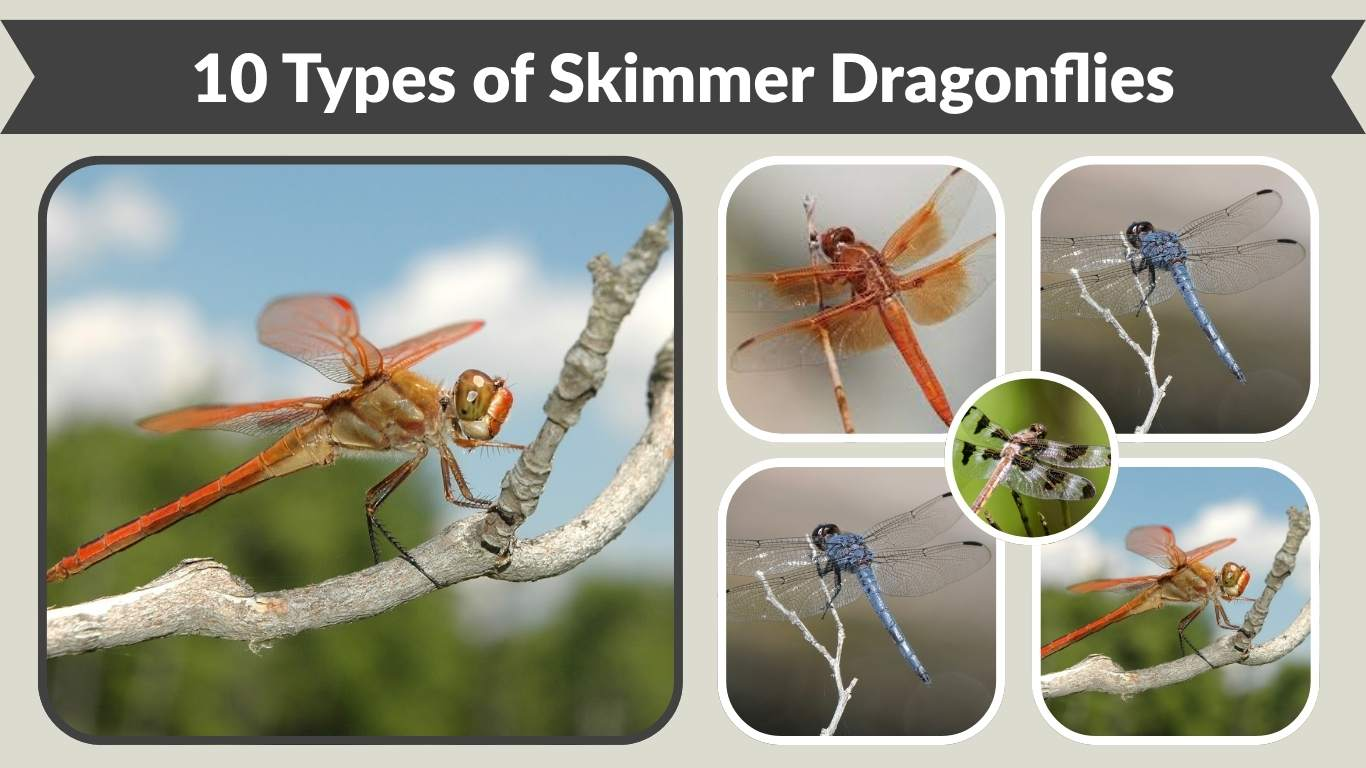
Skimmer dragonflies are among the most colorful and commonly seen dragonflies near ponds, marshes, lakes, and slow-moving streams. They belong to the family Libellulidae and are known for their strong flight, broad wings, and bright body colors. Many species are highly territorial and often perch on reeds, rocks, or shoreline vegetation while hunting insects.
There are many fascinating skimmer dragonfly species, each with unique colors, markings, and behaviors. From the bold Common Whitetail to the bright Flame Skimmer, these dragonflies play an important role in controlling mosquito populations and maintaining healthy freshwater ecosystems during warm seasons.
1. Common Whitetail
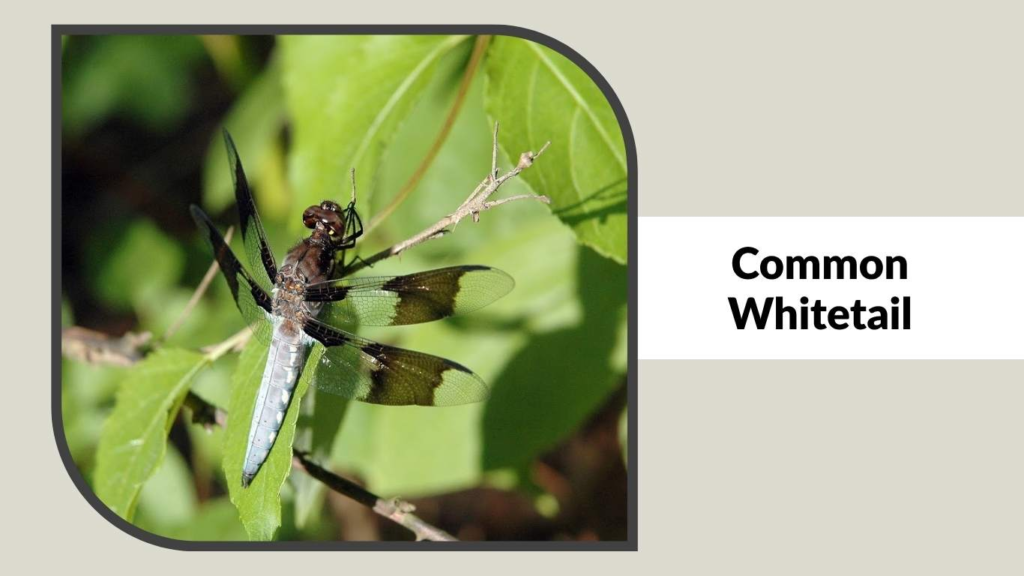
The Common Whitetail is one of the most recognizable skimmer dragonflies found near ponds, lakes, marshes, and slow-moving streams. It is known for its bold wing markings and chalky white abdomen in mature males. This dragonfly is highly active during warm months and is often seen perched close to freshwater habitats.
Identification
- Broad white abdomen in mature males
- Females and young males have brown abdomens
- Distinct dark bands across the wings
- Large compound eyes and sturdy body
- Adults generally measure 42–50 mm long
Habitat
Common Whitetails inhabit ponds, marshes, lakeshores, wetlands, and slow-moving streams with open sunny areas. They are often found perched on rocks, sticks, and shoreline vegetation near freshwater habitats where insects are abundant and breeding conditions are suitable during warmer seasons.
Behavior
This species is highly territorial and frequently returns to the same perch after flying. Common Whitetails feed on mosquitoes, flies, gnats, and other flying insects. Males aggressively defend breeding territories while females remain closer to aquatic vegetation used for egg-laying activities near water.
Distribution
The Common Whitetail is widely distributed across North America, especially throughout the United States and southern Canada. It is one of the most common dragonflies in freshwater habitats and can often be observed during spring, summer, and early autumn in warm regions.
Life Cycle
Females lay eggs in freshwater habitats after mating near ponds and marshes. The larvae develop underwater while feeding on tiny aquatic organisms through several growth stages. Mature adults emerge during warm months and remain active throughout the summer season in suitable wetland environments.
2. Blue Dasher
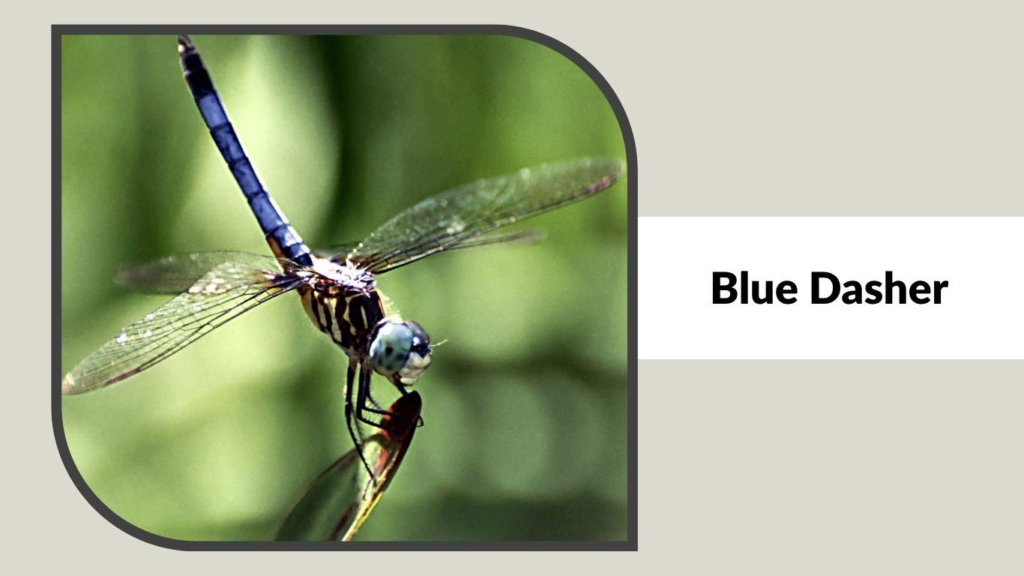
The Blue Dasher is a small and colorful skimmer dragonfly commonly found near ponds, marshes, lakes, and slow-moving streams. It is admired for its bright blue body and agile flight. This species is highly active during warm weather and is often seen perched on reeds and shoreline vegetation.
Identification
- Powdery blue abdomen in mature males
- Females are yellow with black markings
- Green eyes and slender body structure
- Transparent wings with small dark patches
- Adults generally measure 40–45 mm long
Habitat
Blue Dashers inhabit ponds, marshes, wetlands, lakeshores, and calm streams with abundant vegetation. They prefer sunny freshwater habitats where reeds, grasses, and shoreline plants provide ideal resting and breeding locations during warm months of the year.
Behavior
This species is energetic and frequently flies low above the water while hunting insects. Blue Dashers feed on mosquitoes, gnats, flies, and other tiny flying insects. Males often guard territories near breeding areas and repeatedly return to favorite perches close to freshwater habitats.
Distribution
The Blue Dasher is widely distributed across North America, especially throughout the United States, southern Canada, Mexico, and parts of Central America. It is one of the most commonly observed skimmer dragonflies during spring, summer, and early autumn near freshwater environments.
Life Cycle
Females lay eggs directly into freshwater after mating near ponds and marshes. The larvae develop underwater while feeding on small aquatic organisms through several growth stages. Mature adults emerge during warm seasons and remain active throughout summer in suitable freshwater habitats.
3. Twelve-spotted Skimmer
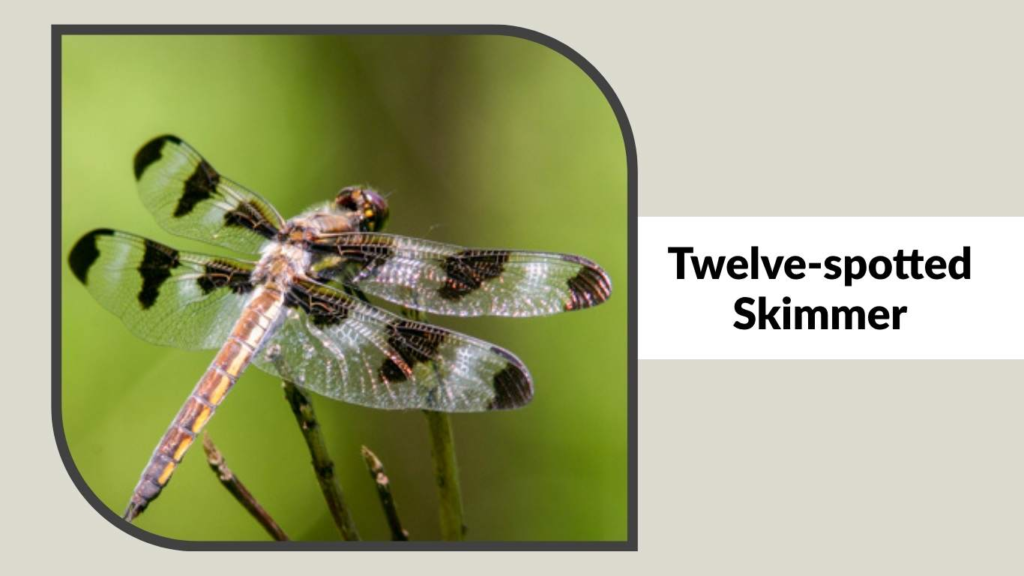
The Twelve-spotted Skimmer is a striking dragonfly species recognized for the dark and white spots on its wings. It is commonly found near ponds, marshes, lakes, and slow-moving rivers. This dragonfly is highly visible during warm months and is often seen perched on shoreline plants and branches.
Identification
- Three dark spots on each wing
- Mature males develop white wing patches
- Broad dark abdomen with lighter markings
- Large eyes and sturdy body structure
- Adults generally measure 42–50 mm long
Habitat
Twelve-spotted Skimmers inhabit ponds, wetlands, marshes, lakeshores, and quiet rivers with open sunny areas. They are commonly found resting on reeds, sticks, and shoreline vegetation near freshwater habitats where insects are abundant and breeding conditions remain favorable.
Behavior
This species is highly active and frequently patrols territories above water surfaces. Twelve-spotted Skimmers feed on mosquitoes, flies, gnats, and other small flying insects. Males are territorial and often chase rivals away from breeding areas while females remain near aquatic vegetation for egg-laying.
Distribution
The Twelve-spotted Skimmer is widely distributed across North America, especially in the United States and southern Canada. It is commonly observed near freshwater habitats during spring, summer, and early autumn, particularly in regions with calm ponds and marshy wetlands.
Life Cycle
Females lay eggs directly into freshwater habitats after mating near ponds and wetlands. The larvae develop underwater while feeding on tiny aquatic organisms through several stages of growth. Mature adults emerge during warm months and remain active throughout the summer season near freshwater environments.
4. Widow Skimmer
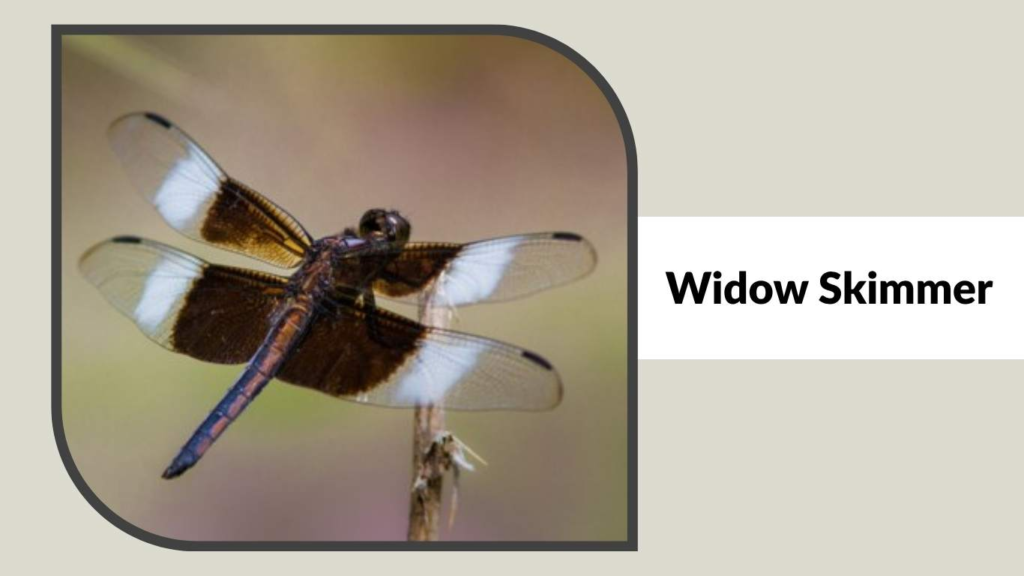
The Widow Skimmer is a beautiful skimmer dragonfly known for its dark wing bands and powdery blue body in mature males. It is commonly found near ponds, marshes, lakes, and slow-moving streams. This species is especially active during summer and is often seen perched on tall grasses and shoreline branches.
Identification
- Broad dark bands across the wings
- Mature males have powdery blue abdomens
- Females are yellowish-brown with dark markings
- Large eyes and slender body structure
- Adults generally measure 45–55 mm long
Habitat
Widow Skimmers inhabit ponds, marshes, lakeshores, wetlands, and calm streams with open sunny areas. They are commonly found resting on reeds, grasses, and branches near freshwater habitats where insects are abundant and breeding conditions remain suitable during warmer seasons.
Behavior
This species is territorial and frequently returns to the same perch after short flights. Widow Skimmers feed on mosquitoes, gnats, flies, and other flying insects. Males actively defend breeding territories near water while females remain close to aquatic vegetation used for laying eggs.
Distribution
The Widow Skimmer is widely distributed across North America, especially throughout the United States and southern Canada. It is one of the most commonly observed skimmer dragonflies during spring, summer, and early autumn near freshwater wetlands and ponds.
Life Cycle
Females lay eggs in freshwater habitats after mating near ponds and marshes. The larvae develop underwater while feeding on small aquatic organisms through several growth stages. Mature adults emerge during warm months and remain active throughout the summer season near suitable freshwater environments.
5. Halloween Pennant
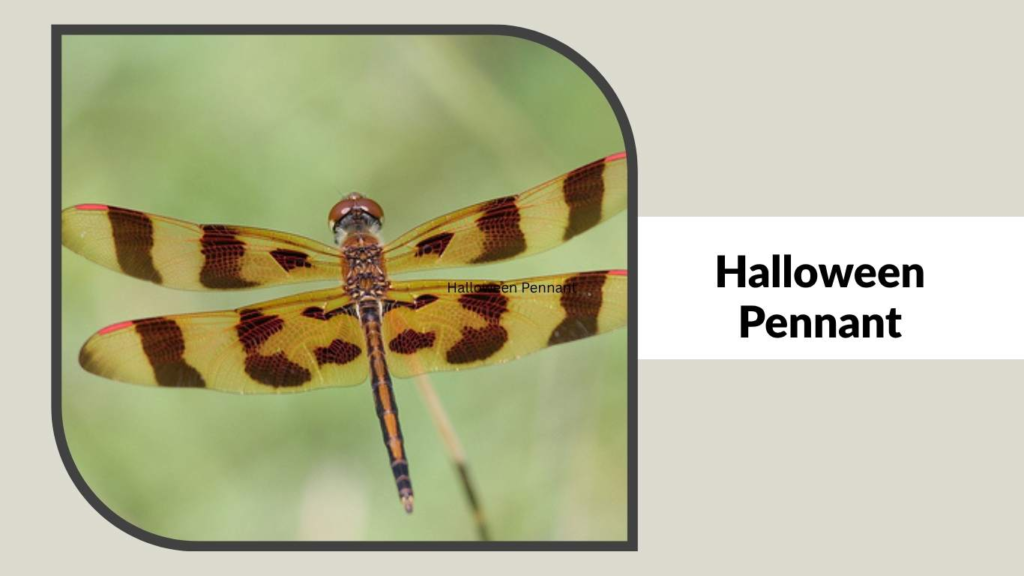
The Halloween Pennant is a colorful skimmer dragonfly recognized for its orange and black wing patterns that resemble Halloween decorations. It is commonly found near ponds, marshes, and wetlands with tall grasses. This dragonfly is especially noticeable during summer when it perches on vegetation swaying in the wind.
Identification
- Orange wings with black bands and spots
- Slender reddish or orange body coloration
- Long narrow abdomen and delicate appearance
- Transparent wing sections between dark markings
- Adults generally measure 35–43 mm long
Habitat
Halloween Pennants inhabit ponds, marshes, wetlands, and slow-moving freshwater habitats surrounded by grasses and reeds. They prefer sunny open areas with abundant shoreline vegetation where they can perch easily while hunting insects and defending breeding territories during warmer seasons.
Behavior
This species is known for its fluttering flight and habit of perching at the tips of grasses and reeds. Halloween Pennants feed on mosquitoes, gnats, flies, and other tiny insects. Males actively patrol territories near breeding sites while females remain close to aquatic vegetation for egg-laying.
Distribution
The Halloween Pennant is widely distributed across eastern and central North America, especially throughout the United States and southern Canada. It is commonly observed during summer and early autumn near freshwater wetlands, ponds, and marshy environments with tall vegetation.
Life Cycle
Females lay eggs directly into freshwater habitats after mating near ponds and wetlands. The larvae develop underwater while feeding on tiny aquatic organisms through several growth stages. Mature adults emerge during warm months and remain active throughout summer in suitable freshwater environments.
6. Eastern Amberwing
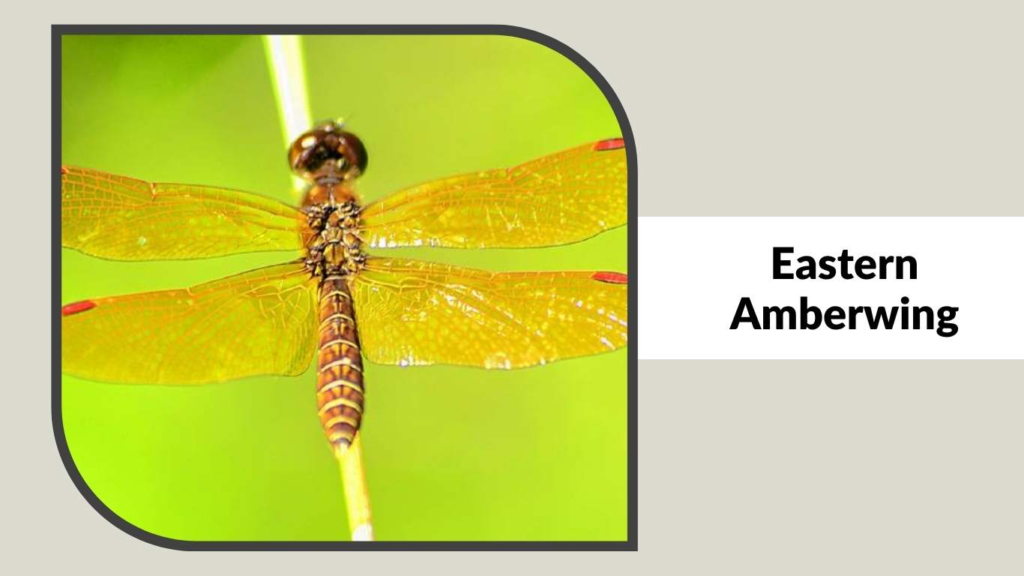
The Eastern Amberwing is one of the smallest skimmer dragonflies found near ponds, marshes, and wetlands. It is recognized for its amber-colored wings and compact body shape. This dragonfly is highly active during warm sunny days and is often seen perched on reeds and floating vegetation close to freshwater habitats.
Identification
- Amber or golden-colored wings
- Small compact body structure
- Brownish-yellow abdomen with dark markings
- Large eyes and short slender legs
- Adults generally measure 20–25 mm long
Habitat
Eastern Amberwings inhabit ponds, marshes, wetlands, lakeshores, and slow-moving streams with abundant aquatic vegetation. They prefer shallow freshwater habitats surrounded by reeds, grasses, and floating plants where insects are plentiful and breeding conditions remain favorable during warmer months.
Behavior
This species is active during sunny daytime hours and frequently flies low above the water surface while hunting insects. Eastern Amberwings feed on mosquitoes, gnats, flies, and other tiny flying insects. Males may defend territories while females remain near aquatic vegetation for egg-laying activities.
Distribution
The Eastern Amberwing is widely distributed across eastern and central North America, especially throughout the United States and southern Canada. It is commonly observed during spring, summer, and early autumn near freshwater wetlands, marshes, ponds, and vegetated shoreline environments.
Life Cycle
Females lay eggs directly into freshwater habitats after mating near ponds and marshes. The larvae develop underwater while feeding on tiny aquatic organisms through several growth stages. Mature adults emerge during warm seasons and remain active throughout summer in suitable freshwater habitats.
7. Great Blue Skimmer
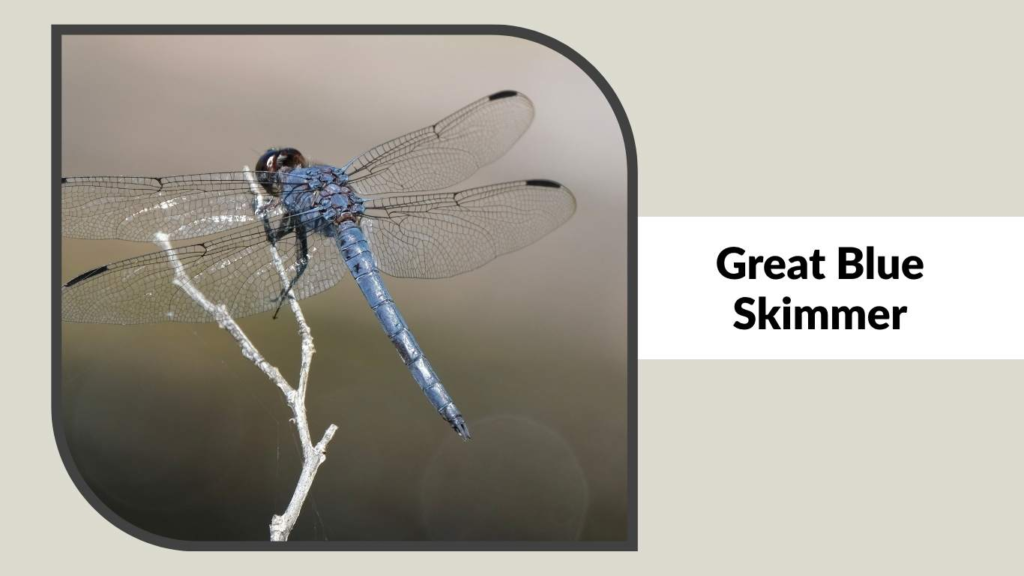
The Great Blue Skimmer is a large and colorful dragonfly recognized for its powdery blue body and broad wings. It is commonly found near ponds, lakes, marshes, and slow-moving streams with abundant vegetation. This species is highly active during warm months and is often seen perched near freshwater habitats.
Identification
- Powdery blue abdomen in mature males
- Females are brownish with yellow markings
- Broad transparent wings with dark bases
- Large eyes and strong body structure
- Adults generally measure 50–60 mm long
Habitat
Great Blue Skimmers inhabit ponds, marshes, lakeshores, wetlands, and slow-moving streams surrounded by grasses and aquatic vegetation. They prefer sunny freshwater habitats where shoreline plants provide ideal perching, hunting, and breeding locations during the warmer months of the year.
Behavior
This species is active during daylight hours and frequently patrols above water while hunting insects. Great Blue Skimmers feed on mosquitoes, flies, gnats, and other small flying insects. Males aggressively defend breeding territories and often return repeatedly to the same resting perch near freshwater habitats.
Distribution
The Great Blue Skimmer is mainly distributed across the southeastern United States and parts of Central America. It is commonly observed near freshwater wetlands and ponds during spring, summer, and early autumn in warm climates with abundant aquatic vegetation.
Life Cycle
Females lay eggs directly into freshwater habitats after mating near ponds and marshes. The larvae develop underwater while feeding on small aquatic organisms through several growth stages. Mature adults emerge during warm months and remain active throughout the summer season in suitable freshwater environments.
8. Golden-winged Skimmer
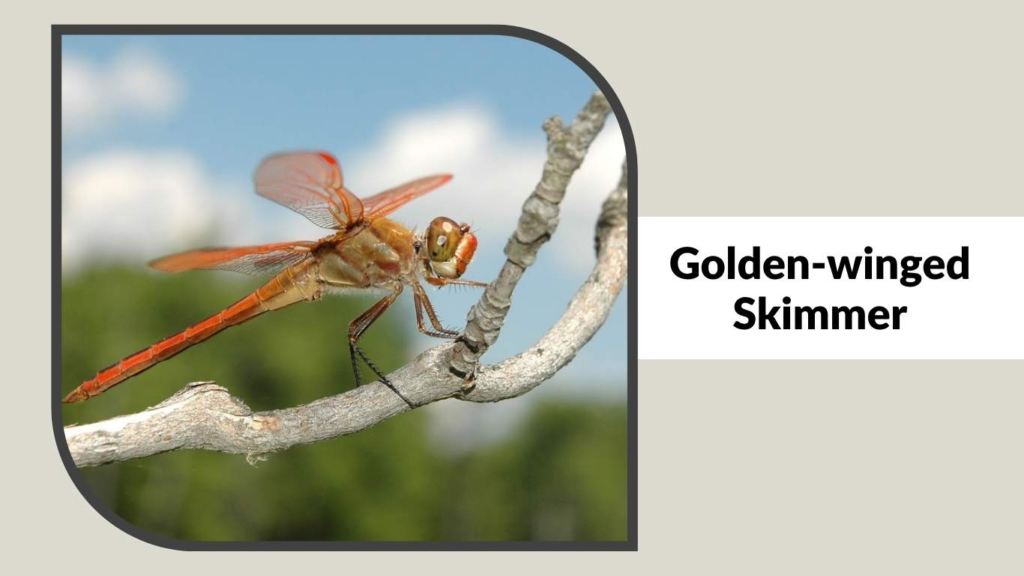
The Golden-winged Skimmer is a striking dragonfly species known for its golden-yellow wings and slender body. It is commonly found near ponds, marshes, wetlands, and slow-moving streams with abundant vegetation. This dragonfly becomes especially active during warm sunny days near freshwater habitats and open grassy areas.
Identification
- Golden-yellow tinted wings
- Slender dark abdomen with pale markings
- Large compound eyes and delicate body structure
- Transparent wing edges with golden coloration
- Adults generally measure 40–50 mm long
Habitat
Golden-winged Skimmers inhabit ponds, marshes, wetlands, lakeshores, and calm streams with open sunny conditions. They are frequently seen perched on grasses, reeds, and branches near freshwater habitats where insects are abundant and breeding environments remain favorable during warmer seasons.
Behavior
This species is active during daytime hours and often flies low above wetland vegetation while hunting insects. Golden-winged Skimmers feed on mosquitoes, gnats, flies, and other tiny flying insects. Males may defend territories near breeding sites while females remain close to aquatic vegetation for egg-laying.
Distribution
The Golden-winged Skimmer is distributed across parts of North and Central America, especially in warm freshwater habitats. It is commonly observed during spring, summer, and early autumn near marshes, ponds, and vegetated wetlands with abundant shoreline plants and calm water conditions.
Life Cycle
Females lay eggs directly into freshwater habitats after mating near ponds and wetlands. The larvae develop underwater while feeding on tiny aquatic organisms through several growth stages. Mature adults emerge during warm seasons and remain active throughout summer in suitable freshwater environments.
9. Needham’s Skimmer
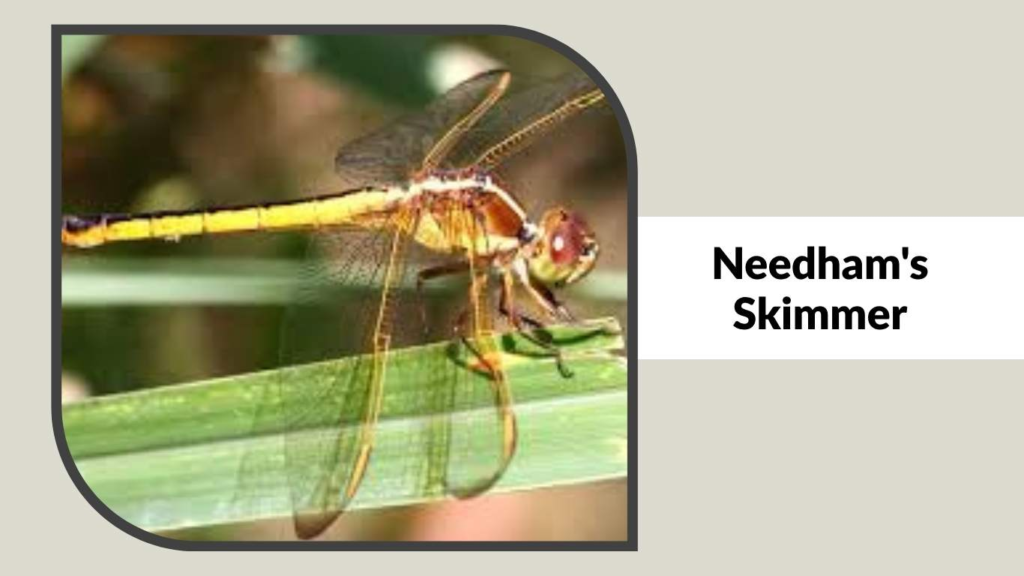
The Needham’s Skimmer is a colorful dragonfly species recognized for its reddish-orange body and graceful flight. It is commonly found near marshes, ponds, wetlands, and slow-moving streams with abundant vegetation. This dragonfly is especially active during summer and is often seen perched on reeds and shoreline grasses.
Identification
- Reddish-orange body coloration in mature males
- Females are yellowish-brown with dark markings
- Transparent wings with amber shading near the base
- Slender abdomen and large compound eyes
- Adults generally measure 45–55 mm long
Habitat
Needham’s Skimmers inhabit ponds, marshes, wetlands, lakeshores, and calm streams surrounded by dense vegetation. They prefer warm freshwater habitats with reeds, grasses, and aquatic plants that provide ideal locations for perching, hunting, and breeding during warmer months of the year.
Behavior
This species is active during sunny daytime hours and frequently flies low above wetland vegetation while searching for prey. Needham’s Skimmers feed on mosquitoes, flies, gnats, and other tiny insects. Males often defend breeding territories while females remain near aquatic vegetation for egg-laying activities.
Distribution
Needham’s Skimmers are widely distributed across the southeastern United States, parts of Central America, and the Caribbean. They are commonly observed during spring, summer, and early autumn near freshwater wetlands, ponds, marshes, and slow-moving aquatic habitats with dense vegetation.
Life Cycle
Females lay eggs directly into freshwater habitats after mating near ponds and marshes. The larvae develop underwater while feeding on tiny aquatic organisms through several growth stages. Mature adults emerge during warm seasons and remain active throughout summer in suitable freshwater environments.
10. Flame Skimmer
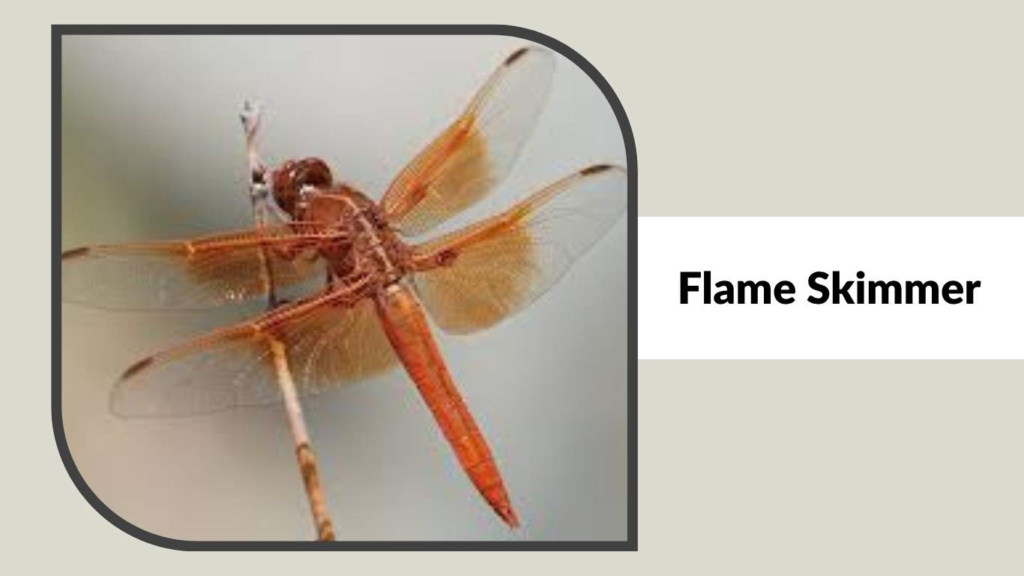
The Flame Skimmer is a brilliantly colored dragonfly species famous for its bright red-orange body and striking appearance. It is commonly found near ponds, marshes, lakes, and slow-moving streams in warm regions. This dragonfly is highly active during sunny weather and is often seen perched on rocks and shoreline vegetation.
Identification
- Bright red or orange body coloration in males
- Females are yellowish-brown with darker markings
- Transparent wings with orange patches near the base
- Large compound eyes and sturdy body structure
- Adults generally measure 40–50 mm long
Habitat
Flame Skimmers inhabit ponds, marshes, lakeshores, wetlands, and calm streams with open sunny areas. They prefer warm freshwater habitats where rocks, reeds, and shoreline vegetation provide excellent resting and hunting locations during the warmer months of the year.
Behavior
This species is highly active during daytime hours and frequently patrols territories above water surfaces. Flame Skimmers feed on mosquitoes, flies, gnats, and other flying insects. Males aggressively defend breeding territories and often return repeatedly to the same perch near freshwater habitats.
Distribution
The Flame Skimmer is widely distributed across the western United States, Mexico, and parts of Central America. It is commonly observed during spring, summer, and early autumn near freshwater wetlands, ponds, and streams in warm sunny climates.
Life Cycle
Females lay eggs directly into freshwater habitats after mating near ponds and marshes. The larvae develop underwater while feeding on tiny aquatic organisms through several growth stages. Mature adults emerge during warm months and remain active throughout summer in suitable freshwater environments.
FAQs
What is a skimmer dragonfly?
A skimmer dragonfly is a member of the dragonfly family Libellulidae, one of the largest dragonfly families in the world. These dragonflies are commonly found near freshwater habitats and are known for their colorful bodies, strong flight, and perching behavior.
Where do skimmer dragonflies live?
Skimmer dragonflies usually live near ponds, marshes, lakes, wetlands, rivers, and slow-moving streams. They prefer sunny freshwater habitats with abundant vegetation where they can hunt insects, rest on shoreline plants, and reproduce during warm seasons.
What do skimmer dragonflies eat?
Skimmer dragonflies feed on mosquitoes, gnats, flies, midges, and other small flying insects. Both adults and larvae are active predators that help naturally control insect populations around freshwater ecosystems and wetland habitats.
How can you identify a skimmer dragonfly?
Skimmer dragonflies can be identified by their broad wings, colorful abdomens, large compound eyes, and strong flying ability. Many species also display distinctive wing markings, powdery blue coloration, or bright red and orange body colors during adulthood.
Are skimmer dragonflies harmful to humans?
Skimmer dragonflies are harmless to humans and do not sting. They are considered beneficial insects because they reduce mosquito populations and contribute to healthy freshwater ecosystems by serving as predators within aquatic and terrestrial food chains.