
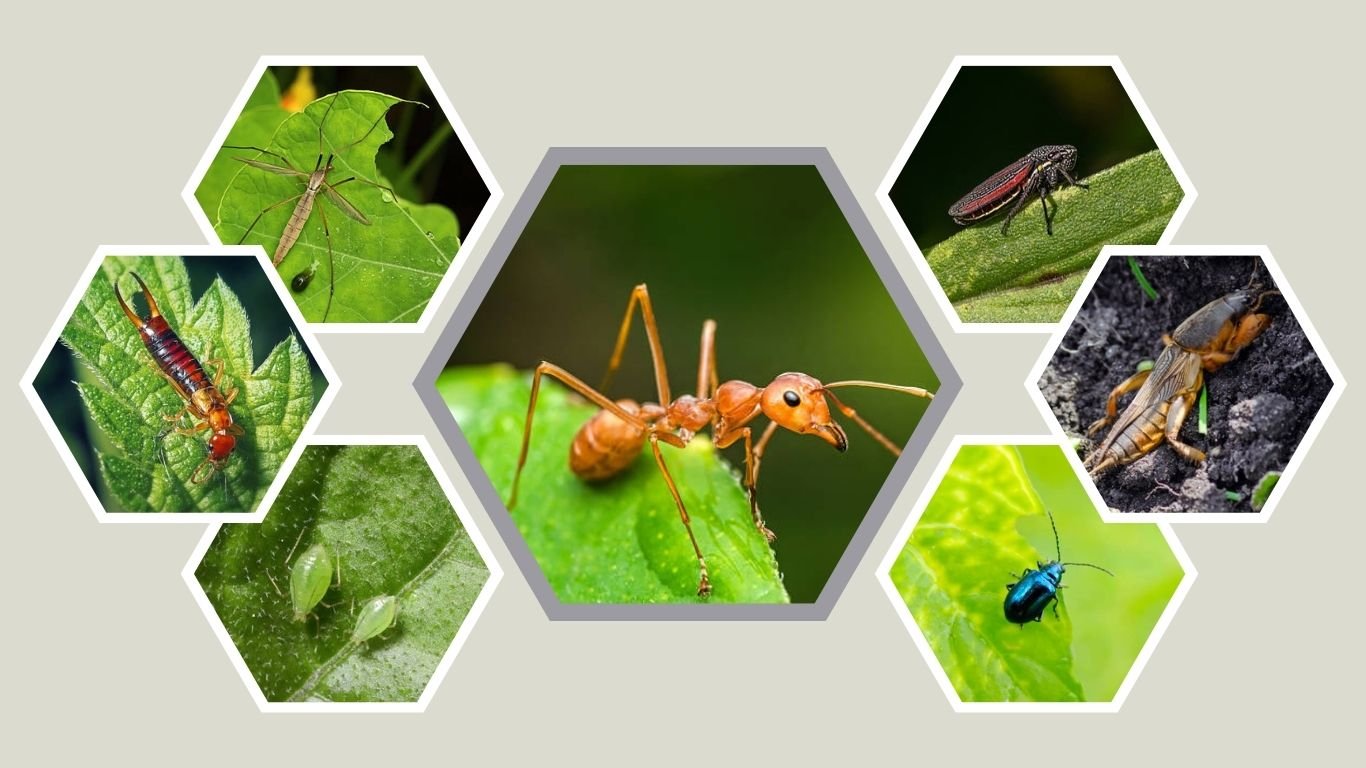
Lawns are home to many different types of insects, some of which are helpful while others can cause serious damage to grass. These bugs live in the soil, on grass blades, or within thatch layers, feeding on plants or other insects. While a few support the ecosystem by controlling pests or breaking down organic matter, others can weaken grass, leading to brown patches and unhealthy turf.
In this guide, we explore 13 common lawn bugs, helping you identify them and understand their behavior, habitat, and impact. Knowing these insects will make it easier to maintain a healthy, green lawn and take action when harmful pests appear.
1. Chinch Bug

Chinch bugs are small lawn pests that can cause serious damage to grass by feeding on plant juices. They are commonly found in warm, dry lawns and are known for creating yellow or brown patches in turf.
Identification
- Small, oval-shaped body
- Black with white wings folded over the back
- Red or orange markings in younger stages
- About 4–5 mm in length
Habitat
Chinch bugs prefer sunny, dry lawn areas with thick grass. They are often found near sidewalks, driveways, or open spaces where heat builds up. These insects hide in the thatch layer of grass, making them difficult to spot without close inspection.
Diet
Chinch bugs feed on grass by piercing the plant and sucking out its juices. While feeding, they also release toxins that block water movement in the grass. This combination of feeding and toxin release leads to visible damage, such as dry, discolored patches.
Behavior
Chinch bugs are most active during hot weather. They tend to gather in groups, which increases the level of damage in affected areas. They move quickly through the lawn and spread from one patch to another. Early detection is important, as their populations can grow rapidly and damage large sections of grass.
2. Sod Webworm

Sod webworms are common lawn pests that can damage grass by feeding on blades and stems. They are actually the larval stage of small moths and are often active during warm seasons. Their presence in a lawn can lead to thinning grass and irregular brown patches if not controlled early.
Identification
- Small caterpillar-like larvae with a slender body
- Usually gray, green, or brown in color
- Brownish moths seen flying low over grass at dusk
- Silken tunnels or webs in the grass
Habitat
Sod webworms are commonly found in lawns, golf courses, and grassy fields. They prefer areas with dense turf where they can hide easily. During the day, they stay concealed in silk-lined tunnels near the soil surface. At night, they come out to feed on grass blades, making them harder to detect.
Diet
Sod webworm larvae feed mainly on grass blades. They chew the leaves close to the ground, which can result in uneven patches and thinning turf. In heavy infestations, they may eat large portions of grass, leaving behind bare or brown spots that weaken the overall lawn health.
Behavior
Sod webworms are mostly active at night. Adult moths lay eggs in the grass, and once hatched, the larvae begin feeding immediately. Their feeding activity increases during warm weather. Birds often feed on them, which can sometimes help control their population naturally.
3. White Grub

White grubs are the larval stage of beetles and are among the most destructive lawn pests. They live underground and feed on grass roots, which can cause large sections of lawn to die if the infestation is severe.
Identification
- C-shaped, soft, white body
- Brown head with visible legs near the front
- Thick, plump appearance
- Usually found just below the soil surface
Habitat
White grubs live in the soil beneath lawns and grassy areas. They prefer moist, well-maintained turf where roots are easily accessible. Lawns with poor drainage or excessive watering may attract more grubs, as these conditions support their growth and survival.
Diet
White grubs feed on the roots of grass plants. By eating the roots, they cut off the plant’s ability to absorb water and nutrients. This leads to weak, dying grass that can be easily pulled up from the soil. Severe infestations can result in large dead patches across the lawn.
Behavior
White grubs remain underground for most of their life cycle. They are most active during the growing season when feeding on roots. As they develop into adult beetles, they emerge from the soil to mate and lay eggs, starting the cycle again. Their presence often attracts animals like birds or moles that dig up lawns in search of them.
4. Armyworm

Armyworms are destructive lawn pests that can quickly damage large areas of grass. They are named for their behavior of moving in groups, feeding across lawns like an “army” and leaving damaged grass behind.
Identification
- Smooth, caterpillar-like body
- Green, brown, or striped appearance
- Distinct lines running along the body
- Medium-sized larvae with a soft texture
Habitat
Armyworms are commonly found in lawns, fields, and grassy areas, especially during warm and humid conditions. They stay hidden near the soil or in thick grass during the day. These insects thrive in environments where grass is abundant and undisturbed.
Diet
Armyworms feed on grass blades and other low plants. They chew leaves rapidly, often stripping entire sections of grass in a short time. In severe infestations, they can completely defoliate lawns, leaving behind bare or brown patches.
Behavior
Armyworms are most active at night and tend to move in large groups while feeding. Their group movement allows them to cover wide areas quickly. During the day, they hide in the grass to avoid predators. Their rapid feeding and movement make them a serious threat to lawn health.
5. Cutworm

Cutworms are common lawn pests that damage grass by cutting young plants at the base. They are the larval stage of certain moths and are known for their nighttime feeding habits.
Identification
- Thick, smooth, caterpillar-like body
- Usually gray, brown, or black
- Curl into a “C” shape when disturbed
- Soft body with a slightly shiny appearance
Habitat
Cutworms live in soil and are often found in lawns, gardens, and grassy areas. They hide just below the surface during the day and come out at night to feed. Areas with moist soil and dense grass are ideal for their survival.
Diet
Cutworms feed on grass stems and young plants. They cut through the base of the plant, causing it to fall over and die. This feeding behavior can create small, scattered dead spots in the lawn, especially in newly grown grass.
Behavior
Cutworms are nocturnal and feed mainly at night. During the day, they remain hidden in the soil to stay protected. When disturbed, they curl up into a tight shape. Their feeding is often unnoticed until visible damage appears in the lawn.
6. Billbug

Billbugs are small beetles that can cause serious lawn damage, especially in warm-season grasses. Their larvae feed inside grass stems and roots, making them difficult to detect until visible damage appears.
Identification
- Small, gray or brown beetle
- Distinct long snout (nose-like extension)
- Hard body with short legs
- Larvae are white, legless, and grub-like
Habitat
Billbugs are commonly found in lawns, especially in areas with thick turf. Adults are often seen walking on sidewalks or grass surfaces, while larvae stay hidden inside stems or soil. They prefer sunny areas and can thrive in well-maintained lawns.
Diet
Adult billbugs feed on grass stems, but most damage is caused by the larvae. The larvae tunnel inside stems and feed on roots, weakening the grass. This results in yellowing, thinning turf that can eventually die if the infestation is severe.
Behavior
Billbugs are active during warm months. Adults lay eggs inside grass stems, and once hatched, larvae begin feeding from within. Their hidden feeding behavior makes early detection difficult. Damaged grass can often be pulled up easily due to weakened roots.
7. Flea Beetle

Flea beetles are tiny jumping insects that can affect lawns and nearby plants. They are named for their ability to jump like fleas when disturbed.
Identification
- Very small, shiny body
- Black, bronze, or metallic color
- Enlarged hind legs for jumping
- Oval-shaped body
Habitat
Flea beetles are found in lawns, gardens, and grassy areas with plenty of vegetation. They prefer warm conditions and are often seen on plant leaves. These insects stay close to their food sources and may move between grass and nearby plants.
Diet
Flea beetles feed on plant leaves, creating small holes in the surface. While they mainly target garden plants, they can also feed on grass in some cases. Heavy feeding can weaken plants and reduce their overall health.
Behavior
Flea beetles are very active and quickly jump away when disturbed. They are most active during warm weather and can reproduce rapidly. Their jumping ability helps them escape predators, making them harder to control in lawns and gardens.
8. Mole Cricket

Mole crickets are unusual lawn insects known for their burrowing behavior. They can cause significant damage to grass by tunneling through soil and feeding on roots.
Identification
- Brown, cylindrical body
- Large, spade-like front legs for digging
- About 3–5 cm long
- Velvety appearance with short wings
Habitat
Mole crickets live underground in lawns, especially in moist, sandy soils. They create tunnels just below the surface, which can disturb the soil structure. These insects prefer warm climates and are often found in well-watered lawns.
Diet
Mole crickets feed on grass roots, stems, and sometimes small insects. Their feeding weakens the grass and disrupts root systems. This can lead to patches of dead or dying grass, especially when combined with their tunneling activity.
Behavior
Mole crickets are mostly active at night. They spend much of their time burrowing through the soil, creating tunnels that damage grass roots. Their movement can loosen soil, making grass feel spongy underfoot. They are also known for producing chirping sounds.
9. Leafhopper

Leafhoppers are small, fast-moving insects that can be found in lawns and grassy areas. They are known for their jumping ability and their role in spreading plant diseases.
Identification
- Small, wedge-shaped body
- Green, yellow, or brown color
- Long hind legs for jumping
- Wings held in a slanted position
Habitat
Leafhoppers are commonly found on grass blades and plant leaves in lawns, fields, and gardens. They prefer areas with healthy vegetation and warm temperatures. These insects stay on plant surfaces where they can easily feed and move around.
Diet
Leafhoppers feed on plant sap by piercing leaves and stems. This feeding can weaken grass and may cause discoloration. In some cases, they can also transmit plant diseases, which can further affect lawn health.
Behavior
Leafhoppers are very active during the day and quickly jump or fly when disturbed. They use their mobility to escape predators and move between plants. Some species communicate through vibrations on plant surfaces, especially during mating.
10. Aphid

Aphids are tiny, soft-bodied insects that can appear in large numbers on grass and nearby plants. They are known for feeding on plant sap and can weaken lawn health when populations grow rapidly.
Identification
- Very small, pear-shaped body
- Soft body, usually green, but can be black, yellow, or brown
- Long antennae and thin legs
- Some have wings, while others are wingless
Habitat
Aphids are commonly found on grass blades, stems, and nearby plants in lawns and gardens. They prefer areas with fresh plant growth and tend to gather in clusters. These insects are often seen on the underside of leaves where they stay protected.
Diet
Aphids feed by sucking sap from plants. This reduces the plant’s nutrients and can cause yellowing or curling of grass and leaves. They also produce a sticky substance called honeydew, which can attract ants and lead to mold growth.
Behavior
Aphids reproduce quickly, especially in warm conditions, allowing their numbers to increase in a short time. They often form large colonies and may rely on ants for protection. When disturbed, some aphids can move to nearby plants or develop wings to spread.
11. Ant

Ants are common lawn insects known for their organized colonies and constant activity. While they are not always harmful, they can affect lawn appearance by building nests and soil mounds.
Identification
- Small body divided into three parts: head, thorax, abdomen
- Elbowed antennae
- Colors range from black and brown to red
- Strong mandibles (jaws)
Habitat
Ants build nests in soil, often creating small mounds in lawns. They prefer dry, well-drained areas but can adapt to many environments. Their colonies may also be found under stones, logs, or within grass roots.
Diet
Ants are omnivores and eat a wide variety of food, including plant material, seeds, and small insects. Many are attracted to sugary substances like honeydew produced by aphids, which can lead to increased aphid activity in lawns.
Behavior
Ants live in highly organized colonies with different roles such as workers and queens. They communicate using chemical signals and work together to gather food and protect their nest. Their tunneling can loosen soil, sometimes affecting grass stability.
12. Earwig

Earwigs are small, nocturnal insects often found in lawns and gardens. They are easily recognized by the pincers at the end of their bodies and are mostly active during the night.
Identification
- Elongated, flat body
- Brown to dark reddish color
- Pair of forceps-like pincers at the rear
- Short wings, though rarely seen flying
Habitat
Earwigs prefer moist, shady areas in lawns. They are commonly found under rocks, mulch, logs, and thick grass. During the day, they hide in damp places to avoid sunlight and predators, making them less visible in lawns.
Diet
Earwigs are omnivores and feed on both plant and animal material. They may eat leaves, flowers, and decaying organic matter, as well as small insects. While they can cause minor plant damage, they also help control pests, making them somewhat beneficial.
Behavior
Earwigs are mostly active at night when they search for food. They use their pincers for defense and capturing prey. During the day, they remain hidden. Despite their appearance, they are not harmful to humans and rarely cause serious lawn damage.
13. Crane Fly Larvae

Crane fly larvae, often called “leatherjackets,” are common lawn pests that can damage grass by feeding on roots. They are the immature stage of crane flies, which resemble large mosquitoes.
Identification
- Grayish-brown, cylindrical body
- Legless with a tough, leathery skin
- Up to 2–3 cm long
- Found just below the soil surface
Habitat
Crane fly larvae live in the soil of lawns, especially in moist and poorly drained areas. They are commonly found in cool, damp environments where grass roots are easily accessible. Lawns with heavy watering or rainfall may attract more larvae.
Diet
These larvae feed on grass roots and stems near the soil surface. Their feeding weakens the grass, causing yellowing, thinning, and patchy areas. Severe infestations can result in large sections of dead turf.
Behavior
Crane fly larvae are mostly active below the soil surface. They feed during cooler periods and remain hidden during the day. Their presence often attracts birds and other animals that dig into the lawn in search of them, causing additional damage.