
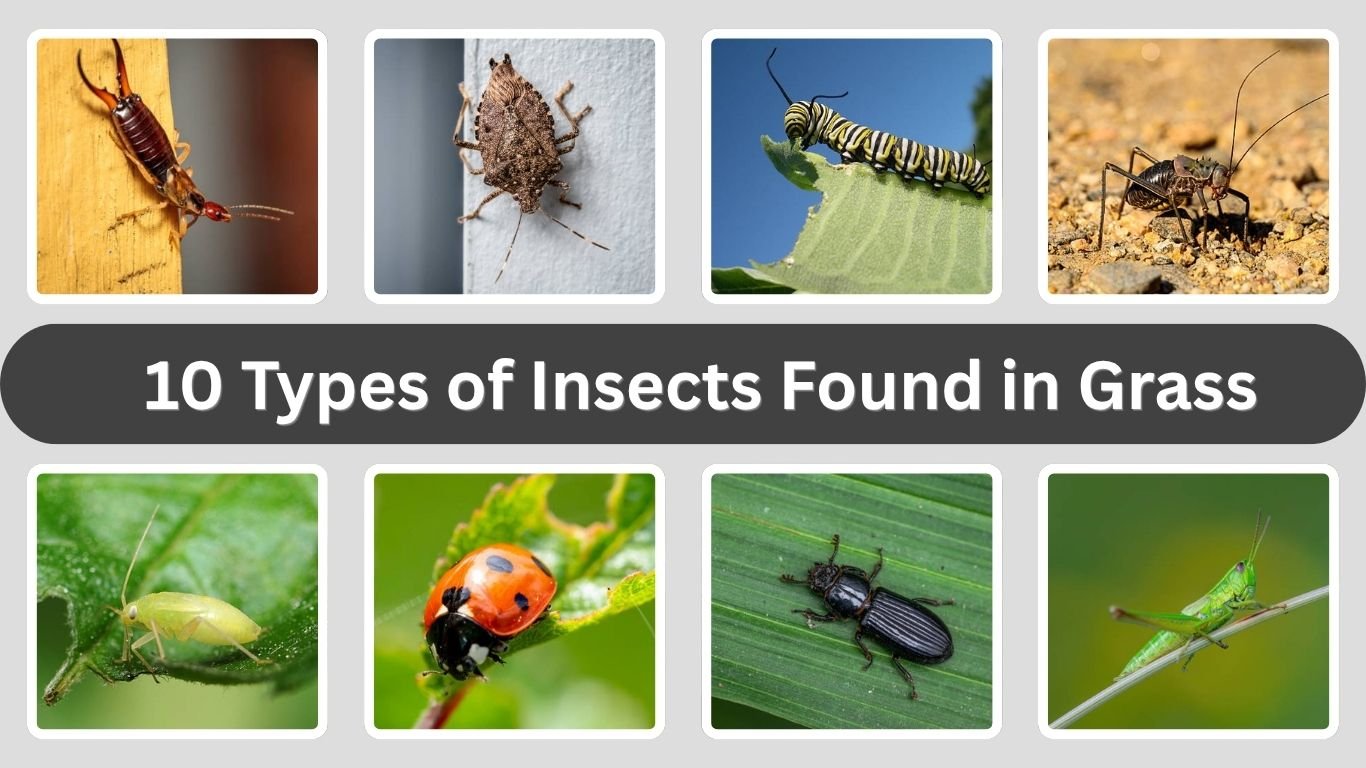
Grassy areas are home to a wide variety of insects that play important roles in the ecosystem. From tiny sap-sucking aphids to jumping grasshoppers, these insects help maintain the balance of nature by supporting food chains, pollinating plants, and controlling pests. Some are beneficial, while others may cause damage to plants, especially in large numbers.
In this article, we explore 10 common types of insects found in grass, highlighting their key features, habitats, diets, and behaviors. This will help you better understand the small but fascinating creatures living all around you in grassy environments.
1. Grasshopper

Grasshoppers are common insects found in grassy areas around the world. They are known for their powerful hind legs, which allow them to jump long distances, and their ability to blend into green surroundings for protection.
Identification
- Long, slender body usually green or brown
- Large hind legs adapted for jumping
- Short antennae compared to crickets
- Wings present in most adult grasshoppers
Habitat
Grasshoppers thrive in open fields, meadows, and lawns where grass and low plants are abundant. They prefer warm, sunny environments and are often seen resting on leaves or hopping between blades of grass. During the day, they are most active and can be easily spotted in grassy landscapes.
Diet
Grasshoppers are herbivores, meaning they mainly feed on plants. Their diet consists of grasses, leaves, and crops. They use strong mouthparts to chew plant material, which can sometimes make them agricultural pests when present in large numbers. However, they also play a role in the ecosystem by helping control plant growth.
Behavior
Grasshoppers are active during the daytime and are known for their jumping ability, which helps them escape predators. Some species can also fly short distances. They produce sounds by rubbing their wings or legs together, especially during mating. This sound is often heard in grassy fields on warm days.
2. Cricket

Crickets are small, ground-dwelling insects commonly found in grassy areas. They are well known for their distinctive chirping sound, which is often heard at night and is produced by males to attract mates.
Identification
- Slender, cylindrical body usually brown or black
- Very long antennae, often longer than the body
- Strong hind legs for jumping
- Wings folded flat along the back
Habitat
Crickets prefer moist, grassy environments such as fields, gardens, and under dense vegetation. They often hide in cracks, soil, or beneath leaves during the day to avoid predators. At night, they become more active and can be seen moving around in search of food.
Diet
Crickets are omnivores, meaning they eat both plant and animal matter. Their diet includes grass, leaves, seeds, and even small insects or organic debris. This flexible feeding habit helps them survive in a variety of grassy environments.
Behavior
Crickets are mostly nocturnal, becoming active after sunset. Male crickets produce chirping sounds by rubbing their wings together, mainly to attract females. They are quick movers and use jumping as their primary escape method when threatened.
3. Ant

Ants are highly organized social insects commonly found in grassy environments. They live in colonies and are known for their teamwork, strength, and ability to adapt to different surroundings.
Identification
- Small body divided into head, thorax, and abdomen
- Elbowed antennae
- Strong mandibles (jaws)
- Colors vary from black and brown to red
Habitat
Ants build their nests in soil, often forming small mounds in grassy areas. They can also be found under rocks, logs, or within plant roots. Grasslands provide them with food sources and protection, making it an ideal habitat for many species.
Diet
Ants are omnivores and have a varied diet. They feed on plant material, seeds, nectar, and small insects. Some ants are attracted to sugary substances, while others hunt for protein-rich food. Their ability to gather and store food helps sustain the colony.
Behavior
Ants are social insects that live in well-structured colonies with specific roles such as workers, soldiers, and a queen. They communicate using chemical signals called pheromones. Ants are constantly active, working together to gather food, build nests, and protect their colony.
4. Beetle

Beetles are one of the most diverse groups of insects found in grassy areas. They come in many shapes and sizes and are easily recognized by their hard outer wing covers.
Identification
- Hard, shell-like front wings (elytra)
- Oval or rounded body shape
- Short antennae in most species
- Wide range of colors, including black, brown, and metallic shades
Habitat
Beetles live in various grassy environments such as fields, gardens, and meadows. They often hide under leaves, within soil, or beneath stones for protection. Grasslands provide them with shelter and access to food, making it a suitable habitat for many species.
Diet
Beetles have diverse feeding habits depending on the species. Some are herbivores that feed on grass and leaves, while others are predators that eat smaller insects. There are also scavenger beetles that consume decaying organic matter, helping maintain ecological balance.
Behavior
Beetles are generally active during the day, although some species are nocturnal. They use their hard wing covers for protection against predators. Many beetles can fly, while others prefer crawling. When threatened, some species may release chemicals or play dead to avoid danger.
5. Ladybug

Ladybugs, also known as ladybirds, are small, colorful insects commonly found in grassy areas. They are beneficial insects because they help control harmful pests like aphids.
Identification
- Small, round or oval-shaped body
- Bright red, orange, or yellow with black spots
- Short antennae
- Hard wing covers with distinct markings
Habitat
Ladybugs are often found in gardens, fields, and grassy areas where plants are abundant. They prefer places with plenty of leaves and flowers, as these areas attract their prey. During colder months, they may gather in groups and hide in sheltered spots.
Diet
Ladybugs are mainly carnivorous and feed on soft-bodied insects such as aphids, mites, and small larvae. A single ladybug can eat many pests in a day, making them very useful for natural pest control. Occasionally, they may also consume pollen or nectar.
Behavior
Ladybugs are active during the day and are strong fliers. They are known for their defensive behavior—when threatened, they can release a yellow fluid with a bad smell to deter predators. Their bright colors also serve as a warning signal to potential threats.
6. Aphid

Aphids are tiny, soft-bodied insects commonly found in grassy areas and on plants. They are known for feeding on plant sap and often gather in large groups, which can sometimes harm vegetation.
Identification
- Very small, pear-shaped body
- Soft and often green, though can be black, yellow, or brown
- Long, thin legs and antennae
- Some species have wings, while others are wingless
Habitat
Aphids are usually found on the stems and undersides of leaves in grassy fields, gardens, and meadows. They prefer areas with abundant plant growth, as they rely on plants for food. These insects often stay clustered together, forming colonies on a single plant or nearby vegetation.
Diet
Aphids feed by piercing plant tissues and sucking out sap. This sap provides them with nutrients, especially sugars. However, they often consume more sugar than needed and release the excess as a sticky substance called honeydew. This can attract ants and lead to the growth of mold on plants.
Behavior
Aphids reproduce very quickly, especially in warm conditions, which allows their populations to grow rapidly. Many species can reproduce without mating, giving birth to live young. They often rely on ants for protection, as ants are attracted to the honeydew they produce. When threatened, some aphids can release chemicals or move to nearby plants to escape danger.
7. Leafhopper

Leafhoppers are small, active insects commonly found in grassy environments. They are known for their quick movements and ability to jump or fly away when disturbed.
Identification
- Small, wedge-shaped body
- Usually green, yellow, or brown
- Long hind legs adapted for jumping
- Wings held roof-like over the body
Habitat
Leafhoppers are typically found in grassy fields, lawns, and agricultural areas. They live on plant surfaces, especially on leaves and stems. These insects prefer warm environments with plenty of vegetation, where they can easily find food and shelter.
Diet
Leafhoppers feed on plant sap by piercing plant tissues with their mouthparts. They mainly consume sap from grasses and other small plants. While feeding, they can sometimes damage plants and may also spread plant diseases, making them a concern in farming areas.
Behavior
Leafhoppers are very active and can move quickly by jumping or flying short distances. They are usually active during the day and tend to avoid predators by rapidly escaping when approached. Some species communicate using vibrations transmitted through plants, especially during mating.
8. Caterpillar

Caterpillars are the larval stage of butterflies and moths, commonly found in grassy areas where plants are abundant. They are known for their soft bodies and constant feeding as they grow before transforming into adult insects.
Identification
- Soft, elongated body with segmented appearance
- Multiple pairs of legs (true legs and prolegs)
- Often green, but can be brightly colored or patterned
- Small head with strong chewing mouthparts
Habitat
Caterpillars are usually found on grass, leaves, and low plants in fields, gardens, and meadows. They stay close to their food source, often hiding on the underside of leaves for protection. Grassy environments provide both food and shelter from predators.
Diet
Caterpillars are herbivores and feed mainly on leaves and grass. They consume large amounts of plant material to support their rapid growth. Some species are selective about the plants they eat, while others feed on a wide variety of vegetation.
Behavior
Caterpillars spend most of their time eating and growing. They move slowly using a looping motion of their bodies. To avoid predators, some use camouflage, blending in with leaves or grass, while others may have bright colors to warn predators. As they mature, they form a cocoon or chrysalis, where they undergo transformation into butterflies or moths.
9. Stink Bug

Stink bugs are shield-shaped insects often found in grassy areas and gardens. They are known for releasing a strong odor as a defense mechanism when disturbed or threatened.
Identification
- Shield-shaped, flat body
- Usually green or brown in color
- Long antennae
- Wings folded neatly over the back
Habitat
Stink bugs are commonly found in grassy fields, meadows, and agricultural areas. They prefer places with plenty of plants, as these provide both food and shelter. They may also hide under leaves or within dense grass to stay protected from predators and harsh weather.
Diet
Stink bugs feed on plant juices by piercing stems, leaves, or fruits with their mouthparts. They mainly consume sap from grasses and crops. Some species may also feed on other small insects. Their feeding can sometimes damage plants, especially in large numbers.
Behavior
Stink bugs are mostly active during the day and can fly short distances when needed. Their most notable behavior is releasing a foul-smelling chemical when they feel threatened, which helps deter predators. They move slowly but rely on their defense mechanism and camouflage to stay safe in grassy environments.
10. Earwig

Earwigs are small insects commonly found in grassy and damp environments. They are easily recognized by the pincers at the end of their bodies, which give them a unique appearance.
Identification
- Elongated, flat body
- Brown or dark reddish color
- Pair of forceps-like pincers at the rear
- Short wings, though not all species fly
Habitat
Earwigs prefer moist, grassy areas such as gardens, fields, and under dense vegetation. They often hide in dark, damp places like under rocks, logs, or within soil during the day. Grasslands provide them with both shelter and access to food sources.
Diet
Earwigs are omnivores and feed on a variety of materials. Their diet includes plant matter, decaying organic material, and small insects. While they may nibble on leaves, they also help control pests by eating harmful insects, making them somewhat beneficial in the ecosystem.
Behavior
Earwigs are mostly nocturnal and become active at night. They use their pincers for defense, capturing prey, and interacting with other earwigs. Despite their intimidating appearance, they are not dangerous to humans. During the day, they remain hidden to avoid predators and harsh environmental conditions.
FAQs
What are the most common insects found in grass?
Common insects found in grass include grasshoppers, crickets, ants, beetles, and aphids. These insects are easily seen in fields and lawns. Each type plays a different role, such as feeding on plants, hunting other insects, or helping with decomposition.
Are grass insects harmful to plants?
Some grass insects can harm plants, especially those that feed on sap or leaves, like aphids and leafhoppers. However, not all are harmful. Many insects, such as ladybugs and certain beetles, help control pests and support plant health.
Why do insects live in grassy areas?
Grassy areas provide insects with food, shelter, and protection from predators. The dense vegetation offers a safe environment where insects can hide, reproduce, and find nutrients, making it an ideal habitat for many species.
Do grass insects help the ecosystem?
Yes, many grass insects play important roles in the ecosystem. They help pollinate plants, break down organic matter, and serve as food for birds and other animals. Their presence supports the balance of nature in grassy environments.
How can I reduce harmful insects in grass?
To reduce harmful insects, you can keep grass healthy, remove excess weeds, and encourage natural predators like birds and beneficial insects. Avoid overusing chemicals, as they can harm helpful insects and disrupt the natural balance.