
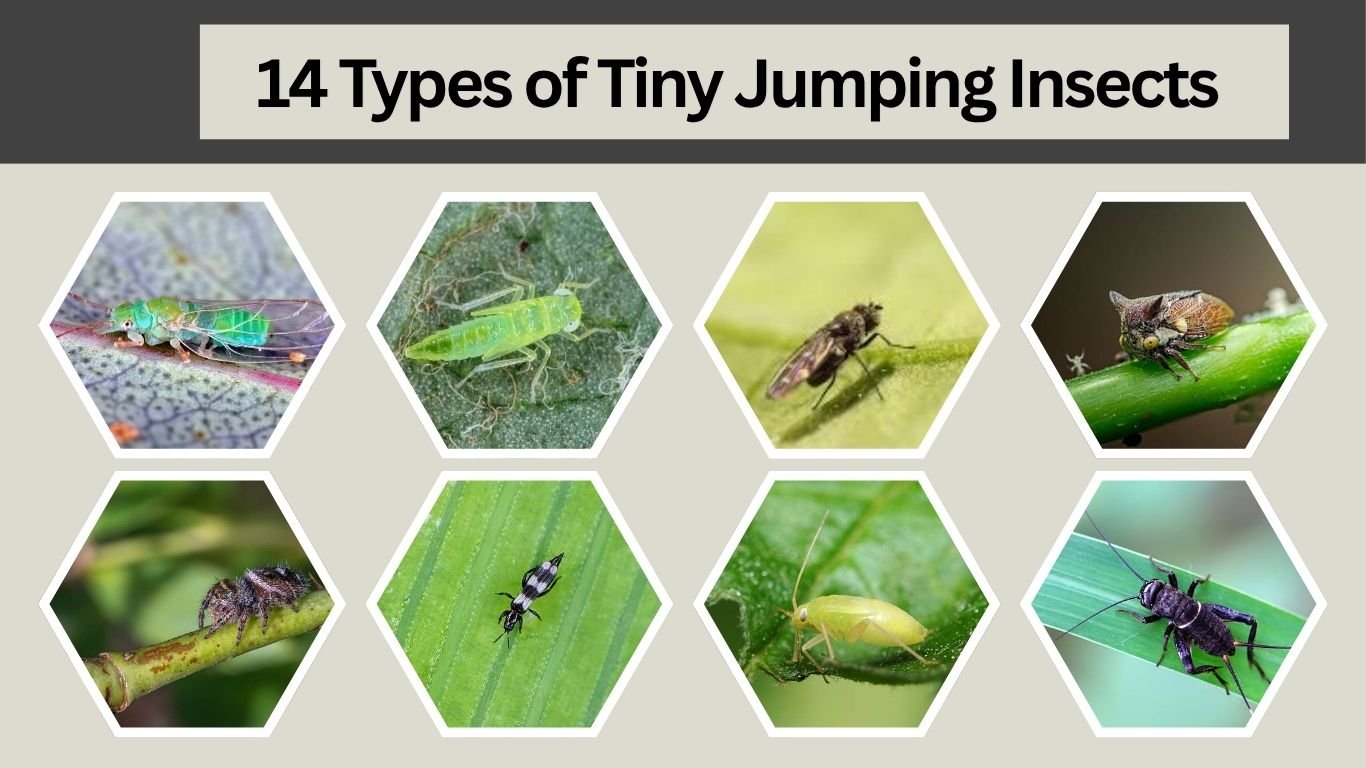
Tiny jumping insects are commonly found in grass, gardens, and around plants. Despite their small size, these insects are highly active and use their strong hind legs to leap quickly from one place to another. This jumping ability helps them escape predators, find food, and move between plants with ease.
In this guide, we explore 14 types of tiny jumping insects, highlighting their key features, habitats, diets, and behaviors. Understanding these insects can help you identify them easily and learn whether they are beneficial or harmful to your plants and surroundings.
1. Flea

Fleas are tiny, wingless insects known for their incredible jumping ability. They are common parasites that live on animals such as dogs and cats, but they can also be found in grassy areas and homes.
Identification
- Very small, dark brown or black body
- Flattened shape from side to side
- Long hind legs adapted for jumping
- No wings
Habitat
Fleas are commonly found in grass, carpets, bedding, and on animals. They prefer warm, humid environments where they can easily find hosts. Outdoors, they hide in shaded grassy areas, waiting to jump onto passing animals or humans.
Diet
Fleas feed on the blood of their hosts. They pierce the skin using specialized mouthparts and consume blood for survival and reproduction. Both adult males and females feed on blood, which is essential for egg production.
Behavior
Fleas are known for their powerful jumping ability, allowing them to leap long distances compared to their size. They are quick and difficult to catch. Fleas reproduce rapidly, and their life cycle includes eggs, larvae, pupae, and adults. They can survive for some time without feeding, making them persistent pests.
2. Springtail

Springtails are tiny, jumping insects often found in moist environments. They are not harmful to humans and play an important role in breaking down organic matter in the soil.
Identification
- Very small, usually less than 2 mm long
- Soft-bodied and wingless
- White, gray, or light brown in color
- Possess a forked structure (furcula) used for jumping
Habitat
Springtails live in damp areas such as soil, leaf litter, grass, and decaying wood. They are commonly found in gardens, lawns, and even indoors in moist places like bathrooms or basements. They prefer environments with high humidity.
Diet
Springtails feed on decaying plant material, fungi, and organic debris. This makes them beneficial, as they help recycle nutrients back into the soil and support plant growth indirectly.
Behavior
Springtails use a specialized appendage called the furcula to jump when disturbed. This allows them to escape predators quickly. They are most active in moist conditions and tend to gather in large numbers in suitable environments.
3. Leafhopper

Leafhoppers are small, fast-moving insects known for their strong jumping ability. They are commonly found on plants and grass, where they feed on plant sap.
Identification
- Small, wedge-shaped body
- Green, yellow, or brown color
- Long hind legs for jumping
- Wings held in a slanted position over the body
Habitat
Leafhoppers are commonly found in grassy areas, gardens, and agricultural fields. They stay on leaves and stems where they can easily feed. Warm and vegetated environments are ideal for their survival.
Diet
Leafhoppers feed on plant sap by piercing plant tissues. Their feeding can weaken plants and sometimes cause discoloration. Some species are also known to spread plant diseases.
Behavior
Leafhoppers are very active during the day and quickly jump or fly when disturbed. Their strong hind legs help them escape predators. They can move rapidly between plants and often remain hidden among leaves.
4. Flea Beetle

Flea beetles are tiny, jumping insects known for their ability to leap like fleas when disturbed. They are common in gardens and grassy areas and can sometimes damage plants.
Identification
- Very small, oval-shaped body
- Shiny black, bronze, or metallic color
- Enlarged hind legs for jumping
- Smooth, hard outer body
Habitat
Flea beetles are found in lawns, gardens, and fields with plenty of vegetation. They prefer warm environments and are often seen on plant leaves. They stay close to their food sources and may move between grass and nearby plants.
Diet
Flea beetles feed on plant leaves, creating small holes in the surface. While they mainly target garden plants, they may also feed on grass. Heavy infestations can weaken plants and reduce their growth.
Behavior
Flea beetles are very active and quickly jump away when disturbed. Their strong hind legs allow them to escape predators easily. They are most active during warm weather and can reproduce rapidly under favorable conditions.
5. Planthopper

Planthoppers are small, jumping insects closely related to leafhoppers. They are known for their ability to hop quickly and their role in feeding on plant sap.
Identification
- Small, compact body
- Green, brown, or gray color
- Wings held tent-like over the body
- Strong hind legs for jumping
Habitat
Planthoppers are commonly found in grassy fields, gardens, and agricultural areas. They stay on plant stems and leaves where they can easily feed. They prefer warm climates with abundant vegetation.
Diet
Planthoppers feed on plant sap by piercing plant tissues. Their feeding can weaken grass and other plants. Some species may also transmit plant diseases, which can further affect plant health.
Behavior
Planthoppers are active during the day and can jump or fly short distances when disturbed. They use their mobility to avoid predators and move between plants. Some species produce waxy secretions that help protect them from threats.
6. Grasshopper Nymph

Grasshopper nymphs are the young stage of grasshoppers and are known for their strong jumping ability even before they develop wings. They are commonly found in grassy areas and fields.
Identification
- Small, wingless version of adult grasshoppers
- Green or brown body for camouflage
- Large hind legs for jumping
- Gradually develop wings as they grow
Habitat
Grasshopper nymphs live in grassy fields, lawns, and meadows. They stay close to the ground among grass blades, where they can hide from predators. These areas provide both food and protection during their early growth stages.
Diet
Grasshopper nymphs are herbivores and feed mainly on grass and small plants. They chew leaves and stems using strong mouthparts. As they grow, their feeding increases, which can sometimes affect plant health in large numbers.
Behavior
Grasshopper nymphs are active during the day and use jumping as their main way to move and escape danger. They molt several times as they grow into adults. Their quick movements help them avoid predators in grassy environments.
7. Cricket Nymph

Cricket nymphs are the immature stage of crickets and resemble smaller versions of adults. They are active jumpers and are often found in grassy and moist environments.
Identification
- Small, slender body similar to adult crickets
- Long antennae
- Strong hind legs for jumping
- Wingless in early stages
Habitat
Cricket nymphs are commonly found in lawns, gardens, and grassy fields. They prefer moist areas with plenty of cover, such as under leaves or within dense grass. These environments provide safety and access to food.
Diet
Cricket nymphs are omnivores and feed on plant material, seeds, and small insects. This varied diet helps them grow and survive in different environments. They may also consume organic debris.
Behavior
Cricket nymphs are mostly active during the night. They jump quickly to escape predators and hide during the day. As they grow, they molt several times before becoming adult crickets capable of producing chirping sounds.
8. Aphid (Winged Form)

Winged aphids are small, jumping-capable insects that develop wings to spread to new plants. While they are not strong jumpers like others, they can quickly move by hopping and flying when disturbed.
Identification
- Very small, soft-bodied insect
- Green, black, yellow, or brown color
- Transparent wings in winged forms
- Pear-shaped body with long antennae
Habitat
Winged aphids are found in grassy areas, gardens, and crop fields. They live on plant stems and leaves, especially where new growth is present. These insects prefer warm environments with plenty of plant life.
Diet
Winged aphids feed on plant sap by piercing plant tissues. This feeding can weaken plants and cause yellowing or curling of leaves. They also produce honeydew, which attracts ants and may lead to mold growth.
Behavior
Winged aphids develop when populations grow or conditions change. They use their wings to spread to new plants and may hop short distances when disturbed. Their rapid reproduction helps them quickly colonize new areas.
9. Thrips

Thrips are tiny, slender insects that can jump short distances and are often found on plants and grass. They are known for feeding on plant tissues and can cause visible damage.
Identification
- Extremely small, thin body
- Yellow, brown, or black color
- Narrow wings with fringed edges
- Fast-moving and hard to see
Habitat
Thrips are commonly found in lawns, gardens, and fields. They live on leaves, flowers, and grass blades. Warm, dry environments with plenty of vegetation are ideal for their survival.
Diet
Thrips feed by scraping plant surfaces and sucking out the contents. This can cause silvery or discolored patches on leaves and grass. In large numbers, they may weaken plants significantly.
Behavior
Thrips are active insects that move quickly and can jump or fly short distances when disturbed. They reproduce rapidly and can spread easily between plants. Their small size makes them difficult to detect until damage becomes noticeable.
10. Jumping Spider

Jumping spiders are small arachnids often included in lists of jumping insects due to their impressive leaping ability. Although not true insects, they are commonly found in grassy areas.
Identification
- Small, compact body
- Usually black, brown, or patterned
- Large front eyes giving good vision
- Hairy body with short legs
Habitat
Jumping spiders are found in lawns, gardens, and grassy fields. They prefer sunny areas where they can hunt easily. They often stay on grass blades, leaves, or low surfaces where prey is available.
Diet
Jumping spiders are carnivores and feed on small insects such as flies, aphids, and other tiny bugs. They do not use webs to catch prey but instead rely on their jumping ability to capture food.
Behavior
Jumping spiders are active hunters during the day. They use their excellent vision to spot prey and then leap accurately to catch it. They are curious and may turn toward movement, but they are harmless to humans.
11. Treehopper

Treehoppers are small, jumping insects known for their unusual shapes and ability to hop quickly from plant to plant. They are often found on stems and branches.
Identification
- Small body with unique, helmet-like shape
- Green, brown, or gray color
- Wings folded over the back
- Strong hind legs for jumping
Habitat
Treehoppers live on plants in grassy areas, gardens, and fields. They are usually found on stems rather than leaves. These insects prefer environments with plenty of vegetation for feeding and protection.
Diet
Treehoppers feed on plant sap by piercing stems and leaves. Their feeding can weaken plants, especially when present in large numbers. They also produce honeydew, which can attract ants.
Behavior
Treehoppers are quick jumpers and can move rapidly when disturbed. Some species form small groups and may be guarded by ants that feed on their honeydew. Their unusual body shape helps them blend in with plant parts, providing camouflage.
12. Psyllid

Psyllids, also known as jumping plant lice, are tiny insects that are well known for their strong jumping ability. They are commonly found on plants and grass, where they feed on sap.
Identification
- Very small, soft-bodied insect
- Resembles tiny cicadas
- Usually green, yellow, or brown
- Strong hind legs for jumping
Habitat
Psyllids are found in grassy areas, gardens, and on shrubs or trees. They prefer places with fresh plant growth, as these provide a steady food source. They often stay on leaves and stems where they can easily feed.
Diet
Psyllids feed on plant sap by piercing plant tissues. Their feeding can cause leaves to curl, yellow, or become deformed. Some species may also spread plant diseases, which can affect overall plant health.
Behavior
Psyllids are active insects that quickly jump away when disturbed. They can also fly short distances to move between plants. Their jumping ability helps them escape predators and adapt to changing environments.
13. Jumping Plant Louse

Jumping plant lice are tiny sap-feeding insects closely related to psyllids. They are known for their quick jumping movements and are often found on grass and small plants.
Identification
- Very small, delicate body
- Light green, yellow, or brown color
- Transparent wings in adult stage
- Long hind legs for jumping
Habitat
Jumping plant lice are commonly found in grassy fields, lawns, and gardens. They prefer areas with young plants and fresh growth. These insects stay on leaves and stems, often in hidden spots for protection.
Diet
They feed on plant sap, extracting nutrients from leaves and stems. This feeding can weaken plants and sometimes cause leaf curling or discoloration. In large numbers, they may reduce plant vigor.
Behavior
Jumping plant lice are highly active and quickly jump when disturbed. They may also fly short distances to relocate. Their small size and quick movement make them difficult to notice until plant damage becomes visible.
14. Shore Fly

Shore flies are tiny insects often found near moist grassy areas and water sources. While they are not strong jumpers like fleas, they can make short hopping movements when disturbed.
Identification
- Very small, dark-colored body
- Short legs with compact shape
- Clear wings folded over the back
- Often seen moving quickly on surfaces
Habitat
Shore flies are commonly found in damp lawns, near puddles, irrigation areas, or moist soil. They prefer environments with high moisture and organic material. Grassy areas with excess water provide ideal conditions for their presence.
Diet
Shore flies feed on algae, decaying organic matter, and microorganisms found in moist environments. They do not typically damage grass directly but may indicate overly wet conditions in the lawn.
Behavior
Shore flies are active during the day and are often seen walking or making short hops across wet surfaces. They are quick movers and tend to gather in areas with moisture. Their presence is usually more of a nuisance than a serious problem for lawns.