
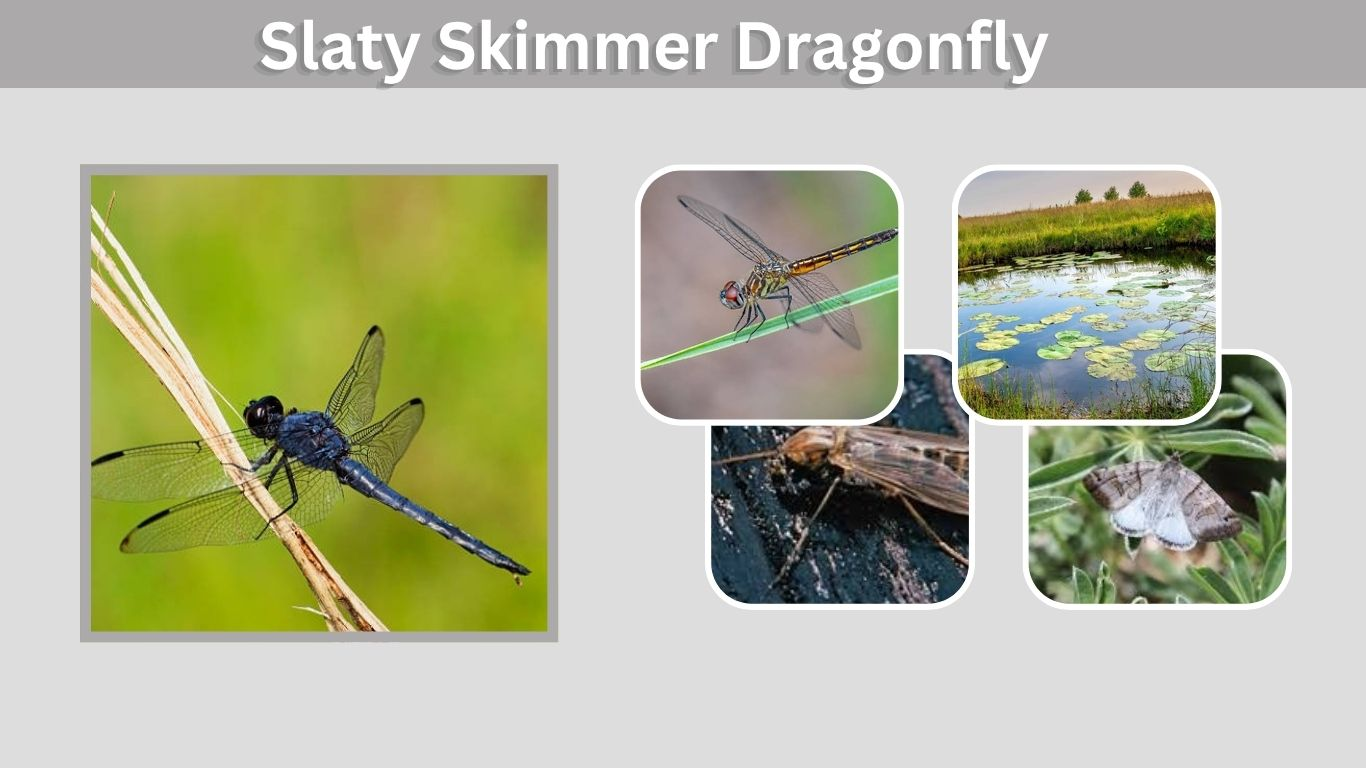
The Slaty Skimmer is a medium-sized dragonfly known for its dark slate-blue body, clear wings, and strong territorial behavior around ponds and wetlands. Males are especially easy to notice because of their powdery blue-gray color and dark face. This dragonfly is common in many parts of eastern North America and is often seen resting on vegetation, patrolling shorelines, or chasing other insects.
What Is a Slaty Skimmer?
The Slaty Skimmer is a dragonfly species in the skimmer family. Its scientific name is Libellula incesta. Like other skimmers, it has a broad body, strong wings, and a habit of perching in open view between short flights.
This dragonfly is often found near still or slow-moving water. It is a familiar species around ponds, lakes, marshes, quiet streams, and wetland edges. Adults are active during warm months and are often seen flying low over water or landing on reeds, sticks, rocks, and shoreline plants.
Why It Is Called Slaty Skimmer
The name “Slaty Skimmer” comes from the adult male’s color. Mature males develop a slate-blue or blue-gray coating over the body. This powdery color is called pruinescence and gives the dragonfly a smooth, dusty appearance.
The word “skimmer” refers to the dragonfly’s flight style. Skimmers often fly close to the water surface while hunting, patrolling, or defending territory.
Is the Slaty Skimmer Common?
The Slaty Skimmer is fairly common in suitable habitats, especially in the eastern United States and parts of nearby regions. It is not usually considered rare where clean ponds, lakes, and wetlands are available.
However, local abundance depends on water quality, shoreline vegetation, and the availability of aquatic habitat for its young.
Slaty Skimmer Identification
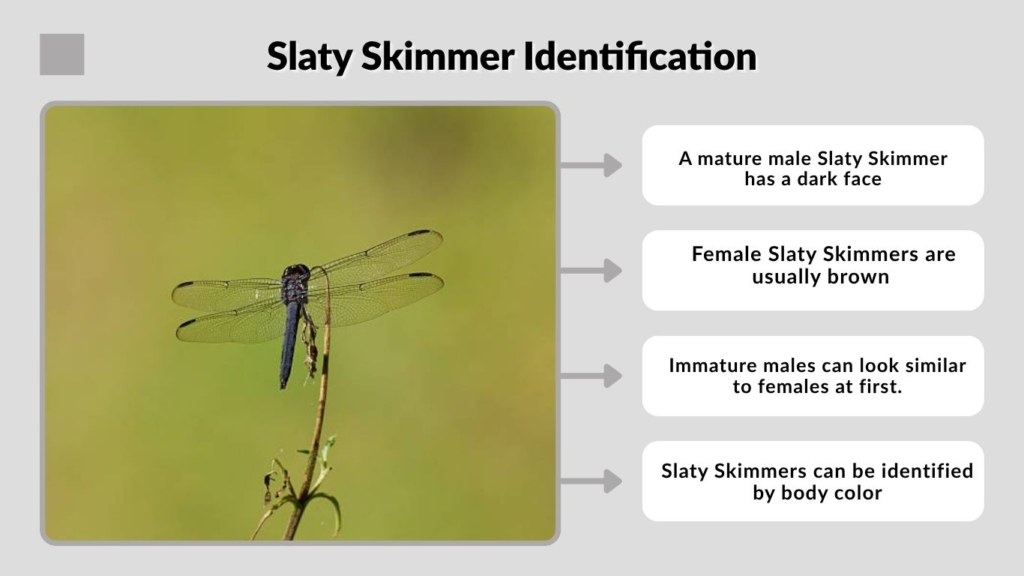
Slaty Skimmers can be identified by body color, wing pattern, face color, and behavior. Mature males are usually the easiest to recognize because they become dark bluish-gray across much of the body.
Females and young males look different. They are usually brownish or yellowish with darker markings before males develop the slate-blue color.
Male Slaty Skimmer
A mature male Slaty Skimmer has a dark face, dark thorax, and a blue-gray abdomen. The wings are mostly clear, but there may be small dark markings near the base or tips depending on age and lighting.
Males often perch in open places near the water. They may return to the same perch again and again while watching for females, rivals, or prey.
Female Slaty Skimmer
Female Slaty Skimmers are usually brown or yellow-brown rather than blue-gray. Their bodies may show pale side markings and darker stripes. This color helps them blend into vegetation and shoreline areas.
Females are less likely to patrol continuously over open water. They may visit the water to mate or lay eggs and then return to nearby vegetation.
Young Slaty Skimmers
Immature males can look similar to females at first. As they mature, they gradually darken and develop the slate-blue coating. This can make identification tricky because the same species may look very different depending on age and sex.
Slaty Skimmer Identification Table
The Slaty Skimmer may be confused with other dark or bluish dragonflies. The table below highlights useful identification clues.
| Feature | Slaty Skimmer | Great Blue Skimmer | Blue Dasher | Widow Skimmer |
|---|---|---|---|---|
| Male color | Slate-blue to blue-gray | Bright blue with pale face | Blue abdomen, striped thorax | Blue body with dark wing patches |
| Wing pattern | Mostly clear wings | Mostly clear wings | Clear wings with amber tint at times | Large dark wing bands |
| Face | Dark face on males | Pale or white face | Pale face | Darker markings, patterned wings |
| Size | Medium | Larger | Smaller | Medium |
| Common habitat | Ponds, lakes, marshes | Ponds, wetlands, slow water | Ponds, gardens, wetlands | Ponds, lakes, marshes |
Where Do Slaty Skimmers Live?
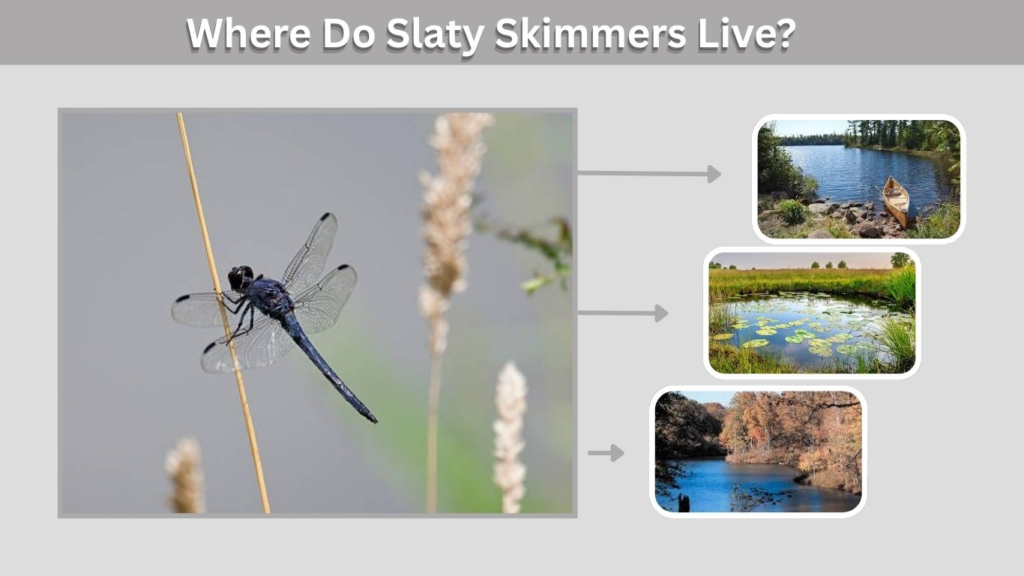
Slaty Skimmers live near water because their young develop underwater. Adults may travel away from the water to feed, but breeding activity happens around ponds, lakes, marshes, and slow streams.
They prefer areas with open water, sunny edges, and enough vegetation for perching and shelter. They are often seen in places where dragonflies can hunt insects and males can defend territories.
Common Habitats
Slaty Skimmers may be found around:
- Ponds
- Lakes
- Marshes
- Wetlands
- Slow-moving streams
- Swamps
- Reservoir edges
- Farm ponds
- Park ponds
- Vegetated shorelines
They are usually more common in sunny areas than in heavily shaded water. Open edges give them space to fly, hunt, and watch for other dragonflies.
Range of the Slaty Skimmer
The Slaty Skimmer is mainly found in eastern North America. It occurs in many eastern and central regions where suitable freshwater habitat is available.
In its range, it can be one of the more familiar pond dragonflies. Birdwatchers, gardeners, hikers, and nature photographers often notice males because of their strong color and perching behavior.
Slaty Skimmer Behavior
Slaty Skimmers are active, alert, and territorial dragonflies. Males often claim small areas near the water and defend them from other males. They may chase away rivals, patrol back and forth, then return to a favorite perch.
Their behavior makes them interesting to watch. A male may sit still for a few seconds, launch into a fast flight, chase another insect, and then land again in nearly the same place.
Perching Habits
Slaty Skimmers often perch on twigs, reeds, grasses, rocks, bare stems, or low branches. They usually choose open spots where they can see movement around them.
This habit makes them easier to photograph than dragonflies that fly continuously. If you scare one away, it may return to the same perch after a short flight.
Territorial Flights
Male Slaty Skimmers defend breeding territories near water. They may chase other males, inspect passing females, and drive away smaller insects or rival dragonflies.
Territorial behavior is strongest on warm sunny days when dragonflies are most active. Cloudy, cool, or windy weather may reduce their activity.
What Do Slaty Skimmers Eat?
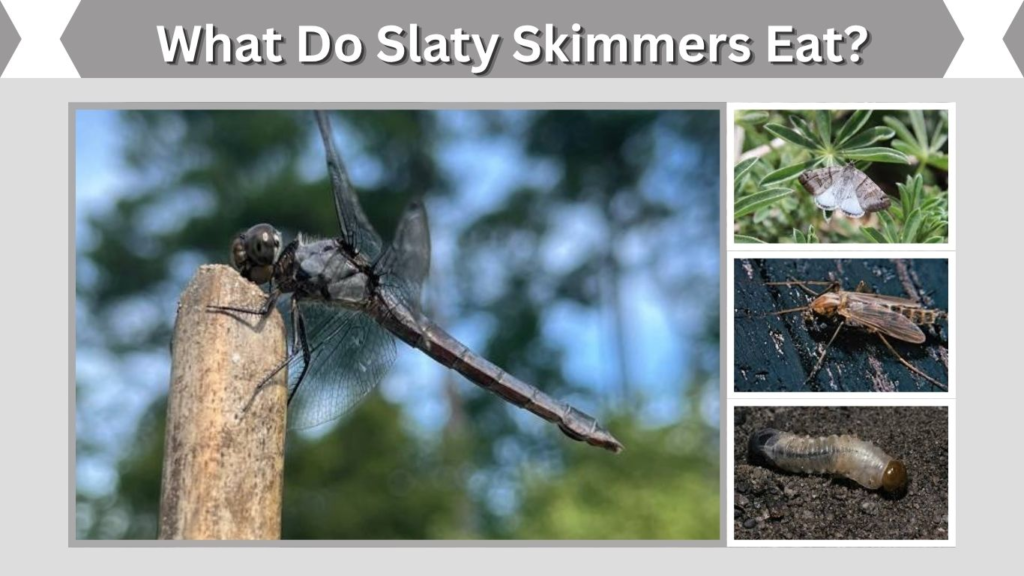
Slaty Skimmers are predators throughout their life cycle. Adults catch flying insects, while young nymphs feed underwater. This makes them important members of wetland food webs.
Adult dragonflies are skilled aerial hunters. They use strong eyesight, fast flight, and quick turns to capture prey in the air.
Adult Diet
Adult Slaty Skimmers may eat:
- Mosquitoes
- Gnats
- Flies
- Small moths
- Small beetles
- Midges
- Flying ants
- Other small flying insects
They help reduce insect populations naturally, although they should not be viewed as complete mosquito control.
Nymph Diet
Slaty Skimmer nymphs live underwater and feed on small aquatic animals. They may eat insect larvae, tiny crustaceans, mosquito larvae, and other small organisms.
As they grow larger, dragonfly nymphs can become strong predators in the pond ecosystem.
Slaty Skimmer Life Cycle
The Slaty Skimmer life cycle includes egg, nymph, and adult stages. Like all dragonflies, it begins life in water and later becomes a flying adult.
This life cycle connects the species strongly to freshwater habitats. Clean, stable water is important for successful development.
Egg Stage
Females lay eggs in or near water. They may deposit eggs by tapping the water surface with the abdomen during flight. The eggs sink or settle into suitable wet areas where they begin development.
The exact egg-laying behavior can be fast and easy to miss because the female may move quickly over the water.
Nymph Stage
After hatching, the young dragonfly lives underwater as a nymph. This stage can last much longer than the adult stage. The nymph grows by feeding on aquatic prey and molting several times.
Nymphs are hidden predators. They wait among plants, mud, or debris and catch small animals that pass nearby.
Adult Stage
When the nymph is ready to transform, it climbs out of the water onto a plant stem, rock, or other surface. The adult dragonfly emerges from the old nymph skin, expands its wings, and eventually flies away.
Freshly emerged adults are soft and pale at first. Their colors darken as they mature.
Slaty Skimmer Mating and Reproduction
Slaty Skimmer reproduction takes place near water. Males hold territories and watch for females. When a female enters the area, mating may occur quickly.
After mating, the female lays eggs in suitable water. Males may continue guarding the area or watching nearby while the female deposits eggs.
Mating Behavior
Dragonflies often mate in a wheel-like position. This behavior may happen on a perch or in flight. After mating, the female must find a good place to lay eggs.
Successful breeding depends on habitat quality. Ponds with vegetation, insects, and safe emergence sites support better dragonfly populations.
Egg-Laying Sites
Females usually choose calm or slow water. Too much disturbance, pollution, or lack of vegetation can reduce suitable egg-laying and nymph survival areas.
Healthy pond edges with native plants are beneficial for Slaty Skimmers and many other dragonflies.
Are Slaty Skimmers Dangerous?
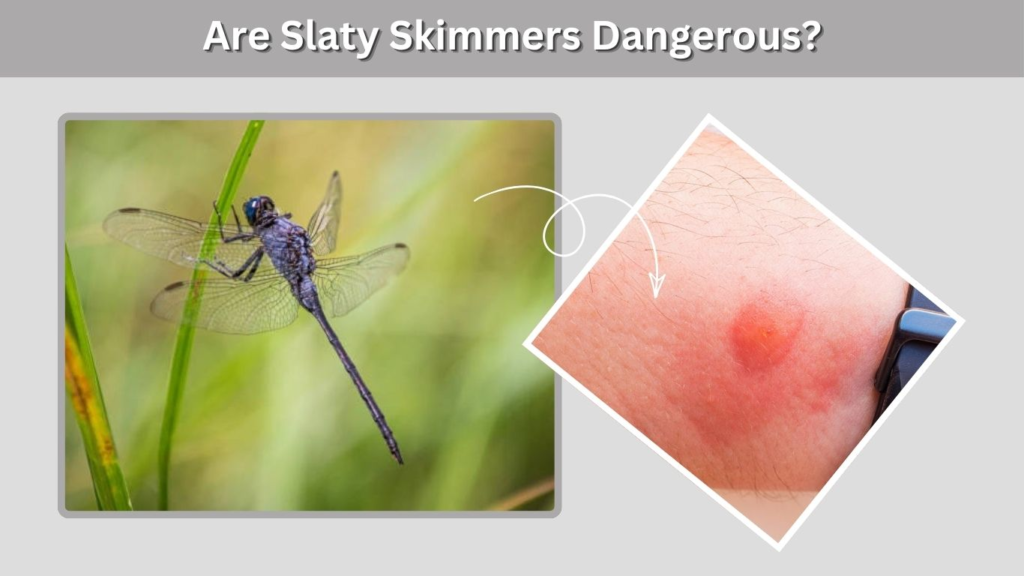
Slaty Skimmers are not dangerous to people. They do not sting, and they are not venomous. They may fly close to humans while hunting insects, but they are not attacking.
If handled roughly, a dragonfly may try to bite with its mouthparts, but this is rare and usually not serious. It is best to observe them without handling.
Do Slaty Skimmers Bite?
A Slaty Skimmer can bite only if captured and held, but it does not seek out people. The bite of a dragonfly is not medically important for most people.
They are better appreciated as beneficial insect predators and beautiful wetland animals.
Are They Good for Gardens?
Yes, Slaty Skimmers can be good around gardens, ponds, and yards because they eat small flying insects. A garden pond or natural wetland edge can attract dragonflies if it has clean water, plants, and safe perching spots.
Avoiding unnecessary pesticides also helps support dragonflies and other beneficial insects.
How to Attract Slaty Skimmers
If you want Slaty Skimmers near your property, the best way is to provide healthy freshwater habitat. Dragonflies need water for reproduction and open sunny areas for hunting.
A small wildlife pond can attract several dragonfly species if it is designed well.
Create Dragonfly-Friendly Habitat
To attract Slaty Skimmers:
- Provide a sunny pond or water feature
- Add native aquatic plants
- Keep some emergent stems for perching
- Avoid pesticides near water
- Keep water clean
- Provide rocks, sticks, or branches for resting
- Avoid adding too many fish to small ponds
- Leave some natural shoreline vegetation
Fish can eat dragonfly nymphs, so wildlife ponds with fewer fish often support more dragonflies.
Best Plants for Dragonfly Habitat
Native wetland plants, grasses, rushes, sedges, and shoreline flowers can improve dragonfly habitat. Emergent plants are especially useful because nymphs can climb them when they are ready to emerge as adults.
A mix of open water and plants is usually better than a bare pond.
Slaty Skimmer vs Similar Dragonflies
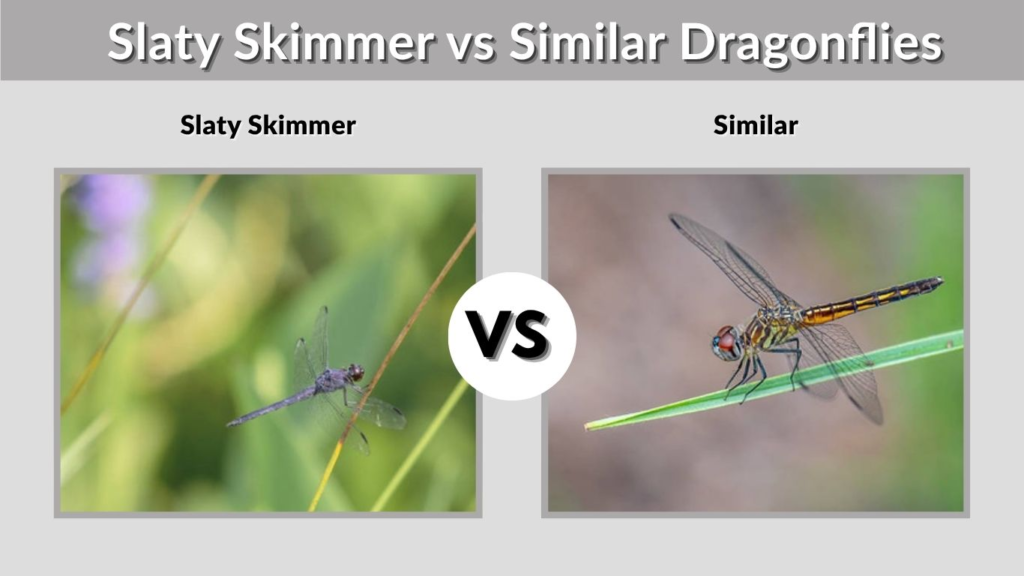
Slaty Skimmers can be confused with other blue or dark dragonflies. The best identification approach is to consider color, wing markings, size, behavior, and habitat.
Mature males are the easiest to identify because of their dark slate-blue body and mostly clear wings.
Slaty Skimmer vs Blue Dasher
The Blue Dasher is smaller and often has a blue abdomen with a more patterned thorax. It may also have a pale face and a different posture. Slaty Skimmers are larger, darker, and more evenly slate-blue in mature males.
Blue Dashers are common around ponds and gardens, so confusion is understandable.
Slaty Skimmer vs Great Blue Skimmer
The Great Blue Skimmer is generally larger and brighter blue. It often has a pale face, which helps separate it from the darker-faced Slaty Skimmer.
If the dragonfly looks large, bright, and pale-faced, it may be a Great Blue Skimmer rather than a Slaty Skimmer.
Slaty Skimmer vs Widow Skimmer
Widow Skimmers have obvious dark wing patches, making them easier to separate. Slaty Skimmers usually have mostly clear wings without large dark bands.
Wing pattern is one of the quickest clues in this comparison.
Fun Facts About the Slaty Skimmer
The Slaty Skimmer may be common, but it has many interesting features that make it worth noticing.
Interesting Facts
- Mature males develop a slate-blue coating.
- Females and young males are brownish or yellow-brown.
- They often return to the same perch.
- They hunt mosquitoes, flies, and other small insects.
- Their young live underwater as predators.
- They are most active on warm sunny days.
- They do not sting or harm people.
- They are helpful indicators of pond and wetland habitat.
FAQs
What does a Slaty Skimmer look like?
A mature male Slaty Skimmer is dark slate-blue or blue-gray with mostly clear wings and a dark face. Females and young males are usually brownish or yellow-brown with darker markings. They have a medium-sized dragonfly body and often perch near water.
Where do Slaty Skimmers live?
Slaty Skimmers live near ponds, lakes, marshes, wetlands, swamps, slow streams, and vegetated shorelines. They prefer sunny freshwater habitats with open water, perching places, and enough aquatic habitat for their nymphs to develop.
What do Slaty Skimmers eat?
Adult Slaty Skimmers eat flying insects such as mosquitoes, flies, gnats, midges, moths, and small beetles. Their underwater nymphs eat aquatic insect larvae, mosquito larvae, tiny crustaceans, and other small pond animals.
Are Slaty Skimmers dangerous?
No, Slaty Skimmers are not dangerous. They do not sting and are not venomous. They may fly close while hunting insects, but they are not attacking people. If handled roughly, they may try to bite, but this is uncommon and not serious.
How can I attract Slaty Skimmers?
You can attract Slaty Skimmers by providing a sunny pond or wetland area with clean water, native aquatic plants, emergent stems, and natural perches. Avoid pesticides near water and maintain healthy shoreline vegetation to support dragonflies.