
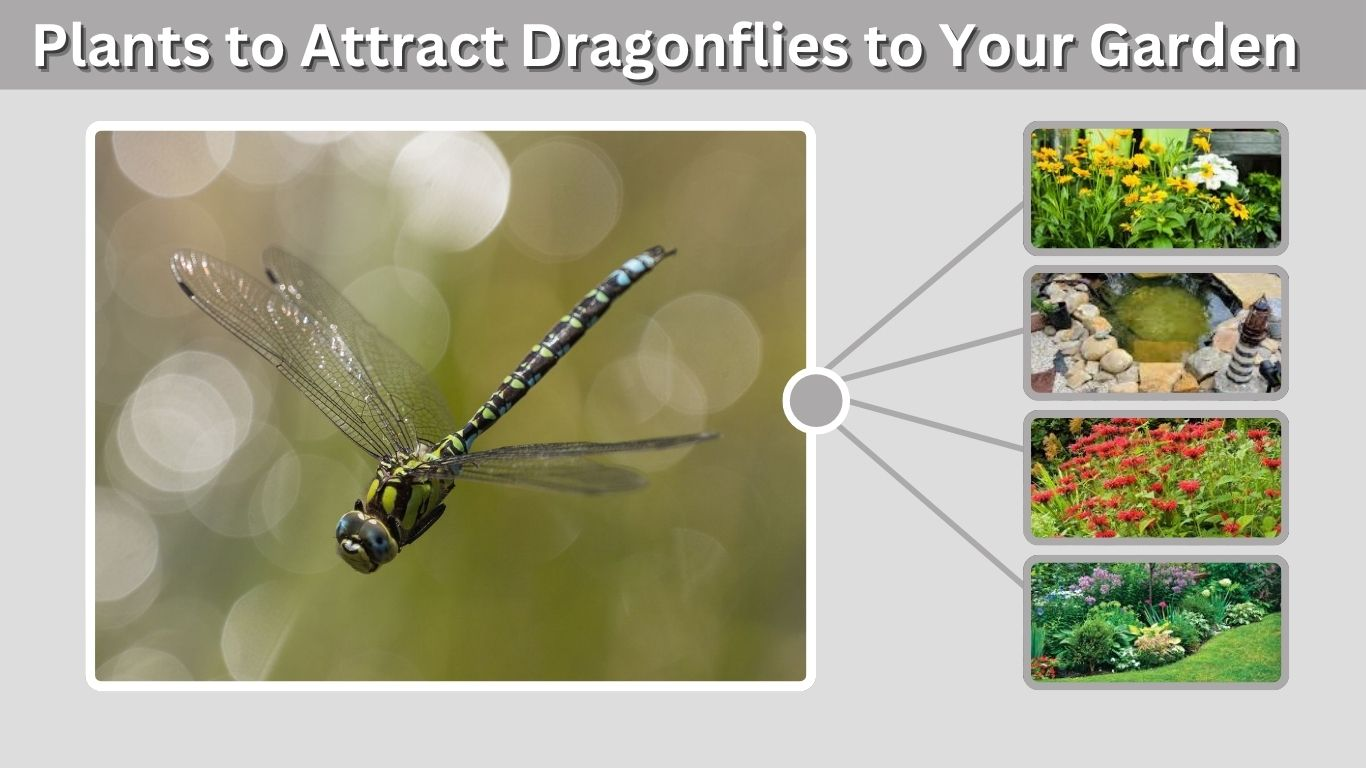
Dragonflies are beautiful, fast-flying insects that bring life, movement, and natural pest control to a garden. Many people want to attract them because they eat mosquitoes, gnats, flies, and other small insects. However, dragonflies are not attracted to flowers in the same way bees and butterflies are. They need water, shelter, perching spots, and plants that support a healthy insect habitat. The right mix of pond plants, marginal plants, grasses, and flowering plants can turn your yard into a dragonfly-friendly space.
Why Plants Matter for Dragonflies
Plants play an important role in attracting dragonflies, but not because dragonflies feed on nectar. Adult dragonflies are predators, and their young live in water. This means they need a habitat that supports both flying adults and aquatic nymphs.
A dragonfly-friendly garden usually includes water, sunny perches, vertical stems, hiding places, and plenty of small insects for food. Plants help create all of these conditions. Aquatic plants give young dragonflies places to hide. Tall stems give adults a place to rest and watch for prey. Flowering plants attract smaller insects, which then become food for dragonflies.
Dragonflies Need More Than Flowers
If you plant only colorful flowers, you may attract butterflies and bees, but you may not attract many dragonflies. Dragonflies are more interested in the structure of the habitat. They like open water, sunny areas, emergent plants, and places to land.
A pond or water feature is one of the best ways to attract dragonflies. Without water, dragonflies may visit briefly, but they are less likely to stay, mate, and lay eggs.
Best Aquatic Plants to Attract Dragonflies
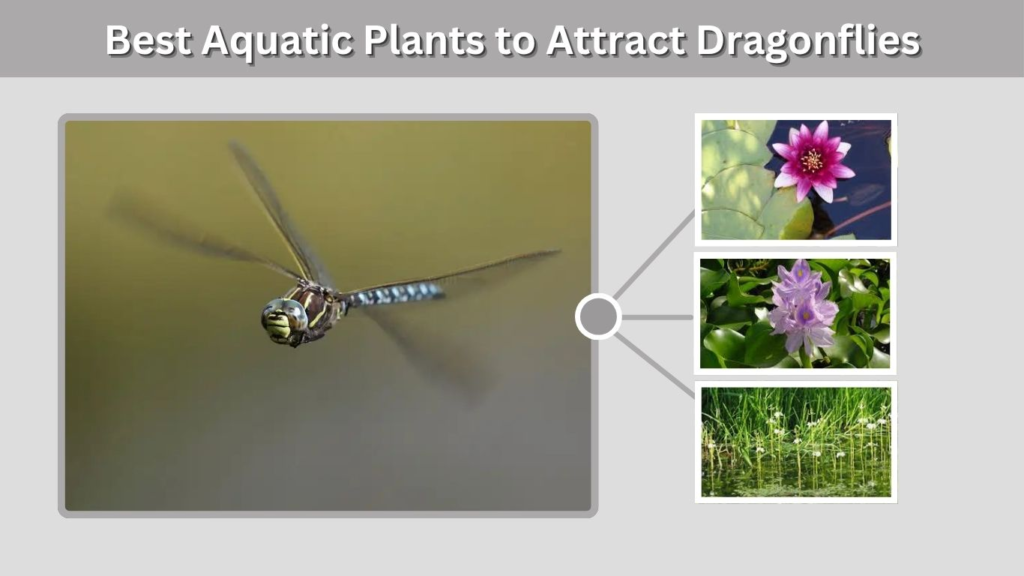
Aquatic plants are among the most important plants for dragonflies. Dragonfly nymphs live underwater, where they hunt mosquito larvae and other small aquatic animals. Plants give these nymphs protection from predators and places to climb when they are ready to become adults.
Water Lilies
Water lilies are excellent pond plants for dragonfly gardens. Their floating leaves provide shade and shelter for aquatic life. Adult dragonflies may also rest near them while hunting around the water surface.
Water lilies help balance the pond by reducing excess sunlight and giving small aquatic organisms a place to live. This creates a healthier habitat for dragonfly nymphs.
Water Hyacinth
Water hyacinth can provide floating cover and root structure in ponds. The hanging roots offer hiding places for small aquatic creatures, including young dragonflies. However, it can spread aggressively in some regions, so gardeners should check whether it is invasive locally before planting.
If water hyacinth is not suitable in your area, choose a native floating plant instead.
Submerged Oxygenating Plants
Submerged plants help keep pond water healthier by adding oxygen and providing underwater structure. These plants are useful for dragonfly nymphs because they create hiding places and hunting zones.
Good options may include hornwort, eelgrass, or other native oxygenating plants suitable for your region. Native plants are usually the safest choice because they support local wildlife without spreading out of control.
Best Emergent Plants for Dragonflies
Emergent plants grow in shallow water or along pond edges, with their stems rising above the surface. These are some of the most valuable plants for dragonflies because nymphs climb their stems before transforming into adults.
Cattails
Cattails are classic wetland plants that provide strong vertical stems. Dragonfly nymphs can climb these stems when they are ready to emerge from the water. Adult dragonflies may also perch on them while watching for prey.
Cattails can spread quickly, so they are best for larger ponds or controlled areas. In small gardens, use them carefully or choose smaller native alternatives.
Pickerelweed
Pickerelweed is a beautiful marginal plant with purple-blue flower spikes. It grows in shallow water and provides both structure and visual appeal. Its upright leaves and stems give dragonflies places to rest and emerge.
The flowers can also attract small insects, which may help create a natural food source for adult dragonflies.
Arrowhead
Arrowhead plants grow in shallow water and are known for their arrow-shaped leaves. They provide useful cover for pond edges and help create a natural wetland look.
These plants support the transition zone between water and land, which is important for dragonflies as they move from aquatic nymphs to flying adults.
Best Marginal Plants for Pond Edges
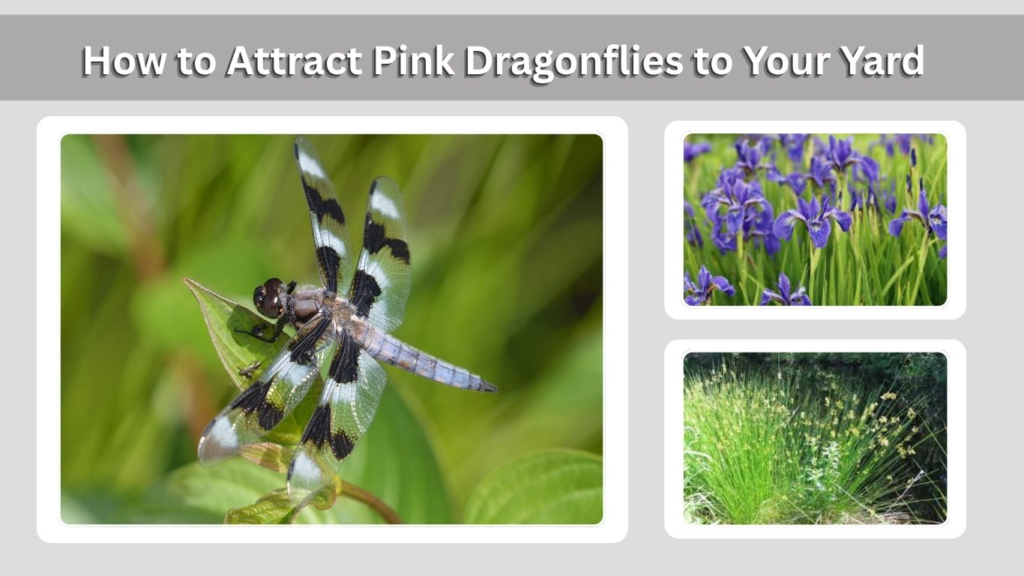
Marginal plants grow around the edges of ponds, streams, and wet areas. They help soften pond borders, prevent erosion, and create safe zones for insects and other wildlife.
Iris
Water-loving irises are excellent choices for pond edges. Their tall leaves provide vertical structure, while their flowers add seasonal color. Dragonflies often perch on upright leaves and stems, especially in sunny areas.
Choose native or non-invasive iris varieties whenever possible. Avoid aggressive species that may crowd out other pond plants.
Rushes
Rushes are simple, grass-like plants that grow well in wet soil and shallow water. Their upright stems are perfect perching sites for dragonflies. They also provide cover for emerging insects and pond wildlife.
Rushes work well in naturalistic water gardens because they blend easily with other wetland plants.
Sedges
Sedges are another good choice for pond margins. They form clumps of narrow leaves and help create a layered habitat. Dragonflies may use them for resting, hunting, and protection from wind.
Sedges are especially useful because many native species are available for different climates and soil conditions.
Flowering Plants That Support Dragonfly Food Sources
Dragonflies do not visit flowers for nectar, but flowering plants still help attract them indirectly. Flowers bring in small insects such as flies, gnats, moths, and mosquitoes. These insects become prey for adult dragonflies.
The best flowering plants for a dragonfly garden are those that attract a wide range of small insects while also supporting a healthy ecosystem.
| Plant Type | Why It Helps Dragonflies | Best Location |
| Water lilies | Provide floating cover and pond shade | Pond surface |
| Cattails | Offer strong emergence stems | Shallow pond edges |
| Pickerelweed | Adds flowers and upright structure | Pond margins |
| Rushes | Provide perching and shelter | Wet edges |
| Sedges | Create cover and natural habitat | Pond borders |
| Black-eyed Susan | Attracts small flying insects | Sunny garden beds |
| Coneflower | Supports pollinators and prey insects | Near pond edges |
| Joe-Pye weed | Attracts many insects | Moist sunny areas |
Black-Eyed Susan
Black-eyed Susan is a bright, easy-to-grow flower that attracts pollinators and small insects. While dragonflies do not eat the flower, they may hunt around the insects it attracts.
Plant black-eyed Susan near a pond or water garden to create a lively feeding area for dragonflies.
Coneflower
Coneflowers attract bees, butterflies, flies, and other insects. This helps increase insect activity in the garden, which may draw hunting dragonflies.
Coneflowers also grow well in sunny areas, and dragonflies usually prefer warm, open, sunny spaces.
Joe-Pye Weed
Joe-Pye weed is especially useful in moist garden areas. Its tall stems and large flower clusters attract many small insects. It also adds height, which dragonflies may use for hunting and resting nearby.
This plant works well near ponds, rain gardens, or damp borders.
Grasses and Tall Plants for Perching
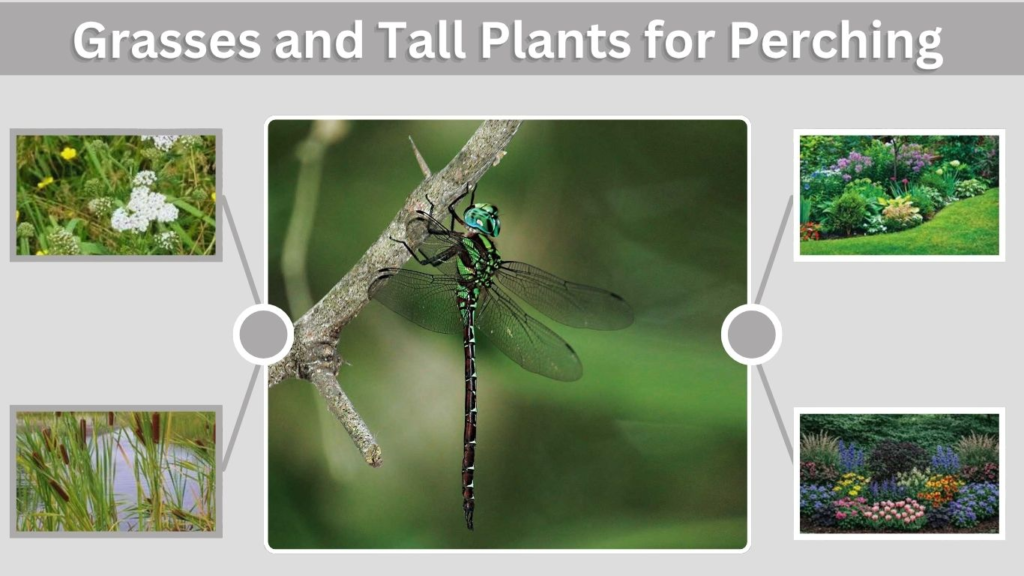
Dragonflies spend a lot of time perching. They rest, warm themselves in the sun, watch for prey, and defend territories from high points. Tall grasses and upright plants are perfect for this.
Native Grasses
Native grasses provide natural perches and help create a layered garden structure. Their stems move with the wind but are often strong enough for dragonflies to land on.
Good choices may include switchgrass, little bluestem, or other native grasses suited to your region.
Reeds
Reeds can be useful near ponds and wetlands because they provide tall vertical stems. Dragonflies may perch on them and use them as lookout points.
Like cattails, some reeds can spread quickly, so choose carefully and avoid invasive species.
Tall Wildflowers
Tall wildflowers add both food-web value and perching structure. Plants like Joe-Pye weed, milkweed, ironweed, and goldenrod may attract insects while also offering stems for dragonflies to rest on.
How to Design a Dragonfly-Friendly Garden
Choosing the right plants is only part of the process. The way you arrange them matters too. Dragonflies need open space for flying, sunny spots for warming, and water for breeding.
Create a Pond or Water Feature
A pond is the most important feature if you want dragonflies to stay. Even a small pond can attract dragonflies if it has clean water, plants, and shallow edges.
For best results:
- Include both shallow and deeper areas
- Add aquatic and marginal plants
- Keep part of the pond sunny
- Avoid strong fountains that disturb the surface too much
- Provide rocks, stems, or sticks for perching
- Avoid using pesticides near the pond
Use Layers of Plants
A good dragonfly habitat has layers. Use submerged plants in the water, floating plants on the surface, emergent plants along the edge, and flowering plants nearby. This creates a complete habitat for both nymphs and adults.
Keep Some Open Water
Plants are important, but dragonflies also need open water. Do not cover the entire pond surface with floating plants. Leave open areas where dragonflies can fly, mate, and lay eggs.
Plants to Avoid in a Dragonfly Garden
Not every plant is a good choice. Some plants spread aggressively, block open water, or reduce habitat quality. Others may require heavy chemical treatment, which can harm the insects dragonflies depend on.
Avoid plants that are invasive in your region. Also avoid plants that quickly cover the entire pond surface. Too much plant growth can reduce oxygen, trap debris, and make the water less suitable for dragonfly nymphs.
Be Careful With Aggressive Plants
Use caution with:
- Invasive water hyacinth
- Aggressive reeds
- Overgrown cattails
- Non-native aquatic plants
- Plants treated with pesticides
- Dense floating plants that cover the whole pond
Before adding pond plants, check local guidance to make sure they are safe and suitable for your area.
Other Tips to Attract Dragonflies
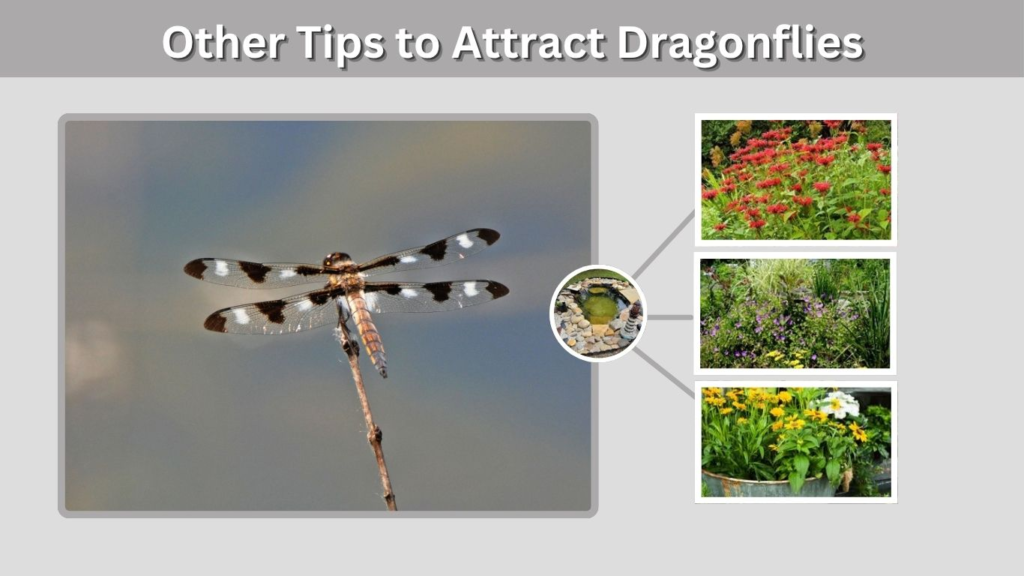
Plants work best when combined with good habitat practices. Dragonflies are sensitive to habitat quality, especially during their aquatic stage.
Make Your Yard More Dragonfly-Friendly
Try these extra tips:
- Avoid chemical pesticides
- Keep water clean
- Add flat rocks for sunning
- Grow native plants
- Leave some natural edges around the pond
- Reduce mosquito breeding in stagnant containers
- Avoid adding too many fish, since fish may eat dragonfly nymphs
- Provide sunny, wind-protected areas
A natural-looking pond with plants and insects is usually better than a perfectly clean, sterile water feature.
FAQs
What plants attract dragonflies the most?
The best plants for dragonflies are aquatic and marginal plants such as water lilies, cattails, pickerelweed, rushes, sedges, and irises. These plants provide shelter, perching spots, and emergence stems. Flowering plants nearby can also attract small insects that dragonflies eat.
Do dragonflies like flowers?
Dragonflies do not feed on nectar like bees or butterflies, so flowers do not attract them directly. However, flowers attract small insects, and dragonflies may come to hunt those insects. Flowers are useful when combined with water, pond plants, and sunny perching areas.
Do I need a pond to attract dragonflies?
A pond is the best way to attract dragonflies because their young live in water. Without water, dragonflies may only visit briefly while hunting. A small pond with native aquatic plants, shallow edges, and sunny perches can make your yard much more attractive to them.
Are water lilies good for dragonflies?
Yes, water lilies can be good for dragonflies. They provide floating cover, shade, and habitat for pond life. They also help create a balanced water environment. However, leave some open water so dragonflies have space to fly, mate, and lay eggs.
What should I avoid in a dragonfly garden?
Avoid pesticides, invasive pond plants, fully covered water surfaces, and too many fish. Pesticides reduce the insects dragonflies eat and may harm aquatic life. Fish can eat dragonfly nymphs, while invasive plants can damage the balance of the pond habitat.