
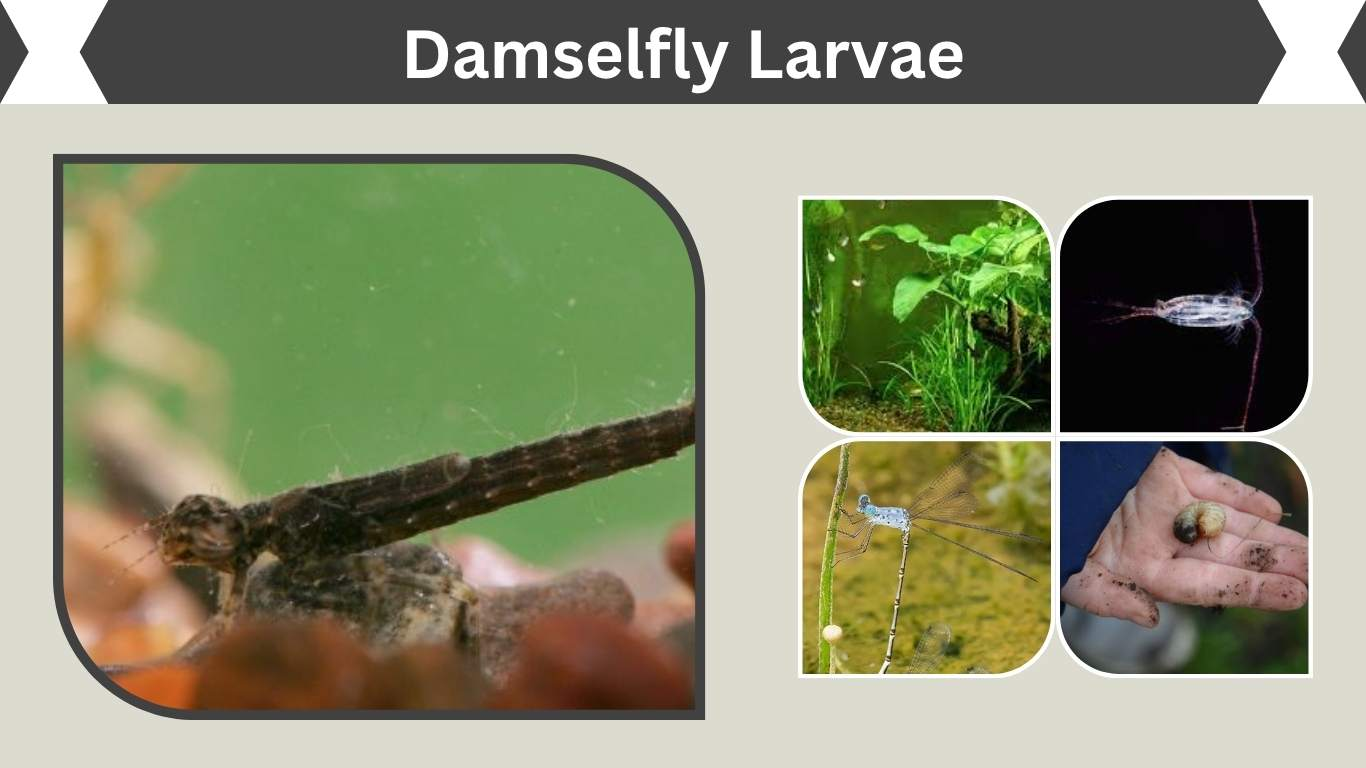
Damselfly larvae are fascinating aquatic insects that spend most of their lives underwater before transforming into delicate flying adults. These larvae are important predators in freshwater ecosystems and are commonly found in ponds, marshes, lakes, and slow-moving streams. Their slender bodies, tail gills, and hunting behavior make them unique among aquatic insects.
Many people confuse damselfly larvae with dragonfly larvae, but they have several noticeable differences in body shape, movement, and habitat preferences. Understanding their identification, diet, habitat, and life cycle helps reveal their importance in maintaining healthy freshwater environments.
What Are Damselfly Larvae?
Damselfly larvae are the immature aquatic stage of damselflies belonging to the order Odonata and suborder Zygoptera. They hatch from eggs laid in water and remain underwater for months or even years before becoming adults. During this stage, they act as active predators and play a major role in aquatic food chains.
Scientific Classification
Damselfly larvae belong to the insect order Odonata, which also includes dragonflies. They are classified under the suborder Zygoptera, which contains all damselfly species. These aquatic insects are closely related to dragonflies but differ in body structure, movement, and breathing methods.
Damselfly Larvae vs Nymphs
The terms “larvae” and “nymphs” are often used interchangeably when discussing damselflies. Scientifically, damselflies undergo incomplete metamorphosis, so the immature stage is technically called a nymph. However, many guides and articles still use the word larvae because it is easier for general readers to understand.
Damselfly Larvae Identification
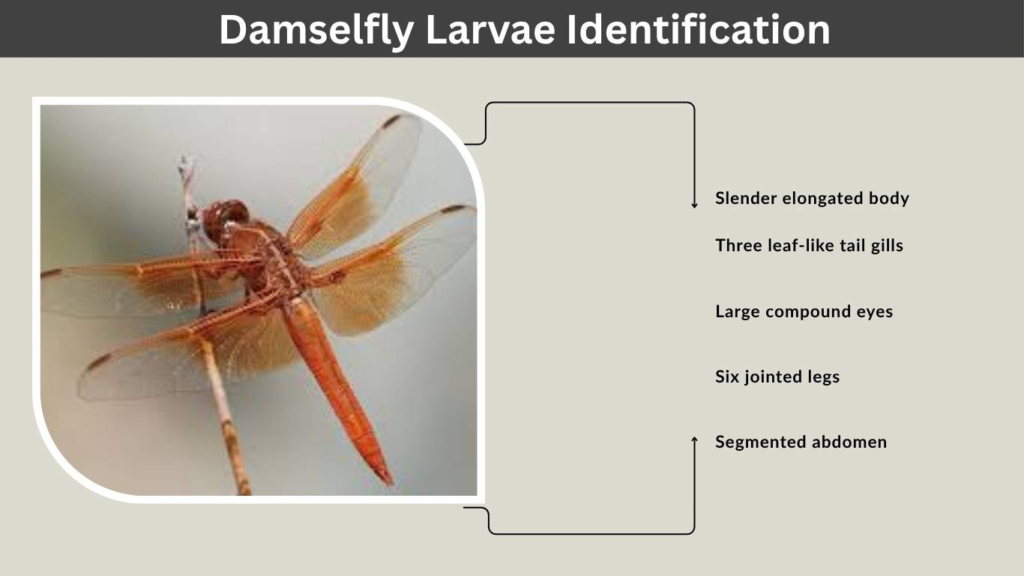
Damselfly larvae are easy to recognize once you know their major physical characteristics. Their slender bodies and external tail gills make them different from many other aquatic insects found in freshwater habitats.
Physical Characteristics
- Slender elongated body
- Three leaf-like tail gills
- Large compound eyes
- Six jointed legs
- Segmented abdomen
- Brown, green, or dark body coloration
Damselfly Larvae Size
Most damselfly larvae are relatively small compared to dragonfly larvae. Depending on the species, they usually grow between 15 and 40 millimeters in length. Younger larvae remain tiny during early instars, while mature individuals become larger before emerging as adults.
Tail Gills and Breathing
One of the most distinctive features of damselfly larvae is their three external tail gills. These gills help them absorb oxygen directly from the water while also assisting with swimming. The tail gills move gently as the larvae rest among aquatic plants and underwater debris.
Damselfly Larvae Habitat
Damselfly larvae prefer calm freshwater habitats with abundant vegetation and stable environmental conditions. Their underwater environment provides shelter, food, and protection from predators throughout their development.
Damselfly Larvae in Water
These larvae commonly live in ponds, lakes, marshes, wetlands, canals, and slow-moving streams. They usually remain hidden among submerged plants, rocks, fallen leaves, or muddy bottoms where they can ambush prey and avoid larger predators.
Preferred Living Conditions
- Clean freshwater habitats
- Moderate dissolved oxygen levels
- Dense aquatic vegetation
- Slow-moving or still water
- Warm seasonal temperatures
- Low pollution levels
Damselfly Larvae in Aquarium
Damselfly larvae sometimes appear in aquariums after aquatic plants or pond water are introduced into fish tanks. Although they may look harmless, they are predators capable of attacking shrimp, fish fry, and other tiny aquatic animals. Aquarists often remove them to protect smaller tank inhabitants.
What Do Damselfly Larvae Eat?
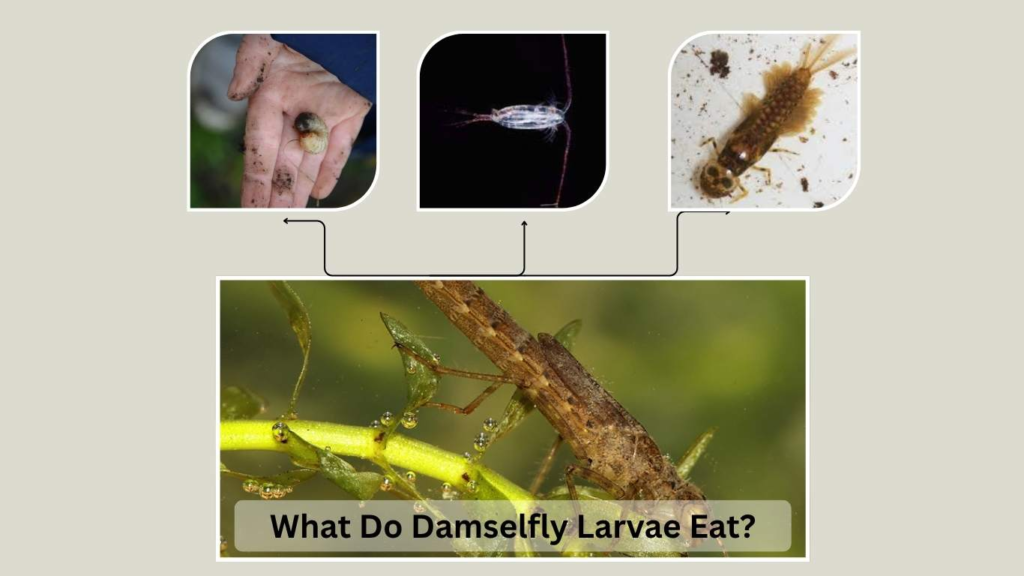
Damselfly larvae are carnivorous predators that feed on a wide range of tiny aquatic organisms. Their hunting behavior helps control insect populations in freshwater ecosystems.
Damselfly Larvae Diet
- Mosquito larvae
- Copepods
- Small aquatic insects
- Tiny crustaceans
- Worms and larvae
- Occasionally small tadpoles
Hunting and Feeding Behavior
Damselfly larvae are ambush predators that wait quietly among aquatic vegetation before attacking prey. They use a specialized extendable mouthpart to grab nearby animals with remarkable speed. Their excellent vision and quick reflexes make them highly effective hunters in ponds and wetlands.
Role in the Food Web
These larvae occupy an important position in freshwater food webs. They help control mosquito populations while also serving as prey for fish, frogs, birds, and larger aquatic insects. Because of this balance, damselfly larvae contribute significantly to healthy aquatic ecosystems.
Damselfly Larvae Life Cycle
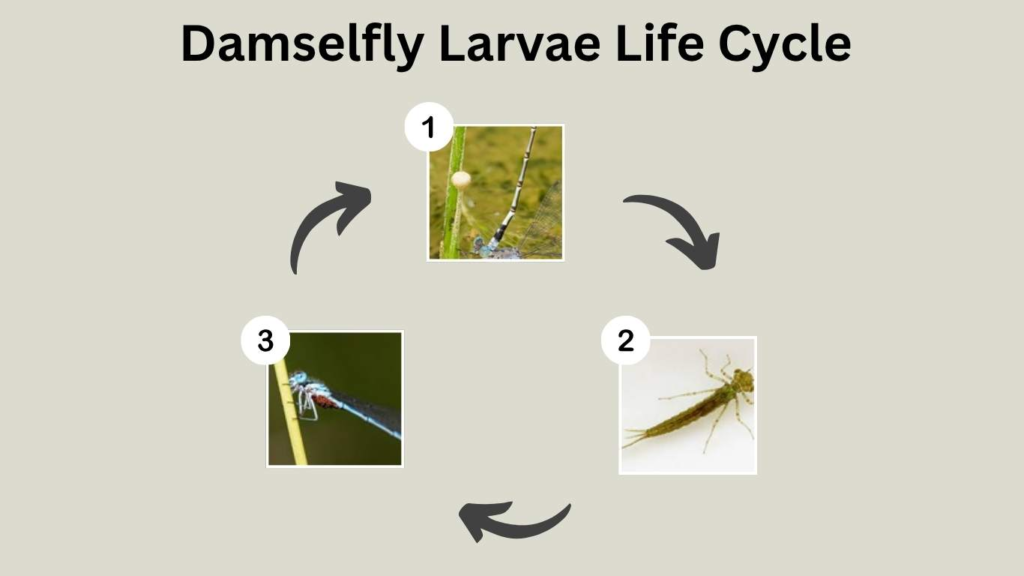
Damselflies spend the majority of their lives underwater as larvae before transforming into winged adults. Their life cycle includes several fascinating developmental stages that occur in freshwater habitats.
Egg Stage
Female damselflies lay eggs inside aquatic plants or directly in freshwater environments. The eggs remain underwater until they hatch into tiny larvae. Depending on species and environmental conditions, this process may take several days or weeks.
Larval Development
After hatching, damselfly larvae begin feeding immediately and pass through several growth stages called instars. During each instar, the larvae molt their outer skin to allow further growth. This underwater development stage can last from a few months to more than a year depending on the species and habitat conditions.
Emergence Into Adults
When damselfly larvae complete their final growth stage, they leave the water and climb onto nearby plants, rocks, or reeds. Their outer skin splits open, allowing the adult damselfly to emerge slowly. After expanding and drying its wings, the newly emerged adult takes its first flight above the freshwater habitat.
Damselfly Larvae Behavior
Damselfly larvae display several fascinating behaviors that help them survive underwater. Their movement, hunting techniques, and defensive strategies allow them to thrive in ponds, wetlands, and slow-moving streams where predators and competition are common.
Swimming and Movement
Damselfly larvae move through the water using fish-like body motions combined with gentle tail movements. They can swim quickly when escaping predators but usually prefer crawling along aquatic plants and submerged surfaces. Their slender bodies help them move easily through dense underwater vegetation while searching for prey.
Predatory Behavior
- Ambush small aquatic animals
- Remain hidden among plants
- Attack prey with extendable mouthparts
- Use quick reflexes for hunting
- Feed mostly during active periods
Molting and Growth
As damselfly larvae grow, they repeatedly shed their outer skin through a process called molting. Each molt marks a new developmental stage known as an instar. During this period, the larvae become larger, stronger, and better hunters before finally transforming into adult damselflies near the water surface.
Damselfly Larvae vs Dragonfly Larvae
Damselfly larvae are often confused with dragonfly larvae because both belong to the order Odonata. However, they differ in body structure, movement, breathing systems, and habitat preferences. Learning these differences makes identification much easier for nature enthusiasts and aquarium owners.
Main Differences
| Feature | Damselfly Larvae | Dragonfly Larvae |
| Body Shape | Slender and narrow | Thick and stocky |
| Gills | External tail gills | Internal gills |
| Swimming Style | Fish-like movement | Jet propulsion |
| Habitat | Vegetated water | Various freshwater habitats |
| Appearance | Delicate body structure | Robust body structure |
Damselfly Larvae vs Mayfly Larvae
Damselfly larvae also resemble mayfly larvae in some freshwater habitats, but several differences exist between them. Damselfly larvae have larger eyes, stronger legs, and leaf-like tail gills, while mayfly larvae usually possess thin thread-like tails and flatter bodies adapted for flowing water conditions.
Predators and Threats
Damselfly larvae face numerous natural threats during their underwater life. Their survival depends heavily on water quality, habitat stability, and protection from larger predators found in freshwater ecosystems.
What Eats Damselfly Larvae?
- Fish
- Frogs
- Water beetles
- Larger aquatic insects
- Birds near shallow water
- Salamanders and tadpoles
Pollution and Habitat Loss
Damselfly larvae are sensitive to polluted water and environmental disturbances. Chemicals, excessive nitrate levels, and habitat destruction can reduce their populations significantly. Because of this sensitivity, scientists often study damselfly larvae as indicators of freshwater ecosystem health and water quality conditions.
How to Get Rid of Damselfly Larvae in Aquarium
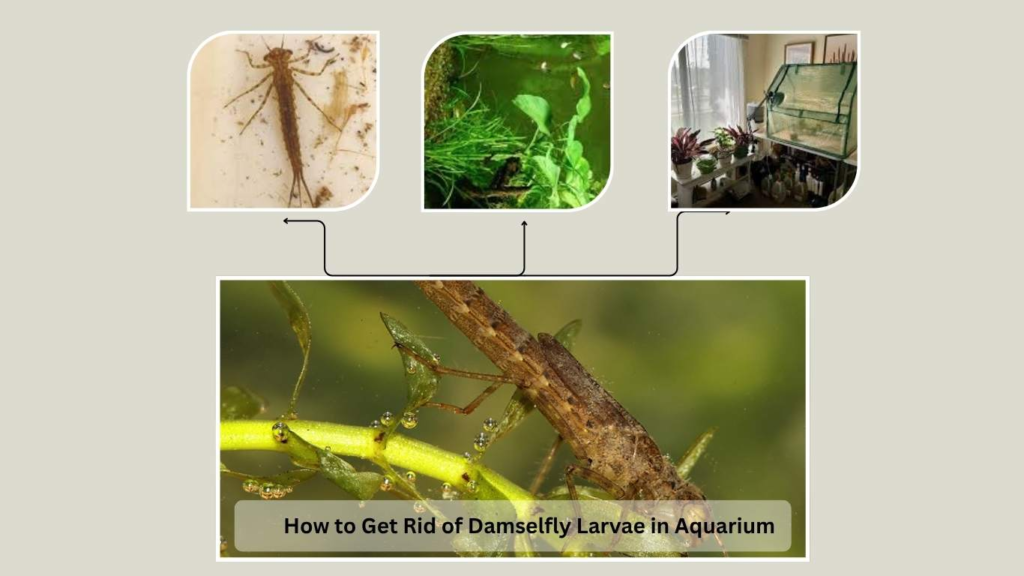
Although damselfly larvae are beneficial in nature, they can become a problem inside aquariums because they prey on shrimp, tiny fish, and fry. Removing them quickly helps protect aquarium animals from unexpected attacks.
Manual Removal Methods
- Remove larvae using a net
- Inspect aquatic plants carefully
- Clean gravel and decorations
- Change aquarium water regularly
- Separate infected plants before use
Prevention Tips
Aquarium owners can prevent damselfly larvae infestations by rinsing aquatic plants thoroughly before placing them into tanks. Avoid adding untreated pond water or outdoor decorations directly into aquariums. Regular tank inspections also help identify larvae before they grow large enough to threaten fish and shrimp populations.
Interesting Facts About Damselfly Larvae
Damselfly larvae possess several unusual adaptations that help them survive underwater for long periods before becoming adults.
- Most of their lifespan is spent underwater
- Tail gills help with breathing and swimming
- Some species remain larvae for more than a year
- They are important mosquito predators
- Their extendable jaws strike prey rapidly
- They play a major role in freshwater food webs
FAQs
What do damselfly larvae eat?
Damselfly larvae mainly eat mosquito larvae, copepods, small aquatic insects, worms, and tiny crustaceans. Larger species may occasionally capture tadpoles or very small fish fry in freshwater habitats.
Are damselfly larvae harmful to fish?
Damselfly larvae can harm very small fish, shrimp, and fry in aquariums because they are predatory insects. Larger fish are usually not affected by them.
How long do damselfly larvae live underwater?
Depending on the species and environmental conditions, damselfly larvae may remain underwater from several months to more than one year before transforming into adults.
What is the difference between damselfly and dragonfly larvae?
Damselfly larvae are slender with external tail gills, while dragonfly larvae are stockier and breathe using internal gills. Their swimming styles and body shapes are also different.
Can damselfly larvae survive in aquariums?
Yes, damselfly larvae can survive in aquariums if water conditions are suitable. However, they may prey on shrimp, fish fry, and other small aquatic animals.