
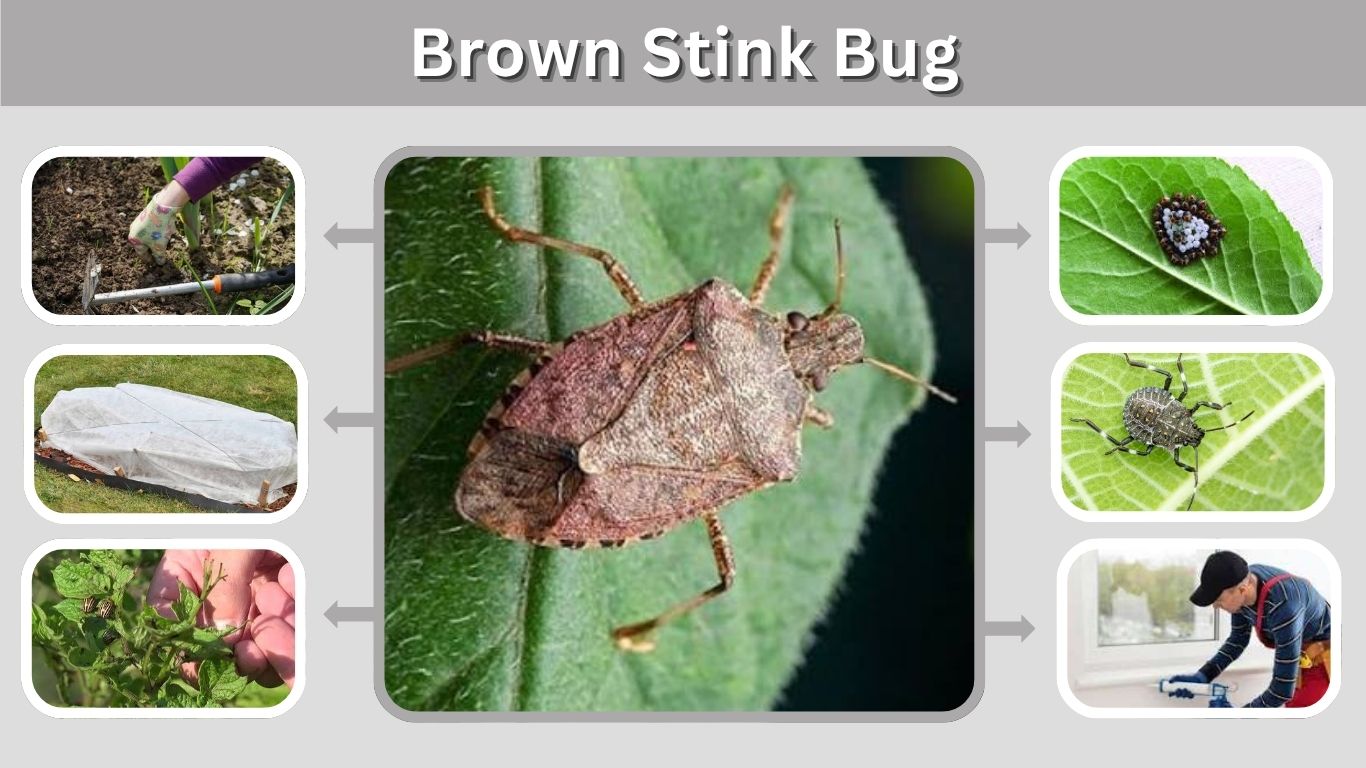
The brown stink bug is a common plant-feeding insect recognized by its shield-shaped body, mottled brown coloration, and strong defensive odor. One well-known North American species is the brown stink bug, Euschistus servus, although several other stink bugs can also appear brown and look very similar. These insects commonly feed on corn, soybeans, tomatoes, fruits, seeds, and other crops. They are not considered dangerous to people, but large populations can damage gardens and agricultural plants. Here is how to identify brown stink bugs, their eggs and nymphs, life cycle, bite risk, habitat, and control.
What Is a Brown Stink Bug?
The common brown stink bug, Euschistus servus, belongs to the family Pentatomidae. Like other stink bugs, it has a broad, shield-shaped body and piercing-sucking mouthparts used to remove fluids from plants. Its brown coloration provides excellent camouflage on bark, dry leaves, stems, and soil. Adults may vary from light brown to dark brown depending on age, individual variation, and environmental conditions.
Brown Stink Bug Identification
- Scientific name: Euschistus servus
- Family: Pentatomidae
- Order: Hemiptera
- Color: Light brown to dark brown
- Body shape: Broad and shield-shaped
- Size: Usually about 10–15 mm long
- Antennae: Long and segmented
- Wings: Fully developed in adults
- Mouthparts: Piercing-sucking beak
- Diet: Fruits, seeds, stems, and other plant tissues
- Defense: Releases a strong odor when disturbed
Brown stink bugs may have small dark spots or subtle markings across the upper body, but coloration can vary.
Brown Stink Bug vs Brown Marmorated Stink Bug
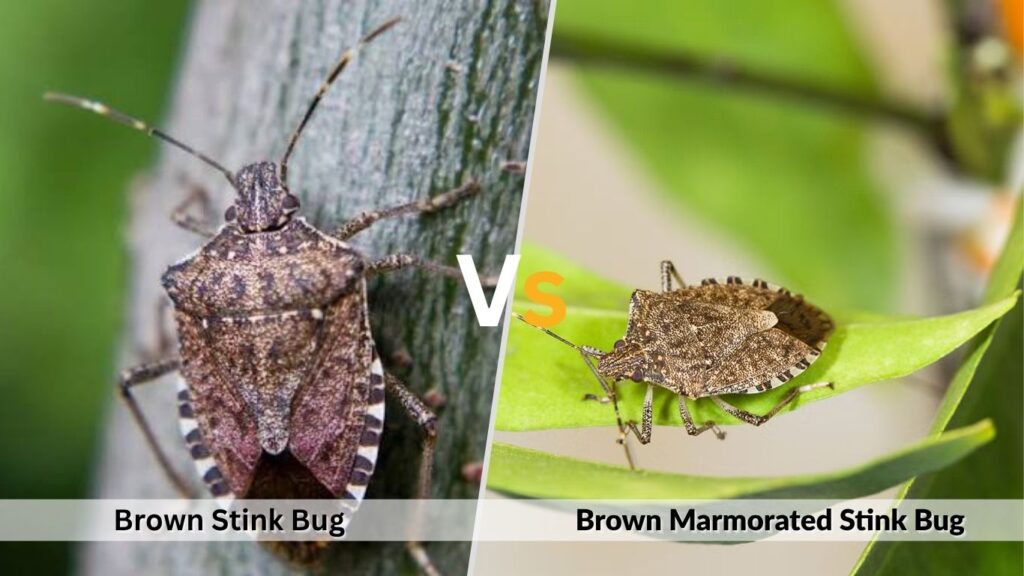
The brown stink bug vs brown marmorated stink bug comparison is important because these insects are frequently confused. The brown marmorated stink bug (Halyomorpha halys) is an invasive species in North America, while Euschistus servus is a native brown stink bug found across much of the continent.
Key Differences
Brown stink bug (Euschistus servus):
- Usually more uniformly brown
- Native to North America
- May have pointed shoulder areas
- Lacks the strongly contrasting banded appearance of brown marmorated stink bugs
- Common in fields and agricultural crops
Brown marmorated stink bug:
- Mottled or marbled brown appearance
- Has distinctive pale bands on the antennae
- Often has alternating light and dark markings along the abdomen
- Frequently enters homes in large numbers
- Originally native to Asia
Looking closely at the antennae and abdominal edges is often more useful than relying on brown coloration alone.
What Does a Brown Stink Bug Nymph Look Like?
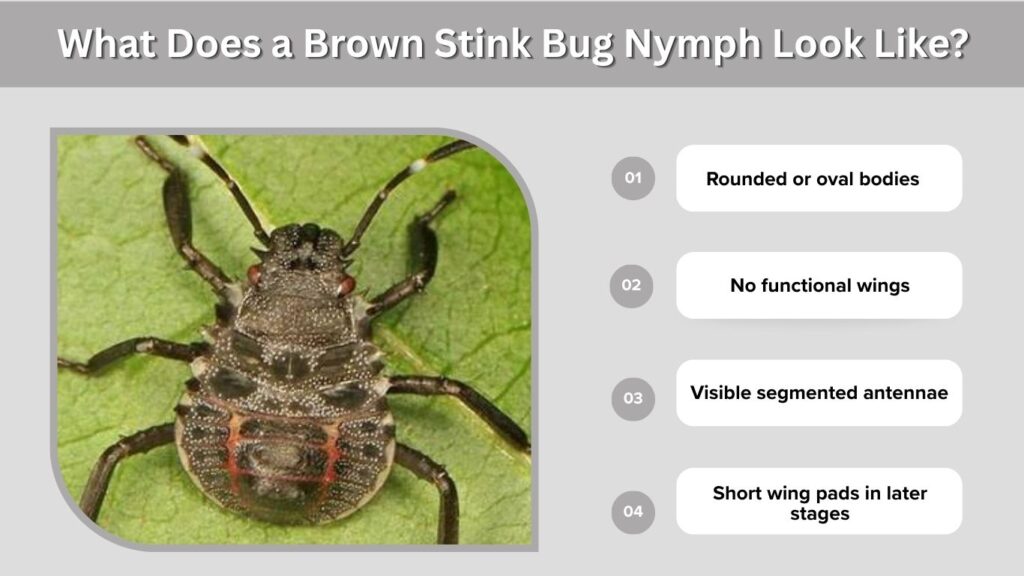
A brown stink bug nymph does not necessarily look like the adult. Newly hatched nymphs are smaller, rounder, and lack fully developed wings. Their color can range from dark brown or black to lighter brown, sometimes with contrasting markings.
As they grow, they molt several times and gradually become more adult-like.
Brown Stink Bug Nymph Identification
Young nymphs typically have:
- Rounded or oval bodies
- Dark brown, black, or mottled coloration
- No functional wings
- Visible segmented antennae
- Short wing pads in later stages
- Shield-like shape becoming more obvious with age
- Piercing-sucking mouthparts
There is no true brown stink bug larva. Stink bugs develop through incomplete metamorphosis, so the immature stage is properly called a nymph.
Brown Stink Bug Eggs
Brown stink bug eggs are usually laid in groups on leaves and other plant surfaces. Females select host plants that can provide food for newly hatched nymphs.
Egg masses may be found on the undersides of leaves, where they receive some protection from direct sunlight and predators.
What Do Brown Stink Bug Eggs Look Like?
Typical characteristics include:
- Small barrel-shaped eggs
- Laid in clusters
- Pale, cream, yellowish, or light-colored when fresh
- Usually attached firmly to leaves
- Darken as development progresses
After hatching, young nymphs may remain near the egg mass briefly before spreading onto surrounding vegetation to feed.
Brown Stink Bug Life Cycle
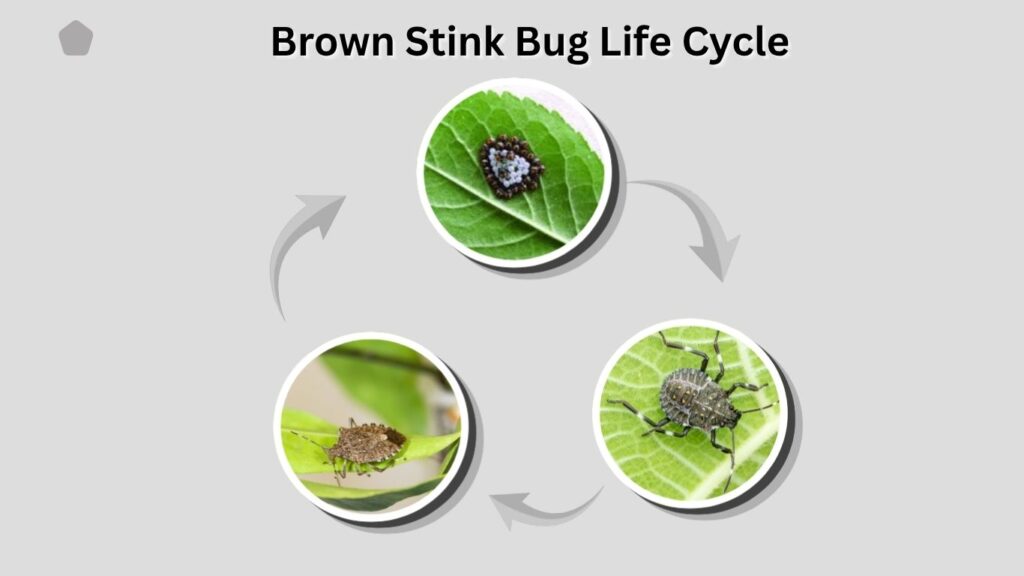
The life cycle of a brown stink bug involves three basic stages: egg, nymph, and adult. There is no caterpillar-like larval stage and no pupa.
Nymphs undergo several molts before becoming mature adults. Temperature, food availability, and climate influence how quickly development occurs.
Brown Stink Bug Life Stages
- Egg – Females deposit clusters on suitable plants.
- Early nymph – Newly hatched bugs remain small and wingless.
- Middle nymph stages – Nymphs grow and molt repeatedly.
- Late nymph – Wing pads become increasingly visible.
- Adult – Fully developed wings allow the stink bug to fly and reproduce.
In warmer regions, more than one generation may develop within a year.
Adults may survive colder periods in sheltered locations before becoming active again when temperatures increase.
What Do Brown Stink Bugs Eat?
Brown stink bugs are primarily plant feeders. They insert their piercing mouthparts into developing seeds, fruits, stems, and other tissues and remove fluids.
They can feed on numerous cultivated and wild plants, making them important agricultural pests in some regions.
Common Food and Host Plants
Brown stink bugs may feed on:
- Corn
- Soybeans
- Cotton
- Tomatoes
- Peaches
- Beans
- Okra
- Pecans
- Various fruits
- Seeds
- Wild weeds and grasses
They often move between different host plants as crops mature during the growing season.
Brown Stink Bug Damage
Brown stink bug feeding can reduce crop quality because the insects puncture developing plant tissues. Damage is especially noticeable when they attack young fruits, seeds, or developing kernels.
A small number may cause little noticeable harm, while larger populations can become significant pests.
Signs of Brown Stink Bug Damage
Look for:
- Small puncture marks
- Pale or discolored spots
- Sunken areas on fruit
- Deformed fruit
- Damaged seeds
- Shriveled kernels
- Reduced crop quality
- Abnormal development
In corn, feeding may damage kernels. In fruits and vegetables, feeding can create hardened or discolored tissue beneath the skin.
Do Brown Stink Bugs Bite?
A brown stink bug bite is unusual because these insects are adapted to feeding on plants, not humans.
Their mouthparts are capable of piercing plant tissues, but brown stink bugs do not seek blood and are not aggressive toward people.
If handled roughly or trapped against the skin, an individual might theoretically probe the skin, causing minor discomfort or irritation. Such incidents are uncommon.
Are Brown Stink Bugs Dangerous?
Brown stink bugs are generally not dangerous to humans or pets.
They do not possess a venomous stinger, and they are not known for spreading human disease through normal contact.
Their main problems are plant damage and the unpleasant smell produced when they are disturbed or crushed.
Why Do Brown Stink Bugs Smell?
The characteristic stink bug odor comes from defensive chemicals released from specialized glands.
When threatened, captured, or crushed, the bug can release this smell to discourage predators.
The odor may be described as:
- Pungent
- Musty
- Herbal
- Sharp
- Unpleasantly sweet or earthy
Avoid crushing brown stink bugs indoors because the smell can remain on surfaces and in rooms for some time.
Brown Stink Bug Habitat
Brown stink bugs occur in many habitats where suitable host plants are available. They are common in agricultural fields, orchards, gardens, woodland edges, weedy areas, and residential landscapes.
They may be found in states such as Texas, Florida, Georgia, Illinois, Michigan, Minnesota, Wisconsin, and other parts of North America.
Brown Stink Bug in the House
Finding a brown stink bug in the house does not necessarily mean it is breeding indoors.
Stink bugs sometimes move into protected structures when temperatures begin dropping. They may enter through cracks, screens, vents, gaps around windows, and spaces beneath doors.
Once indoors, they often remain relatively inactive until warmer conditions return.
Green Stink Bug vs Brown Stink Bug
The most obvious difference between a green stink bug vs brown stink bug is coloration, although species-level identification requires more than color alone.
Green stink bugs are generally bright green and blend well with living foliage.
Brown stink bugs have brown or gray-brown bodies that provide camouflage against bark, dead leaves, and dry plant material.
Both are typically plant feeders and can cause similar crop damage by piercing fruits, seeds, and other developing tissues.
Brown Stink Bug Control
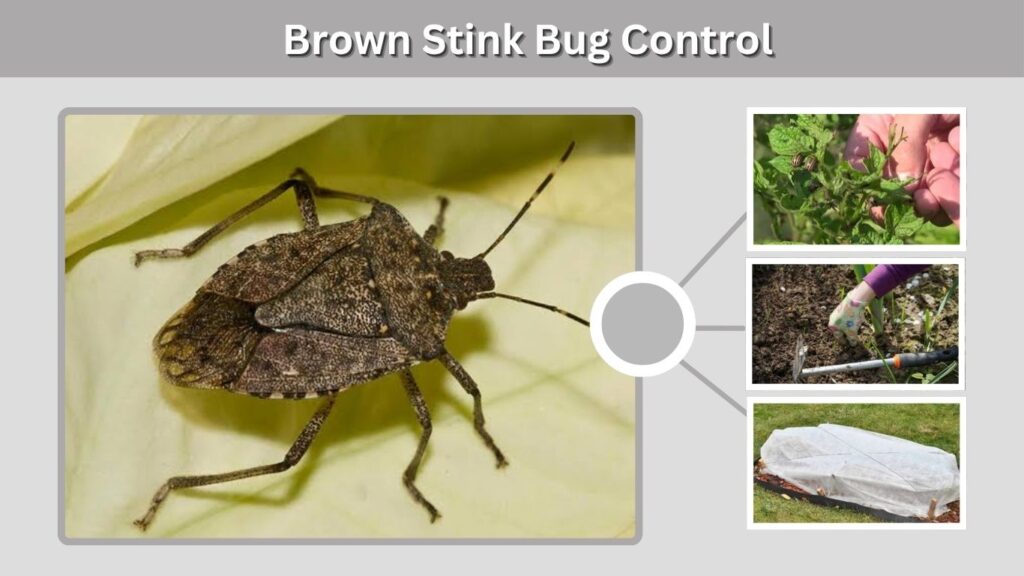
Brown stink bug control works best when insects are detected before populations become large. Eggs and young nymphs are generally easier to manage than winged adults, which can quickly move between plants.
How to Get Rid of Brown Stink Bugs
- Remove egg masses: Check leaves and destroy eggs before they hatch.
- Hand-pick bugs: Drop adults and nymphs into soapy water.
- Control weeds: Reduce alternative host plants around crops.
- Remove damaged produce: Clean up fallen fruits and plant debris.
- Use row covers: Protect vulnerable plants where practical.
- Encourage natural predators: Birds, spiders, predatory insects, and parasitoids can help.
- Seal houses: Repair screens and close exterior cracks to prevent indoor entry.
For severe crop infestations, a pesticide labeled for stink bugs and the specific crop may be needed. Follow all label instructions carefully.
Interesting Brown Stink Bug Facts
Brown stink bugs can fly, although they often spend much of their time walking across vegetation. Their brown camouflage makes them difficult to notice on bark or dead foliage. They use chemical defenses rather than stingers to discourage predators. Like other true bugs, their young are called nymphs rather than larvae. Several different brown-colored stink bug species exist, which is why careful identification is important before deciding whether an insect is native, invasive, or a significant crop pest.
FAQs
What Is the Scientific Name of the Brown Stink Bug?
The common brown stink bug is generally identified as Euschistus servus, a member of the family Pentatomidae.
Do Brown Stink Bugs Bite Humans?
Brown stink bugs rarely bite or probe people. They primarily use their mouthparts to feed on plants and do not seek humans for blood.
What Do Brown Stink Bug Eggs Look Like?
Their eggs are small, barrel-shaped, and usually laid in clusters on plant surfaces, particularly leaves.
Why Are Brown Stink Bugs in My House?
Adults may enter houses when seeking protected shelter during cooler weather. Sealing cracks and repairing screens can reduce indoor entry.
How Do You Get Rid of Brown Stink Bugs?
Remove egg clusters and nymphs, hand-pick adults, control weeds, clean up plant debris, protect crops with barriers, and seal openings around the home.