
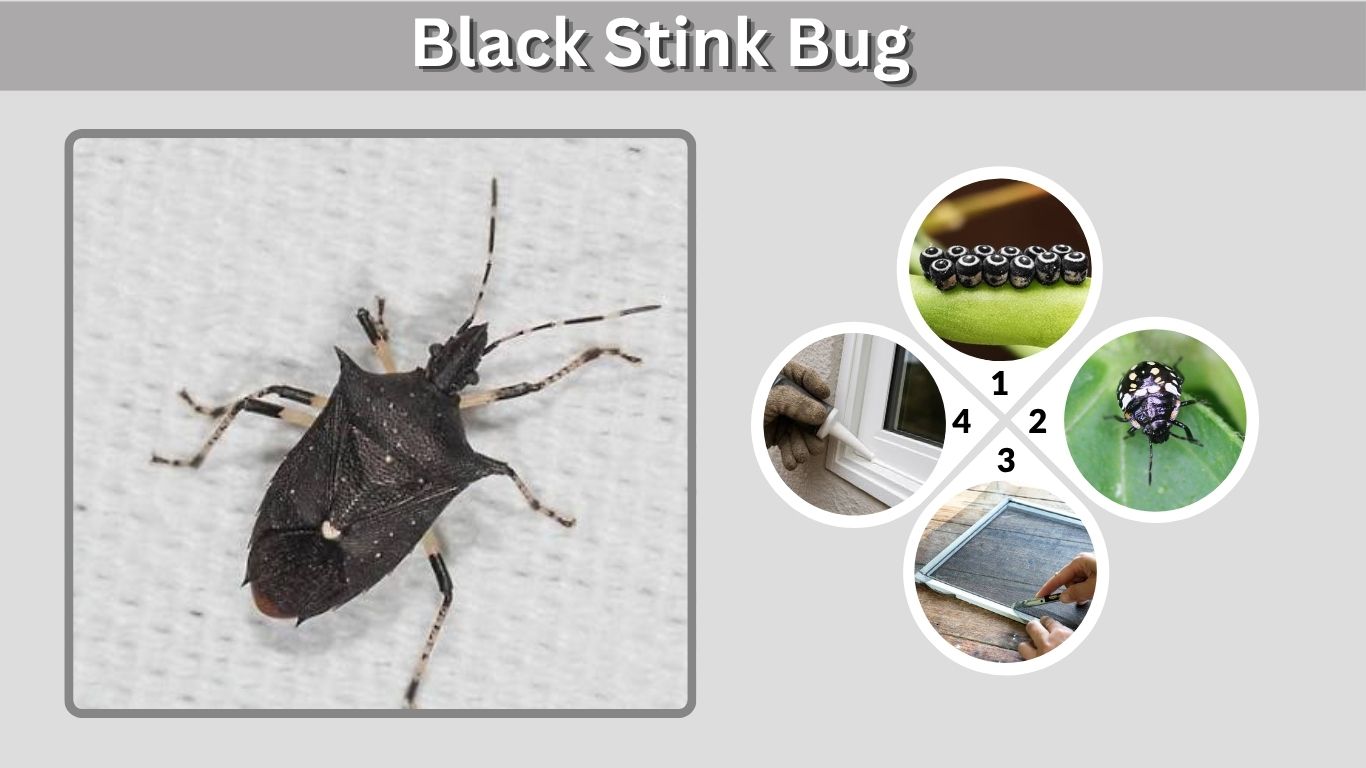
The black stink bug is a dark-colored true bug known scientifically as Proxys punctulatus. Its shiny black body, pointed shoulders, pale-tipped scutellum, and contrasting legs make it relatively distinctive among North American stink bugs. These insects feed mainly on plant juices but may occasionally prey on other insects. They can appear on garden plants, crops, flowers, or around wooded areas. Learning how to identify black stink bugs, their eggs and nymphs, life cycle, smell, bite risk, and similar-looking species can prevent unnecessary concern.
What Is a Black Stink Bug?
The name black stink bug commonly refers to Proxys punctulatus, a member of the stink bug family Pentatomidae. It occurs across a broad part of the Americas and is recorded in portions of the United States, Central America, South America, and the Caribbean. Unlike several economically important stink bugs, it usually does not build populations large enough to cause major crop damage.
Black Stink Bug Scientific Name
The scientific classification includes:
- Scientific name: Proxys punctulatus
- Family: Pentatomidae
- Order: Hemiptera
- Class: Insecta
- Phylum: Arthropoda
The species is a true bug rather than a beetle. Like other true bugs, it possesses piercing-sucking mouthparts used for feeding.
Where Is It Found?
In the United States, Proxys punctulatus has been reported from North Carolina south through Florida and west through parts of the central and southern states to Texas and Oklahoma. It also occurs in Mexico, Central America, Brazil, and several Caribbean islands.
Black Stink Bug Identification
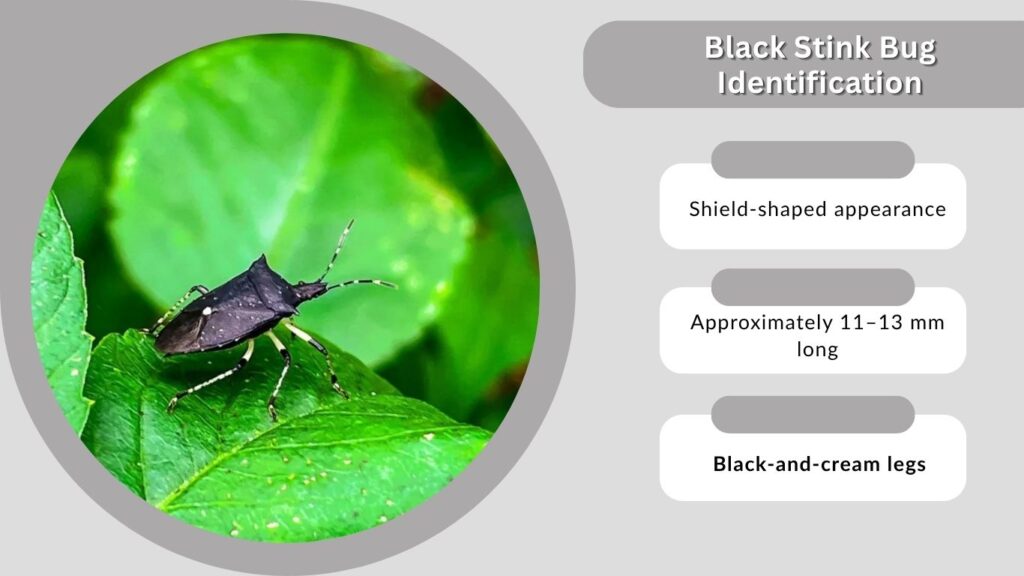
A mature black stink bug has the broad, shield-like shape associated with the stink bug family. Adults are predominantly black, although pale markings on the legs and a small yellowish spot near the tip of the scutellum provide useful identification clues. The pointed shoulder region also gives this species a somewhat sharper appearance than many common brown or green stink bugs.
Key Identification Features
Look for these characteristics:
- Mostly shiny or deep black body
- Shield-shaped appearance
- Approximately 11–13 mm long
- Black-and-cream legs
- Pointed shoulder-like projections
- Small yellow or pale spot near the scutellum tip
- Long piercing-sucking mouthparts underneath the body
Adult size is roughly around half an inch, making the insect noticeable but considerably smaller than many insects described casually as “giant black stink bugs.”
Black Stink Bug vs Black Beetle
A black beetle can sometimes be mistaken for a stink bug because both may have hard-looking dark bodies. However, beetles generally have hardened forewings that meet in a straight line down the back.
Stink bugs have overlapping wings, a broad shield-shaped body, and a prominent triangular scutellum. They also possess a piercing beak instead of the chewing mouthparts characteristic of most beetles.
Black, Red, Orange and Other Color Variations
Not every black-and-red or black-and-orange shield-shaped insect is Proxys punctulatus. Numerous true bugs have bold combinations of black, orange, red, yellow, or white. Young stink bugs can also look very different from adults. Identification should therefore consider body shape, markings, antennae, location, and developmental stage rather than color alone.
Common Color Descriptions
People may encounter insects described as:
- Black and red stink bug: May be a nymph or another true bug species.
- Black and orange stink bug: Several stink bug nymphs have orange and black markings.
- Black and white stink bug: Pale markings may occur on adults or immature stages.
- Black and yellow stink bug: Yellow spots or margins can occur in several pentatomids.
- Black and green stink bug: Some species combine dark markings with green coloration.
The true black stink bug, Proxys punctulatus, is primarily black with contrasting cream-colored areas on the legs and a yellowish spot at the tip of the scutellum.
Black Stink Bug With Orange or Red Antennae
Color alone is not reliable enough for species identification. If an insect has strongly orange or red antennae, bright red markings, or extensive orange areas, it may be a different stink bug or another family of true bugs.
Photographing the top of the insect and comparing the scutellum, shoulders, legs, and antennae usually provides better clues.
Black Stink Bug Eggs and Nymphs
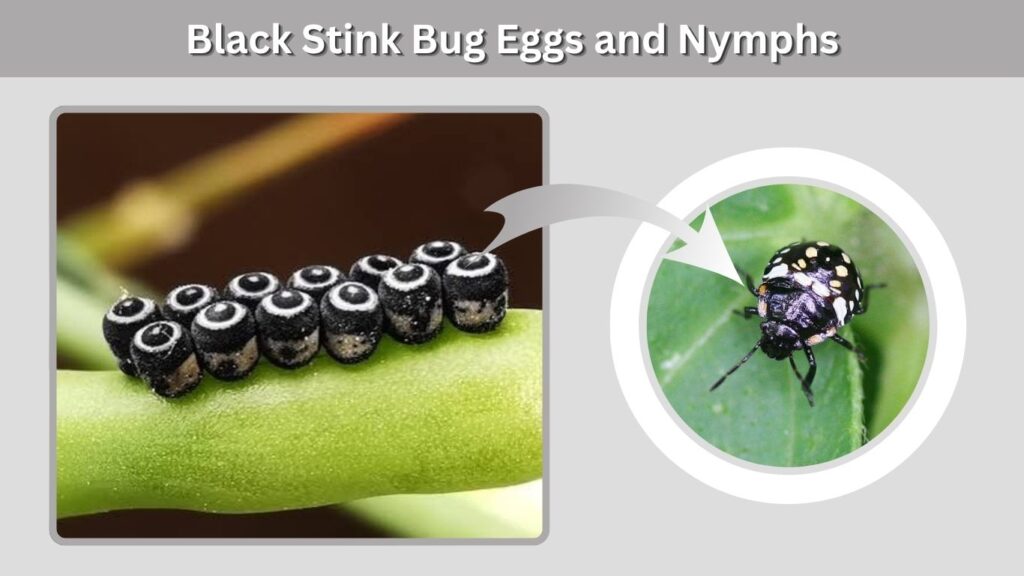
The immature stages look different from mature black stink bugs. Females produce very small pale eggs, and the developing nymphs pass through several stages before obtaining their adult coloration and wings. One particularly interesting feature of P. punctulatus is that females generally deposit their eggs individually or occasionally in pairs rather than producing the large clusters typical of many other stink bugs.
What Do Black Stink Bug Eggs Look Like?
Black stink bug eggs are:
- White to pale in color
- Slightly oval
- About 1 mm in size
- Usually laid individually
- Sometimes deposited in pairs
- Much less likely to appear in large clusters
This egg-laying pattern can help distinguish them from many other North American stink bug species.
Black Stink Bug Nymph
After hatching, the insects develop through five nymphal instars. Young nymphs start relatively light and translucent brown before becoming progressively darker.
As they mature, their coloration approaches the characteristic black appearance of adults. Nymphs do not initially have fully developed functional wings.
Black Stink Bug Life Cycle
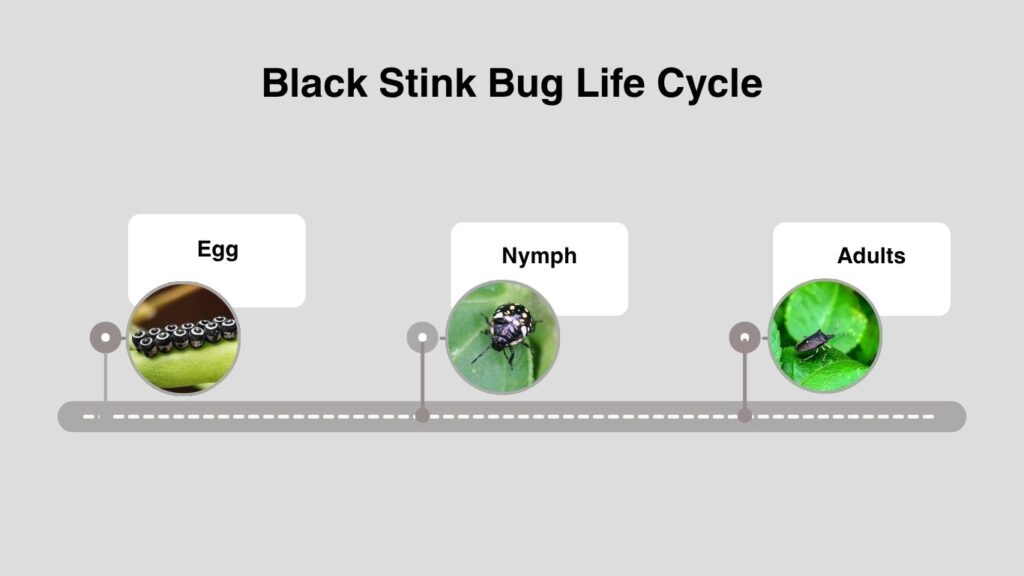
Black stink bugs undergo incomplete metamorphosis, meaning there is no larval or pupal stage. Development progresses directly from egg to nymph and finally to adult. Proxys punctulatus has been estimated to complete its life cycle in about 54 days under studied conditions, although environmental conditions can influence development. Adults may survive unfavorable seasons by sheltering in protected places.
Main Life Cycle Stages
- Egg: Females deposit small pale eggs, generally individually.
- Young nymph: Newly hatched bugs begin feeding and growing.
- Older nymph: Five nymphal instars occur as the insect increases in size.
- Adult: Fully developed adults have functional wings and can reproduce.
The species has been reported overwintering as adults in forest leaf litter and around or beneath fallen logs.
What Do Black Stink Bugs Eat?
Black stink bugs use piercing-sucking mouthparts to extract fluids. They are primarily plant feeders, but their diet is somewhat unusual because they may also attack other insects. They have been collected from crops such as cotton, soybean, and citrus, and associations with dayflowers (Commelina) have also been documented.
Plant Feeding and Predation
When feeding on plants, the bug inserts its mouthparts into tissue and removes fluids. This activity can sometimes produce discolored areas or malformed leaves.
However, P. punctulatus has also been observed attacking insect larvae. It can therefore display both plant-feeding and predatory behavior rather than relying exclusively on one food source.
Do Black Stink Bugs Bite?
Black stink bugs are not blood-feeding insects and do not seek people as a food source. Their mouthparts are designed primarily for piercing plant material and, occasionally, insect prey. They should therefore not be regarded as typical biting household pests. Handling any true bug roughly is still unnecessary because its piercing mouthparts are capable of contacting skin.
Are Black Stink Bugs Dangerous?
For most people, finding a black stink bug is not a cause for concern. It does not infest people, drink blood, or spread around a home like bed bugs.
The best approach is simply to avoid crushing or squeezing the insect and move it outdoors when practical.
Do Black Stink Bugs Smell?
Like other members of the stink bug family, black stink bugs possess defensive scent glands. Stink bugs can release strong-smelling chemicals when disturbed or threatened. The odor is intended to discourage predators rather than harm humans.
Why Do They Produce an Odor?
The smell functions primarily as chemical defense. A predator that encounters an unpleasant-tasting or foul-smelling stink bug may be less likely to attack another one.
Crushing stink bugs indoors can make the odor more noticeable, so capturing and releasing them is often preferable.
Black Stink Bugs in Gardens and Houses
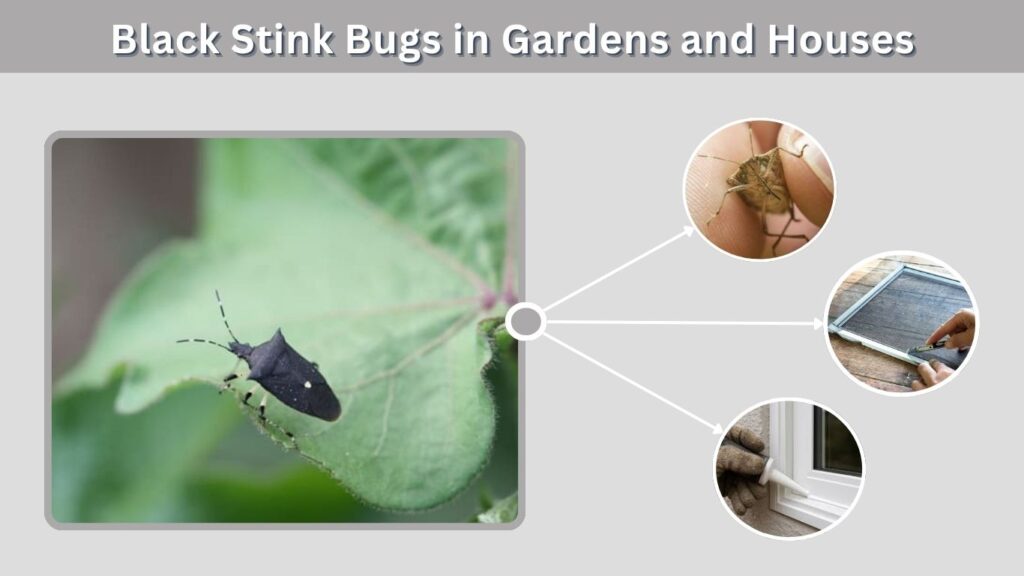
Black stink bugs are more closely associated with outdoor vegetation and wooded environments than with indoor living. Adults may be encountered on flowers, crop plants, or vegetation near woodland edges. They have also been found overwintering in leaf litter and beneath logs. Their feeding can injure plant tissue, but significant economic damage from this particular species is considered uncommon.
What to Do If You Find One
- Avoid crushing it indoors.
- Capture it with a container and release it outside.
- Repair damaged window screens.
- Seal obvious gaps around windows and doors.
- Remove excessive debris directly beside the home.
- Inspect garden plants if many stink bugs repeatedly appear.
A single black stink bug generally does not indicate a serious infestation.
FAQs
Black stink bugs can be confusing because several insects share their dark shield-shaped appearance. Colorful nymphs and unrelated true bugs can create even more identification problems. These answers address common questions about their size, safety, eggs, coloration, and presence around homes.
1. Are black stink bugs poisonous?
No. Black stink bugs are not considered poisonous to people. Their main defense is the unpleasant odor produced when they feel threatened.
2. How big is a black stink bug?
Adult Proxys punctulatus are approximately 11–13 mm long, or around half an inch.
3. Why is there a black stink bug in my house?
An individual may accidentally enter through an open door, window, or small gap while seeking shelter. Black stink bugs normally live outdoors.
4. Are black and red stink bugs the same species?
Not necessarily. Numerous stink bugs and other true bugs have black-and-red coloration, and some stink bug nymphs are more colorful than adults.
5. Do black stink bugs damage plants?
They can suck plant juices and cause localized discoloration or malformed tissue. However, Proxys punctulatus usually occurs at populations too low to cause significant crop damage.