
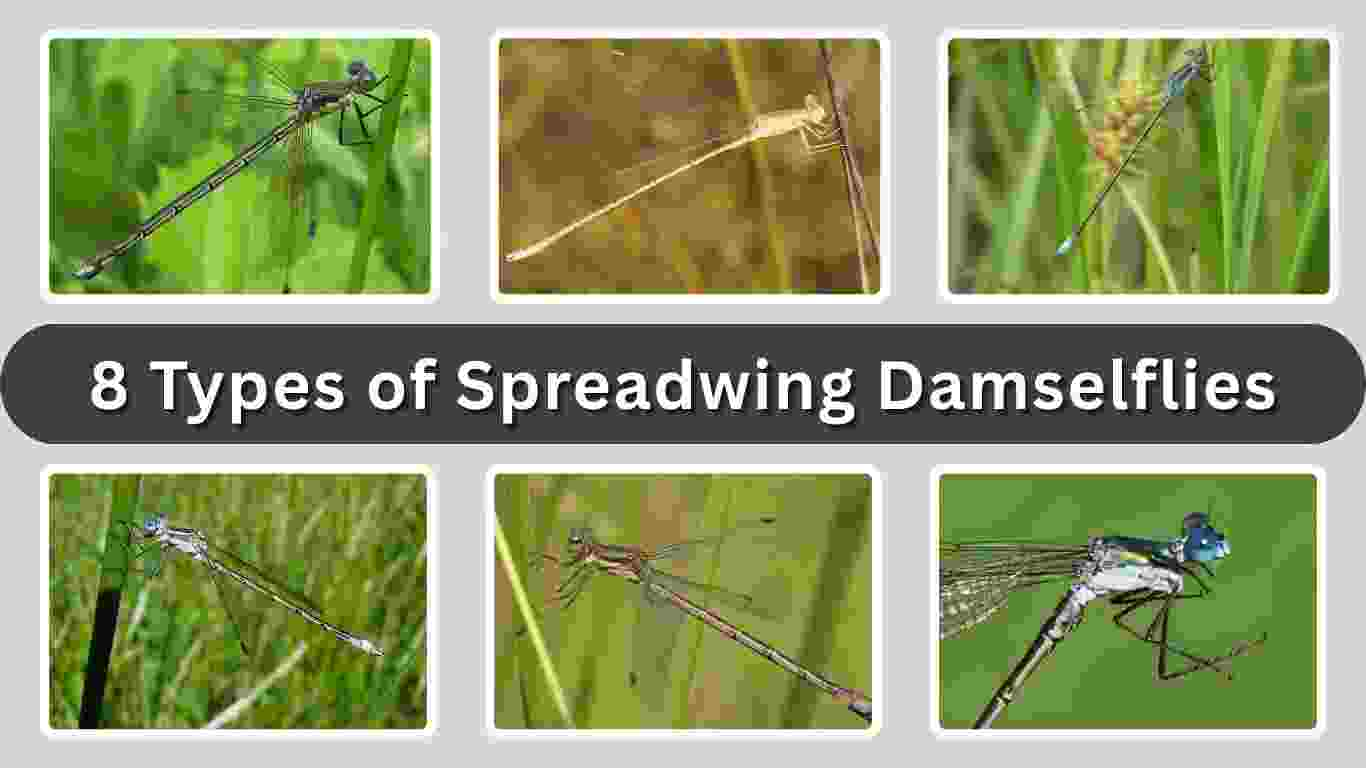
Spreadwing damselflies are slender insects known for their unique resting posture with wings held partly open. They are commonly found near ponds, marshes, bogs, and slow-moving streams where aquatic vegetation is abundant. Their metallic green or bronze bodies and graceful flight make them easy to recognize in wetland habitats.
There are many fascinating spreadwing species, each with distinct markings, behaviors, and habitat preferences. From the Common Spreadwing to the Spot-winged Spreadwing, these damselflies play an important role in controlling mosquito populations while adding beauty to freshwater ecosystems during the warmer months of the year.
1. Common Spreadwing
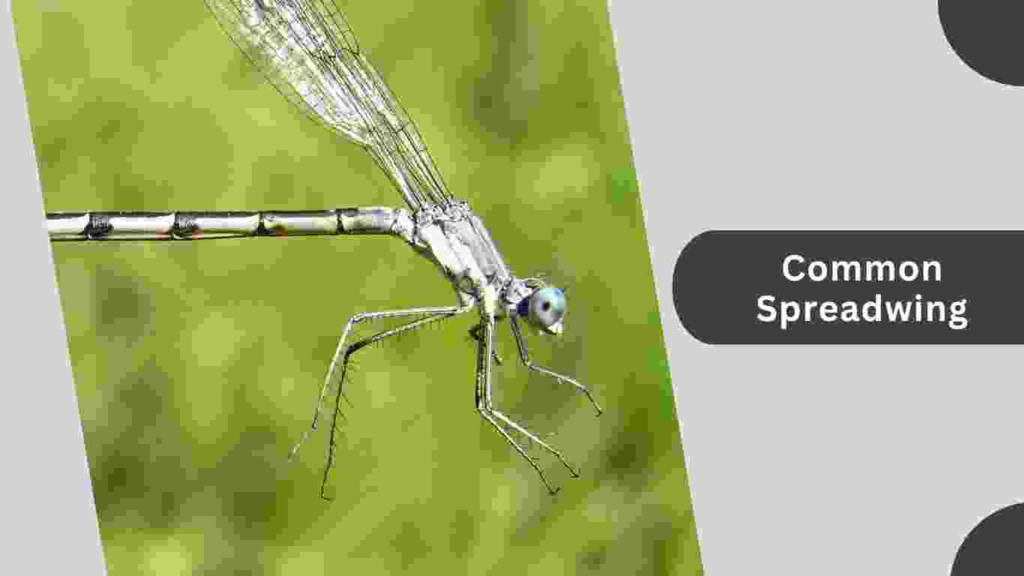
The Common Spreadwing is a slender and metallic-looking damselfly often found near ponds, marshes, and quiet streams. Unlike most damselflies, it rests with its wings partly open, making it easy to recognize. This species is active during late summer and early autumn and is commonly seen perched on grasses and aquatic vegetation near freshwater habitats.
Identification
- Metallic green or bronze body coloration
- Wings held partially spread while resting
- Transparent wings with fine veins
- Slender abdomen and delicate body shape
- Adults usually measure 35–45 mm long
Habitat
Common Spreadwings prefer marshes, ponds, lakeshores, and slow-moving streams with dense vegetation. They are commonly found resting on reeds, grasses, and small plants close to freshwater. Their habitats usually contain calm water and plenty of aquatic plants that provide shelter and breeding areas during warmer months.
Behavior
This species is calm and spends much of its time perched quietly near water. Unlike many damselflies, it keeps its wings slightly open while resting. Common Spreadwings feed on mosquitoes, gnats, and other tiny insects. Males may guard small territories during the breeding season near aquatic vegetation.
Distribution
The Common Spreadwing is widely distributed throughout North America. It can be found across much of the United States and southern Canada, especially in wetland habitats. This species is more commonly observed during late summer and early fall when adults become highly active around freshwater ecosystems.
Life Cycle
Females lay eggs in aquatic plants after mating near freshwater habitats. The larvae develop underwater, feeding on tiny aquatic organisms while growing through several stages. After maturing, they emerge from the water as adults. Common Spreadwings are usually active from midsummer through the early autumn season.
2. Emerald Spreadwing
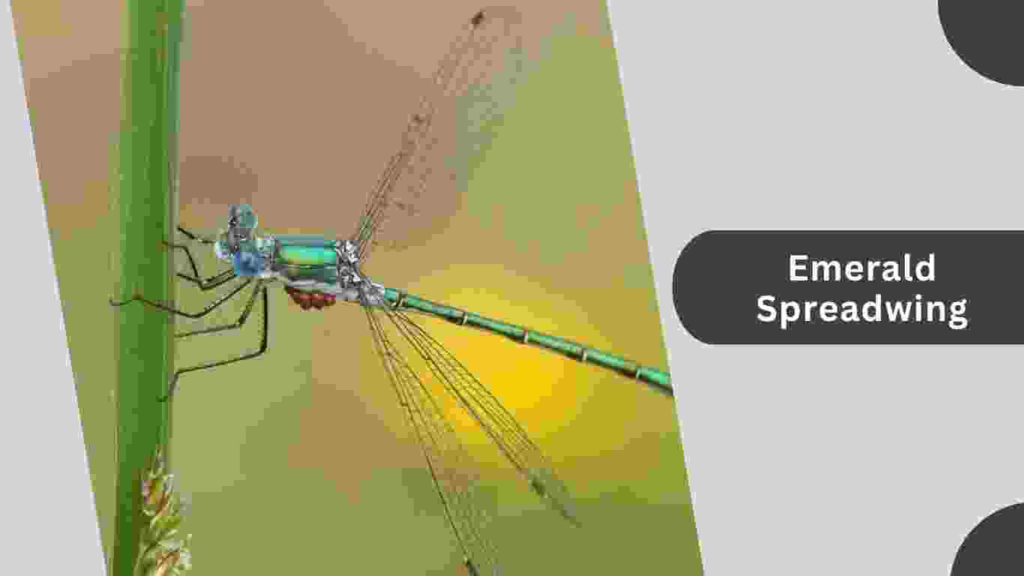
The Emerald Spreadwing is a beautiful damselfly species recognized for its metallic green body and partially spread wings while resting. It is commonly found near ponds, marshes, and lakes with dense vegetation. This species becomes especially active during late summer and is admired for its delicate appearance and graceful flight.
Identification
- Metallic emerald-green body coloration
- Wings held partly open at rest
- Slender abdomen with bronze highlights
- Transparent wings with fine venation
- Adults typically measure 35–45 mm long
Habitat
Emerald Spreadwings inhabit ponds, marshes, bogs, and slow-moving streams with abundant aquatic plants. They are often seen perched on reeds, grasses, and shrubs near calm freshwater. These habitats provide ideal shelter, breeding sites, and feeding opportunities throughout the warmer months of the year.
Behavior
This species spends much of its time resting quietly on vegetation close to water. Emerald Spreadwings fly slowly and gracefully while hunting tiny insects such as mosquitoes and gnats. Males may become territorial during breeding season and often remain close to aquatic plants where females lay eggs.
Distribution
The Emerald Spreadwing is widely distributed across North America, particularly in the United States and southern Canada. It is commonly found in wetlands, marshes, and freshwater habitats with rich vegetation. Adults are usually most visible from midsummer to early autumn in temperate regions.
Life Cycle
After mating, females deposit eggs into aquatic vegetation near freshwater habitats. The larvae live underwater and feed on tiny aquatic organisms while developing through several growth stages. Once mature, they emerge as adults during warm seasons. Emerald Spreadwings are typically active from summer through early fall.
3. Slender Spreadwing
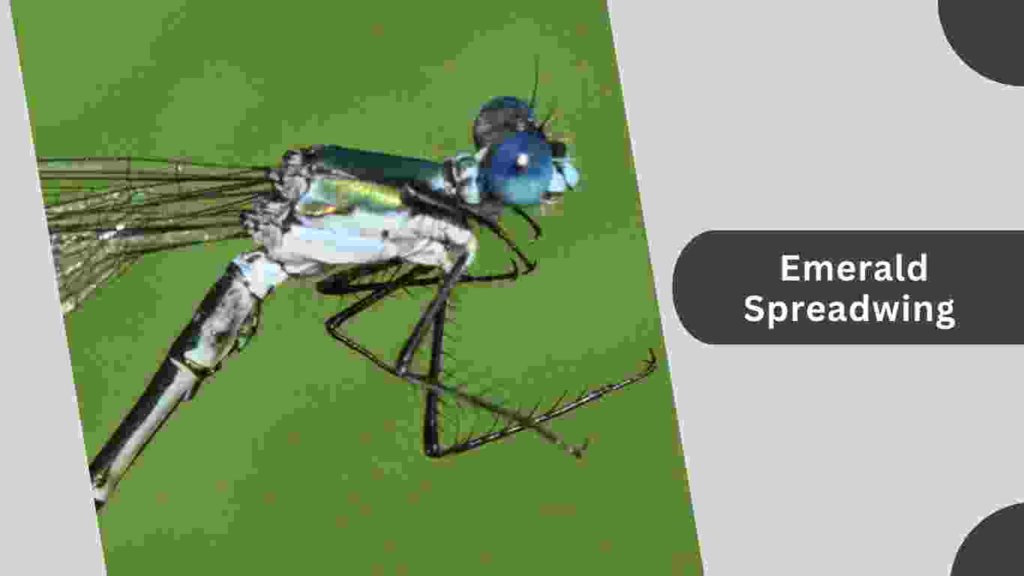
The Slender Spreadwing is a delicate damselfly species known for its thin body and metallic appearance. It is commonly found around marshes, ponds, and slow-moving streams with abundant vegetation. This species rests with its wings slightly spread, which helps distinguish it from many other damselflies found near freshwater habitats.
Identification
- Thin metallic green or bronze body
- Wings held partly open while resting
- Long slender abdomen with pale markings
- Transparent wings with narrow shape
- Adults usually measure 35–42 mm long
Habitat
Slender Spreadwings prefer marshes, bogs, ponds, and quiet streams surrounded by dense vegetation. They are frequently seen perched on reeds, grasses, and shrubs near calm freshwater habitats. Areas with shallow water and abundant aquatic plants provide ideal conditions for feeding, shelter, and reproduction.
Behavior
This species is calm and often remains motionless while resting on vegetation. Slender Spreadwings hunt tiny insects by flying slowly near water surfaces and shoreline plants. Males may defend small territories during breeding periods, while females stay close to aquatic vegetation where eggs are deposited after mating.
Distribution
The Slender Spreadwing is distributed across parts of North America, especially in the United States and southern Canada. It is commonly found in freshwater wetlands and marshy regions with suitable vegetation. Adults are usually most active during summer and early autumn near calm aquatic environments.
Life Cycle
Females lay eggs inside aquatic plants after mating near freshwater habitats. The larvae develop underwater and feed on tiny aquatic organisms while passing through several growth stages. Mature adults emerge during warm seasons and remain active throughout midsummer and early autumn in suitable wetland environments.
4. Sweetflag Spreadwing
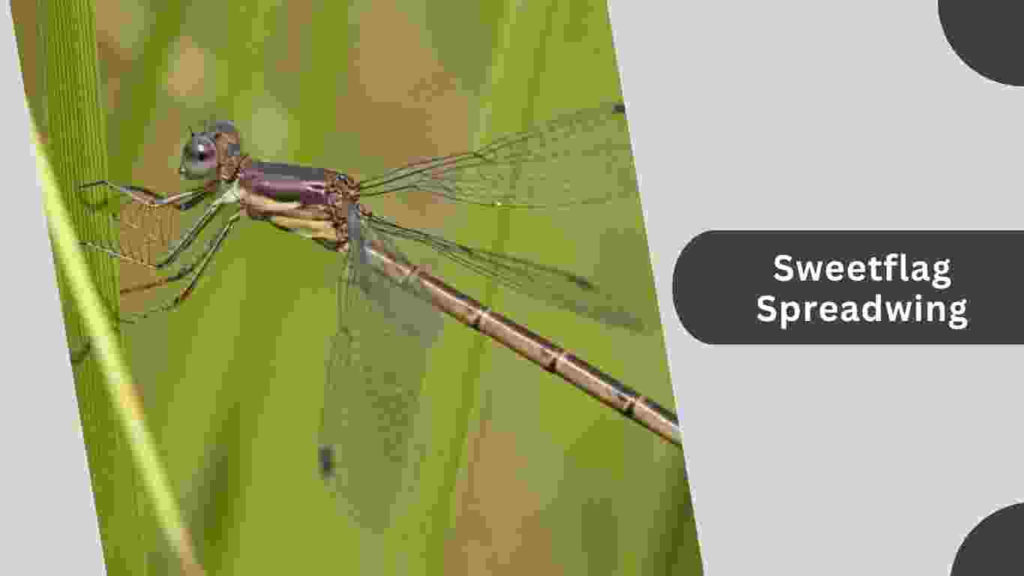
The Sweetflag Spreadwing is a slender damselfly species commonly associated with marshes and wetlands filled with sweetflag plants. Its metallic body and partially open wings make it easy to identify among other spreadwings. This species is most active during summer and is often seen resting quietly on aquatic vegetation.
Identification
- Metallic green or bronze body coloration
- Wings held slightly spread while resting
- Slender abdomen with pale markings
- Transparent wings with delicate veins
- Adults generally measure 35–45 mm long
Habitat
Sweetflag Spreadwings prefer marshes, ponds, bogs, and wetlands with dense aquatic vegetation. They are especially common in areas where sweetflag plants grow near shallow freshwater. These habitats provide excellent shelter, breeding locations, and hunting grounds for tiny insects during warm weather conditions.
Behavior
This species spends much of its time perched on reeds and wetland plants near calm water. Sweetflag Spreadwings fly slowly and feed on mosquitoes, gnats, and other small insects. Males may guard breeding territories while females remain closer to vegetation where eggs are later deposited safely.
Distribution
The Sweetflag Spreadwing is mainly found across parts of North America, particularly in the United States and southern Canada. It is most common in freshwater wetlands with rich plant growth. Adults are generally observed from late spring through early autumn in suitable marsh habitats.
Life Cycle
Females lay eggs inside aquatic plants after mating near freshwater environments. The larvae live underwater and feed on tiny aquatic organisms while growing through several developmental stages. Mature adults emerge during warmer months and remain active from summer until early autumn in wetland habitats.
5. Lyre-tipped Spreadwing
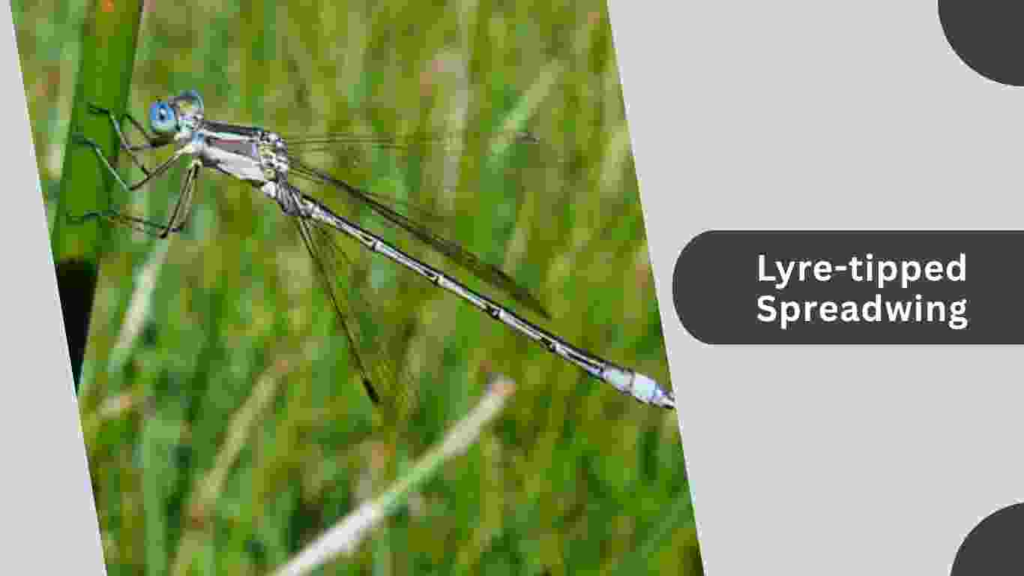
The Lyre-tipped Spreadwing is a unique damselfly species recognized for the distinctive shape of the male’s abdominal appendages. It has a slender metallic body and rests with its wings partly spread. This species is commonly found near ponds, marshes, and wetlands during the warmer months of the year.
Identification
- Metallic green or bronze body coloration
- Wings partially spread while resting
- Males have lyre-shaped abdominal appendages
- Slender abdomen with pale side markings
- Adults usually measure 35–45 mm long
Habitat
Lyre-tipped Spreadwings inhabit ponds, marshes, lakeshores, and slow-moving streams with abundant aquatic vegetation. They are frequently seen resting on reeds, grasses, and small plants near freshwater habitats. Calm wetlands with dense vegetation provide ideal conditions for feeding, breeding, and shelter throughout the season.
Behavior
This species is quiet and spends much of its time perched near water. Lyre-tipped Spreadwings fly slowly while hunting mosquitoes, gnats, and other tiny insects. Males often defend territories close to breeding sites, while females remain among aquatic vegetation before laying eggs in suitable freshwater plants.
Distribution
The Lyre-tipped Spreadwing is widely distributed across eastern and central North America. It is commonly found in the United States and parts of southern Canada where freshwater wetlands are abundant. Adults are most active during summer and early autumn in marshy and vegetated aquatic environments.
Life Cycle
Females deposit eggs into aquatic plants after mating near wetlands and ponds. The larvae develop underwater and feed on small aquatic organisms while growing through several stages. Mature adults emerge during warm seasons and remain active from midsummer until early autumn in suitable freshwater habitats.
6. Swamp Spreadwing
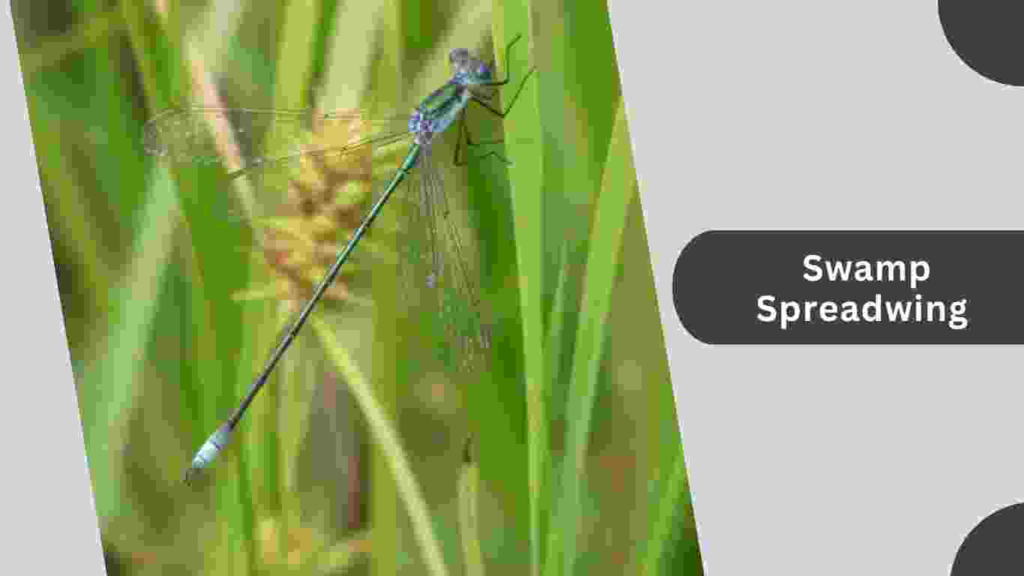
The Swamp Spreadwing is a slender damselfly species commonly found in swampy wetlands and marshes with dense vegetation. It is known for its metallic body coloration and partially spread wings while resting. This species is most active during summer and early autumn near calm freshwater habitats.
Identification
- Metallic green or bronze-colored body
- Wings held slightly open at rest
- Slender abdomen with dark markings
- Transparent wings with fine veins
- Adults usually measure 35–45 mm long
Habitat
Swamp Spreadwings prefer marshes, swamps, bogs, and slow-moving streams with thick aquatic vegetation. They are often seen perched on reeds, grasses, and wetland plants close to shallow freshwater. These habitats provide excellent shelter, feeding opportunities, and breeding sites during warmer seasons.
Behavior
This species is generally calm and spends much of its time resting on vegetation near water. Swamp Spreadwings hunt mosquitoes, gnats, and other tiny insects by flying slowly around wetland areas. Males may defend breeding territories while females stay near aquatic plants used for egg-laying.
Distribution
The Swamp Spreadwing is mainly distributed across eastern and central North America. It is commonly found in freshwater wetlands throughout the United States and southern Canada. Adults are usually active from midsummer to early autumn in marshy and swamp-like environments.
Life Cycle
Females lay eggs inside aquatic vegetation after mating in wetland habitats. The larvae develop underwater and feed on small aquatic organisms while passing through several growth stages. Adult Swamp Spreadwings emerge during warm months and remain active throughout late summer and early fall.
7. Dusky Spreadwing
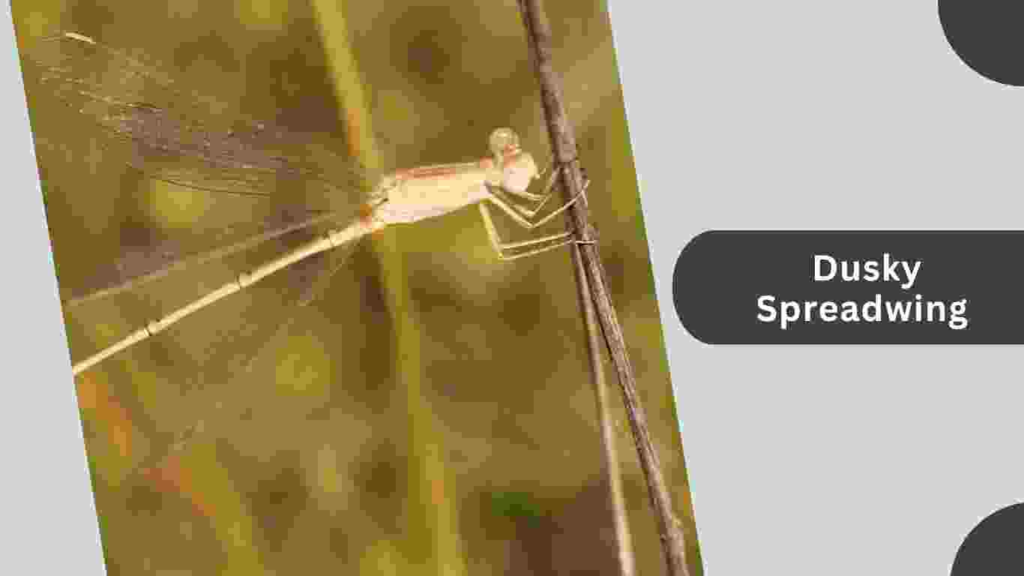
The Dusky Spreadwing is a dark-colored damselfly species known for its smoky appearance and partially spread wings while resting. It is commonly found near marshes, ponds, and slow-moving freshwater habitats. This species becomes especially active during late summer and is often seen perched quietly on wetland vegetation.
Identification
- Dark bronze or dusky metallic body
- Wings held partly open while resting
- Slender abdomen with subtle pale markings
- Transparent wings with smoky tint
- Adults usually measure 35–45 mm long
Habitat
Dusky Spreadwings prefer marshes, ponds, bogs, and slow streams with dense vegetation. They are commonly found resting on reeds, grasses, and shrubs close to freshwater habitats. Calm wetlands with abundant aquatic plants provide ideal conditions for shelter, feeding, and breeding during warm seasons.
Behavior
This species spends much of its time quietly perched near water surfaces and shoreline plants. Dusky Spreadwings fly slowly while hunting mosquitoes, gnats, and other tiny insects. Males may guard small breeding territories, while females remain near aquatic vegetation before depositing eggs into freshwater plants.
Distribution
The Dusky Spreadwing is distributed across parts of North America, especially in the United States and southern Canada. It is commonly observed in wetland ecosystems with calm freshwater habitats. Adults are most active from midsummer through early autumn in marshy and vegetated environments.
Life Cycle
Females lay eggs in aquatic plants after mating near wetlands and ponds. The larvae develop underwater and feed on tiny aquatic organisms while growing through several stages. Adult Dusky Spreadwings emerge during warm seasons and remain active from summer into the early autumn months.
8. Spot-winged Spreadwing
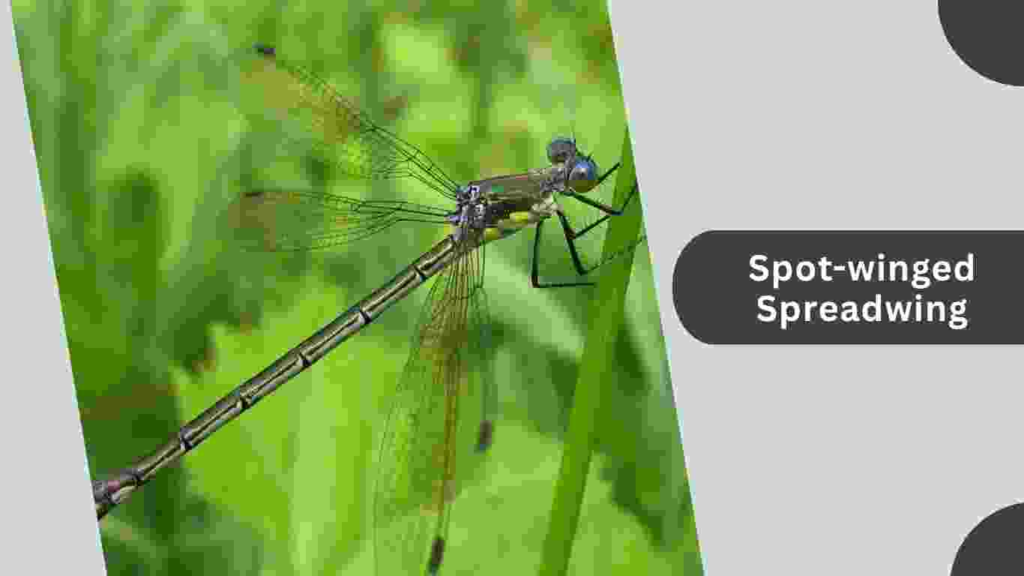
The Spot-winged Spreadwing is a distinctive damselfly species recognized for the dark spots near the tips of its wings. It has a slender metallic body and rests with its wings partially spread. This species is commonly found near ponds, marshes, and wetlands during warm summer months.
Identification
- Metallic green or bronze body coloration
- Dark spots visible near wing tips
- Wings held partly open while resting
- Slender abdomen with pale markings
- Adults usually measure 35–45 mm long
Habitat
Spot-winged Spreadwings inhabit ponds, marshes, bogs, and slow-moving streams with dense vegetation. They are often seen resting on reeds, grasses, and wetland plants close to freshwater habitats. Calm aquatic environments with abundant vegetation provide ideal shelter, feeding areas, and breeding locations throughout the season.
Behavior
This species is calm and spends much of its time perched on vegetation near water. Spot-winged Spreadwings fly slowly while hunting mosquitoes, gnats, and other tiny insects. Males may defend breeding territories, while females remain near aquatic plants where eggs are later deposited safely.
Distribution
The Spot-winged Spreadwing is found across parts of North America, especially in freshwater wetlands throughout the United States and southern Canada. It is commonly observed during summer and early autumn in marshy habitats with abundant aquatic vegetation and calm water conditions.
Life Cycle
Females lay eggs inside aquatic plants after mating near wetlands and ponds. The larvae develop underwater and feed on small aquatic organisms through several growth stages. Mature adults emerge during warm months and remain active from midsummer until early autumn in suitable freshwater habitats.
FAQs
What is a spreadwing damselfly?
A spreadwing damselfly is a type of damselfly known for resting with its wings partly open instead of fully closed. These insects belong to the family Lestidae and are commonly found near wetlands, marshes, ponds, and slow-moving freshwater habitats.
Where do spreadwing damselflies live?
Spreadwing damselflies usually live near freshwater environments such as ponds, marshes, bogs, swamps, and quiet streams. They prefer habitats with dense aquatic vegetation that provide shelter, feeding areas, and suitable locations for breeding and laying eggs.
What do spreadwing damselflies eat?
Spreadwing damselflies feed on tiny flying insects including mosquitoes, gnats, flies, and midges. Both adults and larvae are predators. Their feeding behavior helps naturally control insect populations around freshwater habitats and wetland ecosystems.
How can you identify a spreadwing damselfly?
Spreadwing damselflies can be identified by their slender metallic bodies and their habit of resting with wings partially spread. Many species also have green or bronze coloration, transparent wings, and long delicate abdomens that distinguish them from other damselflies.
Are spreadwing damselflies beneficial?
Yes, spreadwing damselflies are beneficial insects because they help reduce populations of mosquitoes and other small pests. They also play an important role in freshwater ecosystems as both predators and prey, contributing to the balance of wetland food chains.