
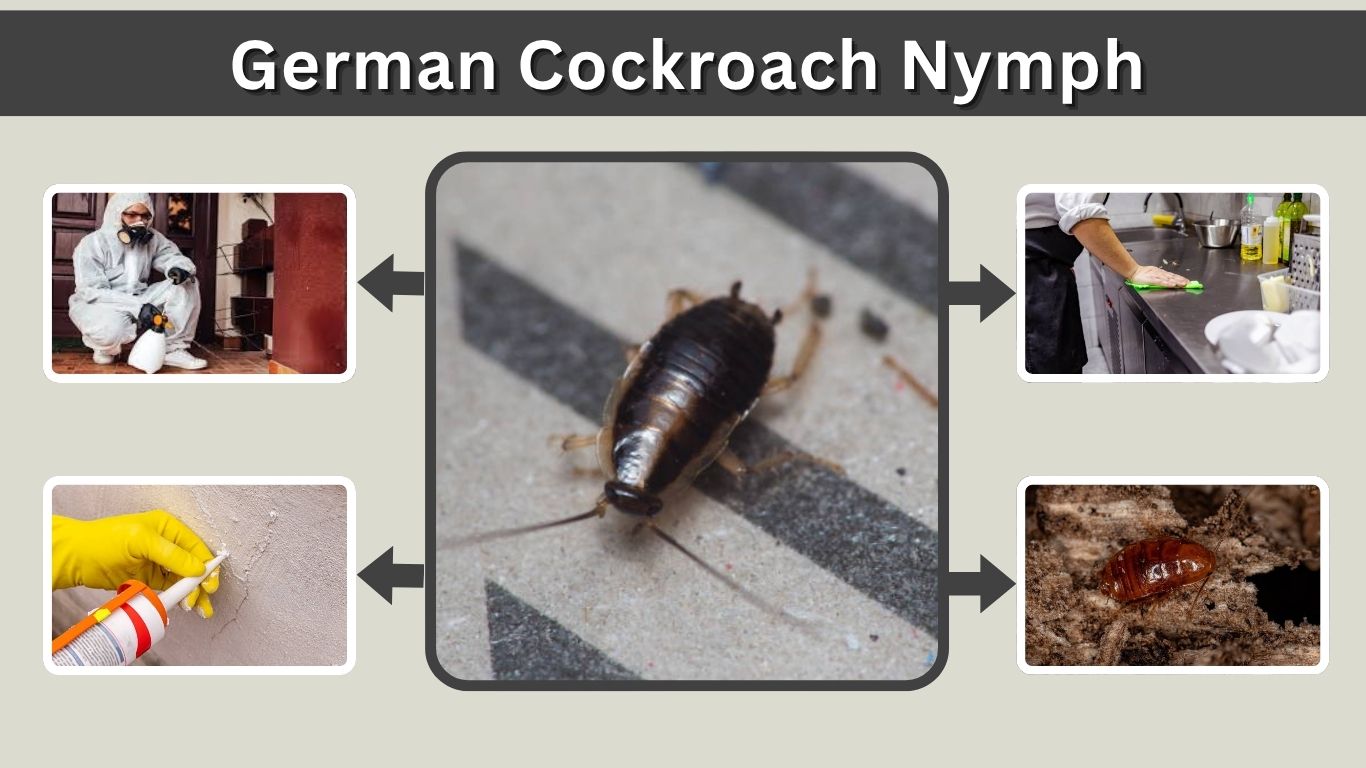
German cockroach nymphs are small, fast-moving pests that often go unnoticed until an infestation becomes serious. These immature cockroaches are a clear sign that breeding is already happening inside your home. Because they grow quickly and hide in tight spaces, early identification is critical. Understanding their appearance, size, and development stages can help you detect problems sooner and take action before the population spreads out of control.
What Is a German Cockroach Nymph?

German cockroach nymphs are the juvenile stage of the German cockroach life cycle. They hatch from egg cases and go through several growth stages before becoming adults. Unlike adults, nymphs do not have wings, but they share the same body structure and behavior patterns.
Key Characteristics
- Wingless but similar in shape to adults
- Smaller and darker in early stages
- Gradually change color as they grow
- Extremely fast and active at night
What Do German Cockroach Nymphs Look Like?
German cockroach nymphs can be difficult to identify because of their small size and dark coloration. However, they have distinct features that set them apart from other insects. Recognizing these visual traits can help confirm whether you are dealing with a cockroach problem or another pest.
Appearance and Color
- Dark brown or almost black when newly hatched
- Become lighter brown or tan as they mature
- Oval, flat body shape with long antennae
Size and Structure
- Very small in early stages, nearly pinhead size
- Grow larger with each molt
- Lack wings but develop visible body segments
German Cockroach Nymph Size
German cockroach nymph size varies depending on their stage of development. Their growth is gradual, and each stage becomes easier to spot. Understanding size differences can help determine how advanced an infestation may be.
Size by Growth Stage
- Early stage nymphs are extremely tiny and hard to notice
- Mid-stage nymphs are visible but still small and wingless
- Late-stage nymphs are close to adult size
Size Compared to Adults
- Adults are significantly larger and have wings
- Nymphs are smaller, darker, and more compact
- Mature nymphs may be mistaken for small adults
German Cockroach Nymph Stages
German cockroach nymphs go through multiple developmental stages before reaching adulthood. Each stage involves shedding their outer skin, allowing them to grow larger and develop adult features over time.
Growth Process
- Hatch from egg cases as tiny nymphs
- Molt several times as they grow
- Develop lighter coloration with each stage
Development Timeline
- Growth speed depends on temperature and food availability
- Warm, humid environments accelerate development
- Under ideal conditions, they mature quickly
German Cockroach Life Cycle

The life cycle of German cockroaches explains why infestations spread so rapidly. From egg to adult, each stage contributes to population growth, making early detection essential for control.
From Egg to Nymph
- Eggs are contained in a protective capsule called an ootheca
- Each capsule can hold dozens of nymphs
- Nymphs typically emerge within a short period under favorable conditions
Development into Adults
- Nymphs grow through multiple stages
- Eventually develop wings and reproductive ability
- Begin producing new egg cases shortly after maturity
German Cockroach Nymph Identification
Identifying German cockroach nymphs correctly is important because they are often confused with other small insects. Proper identification ensures that the correct treatment methods are used.
How to Identify a Nymph
- Small, fast-moving insect with long antennae
- Dark body that becomes lighter over time
- Found in hidden, warm indoor areas
Common Identification Mistakes
- Confusing them with bed bugs
- Mistaking them for small beetles
- Overlooking them due to their size
German Cockroach Nymph vs Bed Bug

German cockroach nymphs are frequently mistaken for bed bugs due to their small size and dark color. However, their behavior and body structure are quite different.
German cockroach nymphs have longer bodies and antennae, while bed bugs are rounder and flatter. Nymphs move quickly and prefer kitchens or moist areas, whereas bed bugs are slower and usually stay near sleeping areas. Additionally, cockroach nymphs do not rely on blood meals, making their behavior very different from bed bugs.
Where Are German Cockroach Nymphs Found?
German cockroach nymphs prefer warm, humid environments where food and water are easily accessible. They tend to hide in small cracks and tight spaces, making them difficult to detect during the early stages of an infestation. Understanding their common hiding spots can help locate and control them more effectively.
Common Indoor Locations
- Kitchens, especially near sinks and food storage areas
- Bathrooms and areas near toilets or drains
- Behind appliances like refrigerators and stoves
Hidden Areas
- Cracks and crevices in walls or cabinets
- Inside electrical outlets and under sinks
- In cluttered storage spaces or cardboard boxes
Signs of a German Cockroach Nymph Infestation
Detecting an infestation early can prevent rapid population growth. Since nymphs are small and often hidden, indirect signs are usually the first indicators of their presence.
Visible Signs
- Small, dark droppings resembling fine pepper
- Shed skins from molting stages
- Egg cases in hidden corners
Behavioral Signs
- Increased activity at night
- Sightings of small, fast-moving insects
- Presence near food, water, or waste areas
What Does It Mean If You See Nymphs?
Seeing German cockroach nymphs usually indicates an established infestation rather than an isolated issue. Nymphs hatch from eggs laid indoors, which means reproduction is already taking place. This suggests that adult cockroaches are also present, even if they are not immediately visible.
When multiple nymphs are spotted, it often means the infestation has progressed beyond the early stage. Immediate action is necessary to prevent the population from growing rapidly and spreading to other areas of the home.
Do German Cockroach Nymphs Bite?
German cockroach nymphs are not known for biting humans. While rare cases may occur in extreme infestations, they generally avoid human contact and focus on finding food and shelter.
The main concern is not biting but contamination. Nymphs can spread bacteria and allergens by crawling over food and surfaces. This can contribute to health issues such as allergies and asthma, especially in sensitive individuals.
How to Get Rid of German Cockroach Nymphs

Eliminating German cockroach nymphs requires a consistent and combined approach. Because they hide well and reproduce quickly, relying on a single method is usually not effective.
Immediate Actions
- Clean all food preparation surfaces thoroughly
- Remove crumbs, grease, and standing water
- Reduce clutter to eliminate hiding spots
Treatment Methods
- Apply gel bait in cracks and crevices
- Use targeted insecticides where nymphs hide
- Consider natural options like diatomaceous earth
Apartment Control Tips
- Treat shared walls and entry points
- Coordinate pest control efforts if possible
- Monitor regularly to prevent reinfestation
Best Ways to Control German Cockroach Nymphs
Long-term control focuses on reducing both current populations and preventing future infestations. A consistent strategy is more effective than occasional treatments.
Effective Control Strategies
- Combine sanitation with baiting methods
- Use insect growth regulators to stop development
- Monitor activity using traps or inspections
Why Consistency Matters
- Nymphs hatch continuously from egg cases
- Missed individuals can restart infestations
- Regular treatment ensures complete elimination
German Cockroach Nymph Infestation Growth
German cockroach populations can grow quickly due to their high reproduction rate. Each egg case contains dozens of nymphs, and these nymphs mature rapidly under favorable conditions.
A single infestation can expand within weeks if left untreated. As nymphs grow into adults, they begin reproducing and creating new generations. This cycle makes it important to address the problem early before it becomes widespread.
Prevention Tips
Preventing German cockroach nymphs is easier than eliminating a full infestation. Maintaining a clean and well-sealed environment reduces the chances of them entering and reproducing in your home.
Simple Prevention Steps
- Keep kitchen and bathroom areas clean and dry
- Seal cracks, gaps, and entry points
- Inspect groceries, boxes, and appliances before bringing them inside
FAQs
What does a German cockroach nymph look like?
German cockroach nymphs are small, wingless insects with dark brown bodies that gradually lighten as they grow. They resemble miniature adults but lack wings and are much smaller in size.
How big is a German cockroach nymph?
Their size depends on the stage of development, ranging from tiny hatchlings to nearly adult-sized nymphs. Early stages are very small, while later stages become easier to see.
What does it mean if I see German cockroach nymphs?
Seeing nymphs usually indicates an active infestation because they hatch from eggs laid indoors. This means adult cockroaches are also present and reproducing.
Do German cockroach nymphs bite humans?
Bites are extremely rare and not a primary concern. The main risk comes from contamination and allergens they spread in indoor environments.
How do you get rid of German cockroach nymphs?
Effective control includes cleaning, using gel baits, applying insecticides, and maintaining consistent treatment to eliminate both nymphs and adult cockroaches.