
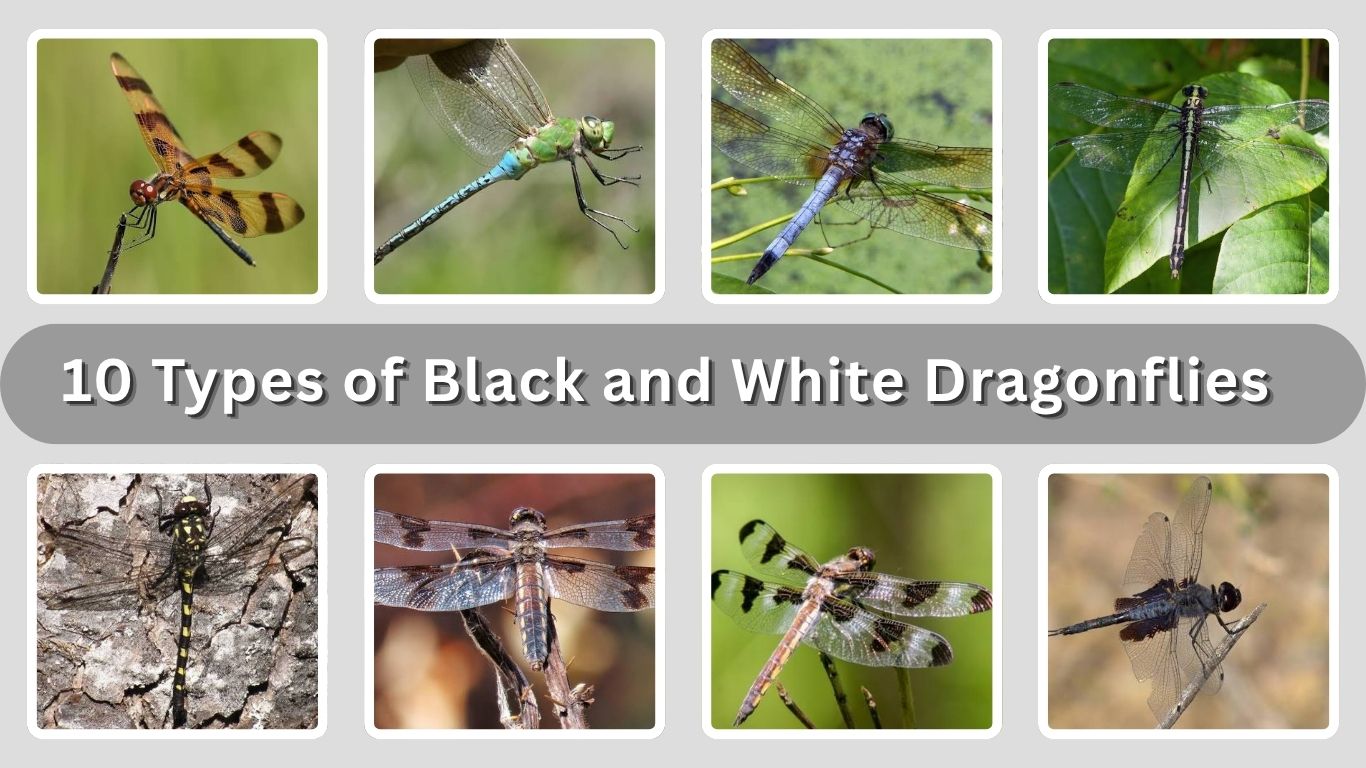
Black and white dragonflies are striking insects known for bold wing patterns, dark bodies, and contrasting markings that make them easy to notice around ponds, lakes, marshes, and streams. Some species, such as the Black Saddlebags, Widow Skimmer, Common Whitetail, and Twelve-Spotted Skimmer, show especially strong black, white, or dark wing patterns. Others combine black with blue, green, yellow, or orange. This guide covers 10 notable dragonflies, including their identification features, habitat, behavior, diet, and life cycle.
1. Black Saddlebags Dragonfly
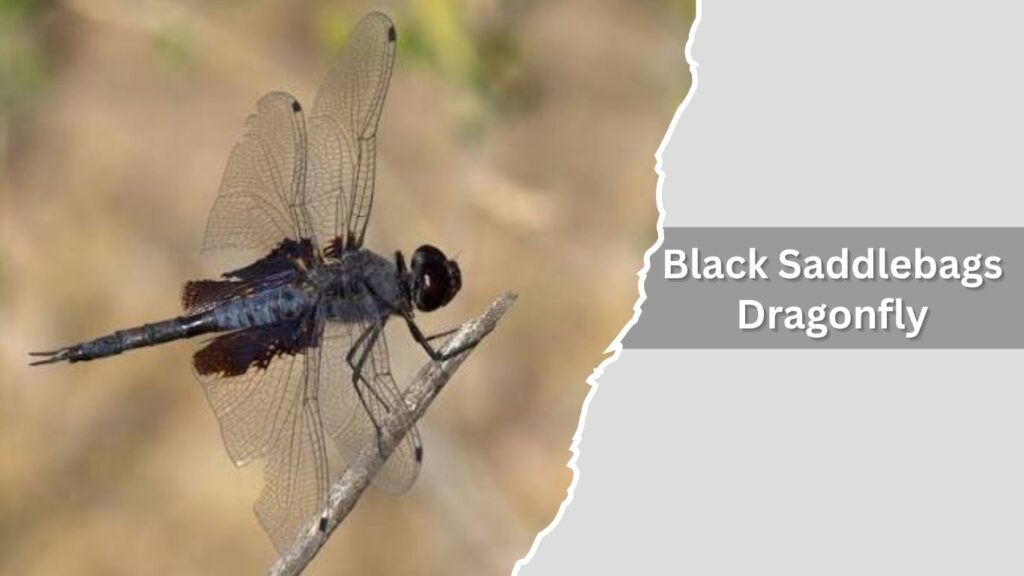
The Black Saddlebags dragonfly (Tramea lacerata) is a striking species recognized by the dark patches near the bases of its hindwings. These markings resemble saddlebags, giving the dragonfly its common name. It is a strong, agile flier often seen around ponds, lakes, marshes, and open fields. Black Saddlebags are also migratory and may travel considerable distances during seasonal movements.
Identification
- Scientific name: Tramea lacerata
- Body color: Mostly dark brown to black
- Wing pattern: Large black patches near the bases of the hindwings
- Wings: Mostly transparent beyond the dark patches
- Body shape: Long, slender abdomen
- Size: Usually around 2 inches long
- Eyes: Large and dark
- Flight: Fast, powerful, and often high above the ground
Habitat and Distribution
Black Saddlebags dragonflies are commonly associated with ponds, lakes, marshes, slow-moving waterways, and other freshwater habitats. Adults frequently leave the water and hunt over fields, roadsides, gardens, and open landscapes. They occur across much of North America and can be especially noticeable during warm weather and seasonal migration periods.
Behavior and Diet
This dragonfly spends much of its time flying while searching for small airborne insects. Black Saddlebags commonly prey on mosquitoes, midges, flies, small moths, and other tiny insects. Their strong wings allow them to remain airborne for long periods, and they may glide between bursts of rapid flight while patrolling feeding areas.
Life Cycle and Reproduction
Like other dragonflies, Black Saddlebags develop through egg, aquatic nymph, and adult stages. Females deposit eggs in freshwater, where the young nymphs hatch and live underwater. The nymphs are predators that feed on aquatic insects and other small organisms. When fully developed, they climb out of the water, shed their final nymphal skin, and emerge as winged adults.
2. Widow Skimmer Dragonfly
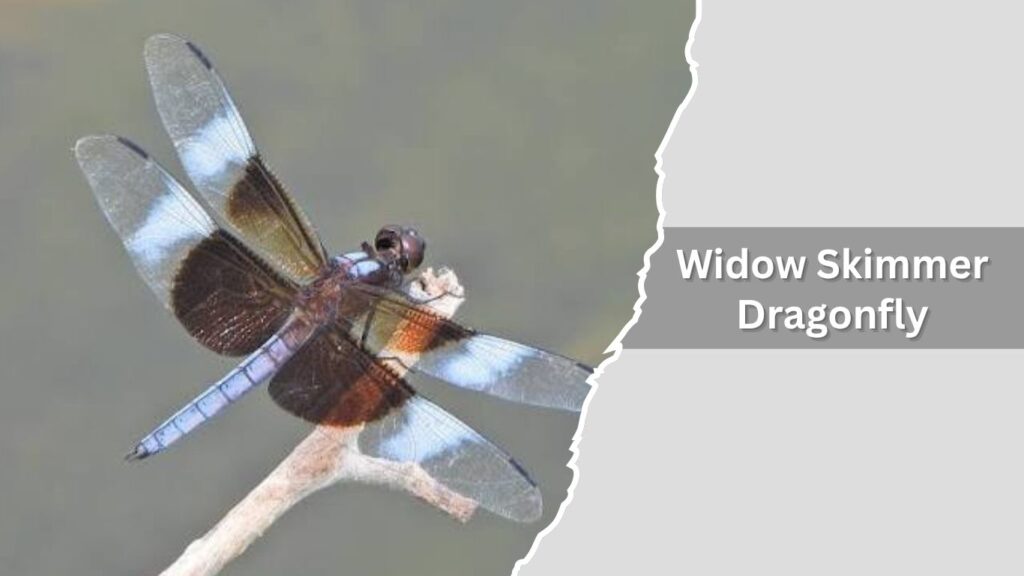
The Widow Skimmer (Libellula luctuosa) is a distinctive dragonfly known for the bold dark patches on its wings. Males often develop pale white areas beside the black wing markings, creating a striking black-and-white appearance. This species is common around ponds, lakes, marshes, and slow-moving water, where adults frequently perch on exposed stems while watching for prey.
Identification
- Scientific name: Libellula luctuosa
- Male color: Dark body with bluish-white pruinescence
- Female color: Brownish to yellowish body
- Wing pattern: Broad black bands near the wing bases
- Male wings: Often show white patches beyond the dark areas
- Size: Usually around 1.5–2 inches long
- Eyes: Large and dark
- Body shape: Broad thorax with a relatively slender abdomen
Habitat and Distribution
Widow Skimmers are usually found near calm freshwater habitats, including ponds, lakes, marshes, and slow streams. Adults may also move into fields, gardens, and open woodland edges while hunting. They are widely distributed across much of North America and are especially noticeable during warm summer months.
Behavior and Diet
Widow Skimmers are active aerial predators that feed on mosquitoes, flies, midges, and other small flying insects. Males often establish territories near water and may chase away competing dragonflies. Adults regularly perch on twigs or vegetation between hunting flights, making them easier to observe than species that remain constantly airborne.
Life Cycle and Reproduction
Females lay eggs in freshwater, where the young nymphs develop underwater. The aquatic nymphs prey on mosquito larvae, small aquatic insects, and other tiny animals. After passing through several molts, mature nymphs crawl onto vegetation or other surfaces and emerge as winged adults.
3. Common Whitetail Dragonfly
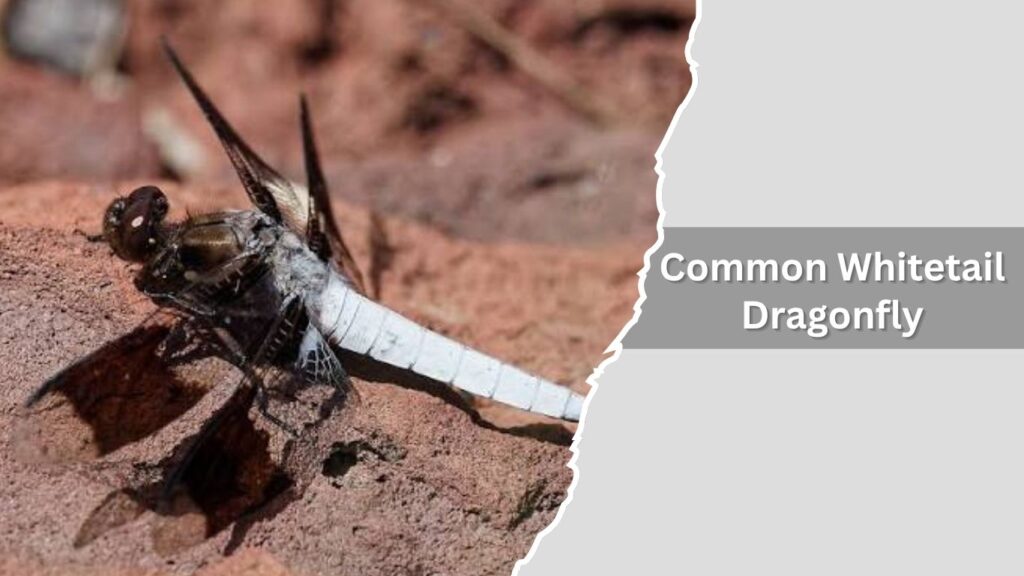
The Common Whitetail (Plathemis lydia) is one of the easiest North American dragonflies to recognize, especially the adult male. Mature males have a broad white abdomen contrasted by dark wing patches, producing a strong black-and-white appearance. Females look different, with brown bodies and yellow abdominal markings. The species commonly occurs around ponds, lakes, wetlands, and slow-moving streams.
Identification
- Scientific name: Plathemis lydia
- Male abdomen: Broad and powdery white
- Female abdomen: Brown with yellow markings
- Wing pattern: Dark patches on the wings
- Body shape: Short, broad abdomen
- Size: Around 1.5–2 inches long
- Male appearance: Strong black-and-white contrast
- Flight: Quick with frequent low perching
Habitat and Distribution
Common Whitetails prefer still or slowly moving freshwater. They are often found around farm ponds, lakes, marshes, canals, and quiet streams. Adults frequently perch on rocks, logs, paths, fences, or low vegetation near the water. The species is widespread across much of the United States and southern Canada.
Behavior and Diet
These dragonflies hunt small airborne insects, including mosquitoes, gnats, midges, and flies. Males may defend territories near the shoreline and frequently return to favorite perches. Their habit of resting in open areas makes them one of the more easily photographed dragonflies.
Life Cycle and Reproduction
Common Whitetails begin life as eggs deposited in water. The nymphs remain aquatic and feed on small insects and other aquatic prey. After completing development, the nymph crawls out of the water and sheds its skin. The newly emerged adult then expands and hardens its wings before beginning its aerial life.
4. Twelve-Spotted Skimmer Dragonfly
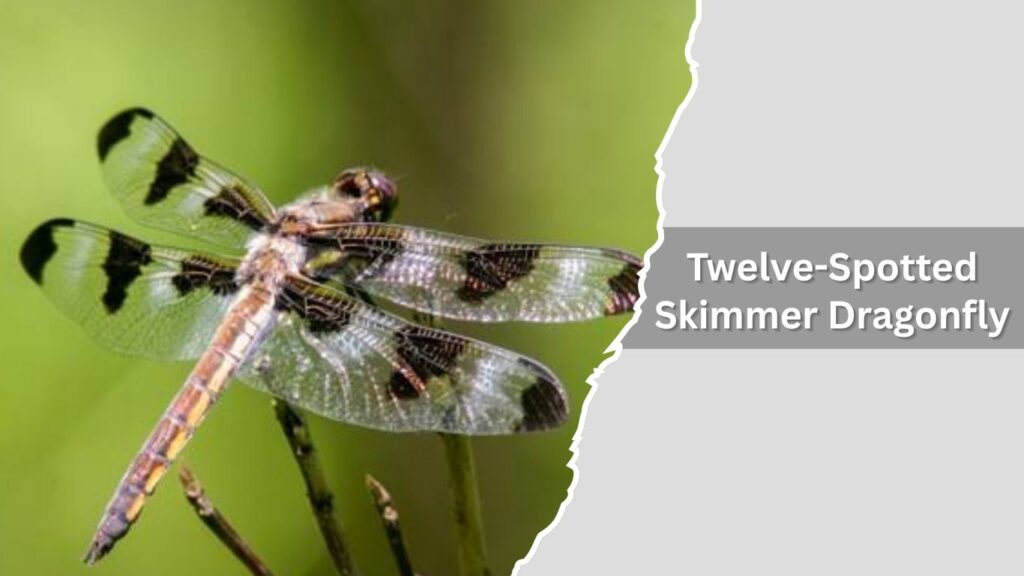
The Twelve-Spotted Skimmer (Libellula pulchella) is a large and colorful dragonfly famous for the dark markings across its four wings. Mature males develop white patches between the black spots, producing a dramatic black-and-white wing pattern. Females lack the bright white markings but retain the characteristic dark wing spots. They are often seen around ponds, lakes, and open wetlands.
Identification
- Scientific name: Libellula pulchella
- Wing pattern: Three dark patches on each wing
- Male markings: White patches develop between dark wing spots
- Female markings: Mostly black wing patches without strong white areas
- Body: Brown with pale yellow markings
- Size: Approximately 2 inches long
- Wingspan: Broad and noticeable
- Flight: Strong and direct
Habitat and Distribution
Twelve-Spotted Skimmers prefer open freshwater environments such as ponds, lakes, marshes, and slow-moving waterways. They are particularly common in sunny locations with plenty of exposed vegetation or branches for perching. Their range covers a large portion of North America.
Behavior and Diet
Adults are active hunters that capture mosquitoes, midges, small flies, and other flying insects. Males frequently patrol sections of shoreline and may aggressively chase other dragonflies. They often return to the same exposed perch after a short hunting flight.
Life Cycle and Reproduction
Females deposit eggs directly into water while males may remain nearby. The eggs hatch into aquatic nymphs that spend their development hunting small underwater animals. Once mature, the nymph climbs onto vegetation or another exposed surface, sheds its final skin, and emerges as an adult dragonfly.
5. Eight-Spotted Skimmer Dragonfly
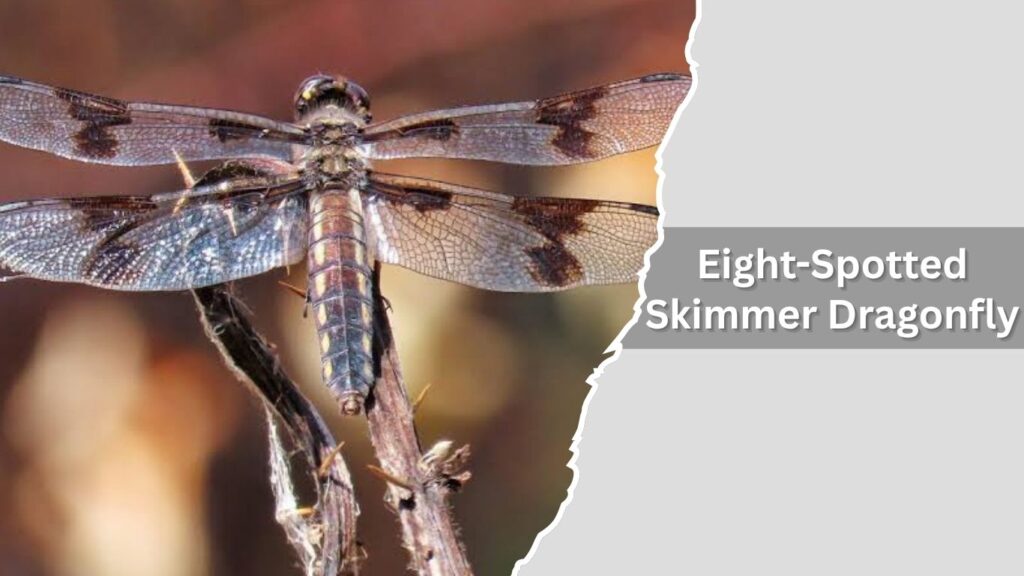
The Eight-Spotted Skimmer (Libellula forensis) is a western North American dragonfly recognized by the prominent black patches on its wings. Mature males also develop bright white wing patches that contrast strongly against the black areas. This combination makes males particularly striking in flight. The species is frequently found near ponds, lakes, marshes, and slow-moving streams.
Identification
- Scientific name: Libellula forensis
- Wing pattern: Large black patches on all four wings
- Male wings: White markings occur between darker patches
- Female wings: Primarily black patches without the same bright white contrast
- Body color: Brown to dark brown
- Size: Around 2 inches long
- Body shape: Stout thorax with a long abdomen
- Flight: Fast and territorial
Habitat and Distribution
Eight-Spotted Skimmers commonly live around open freshwater habitats, especially ponds, lakes, marshes, and slow streams. They are primarily associated with western North America. Adults often choose exposed perches overlooking the water, where they can quickly detect prey or competing dragonflies.
Behavior and Diet
These dragonflies are efficient aerial predators. They catch mosquitoes, midges, flies, and other small insects while flying. Males often defend territories along the shoreline and chase intruding males. Between hunting flights, they frequently rest on stems, branches, or other elevated objects.
Life Cycle and Reproduction
The female lays eggs in freshwater, beginning the aquatic part of the life cycle. Nymphs remain underwater and hunt small aquatic insects and other organisms. After several molts, mature nymphs leave the water and attach themselves to vegetation. The adult then emerges, expands its wings, and begins hunting above the water.
6. Black Petaltail Dragonfly
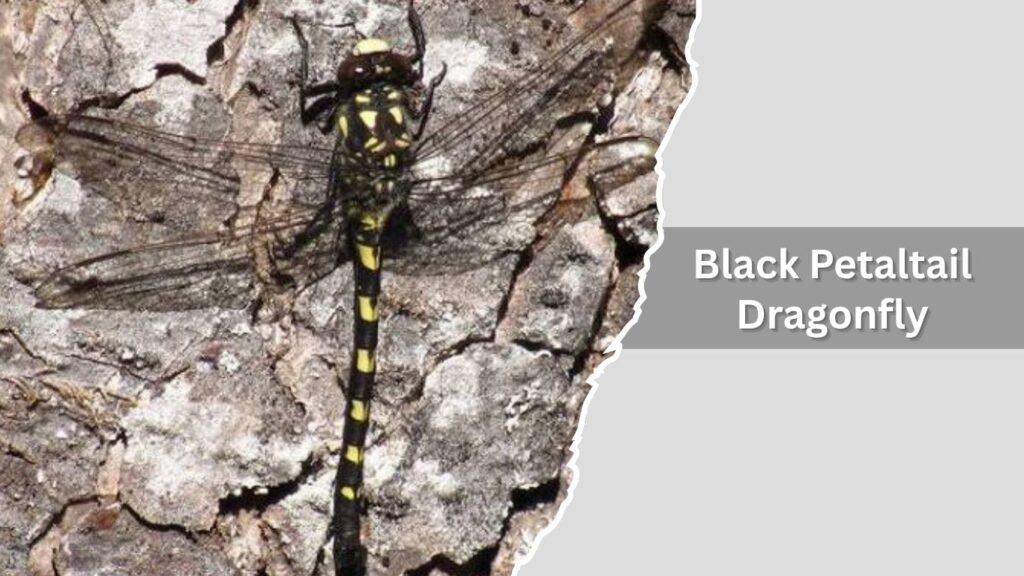
The Black Petaltail (Tanypteryx hageni) is a large, dark dragonfly known for its mostly black body with contrasting yellow markings. Its dark coloration makes it a good match for searches involving black dragonflies and large black dragonfly species. Unlike many dragonflies that stay close to open ponds, the Black Petaltail is often associated with moist forest habitats, seeps, and shaded wetlands.
Identification
- Scientific name: Tanypteryx hageni
- Body color: Mostly black with yellow markings
- Thorax: Dark with narrow yellow stripes
- Abdomen: Long, dark, and patterned with yellow
- Wings: Mostly clear
- Size: Large, often over 2 inches long
- Eyes: Dark and widely separated
- Flight: Strong but often slower than open-water skimmers
Habitat and Distribution
Black Petaltails are strongly associated with wet forest habitats rather than large open lakes. They often occur around seepages, boggy ground, marshy forest edges, and spring-fed areas. The species is found mainly in western North America. Adults may perch vertically on tree trunks, logs, or people standing quietly nearby.
Behavior and Diet
Adults are predatory and capture mosquitoes, flies, midges, and other small flying insects. Black Petaltails frequently patrol shaded clearings and forest openings. They also spend considerable time perched, making them easier to observe than some continuously flying dragonflies. Their dark coloration provides effective camouflage against bark and shaded vegetation.
Life Cycle and Reproduction
Females place eggs in wet moss, mud, or saturated vegetation around seepage habitats. The nymphs live in very shallow water or moist substrates rather than deep ponds. They prey on small aquatic organisms until development is complete. Mature nymphs eventually leave the wet habitat, molt for the final time, and become adults.
7. Black-Shouldered Spinyleg Dragonfly
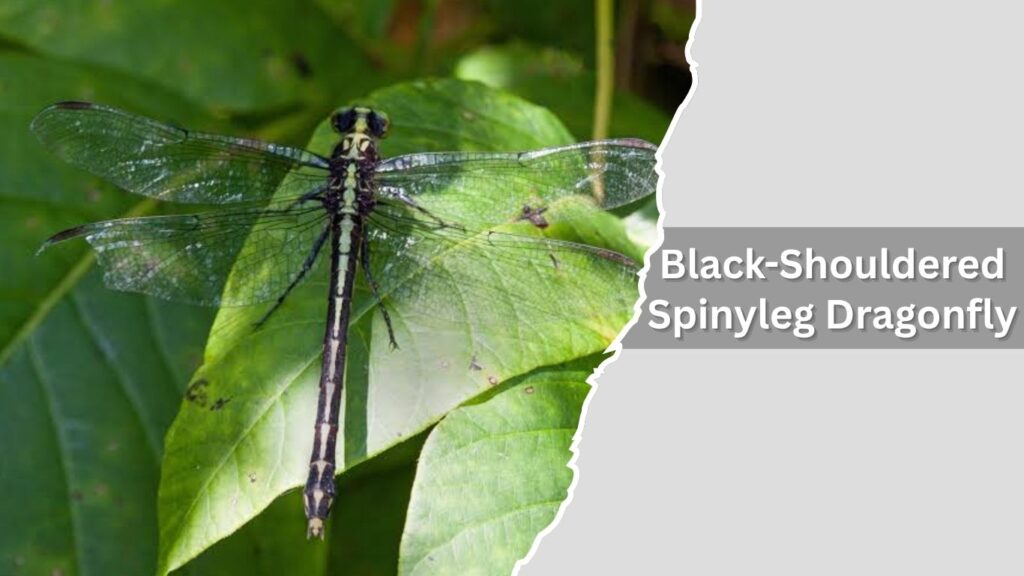
The Black-Shouldered Spinyleg (Dromogomphus spinosus) is a distinctive clubtail dragonfly with bold dark markings across the thorax and long spiny legs. Its black-and-yellow pattern can make it appear like a black and yellow dragonfly when viewed from a distance. It is commonly associated with rivers, streams, lakeshores, and other freshwater habitats containing open areas for hunting.
Identification
- Scientific name: Dromogomphus spinosus
- Body color: Black and yellow
- Thorax: Prominent dark shoulder markings
- Abdomen: Slender with yellow patterning
- Legs: Long and noticeably spiny
- Tail: Slightly club-shaped near the tip
- Wings: Clear
- Size: Medium to large dragonfly
Habitat and Distribution
Black-Shouldered Spinylegs are commonly found near streams, rivers, lakes, and ponds with suitable shoreline habitat. Adults often patrol sandy banks, open paths, and vegetation close to water. The species occurs mainly in eastern and central parts of North America, where it is most visible during warmer months.
Behavior and Diet
This species is an active predator that catches mosquitoes, flies, midges, and other flying insects. Its unusually spiny legs help form an effective basket for trapping prey during flight. Adults may perch on rocks, branches, or low vegetation before making fast flights to capture passing insects.
Life Cycle and Reproduction
Females deposit eggs into suitable freshwater habitats. After hatching, the aquatic nymphs live on or near the bottom, where they hunt small invertebrates. They molt repeatedly as they grow. When mature, a nymph crawls out of the water, sheds its final skin, and emerges as an adult.
8. Blue Dasher Dragonfly
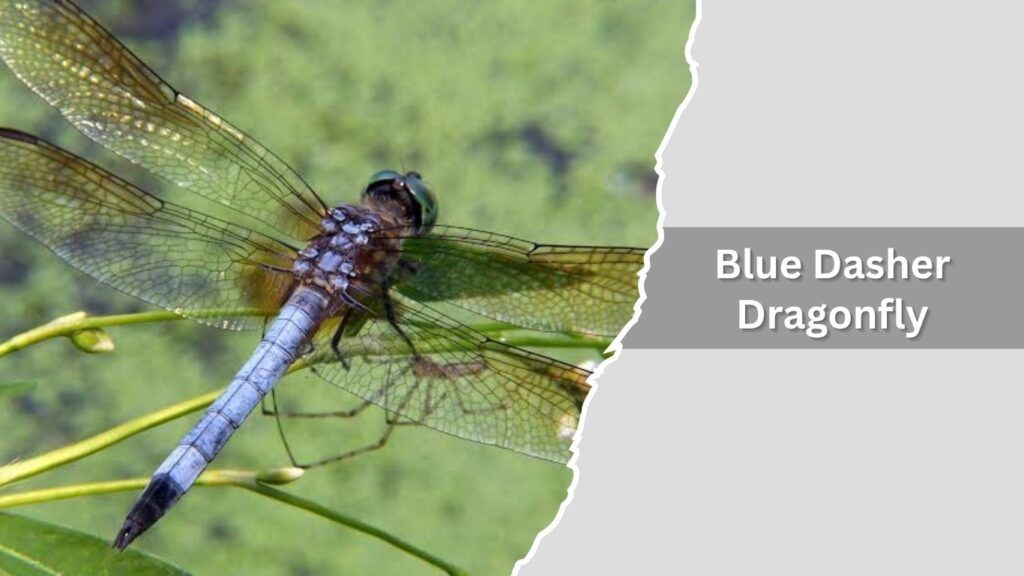
The Blue Dasher (Pachydiplax longipennis) is a small to medium-sized dragonfly commonly seen around ponds, marshes, lakes, and gardens. Mature males develop a powdery blue abdomen with darker markings, giving them a blue-and-black dragonfly appearance. Females and immature males are more yellowish or brownish, making the species look quite different depending on age and sex.
Identification
- Scientific name: Pachydiplax longipennis
- Male abdomen: Powdery blue with dark tip
- Female color: Yellow, brown, and black
- Thorax: Dark with pale or yellowish stripes
- Wings: Mostly clear
- Eyes: Large, often bluish or greenish
- Size: Usually around 1 to 1.7 inches long
- Body shape: Relatively slender
- Flight: Quick and agile
Habitat and Distribution
Blue Dashers prefer still or slow-moving freshwater environments. They are often seen around ponds, marshes, drainage areas, lakeshores, and slow streams. Adults may also visit gardens and open fields near water. The species is widespread across much of the United States and parts of neighboring regions.
Behavior and Diet
Blue Dashers spend much of their time perched on exposed twigs, grasses, or stems. From these lookout points, they launch short flights to catch mosquitoes, gnats, flies, midges, and other small insects. Males can be territorial and may repeatedly chase other dragonflies away from preferred areas.
Life Cycle and Reproduction
Females lay eggs in freshwater, where the larvae develop as aquatic nymphs. Nymphs feed on mosquito larvae and other small aquatic animals. After completing a series of molts, the mature nymph leaves the water and transforms into an adult. Newly emerged adults are initially pale before developing their mature coloration.
9. Common Green Darner Dragonfly
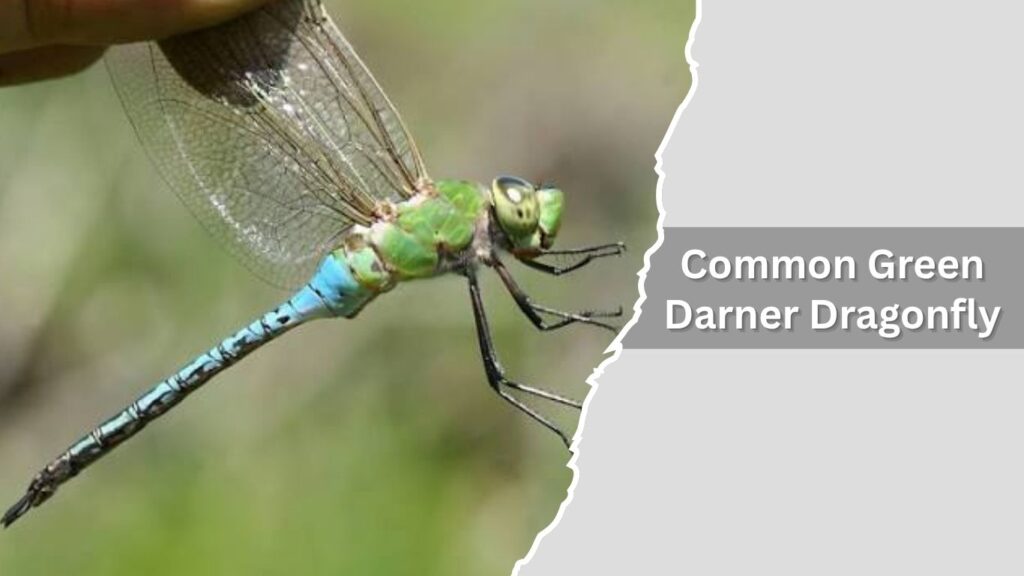
The Common Green Darner (Anax junius) is a large dragonfly recognized by its bright green thorax and powerful flight. Mature males typically have a blue abdomen with dark markings, creating a striking green, blue, and black appearance. It is one of North America’s best-known migratory dragonflies and can travel long distances between breeding and overwintering areas.
Identification
- Scientific name: Anax junius
- Thorax: Bright green
- Male abdomen: Mostly blue with dark markings
- Female abdomen: Greenish, brownish, or reddish
- Wings: Large and transparent
- Body: Long and slender
- Size: Around 2.5 to 3 inches long
- Eyes: Large and prominent
- Flight: Fast, powerful, and sustained
Habitat and Distribution
Common Green Darners are found around ponds, lakes, marshes, wetlands, temporary pools, and slow-moving water. Adults often travel far from aquatic habitats while hunting or migrating. They occur widely across North America and may be observed in large numbers during seasonal migration.
Behavior and Diet
These dragonflies are skilled aerial hunters. Adults eat mosquitoes, flies, midges, moths, and smaller flying insects. Their long legs form a basket beneath the body for catching prey in flight. Common Green Darners may remain airborne for long periods and are among the more powerful flying dragonflies.
Life Cycle and Reproduction
Females insert eggs into aquatic plants or other vegetation near water. The eggs hatch into aquatic nymphs, which prey on insects, tadpoles, and other small animals. After development is complete, the nymph climbs above the water and molts into an adult. Some populations complete seasonal migrations over multiple generations.
10. Halloween Pennant Dragonfly
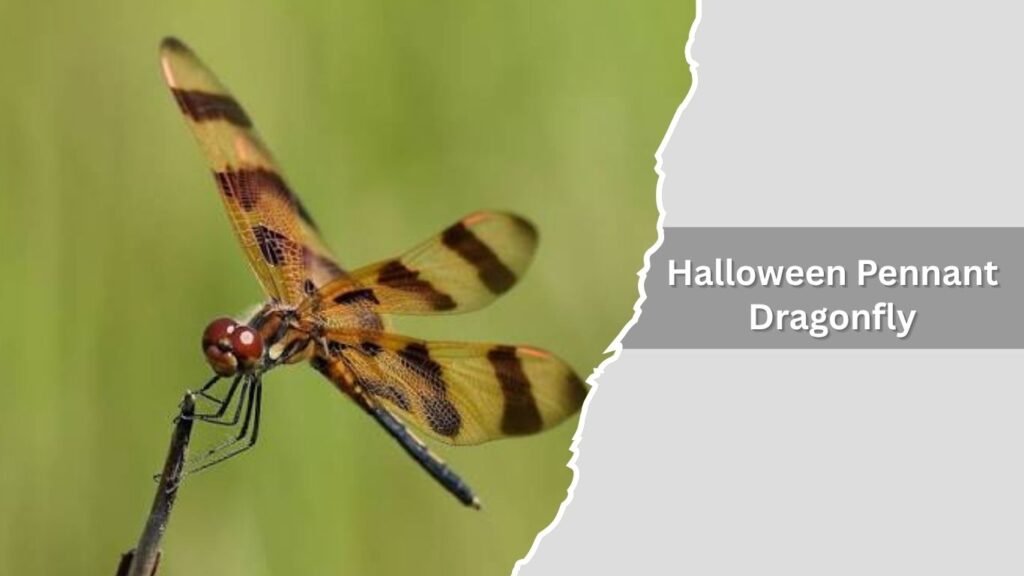
The Halloween Pennant (Celithemis eponina) is one of the most colorful dragonflies in North America. Its orange-yellow wings are marked with dark brown or black bands, giving it a striking black-and-orange appearance. Adults often perch near the tops of grasses and stems, where their wings move slightly in the breeze like small flags or pennants.
Identification
- Scientific name: Celithemis eponina
- Wing color: Orange to yellow
- Wing markings: Dark brown or black bands
- Body color: Yellow-orange with dark markings
- Wings: Broad and highly patterned
- Size: Small to medium
- Eyes: Reddish or brownish in mature individuals
- Perching style: Often rests on the tips of grasses
Habitat and Distribution
Halloween Pennants commonly live around ponds, lakes, marshes, wetlands, and slow-moving freshwater habitats. They are often seen in open sunny areas with tall grasses and emergent vegetation. The species occurs across much of eastern and central North America and is particularly noticeable during summer.
Behavior and Diet
Adults feed on mosquitoes, midges, flies, and other small airborne insects. Halloween Pennants are famous for perching at the ends of flexible grass stems, even when the plants move in strong wind. Males may defend small territories and chase competitors while searching for females.
Life Cycle and Reproduction
Females deposit eggs into shallow freshwater while flying near the surface. The aquatic nymphs develop underwater and feed on small insects and other invertebrates. Once mature, they climb onto vegetation and emerge as adults. Their patterned wings develop fully after the newly emerged dragonfly has expanded and hardened them.
FAQs
What Is the Most Common Black and White Dragonfly?
The Common Whitetail is one of the most recognizable black-and-white dragonflies in North America. Mature males have a broad white abdomen with dark wing patches, while females are brown with yellow markings. Widow Skimmers and Twelve-Spotted Skimmers can also show strong black-and-white patterns.
Are Black Dragonflies Dangerous?
Black dragonflies are generally harmless to humans. They do not sting and do not seek people as prey. A dragonfly may occasionally nip if handled roughly, but this is uncommon. Species such as the Black Saddlebags and Black Petaltail are primarily predators of smaller insects.
What Dragonfly Has Black and White Wings?
Several species can have black-and-white wing patterns. Mature male Widow Skimmers and Twelve-Spotted Skimmers are especially notable because their wings contain dark patches combined with pale or white markings. Eight-Spotted Skimmers can also develop strong black-and-white contrasts across their wings.
What Do Black and White Dragonflies Eat?
Black and white dragonflies mainly eat small flying insects. Their diet can include mosquitoes, midges, gnats, flies, small moths, and other insects. They are skilled aerial predators and usually capture prey while flying by using their legs to form a basket around the insect.
Where Do Black and White Dragonflies Live?
Most black and white dragonflies live near freshwater habitats such as ponds, lakes, marshes, wetlands, streams, and slow-moving rivers. Adults may also travel into gardens, fields, and woodland edges while hunting. The exact habitat and geographic range depend on the particular dragonfly species.