
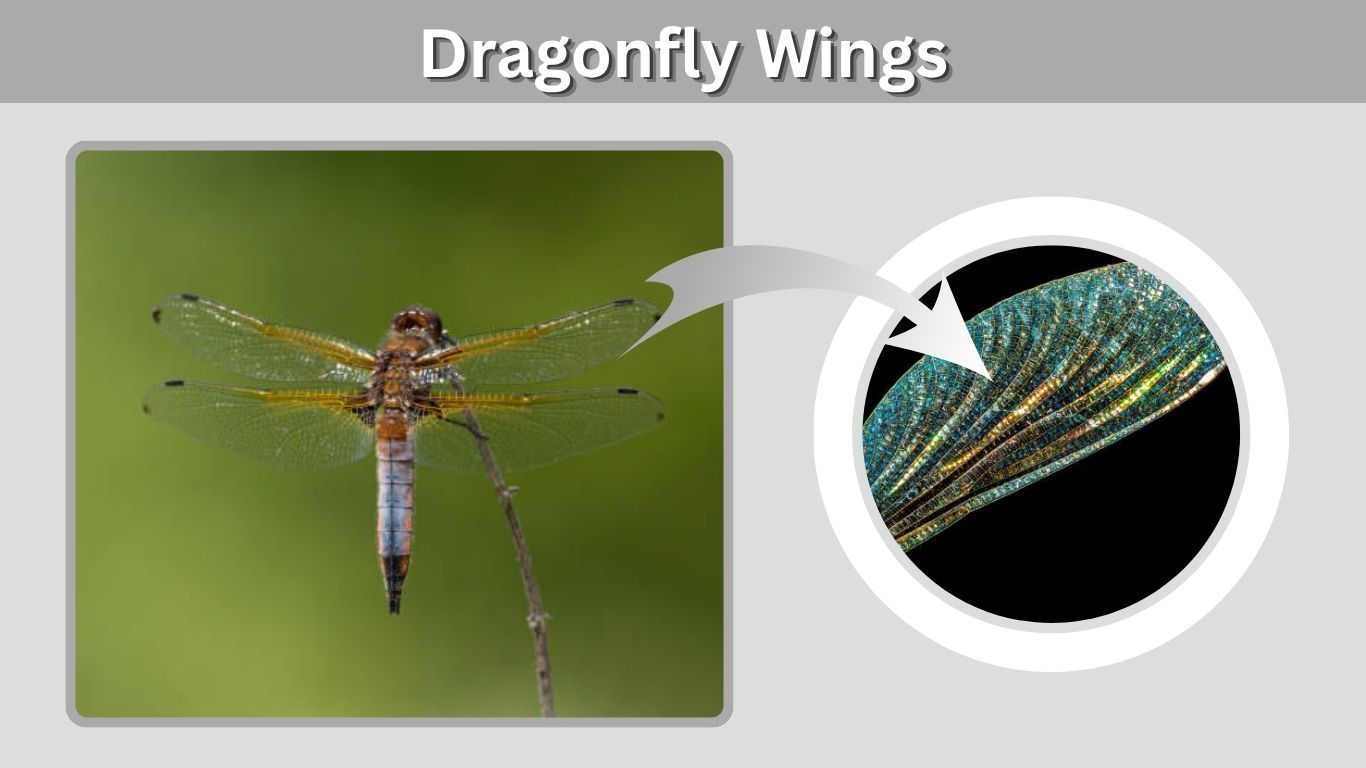
Dragonfly wings are among the most impressive structures in the insect world. Every adult dragonfly has four wings arranged as two independent pairs, allowing it to fly forward, backward, sideways, hover, and make remarkably fast turns. Although the wings appear thin and fragile, their network of veins provides strength while keeping them lightweight. Dragonfly wings can also vary in color and pattern, ranging from completely transparent to black, white-tipped, spotted, striped, or brightly colored depending on the species.
How Many Wings Does a Dragonfly Have?
A dragonfly has four wings, consisting of two forewings and two hindwings. Unlike many flying insects, dragonflies can control these wing pairs somewhat independently. This unusual arrangement contributes to their remarkable maneuverability and makes them highly effective aerial predators.
Do Dragonflies Have Two Sets of Wings?
Yes. Dragonflies have two sets, or pairs, of wings:
- Two forewings at the front
- Two hindwings behind them
- Four wings in total
- Each wing attaches separately to the thorax
The hindwings are usually broader near their bases than the forewings.
This is one feature that can help distinguish dragonflies from some other flying insects.
Why Do Dragonflies Need Four Wings?
Four independently controlled wings give dragonflies exceptional control in the air.
A dragonfly can rapidly change its wing movements to accelerate, slow down, turn sharply, or remain almost stationary in one position.
This maneuverability is particularly important while hunting because dragonflies capture much of their prey while flying.
What Are Dragonfly Wings Made Of?
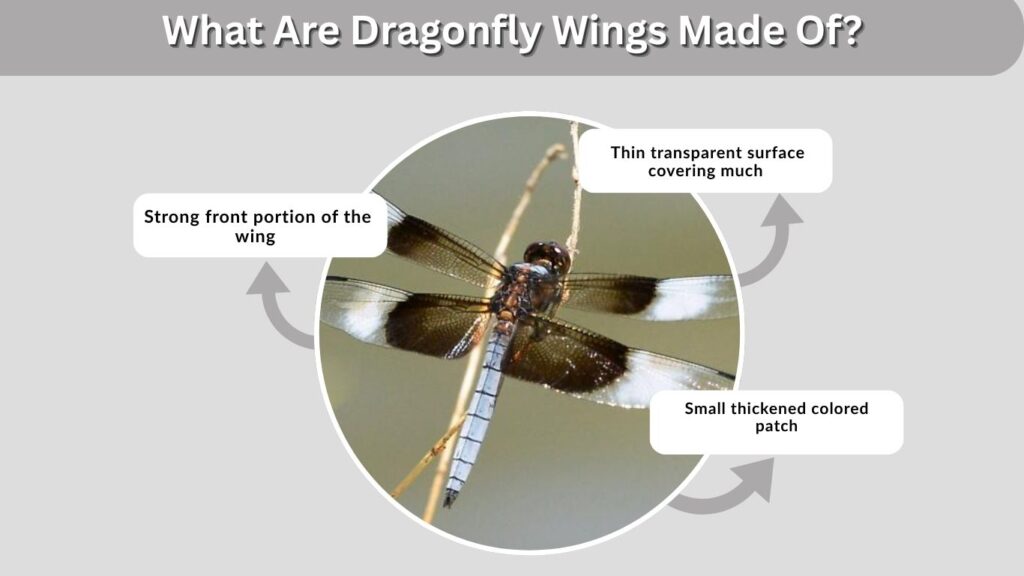
Dragonfly wings look almost like transparent glass, but they are biological structures made primarily from a thin insect cuticle supported by a complex network of veins. Their lightweight construction allows them to move rapidly without adding unnecessary weight to the dragonfly’s body.
Dragonfly Wing Structure
Important parts include:
- Wing membrane: Thin transparent surface covering much of the wing
- Veins: Supporting framework running throughout the wing
- Cross-veins: Smaller connections between major veins
- Leading edge: Strong front portion of the wing
- Pterostigma: Small thickened colored patch near the outer edge
- Wing base: Area connecting the wing to the thorax
Together, these structures provide an effective balance between flexibility and strength.
Why Are the Wings So Strong?
A dragonfly wing is not simply a flat sheet.
Its vein network divides the membrane into numerous small sections. This arrangement helps spread forces across the wing during flight while permitting some flexibility.
The veins also contain living tissues and are important during wing development.
Once an adult emerges, however, damaged dragonfly wings cannot regenerate in the same way that some other body tissues may recover.
Dragonfly Wing Patterns
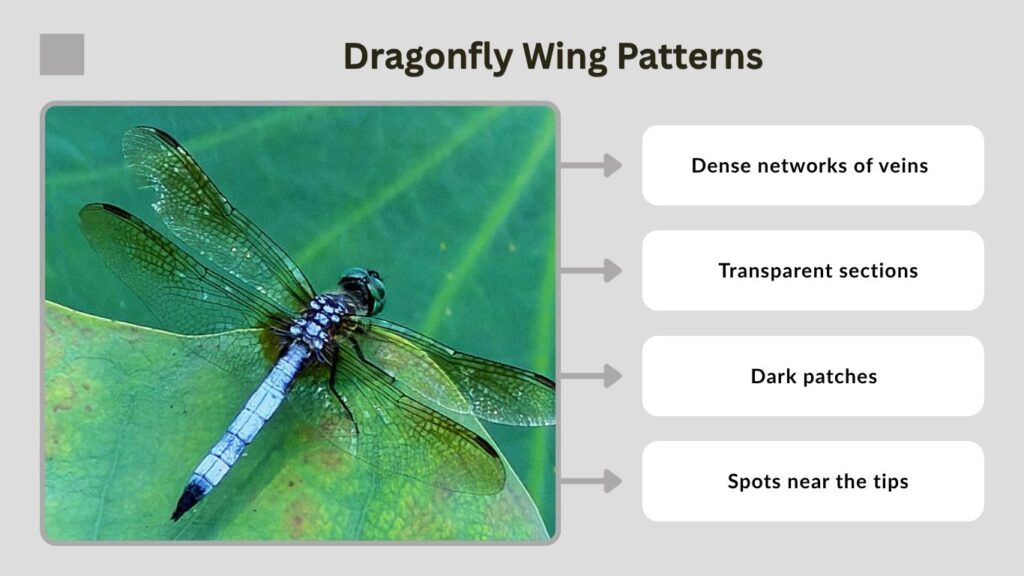
Looking closely at a dragonfly wing reveals an intricate geometric pattern created by its veins and cross-veins. The arrangement differs between groups and can even help specialists identify species.
Patterns can appear especially striking in close-up photographs.
Common Wing Features
Depending on species, you may notice:
- Dense networks of veins
- Transparent sections
- Dark patches
- Colored bands
- Spots near the tips
- Contrasting bases
- Small rectangular or polygon-shaped cells
The tiny sections enclosed by veins can sometimes create the impression that a dragonfly has “square wings.”
In reality, the overall wing remains elongated; the square or rectangular appearance usually comes from markings or individual cells within its vein network.
Dragonfly Wing Colors
Not every dragonfly has completely clear wings. Many species have dark bands, colored patches, or tinted wing surfaces that play roles in identification, communication, camouflage, and courtship.
Wing appearance can also change depending on lighting and viewing angle.
Common Dragonfly Wing Colors
Dragonfly wings may appear:
- Completely transparent
- Smoky brown
- Black
- Black and clear
- Black and white
- White-tipped
- Red or orange
- Blue-tinted
- Spotted
- Striped or banded
Some species are especially recognizable because of these markings.
Dragonfly With Black Wings
A black-winged dragonfly can look dramatically different from the familiar clear-winged species. However, several dragonflies and closely related damselflies have extensive dark pigmentation.
One reason identification becomes confusing is that people often use “dragonfly” informally for several similar-looking insects.
Black and Clear Wings
Some dragonflies have mostly transparent wings interrupted by dark patches or bands.
Look at:
- Where the black area begins
- Whether all four wings have markings
- Whether the wing tips are dark
- Body color
- Eye color
- Overall body size
These features provide better identification clues than the presence of black alone.
Black Wings With White Tips
Certain species display dark wings combined with pale or whitish areas.
Wing markings may differ between males and females and can change subtly as individuals mature.
If identifying one from a photograph, body coloration and geographic location should be considered along with wing pattern.
Dragonfly With Blue Wings
Blue is one of the colors most strongly associated with dragonflies, but usually the blue comes from the body rather than the entire wing.
Nevertheless, certain species can display bluish reflections, pigmentation, or dark wings that appear blue under bright sunlight.
Blue Wings vs Blue Body
A dragonfly described as having blue wings may actually have:
- A bright blue abdomen
- Blue thoracic markings
- Dark wings reflecting blue light
- Blue patches near the wing base
- Transparent wings reflecting the sky
- Naturally tinted wing sections
Lighting can dramatically influence photographs, so apparent wing color alone may not provide a definite identification.
Dragonfly With Black and White Wings
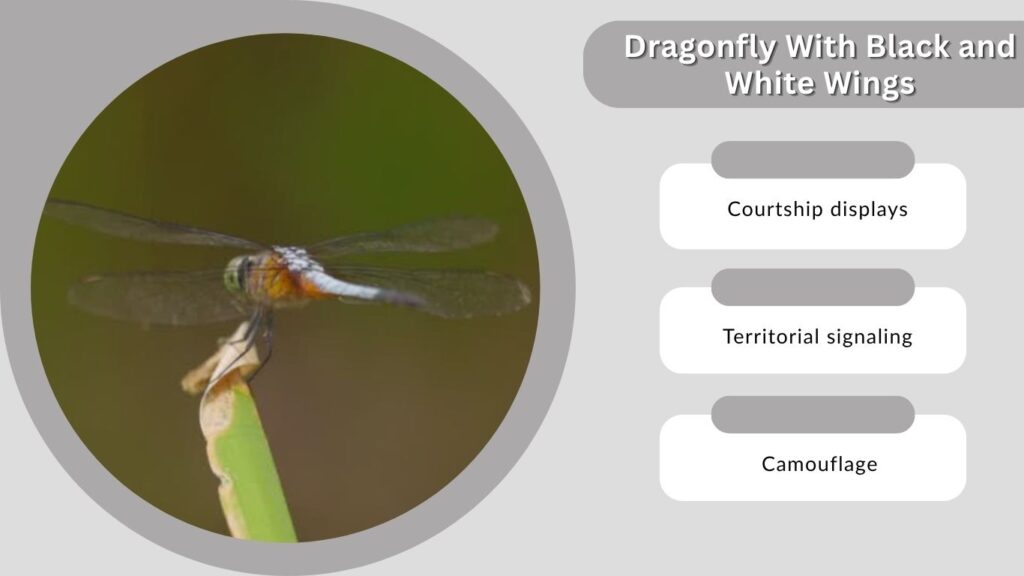
Black-and-white wing patterns are particularly noticeable because they contrast strongly with transparent sections of the wings.
Species with bold patterns may resemble small butterflies when flying.
Why Do Dragonflies Have Patterned Wings?
Possible functions of wing markings include:
- Recognizing members of the same species
- Courtship displays
- Territorial signaling
- Camouflage
- Predator confusion
- Sexual differences between males and females
Not every pattern has the same purpose, and coloration has evolved differently among dragonfly groups.
Dragonfly With Square Wings
Searches for a “dragonfly with square wings” usually describe an insect whose wing patches, tips, or vein cells look unusually rectangular.
True dragonfly wings are not naturally shaped like perfect squares.
Why Wings May Look Square
Possible explanations include:
- Large rectangular dark patches
- Broad hindwing sections
- Geometric vein patterns
- Wings photographed at an unusual angle
- Dark blocks near wing tips
- Confusion with another insect species
Examining the insect’s complete body is important before identifying it from the wing shape alone.
How Do Dragonfly Wings Work?
Dragonflies are exceptional flyers because each wing can contribute differently to a maneuver. Their flight muscles are attached within the thorax and generate the movements needed to beat the wings.
The timing and angle of each wing can change rapidly.
What Dragonflies Can Do in Flight
Their wings allow them to:
- Hover
- Fly forward
- Move backward
- Turn sharply
- Fly sideways
- Rise rapidly
- Dive toward prey
- Accelerate suddenly
- Remain stable in windy conditions
This flexibility makes dragonflies highly successful airborne hunters.
How Fast Do Dragonfly Wings Beat?
Dragonfly wingbeats are relatively easy for the human eye to notice compared with the almost invisible wing movements of mosquitoes or some flies.
Their effectiveness comes not simply from beating extremely fast but from controlling the timing, angle, and interaction of all four wings.
Dragonflies can adjust the relationship between the forewings and hindwings depending on whether they need speed, stability, hovering, or rapid maneuvering.
Can a Dragonfly Fly With a Damaged Wing?
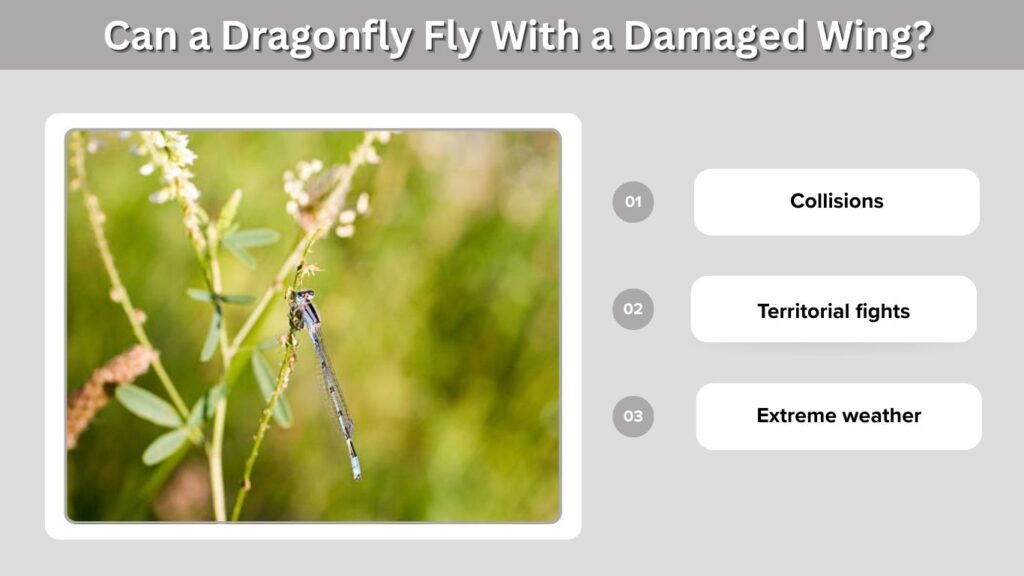
Dragonflies occasionally survive with torn or partially missing wing sections. Small amounts of damage do not necessarily prevent flight because their four-wing system provides some compensation.
Severe damage, however, can significantly reduce hunting and escaping abilities.
Common Causes of Wing Damage
Wings may become damaged through:
- Predator attacks
- Collisions
- Territorial fights
- Extreme weather
- Getting caught in vegetation
- Natural wear as the insect ages
- Rough human handling
Adult dragonflies cannot simply grow a completely new wing.
For this reason, they should never be picked up by their wings.
Do Baby Dragonflies Have Wings?
Dragonfly nymphs do not have functional external wings.
Young dragonflies live underwater, where they are active predators. As a nymph approaches adulthood, developing wing structures become increasingly visible.
From Nymph to Winged Adult
When development is complete, the nymph:
- Climbs out of the water.
- Attaches itself to vegetation or another surface.
- Splits its old outer skin.
- Pulls its adult body free.
- Expands its four wings.
- Waits for the wings to harden.
- Takes its first flight.
A freshly emerged dragonfly has soft, shiny wings that require time to expand and strengthen.
Dragonfly Wings vs Damselfly Wings
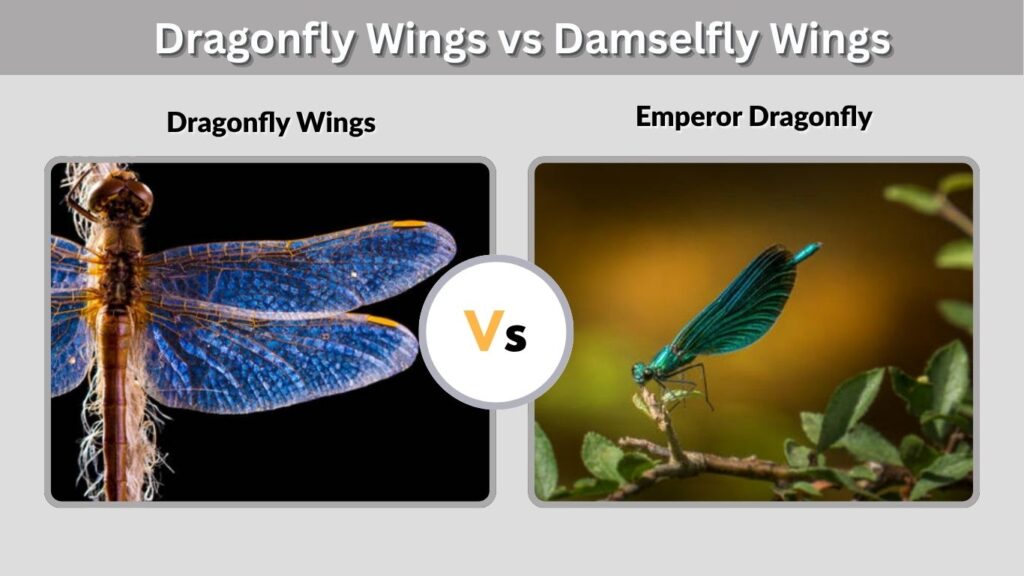
Dragonflies and damselflies both belong to the order Odonata and both have four wings, but their resting positions and shapes can help distinguish them.
| Feature | Dragonfly | Damselfly |
| Number of wings | 4 | 4 |
| Hindwings | Usually broader at base | Similar to forewings |
| Resting position | Usually spread outward | Often folded together |
| Body | Usually robust | Usually slender |
| Flight | Strong and direct | Often lighter and fluttering |
There are exceptions, so multiple characteristics should be considered when identifying an unfamiliar insect.
Interesting Facts About Dragonfly Wings
Dragonfly wings are remarkable for several reasons:
- Adults always have four functional wings.
- The forewings and hindwings can move differently.
- Wings contain an intricate network of veins.
- Many species have transparent wings.
- Others have spots, bands, or dark pigmentation.
- Hindwings are generally broader at the base.
- Dragonflies can hover and fly backward.
- Wing patterns can help identify species.
- Adults cannot regrow a completely destroyed wing.
- Their basic four-wing design has existed for an extraordinarily long evolutionary period.
FAQs
How Many Wings Does a Dragonfly Have?
A dragonfly has four wings—two forewings and two hindwings. The wings attach individually to the thorax and can work with different timing and angles, giving dragonflies exceptional control during hovering, hunting, turning, and rapid flight.
Do Dragonflies Have Two Sets of Wings?
Yes. Dragonflies have two sets of wings, meaning one front pair and one rear pair. This gives them four wings altogether. The hindwings are generally broader near their base than the forewings.
What Are Dragonfly Wings Made Of?
Dragonfly wings consist mainly of a thin cuticular membrane strengthened by an intricate network of veins. The structure keeps the wings lightweight while providing enough strength and flexibility to withstand rapid changes in direction during flight.
Why Do Some Dragonflies Have Black Wings?
Dark wing pigmentation varies among species and may be involved in courtship, recognition, territorial displays, temperature regulation, or other biological functions. Some species have fully dark wings, while others display only black patches, bands, or tips.
Can Dragonflies Regrow Their Wings?
Adult dragonflies cannot regenerate a fully damaged or missing wing. They may continue flying with minor tears or missing sections, but severe wing damage can reduce their ability to hunt, escape predators, and reproduce.