
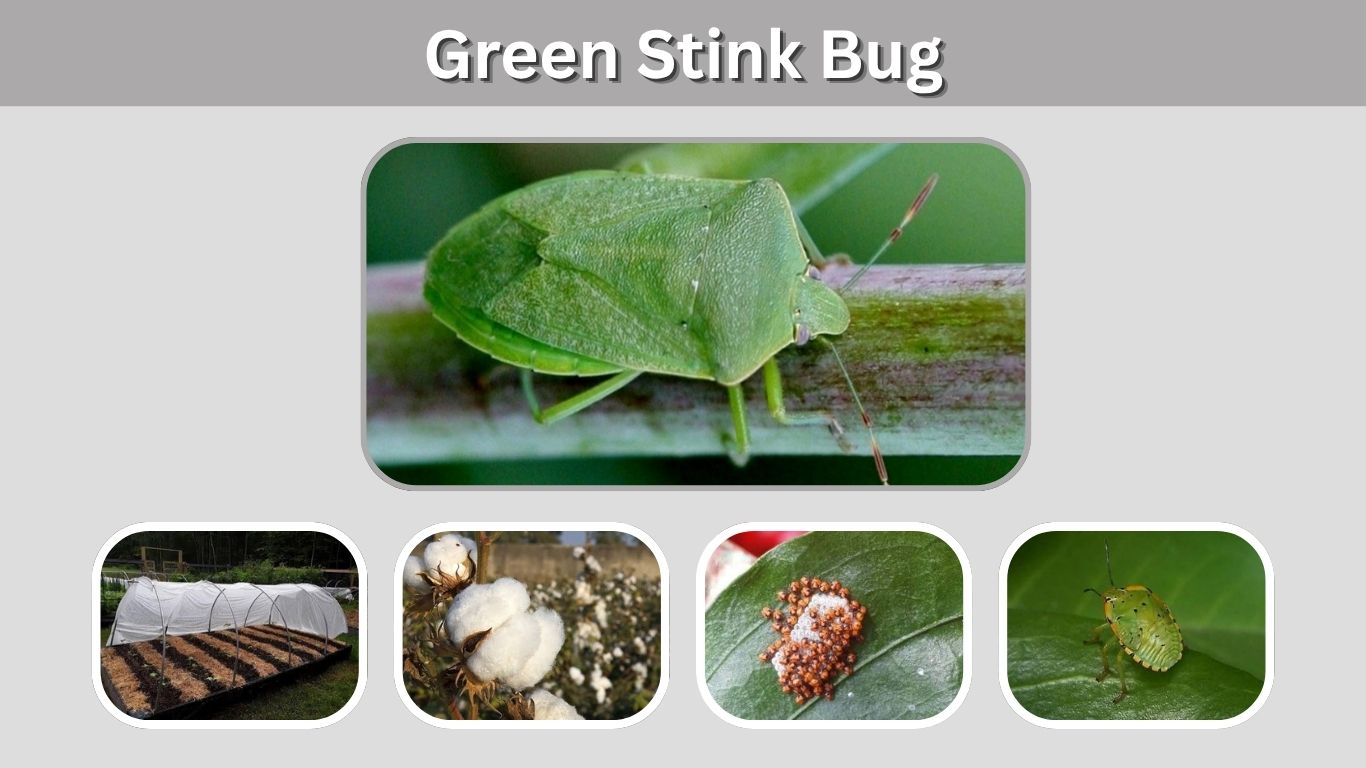
The green stink bug is a common plant-feeding insect recognized by its bright green, shield-shaped body and noticeable odor when disturbed. These bugs occur in gardens, farms, orchards, and landscapes where they feed on fruits, vegetables, seeds, and developing plant tissue. Although green stink bugs can damage crops, they are generally not dangerous to people or pets. Learning how to identify adults, nymphs, eggs, feeding damage, and common look-alikes can help you manage them effectively.
What Is a Green Stink Bug?
Green stink bugs belong to the true bug order Hemiptera and the family Pentatomidae. Several species may be called green stink bugs, including the common green stink bug and southern green stink bug. Although they look similar, their markings, distribution, and preferred host plants can differ. All have piercing-sucking mouthparts used primarily for feeding on plants.
Green Stink Bug Identification
Typical characteristics of an adult green stink bug include:
- Broad, shield-shaped body
- Bright green or lime-green coloration
- Six slender legs
- Long segmented antennae
- Fully developed wings
- Small triangular head
- Piercing-sucking mouthpart
- Approximately 1/2 to 3/4 inch long
- Small yellow, white, or reddish markings in some species
Their flattened body shape makes them easy to distinguish from many beetles, although several other green true bugs can look similar.
Green Stink Bug Scientific Name
The insect commonly called the green stink bug in North America is often Chinavia hilaris. Another well-known species is the southern green stink bug, Nezara viridula.
The name “green stink bug” is therefore sometimes used broadly rather than for a single species. Correct identification may require examining coloration, body shape, antennae, and markings.
Green Stink Bug Nymphs and Eggs
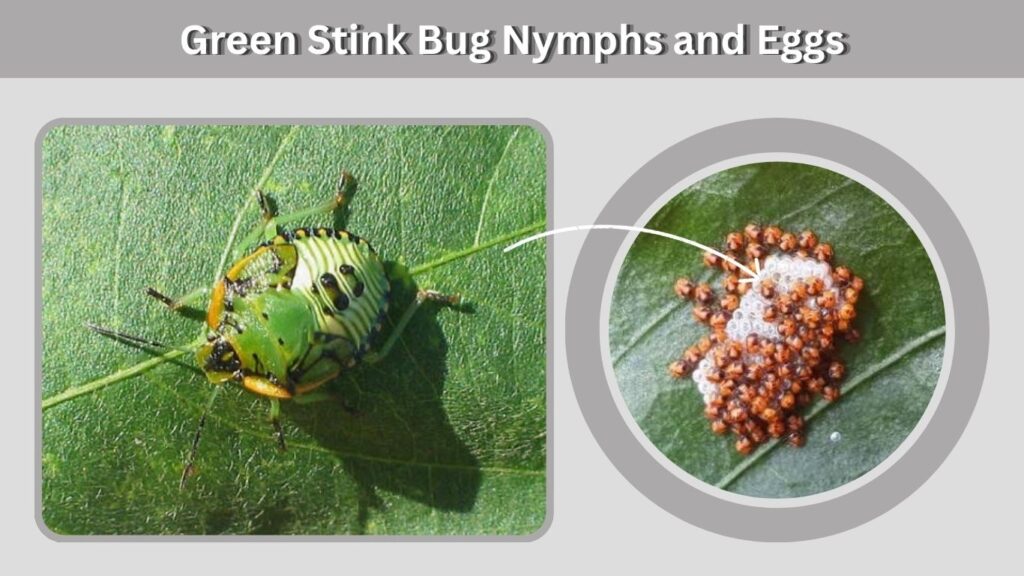
Green stink bugs undergo incomplete metamorphosis. Their development includes egg, nymph, and adult stages rather than a caterpillar or pupal stage. Nymphs change considerably in appearance as they mature, which can make younger insects difficult to associate with the familiar green adults.
What Does a Green Stink Bug Nymph Look Like?
Young green stink bug nymphs may look surprisingly different from adults.
Depending on species and developmental stage, nymphs may have:
- Black bodies with colorful markings
- Green and black patterns
- Orange, red, yellow, or white spots
- Rounded bodies
- Shorter wing pads instead of full wings
- Smaller overall size
As they pass through successive molts, nymphs become larger and gradually develop the green coloration and shield-like shape of adults.
Green Stink Bug Eggs
Green stink bug eggs are usually barrel-shaped and laid in organized clusters on plant surfaces.
Females commonly place eggs:
- On the undersides of leaves
- Near flowers or developing fruit
- On crop plants
- In neat groups
- In protected areas with available food nearby
Eggs may appear pale green, cream, yellowish, or nearly white depending on the species and stage of development.
Green Stink Bug Life Cycle
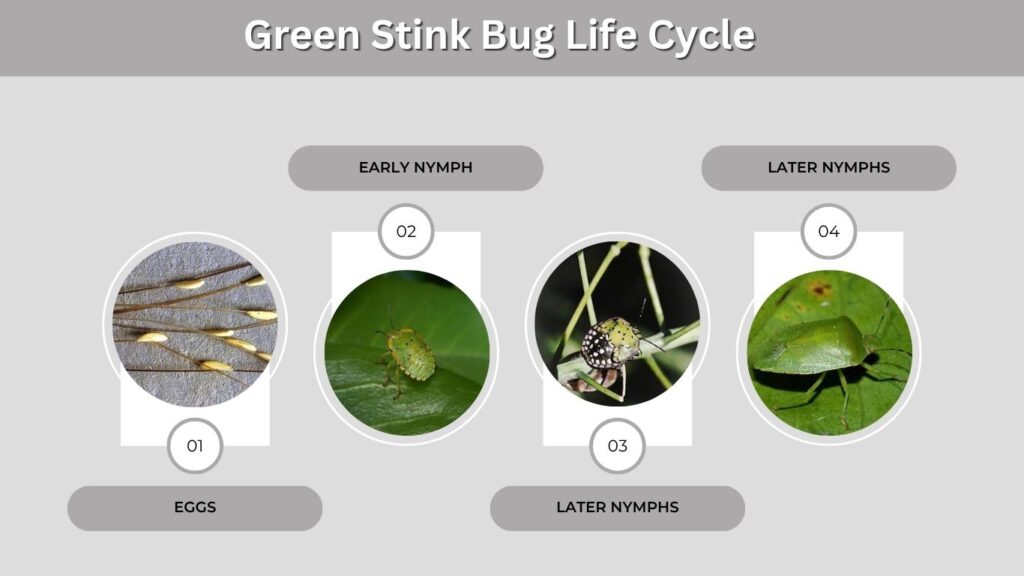
The green stink bug life cycle begins when females deposit clusters of eggs on suitable host plants. After hatching, nymphs remain near the egg mass briefly before beginning to feed. They pass through several nymphal stages, known as instars, before becoming winged adults.
From Egg to Adult
The developmental sequence is:
- Egg: Females lay groups of barrel-shaped eggs on vegetation.
- Early nymph: Newly hatched nymphs are small and often remain together.
- Later nymphs: They spread out and actively feed on plant tissue.
- Final molt: Wing pads become more developed.
- Adult: Mature insects have functional wings and can reproduce.
Development speed varies with temperature, food availability, and species.
Can Green Stink Bugs Fly?
Yes. Adult green stink bugs have fully developed wings and can fly from one plant to another.
Flight allows them to:
- Find new host plants
- Escape disturbed vegetation
- Move between crops
- Search for mates
- Seek shelter
- Enter houses accidentally
Nymphs cannot fly because their wings are not fully developed.
What Do Green Stink Bugs Eat?
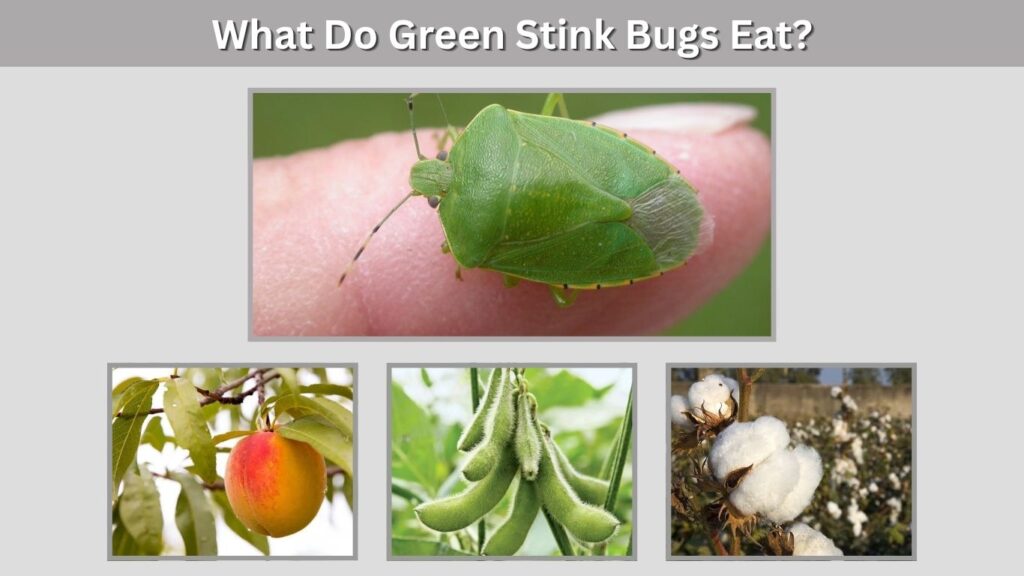
Green stink bugs are primarily plant feeders. Their needle-like mouthparts penetrate plant tissue and allow them to remove fluids. They often prefer developing seeds and fruits because these tissues provide abundant nutrients.
Green Stink Bug Diet and Host Plants
Common host plants may include:
- Tomatoes
- Beans
- Peppers
- Corn
- Soybeans
- Cotton
- Peaches
- Apples
- Citrus
- Pecans
- Sunflowers
- Various weeds
Because they feed on many different plants, populations can move from weeds and wild vegetation into gardens or agricultural crops as the season progresses.
Green Stink Bug Damage
Feeding can injure developing plant tissue. Fruits may show pale spots, depressions, discoloration, or hardened areas around feeding sites.
Severe infestations can also result in poorly developed fruits or seeds. Damage is often most important in agricultural settings, where large populations can reduce crop quality.
Are Green Stink Bugs Harmful?
Green stink bugs can be harmful to plants, but they are generally not considered dangerous to humans. Their main economic importance comes from agricultural feeding damage rather than threats to people. A green stink bug usually attempts to fly or crawl away when disturbed rather than attack.
Are Green Stink Bugs Poisonous?
Green stink bugs are not considered poisonous or venomous to humans.
They do produce defensive chemicals responsible for their characteristic odor, but this does not mean they inject venom. Their smell is primarily designed to discourage predators.
Do Green Stink Bugs Bite?
Green stink bugs do not normally bite people. Their piercing mouthparts are adapted for feeding on plant tissue.
A defensive prick may theoretically occur if one is tightly handled or pressed against the skin, but this is unusual. They do not seek humans or pets as a food source.
Are Green Stink Bugs Bad or Beneficial?
Most common plant-feeding green stink bugs are considered pests when they occur in large numbers on crops or garden plants.
However, not every green shield-shaped bug is a harmful plant feeder. Some predatory stink bug species consume caterpillars and other insects, so proper identification is useful before deciding whether control is necessary.
Green Stink Bug vs. Brown Stink Bug
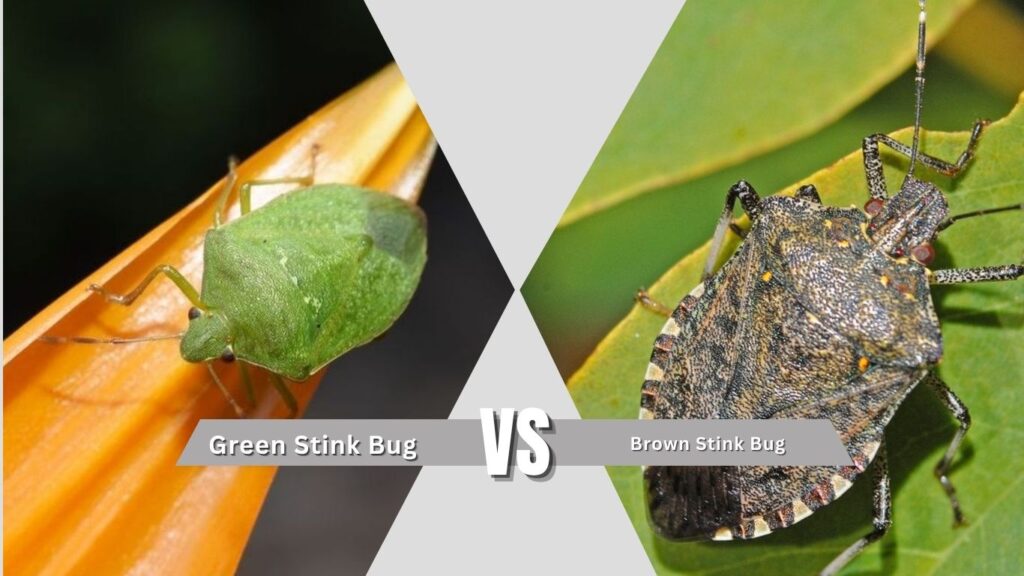
Green and brown stink bugs share a similar shield-shaped body, which can make identification confusing. Color is the easiest difference, although markings and species characteristics should also be considered.
Green Stink Bug
A typical green stink bug has a bright or medium-green body. Some individuals have yellowish or reddish borders around the body.
Adults generally blend well with leaves, stems, and green fruits.
Brown Stink Bug
Brown stink bugs are typically tan, gray, or dark brown. The brown marmorated stink bug, for example, has mottled coloration and characteristic light-and-dark banding on its antennae and abdomen.
Both groups can feed on agricultural crops.
Green Shield Bug vs. Green Stink Bug
The terms “green shield bug” and “green stink bug” are sometimes used differently depending on geographic location. In many regions, insects in the family Pentatomidae may be called either shield bugs or stink bugs because of their shape and defensive odor.
Why the Names Can Be Confusing
“Shield bug” describes the insect’s characteristic body shape, while “stink bug” refers to its ability to produce defensive odors.
Therefore, a green shield bug may also be a type of stink bug. Identification should be based on species characteristics rather than common names alone.
Green Stink Bug Control
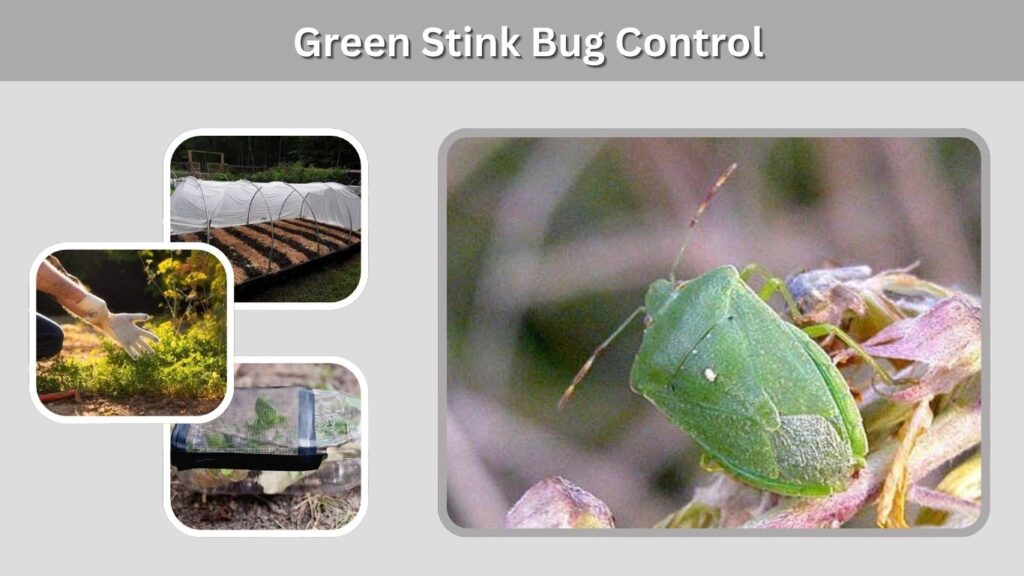
A few green stink bugs in a garden usually do not require aggressive treatment. Control becomes more important when numerous adults and nymphs are feeding on fruits, vegetables, or other valuable plants. Regular inspection is especially useful because removing egg masses and young nymphs can prevent populations from becoming much larger.
How to Get Rid of Green Stink Bugs
Practical control methods include:
- Inspect leaves regularly for egg clusters.
- Remove egg masses by hand when practical.
- Handpick adults while wearing gardening gloves.
- Drop collected insects into soapy water.
- Remove weeds that may provide alternative host plants.
- Use lightweight row covers on vulnerable young crops.
- Keep gardens free of fallen or damaged produce.
- Monitor fruits for feeding damage.
- Follow locally recommended pest-control products when infestations are severe.
Avoid unnecessary insecticide use, especially when beneficial insects and pollinators are active.
Green Stink Bugs in the House
Green stink bugs occasionally enter buildings while searching for shelter or after being attracted to lights.
Seal gaps around:
- Windows
- Doors
- Screens
- Rooflines
- Utility openings
- Vents
- Exterior siding
If one gets indoors, capture it gently with a container rather than crushing it, since crushing can release its unpleasant defensive odor.
FAQs
1. Are green stink bugs poisonous?
No. Green stink bugs are not considered poisonous or venomous to humans. Their strongest defense is the unpleasant odor they release when threatened.
2. Do green stink bugs bite humans?
They do not normally bite humans. Green stink bugs are plant feeders, although accidental defensive piercing may be possible if an insect is squeezed or handled roughly.
3. Are green stink bugs harmful to plants?
Yes. Large populations can damage fruits, vegetables, seeds, and other plant tissues by piercing them and feeding on their fluids.
4. What does a green stink bug nymph look like?
Nymphs are smaller and rounder than adults and may be black, green, orange, red, or patterned. Their appearance changes significantly as they mature.
5. How do you get rid of green stink bugs?
Remove eggs and nymphs early, handpick adults, control weeds, protect susceptible plants with row covers, and seal openings that allow stink bugs to enter the house.