
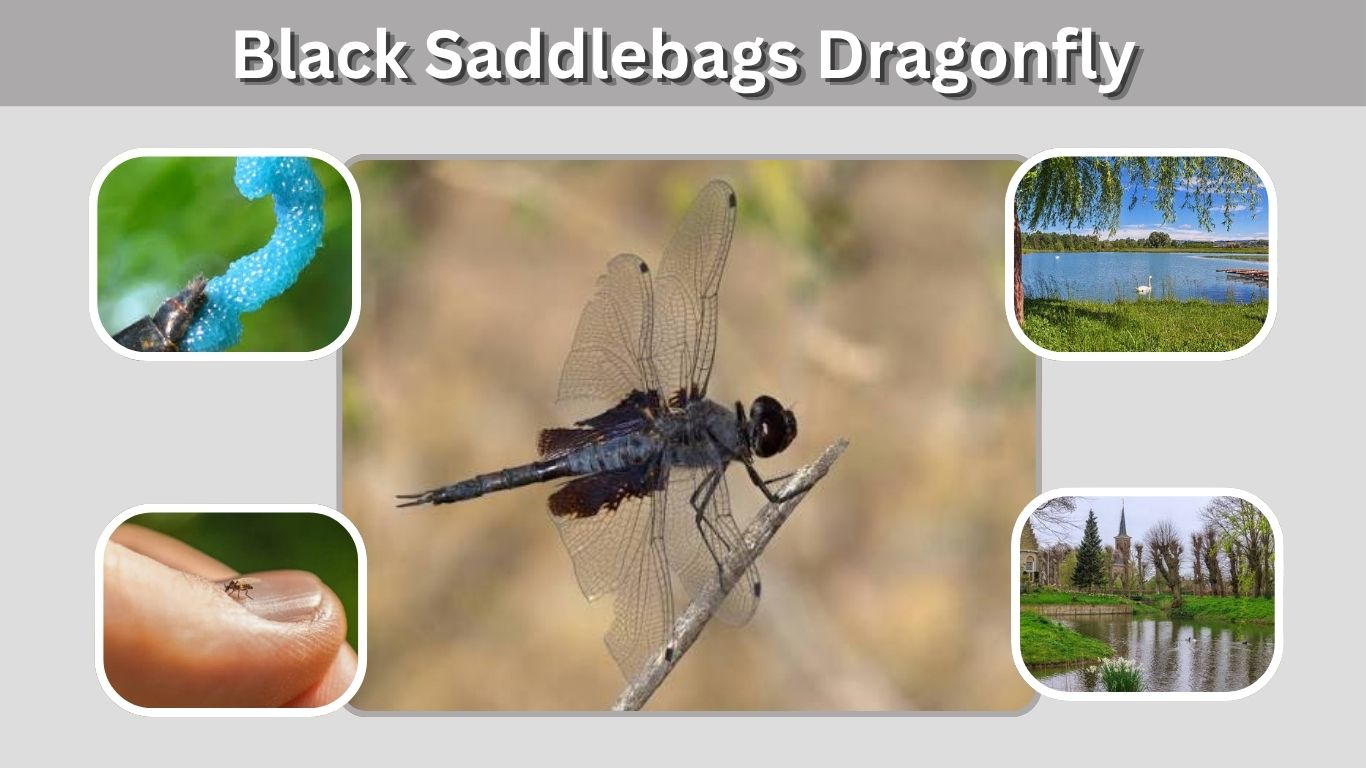
The Black Saddlebags dragonfly is a strong-flying species recognized by the large, dark patches at the bases of its hindwings. These markings look like a pair of saddlebags hanging across the insect’s body, explaining its unusual common name. Also called the Black Saddlebags skimmer, this dragonfly spends much of its time gliding above ponds, fields, and wetlands while catching smaller flying insects. Despite its large size and dark appearance, it is harmless to people.
What Is a Black Saddlebags Dragonfly?
The Black Saddlebags dragonfly, scientifically known as Tramea lacerata, belongs to the skimmer family Libellulidae. It is a medium-to-large dragonfly with a streamlined body, broad hindwings, powerful flight muscles, and prominent dark wing markings. Adults generally measure about 1½ to 2¼ inches long.
This species is often seen continuously flying rather than resting. Its broad hindwings help it glide efficiently, allowing it to patrol large areas with relatively little visible wing movement.
Quick Facts
| Feature | Description |
| Scientific name | Tramea lacerata |
| Family | Libellulidae |
| Other name | Black Saddlebags skimmer |
| Average length | About 1½–2¼ inches |
| Diet | Mosquitoes, gnats, flies, and other insects |
| Habitat | Ponds, lakes, marshes, ditches, and wetlands |
| Activity | Daytime |
| Main identification feature | Black patches at the bases of the hindwings |
| Danger to humans | Harmless |
Black Saddlebags Dragonfly Identification
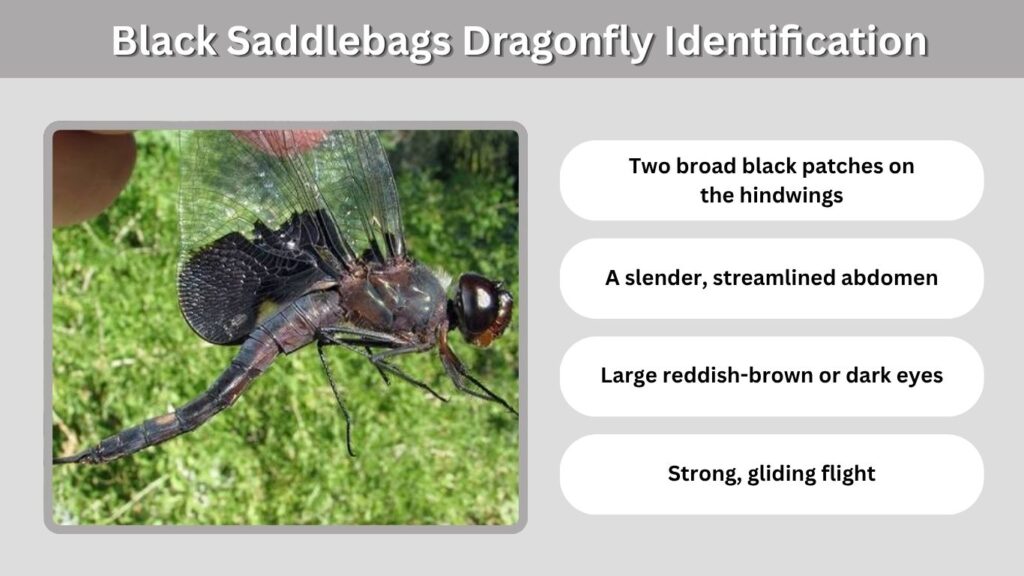
The easiest way to identify this species is by examining the hindwings. Each hindwing has a broad, dark patch close to the body. When viewed from above or during flight, the two patches resemble saddlebags placed across the dragonfly’s back.
Key Identification Features
Look for the following characteristics:
- Two broad black patches on the hindwings
- Mostly transparent outer portions of all four wings
- A slender, streamlined abdomen
- Dark legs
- Large reddish-brown or dark eyes
- A dark brown or black thorax
- Strong, gliding flight
- A total length of approximately two inches
The Black Saddlebags should not be confused with a Widow Skimmer. Both have dark wing patches, but the Black Saddlebags’ markings are concentrated on the broad hindwings and create a distinctive saddle-shaped pattern.
Male vs. Female Black Saddlebags
Male and female Black Saddlebags have the same characteristic dark hindwing patches, but their body colors and markings differ.
Male Black Saddlebags
Mature males are usually darker than females. They commonly have a nearly black abdomen, dark brown eyes, a dark purplish face, and a dark brown or black thorax. Immature males may display yellow markings before becoming darker as they mature.
Female Black Saddlebags
Females are generally slightly larger and less intensely colored than mature males. They often have yellowish or whitish spots along the upper surface of the abdomen. Their face may appear lighter, and their overall body color is usually brownish rather than deep black.
| Feature | Male | Female |
| Body color | Mostly dark brown or black | Brownish with pale markings |
| Abdomen | Darker and less patterned | Yellowish or whitish dorsal spots |
| Size | Usually slightly smaller | Usually slightly larger |
| Face | Dark purple or brown | Lighter yellowish-brown |
| Hindwing patches | Broad and black | Broad and black |
Where Do Black Saddlebags Dragonflies Live?
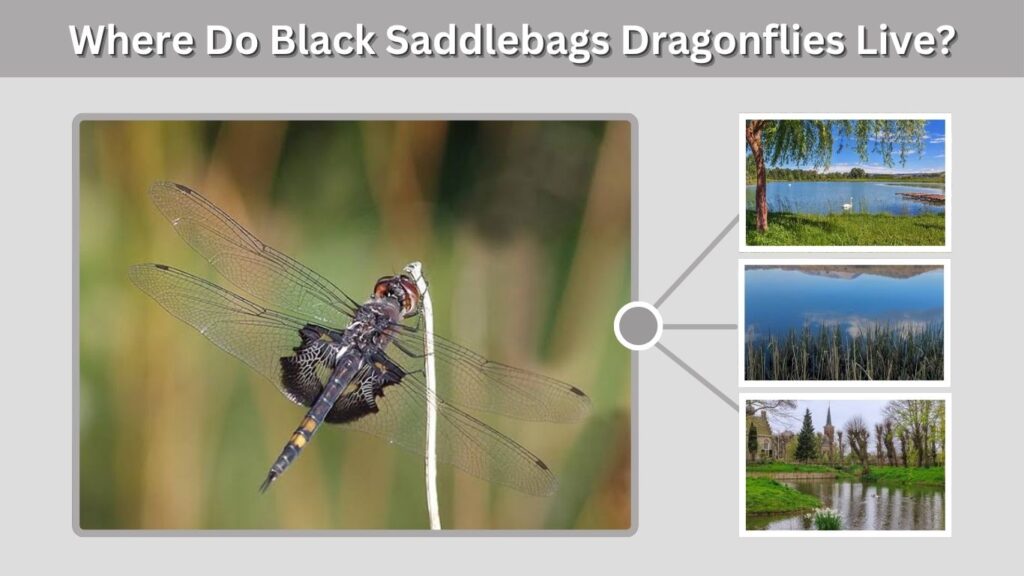
Black Saddlebags dragonflies live near still or slowly moving freshwater. Suitable habitats include ponds, small lakes, marshes, temporary pools, drainage ditches, and other open wetlands. Adults may also travel into grasslands, gardens, roadsides, and fields while feeding or migrating.
They are widely distributed across the United States and parts of southern Canada and Mexico. Populations also occur in places such as Bermuda, Cuba, the Florida Keys, and Hawaii. Their strong flying ability allows individuals to appear far from the water where they developed.
Preferred Breeding Habitat
Females usually deposit their eggs in stagnant or very slow-moving water. Shallow ponds without large numbers of predatory fish can provide especially suitable habitat for developing dragonfly nymphs.
Adults often patrol shorelines several feet above the ground or water. They glide for long periods, occasionally stopping on a high twig, reed, or branch to rest.
What Do Black Saddlebags Dragonflies Eat?
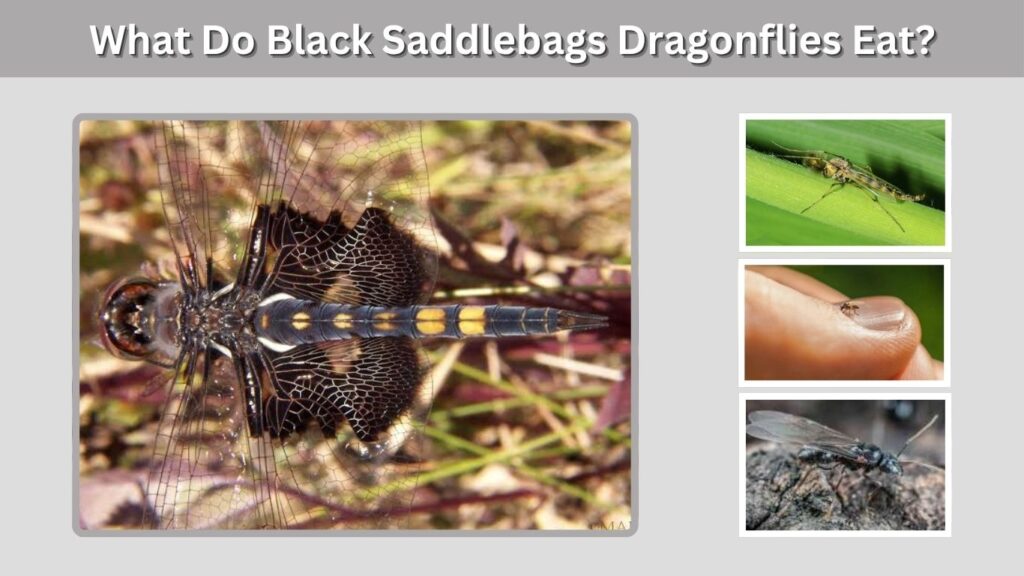
Black Saddlebags are aerial predators. They catch prey during flight using their legs, which form a basket-like structure beneath the body.
Their diet may include:
- Mosquitoes
- Gnats
- Midges
- Small flies
- Flying ants
- Small moths
- Other airborne insects
Adults sometimes gather in large feeding swarms where flying insects are abundant. Their ability to consume mosquitoes and other small insects makes them beneficial natural predators.
The aquatic nymphs are also predators. They capture mosquito larvae, aquatic insects, and other small animals living in ponds and wetlands.
Black Saddlebags Behavior and Flight
Unlike dragonflies that regularly return to the same perch, Black Saddlebags spend much of the day in the air. They are frequently seen gliding, circling, and slowly flapping several feet above fields or water. They may roost high in trees or on dead twigs when inactive.
Their broad hindwings make them efficient gliders. This flying style allows them to search large areas for prey and participate in seasonal movements.
Do Black Saddlebags Migrate?
Black Saddlebags are migratory dragonflies. Some individuals move northward during spring and produce a new generation. Later in the year, adults may travel south, with noticeable movement occurring during late summer and early fall.
They may be observed traveling alongside other migratory dragonflies, including Wandering Gliders and Common Green Darners.
Black Saddlebags Life Cycle
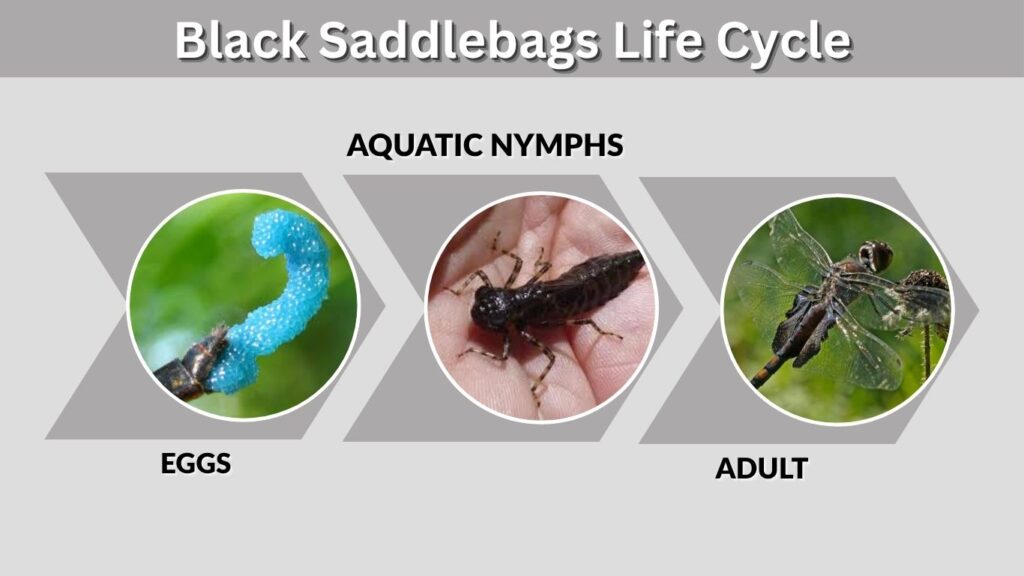
Like other dragonflies, Black Saddlebags undergo incomplete metamorphosis. Their development includes three stages: egg, aquatic nymph, and adult.
Eggs
After mating, the male and female may fly together low over the water. The male briefly releases the female, allowing her to tap the surface with her abdomen and release eggs. The pair may reconnect and repeat the process several times.
Aquatic Nymphs
The eggs hatch into aquatic nymphs, sometimes called naiads. Nymphs live underwater, where they hunt small aquatic animals. They breathe using internal gills and can force water from the abdomen to move quickly when escaping danger.
Adult Emergence
When development is complete, the nymph climbs onto a plant stem or another object above the water. Its outer skin splits, and the adult slowly emerges. The new dragonfly must wait while its wings expand and its body hardens before making its first flight.
Is the Black Saddlebags Dragonfly Dangerous?
Black Saddlebags dragonflies are not dangerous to humans. They are not venomous, do not have stingers, and do not deliberately attack people. Their predatory behavior is directed toward small insects rather than humans or pets.
A dragonfly caught or handled roughly may attempt to defend itself with its mouthparts, but it is unlikely to break human skin. The safest approach is to observe it without grabbing its body or wings.
Do Black Saddlebags Bite?
Black Saddlebags can use their mouthparts to capture insect prey, but they do not normally bite humans. They do not feed on blood, transmit diseases, or infest homes.
If one enters a building, open a nearby door or window and allow it to leave. Avoid pulling or pressing its delicate wings.
Black Saddlebags Dragonfly Meaning
Dragonflies are commonly associated with transformation, adaptability, movement, and personal growth because they spend their early lives underwater before becoming skilled aerial hunters.
The Black Saddlebags’ dark wing markings and migratory behavior may inspire additional symbolic interpretations, including:
- Confidence during change
- Moving forward through uncertainty
- Personal independence
- Emotional strength
- Balance between darkness and light
- Freedom and exploration
These meanings come from personal or cultural symbolism rather than established biological science. Seeing a Black Saddlebags dragonfly does not scientifically predict a future event.
FAQs
Is it called Black Saddlebag or Black Saddlebags?
The widely used common name is Black Saddlebags, with “saddlebags” written in the plural. The name refers to the two large black patches located at the bases of the dragonfly’s hindwings.
Is a Black Saddlebags dragonfly a skimmer?
Yes. It belongs to the family Libellulidae, commonly called the skimmer family. “Black Saddlebags skimmer” and “Black Saddlebags dragonfly” both refer to Tramea lacerata.
Are Black Saddlebags dragonflies rare?
They are widespread and can be reasonably common in suitable habitats. However, they may appear difficult to observe because they spend so much time flying high above ponds, wetlands, and open fields rather than resting at eye level.
Can Black Saddlebags dragonflies fly long distances?
Yes. Their broad wings and efficient gliding behavior make them strong long-distance flyers. They participate in seasonal movements and may appear far from the pond or wetland where they developed.
Are Black Saddlebags beneficial?
Yes. Both adults and aquatic nymphs consume other insects. Adults catch mosquitoes, gnats, midges, and flies, while nymphs hunt mosquito larvae and other aquatic prey. They also provide food for birds, fish, and other wildlife.