
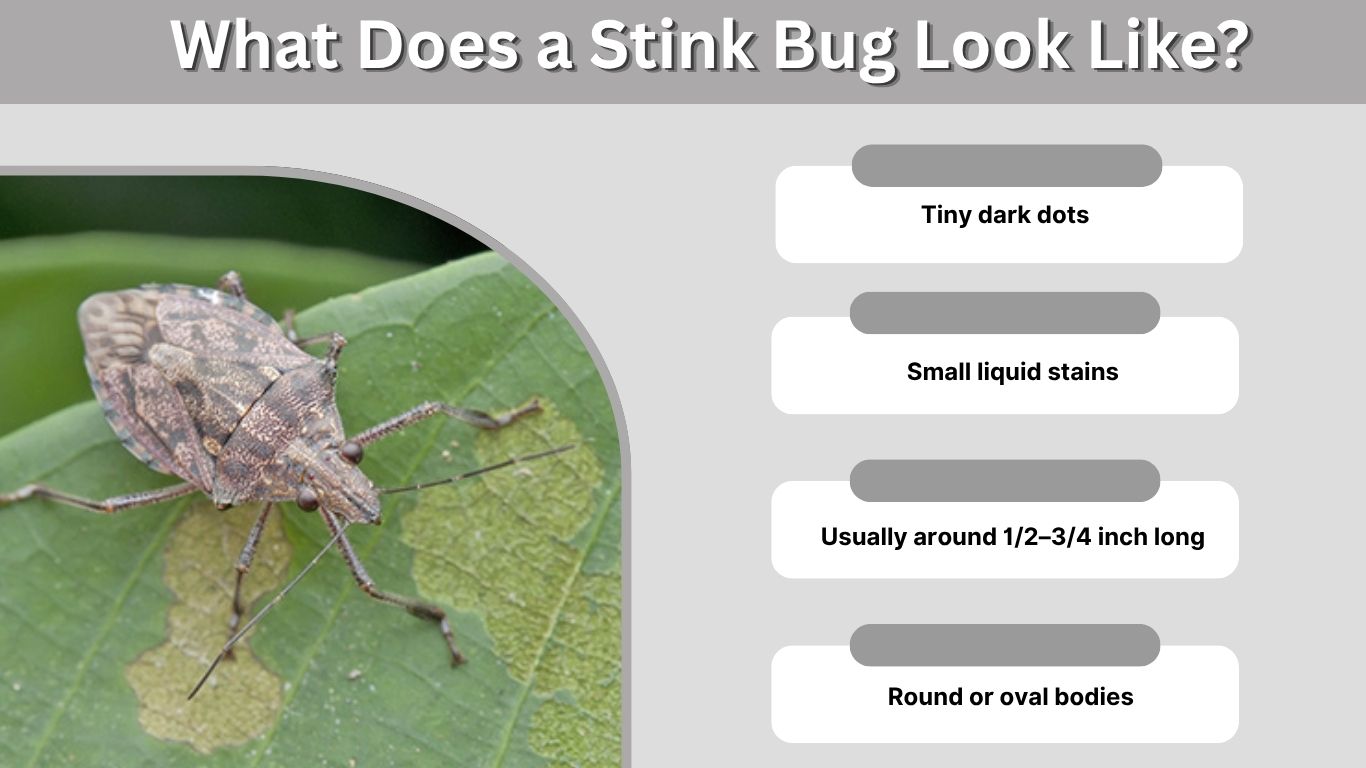
What does a stink bug look like? Most stink bugs have a broad, shield-shaped body, six legs, long antennae, and colors ranging from brown and gray to bright green. The brown marmorated stink bug, one of the most familiar species around homes, has mottled brown coloring and light bands on its antennae. Babies look quite different from adults, while eggs appear as tiny barrel-shaped clusters. Knowing their appearance, smell, life stages, and common lookalikes makes accurate identification much easier.
What Does a Stink Bug Look Like?
Stink bugs belong to the family Pentatomidae and are named for the strong defensive odor many species release when disturbed. Their broad body shape is one of the easiest characteristics to recognize. However, color and markings vary considerably among species, so identification should rely on several features rather than body color alone.
Adult Stink Bug Identification
Common characteristics of adult stink bugs include:
- Body shape: Broad and shield-shaped
- Legs: Six slender legs
- Antennae: Long and segmented
- Wings: Folded flat over the back
- Size: Usually around 1/2–3/4 inch long
- Color: Brown, gray, green, black, or patterned
- Head: Small compared with the broad body
- Back: Often triangular or shield-like when viewed from above
The brown marmorated stink bug commonly has mottled brown coloring, alternating pale and dark markings along the abdomen, and light bands on its antennae.
Green and Black Stink Bugs
Not every stink bug is brown. Green stink bugs may be bright green or yellowish-green and can blend almost perfectly with foliage.
Some species appear almost black or extremely dark brown. Because color varies, looking at body shape, antennae, wings, and markings provides a more dependable identification.
What Does a Baby Stink Bug Look Like?
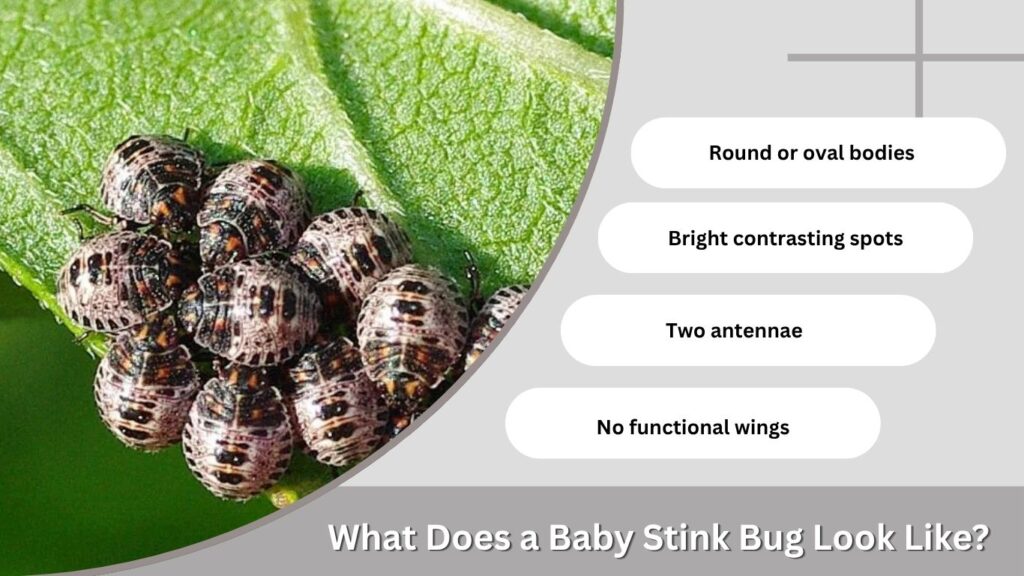
Baby stink bugs are called nymphs rather than larvae. They undergo incomplete metamorphosis, so they do not have caterpillar-like larvae or a pupal stage. Newly hatched nymphs can look surprisingly different from adults, becoming increasingly adult-like each time they molt until they develop full wings.
Stink Bug Nymph Identification
Depending on the species and age, nymphs may have:
- Round or oval bodies
- Black, red, orange, green, or brown coloring
- Bright contrasting spots
- Six dark legs
- Two antennae
- No functional wings
- A broader body as they mature
- Increasingly visible adult-like markings
Brown marmorated stink bug nymphs can display striking red, orange, black, and white patterns when young.
What Do Stink Bug Eggs Look Like?
Stink bug eggs usually resemble tiny barrels or miniature drums. Females commonly deposit them in neat clusters on the underside of leaves.
Eggs may be white, pale green, cream, or yellowish depending on the species and stage of development. A single group often contains dozens of tightly arranged eggs.
After hatching, the young nymphs may remain close to the empty eggs briefly before spreading out to feed.
What Does a Stink Bug Smell Like?
The famous stink bug odor comes from defensive chemicals released through specialized scent glands. The bug usually produces the smell after being handled, crushed, frightened, or disturbed. Different people describe the odor differently because individual perception varies, but the smell can linger on surfaces and become particularly noticeable when several bugs are disturbed indoors.
What Does the Smell Resemble?
People commonly compare stink bug odor to cilantro or coriander, strong herbs, musty vegetation, chemicals, or an unpleasant earthy smell.
Some people find the odor only mildly noticeable, while others consider it extremely unpleasant.
The similarity to cilantro is not entirely surprising because both odors can contain chemical compounds that people perceive in comparable ways.
Why Do Stink Bugs Smell?
The odor serves several purposes:
- Discourages predators
- Helps protect the insect when threatened
- Makes some predators release the bug
- May communicate danger to nearby stink bugs
- Gives the insect time to escape
Squashing a stink bug can release more odor, so capturing and removing it intact is usually preferable indoors.
Bugs That Look Like Stink Bugs
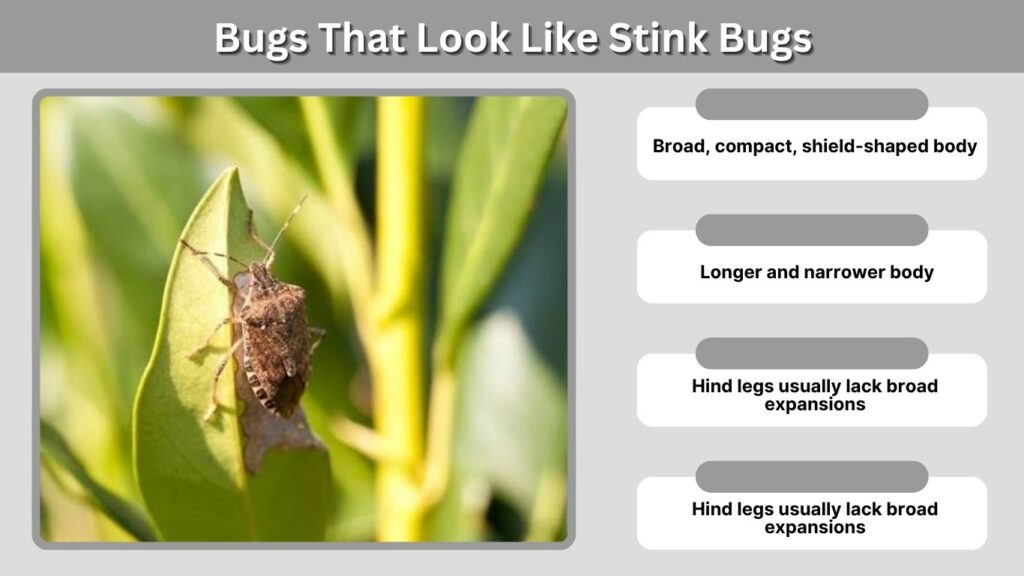
Several insects can be mistaken for stink bugs because they have flattened bodies, long antennae, or similar brown coloration. Leaf-footed bugs, kissing bugs, squash bugs, and some predatory true bugs are among the most frequent sources of confusion. Looking closely at the legs, abdomen, body proportions, and markings usually helps separate them.
Leaf-Footed Bug vs Stink Bug
Leaf-footed bugs often resemble large or elongated stink bugs.
Key differences include:
- Stink bug: Broad, compact, shield-shaped body
- Leaf-footed bug: Longer and narrower body
- Stink bug: Hind legs usually lack broad expansions
- Leaf-footed bug: Many species have flattened, leaf-like hind legs
- Stink bug: Often approximately 1/2–3/4 inch long
- Leaf-footed bug: Frequently larger and more elongated
Both groups are true bugs and many species feed on plants.
Kissing Bug vs Stink Bug
A kissing bug usually has a longer, narrower body than a typical stink bug. Its head is elongated, and many species have orange or reddish markings along the sides of the abdomen.
This distinction matters because kissing bugs can feed on vertebrate blood, whereas the common stink bugs entering homes generally feed on plants.
If an unfamiliar insect resembles a kissing bug, avoid handling it with bare hands until identification is confirmed.
Spider or Beetle That Looks Like a Stink Bug
Some shield-shaped beetles can resemble small stink bugs from a distance, but beetles have hardened forewings that meet in a straight line down the back.
Spiders are easier to separate: spiders have eight legs and no antennae, while stink bugs have six legs and two antennae.
What Does a Stink Bug Bite Look Like?
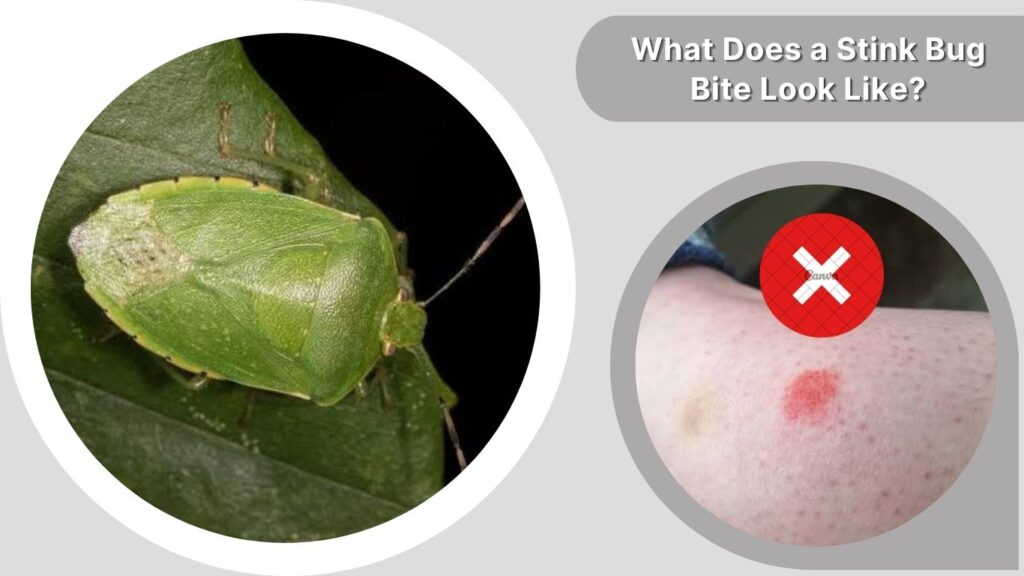
Common household and plant-feeding stink bugs do not normally bite people. Their piercing-sucking mouthparts are primarily used to penetrate fruits, seeds, stems, and other plant tissues. Accidental probing or defensive contact is possible but uncommon, so unexplained skin marks should not automatically be blamed on stink bugs.
Are Stink Bugs Dangerous?
For most people, common stink bugs are mainly a nuisance rather than a health threat.
They generally:
- Do not seek humans for blood
- Do not normally sting
- Are not considered dangerously venomous
- Do not damage houses structurally
- Can damage garden and agricultural plants
- May release unpleasant defensive odors
- Can gather indoors in large numbers
If a skin reaction becomes painful, swollen, infected, or otherwise concerning, its cause may be something other than a stink bug.
What Do Stink Bug Signs Look Like in a House?
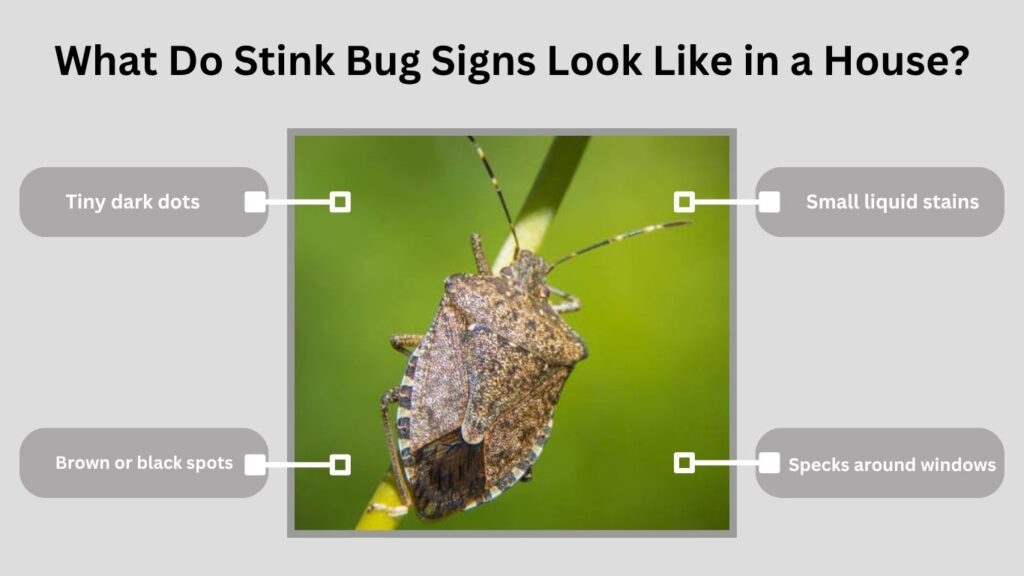
Stink bugs commonly enter buildings when looking for protected places to overwinter. They may gather near windows, doors, attics, wall spaces, curtains, and sunny rooms. Seeing several insects indoors does not necessarily mean they are reproducing inside because many simply entered through small exterior gaps.
What Does a Stink Bug Nest Look Like?
Stink bugs do not build traditional nests like ants, bees, or wasps.
Adults may gather together in protected areas during cold weather, which can create what appears to be a nest. Common hiding places include attics, wall voids, window frames, door frames, siding gaps, and other sheltered spaces.
Eggs are usually laid outdoors on plants rather than in indoor nests.
What Does Stink Bug Poop Look Like?
Stink bug droppings may appear as:
- Tiny dark dots
- Brown or black spots
- Small liquid stains
- Specks around windows
- Spots on walls or curtains
- Marks near areas where many bugs gather
Heavy indoor activity can therefore produce minor staining, although the insects do not eat wood, clothing, or household structures.
FAQs
Stink bugs can vary dramatically in color and appearance, making identification confusing when only one characteristic is considered. Their shield-shaped outline provides the best starting point, followed by antennae, legs, wing markings, and body size. Understanding what their babies, eggs, odor, and common lookalikes look like can prevent harmless insects from being mistaken for more concerning species.
1. What does a brown stink bug look like?
A typical brown stink bug has a broad shield-shaped body, six legs, long antennae, and brown or mottled coloring. Brown marmorated stink bugs also have pale antenna bands and alternating light and dark abdominal markings.
2. What does a green stink bug look like?
Green stink bugs usually have a bright green, shield-shaped body that provides excellent camouflage among leaves. Some may have yellow, red, or pale markings around the edges.
3. What does a baby stink bug look like?
Baby stink bugs are small, round nymphs that may be black, orange, red, green, or patterned. They lack fully developed wings and gradually become more similar to adults through repeated molts.
4. What insect looks like a stink bug but is bigger?
Leaf-footed bugs are among the most common larger stink bug lookalikes. They usually have longer bodies and may have broad, leaf-shaped expansions on their hind legs.
5. What do stink bug eggs look like?
Stink bug eggs resemble tiny barrels arranged in organized clusters, usually on the underside of leaves. Depending on the species, they may appear white, cream, pale green, or yellowish.