
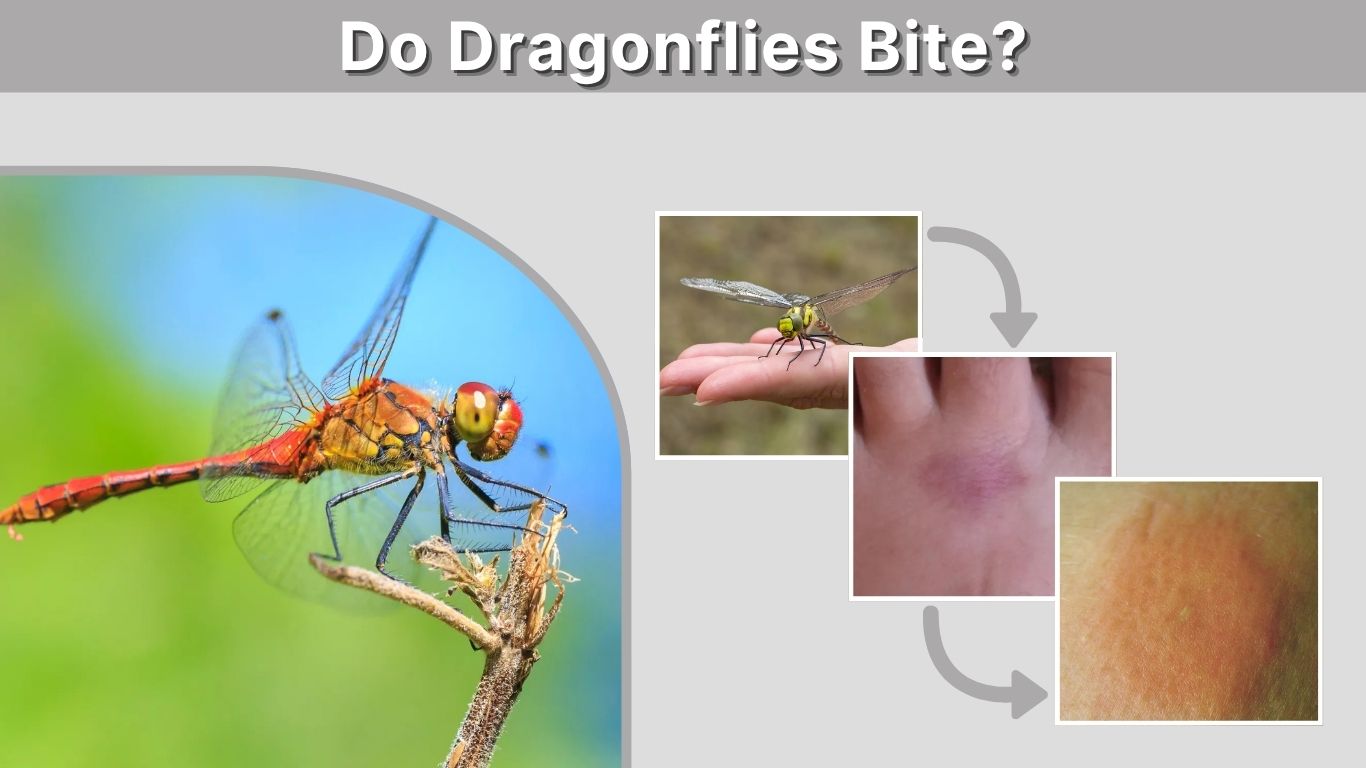
Dragonflies can bite or pinch when they are caught and held, but they do not normally bite people. They cannot sting because they have no stinger, and they do not feed on blood. Most species are too small to break human skin, although a large dragonfly may produce a noticeable pinch if it is handled roughly. Dragonflies are beneficial predators that usually direct their powerful jaws toward mosquitoes, flies, and other insects—not humans.
Do Dragonflies Bite Humans?
Dragonflies have chewing mouthparts with strong mandibles designed to capture and consume insect prey. Therefore, they are physically capable of attempting to bite. However, they do not view people as food and have no reason to land on humans for a blood meal.
A dragonfly may try to bite when it is:
- Grasped around the abdomen
- Trapped between a hand and clothing
- Squeezed or restrained
- Collected without proper equipment
- Handled by a curious child
- Caught by a dog or cat
The British Dragonfly Society reports that large dragonflies sometimes attempt to bite when held, but usually fail to break the skin. The National Park Service notes that some particularly large species may pinch hard and could potentially draw a small amount of blood if allowed to continue biting.
| Question | Answer |
| Can dragonflies bite? | Yes, mainly when handled |
| Do they bite intentionally? | Not under normal circumstances |
| Can they sting? | No |
| Do they drink human blood? | No |
| Can a bite break the skin? | Rarely, mainly with larger species |
| Are they venomous to humans? | No medically important venom |
| Are they dangerous? | No |
Do Dragonflies Bite or Sting?
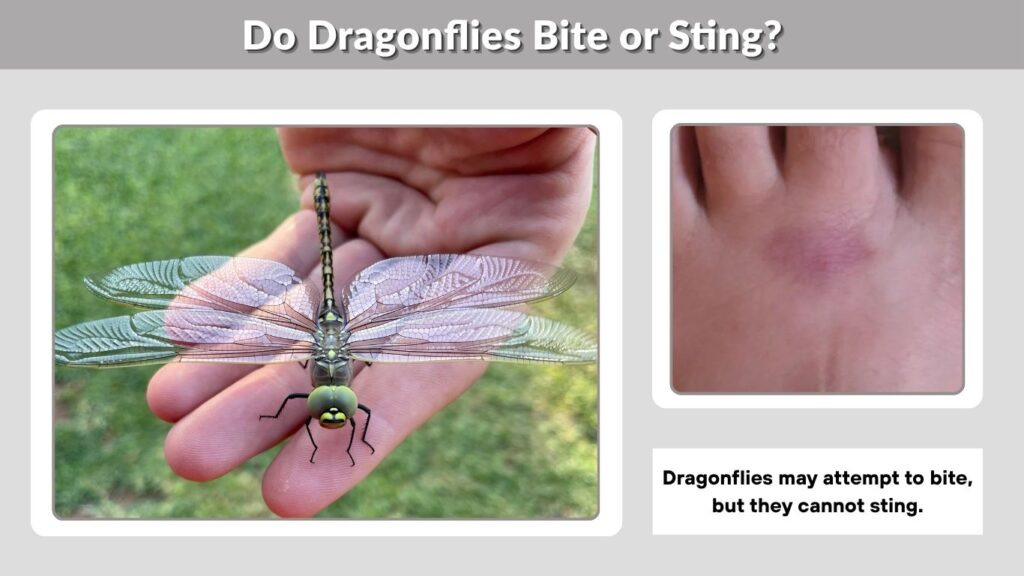
Dragonflies may attempt to bite, but they cannot sting. Female dragonflies possess structures used to lay eggs, but these are not stingers and are not used to inject venom into people. Folk names such as “horse stinger” and “devil’s darning needle” have contributed to the false belief that dragonflies sting.
Why Do People Think Dragonflies Sting?
Large dragonflies may fly close to people, hover nearby, or repeatedly cross the same area. This behavior can look threatening, but the insect may be patrolling its territory or pursuing mosquitoes, gnats, and flies attracted to people. Dragonflies are agile daytime hunters that capture flying insects with their bristled legs.
A dragonfly may also inspect movement near a pond because males of some species defend breeding territories. Such behavior is directed toward other dragonflies rather than an attempt to attack a person.
How Do Dragonflies Bite?
Adult dragonflies capture insects using their legs and then chew the prey with their mandibles. Unlike mosquitoes, they do not have a needle-like proboscis adapted to pierce skin and draw blood. Their mouthparts are designed for cutting and chewing relatively small prey.
When a dragonfly is restrained, it may turn its head toward the person’s fingers and close its mandibles against the skin. This is defensive behavior intended to help the insect escape. Releasing it usually ends the encounter immediately.
Do Dragonfly Bites Hurt?
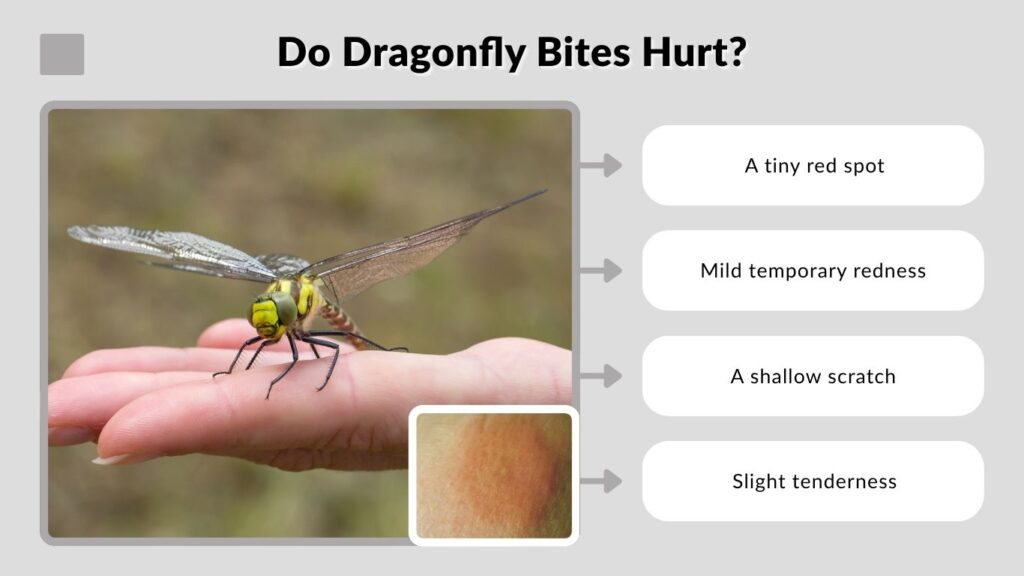
A bite from a small dragonfly is unlikely to be felt or may produce only a light pinch. A larger species, such as a darner, can pinch more noticeably when held. Even then, the bite is not considered medically dangerous, and most dragonflies cannot penetrate normal human skin.
There is no recognized medical pain scale specifically for dragonfly bites. The sensation depends on the dragonfly’s size, how long it remains attached, where it pinches, and the sensitivity of the person involved.
What Does a Dragonfly Bite Look Like?
Most attempted dragonfly bites leave no visible mark. When a large individual manages to pinch the skin, the affected area may show:
- A tiny red spot
- Mild temporary redness
- A shallow scratch
- Slight tenderness
- Minor localized swelling
A skin mark cannot be reliably identified as a dragonfly bite from a photograph alone. Mosquito bites, scratches, plant irritation, and bites from other insects may look similar. A dragonfly is the likely cause only when the person actually saw and felt it biting.
Are Dragonfly Bites Dangerous?
Dragonflies are not regarded as dangerous to humans. They do not normally break the skin, inject medically significant venom, transmit human diseases through biting, or remain attached to feed. Their defensive pinch is primarily a risk to someone who deliberately handles a large individual.
A small break in the skin can still become irritated or infected, particularly if it is scratched or contaminated. Seek medical advice when redness continues spreading, pain increases, the area becomes hot, or pus and drainage develop.
What to Do if a Dragonfly Bites You
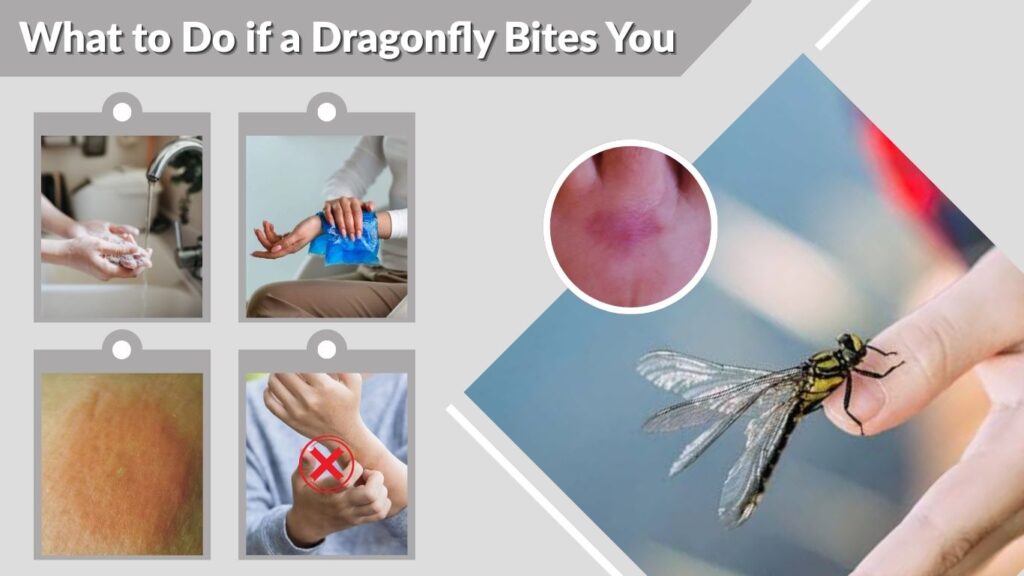
Because dragonfly bites are usually minor, complicated treatment is rarely needed. Basic wound care is generally sufficient when the skin has been pinched or scratched.
Immediate First Aid
- Release the insect. Do not squeeze or crush it against your skin.
- Wash the area. Use soap and clean water, especially if the skin was broken.
- Apply something cold. Hold a wrapped ice pack or cold cloth on the area for 10–20 minutes if it feels sore or swollen.
- Avoid scratching. Scratching damaged skin may introduce bacteria.
- Monitor the spot. Watch for increasing redness, swelling, pain, warmth, or drainage.
Contact a healthcare professional when the wound is deep, bleeding does not stop, symptoms worsen, or signs of infection appear. Breathing difficulty, facial swelling, faintness, or widespread hives following any insect encounter requires urgent medical attention, although such a reaction would be highly unusual after contact with a dragonfly.
Do Dragonfly Nymphs Bite?
Dragonfly nymphs, also called naiads, are aquatic predators. They have stout chewing mandibles and a specialized hinged lower lip that rapidly extends to capture prey. Nymphs eat mosquito larvae and other aquatic organisms, with larger species capable of taking tadpoles or small fish.
A large nymph may attempt to pinch when handled, but it does not seek people as prey. Its mouthparts are intended for small aquatic animals. The safest approach is to observe nymphs in the water or move them with a net rather than picking them up with bare fingers.
Do Different Dragonfly Colors or Species Bite?
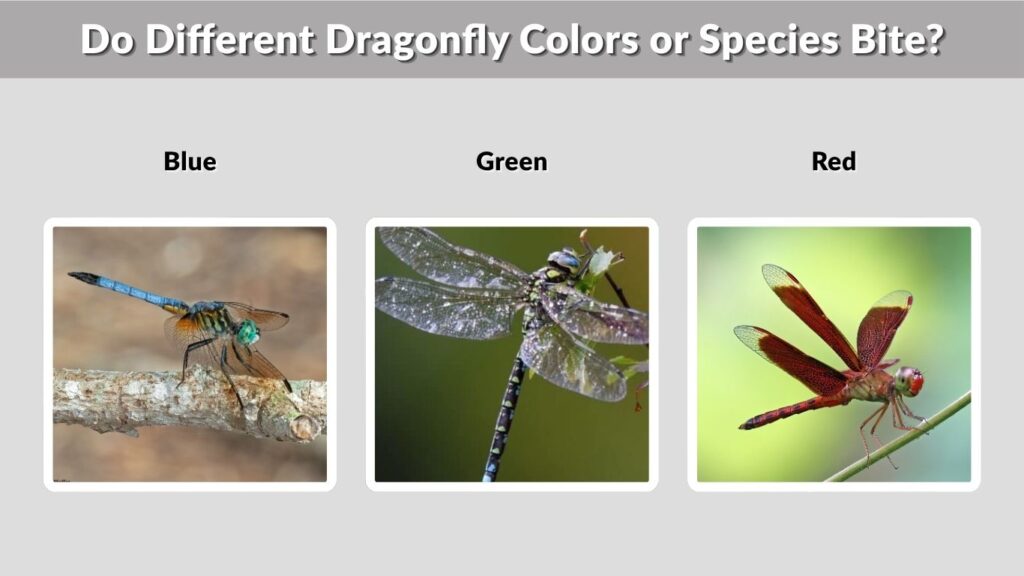
Blue, green, red, black, orange, and purple dragonflies all possess chewing mouthparts because adult dragonflies are predators. Color does not determine whether an individual can pinch. Size and the way the insect is handled are more important.
Large darners, including common green darners, can produce a stronger pinch than small skimmers. Common whitetails, emperor dragonflies, pondhawks, and other familiar species are not naturally aggressive toward humans. Even large species generally attempt to fly away rather than bite.
Do Dragonflies Bite Dogs, Cats, or Horses?
Dragonflies do not seek dogs, cats, horses, or other mammals as hosts. They neither drink blood nor sting animals. A pet might receive a small defensive pinch if it catches a dragonfly in its mouth, but the greater risk is injury to the insect.
Observe a pet that has mouthed a dragonfly. Contact a veterinarian if the animal develops persistent mouth pain, significant swelling, excessive drooling, difficulty swallowing, breathing problems, or another unusual reaction.
Why Dragonflies Are Beneficial
Adult dragonflies are generalist predators that capture mosquitoes, midges, flies, and other airborne insects. Their aquatic nymphs also consume mosquito larvae and numerous small organisms in ponds, lakes, marshes, and streams.
Because they help naturally reduce populations of nuisance insects, dragonflies should normally be welcomed rather than controlled. They do not damage houses, clothing, garden plants, or stored food.
How to Avoid a Dragonfly Bite
Avoiding a defensive pinch is simple: do not grasp a dragonfly around its body. Allow a resting individual to fly away on its own. A dragonfly trapped inside a house can often be helped by opening doors and windows and reducing other indoor light sources.
When handling is necessary for rescue or scientific work, experienced individuals may hold the insect carefully at the base of its wings while keeping fingers away from its mouth. Untrained observers should avoid unnecessary handling because dragonfly wings can be damaged.
FAQs
Do dragonflies intentionally bite people?
No. Dragonflies hunt small insects and do not regard humans as food. They may attempt to pinch only when caught, squeezed, or held in a way that prevents them from escaping.
Can a dragonfly bite break the skin?
Most dragonflies cannot break human skin. A particularly large individual might create a small scratch or draw a tiny amount of blood if held long enough, but this is uncommon.
Do dragonflies have venom?
Dragonflies are effective predators, but adults do not inject medically significant venom into humans. Their mandibles physically grasp and chew prey rather than functioning like the venom-delivering fangs or stingers of other animals.
Do baby dragonflies bite?
Aquatic dragonfly nymphs have strong predatory mouthparts and may pinch defensively when handled. They do not pursue people and should simply be observed or moved with a net.
Should I be afraid when a dragonfly flies around me?
No. A dragonfly flying nearby is usually hunting tiny insects, patrolling an area, or traveling between resting and breeding sites. It is not trying to attack or sting you.