
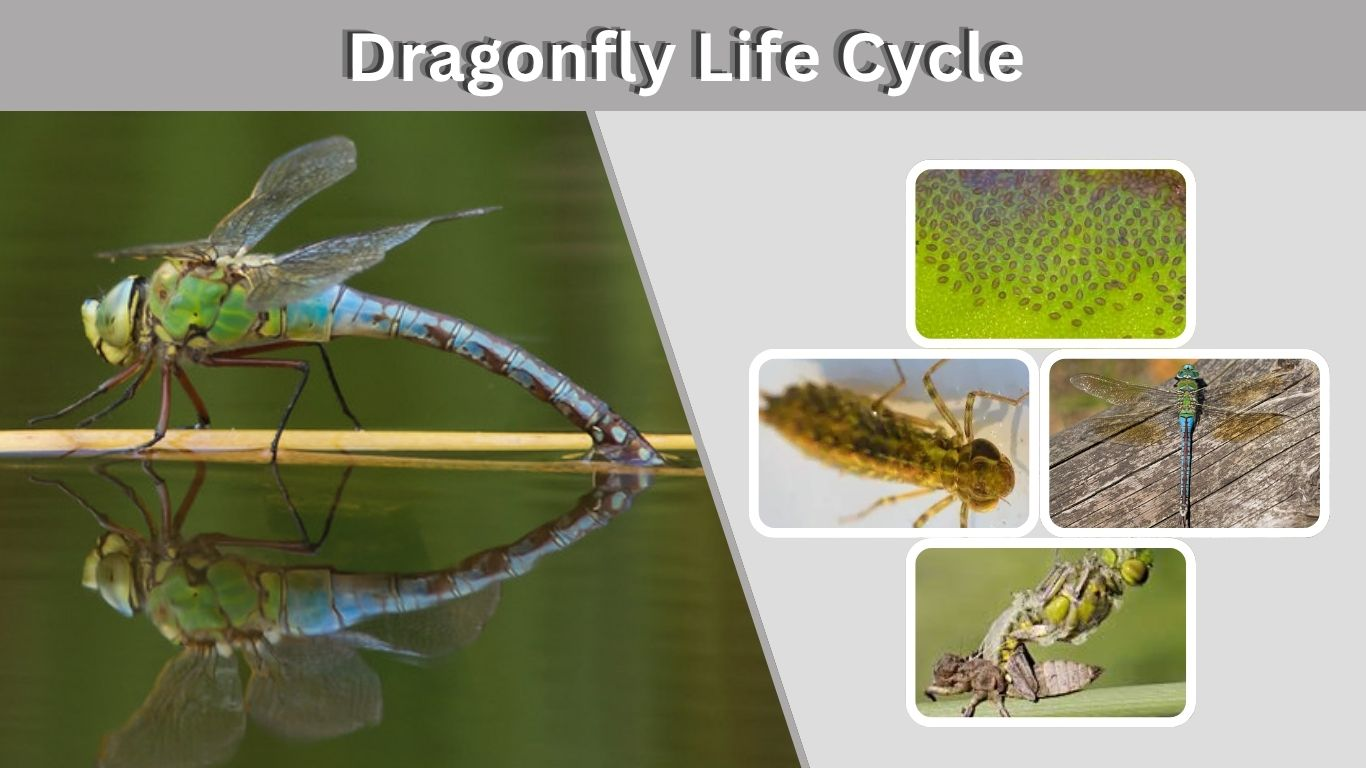
Dragonflies are among the oldest and most fascinating insects on Earth. Known for their colorful bodies, large eyes, and impressive flying abilities, dragonflies undergo a remarkable transformation throughout their lives. Unlike butterflies, they experience incomplete metamorphosis and spend most of their development underwater. Understanding the dragonfly life cycle helps us appreciate their role in nature and the unique adaptations that allow them to thrive in different environments. This guide explores the stages, timeline, and interesting facts about dragonfly development.
What Is the Dragonfly Life Cycle?
The dragonfly life cycle describes the process of growth and development from egg to adult. Dragonflies undergo incomplete metamorphosis, meaning they do not have a pupal stage like butterflies. Instead, they pass through three distinct stages that allow them to gradually develop into flying adults.
What Is a Dragonfly Life Cycle?
A dragonfly life cycle is the series of developmental stages a dragonfly experiences throughout its life. Each stage serves a specific purpose and helps the insect survive in changing environments.
The life cycle begins when a female dragonfly lays eggs in or near water. After hatching, the young dragonfly lives underwater as a nymph before eventually emerging as an adult dragonfly.
How Many Stages Are in a Dragonfly Life Cycle?
Dragonflies have three main life stages:
- Egg stage
- Nymph stage
- Adult stage
Unlike insects that undergo complete metamorphosis, dragonflies develop gradually without forming a cocoon or chrysalis.
Why Is the Dragonfly Life Cycle Unique?
The dragonfly life cycle is unusual because most of the insect’s life is spent underwater. While adult dragonflies are commonly seen flying around ponds and gardens, the majority of their development occurs beneath the surface.
This extended aquatic phase helps dragonflies become effective predators long before they take flight.
Dragonfly Life Cycle Stages
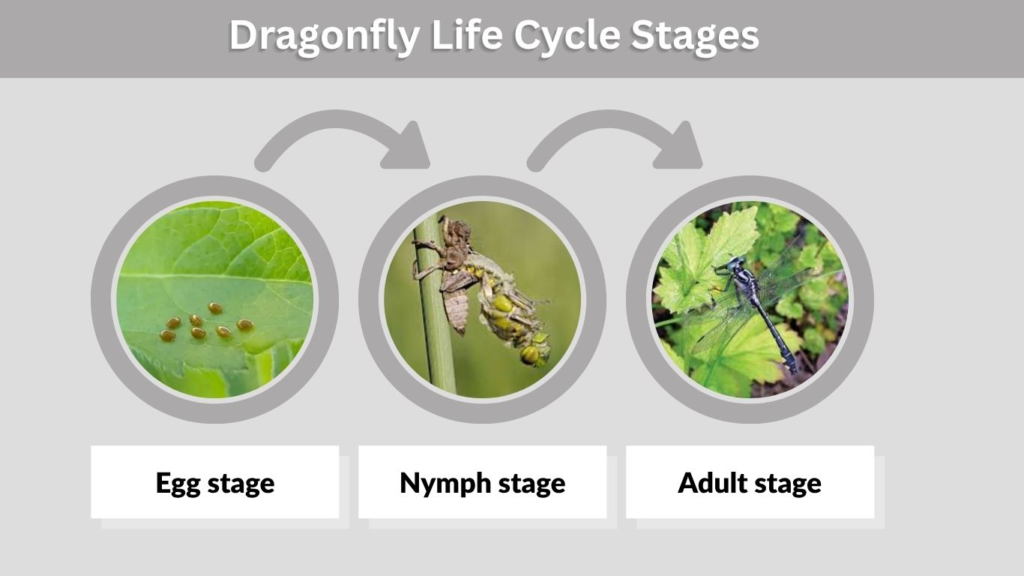
Understanding each stage of development provides insight into how dragonflies grow and survive. Every phase involves important physical and behavioral changes that prepare the insect for adulthood.
Stage 1: Egg
The life cycle begins when a female dragonfly lays eggs. Depending on the species, eggs may be deposited directly into water, attached to aquatic plants, or placed near the water’s edge.
Key facts about dragonfly eggs include:
- Hundreds of eggs may be laid at one time
- Eggs are usually placed in freshwater habitats
- Hatching times vary by species
- Some eggs hatch within days, while others take weeks
The egg stage is relatively short compared to later stages of development.
Stage 2: Nymph
After hatching, the dragonfly enters the nymph stage. This is the longest stage of the life cycle and can last anywhere from several months to several years.
Dragonfly nymphs live entirely underwater and are skilled predators. They use specialized mouthparts to catch prey and consume a variety of aquatic organisms.
Common prey includes:
- Mosquito larvae
- Small insects
- Tadpoles
- Tiny fish
- Aquatic worms
As nymphs grow, they shed their outer skin multiple times through a process called molting. Each molt allows the nymph to become larger and more developed.
Stage 3: Adult Dragonfly
When the nymph reaches maturity, it leaves the water and climbs onto a plant stem, rock, or other surface. At this point, a remarkable transformation occurs.
The adult dragonfly slowly emerges from the nymph’s exoskeleton. Its wings expand and harden before it takes its first flight. Once fully developed, the adult begins hunting, mating, and reproducing.
Adult dragonflies are known for their:
- Exceptional flying skills
- Large compound eyes
- Fast hunting abilities
- Bright colors
Although the adult stage is the most visible, it is often the shortest phase of the dragonfly’s life.
Dragonfly Nymph Life Cycle
The nymph stage deserves special attention because it represents the majority of a dragonfly’s lifespan. During this period, dragonflies undergo significant growth while living in aquatic habitats.
What Is a Dragonfly Nymph?
A dragonfly nymph is the immature form of a dragonfly that lives underwater. It looks very different from the adult and lacks wings. Instead, it has a stout body designed for hunting in ponds, lakes, streams, and wetlands.
Nymphs are highly effective predators and play an important role in freshwater ecosystems. Their ability to catch prey helps control populations of mosquitoes and other aquatic insects.
How Long Does the Nymph Stage Last?
The length of the nymph stage varies depending on species and environmental conditions. Some dragonflies complete development in less than a year, while others remain nymphs for several years.
Water temperature, food availability, and habitat quality all influence growth rates. In colder climates, development often takes longer because metabolic processes occur more slowly.
What Do Dragonfly Nymphs Eat?
Dragonfly nymphs are carnivorous hunters that feed on a wide range of aquatic organisms. Their diet supports rapid growth and prepares them for adulthood.
Because they consume many mosquito larvae, dragonfly nymphs are considered beneficial insects that contribute to natural pest control in freshwater environments.
How Long Is a Dragonfly Life Cycle?
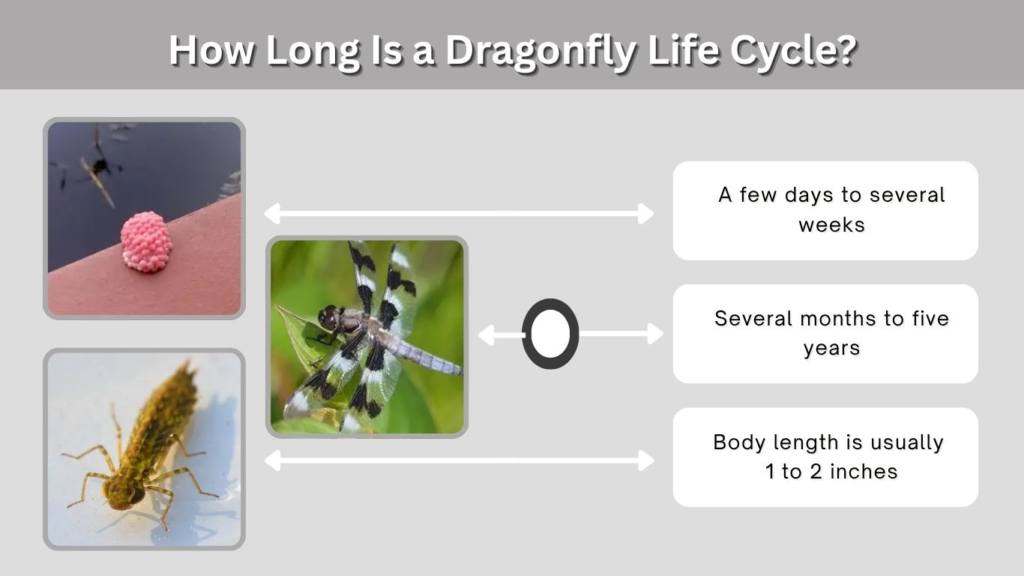
The length of a dragonfly’s life cycle varies significantly among species. Environmental conditions, climate, and food availability all affect how quickly a dragonfly develops. While adult dragonflies often live only a few weeks or months, the entire life cycle may take several years to complete.
Average Dragonfly Life Cycle Timeline
Each stage lasts for a different amount of time depending on the species.
Typical durations include:
- Egg stage: A few days to several weeks
- Nymph stage: Several months to five years
- Adult stage: A few weeks to several months
The nymph stage accounts for the majority of a dragonfly’s life.
Factors That Affect Development
Several environmental factors influence how quickly dragonflies grow and mature.
These factors include:
- Water temperature
- Food supply
- Habitat quality
- Species type
- Seasonal conditions
Dragonflies living in warmer regions often develop faster than those found in colder climates.
Dragonfly Life Cycle Timeline Example
A typical dragonfly may hatch from an egg within a few weeks, spend one to three years as a nymph, and then emerge as an adult during spring or summer. The adult focuses on feeding and reproduction before completing its life cycle.
Dragonfly Life Cycle Diagram
A life cycle diagram helps illustrate the transformation from egg to adult dragonfly. These visual tools are commonly used in classrooms, science projects, and educational materials.
Simple Dragonfly Life Cycle Diagram
The basic dragonfly life cycle follows this sequence:
Egg → Nymph → Adult Dragonfly
This simple diagram highlights the three major stages of incomplete metamorphosis.
Detailed Dragonfly Life Cycle Diagram
A more detailed diagram may include additional developmental steps:
- Egg deposition
- Egg hatching
- Early nymph growth
- Multiple molting stages
- Final nymph stage
- Adult emergence
- Mature dragonfly
These details help students understand the gradual changes that occur during development.
Dragonfly Life Cycle Drawing Ideas
Drawing the dragonfly life cycle can be an effective learning activity. Students often create illustrations showing each stage and label the important features associated with development.
Dragonfly Life Cycle for Kids
The dragonfly life cycle is a popular science topic because it demonstrates how insects grow and change over time. Children often enjoy learning about dragonflies because of their colorful appearance and impressive flying abilities.
Easy Explanation for Children
A dragonfly begins life as an egg placed in or near water. The egg hatches into a nymph that lives underwater and hunts small creatures. After growing and molting many times, the nymph climbs out of the water and transforms into an adult dragonfly with wings.
This process allows children to understand how animals change throughout their lives.
Fun Dragonfly Life Cycle Facts
Dragonflies have many fascinating characteristics that make them unique among insects.
Interesting facts include:
- Dragonflies existed before dinosaurs
- They can fly in multiple directions
- Their eyes contain thousands of lenses
- Nymphs are underwater predators
- Adult dragonflies help control mosquitoes
These facts make dragonflies a favorite topic in nature studies.
Dragonfly Life Cycle Activities
Teachers and parents can reinforce learning through hands-on activities. Coloring pages, worksheets, crafts, and observation journals help children visualize each stage and better understand insect development.
Dragonfly vs Butterfly Life Cycle
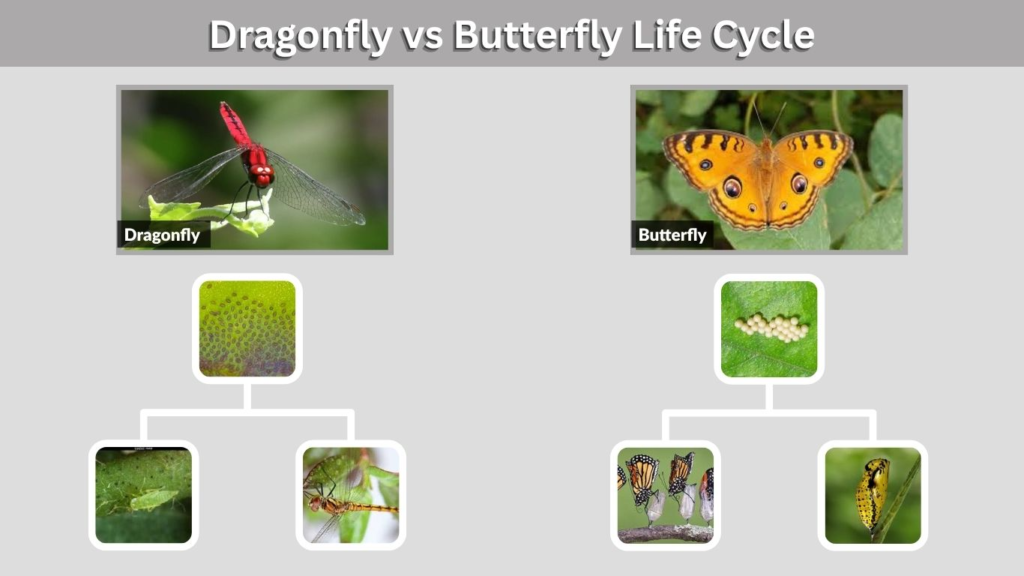
Dragonflies and butterflies both undergo major changes during their lives, but their developmental processes are very different. Understanding these differences helps explain the diversity of insect life cycles.
Dragonfly Life Cycle
Dragonflies undergo incomplete metamorphosis. They develop gradually through three stages and do not form a cocoon or chrysalis.
The stages include:
- Egg
- Nymph
- Adult
Each stage builds directly on the previous one.
Butterfly Life Cycle
Butterflies experience complete metamorphosis. Their development involves a dramatic transformation through four distinct stages.
The stages include:
- Egg
- Caterpillar
- Pupa
- Adult butterfly
The pupal stage allows extensive physical changes before adulthood.
Major Differences Between Dragonflies and Butterflies
The most significant difference is that dragonflies spend much of their lives underwater as nymphs, while butterflies develop on land as caterpillars. Dragonflies also lack the pupal stage that is characteristic of butterfly development.
Fascinating Facts About the Dragonfly Life Cycle
Dragonflies possess remarkable adaptations that help them survive in both aquatic and aerial environments. Their life cycle demonstrates how insects can thrive in dramatically different habitats during different stages of development.
The Nymph Stage Lasts the Longest
Most dragonflies spend far more time underwater as nymphs than they do as flying adults. This stage is essential for growth and development.
Dragonflies Molt Many Times
As nymphs grow, they repeatedly shed their exoskeletons. Each molt allows the insect to increase in size and move closer to adulthood.
Adults Can Fly Soon After Emerging
After leaving the nymph stage, adult dragonflies expand and harden their wings. Within a relatively short time, they are capable of powerful and agile flight.
FAQs
What are the three stages of a dragonfly life cycle?
The dragonfly life cycle consists of three main stages: egg, nymph, and adult. Dragonflies undergo incomplete metamorphosis, meaning they do not have a pupal stage like butterflies.
How long does a dragonfly life cycle take?
The complete dragonfly life cycle can take anywhere from several months to five years, depending on the species and environmental conditions. Most of this time is spent in the nymph stage underwater.
What is a dragonfly nymph?
A dragonfly nymph is the immature aquatic stage of a dragonfly. Nymphs live underwater, hunt small prey, and molt multiple times before emerging as adult dragonflies.
Do dragonflies undergo complete or incomplete metamorphosis?
Dragonflies undergo incomplete metamorphosis. Their life cycle includes only three stages—egg, nymph, and adult—without a cocoon or chrysalis stage.
Why do dragonflies spend most of their lives underwater?
Dragonflies spend most of their lives underwater because the nymph stage is the longest part of their development. During this period, they grow, molt, and feed on aquatic organisms before transforming into flying adults.