
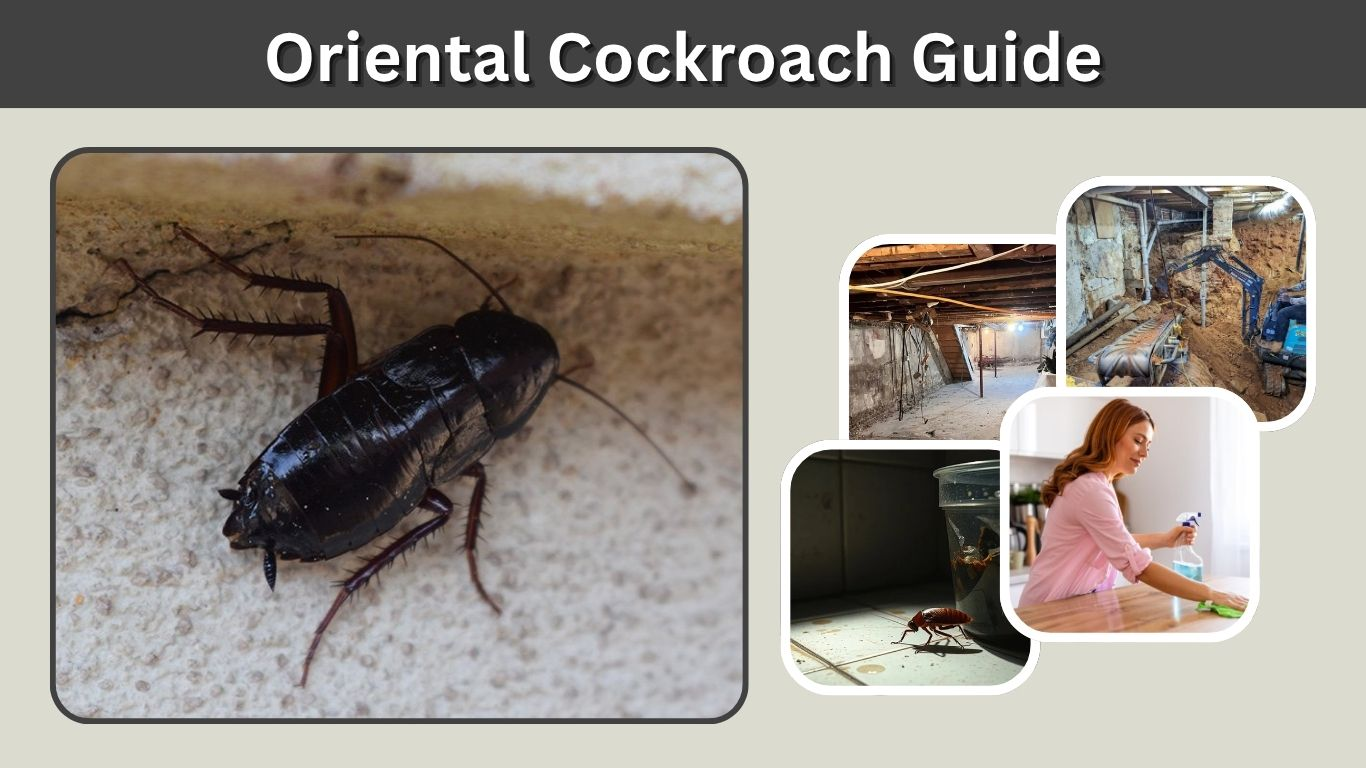
Oriental cockroaches, also called “waterbugs,” are dark, slow-moving pests that thrive in damp, dark areas of homes. They can contaminate food, spread bacteria, and create unpleasant odors. Identifying them early and understanding their behavior is key to controlling infestations effectively. This guide covers their physical characteristics, life cycle, habitats, and feeding habits, as well as practical strategies for elimination using chemical, natural, and preventive methods. Following these steps ensures a safer, cleaner, and cockroach-free living environment.
Identification of Oriental Cockroaches
Correct identification is crucial for effective treatment. Oriental cockroaches are distinct in size, color, and behavior compared to other common species like German and American cockroaches. Understanding their physical traits, life stages, and signs of presence helps homeowners detect infestations early.
Physical Characteristics
- Dark brown to black, shiny body
- Adult males: smaller with limited wings
- Adult females: larger, wingless
- Flattened, oval-shaped body
- Size: about 1 inch (25 mm)
Nymphs and Eggs
- Nymphs: smaller, darker, no wings
- Egg cases (ootheca): brown, capsule-shaped, hidden in cracks and corners
Oriental Cockroaches Behavior and Habitats
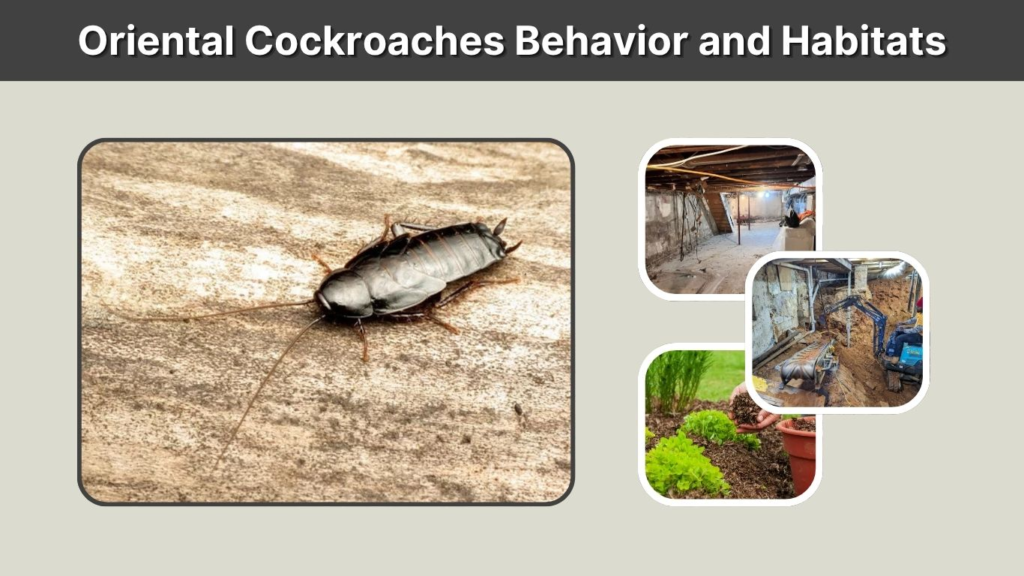
Oriental cockroaches prefer cool, damp, and dark areas. They are mostly nocturnal, venturing out at night to feed. Understanding where they hide and how they behave helps target treatments effectively and prevents reinfestation.
Common Hiding Spots
- Basements, crawl spaces, and garages
- Around sinks, drains, and pipes
- Inside appliances, electronics, or under furniture
- Outdoor areas with mulch, leaves, or debris
Activity Patterns
- Nocturnal; rarely seen during the day
- Slow-moving, unlike fast German cockroaches
- Do not fly indoors; males have limited wings but rarely use them
Oriental Cockroaches Life Cycle and Reproduction
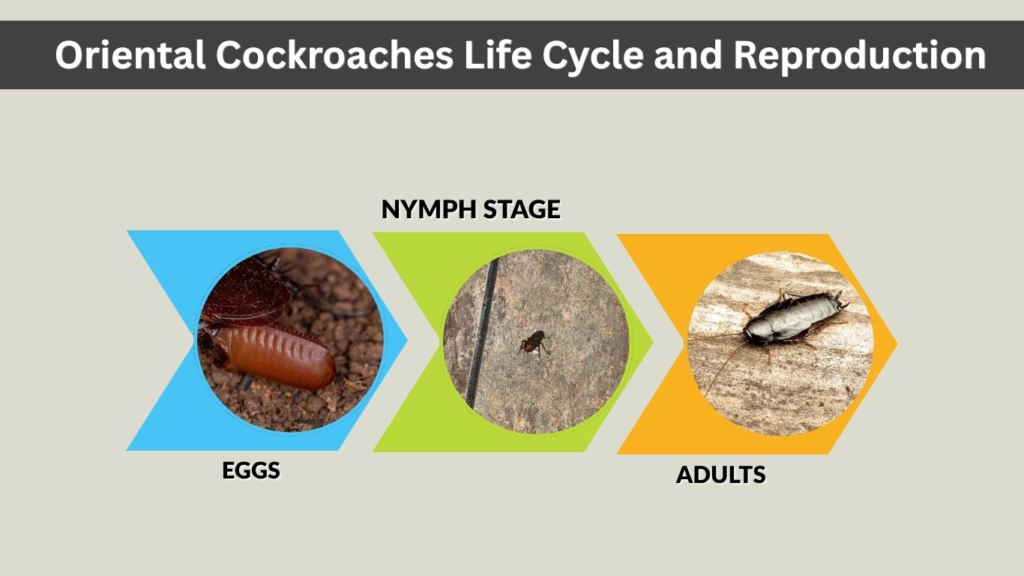
Knowledge of the Oriental cockroach life cycle is vital for planning treatments. From eggs to nymphs and adults, understanding timing helps target both visible pests and hidden populations, ensuring permanent control.
Egg Stage
- Females produce 8–16 ootheca, each containing ~16 eggs
- Egg cases are deposited in hidden areas like cabinets or corners
- Hatch in 6–8 weeks
Nymph Stage
- Small, wingless, dark-colored
- Undergo 5–7 molts before adulthood
- Growth duration: 3–4 months depending on conditions
Adult Stage
- Lifespan: up to 1 year indoors
- Males are smaller and may attempt short flights outdoors
- Females are larger, wingless, and primarily crawl
Oriental Cockroaches Diet and Feeding Habits
Oriental cockroaches are scavengers that feed on decaying organic matter. Their feeding habits make kitchens, drains, and damp areas particularly attractive, and targeting these locations is essential for effective control.
Common Foods
- Rotten food, leftovers, and garbage
- Pet food and spilled dry goods
- Decaying plant material outdoors
Water Needs
- Require moist areas for survival
- Can survive weeks without food, but need water frequently
Oriental Cockroaches Signs of Infestation
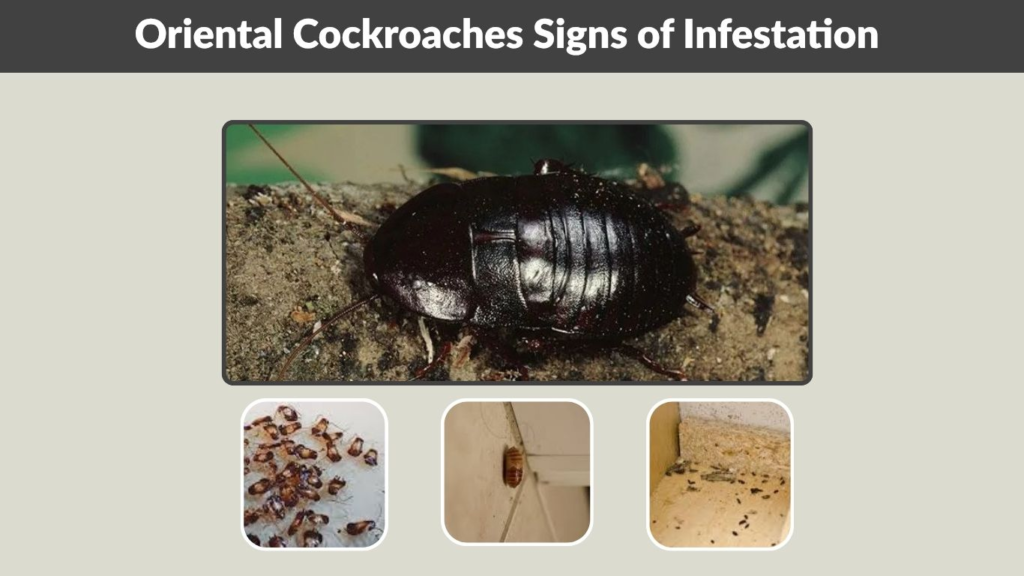
Detecting infestations early helps prevent severe problems. Look for droppings, egg cases, unusual odors, and sightings of live or dead cockroaches to determine the extent of the problem.
Common Signs
- Small dark droppings resembling coffee grounds
- Egg cases hidden behind appliances or furniture
- Musty or oily odors in infested areas
- Sightings of live cockroaches at night
Chemical Treatments for Oriental Cockroaches
Chemical solutions are often the fastest way to reduce cockroach populations. Proper application ensures safety and effectiveness, targeting both adults and nymphs. Combining sprays, powders, and baits provides a comprehensive solution for persistent infestations.
Sprays and Aerosols
- Quick knockdown of visible cockroaches
- Effective in cracks, baseboards, and under appliances
- Use according to label instructions to avoid contamination
Gel Baits
- Placed in hidden areas where cockroaches travel
- Poison is carried back to the nest, affecting others
- Long-lasting and discreet
Powdered Insecticides
- Apply in corners, wall voids, and behind cabinets
- Works on hard-to-reach areas
- Effective when combined with good sanitation
Oriental Cockroaches Natural and Home Remedies
For those avoiding chemicals, natural methods can help reduce Oriental cockroach populations. While slower than chemical treatments, they are safe for families and pets when used correctly.
Boric Acid
- Sprinkle thin layers in cracks, under appliances, and behind cabinets
- Long-lasting effect on nymphs and adults
Baking Soda and Sugar
- Sugar attracts roaches, and baking soda kills them after ingestion
Essential Oils
- Peppermint, tea tree, and eucalyptus oils repel cockroaches
- Can be applied as sprays around entry points
Oriental Cockroaches Preventive Measures
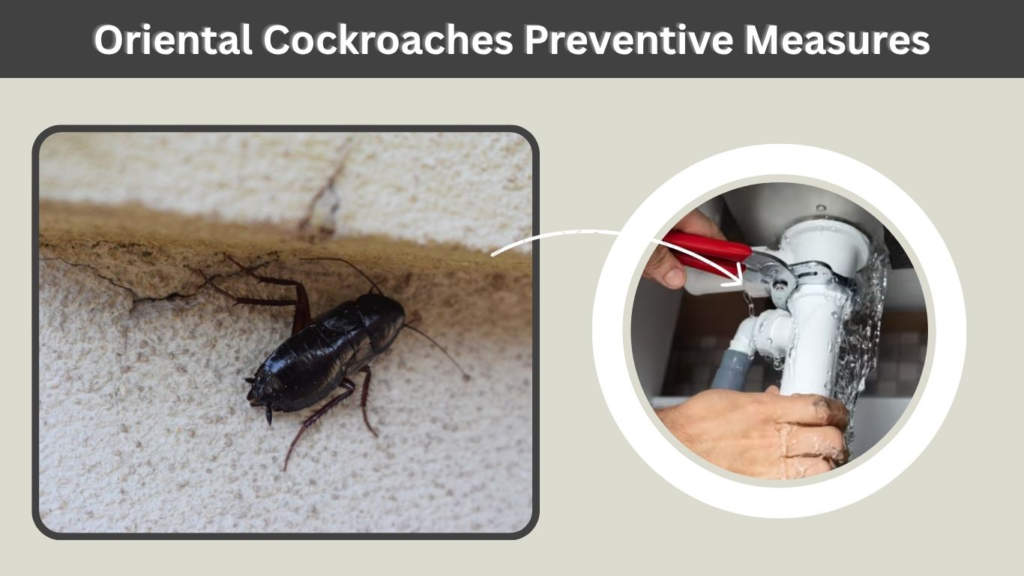
Preventing future infestations is essential for long-term control. Maintaining hygiene, sealing entry points, and reducing moisture make your home less attractive to cockroaches.
Hygiene Practices
- Clean counters and floors regularly
- Store food in airtight containers
- Dispose of garbage promptly
Moisture Control
- Fix leaky pipes and faucets
- Ventilate bathrooms and kitchens
- Avoid leaving standing water
Structural Prevention
- Seal cracks, gaps, and drains
- Remove outdoor debris, mulch, and leaves near the house
Handling Cockroach Eggs
Cockroach eggs (ootheca) are highly resistant and require careful attention. Targeting eggs ensures the next generation is eliminated and prevents reinfestation.
Identifying Egg Cases
- Brown, capsule-shaped, hidden in dark, damp areas
- Often found behind appliances or in cabinets
Treatment Methods
- Use boric acid or diatomaceous earth in cracks
- Vacuum up egg cases when possible
- Repeat treatments every few weeks to catch newly hatched nymphs
Specialized Infestation Areas
Certain areas, such as apartments, cars, and drains, require focused strategies. Treating these areas properly increases the likelihood of complete elimination.
Apartments or Shared Housing
- Coordinate with neighbors to control spread
- Place baits in common areas
- Professional pest control may be necessary for severe infestations
Cars and Electronics
- Clean interiors thoroughly, removing crumbs and debris
- Use cockroach-safe sprays or traps
- Pay attention to air vents and storage compartments
Bathrooms and Drains
- Apply gels or powders around pipes and drains
- Keep areas dry and ventilated
- Use natural repellents in wet corners
DIY vs Professional Extermination
Small infestations can be treated with DIY methods, but larger or persistent infestations often require professional intervention. Choosing the right approach saves time and ensures effective control.
DIY Treatments
- Sprays, baits, gels, and powders are effective for small infestations
- Consistency and monitoring are key
- Combine chemical and natural remedies for best results
Professional Services
- Comprehensive treatment plans, including follow-ups
- Access to stronger insecticides and expertise
- Often includes advice on prevention and home-proofing
FAQs
How quickly do Oriental cockroach infestations spread?
Oriental cockroach populations grow slowly compared to German cockroaches, but a single female can lay multiple egg cases in her lifetime. Infestations can become noticeable within a few months if favorable conditions, like moisture and food, are present. Early detection is key to preventing rapid spread.
Can Oriental cockroaches climb walls or ceilings?
Yes, they can climb vertical surfaces, especially walls near damp areas. While they are slower than other species, their ability to access cabinets, drains, and pipes allows them to reach food and water sources, making comprehensive control essential.
Are Oriental cockroaches invasive in my area?
Oriental cockroaches are widespread across many regions, including the U.S., and thrive in moist, dark environments. They are considered invasive in certain climates because they can colonize basements, sewers, and outdoor mulch areas, outcompeting native cockroach species.
What kills Oriental cockroaches most effectively?
Boric acid, gel baits, and insecticide powders are highly effective. Targeting hiding spots, cracks, and moisture-prone areas maximizes success. For large infestations, professional extermination ensures complete elimination and reduces the risk of reinfestation.
Can Oriental cockroaches survive outdoors?
Yes, they prefer moist outdoor environments such as sewers, leaf litter, mulch, and under stones. While they can survive outdoors, they often enter homes seeking food, warmth, and shelter, especially during cooler months.