
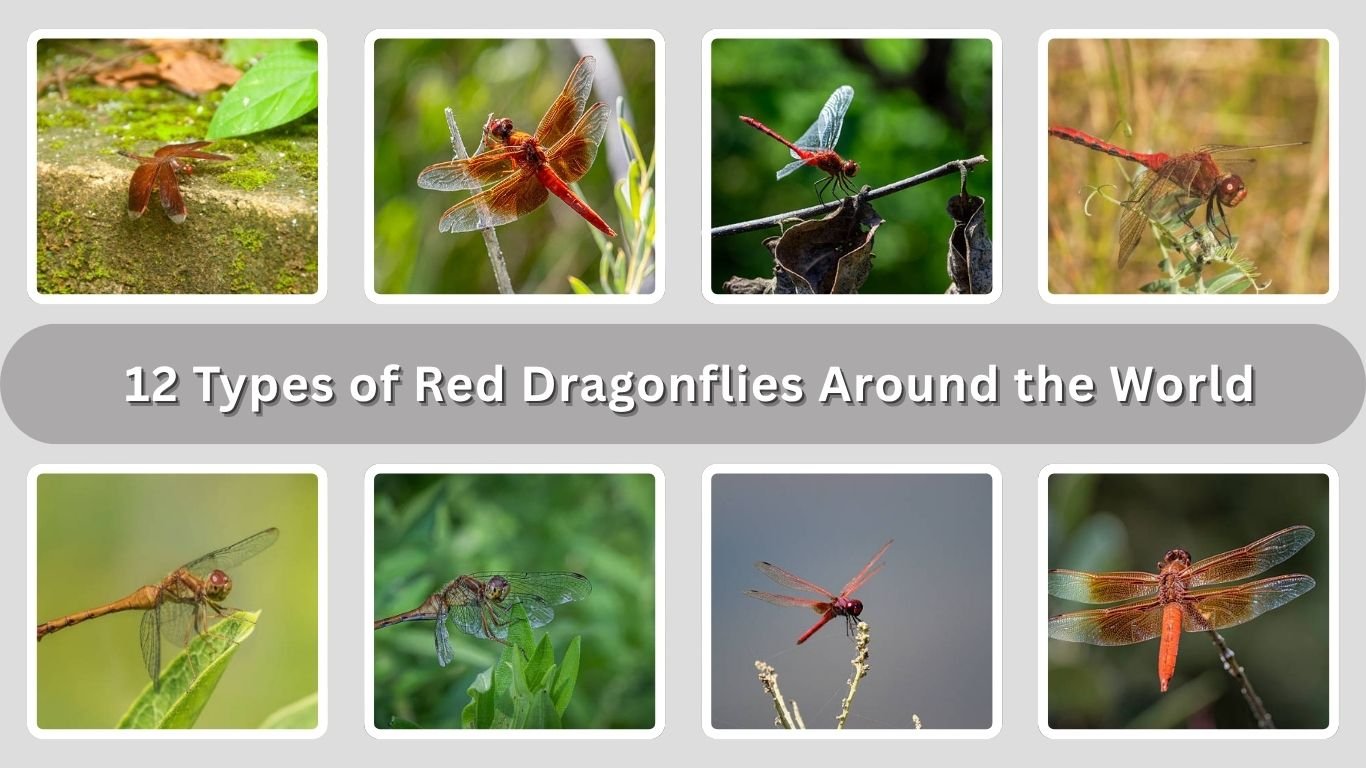
Red dragonflies are some of the most striking and easily recognizable insects in nature. Their bright red coloration, especially in mature males, makes them stand out near water bodies such as ponds, lakes, and wetlands. These dragonflies are found across tropical and temperate regions, with each species showing unique patterns, habitats, and behaviors. Beyond their beauty, they play an important ecological role by feeding on mosquitoes and other small insects. In this guide, you will discover 12 types of red dragonflies and learn how to identify them in the wild.
1. Scarlet Skimmer (Crocothemis servilia)

Overview: The Scarlet Skimmer is one of the most recognizable red dragonflies, widely found across Asia. Its bright coloration and adaptability make it a common sight near freshwater bodies, especially in tropical and subtropical regions.
Identification
- Medium-sized dragonfly with a broad abdomen
- Mature males are bright scarlet red across the body
- Females and juveniles are yellowish-brown with subtle markings
- Transparent wings with a slight amber tint near the base
Color Pattern
The Scarlet Skimmer is famous for its vivid red coloration, which develops fully in mature males. The entire body, including the abdomen and thorax, turns a striking scarlet shade. In contrast, females and younger individuals lack this intensity and display more muted yellow or brown tones, helping them blend into their surroundings.
Habitat
This species thrives in freshwater environments such as ponds, lakes, marshes, and rice fields. It prefers still or slow-moving water and is commonly seen perched on plants or hovering just above the surface. Its adaptability allows it to live in both rural and urban water bodies.
Behavior
Scarlet Skimmers are active during the day and are often seen basking in sunlight. Males are territorial and may chase away other dragonflies to defend their space. They are skilled hunters, feeding on small flying insects like mosquitoes, making them beneficial for controlling pest populations.
2. Crimson Marsh Glider (Trithemis aurora)

Overview: The Crimson Marsh Glider is a striking red dragonfly known for its glowing crimson body and graceful flight. It is commonly found in tropical and subtropical regions, especially around calm wetlands and marshy areas.
Identification
- Medium-sized dragonfly with a slender body
- Males have a bright crimson to magenta abdomen
- Females are yellowish-brown with lighter markings
- Wings are clear with a slight reddish or purplish tint
Color Pattern
The male Crimson Marsh Glider displays a vibrant crimson to purplish-red color that can appear almost glowing under sunlight. Its thorax may have a slightly darker tone compared to the abdomen. Females and immature individuals lack the vivid red and instead show dull yellow or brown shades, which provide better camouflage.
Habitat
This species prefers marshes, ponds, lakes, and slow-moving streams. It is often seen near vegetation around water bodies where it can easily perch and hunt. It thrives in warm climates and is frequently observed in open, sunny areas close to freshwater.
Behavior
Crimson Marsh Gliders are active fliers and are usually seen gliding smoothly over water. Males are territorial and often perch in exposed spots to watch for rivals. They feed on small flying insects and play an important role in maintaining ecological balance by reducing insect populations.
3. Red-veined Darter (Sympetrum fonscolombii)

The Red-veined Darter is a widely distributed dragonfly known for its mobility and distinctive wing markings. It is a strong migratory species and can be found across multiple continents, often appearing in temporary water bodies.
Identification
- Medium-sized dragonfly with a slim abdomen
- Males are reddish with lighter thorax tones
- Females are yellowish-brown with black markings
- Wings have clearly visible red veins
Color Pattern
Males develop a soft red coloration on the abdomen, which contrasts with the pale thorax. The most notable feature is the red venation in the wings, giving the species its name. Females and juveniles lack the red tone and instead show yellow and brown shades with more defined striping.
Habitat
This species prefers open areas with still or slow-moving water such as ponds, lakes, and temporary rain pools. It is highly adaptable and often appears in newly formed water bodies, making it one of the first dragonflies to colonize such habitats.
Behavior
Red-veined Darters are active and fast fliers, often seen patrolling over water. They are known for long-distance migration and can travel in large numbers. Like other dragonflies, they feed on small insects and help control mosquito populations.
4. Autumn Meadowhawk (Sympetrum vicinum)

The Autumn Meadowhawk is a small red dragonfly commonly seen in late summer and autumn. It is known for its late-season activity and ability to survive in cooler temperatures compared to many other species.
Identification
- Small dragonfly with a compact body
- Males have a bright red abdomen
- Females are yellow to brown with subtle markings
- Wings are clear with a slight amber tint
Color Pattern
Mature males display a rich red coloration across the abdomen, which becomes more intense as the season progresses. Females and immature individuals have a more subdued yellowish or brown tone, allowing them to blend into grassy and woodland environments.
Habitat
This species is commonly found near ponds, marshes, and slow streams. It also frequents grassy fields and woodland edges, especially during cooler months. It prefers calm waters and areas with abundant vegetation.
Behavior
Autumn Meadowhawks are active later in the year than most dragonflies. They are often seen basking in sunlight to maintain body warmth. These dragonflies are agile hunters, feeding on small flying insects and contributing to natural pest control.
5. Cherry-faced Meadowhawk (Sympetrum internum)

The Cherry-faced Meadowhawk is a small, brightly colored dragonfly known for its distinctive red face and body. It is commonly found in North America, especially around calm freshwater habitats.
Identification
- Small dragonfly with a slender body
- Males have a bright red face and abdomen
- Females are yellowish with dark markings
- Wings are clear with slight amber shading
Color Pattern
Mature males display a vivid red coloration that covers both the face and abdomen, giving them a striking appearance. The thorax may appear slightly darker. Females and immature individuals are more subdued, with yellow or tan bodies and visible dark striping for camouflage.
Habitat
This species prefers ponds, lakes, marshes, and slow-moving streams. It is often seen resting on grasses or low vegetation near water. It favors quiet, shallow water bodies with plenty of plant cover.
Behavior
Cherry-faced Meadowhawks are active during the day and are often seen perching before darting out to catch prey. They are agile fliers and feed on small insects. Males may show mild territorial behavior, especially around breeding sites.
6. Ruby Meadowhawk (Sympetrum rubicundulum)

The Ruby Meadowhawk is a common red dragonfly recognized for its deep ruby coloration in mature males. It is widely distributed across North America and is often seen in late summer.
Identification
- Small to medium-sized dragonfly
- Males develop a deep ruby-red abdomen
- Females are yellowish-brown with fine markings
- Wings are transparent with slight dark edging
Color Pattern
Mature males exhibit a rich ruby-red color that intensifies with age, especially on the abdomen. The thorax may retain some brownish tones. Females and juveniles are less colorful, showing yellow or brown shades that help them stay less visible to predators.
Habitat
Ruby Meadowhawks inhabit ponds, lakes, marshes, and slow streams. They are commonly found in areas with abundant vegetation and prefer warm, sunny environments near still water.
Behavior
These dragonflies are active hunters and are frequently seen flying low over water or perched on plants. They feed on small flying insects and are beneficial in reducing pest populations. Males may defend small territories during the breeding season.
7. Red Skimmer (Orthetrum testaceum)

The Red Skimmer is a common dragonfly in South and Southeast Asia, easily recognized by its warm reddish tones. It is frequently seen around open water bodies and is well adapted to human-altered environments.
Identification
- Medium-sized dragonfly with a slightly broad abdomen
- Males show reddish to orange coloration
- Females are yellowish-brown with darker patterns
- Wings are clear with a faint amber tint at the base
Color Pattern
Males develop a soft reddish-orange color, especially on the abdomen, while the thorax may appear slightly darker or brownish. The coloration is not as intense as some other red species but still stands out in sunlight. Females and juveniles display dull yellow and brown shades with visible striping.
Habitat
This species is commonly found near ponds, lakes, rice fields, and slow-moving streams. It adapts well to disturbed habitats, including urban and agricultural areas, as long as water is present.
Behavior
Red Skimmers are often seen perching on exposed twigs or hovering over water. They are active hunters, feeding on small flying insects. Males can be territorial and may chase away intruders from their preferred perching spots.
8. Flame Skimmer (Libellula saturata)

The Flame Skimmer is a brilliantly colored dragonfly known for its intense red-orange appearance. It is native to western North America and is often found in sunny, open landscapes.
Identification
- Medium-sized dragonfly with a sturdy body
- Males are bright flame-red to orange
- Females are yellowish with brown markings
- Wings have an orange tint, especially near the base
Color Pattern
Mature males exhibit a striking flame-red or orange coloration that covers most of the body, including the thorax and abdomen. The wings often carry a warm orange hue, enhancing their vivid look. Females and immature individuals are less colorful, showing yellow and brown tones.
Habitat
Flame Skimmers prefer ponds, lakes, streams, and desert water bodies. They are often seen in open, sunny environments where they can bask and hunt efficiently.
Behavior
These dragonflies are strong fliers and are frequently observed gliding over water or resting in the sun. They feed on flying insects and are effective predators. Males are territorial and actively defend their area during the breeding season.
9. Band-winged Meadowhawk (Sympetrum semicinctum)

The Band-winged Meadowhawk is a distinctive red dragonfly known for the dark bands on its wings. It is commonly found in North America, especially in wetland habitats during warmer months.
Identification
- Small to medium-sized dragonfly
- Males have a red abdomen with darker markings
- Females are yellowish-brown with black patterns
- Wings feature noticeable dark bands near the base
Color Pattern
Mature males develop a bright red abdomen, which contrasts with the darker thorax. The most unique feature is the dark banding on the wings, making it easy to identify. Females and immature individuals show muted yellow and brown tones with more visible striping.
Habitat
This species prefers marshes, ponds, and grassy wetlands. It is often seen near shallow water with plenty of vegetation, where it can perch and hunt effectively.
Behavior
Band-winged Meadowhawks are active fliers and are often seen resting on grasses between flights. They hunt small flying insects and contribute to natural pest control. Males may guard territories, especially around breeding areas.
10. Coral-tailed Cloudwing (Tholymis tillarga)

The Coral-tailed Cloudwing is a tropical dragonfly known for its unique tail coloration and twilight activity. It is widely found in Asia, including regions like Bangladesh.
Identification
- Medium-sized dragonfly with a slender body
- Males have a distinct coral-red tail segment
- Females are brownish with lighter markings
- Wings are slightly smoky or translucent
Color Pattern
The most striking feature of this species is the coral-red coloration at the tip of the abdomen, especially in males. The rest of the body is darker, creating a strong contrast. Females and juveniles have more uniform brown tones, lacking the bright tail color.
Habitat
Coral-tailed Cloudwings are commonly found near ponds, lakes, and slow-moving waters in tropical regions. They prefer areas with surrounding vegetation and are often seen resting during the day.
Behavior
Unlike many dragonflies, this species is most active at dusk. It flies in low light conditions, hunting small insects. During the day, it remains perched and inactive. Its twilight activity makes it unique among dragonflies.