
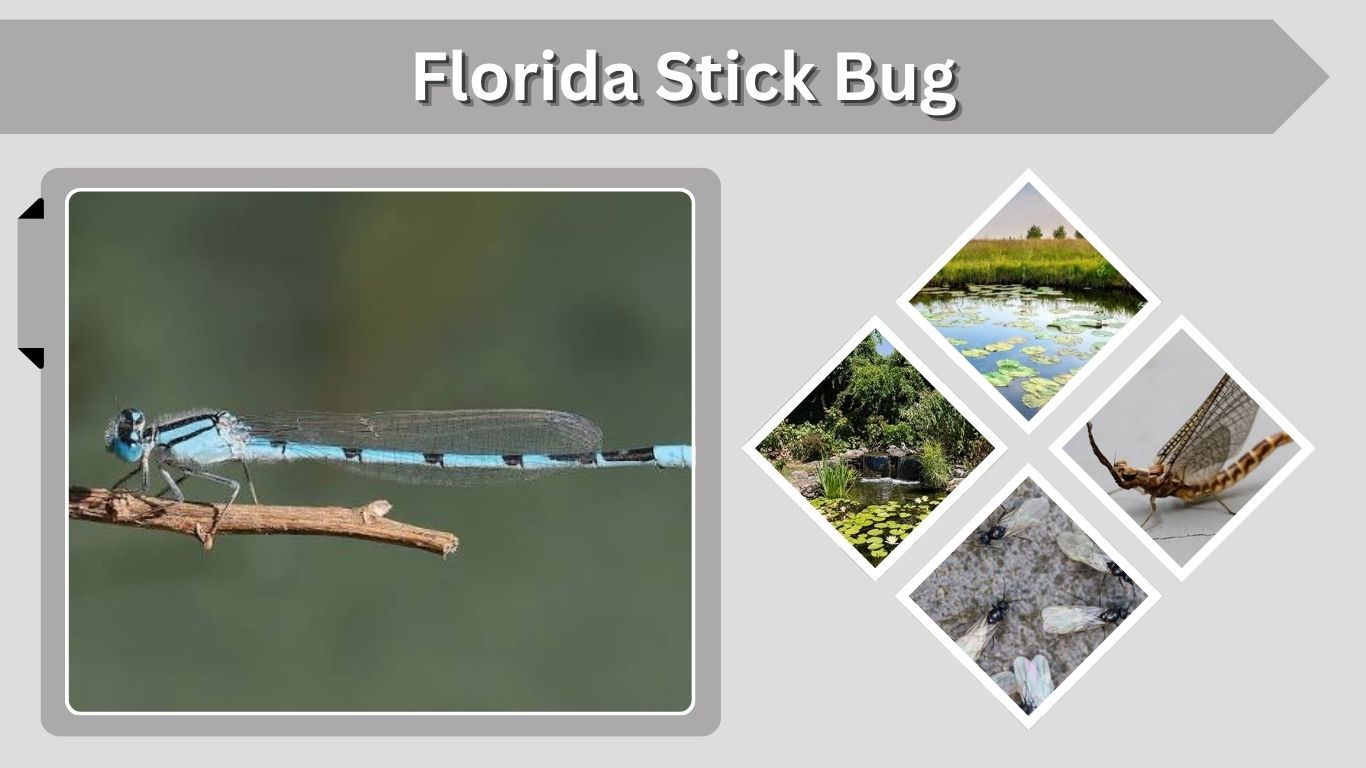
The Familiar Bluet (Enallagma civile) is a small, brightly colored damselfly commonly seen around ponds, lakes, marshes, wetlands, and slow-moving streams. Adult males are especially noticeable because of their vivid blue-and-black bodies, while females may be blue, greenish, tan, or brown. This adaptable species can tolerate a wide variety of aquatic habitats and readily colonizes newly created wetlands. Familiar Bluets are predators throughout their lives, feeding on small flying insects as adults and aquatic invertebrates as larvae.
What Is a Familiar Bluet?
The Familiar Bluet is a damselfly belonging to the genus Enallagma, commonly called the American bluets.
Its scientific name is Enallagma civile. Another common name sometimes used is Civil Bluet.
| Classification | Name |
| Kingdom | Animalia |
| Phylum | Arthropoda |
| Class | Insecta |
| Order | Odonata |
| Suborder | Zygoptera |
| Family | Coenagrionidae |
| Genus | Enallagma |
| Species | Enallagma civile |
The family Coenagrionidae includes many of the small, narrow-winged damselflies commonly found around freshwater.
Familiar Bluet Identification
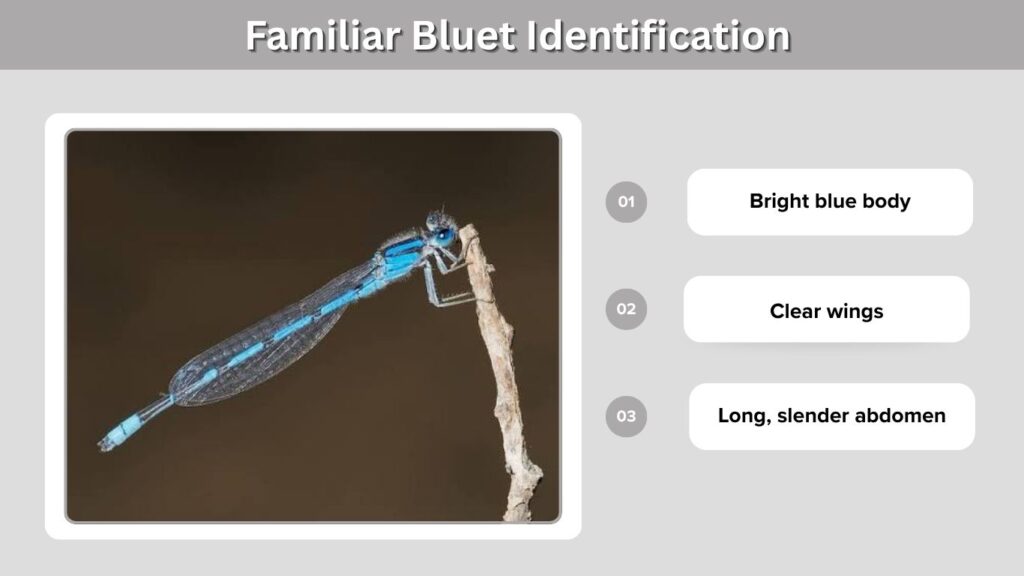
Familiar Bluets are small to medium-sized damselflies measuring approximately 28–39 mm, or about 1.1–1.5 inches long.
Mature males are among the bluer members of the genus.
Male Familiar Bluet
A typical male has:
- Bright blue body
- Black stripe along the center of the thorax
- Narrower black stripes along the sides
- Mostly blue middle abdominal segments
- Black, torpedo-shaped marks on the abdomen
- Blue eyes with dark caps
- Clear wings
- Long, slender abdomen
- Distinctive terminal appendages
The relatively large amount of blue on the abdomen is a useful field clue. Illinois DNR describes the black abdominal markings as torpedo-shaped and pointing toward the end of the abdomen.
However, several Enallagma species look extremely similar, so close examination of the male’s terminal appendages may sometimes be necessary for a confident identification.
Female Familiar Bluet
Females are more variable than males.
They may be:
- Blue
- Greenish
- Tan
- Brown
Female eyes are typically greenish to tan with a darker brown cap rather than the bright blue eyes of mature males. Their abdomen usually shows considerably more dark coloration than that of males.
This variation makes female Familiar Bluets particularly easy to confuse with females of other bluet species.
Male vs. Female Familiar Bluet
| Feature | Male | Female |
| Main color | Bright blue | Blue, tan, greenish or brown |
| Eyes | Blue with black cap | Greenish/tan with brown cap |
| Abdomen | Mostly blue with black marks | Generally darker |
| Body | Slender | Often slightly more robust |
| Identification | Terminal appendages useful | Often more difficult |
Immature Familiar Bluet
Young adults do not always display the brilliant coloration associated with mature males.
An immature male Familiar Bluet may appear paler, duller, or somewhat grayish before its adult colors fully develop.
BugGuide documents immature males with identification features that differ somewhat from fully mature individuals, demonstrating why coloration alone is not always enough for identification.
What Is a Teneral Familiar Bluet?
A newly emerged damselfly is called teneral.
At this stage:
- The body is extremely soft.
- Wings are still hardening.
- Colors are pale.
- Flight may initially be weak.
- Adult markings have not fully developed.
Within hours or days, its exoskeleton hardens and its mature coloration becomes increasingly apparent.
Where Do Familiar Bluets Live?
The Familiar Bluet has a broad North American distribution.
NatureServe records it across a large portion of the United States and multiple Canadian provinces, including British Columbia, Manitoba, Ontario, Quebec, Saskatchewan, New Brunswick, Nova Scotia, Newfoundland, and Prince Edward Island.
Its broad distribution and tolerance of different aquatic environments help explain the name “Familiar”—in many areas, it is one of the damselflies people are most likely to encounter.
Familiar Bluet Habitat
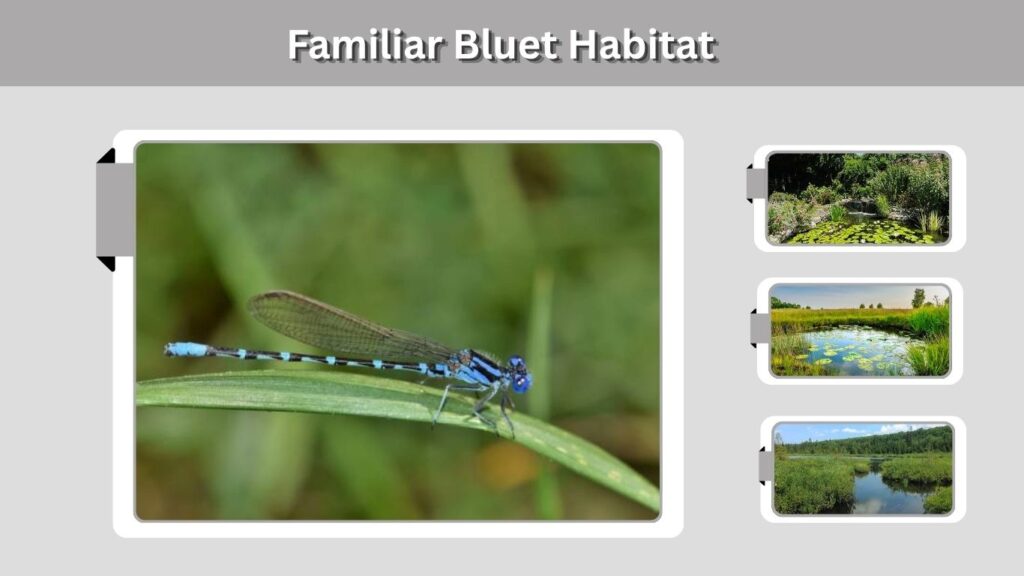
Familiar Bluets are highly adaptable.
They can breed around:
- Ponds
- Lakes
- Open marshes
- Wetlands
- Slow-moving streams
- Vegetated river margins
- Newly created ponds
- Brackish coastal waters
- Some saline wetlands
Vegetation around or within the water is especially important because adults use plants for perching and females deposit eggs in plant tissue.
Their ability to use recently formed wetlands also makes them effective colonizers.
What Do Familiar Bluets Eat?
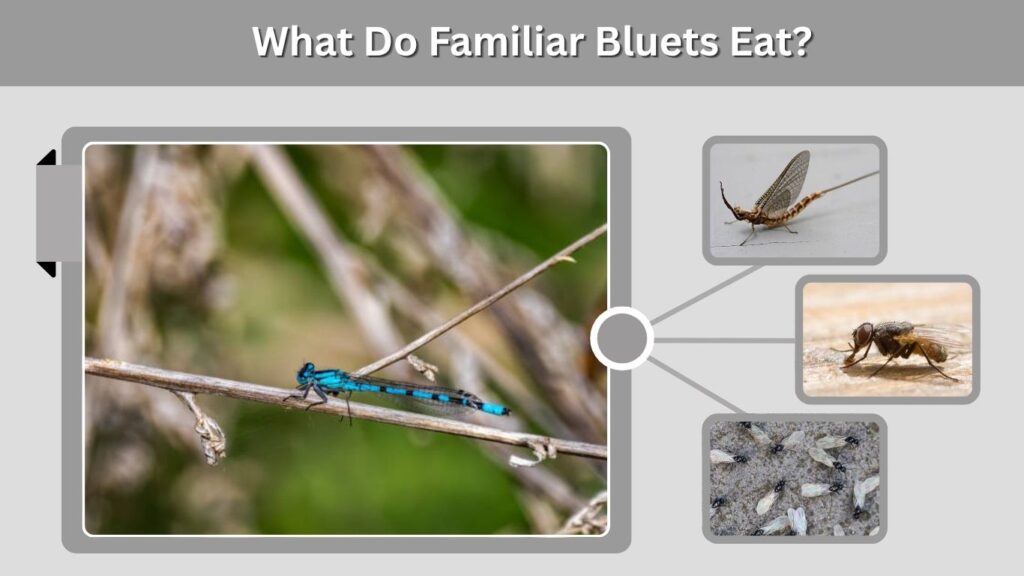
Both adult and larval Familiar Bluets are predators.
Adult Diet
Adults capture small flying insects, including:
- Mosquitoes
- Midges
- Small flies
- Tiny moths
- Mayflies
- Flying ants
- Flying termites
They usually catch prey in flight using their legs before transferring it to their mouthparts.
Familiar Bluet Larvae
The aquatic immature stage is often called a nymph or naiad.
Larvae live underwater among vegetation and prey upon small aquatic animals.
Their diet may include:
- Mosquito larvae
- Aquatic fly larvae
- Mayfly larvae
- Small crustaceans
- Other tiny aquatic invertebrates
Laboratory research has confirmed that Enallagma civile nymphs can consume substantial numbers of mosquito larvae.
Familiar Bluet Life Cycle
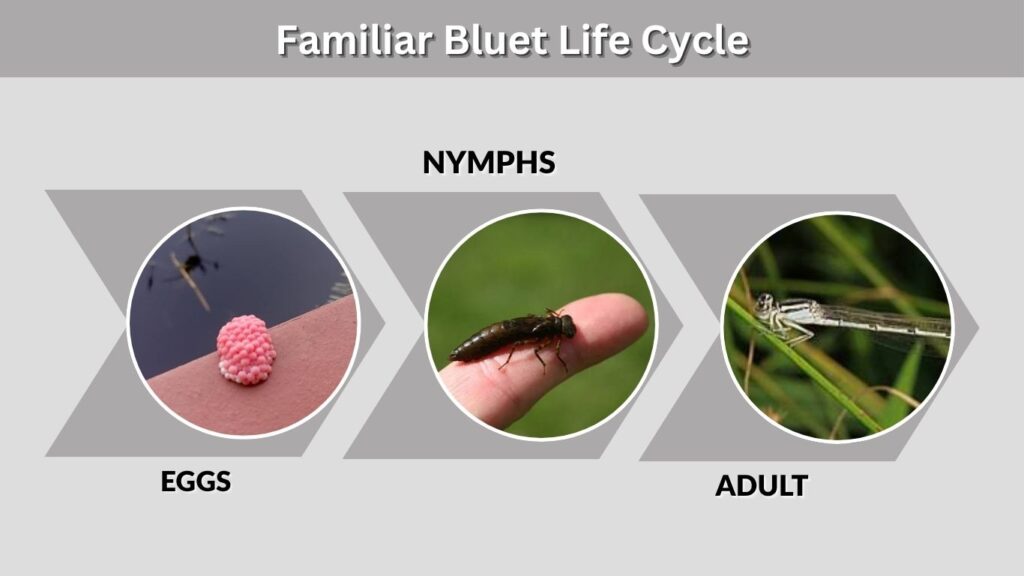
Like other damselflies, Familiar Bluets undergo incomplete metamorphosis:
Egg → Aquatic Nymph → Adult
There is no caterpillar or pupal stage.
Eggs
Females deposit eggs inside soft aquatic plant tissue, sometimes at or beneath the water’s surface.
Aquatic Nymph
The eggs hatch into aquatic nymphs.
Nymphs are completely predatory and molt repeatedly as they grow. In colder portions of the range, they may overwinter as late-stage nymphs.
Adult
When development is complete, the nymph climbs out of the water onto vegetation.
Its skin splits, and the winged adult emerges.
The newly emerged teneral adult allows its wings and exoskeleton to harden before flying away.
Familiar Bluet Mating
Males commonly patrol areas around water searching for females.
During mating, damselflies form the distinctive wheel position characteristic of Odonata.
After mating, the male may remain attached to the female in tandem while the pair searches for suitable egg-laying locations.
How Do Familiar Bluets Lay Eggs?
Familiar Bluets can spend considerable time investigating potential oviposition sites.
The female inserts eggs into soft plant tissue at or beneath the water surface. She may deposit a small number of eggs at one location before moving to another.
Females may even submerge while laying eggs, while the male waits nearby and can reconnect with her afterward.
Familiar Bluet vs. Marsh Bluet
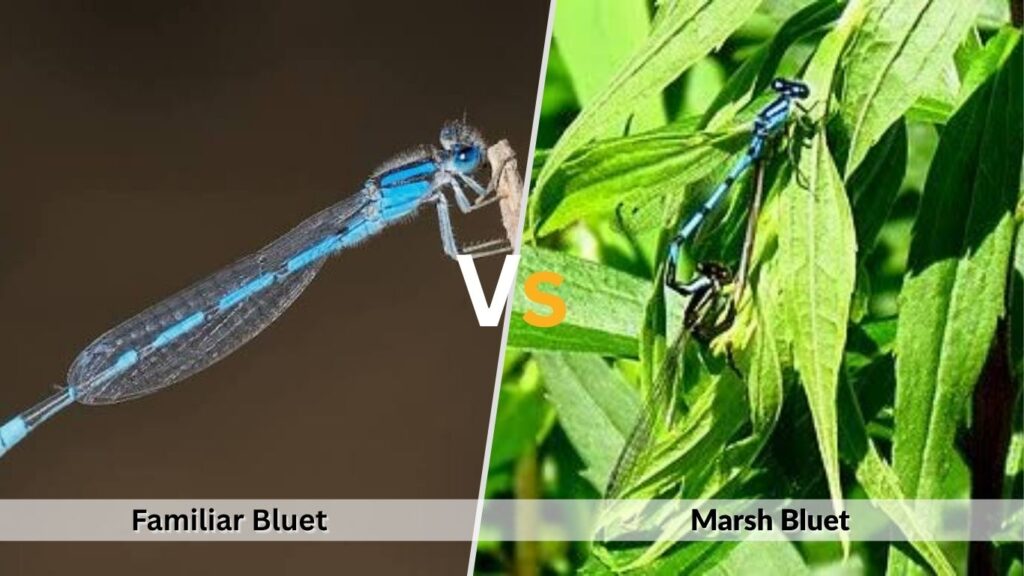
The Marsh Bluet (Enallagma ebrium) can resemble a Familiar Bluet.
| Feature | Familiar Bluet | Marsh Bluet |
| Scientific name | E. civile | E. ebrium |
| Male abdomen | Mostly blue through middle | More extensive black |
| Segment 7 | Considerable blue possible | Almost entirely black |
| Habitat | Wide variety of waters | Especially marshy ponds |
| Range | Very broad | More northern |
Marsh Bluet males typically show significantly more black, including an almost entirely black seventh abdominal segment.
Close inspection may still be needed.
Northern Bluet vs. Familiar Bluet
The Northern Bluet (Enallagma annexum) is another potential look-alike.
Both can have blue-and-black bodies and occur together in portions of North America.
Accurate separation may require examining:
- Abdominal pattern
- Terminal appendages of males
- Thoracic markings
- Geographic location
Bluets are notoriously difficult to identify from distant photographs. Specialists frequently use the male claspers or other structural features rather than relying only on color.
Familiar Bluet vs. Dragonfly
People sometimes call the Familiar Bluet a Familiar Bluet dragonfly, but technically it is a damselfly.
Both belong to the order Odonata.
Typical damselfly features include:
- Narrower body
- Widely separated eyes
- Delicate appearance
- Wings usually held together above the abdomen when resting
Dragonflies generally have broader bodies and usually hold their wings open when perched.
Interesting Familiar Bluet Facts
- Its scientific name is Enallagma civile.
- It belongs to the family Coenagrionidae.
- Adults measure about 28–39 mm long.
- Males are brilliant blue and black.
- Females occur in several color forms.
- Adults eat mosquitoes and other small flying insects.
- Larvae are aquatic predators.
- Nymphs can eat mosquito larvae.
- Females insert eggs into aquatic vegetation.
- They tolerate many different freshwater habitats.
- They can rapidly colonize newly created wetlands.
- Identifying some bluets may require examining male terminal appendages.
FAQs
1. What is a Familiar Bluet?
The Familiar Bluet (Enallagma civile) is a small blue-and-black damselfly belonging to the family Coenagrionidae. It occurs widely across North America and is commonly found around ponds, lakes, wetlands, marshes, and other vegetated aquatic habitats.
2. How do you identify a male Familiar Bluet?
Males are predominantly bright blue with black thoracic stripes and torpedo-shaped black markings along the abdomen. They also have blue eyes with dark caps. For difficult cases, the shape of the terminal appendages provides a more reliable identification feature.
3. What does a female Familiar Bluet look like?
Females are more variable than males and may be blue, greenish, tan, or brown. Their eyes are commonly greenish or tan with darker caps, and their abdomens generally contain considerably more dark coloration than mature males.
4. Where do Familiar Bluets live?
They inhabit a broad variety of aquatic environments, including ponds, lakes, marshes, newly created wetlands, slow streams, river margins, and even some brackish or saline habitats. Aquatic vegetation is especially useful for resting, mating, and egg laying.
5. Are Familiar Bluets beneficial?
Yes. Both adults and aquatic nymphs are predators. Adults consume mosquitoes, midges, flies, and other small insects, while nymphs hunt mosquito larvae and other aquatic invertebrates, making them useful components of wetland food webs.