
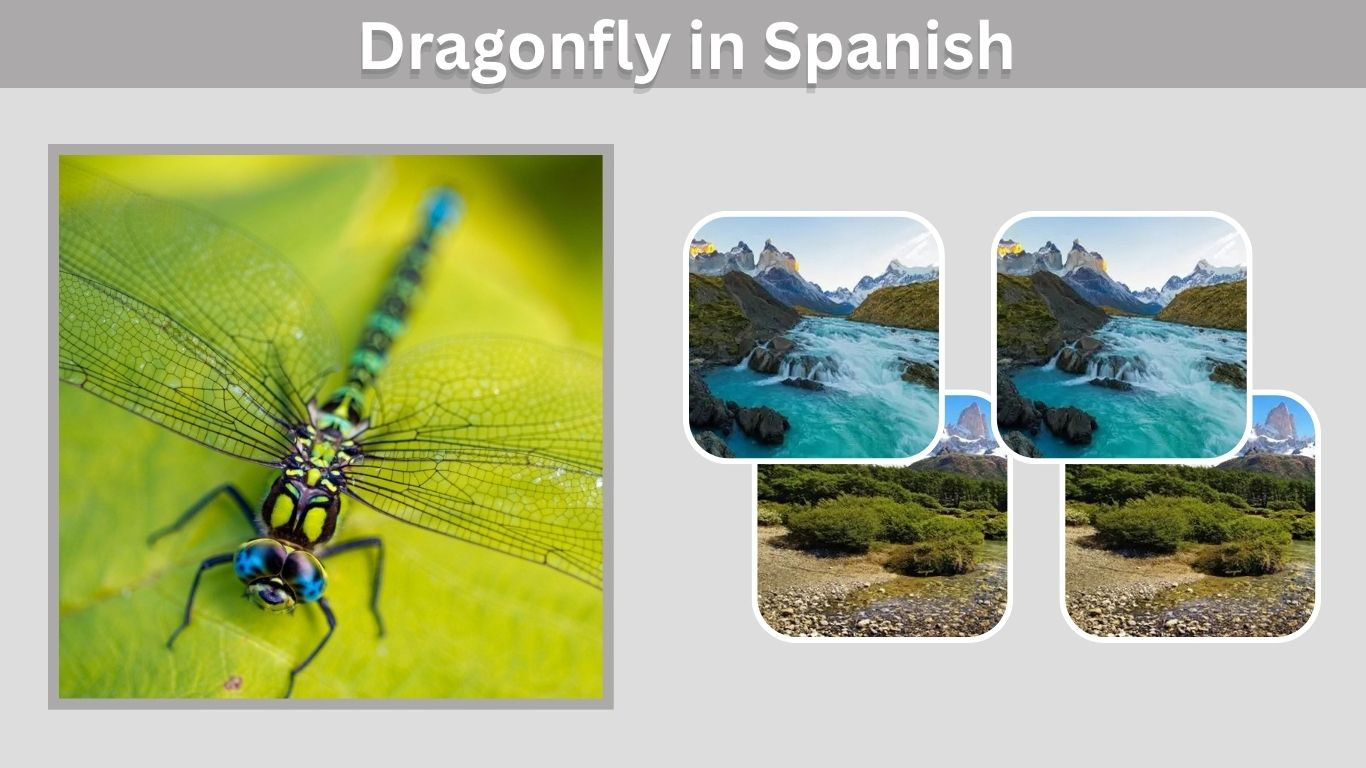
Learning how to say dragonfly in Spanish is useful for language learners, travelers, nature enthusiasts, and students. While many people expect a single translation, the Spanish word for dragonfly can vary depending on the country and region. Different Spanish-speaking communities use unique names, pronunciations, and expressions for this fascinating insect. Understanding these variations can help improve communication and cultural awareness. This guide explains the most common Spanish translations for dragonfly, their meanings, pronunciation, and how they are used in everyday conversations.
What Is Dragonfly in Spanish?
The word dragonfly has several Spanish translations, although one term is generally recognized across many Spanish-speaking countries. Regional vocabulary differences are common throughout the Spanish language, especially when discussing animals and insects. Learning the most widely accepted translation provides a strong foundation while also helping you recognize alternative names you may encounter in different countries.
The Most Common Translation
The most common Spanish translation for dragonfly is libélula. This word is widely understood throughout Spain, Mexico, and many Latin American countries.
What Does Libélula Mean?
Libélula refers specifically to the insect known in English as a dragonfly. It is commonly used in educational materials, scientific discussions, and everyday conversation.
Why Different Names Exist
Regional dialects often develop unique names for local wildlife. As a result, dragonflies may be called by different names depending on where Spanish is spoken.
How Do You Say Dragonfly in Spanish?
Pronunciation is just as important as knowing the correct translation. Even if you know the word libélula, using the correct pronunciation can make communication easier and more natural.
Pronunciation Guide
The word libélula is commonly pronounced as:
lee-BEH-loo-lah
The stress falls on the second syllable, which helps distinguish it from similar-sounding words.
Helpful Pronunciation Tips
To improve pronunciation:
- Break the word into syllables
- Practice slowly at first
- Listen to native speakers
- Repeat the word in sentences
- Focus on the accented syllable
Consistent practice helps build confidence when speaking Spanish.
Common Pronunciation Mistakes
Many English speakers place emphasis on the wrong syllable or pronounce the vowels incorrectly. Spanish vowels are generally shorter and more consistent than English vowels.
Spanish Word for Dragonfly in Different Regions
Spanish vocabulary varies significantly across countries. While libélula is widely understood, regional names and local expressions may also be used.
Dragonfly in Spain
In Spain, libélula is the standard term used in schools, books, media, and everyday conversation. Most Spanish speakers in Spain immediately recognize the word.
Dragonfly in Mexico
Mexican Spanish also commonly uses libélula. However, some local communities may use regional nicknames or informal terms depending on cultural traditions.
Dragonfly in Central and South America
Throughout Latin America, libélula remains the most widely accepted translation. Regional differences typically involve pronunciation or local slang rather than completely different words.
Why Regional Variations Matter
Understanding regional vocabulary can be helpful when traveling or communicating with Spanish speakers from different countries. It allows for clearer communication and demonstrates cultural awareness.
Dragonfly in Mexican Spanish
Mexico is one of the largest Spanish-speaking countries in the world, making Mexican Spanish especially important for language learners. While the standard translation remains the same, there are some interesting regional considerations.
Common Usage in Mexico
The word libélula is commonly taught in schools and used in dictionaries throughout Mexico. It is the term most likely to be understood nationwide.
Local Expressions
Depending on the region, people may occasionally use descriptive nicknames or local insect names. These variations are usually informal and less common than the standard word.
Dragonflies in Mexican Culture
Dragonflies are often associated with nature, water, and seasonal changes. Although they are not as prominent in folklore as some other animals, they remain familiar insects throughout much of Mexico.
Dragonfly in Spanish-Speaking Countries
Because Spanish is spoken in many countries, language learners often wonder whether the translation changes significantly across regions. In most cases, the core translation remains consistent, though local preferences may vary.
Countries That Commonly Use Libélula
The term libélula is widely recognized in:
- Spain
- Mexico
- Colombia
- Argentina
- Chile
This broad usage makes it one of the safest vocabulary choices for learners.
Regional Vocabulary Differences
Some communities may have local names influenced by indigenous languages, folklore, or historical traditions. However, these terms are usually less common than the standard Spanish translation.
Communication Across Regions
Using libélula generally ensures that Spanish speakers from different countries will understand what insect you are describing. This makes it the preferred choice for travelers and students alike.
Dragonfly Meaning in Spanish Culture
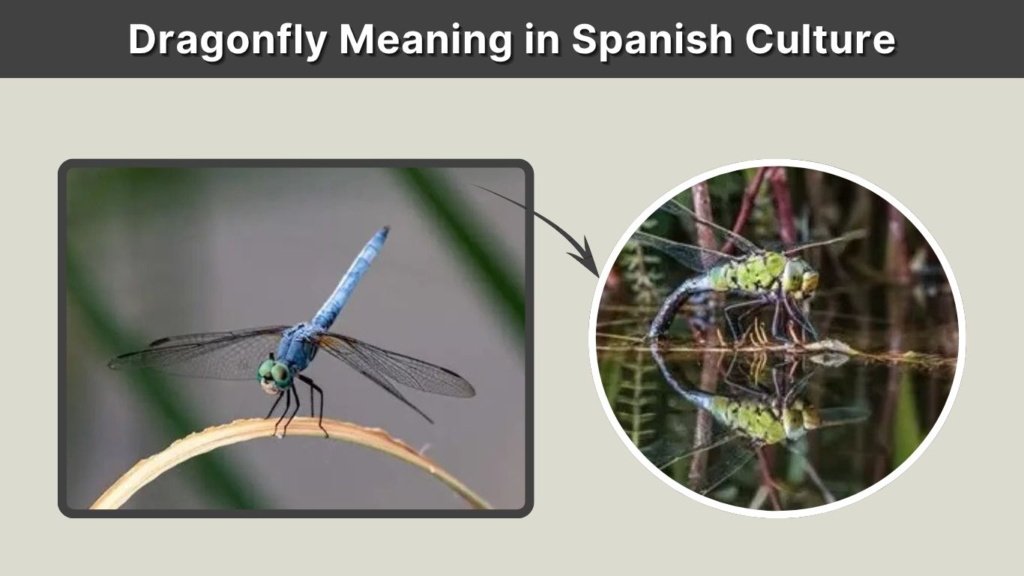
Dragonflies are often connected with nature, water, movement, and transformation. While the Spanish word libélula mainly refers to the insect itself, many people also associate dragonflies with beauty, change, freedom, and calm outdoor environments. These symbolic meanings may appear in art, stories, poetry, jewelry, and nature writing across Spanish-speaking communities.
Symbolic Meaning
In many contexts, dragonflies symbolize transformation because they begin life in water and later become flying insects. This life cycle makes them a natural symbol of growth and personal change.
Nature and Water Connection
Dragonflies are commonly seen near ponds, rivers, wetlands, and gardens. Because of this, they are often associated with peaceful natural settings and healthy ecosystems.
Spiritual Meaning
Some people view dragonflies as symbols of renewal, adaptability, and emotional clarity. These meanings are not universal, but they are common in modern symbolic interpretations.
Example Sentences Using Dragonfly in Spanish
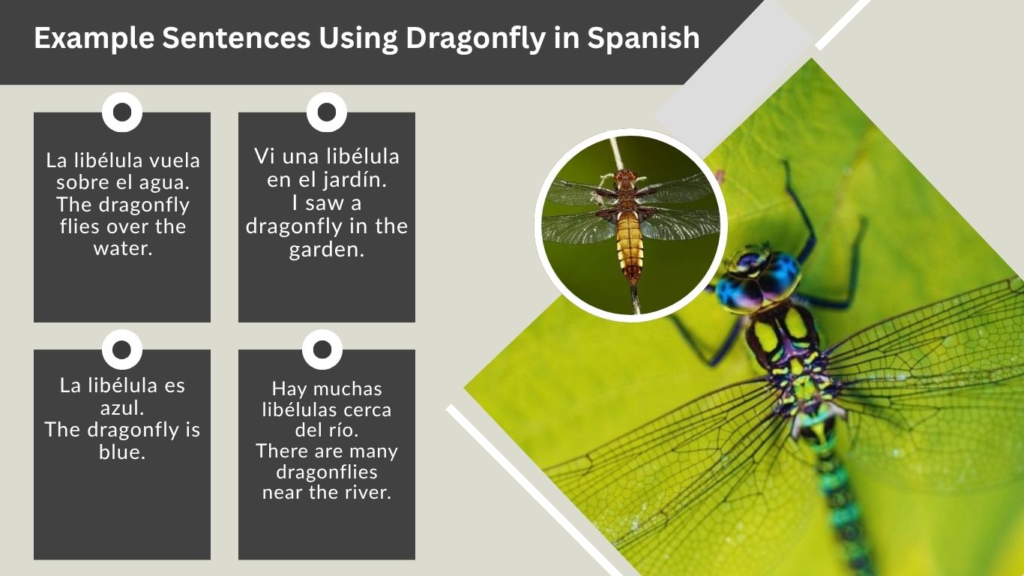
Learning a word becomes easier when you see it used in real sentences. The word libélula is a feminine noun in Spanish, so it usually appears with feminine articles such as la or una. Example sentences help learners understand grammar, pronunciation, and natural usage in everyday communication.
Beginner Examples
- La libélula vuela sobre el agua.
The dragonfly flies over the water. - Vi una libélula en el jardín.
I saw a dragonfly in the garden. - La libélula es azul.
The dragonfly is blue.
Travel and Nature Examples
- Hay muchas libélulas cerca del río.
There are many dragonflies near the river. - Quiero tomar una foto de la libélula.
I want to take a picture of the dragonfly. - Las libélulas viven cerca del agua.
Dragonflies live near water.
Grammar Note
Because libélula is feminine, use la libélula for “the dragonfly” and una libélula for “a dragonfly.” The plural form is libélulas.
Dragonfly Translation Mistakes to Avoid
Although dragonfly seems like a simple word to translate, learners sometimes make mistakes by translating it too literally or confusing it with other insects. Understanding these errors can help you use the correct Spanish vocabulary with confidence.
Avoid Literal Translation
Do not translate dragonfly word-for-word as “dragón mosca” or “mosca dragón.” These phrases sound unnatural and are not the standard Spanish names for the insect.
Do Not Confuse It With Butterfly
Dragonflies and butterflies are different insects. Dragonfly is libélula, while butterfly is mariposa. These words should not be used interchangeably.
Watch the Accent Mark
The correct spelling is libélula, with an accent on the “e.” The accent mark shows where the stress belongs in pronunciation.
Dragonfly in Spanish Pronunciation and Spelling
Pronunciation and spelling are important for clear communication. The word libélula may look unfamiliar to English speakers at first, but it becomes easier once divided into syllables. Paying attention to the accent mark helps you say the word naturally.
Syllable Breakdown
Libélula can be divided into four syllables: li-bé-lu-la. The strongest sound falls on bé.
Spelling Tips
The most important spelling detail is the accent mark over the letter é. Without it, the word may look incomplete or incorrect in formal writing.
Plural Form
The plural of libélula is libélulas. For example, “dragonflies in Spanish” can be translated as libélulas en español.
FAQs
What do you call a dragonfly in Spanish?
The most common Spanish word for dragonfly is libélula. This term is widely used and understood throughout Spain, Mexico, and most Spanish-speaking countries.
Is libélula masculine or feminine in Spanish?
Libélula is a feminine noun in Spanish. Therefore, it is used with feminine articles such as la libélula (the dragonfly) and una libélula (a dragonfly).
Are there different Spanish names for dragonflies?
Yes. While libélula is the standard term, some regions may use local nicknames or informal names influenced by local culture, dialects, or folklore. However, libélula remains the most universally recognized word.
How do you say dragonflies in Spanish?
The plural form of libélula is libélulas. For example, “I saw dragonflies near the pond” can be translated as Vi libélulas cerca del estanque.
Is libélula used in both Spain and Latin America?
Yes. The word libélula is commonly used throughout Spain and Latin America. It is the standard dictionary translation and is generally understood by Spanish speakers regardless of their country of origin.