
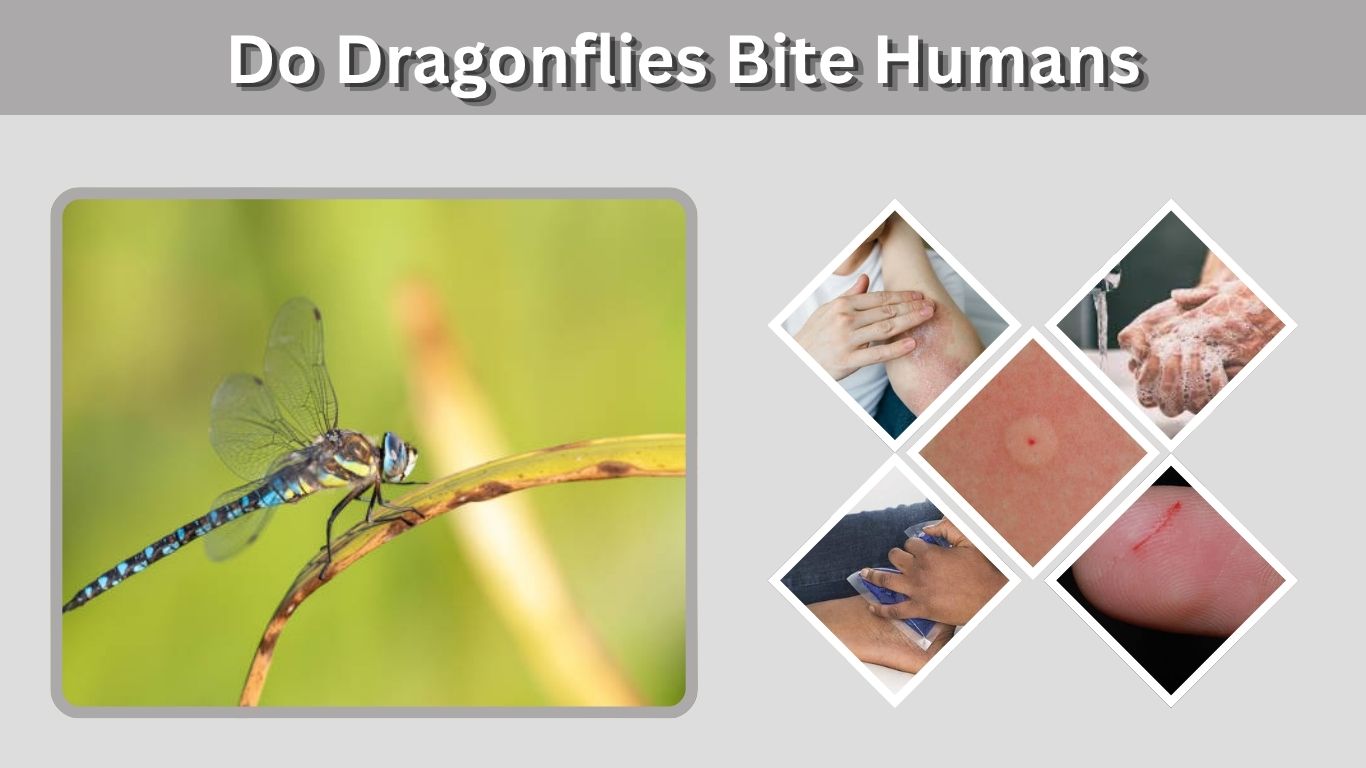
Do dragonflies bite humans? Dragonflies can bite in rare situations, but they do not normally attack people. They have strong chewing mouthparts used for catching and eating insects, not for feeding on humans. A dragonfly may occasionally pinch the skin if it is trapped, grabbed, or handled roughly, but most species cannot break human skin. Dragonflies also do not have stingers, so they cannot sting like bees or wasps. In normal outdoor encounters, these fast-flying insects are considered harmless to people.
Do Dragonflies Bite Humans?
Yes, dragonflies are physically capable of biting, but human bites are uncommon. Their jaws are designed for capturing mosquitoes, flies, moths, and other insects.
Dragonflies generally avoid people and have no reason to bite humans during normal activity.
When Might a Dragonfly Bite?
A dragonfly may attempt to bite when:
- It is caught by hand
- Someone squeezes or restrains it
- It becomes trapped against skin
- It feels threatened
- A large species is handled roughly
Even then, the bite is usually defensive.
A dragonfly flying around your yard, pond, or garden is extremely unlikely to intentionally land on you and bite.
Do Dragonflies Sting Humans?
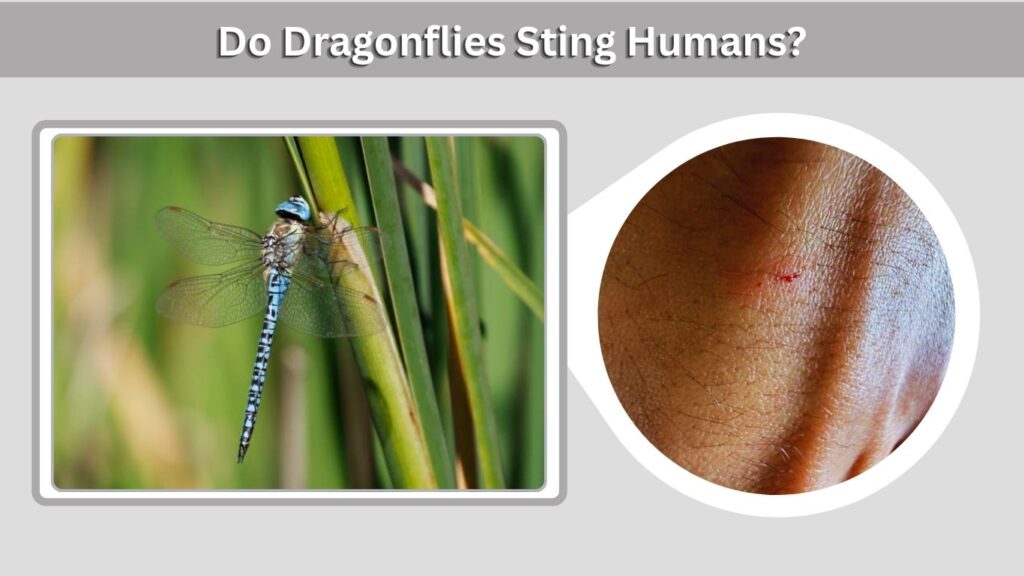
No. Dragonflies cannot sting humans because they do not possess a stinger.
People sometimes mistake the structures at the end of a dragonfly’s abdomen for a stinger, especially when looking at females. These structures are involved in reproduction and egg laying rather than injecting venom.
Dragonfly Bite vs Sting
| Feature | Dragonfly |
| Can bite? | Yes, rarely |
| Can sting? | No |
| Has venom? | No |
| Aggressive to humans? | No |
| Bite dangerous? | Usually no |
| Attacks people? | No |
This makes dragonflies very different from bees, hornets, and wasps.
Why Do Dragonflies Bite Humans?
Dragonflies do not bite humans for food. They are predators of other small animals, primarily insects.
When a bite occurs, it is almost always because the insect feels threatened or has been physically restrained.
Defensive Biting
A dragonfly held between someone’s fingers may move its jaws in an attempt to escape.
Larger dragonflies have stronger mouthparts and may produce a noticeable pinch.
Their jaws are powerful relative to their body size because they must quickly crush insect prey.
However, human skin is much tougher than the insects they normally eat, so even a strong dragonfly usually causes little damage.
What Does a Dragonfly Bite Feel Like?
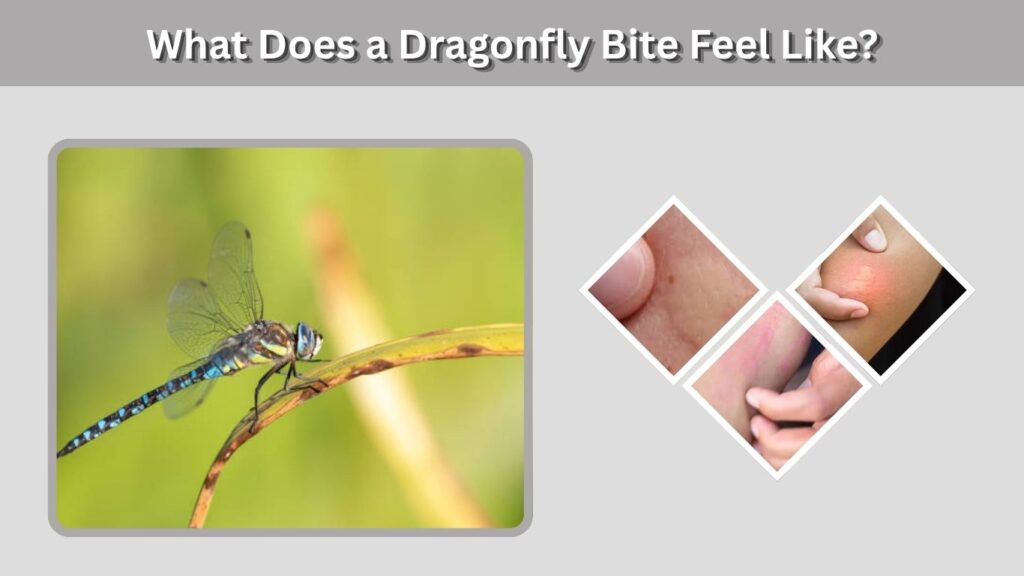
A dragonfly bite may feel like a small pinch. Larger species may cause slightly more discomfort, particularly if they manage to catch a thin area of skin.
Most bites produce little or no lasting effect.
Possible Symptoms
A rare dragonfly bite may cause:
- Brief pinching sensation
- Mild pain
- Small red mark
- Slight skin irritation
- Minor swelling
- Tiny superficial scratch
Symptoms typically remain mild.
Serious reactions are not normally associated with dragonfly bites because they do not inject venom.
Can a Dragonfly Bite Break the Skin?
Most dragonflies are unlikely to break healthy human skin.
However, very large species possess stronger mandibles and may potentially create a tiny superficial break if handled firmly or allowed to bite thin skin.
Larger Dragonflies
Large dragonflies such as darners can look intimidating because of their size and powerful jaws.
Even these insects are not considered dangerous.
Their mouthparts evolved primarily for:
- Grabbing prey
- Crushing insects
- Cutting food
- Processing small arthropods
They are not specialized for piercing mammalian skin.
Are Dragonfly Bites Dangerous?
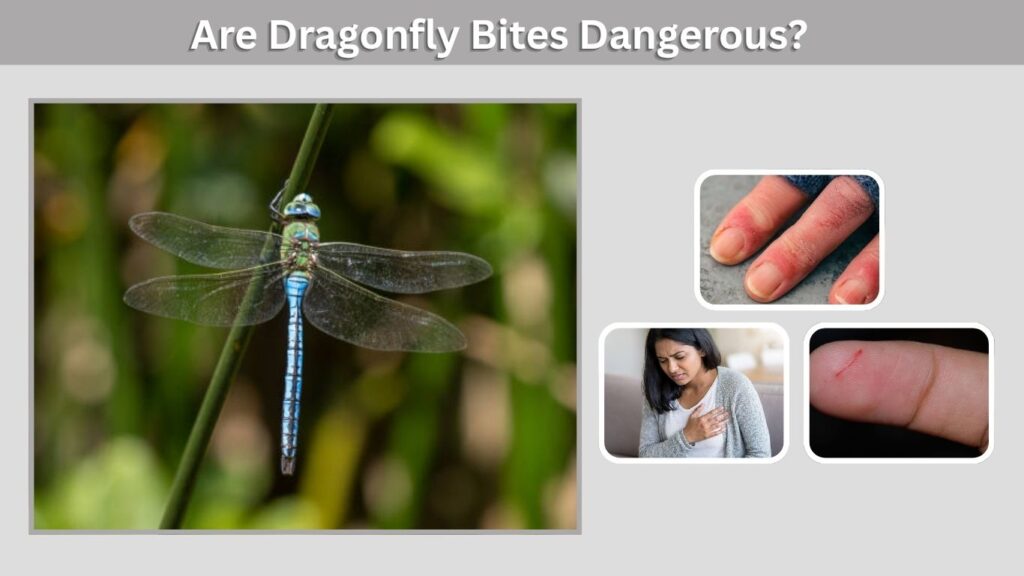
Dragonfly bites are generally harmless.
Unlike venomous insects, dragonflies do not inject toxins through their jaws. A rare bite usually requires nothing more than basic cleaning if the skin is scratched or broken.
Possible Risks
Minor risks may include:
- Small skin irritation
- Temporary redness
- Minor bleeding
- Mild discomfort
- Rare secondary infection if broken skin becomes contaminated
Keeping the area clean is normally sufficient.
Seek medical advice if an unusual wound develops severe swelling, increasing redness, significant pain, or signs of infection.
What Should You Do After a Dragonfly Bite?
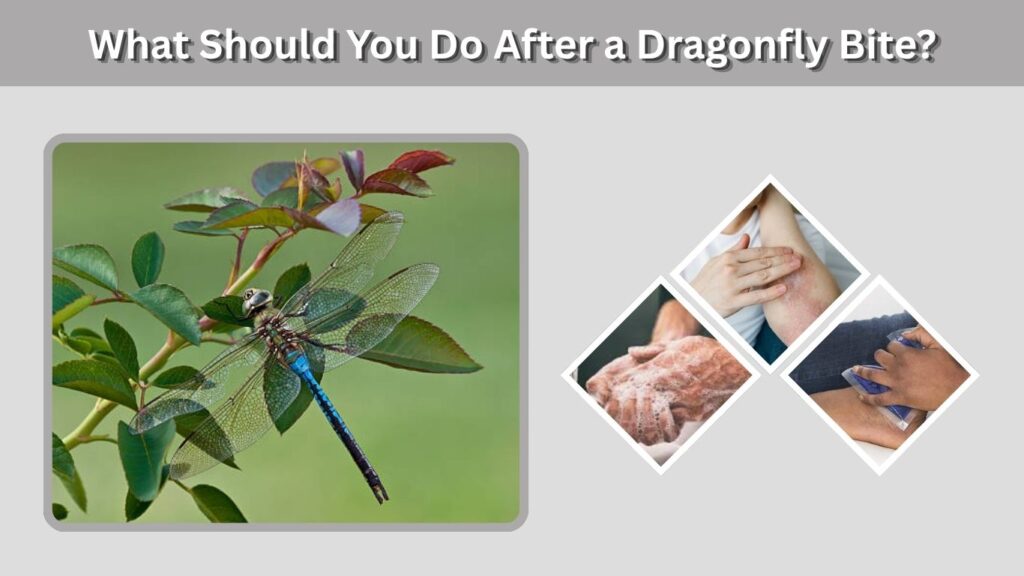
Most dragonfly encounters require no treatment at all.
If a large dragonfly bites hard enough to leave a mark, basic skin care can help prevent irritation.
Simple Bite Care
- Wash the area with soap and clean water.
- Dry the skin gently.
- Apply a cold compress if swelling occurs.
- Avoid scratching the area.
- Monitor for increasing redness or irritation.
A dragonfly bite normally improves quickly.
There is no need for specialized antivenom because dragonflies are not venomous.
Do Dragonflies Have Teeth?
Dragonflies do not have teeth like humans or mammals.
Instead, they possess strong chewing mouthparts called mandibles. These jaws have cutting surfaces that help the insect capture and consume prey.
How Dragonfly Jaws Work
Dragonflies are effective predators.
Their jaws help them:
- Grab insects
- Crush exoskeletons
- Tear prey into pieces
- Consume food rapidly
The name Odonata, the insect order containing dragonflies and damselflies, is associated with their prominent toothed or tooth-like jaws.
These impressive mouthparts make them excellent insect hunters without making them dangerous to humans.
What Do Dragonflies Normally Bite?
Dragonflies use their jaws mainly against prey.
Adult dragonflies hunt other insects while flying and may eat surprisingly large numbers of small flying insects throughout the day.
Common Dragonfly Prey
Their diet may include:
- Mosquitoes
- Midges
- Flies
- Moths
- Mayflies
- Gnats
- Flying ants
- Small bees
- Other dragonflies
- Various small flying insects
Large dragonflies can sometimes capture smaller dragonflies or other relatively large insect prey.
Their appetite for mosquitoes and other flying insects is one reason dragonflies are often considered beneficial around gardens and wetlands.
Do Baby Dragonflies Bite Humans?
Young dragonflies are called nymphs or naiads and live underwater.
They are predators just like adults, but they hunt aquatic animals rather than flying insects.
Dragonfly nymphs have specialized mouthparts for rapidly grabbing prey.
What Dragonfly Nymphs Eat
They may consume:
- Mosquito larvae
- Aquatic insects
- Small crustaceans
- Tadpoles
- Worms
- Other dragonfly larvae
- Very small fish
Although large nymphs can defend themselves if handled, they are not considered a significant danger to people.
Avoid unnecessarily picking up unfamiliar aquatic insects.
Do Dragonflies Attack Humans?
No. Dragonflies do not normally attack humans.
Their fast and direct flying style sometimes creates the impression that they are chasing people, but they are generally searching for prey, patrolling territory, or investigating their surroundings.
Why Dragonflies Fly Near People
A dragonfly may approach you because:
- Small insects are flying nearby.
- You are standing near its hunting territory.
- Your movement disturbed flying insects.
- You are close to a pond or breeding area.
- It is simply traveling through the area.
A dragonfly repeatedly flying around someone is therefore usually hunting other insects rather than targeting the person.
Can Dragonflies Bite Dogs or Cats?
A dragonfly could theoretically pinch a pet if the animal catches it and holds it in its mouth.
However, dragonflies are not considered dangerous to dogs or cats.
A curious pet is usually a greater danger to the dragonfly than the dragonfly is to the pet.
If Your Pet Catches One
Most encounters cause no problem.
Watch for unusual mouth irritation, excessive drooling, or difficulty swallowing if your pet chews any unfamiliar insect.
Dragonflies themselves are not equipped with venom or stingers.
Are Dragonflies Dangerous to Children?
Dragonflies are generally safe around children.
They do not chase, sting, or deliberately bite people. Children should simply avoid grabbing them because rough handling may cause the insect to defend itself and can easily injure the dragonfly.
Safe Observation Tips
Teach children to:
- Watch dragonflies without grabbing them
- Avoid pulling their wings
- Never squeeze insects
- Observe them near ponds from a safe location
- Wash hands after handling outdoor insects
Dragonflies can be excellent insects for introducing children to wildlife because their hunting and flight behavior is easy to observe.
Dragonfly vs Bee: Bite and Sting Differences
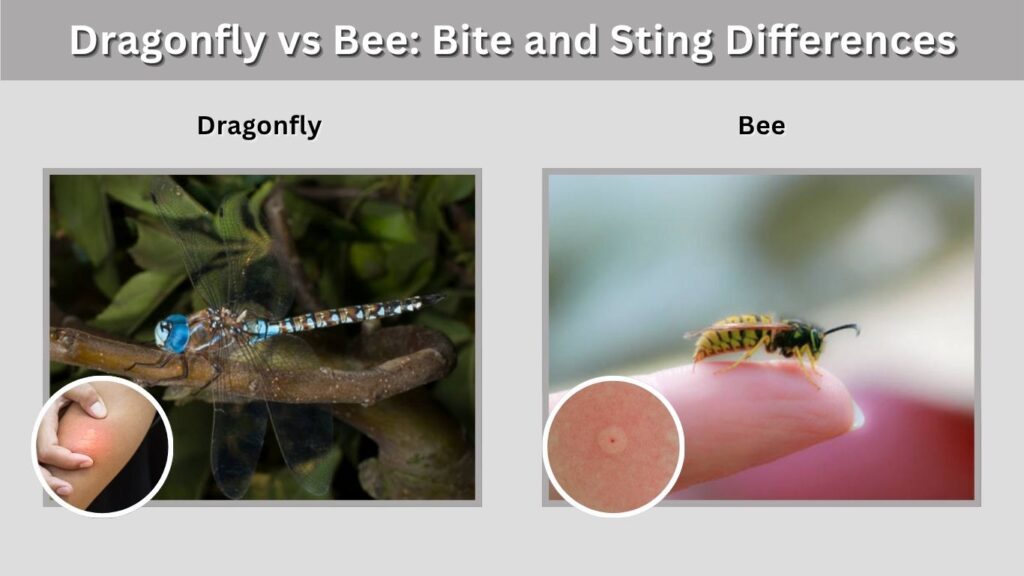
Dragonflies and bees interact with humans very differently.
Main Differences
| Characteristic | Dragonfly | Bee |
| Bites humans | Rarely | Usually no |
| Stings humans | No | Some species do |
| Venom | No | Yes in stinging species |
| Main food | Other insects | Nectar and pollen |
| Human danger | Very low | Can cause allergic reactions |
| Typical defense | Escape or rare bite | Sting in some situations |
A dragonfly’s intimidating jaws therefore present far less risk than the defensive sting of many bees or wasps.
Should You Be Afraid of Dragonflies?
There is little reason to fear dragonflies.
They are beneficial predators that help control populations of mosquitoes, midges, and other flying insects. Their large eyes, long abdomen, and fast flight can make them look formidable, but these features are adaptations for hunting small prey.
Leave them undisturbed and they will normally ignore you completely.
FAQs
Do Dragonflies Bite or Sting Humans?
Dragonflies can occasionally bite if they are captured or handled roughly, but they cannot sting. They have strong jaws for eating insects but no stinger or venom. Most human encounters with dragonflies are completely harmless.
Does a Dragonfly Bite Hurt?
A large dragonfly may produce a noticeable pinch, but most bites cause little pain and may not even break the skin. Any discomfort is generally brief because dragonflies are not equipped to attack humans.
Why Would a Dragonfly Bite You?
A dragonfly may bite defensively if someone grabs, squeezes, or restrains it. It does not bite humans for food and does not deliberately seek people to attack.
Are Dragonfly Bites Poisonous?
No. Dragonflies are not venomous and do not inject poison when they bite. Their jaws are simply mechanical mouthparts used to catch and consume other insects.
Can Dragonflies Sting With Their Tail?
No. Dragonflies do not have a stinger in their abdomen or tail. Structures visible at the end of the abdomen are related to reproduction and mating, not venom delivery or stinging.