
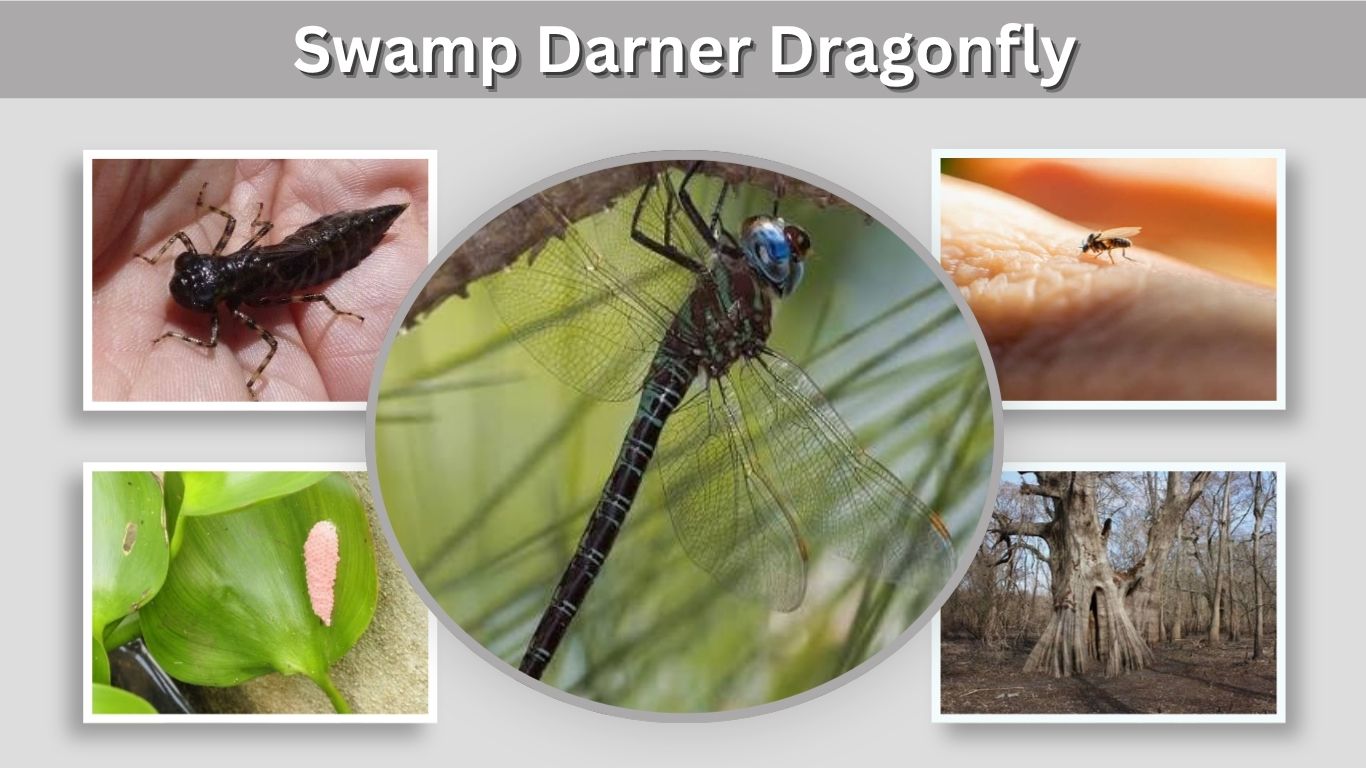
The swamp darner is one of the largest dragonflies in North America. Scientifically named Epiaeschna heros, it has a long dark-brown abdomen, narrow green rings, green thoracic stripes, and striking blue eyes in mature males. This powerful predator inhabits shaded ponds, wooded swamps, temporary wetlands, and slow streams across eastern North America. Adults may also gather in impressive feeding swarms around woodland openings, especially near dusk.
Swamp Darner Overview
The swamp darner belongs to the darner family, Aeshnidae, within the order Odonata. It is the only living species currently placed in the genus Epiaeschna. Although it is sometimes called a “giant darner” because of its size, giant darner can also refer broadly to other exceptionally large dragonflies.
| Feature | Information |
| Common name | Swamp darner |
| Scientific name | Epiaeschna heros |
| Family | Aeshnidae |
| Adult length | Approximately 3.1–3.7 inches |
| Main colors | Dark brown, green and blue |
| Habitat | Wooded swamps, shaded ponds and slow streams |
| Diet | Flying insects and aquatic invertebrates |
| Range | Eastern United States and southeastern Canada |
| Activity | Daytime and dusk |
| Conservation | Secure across much of its range but locally uncommon |
The species generally measures 80–94 millimeters, or about 3.1–3.7 inches, in total length. Its hindwings may reach 52–60 millimeters long, giving the insect an impressive overall appearance in flight.
How to Identify a Swamp Darner
Swamp darners are unusually large, dark dragonflies with green markings that look more like thin rings than the broad spots found on many related darners. Their size, abdominal pattern, and facial markings help distinguish them from similar species.
Identification Features
- Very large body measuring up to about 3.7 inches
- Dark-brown thorax with two straight green stripes
- Small green spot between the thoracic stripes
- Dark abdomen with two or three narrow green rings per segment
- Large blue eyes in mature males
- Brown face with pale blue or green markings
- Long, clear wings that may appear lightly amber
- Black legs adapted for catching prey in flight
Recently emerged adults may look pale, dull, or grayish before their bodies harden and their mature colors become stronger.
Male Swamp Darner
Males usually have bright blue eyes, a brown face, and a slender abdomen. Their dark abdominal segments are crossed by very narrow green or blue-green rings.
Males patrol swamps and slow streams while looking for females. They may fly back and forth over the water, but adults also forage in woodland openings and other areas away from their breeding sites.
Female Swamp Darner
Females are colored similarly to males but usually have a thicker abdomen. Their eyes contain more green or brown and are generally less intensely blue than those of mature males.
The tip of the female abdomen also differs because it contains structures used for placing eggs into mud, plant material, or decaying wood.
Swamp Darner Color Phases
Swamp darners do not have clearly defined color phases comparable to some polymorphic dragonflies. Apparent differences usually result from sex, age, maturity, lighting, and wear.
A newly emerged individual, known as a teneral adult, may appear pale brown or gray-green. As it matures, the body darkens, the green markings become clearer, and a male’s eyes develop a stronger blue color. Females generally retain browner or greener eyes.
Where Do Swamp Darners Live?
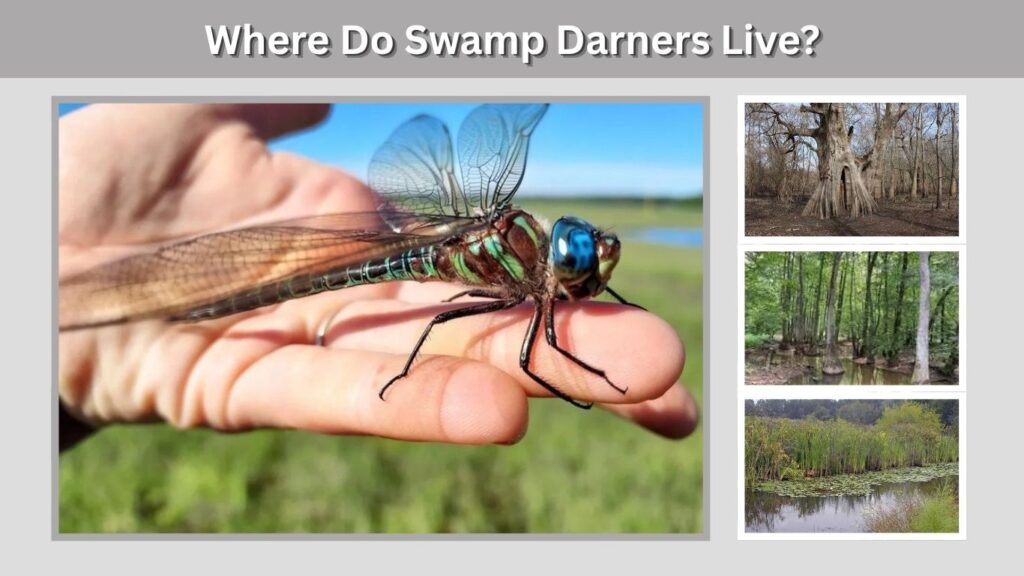
Swamp darners inhabit eastern North America. Their range extends through much of the eastern United States and into southeastern Canada, including Ontario and areas farther east. They are generally more common in southern parts of their range.
They occur in states such as Pennsylvania, Ohio, Indiana, Illinois, Wisconsin, Texas and Florida. Their local abundance depends on the availability of suitable woodland wetlands.
Preferred Habitat
Swamp darners are associated with:
- Shaded woodland ponds
- Forested swamps
- Temporary or seasonal pools
- Slow-moving streams
- Bottomland forests
- Muddy wetlands with decaying wood
- Fish-free or lightly populated ponds
Temporary woodland pools can provide valuable breeding habitat because they may contain fewer predatory fish. Some swamp darner habitats dry partly or completely during summer, yet moist mud and leaf litter can remain suitable for developing nymphs.
When Are Swamp Darners Active?
Across much of their range, adults are observed from spring through late summer. BugGuide records place the main season from April through August, while northern populations may fly from early June into early September.
They can be especially noticeable during spring and early summer. Adults may hunt during daylight, but large feeding groups are sometimes seen near dusk.
What Do Swamp Darners Eat?
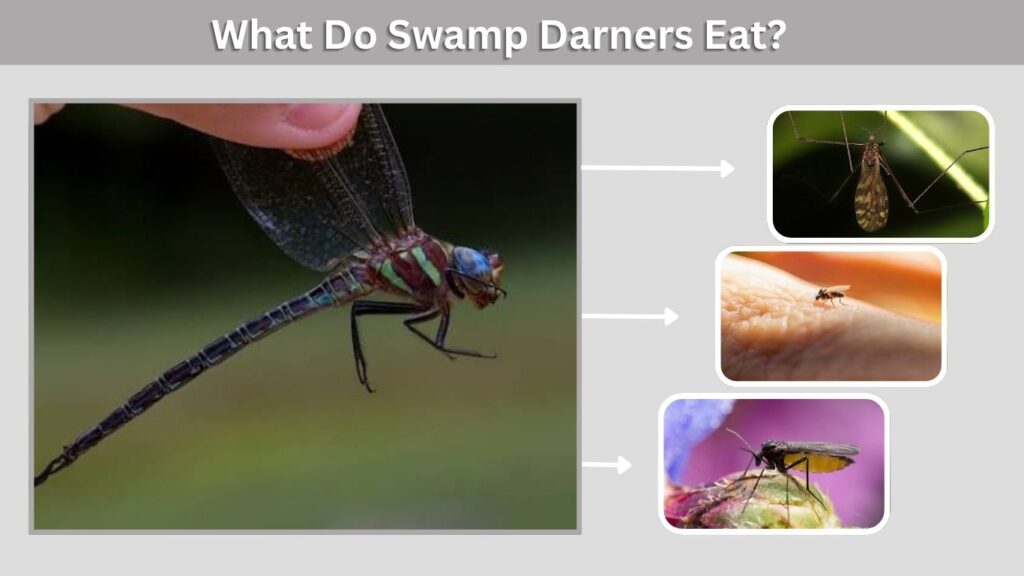
Adult swamp darners are aerial predators. Their legs form a basket beneath the body, allowing them to intercept and hold insects while flying.
Their prey includes:
- Mosquitoes
- Midges
- Flies
- Gnats
- Winged ants
- Winged termites
- Small moths
- Other dragonflies and damselflies
They frequently hunt high above the ground, which can make them difficult to observe. When ants or termites produce large mating flights, swamp darners may gather in feeding swarms to exploit the temporary abundance of prey.
Swamp Darner Nymph Diet
Swamp darner nymphs live underwater or in extremely wet sediment. They are ambush predators that capture mosquito larvae, aquatic insects, worms, small crustaceans, tadpoles, and other small animals.
The nymph uses an extendable lower jaw to seize prey. This aquatic predatory stage occupies most of the dragonfly’s life cycle.
Swamp Darner Life Cycle
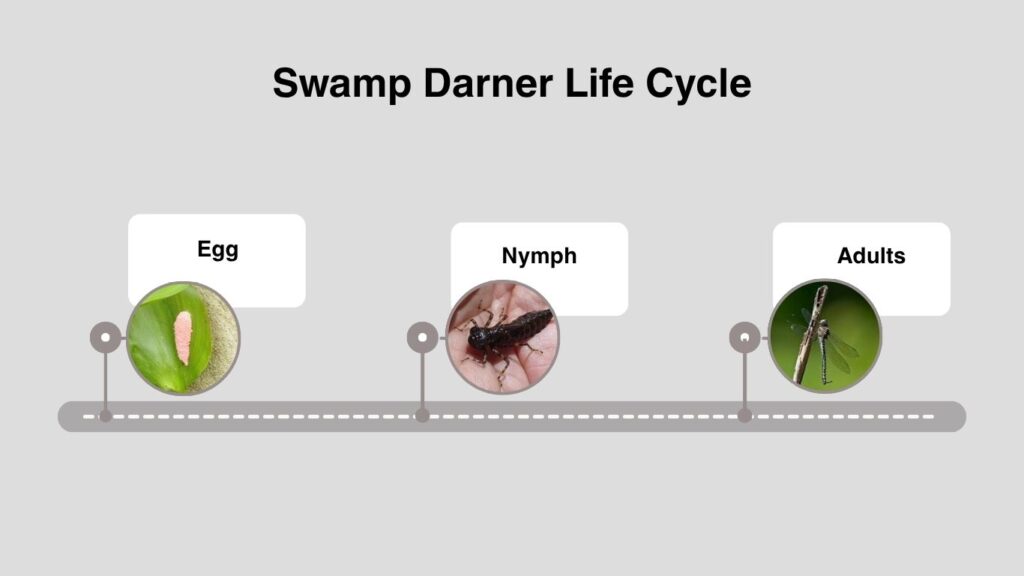
Swamp darners undergo incomplete metamorphosis, passing through egg, aquatic nymph, and winged adult stages. There is no pupal stage.
Egg Laying
After mating, females place eggs in several types of damp material. Egg-laying sites may include:
- Soft mud
- Wet stems
- Decaying logs
- Wood near the waterline
- The moist bottom of a dried pond
This flexible egg-laying behavior helps the species reproduce in temporary wetlands where water levels change seasonally.
Nymph and Adult Emergence
After hatching, the nymph grows through repeated molts while living in water or saturated wetland material. Once fully developed, it climbs onto a plant, tree trunk, or other support above the water.
The adult emerges through a split in the nymph’s skin, expands its wings, and waits for its body to harden. The abandoned skin, known as an exuvia, remains attached to the emergence surface.
Swamp Darner Swarms
Swamp darners are sometimes observed in large aerial groups. These gatherings may be feeding swarms rather than breeding colonies.
The dragonflies often appear where winged ants, termites, mosquitoes, or other flying insects are concentrated. Swarms may form over forest openings, roads, clearings, and wetlands, especially in the evening. Some observations also suggest that swamp darners undertake seasonal movements, particularly along the Atlantic coast.
Swamp Darner vs. Shadow Darner
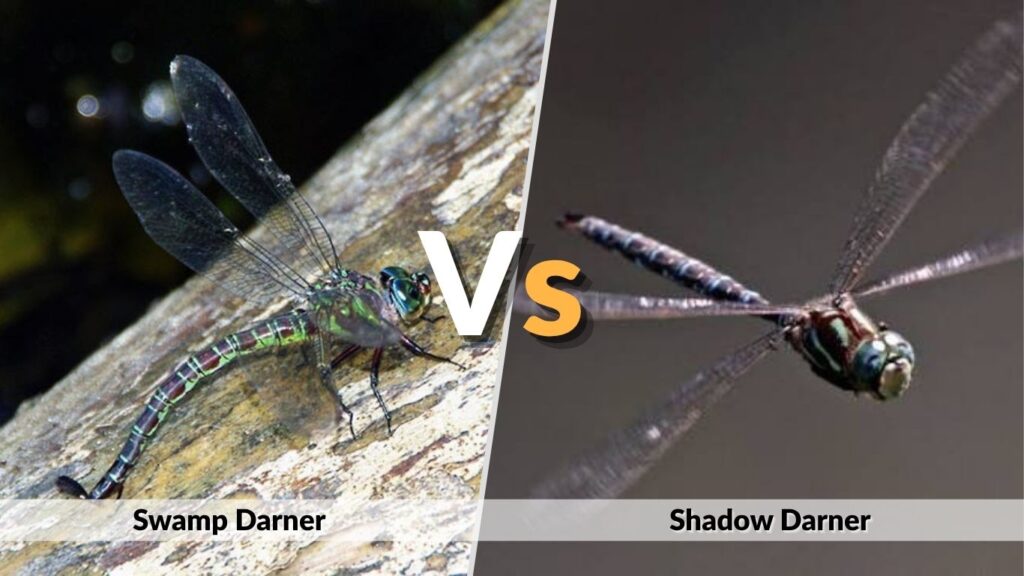
The shadow darner is smaller and usually appears later in the year. It also has more conventional abdominal spots rather than the swamp darner’s narrow rings.
| Feature | Swamp darner | Shadow darner |
| Adult length | About 3.1–3.7 inches | About 2.5–3 inches |
| Abdomen | Narrow green rings | Small green or blue spots |
| Male eyes | Bright blue | Usually turquoise |
| Main season | Spring through summer | Summer through fall |
| Habitat | Swamps and shaded ponds | Shaded ponds, streams and woodland edges |
| General build | Exceptionally large | Large but noticeably smaller |
Shadow darner thoracic stripes may bend near the top and have a flag-shaped projection. Its abdominal spots are also smaller and more widely separated than the rings of a swamp darner.
Are Swamp Darners Endangered?
The swamp darner is widespread and is not generally considered endangered across North America. It is listed as common and native in Illinois and occurs throughout a broad eastern range.
Its status can differ locally. Maine’s 2025 Wildlife Action Plan lists it as a species of Special Concern because records are limited and successful breeding has not been confirmed there. Protecting wooded wetlands, seasonal pools, and clean slow-moving streams supports local populations.
Do Swamp Darners Bite?
Swamp darners do not attack people, sting, or inject venom. However, their large chewing mouthparts can deliver a firm defensive pinch when an individual is captured or tightly restrained.
The bite is unlikely to be medically serious, but it may hurt more than a bite from a smaller dragonfly. Observe swamp darners without grabbing them, particularly by their delicate wings.
FAQs
Is the swamp darner the largest dragonfly?
It is among the largest dragonflies in North America and one of the largest in the eastern United States. Adults can approach 3.7 inches long. However, other species may exceed it in body length or wingspan, so it is not universally the largest dragonfly.
Why are swamp darner eyes blue?
The blue eyes are part of the mature male’s normal coloration and help with species and sex recognition. Females generally have eyes containing more brown or green. Newly emerged males may not develop their full blue coloration immediately.
Are swamp darners beneficial?
Yes. Adults consume mosquitoes, flies, midges, ants, termites, and other flying insects. Their aquatic nymphs also prey on mosquito larvae and various small aquatic animals, helping regulate insect populations in wetland ecosystems.
Can swamp darners live away from swamps?
Adults may travel considerable distances from breeding water to hunt. They can appear in yards, woodland openings, fields, and urban areas. Their nymphs, however, require swamps, ponds, streams, or saturated wetland sediment for development.
What attracts swamp darners to a yard?
Abundant flying insects can attract hunting swamp darners. Nearby woodland, seasonal wetlands, streams, outdoor lights, and evening swarms of ants or termites may increase sightings. A visiting swamp darner is temporary and will not infest a house or garden.