
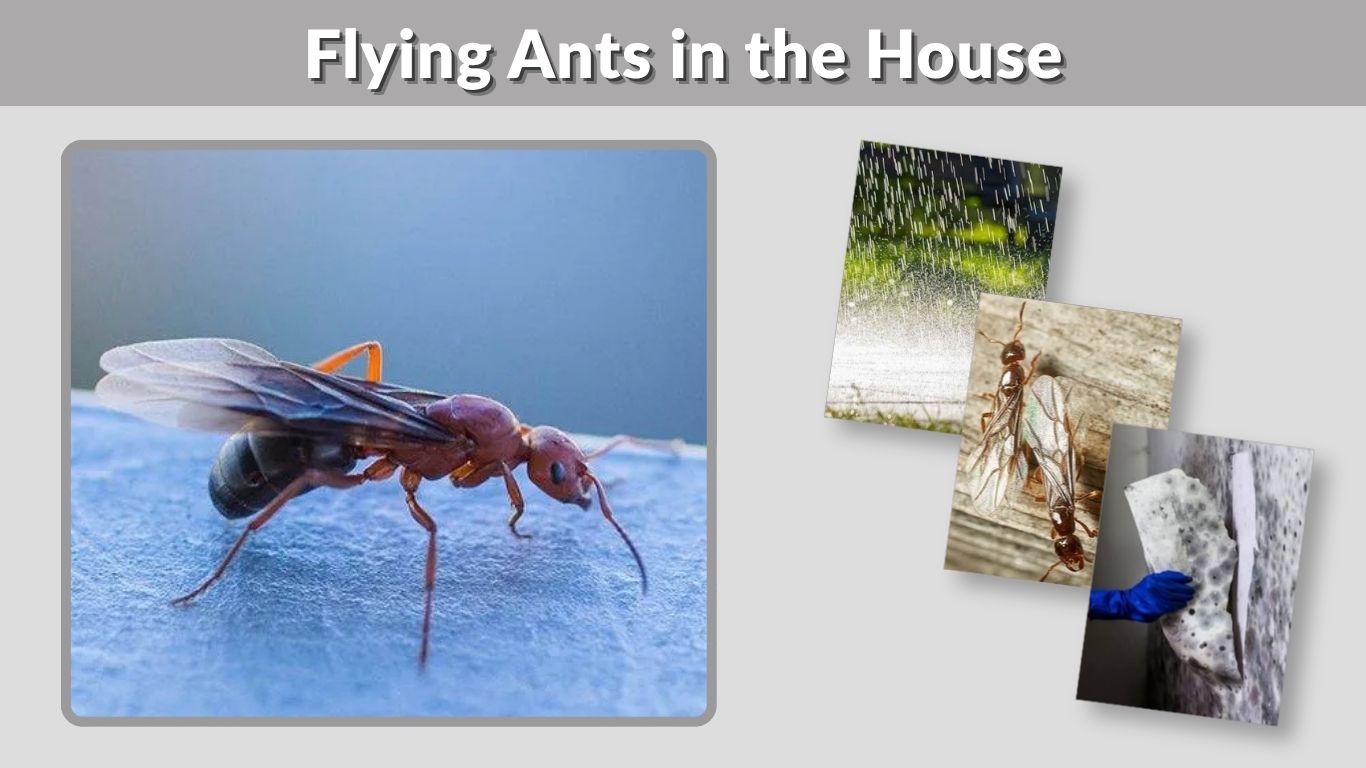
Finding flying ants in your house can be alarming, especially when dozens suddenly gather around windows or lights. These insects are reproductive members of an established ant colony, not a separate species. They develop wings temporarily to mate and establish new colonies. A few flying ants may have entered from outside, but repeated indoor swarms can indicate a nest hidden within the building. Correct identification is essential because winged termites closely resemble flying ants and may signal a more serious structural problem.
What Are Flying Ants?
Flying ants are sexually mature male ants and queens, collectively known as alates. Most of their lives are spent inside a colony while they develop. When weather conditions become favorable, they leave the nest for a synchronized mating flight.
After mating, the males generally die. Fertilized queens land, remove their wings, and look for protected places to begin new colonies. Therefore, flying ants do not remain winged throughout their lives.
Workers of many ant species can produce winged reproductive forms, including:
- Carpenter ants
- Pavement ants
- Odorous house ants
- Fire ants
- Citronella ants
- Little black ants
- Acrobat ants
The species involved determines whether the colony is merely a nuisance or a potential threat to wooden structures.
Why Do Flying Ants Suddenly Appear in the House?
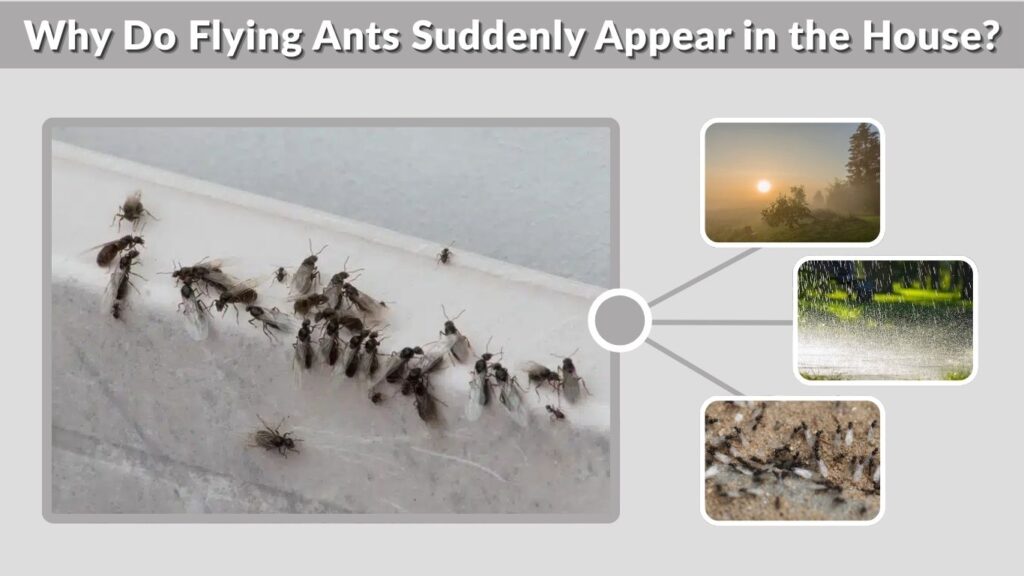
A sudden swarm usually means that environmental conditions have triggered reproductive ants to leave a mature colony. They may be emerging from a nest inside the house or entering from outdoors.
Warm and Humid Weather
Many ants swarm during warm, humid conditions in spring or summer. Calm weather allows the reproductive ants to fly, mate, and locate suitable nesting sites. This is why large numbers may appear on the same day across an entire neighborhood.
Rainfall
Flying ants commonly emerge after rain because the damp soil is easier for newly mated queens to excavate. Increased humidity also reduces the risk of their bodies drying out during flight.
If flying ants appear inside after rain, they may have entered through gaps while seeking shelter. However, they could also be emerging from a colony beneath the foundation or within a damp structural area.
An Indoor Ant Colony
Repeated swarms inside a house can indicate an established colony in a wall void, attic, floor, foundation, window frame, or damaged piece of wood. A mature colony may exist for several years before producing winged males and queens.
Attraction to Light
Flying ants are often attracted to windows, lamps, and other bright surfaces. Swarmers emerging inside may move toward windows because daylight appears to offer an exit. Outdoor swarmers may also enter at night through open windows while approaching artificial lights.
Where Do Flying Ants Come From Inside a House?
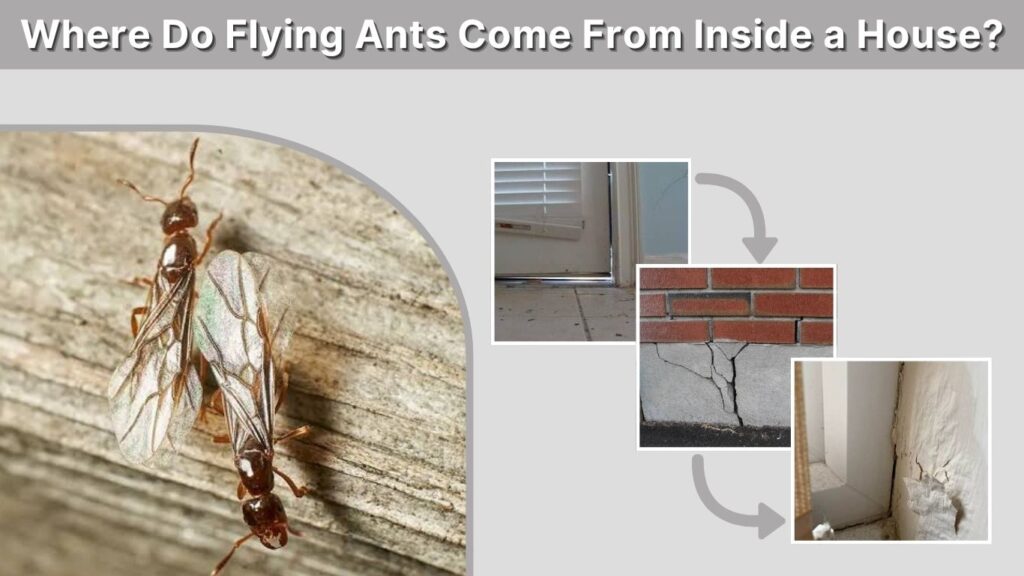
Flying ants can enter through surprisingly small openings or emerge directly from a concealed indoor nest.
Common entry and nesting locations include:
- Gaps around doors and windows
- Damaged screens
- Foundation cracks
- Roof and siding gaps
- Plumbing and utility openings
- Wall voids
- Attics and crawl spaces
- Spaces beneath flooring
- Damp window or door frames
- Wood affected by leaks or decay
Observe where the ants first appear. If they consistently emerge from the same crack, light fixture, baseboard, vent, or wooden surface, a colony may be nearby.
A single flying ant does not necessarily mean there is a nest indoors. Several ants entering through an open window during a neighborhood mating flight can create a temporary problem. Frequent or concentrated indoor activity requires closer investigation.
What Do Flying Ants Look Like?
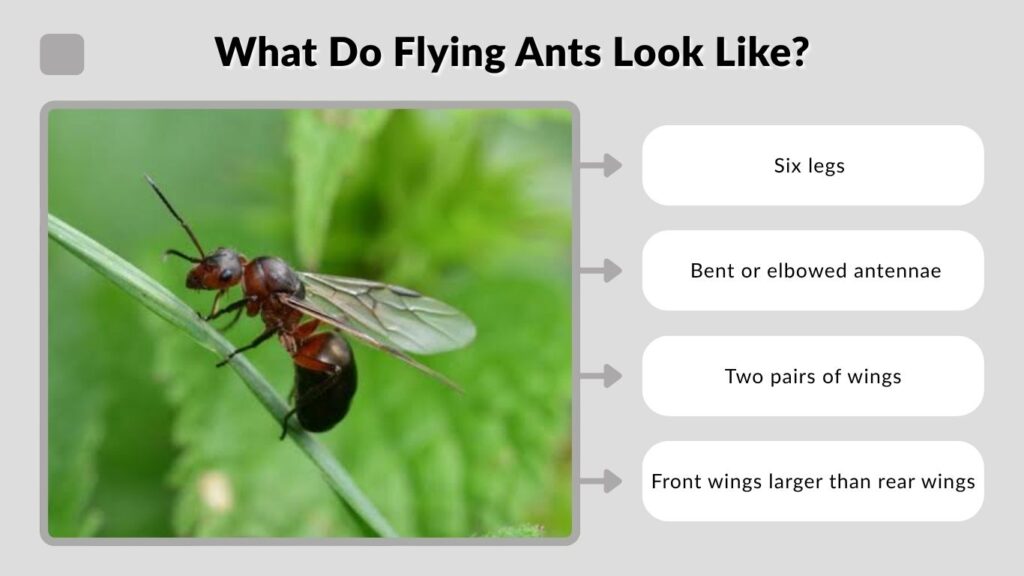
Flying ants vary in size and color according to species. They may be tiny or relatively large and can appear black, brown, reddish, yellowish, or mixed in color.
Despite this variation, they share several characteristics:
- Six legs
- Bent or elbowed antennae
- A narrow, pinched waist
- Two pairs of wings
- Front wings larger than rear wings
- Clearly divided body sections
Small flying ants may be pavement ants, little black ants, or odorous house ants. Large black flying ants are often carpenter ant reproductives. Red flying ants may belong to fire ant, field ant, or other reddish species.
Color and size alone are not enough for a reliable identification. Antennae, waist shape, and wing proportions provide better clues.
Flying Ants vs. Termites in the House
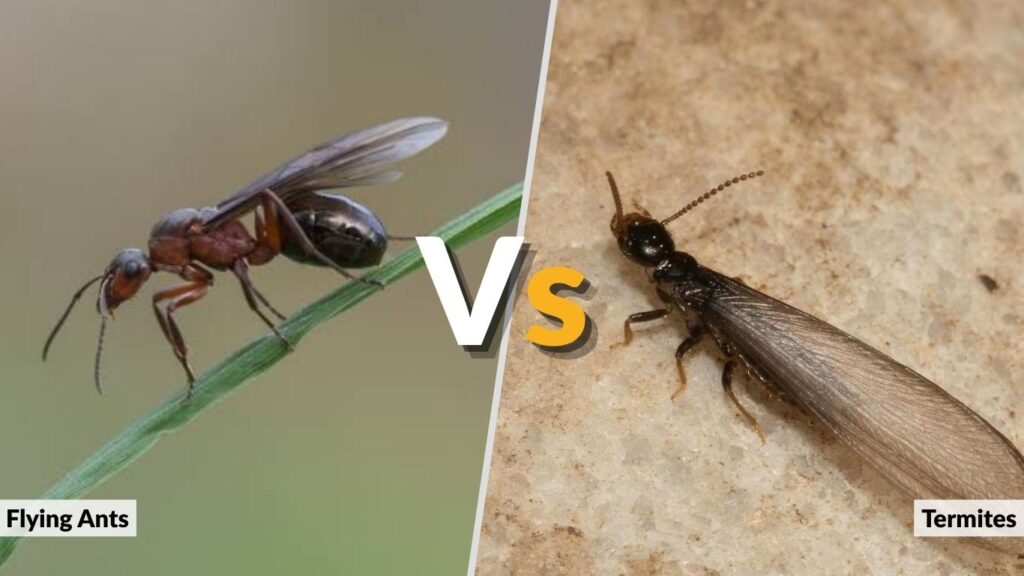
Winged termites are frequently mistaken for flying ants. Because termites can secretly damage wooden structures, examining the insects before beginning treatment is important.
| Feature | Flying Ant | Winged Termite |
|---|---|---|
| Antennae | Bent or elbowed | Straight and bead-like |
| Waist | Narrow and pinched | Broad and straight |
| Wings | Front pair larger than rear pair | Four nearly equal wings |
| Body | Clearly segmented | More evenly shaped |
| Wing strength | Relatively firm | Fragile and easily detached |
| Structural risk | Depends on species | Potentially serious |
The phrase “flying white ants” commonly refers to termites rather than true ants. Termites are sometimes called white ants, although reproductive termite swarmers may be brown or black.
Collect a few specimens in a sealed container if identification is uncertain. Look for piles of matching discarded wings around windows, doors, or baseboards. Numerous loose wings can be evidence of a termite swarm and should be professionally assessed.
Are Flying Ants in the House Dangerous?
Most flying ants pose little direct danger to people. The reproductive ants are primarily focused on mating and finding new nesting locations. However, risks differ between species.
Carpenter ants can bite when handled, although their bites are not usually medically serious. Fire ants can sting repeatedly and may cause painful, itchy pustules. A severe allergic reaction following a sting requires urgent medical care.
Flying ants do not normally attack people in swarms. Their presence is more concerning when it points to a hidden colony or a moisture problem.
Can Flying Ants Damage a House?
Most ant species do not cause structural damage. Carpenter ants are an important exception because they excavate damp or decaying wood to create smooth nesting galleries.
Carpenter ants do not eat wood as termites do. Nevertheless, a large colony occupying timber for a long period can worsen existing damage. Their presence may also reveal leaking pipes, roof damage, poor ventilation, or persistent condensation.
How to Get Rid of Flying Ants in the House
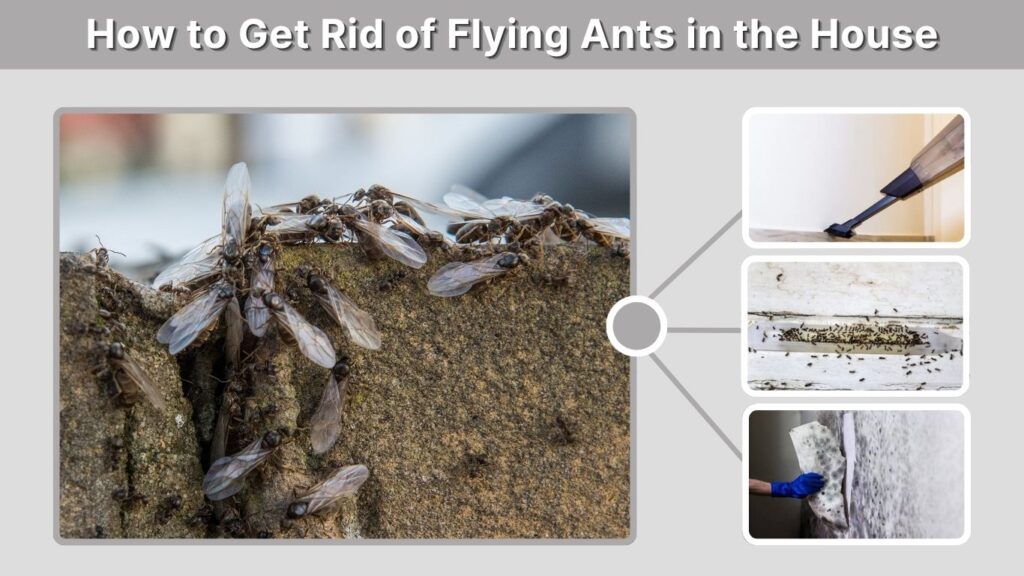
Removing the visible insects provides immediate relief, but long-term control requires finding and managing the colony responsible for them.
1. Confirm Their Identity
Before applying a treatment, determine whether the insects are ants or termites. Preserve several specimens or take clear photographs showing their wings, waist, and antennae.
If they appear to be termites, arrange a termite inspection. Household ant sprays will not eliminate a hidden termite colony.
2. Vacuum the Flying Ants
Use a vacuum to remove flying and dead ants from windows, walls, floors, and light fixtures. Empty the vacuum outdoors in a closed bag afterward.
Vacuuming is a quick way to control a temporary swarm without spreading pesticide through living areas. However, it does not eliminate an established nest.
3. Find Their Entry Point
Follow walking ants and inspect areas where winged ants are emerging. Check windows, baseboards, plumbing openings, damaged wood, and damp structural spaces.
Seal exterior openings after confirming that the ants are not actively using them as access to a hidden indoor nest. Sealing a nest entrance too early may cause ants to find another route into the room.
4. Use an Appropriate Ant Bait
Ant baits contain a slow-acting ingredient mixed with an attractive food. Workers carry it back to the nest and share it with other colony members.
Place the bait near active trails but away from children and pets, following all label directions. Avoid spraying repellent insecticide near bait because it can prevent ants from feeding or cause some species to divide into multiple nests.
5. Correct Moisture Problems
Repair leaking pipes, damaged gutters, roof leaks, and poorly sealed windows. Improve ventilation in damp crawl spaces, bathrooms, attics, and basements.
Moisture correction is especially important when carpenter ants are involved. Their colonies frequently occupy wood that has already been softened by water or fungal decay.
6. Remove Outdoor Nesting Conditions
Move firewood away from exterior walls and store it above the ground. Remove rotting logs, stumps, leaf piles, and unused boards. Trim branches and shrubs that touch the roof or siding because ants may use them as bridges.
7. Call a Pest-Control Professional
Professional help may be necessary when:
- Flying ants repeatedly emerge indoors
- The nest cannot be located
- Large carpenter ants are present
- Ants emerge from structural wood
- Several rooms are affected
- Baiting does not reduce activity
- The insects may be termites
A professional can identify the species, locate hidden nests, and select a treatment suited to the colony’s behavior.
Why Are Dead Flying Ants Appearing Indoors?
Dead flying ants around windows or floors are common after a mating flight. Males naturally die shortly after mating, while other swarmers become trapped indoors, dehydrate, or exhaust themselves while trying to reach light.
A small number of dead ants after one outdoor swarm may not indicate an infestation. Repeated piles in the same indoor location, however, suggest that reproductive ants may be emerging from a concealed colony.
How to Prevent Flying Ants From Returning
Prevention involves limiting access, food, water, and nesting opportunities. These measures will not always stop outdoor mating flights, but they can reduce the likelihood of ants entering or establishing colonies.
- Repair damaged window and door screens.
- Seal cracks around foundations, pipes, and cables.
- Install weather stripping around exterior doors.
- Keep food in tightly closed containers.
- Clean crumbs, grease, spills, and pet-food residue.
- Empty garbage containers regularly.
- Repair water leaks promptly.
- Replace damp or decaying wood.
- Keep mulch and firewood away from the foundation.
- Trim vegetation that touches the building.
FAQs
Does one flying ant mean there is an infestation?
One flying ant may have entered through a window or door during an outdoor mating flight. It does not prove that a colony is inside. Repeated sightings, large indoor swarms, or ants emerging from the same structural opening provide stronger evidence of an infestation.
Why are flying ants appearing in my house at night?
Flying ants may approach outdoor lights and enter through open windows, doors, or damaged screens. Ants emerging from an indoor colony also move toward bright lamps and windows. Turning off unnecessary exterior lights and repairing screens can reduce nighttime entry.
Are big black flying ants carpenter ants?
Many large black flying ants are carpenter ant reproductives, but appearance alone is not conclusive. Carpenter ants generally have bent antennae, narrow waists, large front wings, and smoothly rounded thoraxes. Repeated indoor sightings near damp wood justify a closer inspection.
Do flying ants lay eggs around the house?
Male flying ants do not lay eggs. After mating, a fertilized queen removes her wings and searches for a protected nesting location. If successful, she lays eggs inside the new nest. Visible flying ants are adults and are not newly hatched baby ants.
Will flying ants disappear on their own?
A temporary swarm may disappear within several hours or days as the ants die or leave. However, flying ants can return if a mature colony remains inside the building. Repeated swarms require identification, inspection, and treatment of the underlying nest.