
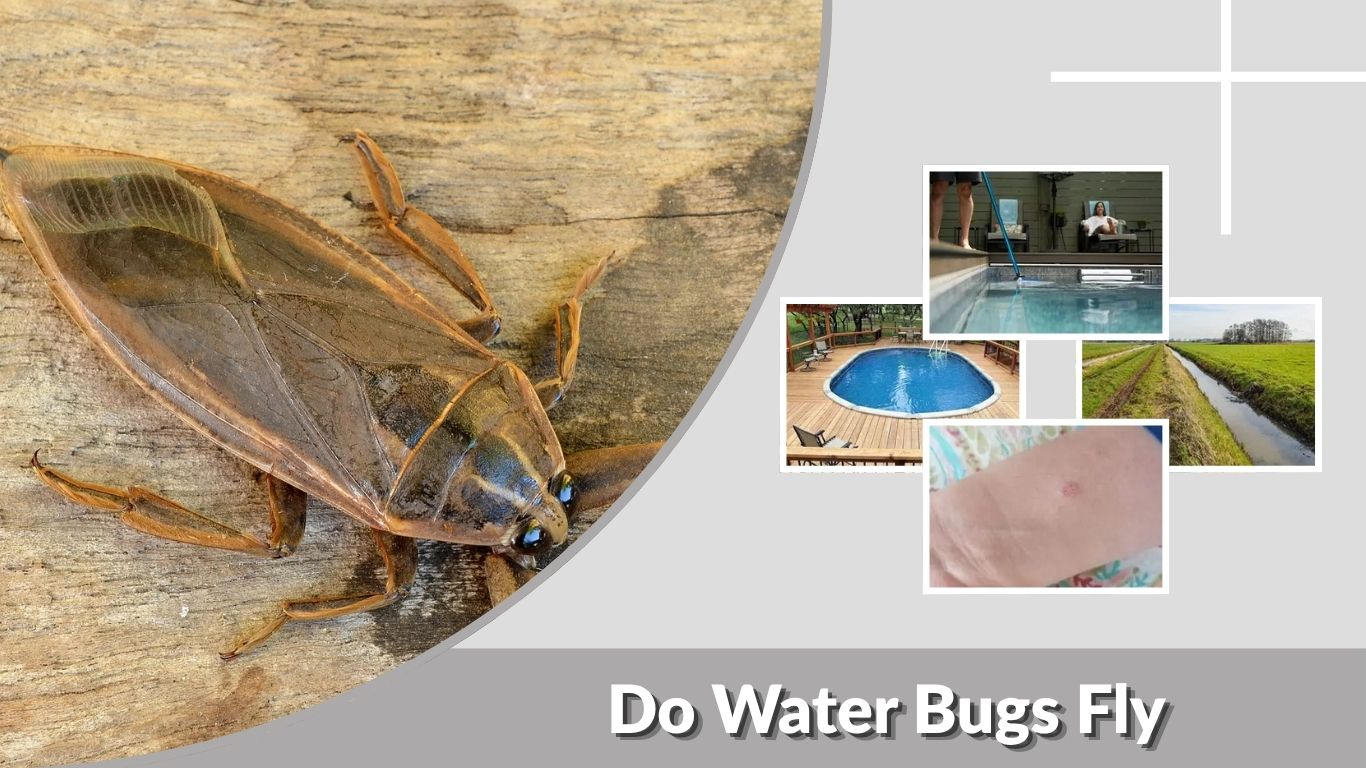
Yes, some water bugs can fly, but not every insect called a water bug has the same ability. True aquatic water bugs, including giant water bugs, often have wings and may fly at night, especially around lights. However, household “water bugs” are often cockroaches, and some roach species fly while others do not. Correct identification is the key to understanding what you are seeing.
Why the Name Water Bug Causes Confusion
The term water bug is used in two different ways. In nature, it usually refers to aquatic insects that live in ponds, lakes, streams, ditches, or swimming pools. In homes, many people use the same name for large cockroaches found in damp places.
That creates confusion because these insects behave differently. Some true water bugs are strong fliers. Some cockroaches can fly or glide. Others have wings but rarely leave the ground.
True Water Bugs
True water bugs are aquatic insects. They live in or near water and often use their legs to swim. Some are predators, feeding on small fish, tadpoles, insects, and other aquatic animals.
Common true water bugs include:
- Giant water bugs
- Backswimmers
- Water boatmen
- Water scorpions
- Creeping water bugs
Many true water bugs have wings as adults. They may fly from one water source to another when conditions change.
Household Water Bugs
In homes, “water bug” often means a large cockroach. The most common example is the oriental cockroach, which likes cool, damp areas such as basements, drains, crawl spaces, bathrooms, and utility rooms.
These indoor pests are not true water bugs. They are roaches. Their ability to fly depends on the species.
Do Water Bugs Fly?
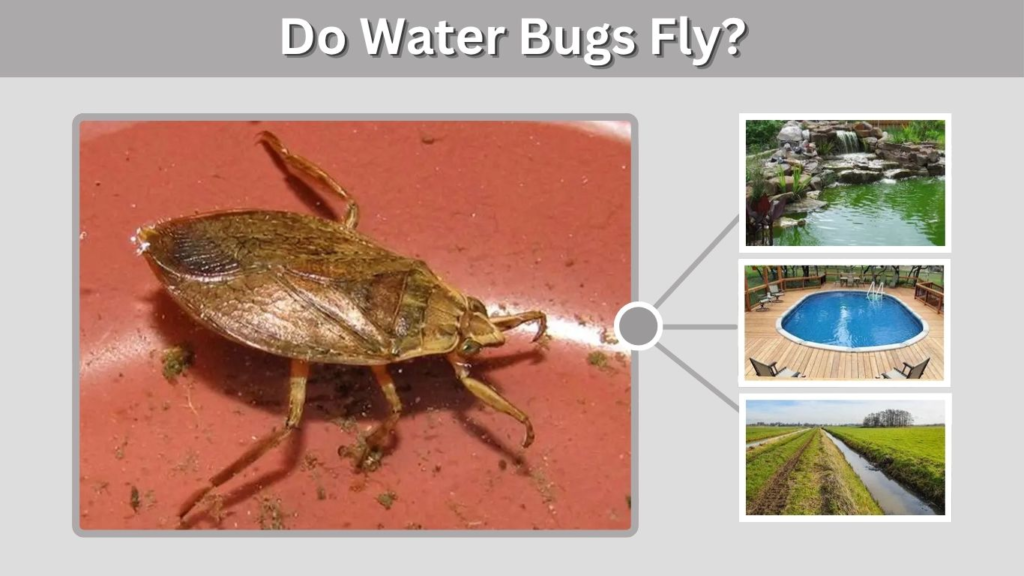
Yes, many true water bugs can fly. Adult aquatic water bugs may use flight to move between ponds, lakes, puddles, swimming pools, and other wet areas. They may fly when their habitat dries up, becomes crowded, lacks food, or when they are searching for mates.
However, water bugs do not usually fly around all day. Many are more active at night and may be drawn to lights. This is one reason people sometimes find large water bugs near porch lights, pool lights, parking lot lights, or windows.
Why Water Bugs Fly
Water bugs fly for practical reasons. They are not flying because they want to attack people. Flight helps them survive and spread to new habitats.
They may fly to:
- Find a new pond, pool, or ditch
- Escape drying water
- Search for food
- Look for mates
- Move away from crowded areas
- Reach better shelter
- Follow reflected light that looks like water
A shiny surface, bright pool light, or outdoor lamp can confuse flying aquatic insects. They may land near homes simply because the light attracts them.
Do Giant Water Bugs Fly?
Yes, giant water bugs can fly. These large aquatic insects are among the most noticeable flying water bugs because of their size. They may reach several inches long, and seeing one fly near a light can be startling.
Giant water bugs are sometimes called electric light bugs because adults are often attracted to outdoor lights at night. They may land on porches, sidewalks, windows, parking lots, pool decks, or near doors.
Are Giant Water Bugs Good Fliers?
Giant water bugs are capable fliers, but they are not graceful houseflies. Their flight can look heavy, awkward, or sudden because of their large bodies. They usually fly when they need to relocate, not because they spend most of their lives in the air.
Most of their time is spent in water. They wait near the surface, cling to vegetation, and hunt aquatic prey. Flight is mainly a way to move between water habitats.
Why Giant Water Bugs Fly Toward Lights
Giant water bugs are attracted to artificial lights at night. They may mistake light reflections for water or use light cues while moving between habitats. This can make it seem like they are flying toward people, but they are usually heading toward the light source, not the person.
If a giant water bug flies near you, avoid swatting it with your bare hand. These insects can bite defensively if handled or pressed against the skin.
Do All Water Bugs Fly?
No, not all water bugs fly. Some species can fly well, some fly only during certain life stages or seasons, and some are poor fliers. Young water bugs, called nymphs, do not have fully developed wings and cannot fly.
Adults are more likely to fly than immature insects. Even among adults, flight depends on the species, weather, temperature, humidity, habitat conditions, and the insect’s need to move.
Why Some Water Bugs Do Not Fly Often
Some water bugs have wings but rarely use them. If their habitat has enough food, water, shelter, and mates, they may have little reason to leave. Flight can also be risky because it exposes them to birds, bats, and other predators.
A water bug may stay grounded or in water if:
- Food is available
- The water source is stable
- Weather conditions are poor
- It is not mating season
- The insect is immature
- The species is not a strong flier
This is why people may see water bugs in water for years and only occasionally notice them flying.
Do Water Bugs Fly in the House?
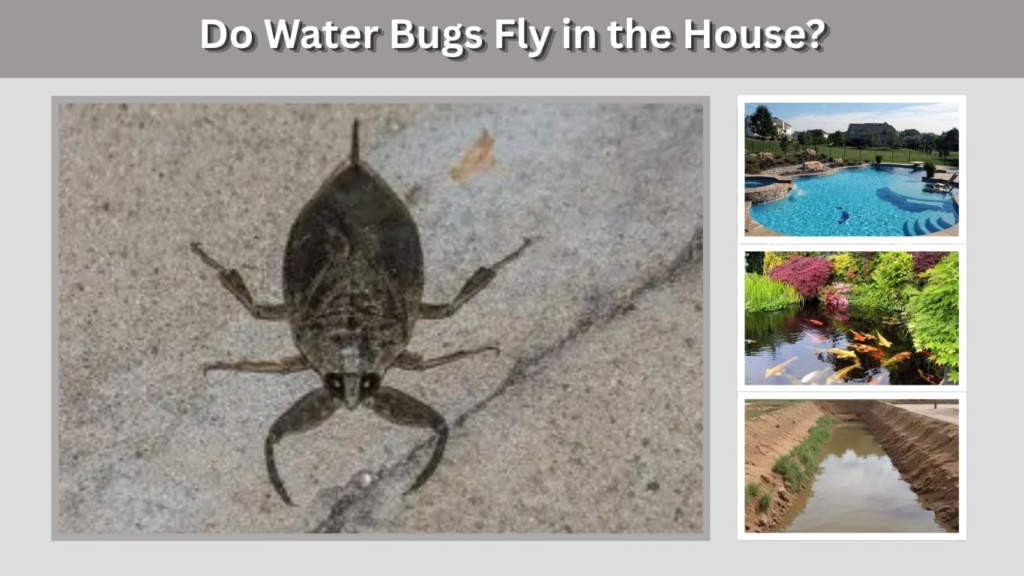
A true aquatic water bug may fly into or near a house by accident, especially if lights are on at night. However, if you regularly see “water bugs” inside your home, you are probably dealing with cockroaches rather than true water bugs.
True water bugs do not usually infest houses. They need aquatic habitats and are more likely to appear indoors accidentally. Cockroach-like water bugs, on the other hand, can live and reproduce inside buildings.
Why Flying Water Bugs Enter Homes
Flying insects may enter through open doors, windows, damaged screens, vents, garage gaps, or cracks around lights. If the insect is a true water bug, it likely came from a nearby water source.
Possible sources include:
- Ponds
- Lakes
- Creeks
- Ditches
- Swimming pools
- Water gardens
- Retention basins
- Flooded areas
- Bright outdoor lights
If you find one large aquatic bug indoors, remove it carefully and check nearby entry points. If you keep seeing many bugs inside, look for signs of a roach problem.
Do Water Bugs or Roaches Fly?
Some roaches fly, some glide, and some cannot fly. This is why the question can be tricky. When people ask whether water bugs fly, they may actually be asking whether the roach-like pest in their home can fly.
American cockroaches have wings and can fly short distances, especially in warm, humid conditions. Oriental cockroaches, which are also commonly called water bugs, have underdeveloped wings and generally cannot fly.
Flying Ability by Common Pest Type
| Insect Type | Can It Fly? | Where You May See It |
| Giant water bug | Yes | Ponds, lakes, pools, outdoor lights |
| Backswimmer | Yes | Pools, ponds, outdoor lights |
| Water boatman | Some can fly | Pools, ponds, calm water |
| American cockroach | Yes, but often short flights or gliding | Drains, basements, kitchens, warm damp areas |
| Oriental cockroach | No, generally cannot fly | Basements, crawl spaces, drains, cool damp areas |
If the insect is large, dark, and found indoors near moisture, it may be an oriental cockroach. If it has long antennae and runs quickly, it is more likely a roach than a true water bug.
Why Do Water Bugs Fly at You?
Water bugs usually do not fly at people on purpose. They may seem to fly toward you because you are standing near a light, doorway, pool lamp, phone screen, porch bulb, or reflective surface. The bug may be navigating toward the brightest object in the area.
Large insects also fly less smoothly than smaller flies or mosquitoes. Their movement may look clumsy or direct, which can make the encounter feel intentional.
What to Do If One Flies Near You
Stay calm and avoid grabbing it. A true water bug may bite if handled, and a roach can spread germs if crushed in the wrong area.
Use safe removal methods:
- Turn off unnecessary outdoor lights.
- Step away from the light source.
- Use a cup and cardboard to trap the insect.
- Wear gloves if you must handle debris.
- Use a broom or dustpan for indoor removal.
- Keep doors and windows closed at night.
- Repair torn screens and door gaps.
If the insect is in a pool, use a skimmer net instead of your hand.
Do Flying Water Bugs Bite?
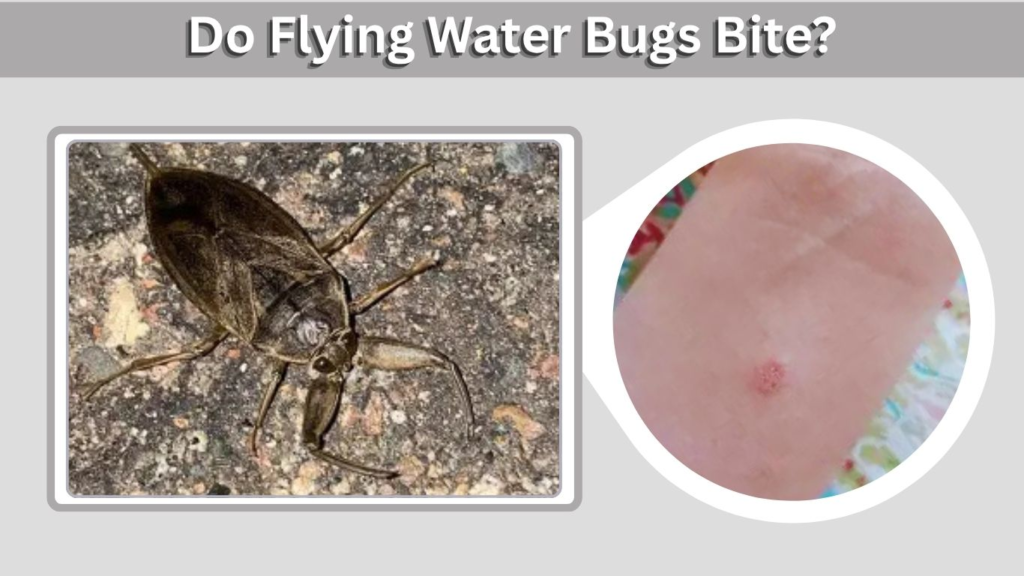
Some flying water bugs can bite, especially giant water bugs and backswimmers. They do not bite because they are flying. They bite when touched, trapped, stepped on, or handled.
A giant water bug bite can be painful, but it is usually defensive. Backswimmers may also bite swimmers when disturbed in pools or ponds. Water boatmen are much less likely to bite.
How to Avoid Bites
Most water bug bites are preventable. The main rule is simple: do not pick up unknown aquatic insects with bare hands.
To avoid bites:
- Use a pool skimmer for insects in water.
- Wear water shoes in ponds or shallow lakes.
- Teach children not to touch large water insects.
- Wear gloves when cleaning drains, pools, or pond edges.
- Shake out pool towels, shoes, and toys.
- Do not swat large bugs against your skin.
If you are bitten, wash the area with soap and water, apply a cold compress, and monitor for swelling, spreading redness, or signs of infection.
Where Do Flying Water Bugs Come From?
Flying water bugs usually come from outdoor water sources. They may leave their habitat when they need better conditions. After heavy rain, drought, pool algae growth, or seasonal changes, water bugs may move around more often.
If you see them near your home, look for nearby water or damp areas.
Common sources include:
- Swimming pools
- Decorative ponds
- Drainage ditches
- Wet lawns
- Standing water
- Birdbaths
- Retention ponds
- Flooded containers
- Creek edges
Indoor “water bugs” usually come from damp hiding places, not from outdoor ponds. Roach-like water bugs may enter through plumbing gaps, drains, foundation cracks, crawl spaces, or under doors.
How to Keep Flying Water Bugs Away
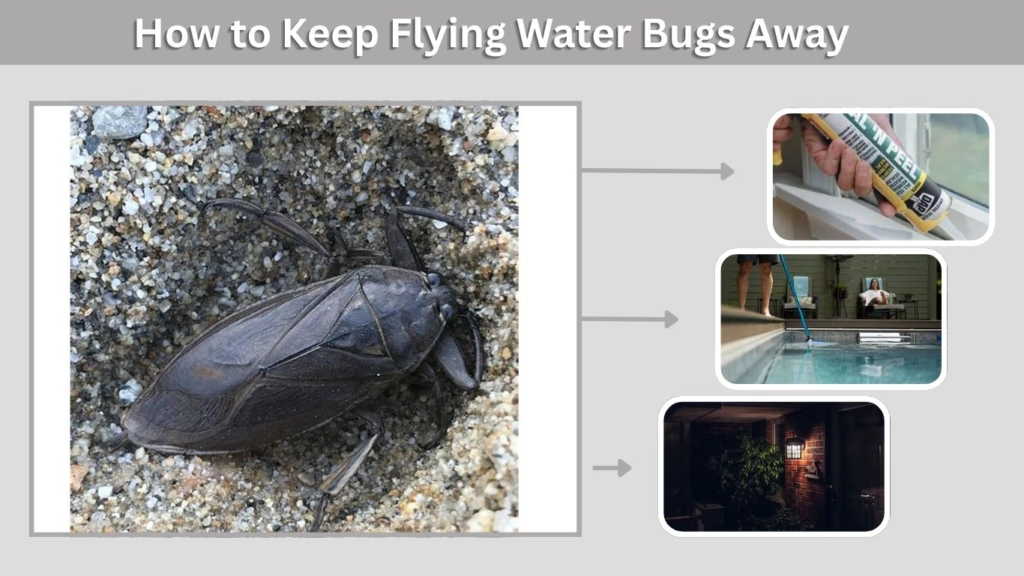
Prevention depends on whether you are dealing with true water bugs outdoors or roach-like water bugs indoors. For outdoor flying water bugs, reduce light attraction and water conditions that invite them. For indoor pests, focus on moisture control, sealing, and sanitation.
Outdoor Prevention
Outdoor water bugs are often drawn by lights and water. You may not eliminate them completely, but you can reduce how often they gather near your home.
Helpful steps include:
- Turn off porch lights when not needed.
- Use curtains or blinds at night.
- Move bright lights away from doors.
- Keep pool water clean and balanced.
- Remove algae from pools and ponds.
- Clear leaves and organic debris from water.
- Empty standing water from containers.
- Repair torn window and door screens.
Pool maintenance is especially important. Bugs often show up when the water has algae or small insects that provide food.
Indoor Prevention
For roach-like water bugs, the goal is to make your home less attractive. These pests need food, water, and shelter.
Indoor prevention tips include:
- Fix leaky pipes and faucets.
- Dry damp basements and utility rooms.
- Seal cracks around doors, windows, and pipes.
- Store food in sealed containers.
- Clean crumbs and grease quickly.
- Take out trash regularly.
- Remove clutter from damp storage areas.
- Use drain covers where needed.
If you see multiple roach-like water bugs, egg cases, droppings, or repeated activity at night, consider calling a pest control professional.
How to Tell If It Is a Water Bug or a Roach
Look at where you found it, how it moves, and what its body looks like. True water bugs are usually found near water and may have front legs shaped for grabbing prey. Roaches have long antennae, flattened bodies, and often run quickly along walls or floors.
Quick Identification Clues
A true water bug is more likely if:
- It was found in a pond, pool, or near outdoor lights.
- It has strong front legs.
- It appears broad, flat, and aquatic.
- It was seen swimming.
- It appeared after rain or near water.
A cockroach is more likely if:
- It was found in a kitchen, bathroom, basement, or drain.
- It has long antennae.
- It runs quickly when lights turn on.
- You see more than one indoors.
- There are droppings, egg cases, or a musty odor.
Correct identification matters because true water bugs usually need removal, while roaches may require pest control.
Should You Be Worried About Flying Water Bugs?
A flying water bug can be scary, especially when it is large, but one outdoor insect is usually not a serious problem. True water bugs are part of the natural environment and often appear near lights by accident.
You should be more concerned if you see many roach-like insects indoors. That may point to moisture problems, food sources, or an infestation.
For a single flying water bug, safely remove it and reduce light attraction. For repeated indoor sightings, inspect damp areas, seal entry points, and address sanitation or pest control needs.
FAQs
Do water bugs fly?
Yes, some water bugs fly. True aquatic water bugs, including giant water bugs and backswimmers, often have wings as adults and may fly at night. They usually fly to find water, food, mates, or better habitat. Indoor “water bugs” may actually be cockroaches, and their flying ability depends on the species.
Do giant water bugs fly?
Yes, giant water bugs can fly. They are large aquatic insects that may leave ponds, lakes, ditches, or pools to find new water sources. They are often attracted to electric lights at night, which is why people sometimes see them near porches, windows, parking lots, and pool areas.
Do water bugs fly in the house?
True water bugs may fly into a house by accident, especially through open doors, windows, or damaged screens near outdoor lights. However, repeated indoor sightings usually mean the insect is a cockroach, not a true water bug. Roach-like water bugs prefer damp indoor areas such as basements and drains.
Why do water bugs fly at you?
Water bugs usually are not trying to fly at you. They may be attracted to lights, reflections, or bright surfaces near you. Large insects can also fly awkwardly, making their movement seem more direct. If one comes close, move away calmly and avoid handling it with bare hands.
Do flying water bugs bite?
Some flying water bugs can bite, especially giant water bugs and backswimmers, but they usually bite only when touched, trapped, or threatened. They do not fly around looking for people to bite. To stay safe, use a skimmer, cup, or gloves instead of grabbing them by hand.