
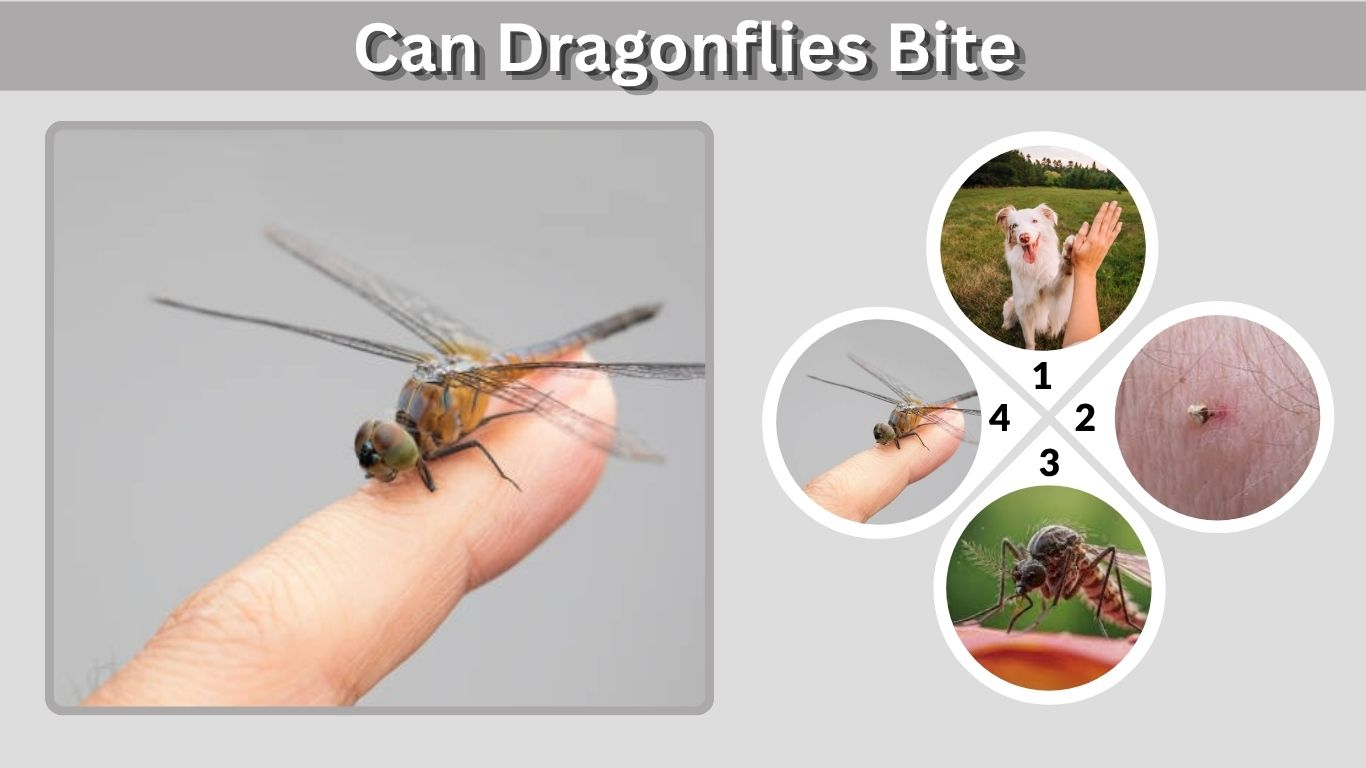
Dragonflies are among the most fascinating insects found around ponds, lakes, gardens, and wetlands. Their large eyes, colorful bodies, and impressive flying abilities often attract attention. However, many people wonder whether these insects can bite or sting humans. Questions about dragonfly bites are common because their size and appearance can seem intimidating. Understanding how dragonflies behave and whether they pose any danger can help clear up myths and provide accurate information about these beneficial insects.
Do Dragonflies Bite?
Dragonflies are predators that feed on mosquitoes, flies, and other small insects. They possess strong mouthparts designed for catching and eating prey. Although dragonflies can bite, biting humans is uncommon. Most encounters between people and dragonflies are harmless because these insects are not naturally aggressive toward humans and generally avoid direct contact whenever possible.
Can a Dragonfly Bite You?
Yes, a dragonfly can bite a person. Dragonflies have mandibles, which are jaw-like mouthparts used to capture and consume insects. If a dragonfly feels threatened or is handled improperly, it may use these mandibles in self-defense.
Most dragonfly bites are minor and feel similar to a small pinch. The bite may surprise a person, but it rarely causes significant pain or injury.
Why Would a Dragonfly Bite a Human?
Dragonflies do not seek out humans as prey. In the rare situations where a bite occurs, it is usually because the insect feels trapped or threatened.
Common reasons a dragonfly might bite include:
- Being held or grabbed by a person
- Becoming trapped in clothing or hair
- Attempting to escape after being caught
- Defending itself from perceived danger
In most cases, the dragonfly simply wants to get away rather than harm anyone.
Do Dragonflies Sting?
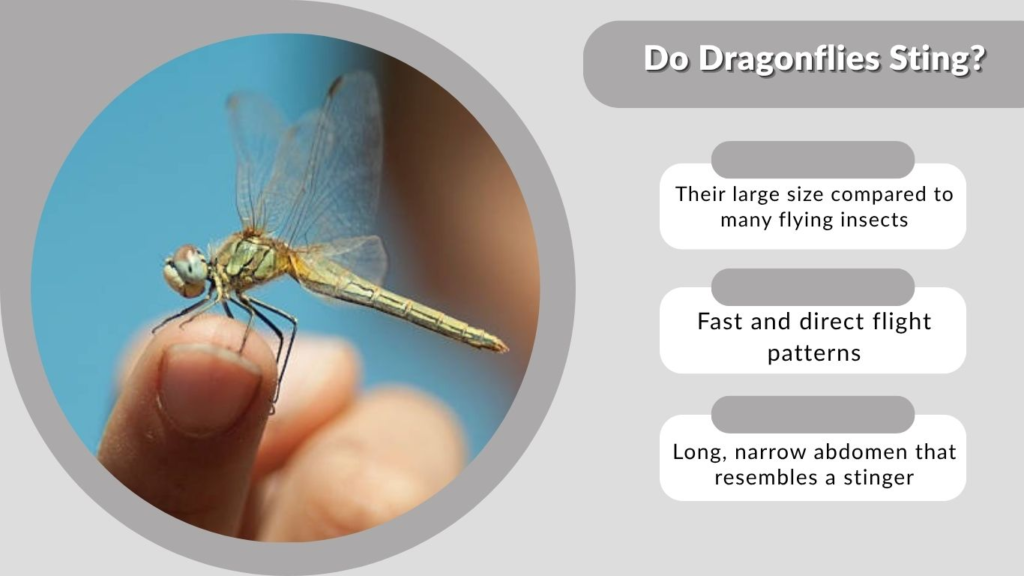
Many people confuse dragonflies with stinging insects such as bees, wasps, and hornets. This misunderstanding has contributed to numerous myths about dragonflies over the years. While they may appear intimidating due to their size and fast flight patterns, dragonflies lack the physical structures necessary to sting humans or other animals.
Can Dragonflies Sting Humans?
No, dragonflies cannot sting humans.
Unlike bees or wasps, dragonflies do not have a stinger. They also cannot inject venom into people or animals. Their bodies are designed for hunting insects rather than defending themselves through stinging.
Because they lack a stinger entirely, there is no possibility of receiving a dragonfly sting.
Why Do People Think Dragonflies Sting?
The belief that dragonflies sting likely comes from old folklore and misconceptions. Their elongated bodies are sometimes mistaken for stingers, especially by people unfamiliar with these insects.
Several factors contribute to this myth:
- Their large size compared to many flying insects
- Fast and direct flight patterns
- Long, narrow abdomen that resembles a stinger
- Historical legends passed down through generations
Despite these myths, scientists confirm that dragonflies are incapable of stinging.
Are Dragonfly Bites Dangerous?
Although dragonflies can bite under certain circumstances, they are not considered dangerous to humans. Their bites are generally mild and rarely result in serious complications. Understanding the actual risks associated with dragonfly bites helps separate facts from fear and allows people to appreciate these insects for their ecological benefits rather than worry about potential harm.
Do Dragonfly Bites Hurt?
The level of discomfort depends on the size of the dragonfly. Smaller species usually produce little more than a mild pinch, while larger species may create a stronger sensation.
Even when a bite is noticeable, the discomfort is typically brief. Most people experience no lasting effects after being bitten by a dragonfly.
Are Dragonfly Bites Poisonous?
Dragonfly bites are not poisonous.
Dragonflies do not produce venom and cannot inject toxins through their mouthparts. Their mandibles are intended solely for catching prey and breaking down food.
As a result, a dragonfly bite does not expose a person to poisonous substances or venom-related health risks.
Can Dragonfly Bites Become Infected?
Like any minor skin injury, a bite that breaks the skin could potentially become infected if not kept clean. However, infections from dragonfly bites are extremely uncommon.
Basic care usually includes washing the affected area with soap and water and monitoring it for unusual redness or swelling. Most bites heal without any medical treatment.
Can You Die From a Dragonfly Bite?
Concerns about severe reactions often lead people to ask whether dragonfly bites can be fatal. Fortunately, dragonflies are among the least dangerous insects humans encounter outdoors. Their bites are not venomous, they do not transmit known diseases to humans, and there are no documented cases of deaths directly caused by dragonfly bites.
Can Dragonfly Bites Kill You?
No, dragonfly bites do not kill people.
Dragonflies lack venom, cannot sting, and are not known to spread diseases through biting. Their bites are generally harmless and cause only minor discomfort when they occur.
For the vast majority of people, a dragonfly bite is nothing more than a brief and harmless experience.
Can Dragonflies Bite Dogs and Other Pets?
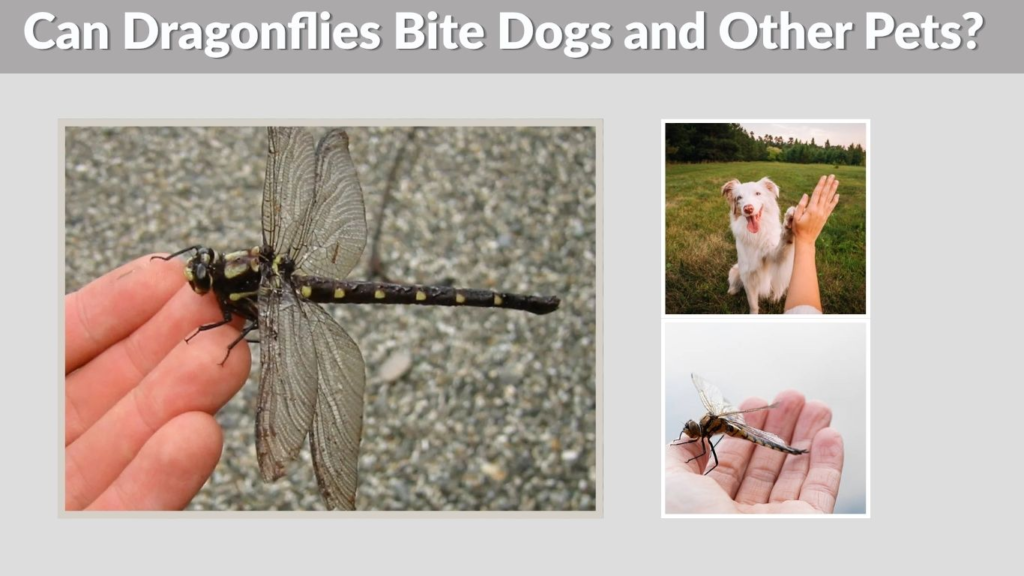
Pet owners often notice dragonflies flying around yards, gardens, and water sources. Since dogs and cats may chase insects out of curiosity, many people wonder whether dragonflies can harm their pets. Fortunately, dragonflies are generally harmless to domestic animals and rarely cause any problems during encounters.
Can Dragonflies Bite Dogs?
Yes, a dragonfly could bite a dog if it were caught or handled, but this situation is very uncommon. Dragonflies prefer escaping rather than defending themselves.
A curious dog may try to chase or catch a dragonfly, but the insect is unlikely to cause harm. Even if a bite occurs, it is usually too minor to create any serious issue.
Are Dragonflies Dangerous to Pets?
Dragonflies are not considered dangerous to dogs, cats, or most household pets.
Reasons they are generally safe include:
- They do not possess venom
- They cannot sting animals
- They do not attack pets
- They rarely bite unless threatened
In most cases, a pet’s interaction with a dragonfly ends without any injury to either animal.
Can Big Dragonflies Bite?
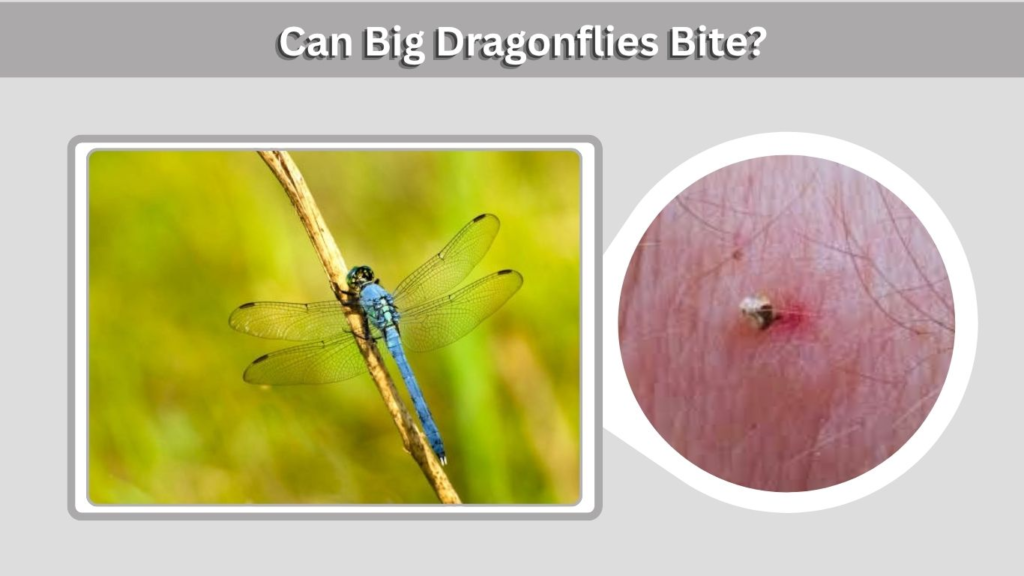
Some dragonfly species are significantly larger than others, which naturally raises concerns about the strength of their bites. While larger species have stronger mandibles, they remain harmless to humans under normal circumstances. Their size may look intimidating, but their behavior is typically calm and non-aggressive toward people.
Do Larger Dragonflies Have Stronger Bites?
Yes, larger dragonflies generally have stronger mouthparts than smaller species. Their mandibles are designed to catch flying insects and hold prey securely during feeding.
A large dragonfly may produce a more noticeable pinch if it bites. However, even larger species rarely cause injury beyond temporary discomfort.
Which Dragonflies Are Most Likely to Bite?
The likelihood of biting depends more on handling than species size. A dragonfly that feels trapped may attempt to defend itself regardless of whether it is large or small.
Most dragonflies will:
- Fly away when approached
- Avoid direct contact with humans
- Only bite when physically restrained
- Show defensive behavior when threatened
Because of this, encounters involving bites remain uncommon.
Can Dragonfly Larvae Bite?
Dragonflies spend much of their lives underwater before becoming flying adults. During this stage, they exist as aquatic nymphs or larvae. These immature dragonflies are active predators and use specialized mouthparts to capture prey beneath the water’s surface.
What Are Dragonfly Larvae?
Dragonfly larvae, often called nymphs, live in ponds, lakes, streams, and wetlands. They feed on small aquatic organisms and play an important role in freshwater ecosystems.
Unlike adult dragonflies, nymphs spend months or even years underwater before emerging and transforming into winged adults.
Can Dragonfly Nymphs Bite Humans?
Yes, dragonfly nymphs can bite if handled.
Their mouthparts are designed to catch prey, and they may use them defensively when disturbed. While a nymph’s bite can feel sharper than expected, it is not dangerous.
Like adult dragonflies, nymphs are not venomous and do not pose a serious risk to people.
Are Dragonflies Aggressive Toward Humans?
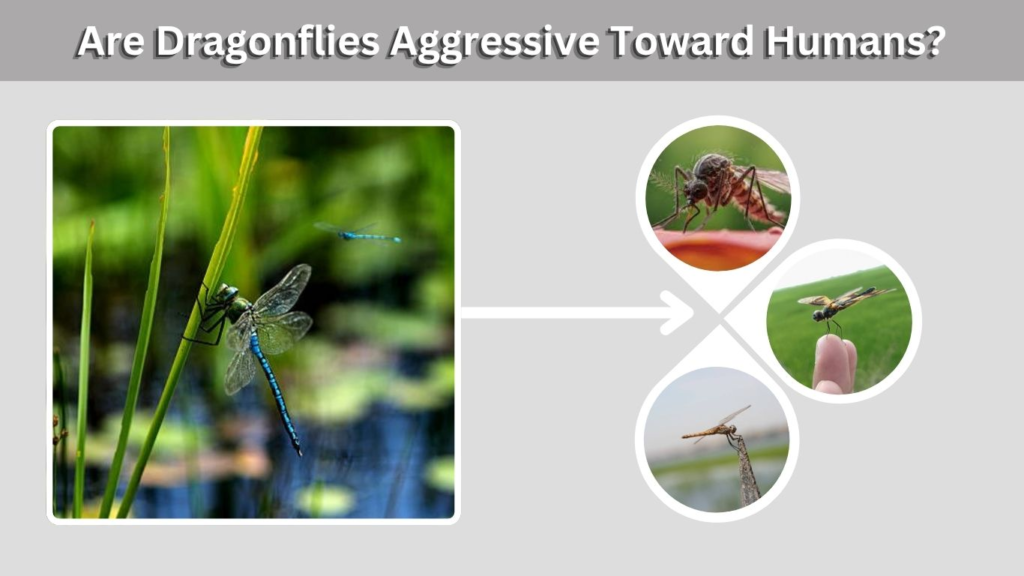
Dragonflies often fly close to people, leading some individuals to believe they are being chased or targeted. In reality, dragonflies have little interest in humans and are usually focused on hunting insects. Their behavior is often misunderstood because of their speed and remarkable flying skills.
Why Do Dragonflies Fly Around People?
Dragonflies may appear to follow people for several reasons. Most commonly, they are attracted to areas where insects are abundant.
They often fly near humans because:
- Mosquitoes are present nearby
- Small flying insects gather around people
- They are patrolling their territory
- They are searching for food
Their attention is directed toward prey rather than people themselves.
Do Dragonflies Attack Humans?
Dragonflies do not attack humans.
Even territorial species reserve aggressive behavior for competing dragonflies rather than people. If a dragonfly flies close to someone, it is usually investigating its surroundings or hunting insects.
In fact, dragonflies are often considered beneficial because they help reduce mosquito populations naturally.
Dragonfly Myths and Facts
Dragonflies have inspired myths for centuries, many of which continue to circulate today. Understanding the truth behind these beliefs helps people appreciate these insects and their ecological value.
Common Dragonfly Myths
Several misconceptions persist about dragonflies:
- Dragonflies can sting people
- Dragonfly bites are deadly
- Dragonflies are poisonous
- Dragonflies intentionally attack humans
None of these claims are supported by scientific evidence.
The Facts About Dragonflies
The truth is much simpler. Dragonflies are beneficial predators that help control insect populations and rarely interact negatively with humans.
Key facts include:
- Dragonflies can bite but rarely do
- They cannot sting
- They are not venomous
- They do not transmit diseases through bites
- They help control mosquitoes and pests
FAQs
Can dragonflies bite humans?
Yes, dragonflies can bite humans, but it is rare. They have strong mandibles that help them catch and eat insects. A dragonfly may bite if it feels threatened or is handled improperly. Most bites feel like a small pinch and cause little to no lasting discomfort.
Can dragonflies sting people?
No, dragonflies cannot sting people. Unlike bees, wasps, and hornets, dragonflies do not have stingers. They are incapable of injecting venom and pose no stinging risk to humans or pets.
Are dragonfly bites dangerous?
Dragonfly bites are generally harmless. They are not venomous, do not transmit known diseases to humans, and rarely break the skin. In most cases, a bite causes only minor irritation that disappears quickly without medical treatment.
Can dragonflies bite dogs or cats?
Yes, a dragonfly could bite a dog or cat if it is caught or handled, but such incidents are uncommon. Dragonflies are not aggressive toward pets and usually try to fly away instead of defending themselves. Their bites are not considered dangerous to household animals.
Why do dragonflies fly around people?
Dragonflies often fly near people because they are hunting mosquitoes, flies, and other small insects. They may also be patrolling their territory. If a dragonfly seems to be following you, it is usually interested in nearby prey rather than you personally.