
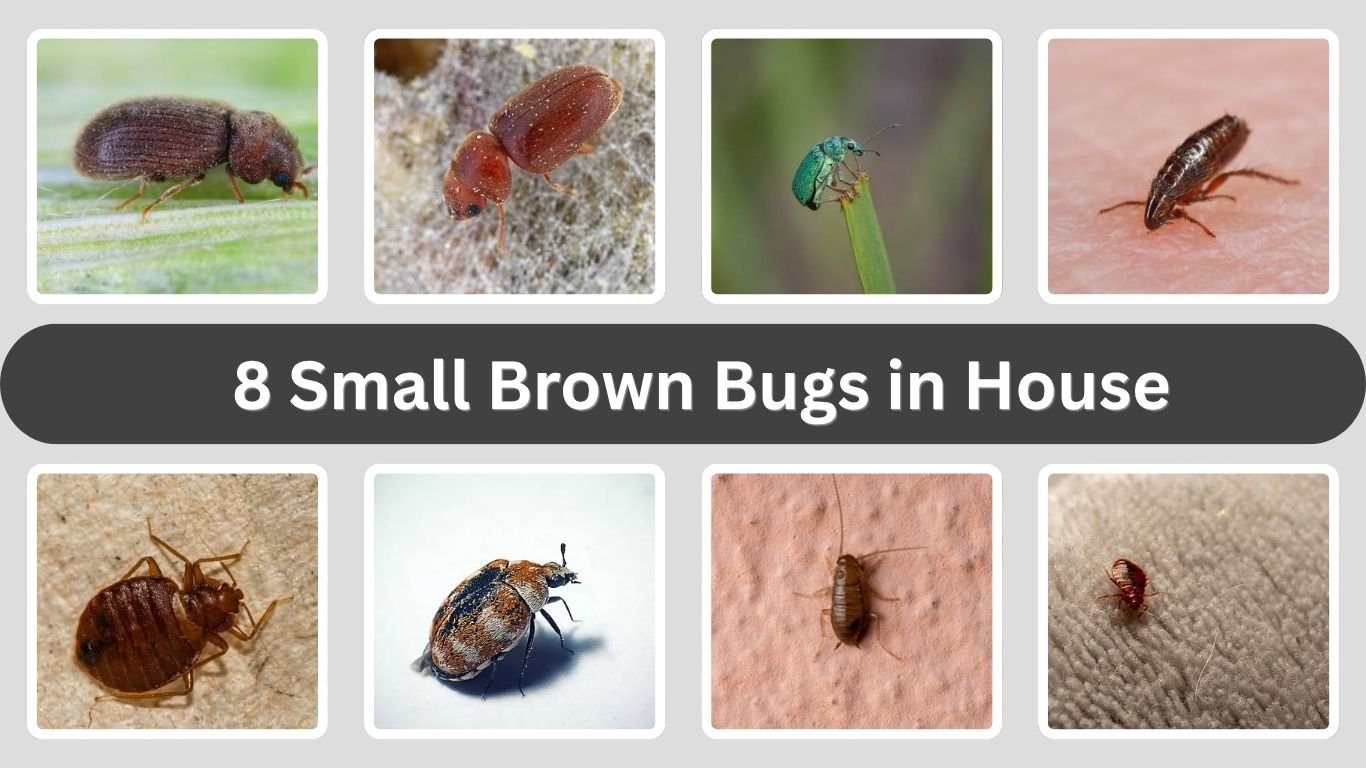
Small brown bugs in the house can be frustrating and sometimes difficult to identify. These tiny pests often appear in kitchens, bedrooms, or storage areas, usually attracted by food, moisture, or hidden spaces. While some are harmless, others can damage fabrics, contaminate food, or cause discomfort. Knowing the types of small brown bugs helps you recognize the problem early and take the right steps to control them. This guide covers 8 common tiny brown bugs found indoors and explains how to identify and prevent them effectively.
1. Carpet Beetles

Carpet beetles are small brown bugs commonly found inside homes, especially where natural fibers are present. While adult beetles are mostly harmless, their larvae can damage fabrics, carpets, and clothing. They often go unnoticed until visible damage appears. These pests can enter homes easily and spread quickly if conditions are suitable, making early identification important.
Identification
- Small, oval-shaped bodies
- Brown, black, or mottled color patterns
- About 2–4 mm in size
- Hard outer shell
- Larvae are hairy and brownish
- Often found near damaged fabrics
Where They Are Found
Carpet beetles are usually found in areas with natural fibers such as carpets, rugs, clothing, and upholstered furniture. They prefer dark, undisturbed places like closets, storage boxes, and under furniture. Adult beetles may also be seen near windows, as they are attracted to light and often come from outdoors.
Why They Appear
Carpet beetles appear in homes in search of food sources like wool, silk, leather, and other organic materials. They may enter through open windows or be brought in with infested items. Accumulated dust, pet hair, and lint provide ideal feeding conditions for larvae, allowing them to grow and spread.
Basic Prevention
Preventing carpet beetles involves regular cleaning and proper storage. Vacuuming carpets, furniture, and hidden areas helps remove eggs and larvae. Store clothes in sealed containers and keep closets clean. Washing fabrics before storage and reducing dust buildup can also help prevent infestations.
2. Bed Bugs

Bed bugs are small brown insects that feed on human blood, usually at night. They are known for hiding in bedding, furniture, and tiny cracks, making them difficult to detect early. Although they do not spread diseases, their bites can cause itching and discomfort. Bed bugs spread easily and can become a serious problem if not controlled quickly.
Identification
- Small, flat, oval-shaped bodies
- Reddish-brown color
- About 4–7 mm in size
- No wings, but fast-moving
- Swell and darken after feeding
- Leave small blood spots on bedding
Where They Are Found
Bed bugs are commonly found in bedrooms, especially in mattresses, bed frames, and headboards. They hide in cracks, seams, and folds of fabric close to sleeping areas. They can also be found in furniture, behind wallpaper, and inside small crevices around the room.
Why They Appear
Bed bugs usually enter homes by hitchhiking on luggage, clothing, or used furniture. Traveling or bringing in second-hand items increases the risk. They are attracted to human presence rather than dirt, and once inside, they multiply quickly if not treated.
Basic Prevention
Preventing bed bugs involves inspecting luggage and furniture before bringing them indoors. Wash clothes after traveling and keep sleeping areas clean. Using mattress covers and reducing clutter can limit hiding spots and help prevent infestations.
3. Fleas

Fleas are tiny brown bugs that are commonly associated with pets, but they can also bite humans. They are known for their strong jumping ability and can quickly spread throughout a home. Fleas reproduce rapidly, and their bites can cause itching and irritation. Once they enter a home, they can be difficult to eliminate without proper cleaning and pet care.
Identification
- Very small, about 1–3 mm in length
- Dark brown or reddish-brown color
- Flattened bodies
- Strong hind legs for jumping
- Move quickly and jump when disturbed
- Bite marks often appear in clusters
Where They Are Found
Fleas are most commonly found on pets such as cats and dogs, as well as in areas where pets rest. Carpets, rugs, pet bedding, and upholstered furniture are common hiding places. They may also be found in cracks in floors or along baseboards.
Why They Appear
Fleas usually enter homes through pets that have been outdoors or in contact with other animals. They can also be brought in on clothing or items. Warm and humid conditions help them reproduce quickly, leading to fast infestations.
Basic Prevention
Preventing fleas involves regular pet care and cleaning. Bathe and groom pets frequently and keep their bedding clean. Vacuum carpets and furniture regularly to remove eggs and larvae. Maintaining cleanliness and monitoring pets can help prevent flea problems.
4. Weevils

Weevils are tiny brown beetles commonly found in stored food items, especially grains and dry goods. They are known for their small size and distinctive snout. While they do not harm humans directly, they can contaminate food and spread quickly if not controlled. Their presence is usually noticed when they appear inside food containers.
Identification
- Small, about 2–4 mm in length
- Brown or dark brown color
- Long, narrow snout (nose-like feature)
- Oval or cylindrical body
- Hard outer shell
- Often found inside food packages
Where They Are Found
Weevils are typically found in kitchens and pantries, especially in stored grains like rice, flour, pasta, and cereals. They stay close to food sources and are often discovered inside containers or packaging. They can also spread to nearby food items if not removed quickly.
Why They Appear
Weevils usually enter homes through infested food products purchased from stores. Once inside, they lay eggs in food items, allowing their population to grow rapidly. Poor storage conditions, such as open or loosely sealed containers, make it easier for them to spread.
Basic Prevention
Preventing weevils involves proper food storage and regular inspection. Store dry foods in airtight containers and check items before use. Dispose of infested products immediately. Keeping pantry areas clean and dry helps reduce the risk of infestation.
5. Cockroach Nymphs

Cockroach nymphs are small brown bugs that represent the early stage of cockroaches. They look similar to adult roaches but are smaller and do not have wings. These pests are often hidden and come out mostly at night. Their presence usually indicates a larger infestation nearby, making early detection important for proper control.
Identification
- Small, about 2–10 mm depending on age
- Light brown to dark brown color
- Flat, oval-shaped body
- No wings
- Fast-moving, especially when disturbed
- Resemble tiny versions of adult cockroaches
Where They Are Found
Cockroach nymphs are commonly found in dark, warm, and hidden areas of the home. Kitchens and bathrooms are their main locations, especially under sinks, behind appliances, and inside cabinets. They also hide in cracks, wall gaps, and near food or water sources.
Why They Appear
Cockroach nymphs appear when adult cockroaches lay eggs in hidden areas. Food crumbs, grease, moisture, and clutter create ideal conditions for them. Once inside, they can multiply quickly if the environment supports their survival.
Basic Prevention
Preventing cockroach nymphs involves keeping the home clean and dry. Store food properly, clean surfaces regularly, and avoid leaving food out. Fix leaks and reduce moisture in key areas. Sealing cracks and maintaining good hygiene can help prevent infestations.
6. Booklice

Booklice are tiny brownish bugs often found in damp areas of the home. Despite their name, they do not damage books but feed on mold and fungi that grow on surfaces. They are harmless to humans and do not bite, but their presence usually indicates excess moisture. Because of their small size, they are often mistaken for other tiny pests.
Identification
- Very small, about 1–2 mm in length
- Light brown, gray, or pale color
- Soft-bodied with an elongated shape
- Long antennae
- Slow-moving
- Often found in clusters
Where They Are Found
Booklice are commonly found in humid areas such as bathrooms, kitchens, basements, and near windows. They may appear on damp walls, inside cabinets, or around stored paper items like books and cardboard boxes. Areas with poor ventilation are especially prone to their presence.
Why They Appear
Booklice appear when there is high humidity and mold growth. They feed on fungi that develop in damp conditions. Leaks, condensation, and poor airflow create an ideal environment for them to survive and reproduce.
Basic Prevention
Preventing booklice involves reducing moisture and improving ventilation. Fix leaks, dry damp areas quickly, and use dehumidifiers if needed. Regular cleaning to prevent mold buildup also helps remove their food source. Keeping spaces dry is the most effective way to control them.
7. Drugstore Beetles

Drugstore beetles are tiny brown bugs that commonly infest stored food and household items. Despite their name, they are not limited to medicines and can feed on a wide range of dry materials. These pests are known for their ability to chew through packaging, making them a frequent problem in kitchens and storage areas.
Identification
- Very small, about 2–3 mm in length
- Reddish-brown or light brown color
- Oval-shaped, hump-backed body
- Hard outer shell
- Head often hidden under the thorax
- Capable of flying
Where They Are Found
Drugstore beetles are commonly found in pantries, kitchens, and storage areas. They infest dry goods such as flour, spices, cereals, and packaged foods. They may also be found in non-food items like paper, books, and even certain fabrics. These beetles often hide inside packaging and spread to nearby items.
Why They Appear
Drugstore beetles usually enter homes through infested products brought from stores. Once inside, they lay eggs in food or materials, allowing larvae to develop and spread. Warm conditions and improperly stored items make it easier for them to multiply quickly.
Basic Prevention
Preventing drugstore beetles involves storing food in airtight containers and inspecting products before use. Dispose of infested items immediately to stop the spread. Regularly clean storage areas and keep them dry. Proper storage and routine checks are key to preventing infestations.
8. Cigarette Beetles

Cigarette beetles are tiny brown pests that commonly infest stored products, especially dry goods and organic materials. Despite their name, they are not limited to tobacco and can be found in various household items. These beetles can spread quickly and contaminate food, making them a common nuisance in kitchens and storage areas.
Identification
- Very small, about 2–3 mm in length
- Light brown to reddish-brown color
- Oval-shaped, smooth body
- Head bent downward, not easily visible from above
- Strong fliers
- Often found inside packaging or near stored goods
Where They Are Found
Cigarette beetles are commonly found in kitchens, pantries, and storage areas. They infest dry foods such as flour, spices, cereals, and dried herbs. They may also be found in tobacco products, pet food, and even decorative items made from natural materials. They usually stay close to their food source but can spread to nearby items.
Why They Appear
Cigarette beetles usually enter homes through infested products brought from stores. Once inside, they lay eggs in food or organic materials, allowing larvae to develop and spread. Warm temperatures and poor storage conditions help them multiply quickly.
Basic Prevention
Preventing cigarette beetles involves proper storage and regular inspection. Store dry goods in airtight containers and check items before use. Dispose of infested products immediately. Keeping storage areas clean and dry can help reduce the risk of infestation.
FAQs
What are small brown bugs commonly found in houses?
Small brown bugs often include carpet beetles, bed bugs, fleas, and weevils. These pests usually appear in areas with food, fabric, or moisture. Identifying the exact type helps in choosing the right prevention and control method.
Are small brown bugs harmful to humans?
Most small brown bugs are not dangerous, but some can cause issues. Bed bugs and fleas may bite and cause itching, while others like beetles can damage fabrics or food. Even harmless bugs can become a nuisance if they multiply.
Why do brown bugs appear in the house?
Brown bugs usually appear due to food sources, moisture, or easy entry points. Infested items, poor storage, and warm indoor conditions can attract them. Once inside, they can reproduce quickly if the environment supports them.
How can I get rid of small brown bugs?
Getting rid of these bugs involves cleaning, proper storage, and removing their food sources. Vacuum regularly, store food in airtight containers, and fix moisture issues. Disposing of infested items quickly also helps stop the spread.
How can I prevent brown bugs from coming back?
Prevention includes maintaining cleanliness, sealing cracks, and reducing humidity. Regular inspection of food and household items is important. Keeping your home dry and organized makes it less attractive for these pests to return.