
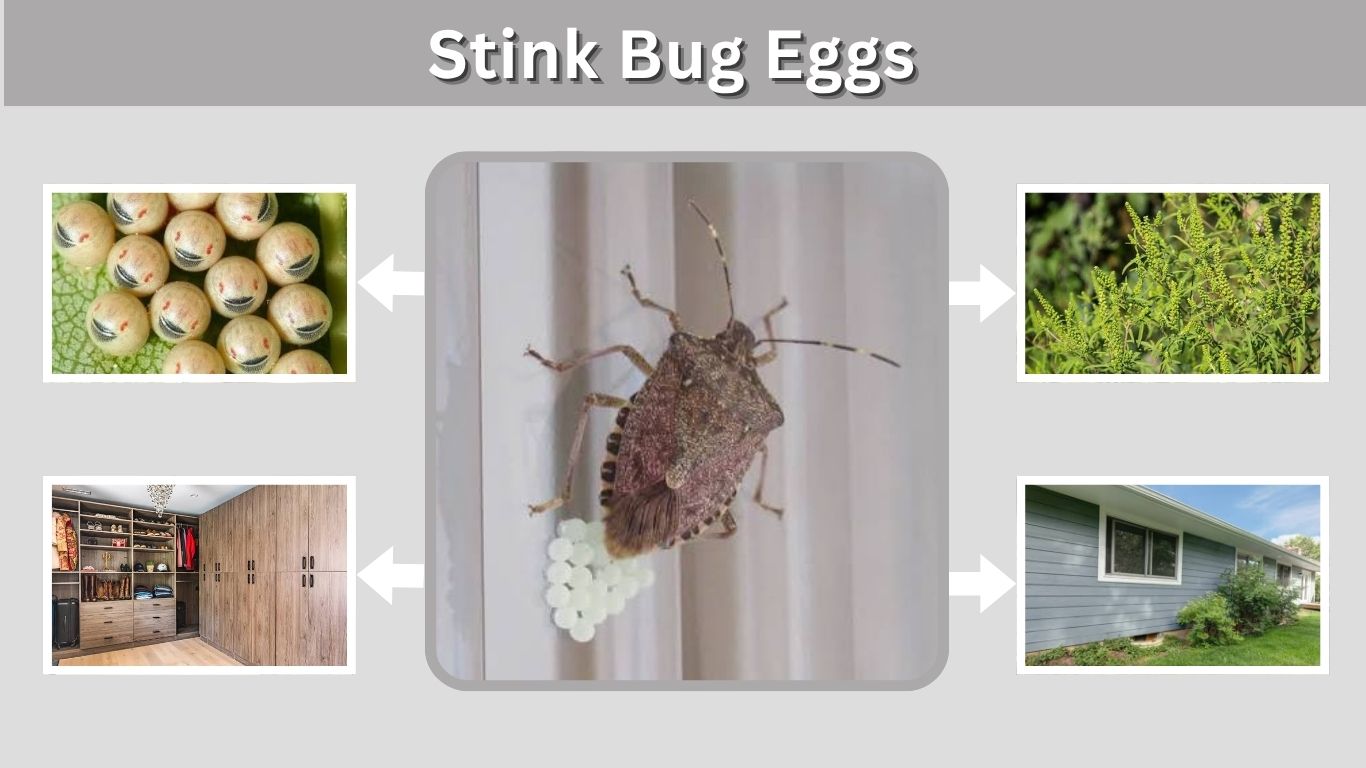
Stink bug eggs are small, barrel-shaped eggs usually laid in tightly arranged clusters on the undersides of plant leaves. Depending on the species, they may appear white, pale green, yellow, cream, or slightly translucent. Brown marmorated stink bugs commonly deposit groups of roughly 20–30 eggs on host plants during warm weather. Although adult stink bugs frequently enter houses for winter shelter, they usually do not establish breeding populations indoors. Learning how to identify stink bug eggs, where they are laid, and how to remove them can help prevent garden infestations.
What Do Stink Bug Eggs Look Like?
Stink bug eggs are distinctive once you know what to look for. Most are tiny, rounded or barrel-shaped structures arranged closely together in an organized cluster. Their appearance changes somewhat according to species and development. Fresh eggs may be pale or translucent, while eggs nearing hatching can become darker as the developing nymph becomes visible.
Stink Bug Egg Identification
Typical stink bug eggs have these characteristics:
- Barrel-shaped or rounded appearance
- Usually about 1–2 mm across
- White, cream, pale green, or yellow coloration
- Laid in organized clusters
- Frequently attached to leaf undersides
- Smooth or slightly textured surface
- Often arranged in several tight rows
- May darken shortly before hatching
Stink bugs do not normally produce a silk egg sac or egg sack. Instead, females attach individual eggs directly to a surface while arranging them into a mass.
Brown Marmorated Stink Bug Eggs
Brown marmorated stink bug eggs are typically pale green to whitish and approximately barrel-shaped. Females commonly place about 20–30 eggs in a cluster, with around 28 being frequently observed.
Egg masses are usually located underneath leaves of trees, vegetables, weeds, and other host plants.
As the embryos develop, darker markings may become visible through the egg covering. Once the nymphs emerge, empty shells often remain attached to the leaf.
Green Stink Bug Eggs
Green stink bug eggs may appear pale green, cream, yellowish, or whitish depending on the species and developmental stage.
Like brown marmorated stink bugs, green stink bugs generally arrange eggs in compact clusters on vegetation.
Color alone is not enough for reliable identification because several stink bug species produce eggs that look similar. Examining the shape, arrangement, host plant, and nearby adults or nymphs can make identification easier.
Where Do Stink Bugs Lay Eggs?
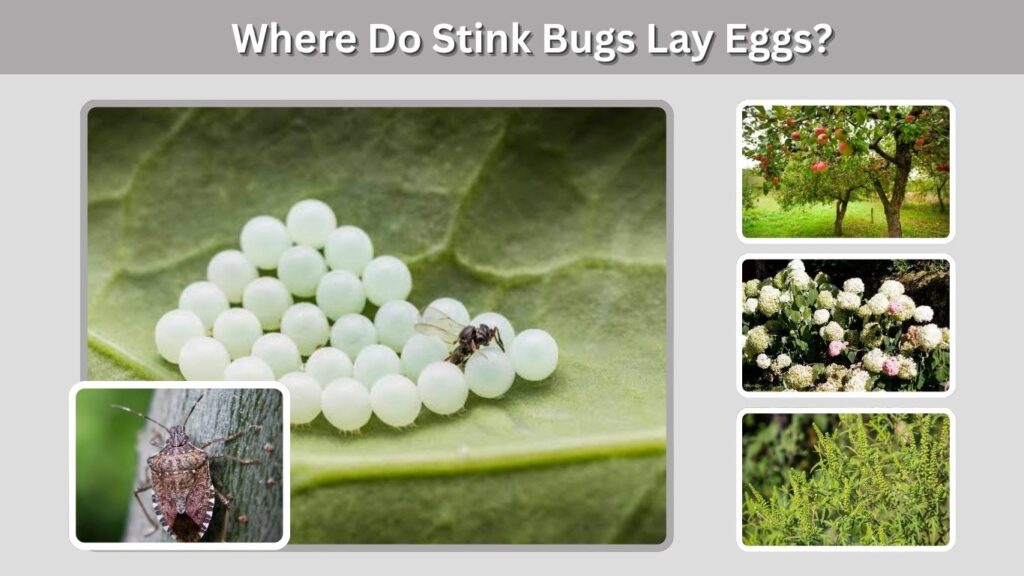
Most plant-feeding stink bugs lay their eggs outdoors where newly hatched nymphs can immediately access food. Leaves provide both protection and proximity to plant juices. Females generally choose healthy vegetation during spring and summer rather than depositing eggs randomly on indoor household surfaces.
Common Egg-Laying Locations
Stink bug eggs may be found on:
- Undersides of leaves
- Vegetable plants
- Fruit trees
- Ornamental shrubs
- Weeds
- Soybean plants
- Corn
- Tomatoes
- Beans
- Peppers
- Fruit-bearing plants
- Occasionally exterior window screens
The underside of a leaf provides some protection from direct sunlight, rain, and predators, which is why it is such a common location.
Stink Bug Eggs on Leaves and Plants
Finding egg clusters on leaves can indicate that adult stink bugs are actively reproducing nearby.
After hatching, nymphs often remain together around the empty egg mass for a short period before dispersing. As they grow, plant-feeding nymphs begin puncturing leaves, fruits, pods, seeds, and stems with their piercing-sucking mouthparts.
Checking leaf undersides regularly is one of the easiest ways to detect an infestation before large numbers of nymphs develop.
Do Stink Bugs Lay Eggs in the House?
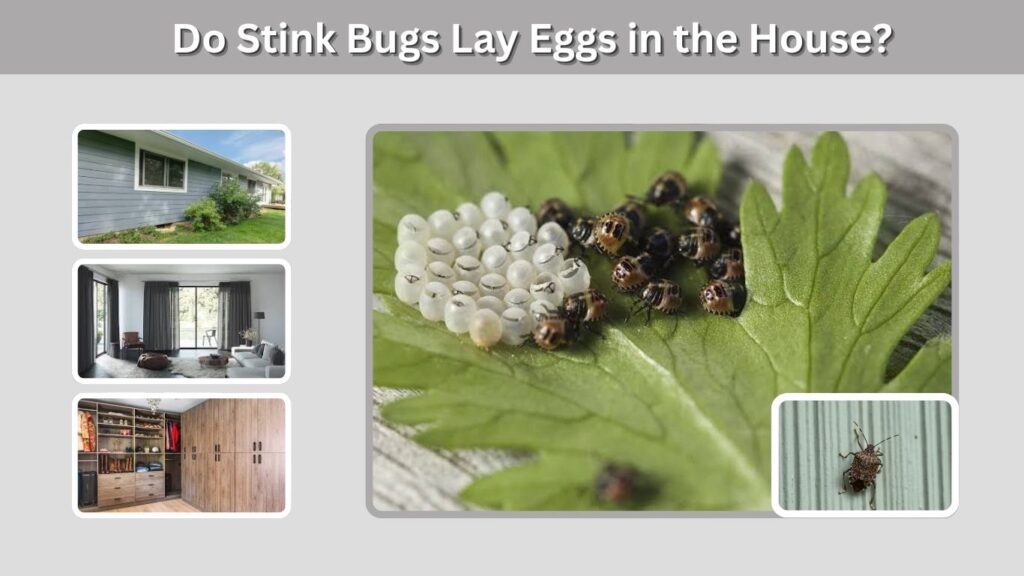
Adult stink bugs commonly enter buildings during autumn, which can make homeowners worry that they will reproduce inside. However, common household-invading species such as the brown marmorated stink bug generally enter buildings to overwinter rather than to lay eggs. Their normal reproductive activity takes place outdoors during warmer months.
Stink Bug Eggs in the House
Finding adult stink bugs indoors does not normally mean eggs are hidden throughout your home.
Overwintering stink bugs may shelter in:
- Attics
- Wall voids
- Window frames
- Door frames
- Behind siding
- Curtains
- Closets
- Cracks and crevices
They remain relatively inactive during cold weather and eventually attempt to return outdoors as temperatures rise.
If you find a suspected egg cluster indoors, examine it carefully because eggs from moths, beetles, flies, or other insects may easily be mistaken for stink bug eggs.
Do Stink Bugs Lay Eggs in Beds or Clothes?
Stink bugs do not normally choose beds, mattresses, clothing, or human hair as egg-laying sites.
Unlike bed bugs, they are not adapted to live and reproduce around sleeping humans. Plant-feeding stink bugs need outdoor host plants for their developing young.
A stink bug crawling on bedding or clothing has most likely wandered there accidentally after emerging from an indoor hiding place.
When Do Stink Bugs Lay Eggs?
Egg-laying usually begins after overwintered adults become active during spring. Timing varies according to stink bug species, climate, and local temperatures. Females feed and mate after leaving winter shelters, then search for suitable host plants on which to deposit their eggs.
Stink Bug Egg-Laying Season
A typical seasonal pattern includes:
- Adults leave overwintering shelters in spring.
- They begin feeding on available plants.
- Mating occurs.
- Females deposit egg clusters on vegetation.
- Eggs hatch during warm weather.
- Nymphs feed and pass through several developmental stages.
- New adults eventually appear later in the season.
In warmer climates, some species may complete more than one generation per year.
How Many Eggs Do Stink Bugs Lay?
The number varies considerably between species. A single female can produce multiple egg masses during her reproductive life.
Brown marmorated stink bugs commonly produce approximately 20–30 eggs in each mass. Over an entire season, an individual female can potentially produce many more eggs through repeated laying.
This reproductive ability helps populations increase quickly when weather and food conditions are favorable.
How Long Do Stink Bug Eggs Take to Hatch?
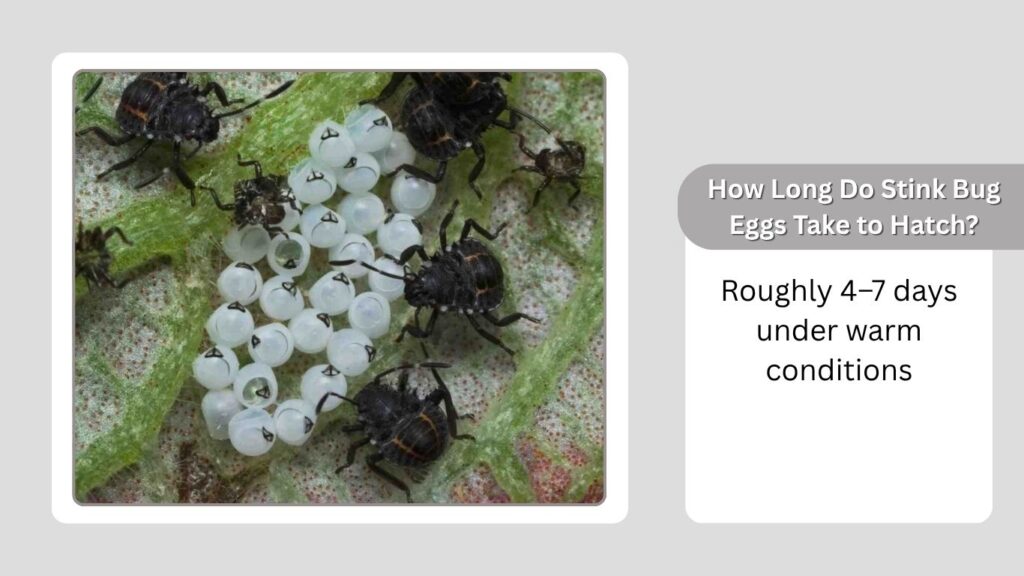
Stink bug eggs develop relatively quickly during warm weather. Temperature is one of the most important influences on hatching speed. Eggs exposed to favorable summer conditions may hatch within several days, whereas cooler temperatures can slow development.
Stink Bug Egg Hatching
For many common species, hatching may occur within roughly 4–7 days under warm conditions, although exact timing varies.
Signs that hatching is approaching can include:
- Eggs becoming darker
- Visible dark markings inside eggs
- Changes from translucent to opaque coloration
- Tiny nymphs visible through the shell
- Newly emerged nymphs gathering around the egg mass
Empty eggs generally remain attached to the plant after hatching.
What Do Baby Stink Bugs Look Like?
Newly hatched stink bugs are called nymphs. They do not yet have fully developed wings and can look surprisingly different from adults.
Brown marmorated stink bug nymphs may show combinations of black, reddish-orange, and later brown coloration as they mature.
Nymphs pass through several stages, called instars, before becoming adults. Their appearance gradually changes with each molt.
How to Get Rid of Stink Bug Eggs
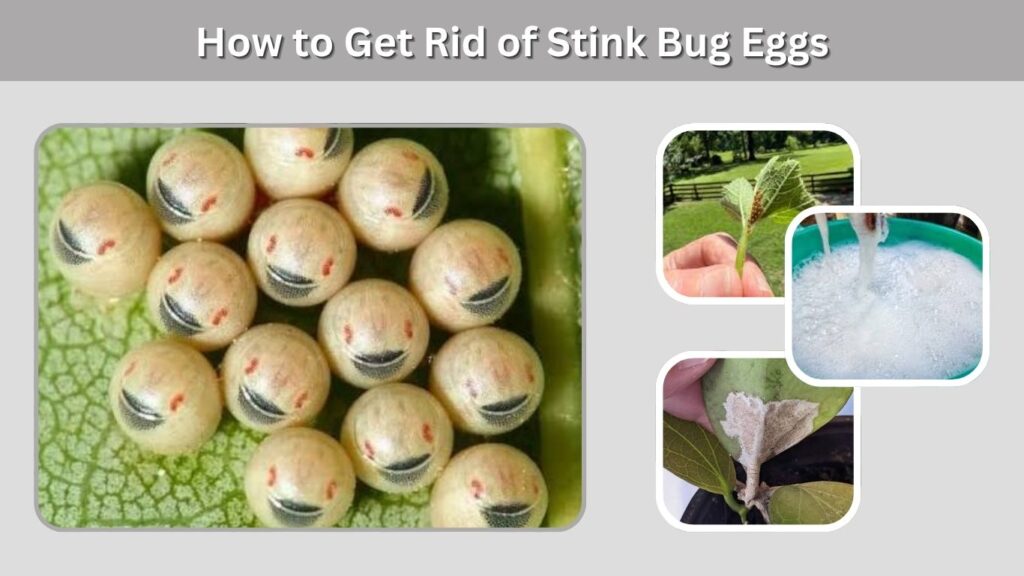
Removing egg masses before they hatch is one of the simplest ways to reduce stink bug populations in a home garden. Because the eggs cannot escape, manual removal can eliminate dozens of potential nymphs at once without requiring broad pesticide applications.
How to Remove Stink Bug Eggs
Try these methods:
- Inspect the undersides of leaves regularly.
- Remove heavily infested leaves when practical.
- Scrape egg masses into soapy water.
- Crush or destroy removed eggs away from plants.
- Place collected eggs in a sealed bag before disposal.
- Check nearby plants for additional clusters.
- Look for newly hatched nymphs around old egg masses.
- Continue inspecting plants throughout the growing season.
Be careful before destroying unidentified eggs because beneficial insects can also lay eggs on garden plants.
Stink Bug Eggs on Window Screens
Egg clusters occasionally appear on outdoor screens, windows, siding, or other surfaces. If you are confident they are stink bug eggs, they can usually be scraped off and placed in soapy water.
After removal, clean the area and inspect surrounding vegetation.
A cluster on the exterior of a window does not necessarily mean stink bugs are reproducing inside your home.
Stink Bug Eggs vs Other Insect Eggs
Many insects produce small egg masses, so misidentification is common. Moth eggs, lady beetle eggs, leaf-footed bug eggs, assassin bug eggs, and other insect eggs can occur on the same plants as stink bug eggs.
Stink Bug Eggs vs Moth Eggs
Stink bug eggs tend to be relatively barrel-shaped and arranged in neat, compact groups.
Moth eggs vary enormously. Depending on species, they may occur individually, in overlapping masses, beneath hairs or scales, or within irregular clusters.
Location also helps. If a group of barrel-shaped eggs occurs underneath a plant leaf and stink bugs are present nearby, stink bugs become a stronger possibility.
Whenever identification is uncertain, waiting for the eggs to develop or photographing them for identification may prevent accidental destruction of beneficial insects.
Are Stink Bug Eggs Dangerous?
Stink bug eggs are not dangerous to touch in normal circumstances. They cannot bite, sting, jump, or release an attacking insect. Their importance comes from what happens after they hatch, particularly when the species is a plant-feeding agricultural pest.
Can Stink Bug Eggs Harm Plants?
The eggs themselves do not feed on plants. Damage begins after nymphs hatch and start using their piercing mouthparts.
Plant-feeding stink bug nymphs may eventually attack:
- Tomatoes
- Peppers
- Apples
- Peaches
- Pears
- Corn
- Soybeans
- Beans
- Seeds and pods
Removing eggs early can therefore prevent later feeding damage.
FAQs
1. What do stink bug eggs look like?
Stink bug eggs are typically tiny, barrel-shaped eggs arranged in tight clusters. They may be white, cream, pale green, or yellow. Most species attach their eggs directly to plant surfaces, particularly the undersides of leaves, where newly hatched nymphs can quickly find food.
2. Do stink bugs lay eggs inside your house?
Usually, no. Brown marmorated stink bugs commonly enter homes to overwinter rather than reproduce. Females normally lay their eggs outdoors on plants during spring and summer. Finding several adult stink bugs indoors therefore does not automatically mean they are laying eggs throughout the building.
3. How many eggs does a stink bug lay?
The number depends on species. Brown marmorated stink bugs commonly lay around 20–30 eggs in each cluster, often close to 28. A female can lay multiple clusters throughout the reproductive season, allowing stink bug populations to increase rapidly under favorable conditions.
4. How long do stink bug eggs take to hatch?
Many stink bug eggs hatch within several days under warm conditions, often roughly 4–7 days for common species. Temperature and species influence development speed. Eggs may darken before hatching, and newly emerged nymphs often remain clustered around the empty eggs temporarily.
5. How do you get rid of stink bug eggs?
Inspect plant leaves and manually remove suspected egg masses. They can be scraped into soapy water or sealed in a bag before disposal. Regularly checking leaf undersides is particularly effective. Make sure the eggs are correctly identified so you do not accidentally remove beneficial insect eggs.