
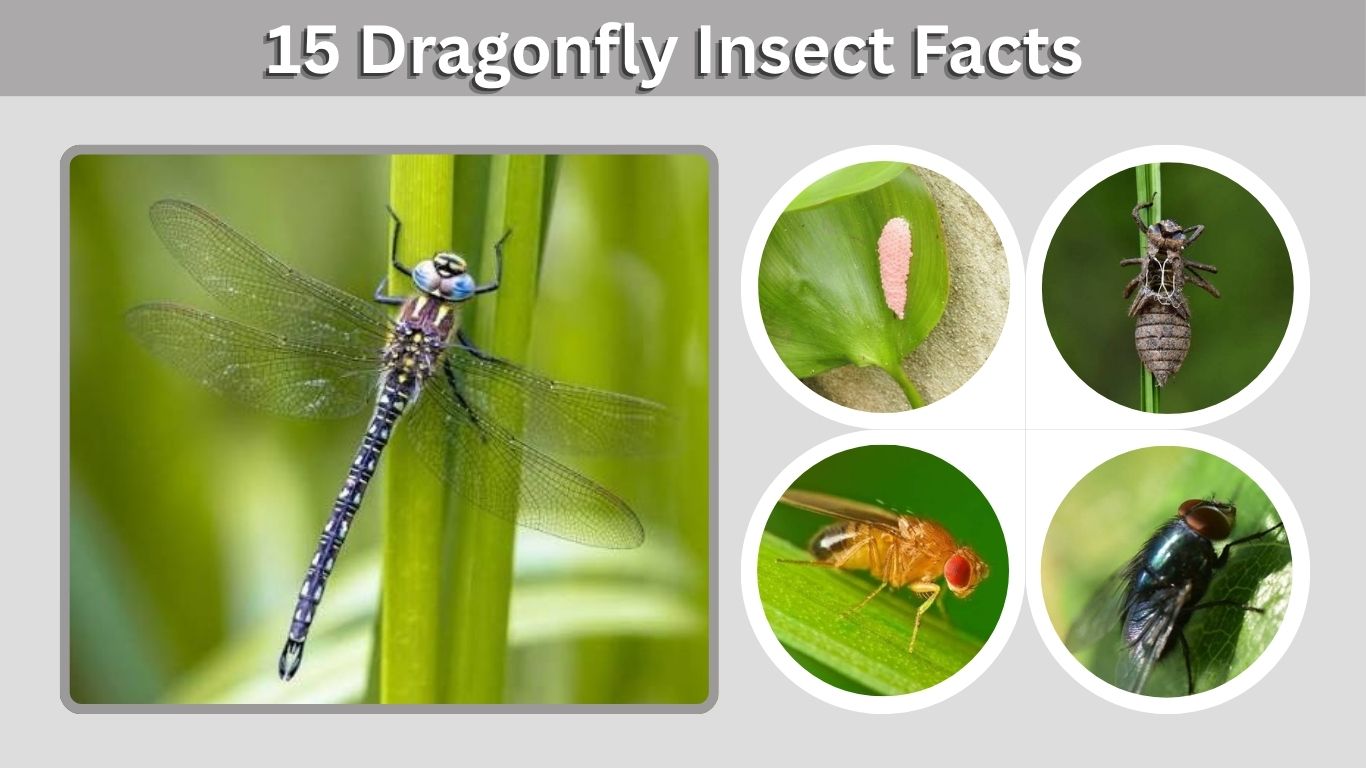
Dragonflies are among the most recognizable flying insects, with long bodies, huge eyes, transparent wings, and remarkable aerial skills. They belong to the insect order Odonata and are closely related to damselflies. Dragonflies spend the first part of their lives underwater before becoming powerful flying predators. They eat mosquitoes, flies, and many other small insects, making them beneficial around ponds and wetlands. These 15 dragonfly insect facts explain their life cycle, hunting behavior, flight abilities, appearance, and fascinating evolutionary history.
Dragonfly Classification and Identification
Dragonflies are true insects because they have six legs, three main body sections, and an external skeleton. They belong to the suborder Anisoptera within Odonata. Adults are especially easy to recognize because of their large eyes, elongated abdomen, and two pairs of strong wings.
1. Dragonflies Are Insects
Yes, a dragonfly is an insect.
Like other insects, it has:
- Six legs
- A head
- A thorax
- An abdomen
- Two antennae
- An exoskeleton
- Three pairs of jointed legs
Adult dragonflies also have two pairs of wings.
Although people sometimes call almost any small crawling animal a “bug,” dragonflies are scientifically classified as insects.
2. Dragonflies Belong to the Order Odonata
Dragonflies belong to the insect order Odonata, along with damselflies.
Modern dragonflies are generally placed in the suborder Anisoptera. Damselflies belong primarily to Zygoptera.
Both groups share an aquatic juvenile stage and predatory behavior, but adult dragonflies are generally stronger fliers with more robust bodies.
3. Dragonflies Have Huge Eyes
A dragonfly’s head is dominated by two enormous compound eyes.
These eyes contain thousands of individual visual units, allowing the insect to detect movement across a broad field of view.
Excellent vision is essential because dragonflies hunt flying prey at high speed and must rapidly judge direction, distance, and movement.
Dragonfly Flight Facts
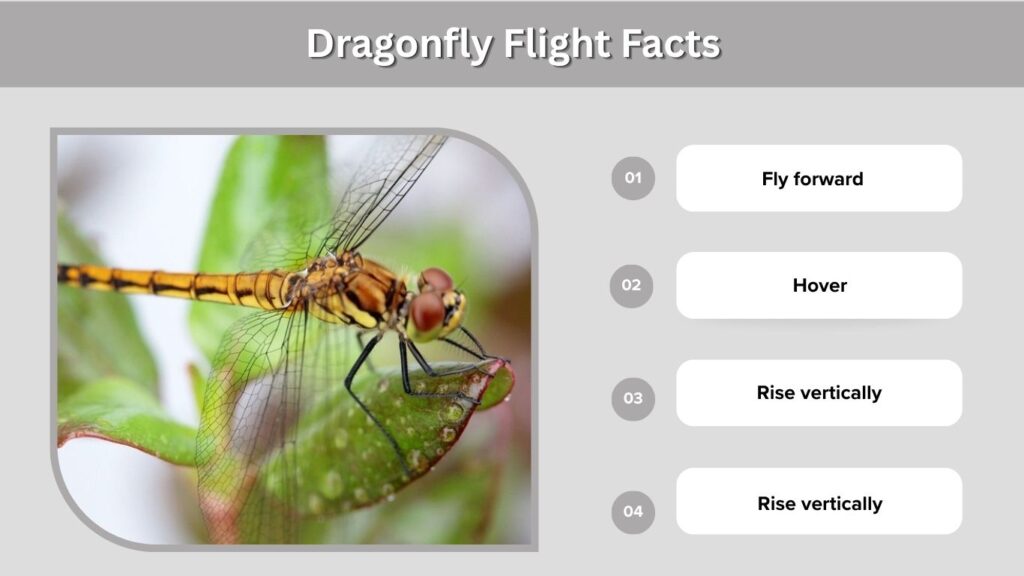
Dragonflies are exceptional aerial predators. Their four wings can be controlled with considerable independence, allowing them to accelerate, turn, hover, and change direction very quickly. This maneuverability helps them catch other flying insects in midair.
4. Dragonflies Can Fly Backward
One of the coolest dragonfly facts is that they can fly backward.
Their wing structure allows them to:
- Fly forward
- Move backward
- Hover
- Rise vertically
- Descend rapidly
- Make sharp turns
This level of maneuverability is unusual among flying insects and makes dragonflies extremely effective hunters.
5. Dragonflies Are Very Fast Fliers
Dragonflies are among the faster and more agile flying insects, although claims that every dragonfly is the absolute fastest insect are oversimplified.
Different species have different flight abilities. Their real advantage is not just speed but the combination of speed, acceleration, hovering, and rapid directional changes.
6. Their Four Wings Can Work Independently
Dragonflies have two pairs of wings attached to the thorax.
Instead of simply flapping all four wings in exactly the same way, they can alter how the front and rear wings move relative to one another.
This helps them perform complicated aerial maneuvers while chasing prey or defending territory.
Dragonfly Diet and Hunting
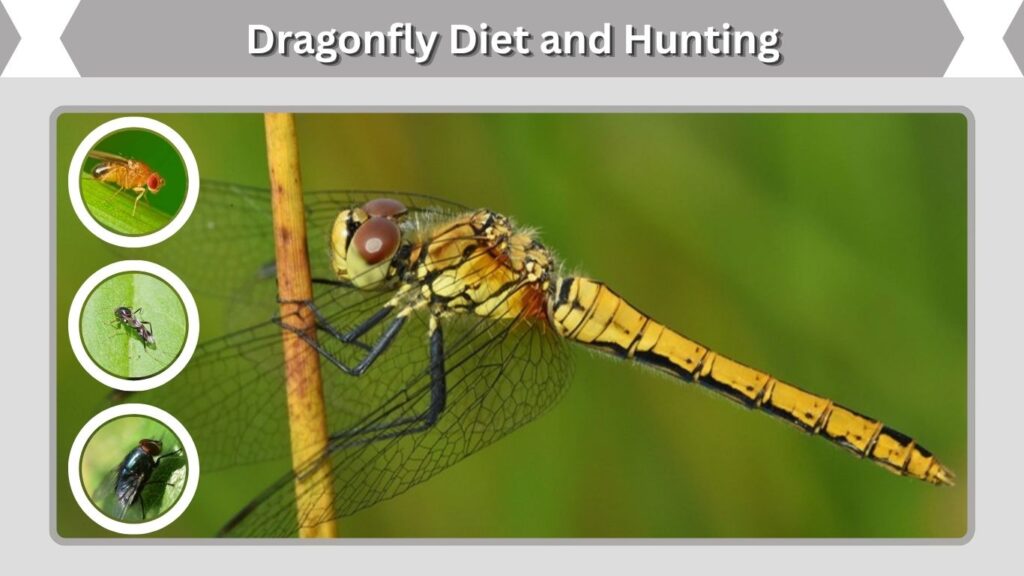
Adult dragonflies are predators. They catch other insects while flying and use their legs to trap prey before bringing it toward the mouth. Their feeding habits make them valuable members of many wetland and garden ecosystems.
7. Dragonflies Eat Other Insects
Common prey includes:
- Mosquitoes
- Midges
- Small flies
- Gnats
- Moths
- Flying ants
- Other small insects
- Occasionally smaller dragonflies
They usually capture living prey rather than searching for dead insects.
8. Dragonflies Catch Prey in Midair
Dragonflies are aerial hunters.
Their legs form a basket-like structure beneath the body, helping them intercept and hold insects during flight.
Once prey is captured, a dragonfly may eat it while flying or land on vegetation to finish its meal.
9. Dragonflies Are Beneficial Insects
Dragonflies can help reduce populations of mosquitoes and other small flying insects.
They do not eliminate mosquito populations completely, but both adult dragonflies and their aquatic young prey on other animals.
Their presence often indicates that nearby wetlands, ponds, or aquatic habitats can support diverse insect life.
Dragonfly Life Cycle Facts
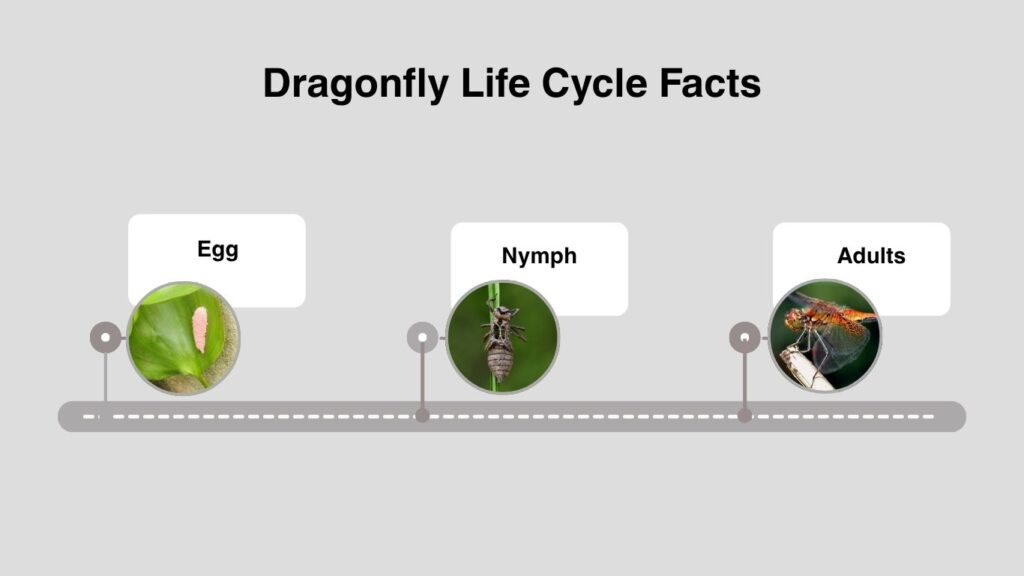
The dragonfly life cycle is very different from that of butterflies. Dragonflies do not have a caterpillar or pupal stage. Instead, they undergo incomplete metamorphosis and spend much of their development underwater.
10. Young Dragonflies Live Underwater
Immature dragonflies are commonly called nymphs or naiads.
They live underwater in habitats such as:
- Ponds
- Marshes
- Slow-moving streams
- Lakes
- Wetlands
Depending on the species, this aquatic stage may last much longer than the adult flying stage.
11. Dragonfly Nymphs Are Predators
Dragonfly nymphs are active hunters.
They can prey on aquatic organisms such as insect larvae, small crustaceans, tadpoles, and other suitably sized animals.
Their lower mouthpart is specially adapted to extend rapidly forward and grab prey.
12. Dragonflies Do Not Have a Pupal Stage
Their life cycle follows:
Egg → Nymph → Adult
A mature aquatic nymph eventually climbs out of the water onto a plant, rock, or other surface.
Its outer skin splits, and the adult dragonfly slowly emerges. The wings expand and harden before the insect begins normal flight.
Interesting Dragonfly Appearance Facts
Dragonflies occur in a remarkable range of colors. Depending on species, adults may be blue, red, green, yellow, golden, black, brown, or patterned. Color can also differ between males, females, and immature adults.
13. Dragonflies Can Be Blue, Red, Green, or Golden
Different dragonfly species display striking colors, including:
- Bright blue
- Deep red
- Metallic green
- Golden yellow
- Black
- Brown
- Orange
Color may help with species recognition and mating.
Some species become more strongly colored as they mature.
14. Dragonflies Are Often Called Darning Needles
“Darning needle” is an old informal name for dragonflies.
Their long, narrow abdomen resembles a large sewing needle, leading to names such as:
- Darning needle
- Sewing needle
- Devil’s darning needle
Old folklore sometimes claimed dragonflies could sew people’s mouths or ears shut, but these stories are myths.
15. Dragonfly Ancestors Are Extremely Ancient
Dragonfly-like insects have an evolutionary history extending back hundreds of millions of years.
Ancient relatives included giant forms with wingspans much greater than those of modern dragonflies.
Modern dragonflies are smaller, but their basic predatory body design remains remarkably successful.
Dragonfly vs. Damselfly
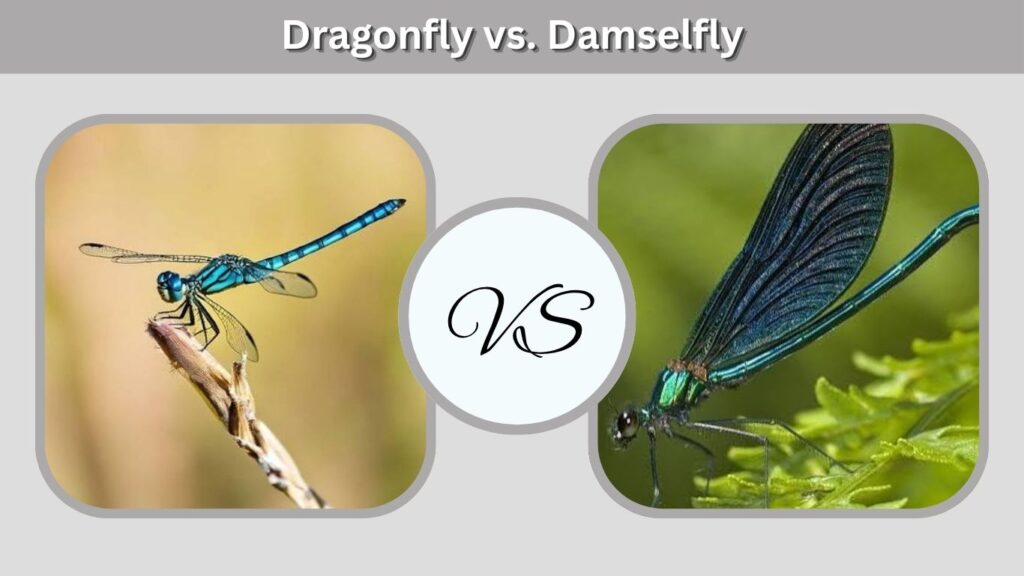
Dragonflies and damselflies are closely related and are frequently confused. Both have long abdomens, large eyes, and two pairs of transparent wings, but several visible differences can help separate them.
Main Differences
Dragonflies usually:
- Have thicker bodies
- Have very large eyes that may nearly meet
- Hold their wings open while resting
- Fly strongly and quickly
Damselflies usually:
- Have thinner bodies
- Have widely separated eyes
- Often fold their wings over the abdomen at rest
- Appear more delicate in flight
Some exceptions occur, so exact identification may require a closer look.
Insects That Look Like Dragonflies
Several insects can be mistaken for dragonflies because they have long bodies or transparent wings. However, differences in antennae, wing arrangement, body shape, and resting posture usually make identification possible.
Common Dragonfly Look-Alikes
Possible look-alikes include:
- Damselflies
- Antlions
- Owlflies
- Crane flies
- Some lacewings
- Mayflies
Damselflies are the most closely related and commonly confused group.
Mayflies can also have long bodies, but adults often possess obvious tail filaments that dragonflies lack.
Are Dragonflies Dangerous?
Dragonflies are predators, but their prey consists mainly of other insects. They do not hunt people, drink human blood, or sting.
A dragonfly usually flies away if approached.
Do Dragonflies Bite Humans?
Dragonflies are capable of using their mouthparts defensively if captured or handled roughly, but they do not normally bite people.
Even large dragonflies are not considered dangerous to humans.
Observing them without grabbing them prevents almost any possibility of defensive biting.
What Eats Dragonflies?
Dragonflies are skilled predators, but they are also prey for many animals. Both adults and aquatic nymphs form part of the food web.
Dragonfly Predators
Animals that may eat dragonflies include:
- Birds
- Frogs
- Fish
- Spiders
- Larger dragonflies
- Lizards
- Aquatic predators
Birds can catch adults in flight, while fish and other aquatic hunters frequently prey on dragonfly nymphs.
FAQs
Is a Dragonfly an Insect?
Yes. Dragonflies are insects belonging to the order Odonata. They have six legs, three main body sections, two antennae, and two pairs of wings as adults. Their closest well-known relatives are damselflies.
Are Dragonflies Aquatic Insects?
Dragonflies are partly aquatic. Their eggs and nymphal stages develop in or around freshwater, while adults live above water and fly through terrestrial environments. The aquatic nymph stage may last considerably longer than the adult stage.
What Insects Do Dragonflies Eat?
Adult dragonflies eat mosquitoes, midges, gnats, flies, moths, flying ants, and other small insects. They usually catch prey while flying, using their legs to form a basket that traps the insect before it is eaten.
What Insect Looks Like a Dragonfly?
Damselflies are the insects most commonly mistaken for dragonflies. Antlions, owlflies, mayflies, and some lacewings can also resemble them. Damselflies generally have thinner bodies and usually hold their wings differently while resting.
Are Dragonflies Beneficial Insects?
Yes. Dragonflies are beneficial predators that consume many small flying insects, including mosquitoes and midges. Their aquatic nymphs are also predators and play an important role in freshwater food webs.