
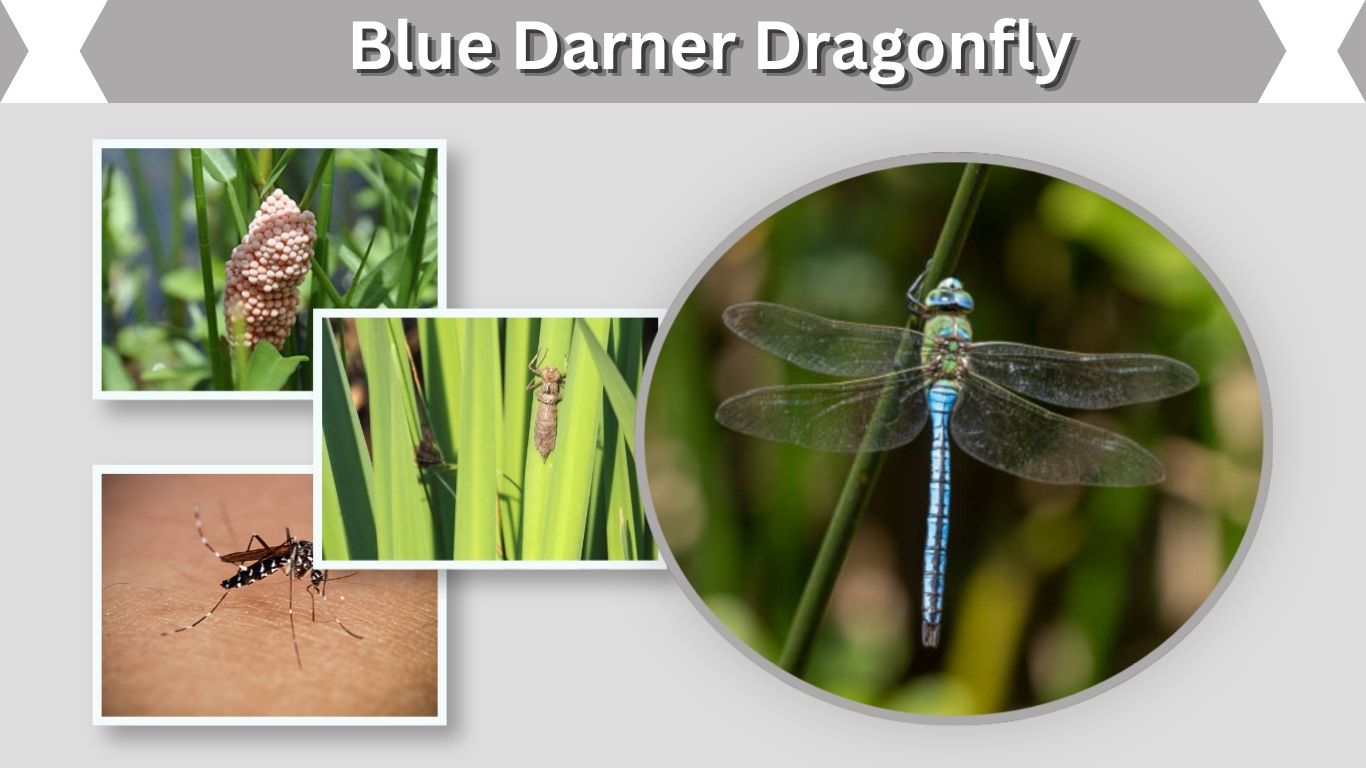
The blue darner dragonfly is best represented in western North America by the striking Blue-eyed Darner, Rhionaeschna multicolor. This large, fast-flying dragonfly is recognized by its brilliant blue eyes, blue body markings, and powerful flight. Males are especially colorful, while females may display either blue or greenish markings. Blue-eyed Darners usually occur around ponds, lakes, marshes, and slow-moving water, although adults may wander far from wetlands while hunting.
What Is a Blue Darner Dragonfly?
The name “blue darner” is sometimes used loosely for large blue-colored darners, but the Blue-eyed Darner is a distinctive North American species. Its accepted scientific name is Rhionaeschna multicolor, although older field guides may list it as Aeshna multicolor. It belongs to Aeshnidae, the family commonly known as darners.
Blue Darner Dragonfly Scientific Name
The classification of the Blue-eyed Darner is:
- Common name: Blue-eyed Darner
- Scientific name: Rhionaeschna multicolor
- Former name: Aeshna multicolor
- Family: Aeshnidae
- Order: Odonata
- Suborder: Anisoptera
The species was historically placed in the genus Aeshna before being classified within Rhionaeschna.
Blue-eyed Darner Dragonfly Identification
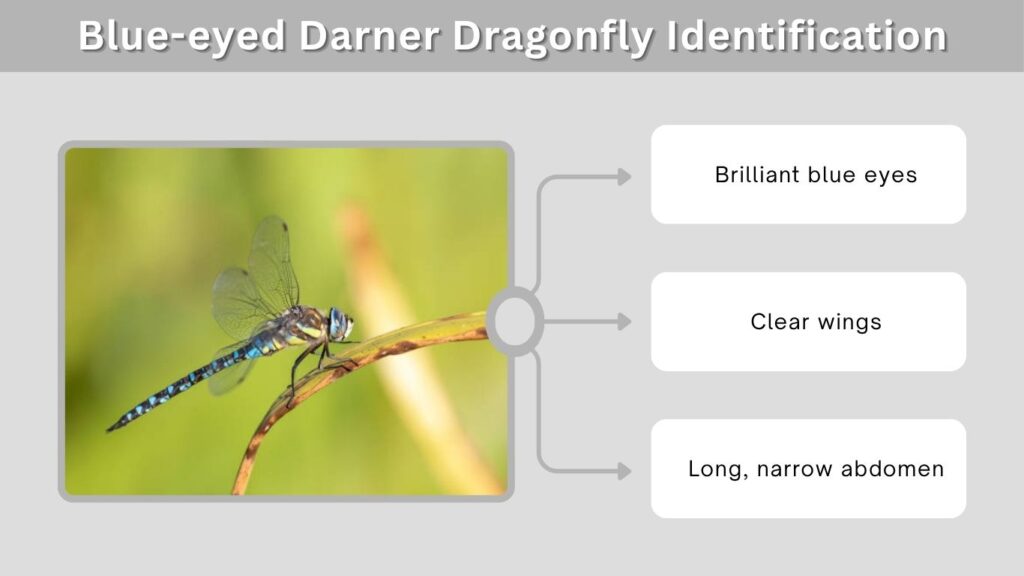
The Blue-eyed Darner is a relatively large dragonfly with a long abdomen and powerful wings. Its most memorable feature is its intense blue coloration, especially in mature males. Females are more variable and may have greenish or blue markings, making identification slightly more challenging.
Male Blue-eyed Darner
Adult males typically show:
- Brilliant blue eyes
- Blue face
- Dark brown to nearly black body
- Numerous bright blue abdominal spots
- Pale blue stripes along the thorax
- Long, narrow abdomen
- Clear wings
- Forked terminal appendages
The combination of brilliant blue eyes and blue abdominal markings makes mature males particularly distinctive.
Female Blue-eyed Darner
Females can look somewhat different from males.
They may have blue markings similar to the male, or their thoracic stripes and abdominal markings can appear yellow-green or greenish. The Wisconsin Odonata Survey notes that females occur in both blue and green forms.
Because females resemble several other darners, identifying them solely from color can be difficult.
How Big Is a Blue Darner Dragonfly?
Blue-eyed Darners are considered large dragonflies. A photographed California individual measured about 2.6 inches, or roughly 6.6 centimeters, in length, illustrating the substantial size typical of this species.
Their long wings and slender abdomen make them appear even larger while flying.
Blue Darner Size
Typical characteristics include:
| Feature | Blue-eyed Darner |
| Body length | Around 2.5–3 inches |
| Body shape | Long and slender |
| Wings | Four large transparent wings |
| Eyes | Brilliant blue |
| Male markings | Bright blue |
| Female markings | Blue or greenish |
Size can vary somewhat between individual dragonflies.
Where Do Blue-eyed Darner Dragonflies Live?
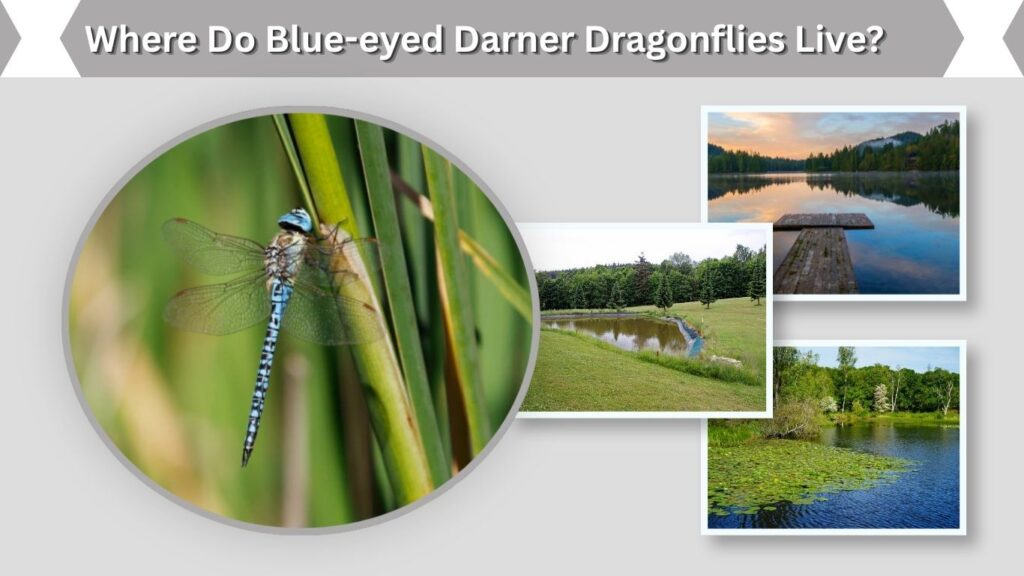
Blue-eyed Darners are primarily associated with western and central North America. Their range extends from portions of Canada through the western United States and southward into Mexico. Records also extend eastward into parts of the Midwest, including Wisconsin.
Blue Darner Habitat
Common habitats include:
- Ponds
- Lakes
- Marshes
- Slow-moving streams
- Wet meadows
- Cattail-bordered wetlands
- Shallow lake bays
- Vegetated waterways
- Open areas near water
They frequently favor water surrounded by emergent or floating vegetation.
Adults can also travel away from water while hunting and may appear in gardens, fields, or other open areas.
Blue-eyed Darner Dragonfly in California
California is an especially good place to encounter Blue-eyed Darners. They are among the earlier darner species to appear during spring in parts of the state and can remain active for an extended period.
Their brilliant blue coloration can make males easy to recognize when they briefly perch.
Where to Look in California
Good places to watch for them include areas around:
- Freshwater ponds
- Marshes
- Slow streams
- Reservoir edges
- Wetland vegetation
- Gardens near water
- Open fields near wetlands
A Blue-eyed Darner may patrol repeatedly over the same stretch of water before suddenly changing direction or hovering briefly.
Blue Darner Dragonfly Diet
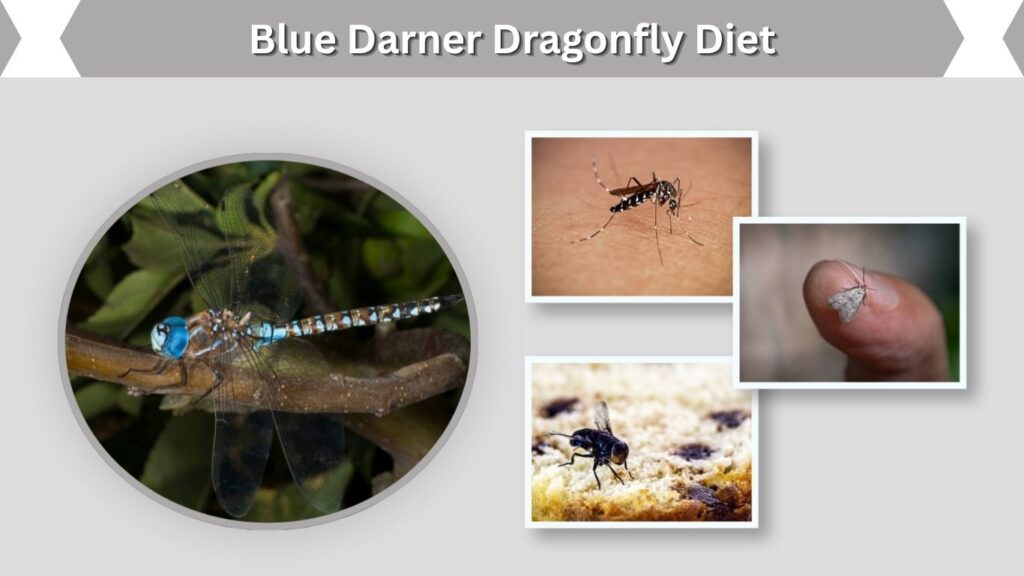
Blue-eyed Darners are predators throughout their lives. Adults capture other insects while flying, while their aquatic young hunt organisms beneath the water.
Their predatory diet makes them part of the natural food web around ponds and wetlands.
What Do Adult Blue Darners Eat?
Adults may capture:
- Mosquitoes
- Flies
- Small moths
- Mayflies
- Flying ants
- Flying termites
- Other small airborne insects
They are agile aerial hunters capable of catching prey during flight.
What Do Blue Darner Nymphs Eat?
The immature aquatic stage can feed on:
- Mosquito larvae
- Aquatic fly larvae
- Mayfly larvae
- Small crustaceans
- Tadpoles
- Very small fish
- Other aquatic animals
Dragonfly nymphs are active underwater predators rather than passive filter feeders.
Blue Darner Behavior
Blue-eyed Darners are strong and energetic flyers. Males commonly patrol large areas around shorelines or over open water, apparently searching for females and defending productive breeding areas.
They may fly irregular routes instead of remaining permanently perched.
Flight Behavior
You may notice a Blue-eyed Darner:
- Flying continuously over open water
- Patrolling along pond edges
- Hovering briefly
- Hunting above vegetation
- Chasing other dragonflies
- Moving through reeds and cattails
- Traveling well away from water
The Wisconsin Odonata Survey describes adults flying irregular patterns across open fields and large areas of open water.
Blue Darner Dragonfly Life Cycle
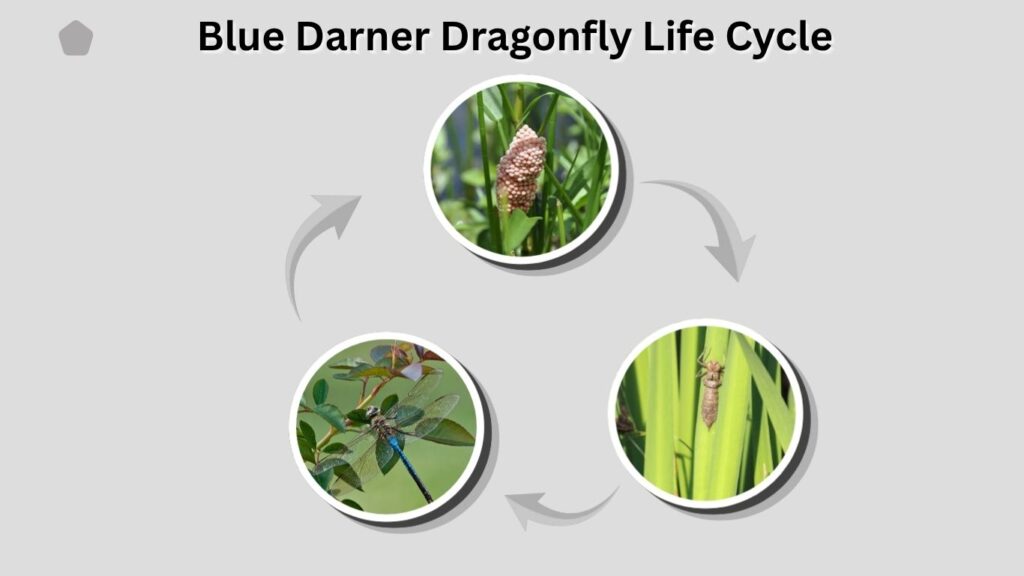
Like other dragonflies, Blue-eyed Darners undergo incomplete metamorphosis. Their development includes egg, aquatic nymph, and adult stages rather than a caterpillar or pupal stage.
Much of their life is spent underwater before the familiar flying adult appears.
Eggs and Reproduction
Males patrol wetlands searching for receptive females.
Females lay eggs into or around aquatic vegetation. Eggs may be deposited in stems and leaves above or below the waterline, particularly around dense emergent vegetation and floating plants.
Aquatic Nymph Stage
After hatching, the young dragonfly lives underwater as a nymph.
The nymph grows through repeated molts while hunting aquatic prey. When development is complete, it climbs from the water onto vegetation or another surface.
The outer skin eventually splits and the winged adult emerges.
Blue-eyed Darner vs Common Green Darner
Blue-eyed Darners can occasionally be confused with other large darners, including the Common Green Darner. However, their coloration provides useful clues.
Main Differences
| Feature | Blue-eyed Darner | Common Green Darner |
| Scientific name | Rhionaeschna multicolor | Anax junius |
| Eyes | Bright blue | Brownish to bluish |
| Thorax | Brown with pale stripes | Mostly green |
| Abdomen | Blue spotted | Male mostly blue |
| Distribution | Mainly western/central | Very widespread |
| Family | Aeshnidae | Aeshnidae |
The Common Green Darner is easily recognized by its largely green thorax, whereas the Blue-eyed Darner has distinct pale stripes and blue spotting.
Are Blue Darner Dragonflies Dangerous?
Blue-eyed Darners may look intimidating because of their size and fast flight, but they are not dangerous to humans.
They do not have a stinger and do not seek out people to attack.
Can a Blue Darner Bite?
A dragonfly has chewing mouthparts because it eats insects, so a captured individual could potentially pinch if handled roughly.
However, Blue-eyed Darners normally use their jaws for catching prey rather than biting humans.
Watching rather than capturing them is better for both the insect and observer.
Why Are Blue-eyed Darners Important?
Blue-eyed Darners are both predators and prey within wetland ecosystems. Their aquatic nymphs consume small aquatic animals, while adults hunt numerous flying insects.
At the same time, dragonflies provide food for birds, fish, frogs, and other wildlife.
Their dependence on aquatic habitats also makes dragonfly diversity useful when observing the overall biological richness of ponds, marshes, and wetlands.
FAQs
What Is the Scientific Name of the Blue-eyed Darner?
The Blue-eyed Darner’s scientific name is Rhionaeschna multicolor. Older references may call it Aeshna multicolor because the species was formerly classified within the genus Aeshna. It belongs to the darner family Aeshnidae.
How Big Is a Blue-eyed Darner Dragonfly?
Blue-eyed Darners are large dragonflies generally measuring roughly 2.5 to 3 inches long. Their long wings and slender abdomen can make them appear larger when flying quickly over ponds, marshes, and open fields.
Where Do Blue-eyed Darner Dragonflies Live?
They occur mainly across western and central North America, with records extending from western Canada through much of the western United States and southward into Mexico. They commonly inhabit lakes, ponds, marshes, and slow-moving streams.
What Do Blue Darner Dragonflies Eat?
Adult Blue-eyed Darners catch mosquitoes, flies, moths, mayflies, and other flying insects. Their aquatic nymphs prey on mosquito larvae, aquatic insects, small crustaceans, tadpoles, and occasionally tiny fish.
Are Blue-eyed Darner Dragonflies Rare?
Their abundance varies considerably across their range. They are well established in much of western North America but can be uncommon or localized near the eastern edge of their distribution. Suitable wetlands and breeding habitat strongly influence where they can be found.