
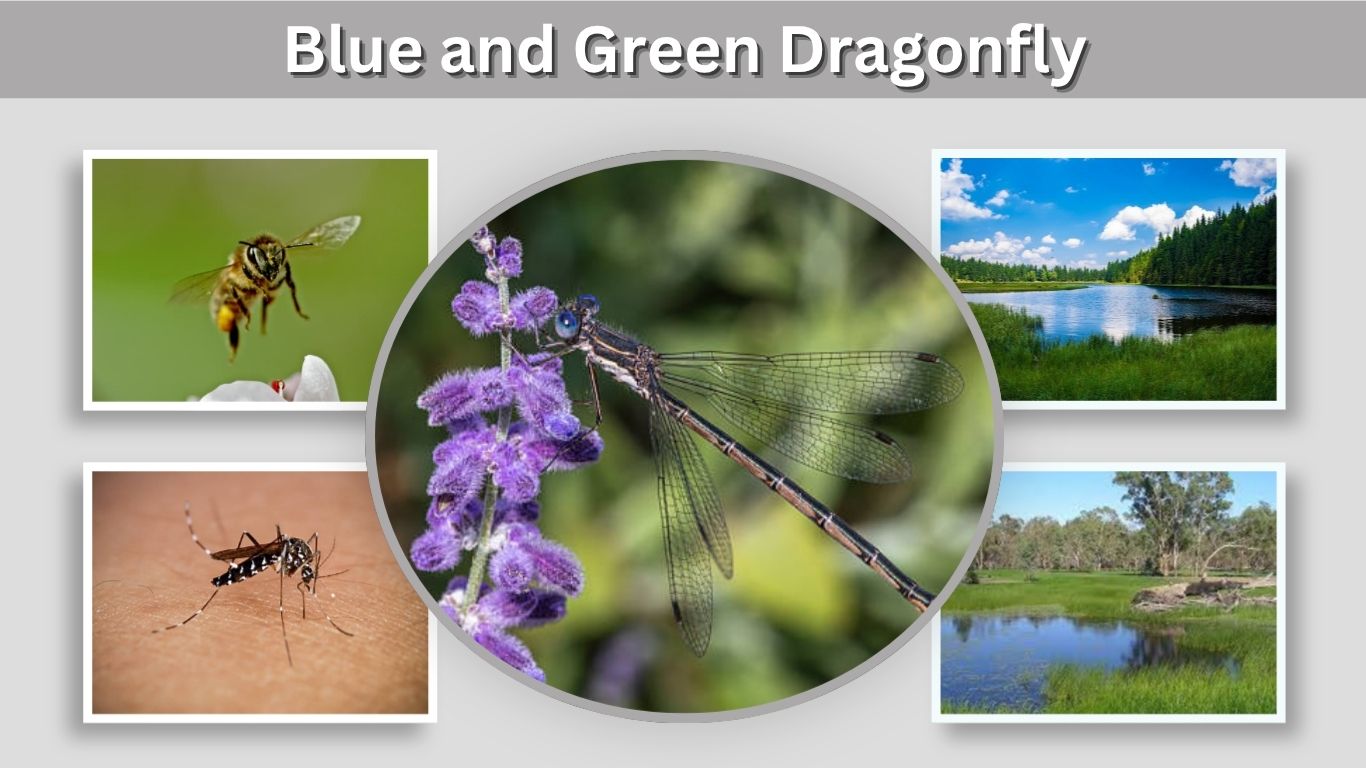
A blue and green dragonfly can refer to several dragonfly species that combine blue, turquoise, emerald green, or yellow-green coloring. In many cases, mature males show the strongest blue coloration, while the thorax, head, eyes, or face may remain green. Large darners are especially well known for this color combination.
Common possibilities include the Green Darner, Emperor Dragonfly, Blue-eyed Darner, and several other large dragonflies. Exact identification depends on body pattern, eye color, size, wing markings, geographic location, and whether the insect is male or female.
What Is a Blue and Green Dragonfly?
There is no single species officially called the “blue and green dragonfly.” The phrase usually describes the insect’s appearance.
Dragonflies can show surprisingly vivid colors, including:
- Sky blue
- Powder blue
- Turquoise
- Emerald green
- Apple green
- Yellow-green
- Blue-green
- Metallic green
Color may also change as an adult matures.
Some males become much bluer with age, while females of the same species remain mainly green or brown.
How to Identify a Blue and Green Dragonfly
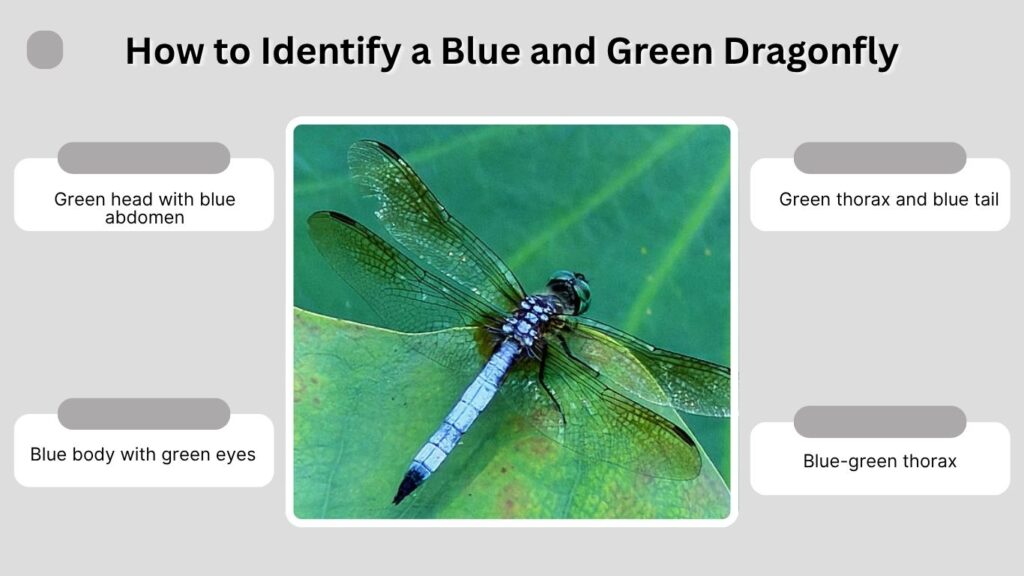
Start by examining where each color appears.
A dragonfly may have:
- Green head with blue abdomen
- Green thorax and blue tail
- Blue body with green eyes
- Blue abdomen and green face
- Green body with blue abdominal markings
- Blue-green thorax
- Metallic green and blue coloration
Other important features include:
- Overall body size
- Abdomen pattern
- Wing color
- Wing spots
- Eye color
- Thorax stripes
- Habitat
- Geographic location
Color alone is rarely enough for a certain species identification.
Common Blue and Green Dragonfly Species
Several well-known dragonflies can match this general description.
| Species | Typical Blue Features | Typical Green Features |
| Green Darner | Blue abdomen in mature males | Green thorax |
| Emperor Dragonfly | Sky-blue male abdomen | Apple-green thorax |
| Blue-eyed Darner | Blue abdominal spots | Greenish thoracic markings |
| Common Hawker | Blue spots on male abdomen | Greenish tones may occur |
| Southern Hawker | Blue tail markings | Bright green body markings |
Green Darner
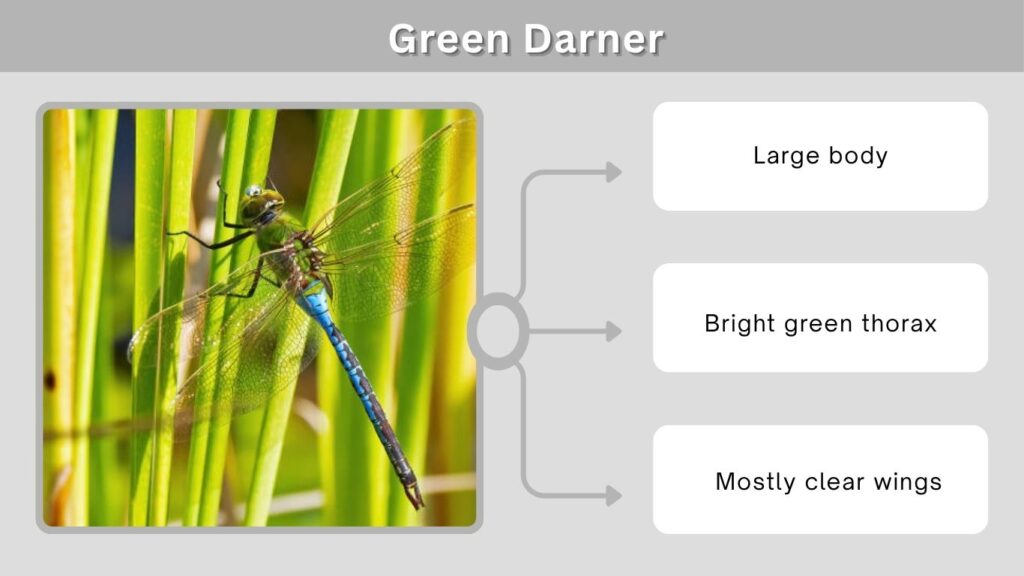
The Common Green Darner (Anax junius) is one of the strongest possibilities for a large green and blue dragonfly in North America.
Mature males typically have a bright green thorax and predominantly blue abdomen.
Females usually have more brown, green, or reddish coloration and may lack the intense blue of mature males.
Green Darner Identification
Look for:
- Large body
- Bright green thorax
- Blue abdomen in mature males
- Large eyes
- Mostly clear wings
- Strong, fast flight
- Long, slender abdomen
Green Darners are powerful flyers and are often seen cruising continuously rather than sitting for long periods.
Emperor Dragonfly
In the UK and Europe, the Emperor Dragonfly (Anax imperator) is one of the best matches for a large blue and green dragonfly.
Adult males generally have a vivid sky-blue abdomen combined with an apple-green thorax.
A dark line runs along the upper surface of the abdomen.
Emperor Dragonfly Appearance
Typical male characteristics include:
- Large size
- Green thorax
- Blue abdomen
- Dark central abdominal stripe
- Blue-green eyes
- Clear wings
- Powerful flight
Females tend to be greener overall, although some can develop blue coloration.
Therefore, a large blue-green dragonfly in the UK could easily be an Emperor.
Blue-Eyed Darner
The Blue-eyed Darner is another large North American dragonfly with impressive blue coloration.
Mature males are usually distinguished by their intense blue eyes and blue abdominal markings against a darker background.
Depending on lighting and individual variation, parts of the thorax can appear greenish or blue-green.
Dragonfly With Green Head and Blue Body
A description such as “dragonfly with green head and blue body” can fit several darners.
Pay attention to whether the green is actually on the head or the thorax immediately behind it.
Because dragonflies have extremely large eyes, the color of those eyes can also make the entire head appear green from a distance.
Green Dragonfly With Blue Tail
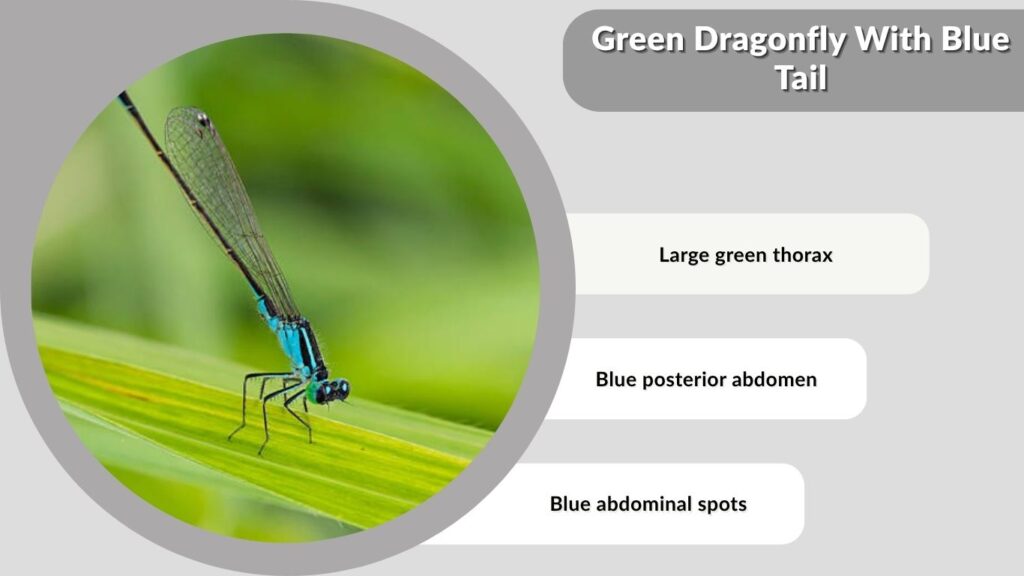
A green dragonfly with a blue tail is often a mature male darner.
In some species, the thorax remains green while blue coloration becomes increasingly visible along the abdomen.
Possible identifying features include:
- Large green thorax
- Blue posterior abdomen
- Blue abdominal spots
- Clear wings
- Large blue or green eyes
If most of the abdomen is solid blue, a Green Darner or Emperor Dragonfly may be more likely than a species where blue occurs only as spots.
Large Blue and Green Dragonfly
Many searches for a large blue and green dragonfly likely refer to a member of the darner family.
Darners are among the most noticeable dragonflies because they are relatively large, fast, and often brightly patterned.
Some can reach around 3 inches in body length, although exact size varies by species.
How to Recognize a Darner
Darners typically have:
- Long, slender abdomen
- Large body size
- Very large compound eyes
- Strong transparent wings
- Blue, green, or yellow markings
- Fast and persistent flight
They frequently patrol over ponds, marshes, lakes, fields, and woodland edges.
Blue Dragonfly With Green Eyes
Eye color can be a useful identification feature.
Several dragonflies have green, turquoise, or blue-green eyes.
A dragonfly that appears to have a blue body and green eyes may change noticeably depending on sunlight.
Compound eyes can reflect light differently from different angles, making them look:
- Green
- Aqua
- Turquoise
- Blue
- Gray-green
For this reason, body markings are usually more reliable than eye color alone.
Metallic Blue-Green Dragonfly
Some dragonflies and damselflies can appear metallic rather than powdery blue.
Their bodies may reflect blue, green, turquoise, or even purple depending on the angle of light.
If the insect is very slender and metallic blue-green, it may actually be a damselfly rather than a dragonfly.
Dragonfly vs Damselfly
| Feature | Dragonfly | Damselfly |
| Body | Usually thicker | Usually very slender |
| Eyes | Often close together | Usually widely separated |
| Wings at rest | Usually held open | Often folded together |
| Flight | Strong and direct | Often lighter and fluttering |
Metallic green and blue damselflies can easily be misidentified when viewed quickly.
Difference Between Blue and Green Dragonflies
There is no biological category dividing dragonflies into “blue dragonflies” and “green dragonflies.”
Color differences frequently occur because of:
- Species
- Sex
- Age
- Maturity
- Temperature
- Lighting
- Geographic variation
A male may be primarily blue while the female of the same species is green.
Young males can also initially resemble females before developing their adult colors.
Blue and Green Dragonflies in Texas
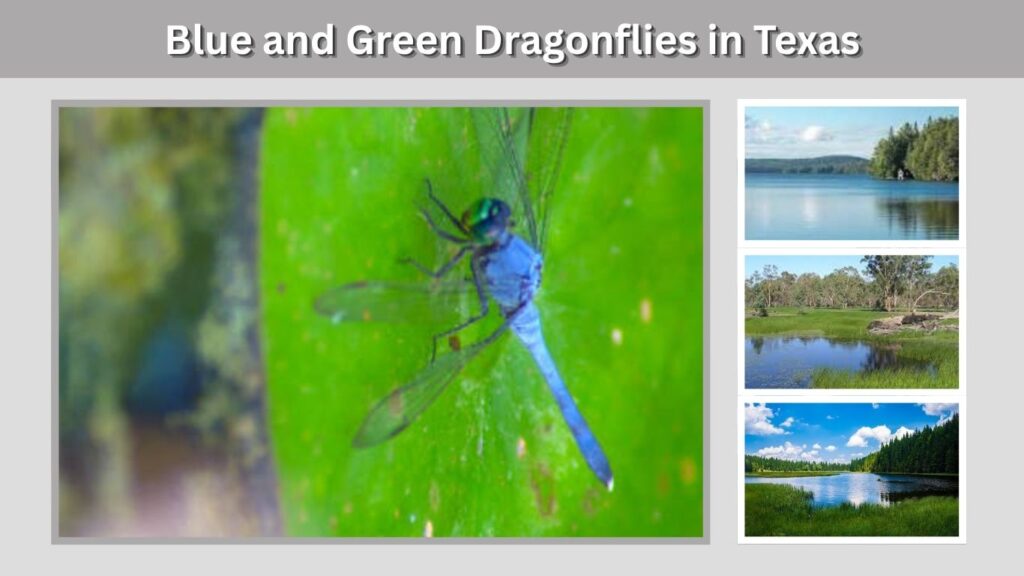
Texas supports many dragonfly species because of its varied freshwater habitats and warm climate.
A large green-and-blue dragonfly may be a Common Green Darner, particularly if it has a green thorax and blue abdomen.
These insects can occur around:
- Ponds
- Lakes
- Wetlands
- Slow rivers
- Parks
- Garden ponds
- Open fields near water
Migration can also make some darner species appear far from obvious aquatic habitats.
Blue and Green Dragonflies in California
California also supports multiple blue, green, and blue-green dragonfly species.
Large darners are among the most likely candidates when someone encounters a bright blue-and-green insect.
Blue-eyed Darners may be especially noticeable because of their brilliant eye color and blue abdominal markings.
Location within the state, elevation, habitat, and season can help narrow identification.
Blue and Green Dragonflies in Wisconsin
In Wisconsin, large blue-green dragonflies may include Common Green Darners and other darner species active during warmer months.
Wetlands, ponds, lakeshores, marshes, and slow-moving waterways provide suitable breeding habitat.
Because northern winters are cold, dragonfly activity is strongly seasonal.
Adults are most visible during the warmer portion of the year.
Blue and Green Dragonflies in the UK
A large blue-green dragonfly in the UK is often worth comparing with the Emperor Dragonfly.
Adult males are particularly striking because they combine:
- Bright blue abdomen
- Green thorax
- Large size
- Dark dorsal abdominal stripe
Other hawkers can show combinations of green and blue markings, so patterns should be checked carefully before making an identification.
Blue and Green Dragonfly Meaning
The meaning of a blue and green dragonfly comes from personal, cultural, or spiritual symbolism rather than science.
Dragonflies are often associated with transformation because of their dramatic life cycle from aquatic nymph to flying adult.
Blue is commonly associated symbolically with:
- Calmness
- Communication
- Trust
- Clarity
- Peace
Green is often associated with:
- Growth
- Renewal
- Nature
- Healing
- Balance
Together, blue and green may be interpreted as representing peaceful transformation, emotional growth, renewal, or balance.
Blue and Green Dragonfly Spiritual Meaning
In modern spiritual interpretations, seeing a blue-and-green dragonfly may be viewed as a reminder to remain adaptable while moving through personal change.
Some people connect it with:
- New beginnings
- Emotional healing
- Personal growth
- Inner peace
- Connection with nature
- Positive transformation
These meanings are symbolic interpretations and are not scientifically established properties of dragonflies.
Are Blue and Green Dragonflies Dangerous?
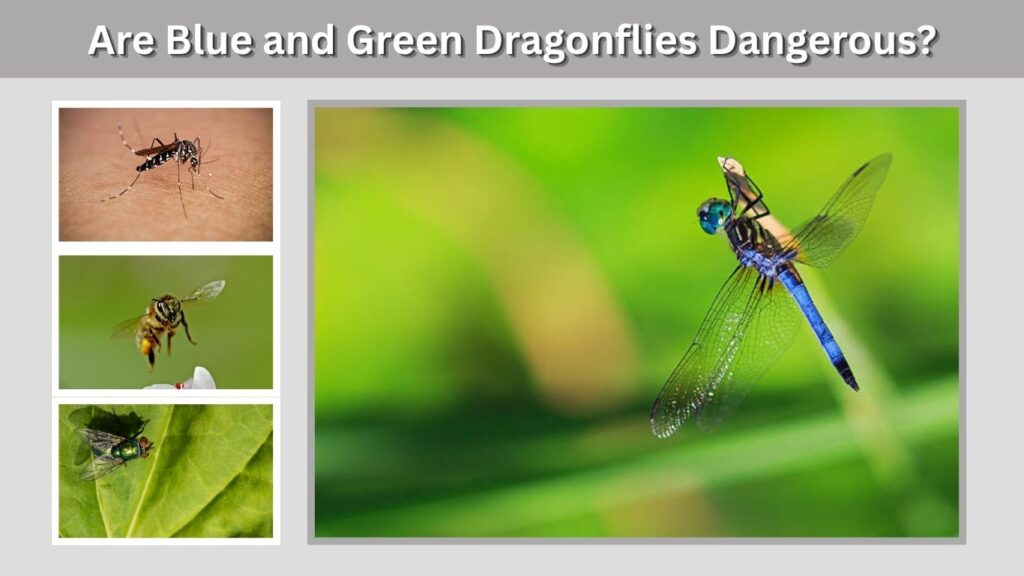
No. Dragonflies are not considered dangerous to humans.
They are predators of smaller insects and frequently catch mosquitoes, flies, midges, and other airborne prey.
Dragonflies do not have stingers.
A large dragonfly may look intimidating because of its strong jaws and rapid flight, but it generally has no reason to attack people.
FAQs
What species is a blue and green dragonfly?
Several species can appear blue and green. The Common Green Darner is a strong possibility in North America, while the Emperor Dragonfly is a common example in the UK and Europe.
What dragonfly has a green body and blue tail?
A mature male Common Green Darner can have a bright green thorax and blue abdomen. Other darner species may also combine green upper-body coloration with blue abdominal markings.
Why is my dragonfly blue and green?
The coloration may be normal for its species, sex, and maturity. Mature males of several species develop blue coloration while retaining green on the thorax, eyes, face, or other body areas.
Are blue and green dragonflies rare?
Not necessarily. Some blue-and-green species, including certain darners, can be widespread. Whether an individual species is rare depends on geographic location, habitat, and local population.
What does seeing a blue and green dragonfly mean?
Scientifically, it does not carry a special message. Symbolically, some people associate blue and green dragonflies with transformation, peace, healing, renewal, emotional growth, and balance.