
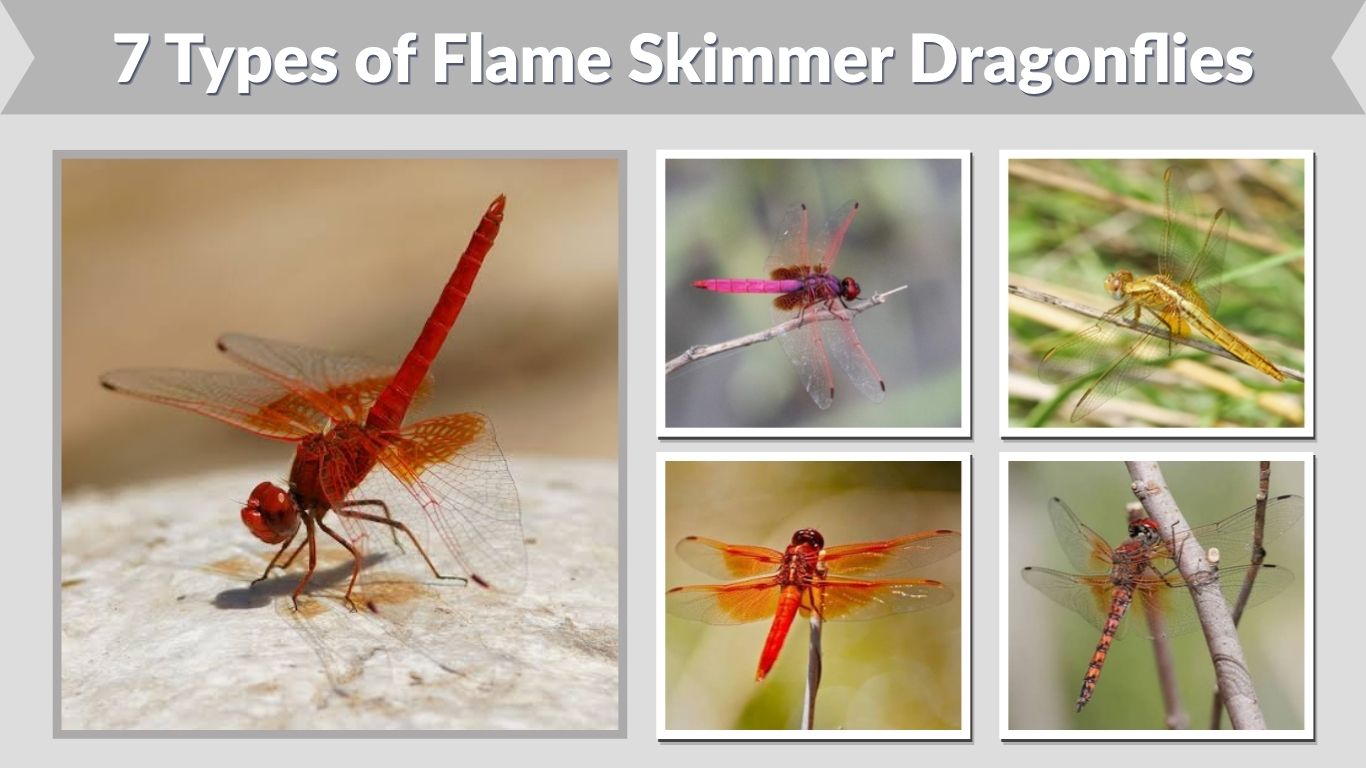
Flame skimmers are among the most colorful dragonflies seen around ponds, streams, wetlands, and warm springs. Mature males often display brilliant orange, scarlet, crimson, or red bodies that appear to glow in sunlight. Their strong flight and habit of returning to exposed perches also make them relatively easy to observe.
Scientifically, the name Flame Skimmer belongs to one species, Libellula saturata. However, several related skimmer dragonflies have similar fiery colors and are frequently mistaken for it. This guide covers the true Flame Skimmer and six comparable flame-colored species, explaining their appearance, habitat, range, behavior, and distinguishing features.
Quick Comparison of Flame-Colored Skimmers
Although these seven dragonflies belong to the skimmer family, they do not all live in the same part of the world. Differences in body color, wing markings, habitat, and geographic range are useful for identification.
| Dragonfly | Scientific Name | Main Color | Distinctive Feature |
|---|---|---|---|
| Flame Skimmer | Libellula saturata | Orange-red | Extensive amber coloring across wings |
| Neon Skimmer | Libellula croceipennis | Bright red | Clearer wings with smaller amber bases |
| Red Rock Skimmer | Paltothemis lineatipes | Red and cream | Usually associated with rocky streams |
| Scarlet Skimmer | Crocothemis servilia | Blood-red | Thin black stripe along abdomen |
| Broad Scarlet | Crocothemis erythraea | Scarlet-red | Broad, flattened abdomen |
| Crimson Marsh Glider | Trithemis aurora | Crimson-purple | Violet tones and amber wing bases |
| Kirby’s Dropwing | Trithemis kirbyi | Fiery red | Large orange patches at wing bases |
1. Flame Skimmer
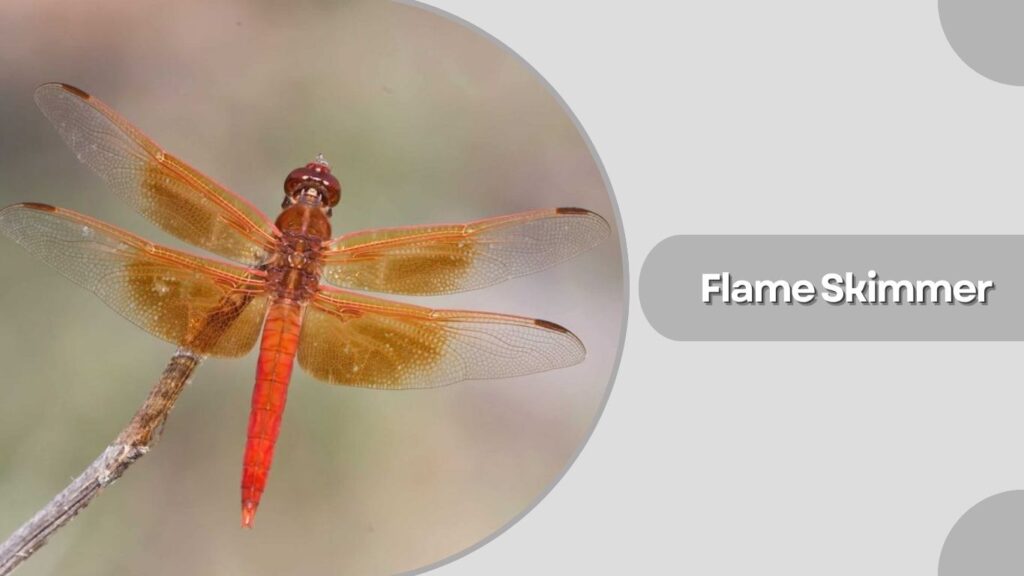
The Flame Skimmer is the species that officially carries this common name. It is a large, striking dragonfly native to western North America. Its glowing orange body and amber-colored wings make it look as though it has been touched by fire.
Identification
Mature male Flame Skimmers are usually deep orange or reddish orange. The color extends across the face, eyes, thorax, abdomen, legs, and many of the wing veins. Their broad wings have extensive amber or orange shading that may reach about halfway along each wing.
Females and immature males are generally lighter. They may appear yellowish brown, golden brown, or dull orange and often have pale markings along the abdomen. Adults commonly measure approximately 49–61 millimeters long.
Habitat and Range
Flame Skimmers are primarily associated with western North America. They occur in parts of the western United States and Mexico, with their distribution reaching northward into some warmer regions.
They prefer warm aquatic habitats, including:
- Ponds and small lakes
- Slow-moving streams
- Irrigation channels
- Marshy pools
- Desert oases
- Hot springs
- Garden ponds
Their ability to use artificial ponds and drainage systems allows them to survive close to towns and residential areas.
Feeding and Behavior
Like other skimmers, the Flame Skimmer is an aerial predator. Adults catch mosquitoes, gnats, flies, moths, and other small flying insects. They usually hunt from a favorite perch, launching into the air when prey passes before returning to the same branch, reed, or stone.
Males are territorial around breeding water. They patrol the shoreline, chase competing males, and regularly rest in exposed sunny locations.
Reproduction and Life Cycle
After mating, the female lays eggs by dipping the end of her abdomen against the water’s surface. The eggs hatch into aquatic nymphs that live among mud, plants, and debris.
The nymphs feed on mosquito larvae, aquatic insects, small crustaceans, tadpoles, and occasionally tiny fish. Once fully developed, a nymph climbs above the water, sheds its skin, and emerges as a winged adult.
2. Neon Skimmer
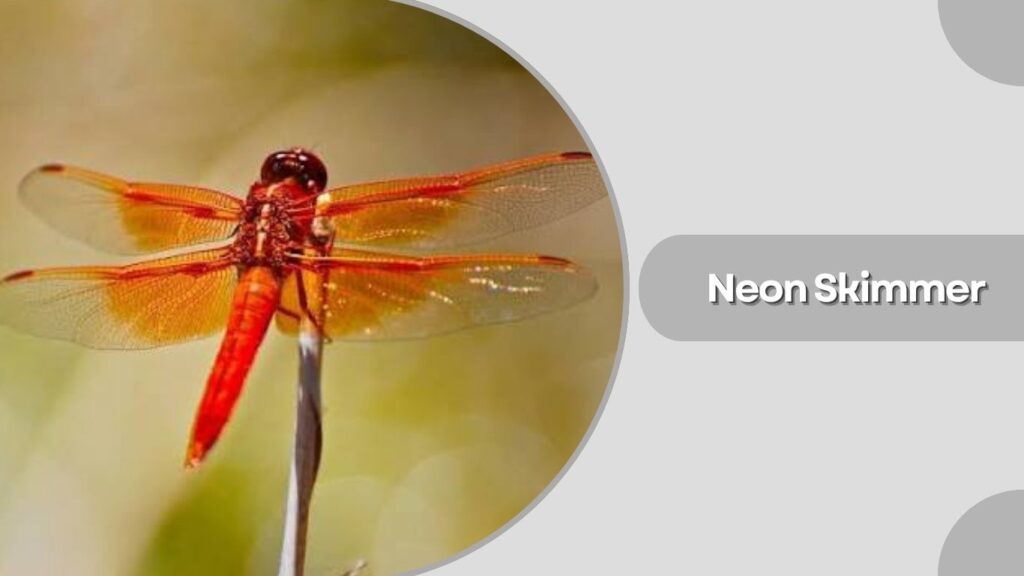
The Neon Skimmer closely resembles the true Flame Skimmer. Both species can occur in the same region, particularly in the southwestern United States. Its intensely red body gives it the brilliant “neon” appearance reflected in its name.
Identification
Mature males have a bright red face, thorax, abdomen, and abdominal appendages. The sides of the thorax can look slightly brownish red, but they usually lack prominent stripes or patterns.
The most useful difference is found in the wings. A Neon Skimmer has less amber coloring than a Flame Skimmer. The orange or yellowish patch is concentrated near the wing bases rather than spreading broadly across the wings.
Females and immature individuals are duller reddish brown or yellow-brown. They may show a pale yellow line along the top of the abdomen.
Habitat and Distribution
Neon Skimmers occur from the southwestern United States through Mexico and Central America and into parts of northern South America. In the United States, they are most likely to be encountered in warm southern regions.
Suitable habitats include ponds, reservoirs, lakeshores, canals, and slowly flowing streams. They generally choose open, sunny water with reeds, branches, rocks, or other available perches.
Hunting Behavior
Neon Skimmers are active and watchful predators. Their large compound eyes help them detect small insects moving in nearly every direction. They frequently leave a perch, capture an insect in flight, and return to rest.
Males defend sections of shoreline from rivals. A particularly valuable perch may be used repeatedly throughout the day.
Flame Skimmer vs. Neon Skimmer
The two species are easiest to separate by looking at wing color and the shade of the body. Flame Skimmers are usually more orange, and their amber wing coloration is much broader. Neon Skimmers tend to be brighter red and have relatively clear wings beyond the smaller colored areas near their bases.
3. Red Rock Skimmer
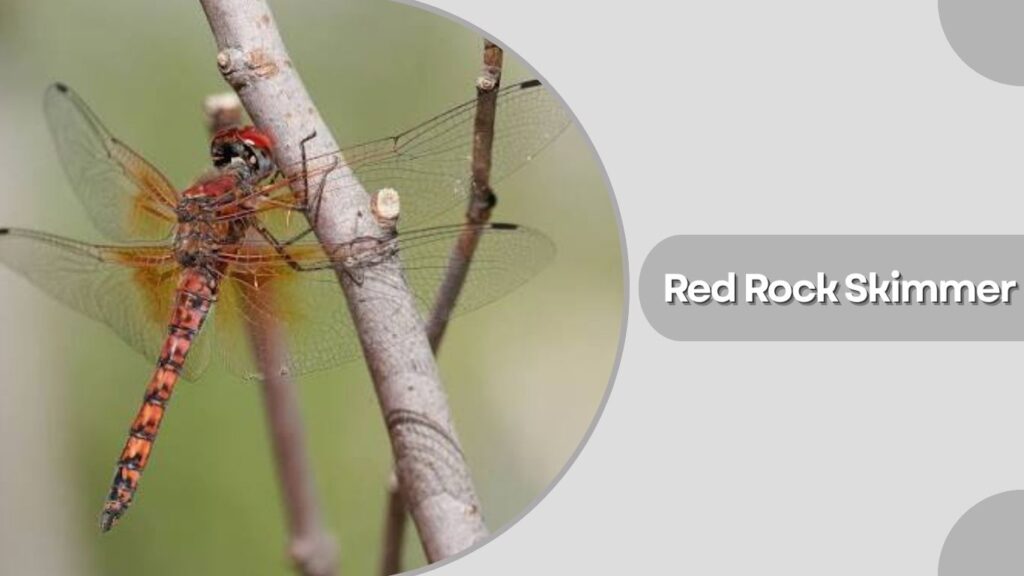
The Red Rock Skimmer is a distinctive North and Central American dragonfly strongly associated with rocky streams. Instead of selecting quiet ponds, it is often encountered in sunlit canyons where water flows between exposed stones.
Identification
Males have a red body combined with pale cream or whitish markings on the thorax. Their coloration can vary with age and lighting, but they generally appear darker and more patterned than Flame Skimmers.
Females are less colorful and may be brown, tan, or grayish. Their subdued pattern provides camouflage when they rest on rocks or vegetation.
Both sexes have strong wings and sturdy bodies suited to flying through uneven stream corridors. The combination of body markings and rocky habitat is extremely helpful for identification.
Habitat and Range
Red Rock Skimmers occur in the southwestern United States, Mexico, and parts of Central America. They are most closely connected with flowing water in warm, dry landscapes.
Common locations include:
- Rocky creeks
- Desert streams
- Canyon pools
- Seepage areas
- Waterfalls
- Sunlit riverbanks
Adults frequently perch directly on stones, especially where sunlight warms the rock.
Territorial Behavior
Males defend breeding areas along streams and repeatedly patrol short sections of water. They may chase other dragonflies, return to a warm boulder, and then fly out again to catch prey or investigate a female.
They generally hold their wings open while resting. Their position on an exposed rock gives them a clear view of flying insects and approaching rivals.
How It Differs From a Flame Skimmer
The Red Rock Skimmer has more obvious pale thoracic markings and a stronger association with rocky, flowing streams. A Flame Skimmer is more uniformly orange and has extensive amber coloring in its wings. It is also more likely to appear around warm ponds, slow streams, or artificial water features.
4. Scarlet Skimmer
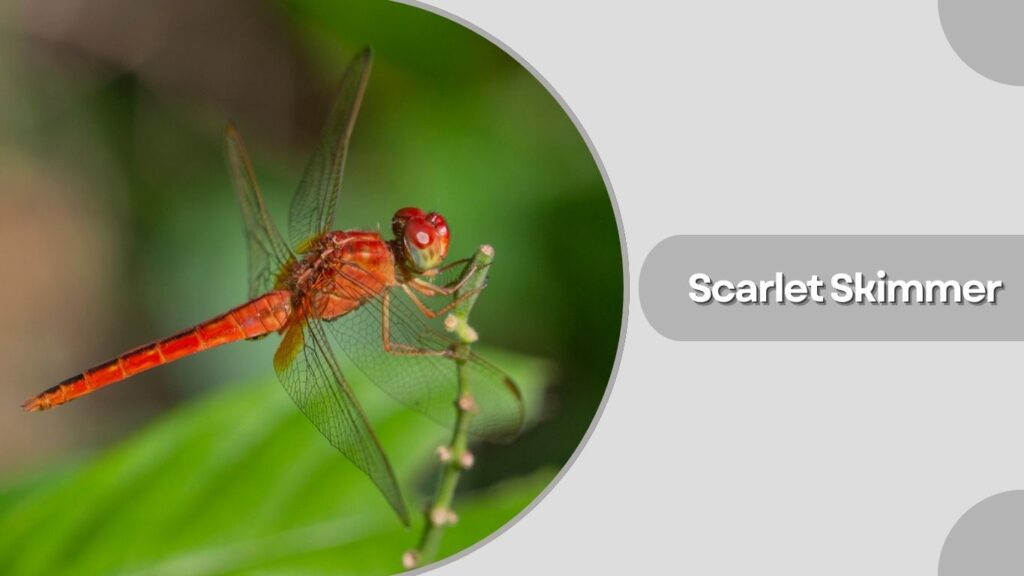
The Scarlet Skimmer, also called the Ruddy Marsh Skimmer, is a medium-sized red dragonfly native to Asia. It has also become established in several places outside its original range, including Hawaii, Florida, and parts of the Caribbean.
Identification
Mature males are usually blood-red across the face, eyes, thorax, abdomen, and tail appendages. A thin black line commonly runs down the center of the abdomen, although this feature may vary between populations.
A small amber patch can be visible near the base of each hindwing. Most of the remaining wing surface is transparent.
Females and young males are more likely to be yellow, olive-brown, or straw-colored. Female abdominal markings are usually darker and more noticeable than those of mature males.
Habitat
Scarlet Skimmers breed in open, relatively still water. They tolerate both natural wetlands and habitats altered by people.
They can be found around rice fields, marshes, ponds, canals, drainage ditches, reservoirs, and slow-moving streams. Adults normally select sunny locations with plenty of low vegetation for perching.
Feeding and Daily Activity
These dragonflies are most active during warm, sunny periods. Adults prey on mosquitoes, midges, small flies, and other insects they can capture in the air.
A male may sit on the tip of a reed while watching the surrounding area. It quickly flies after prey or competing males before returning to an exposed perch.
Distinguishing Features
The Scarlet Skimmer has much clearer wings than the true Flame Skimmer. Its red body, narrow dark abdominal stripe, and small amber hindwing patches are useful identifying features. Geographic location is equally important because its natural range is centered in Asia rather than western North America.
5. Broad Scarlet
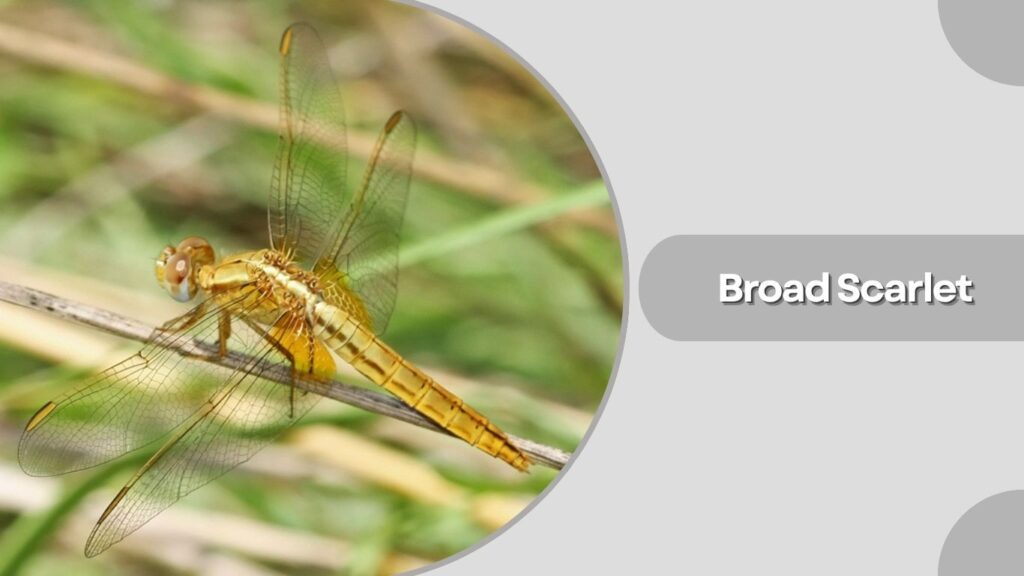
The Broad Scarlet is another red member of the skimmer family. It is widespread across Africa, southern Europe, the Middle East, and parts of Asia. Its tolerance of warm artificial ponds has helped it occupy many human-modified landscapes.
Identification
An adult male has a vivid scarlet or orange-red body. The abdomen is noticeably broad and somewhat flattened, particularly near its base. This feature gives the species a heavier appearance than many slender red dragonflies.
The wings are mostly transparent but may show yellow or amber coloring near their bases. Females are generally yellowish brown or golden and have pale lines on the thorax. Older females can become darker or develop a reddish appearance.
Preferred Habitat
Broad Scarlets favor warm, open bodies of still or gently moving water. They often appear around ponds, marshes, canals, reservoirs, flooded fields, and slow rivers.
They can tolerate water with limited vegetation, especially when there are open stones, bare ground, sticks, or reeds available for resting.
Perching and Territorial Activity
Males frequently perch close to the ground with their wings held open. They defend small territories and chase away other males that approach the breeding area.
During very hot weather, an adult may adjust its abdomen or body position to reduce exposure to direct sunlight. This behavior helps it regulate its temperature while remaining close to its territory.
Broad Scarlet vs. Scarlet Skimmer
Both species have brilliant red males, but the Broad Scarlet usually has a wider, flatter abdomen and lacks the Scarlet Skimmer’s characteristic central black abdominal line. Their ranges may overlap in portions of Asia, so close observation is sometimes needed for a confident identification.
6. Crimson Marsh Glider
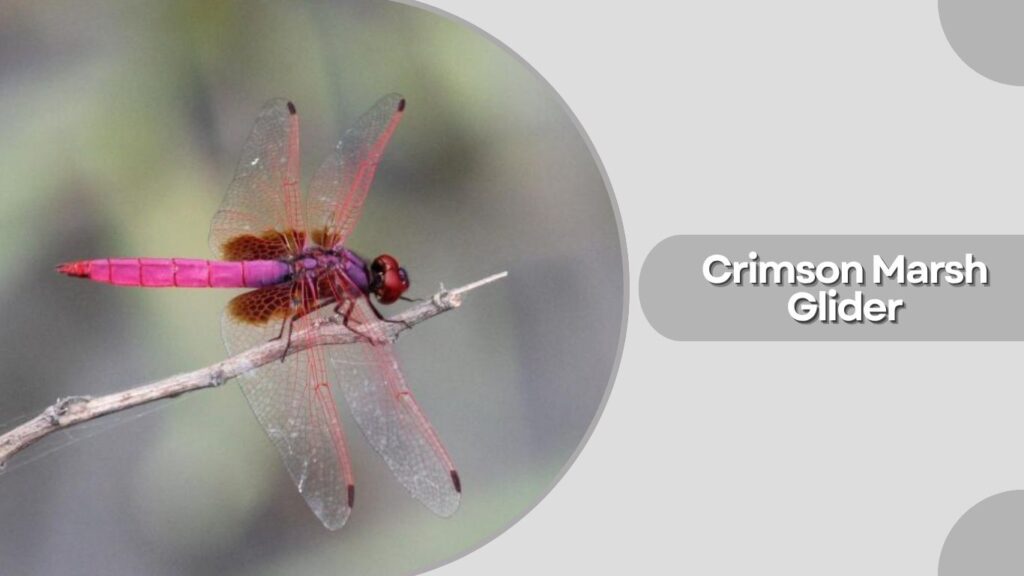
The Crimson Marsh Glider is a small but exceptionally colorful dragonfly found across South and Southeast Asia. Mature males may display crimson, reddish purple, and violet tones, creating a noticeably different appearance from the orange Flame Skimmer.
Identification
Adult males have a crimson or purplish-red face, thorax, and abdomen. A violet or magenta bloom may develop over parts of the body as the male matures. The wings are transparent, with attractive amber patches near their bases.
Females and immature males are usually golden yellow or olive-brown. Dark markings run along the abdomen, and the colored areas at the wing bases are generally visible in both sexes.
Its smaller size and purplish coloration help distinguish it from larger flame-colored dragonflies.
Habitat and Distribution
Crimson Marsh Gliders inhabit tropical and subtropical regions of Asia. They can be found around marshes, ponds, rice fields, canals, slow streams, and temporary wetlands.
They prefer sunny places with grasses, reeds, and low plants. Adults may disappear during heavy rain but quickly return to open perches when sunshine warms the habitat.
Feeding Behavior
These dragonflies capture mosquitoes, midges, flies, and other tiny insects. They often hunt close to vegetation rather than patrolling far above the water.
Males choose low perches from which they can watch a breeding area. Although relatively small, they may behave aggressively toward similar-sized dragonflies entering their territory.
Key Identification Difference
The combination of a crimson-purple body, amber wing bases, small size, and Asian range separates the Crimson Marsh Glider from the true Flame Skimmer. Females are more difficult to recognize, but their yellow-brown bodies and dark abdominal markings offer useful clues.
7. Kirby’s Dropwing
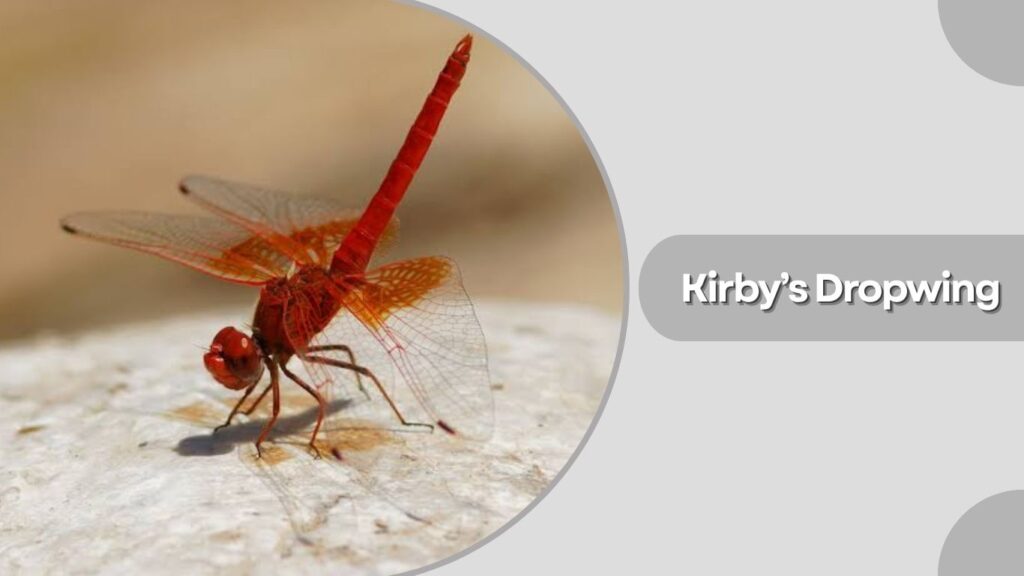
Kirby’s Dropwing is a spectacular red dragonfly recognized by the large orange or amber patches at the bases of its wings. Its fiery appearance makes it one of the closest visual matches to the Flame Skimmer, despite belonging to a different genus.
Identification
Mature males are intensely red across the face, thorax, abdomen, and legs. Large orange-red patches cover the bases of all four wings. The remaining parts of the wings are mostly transparent.
Females and immature males are yellowish or ochre-brown with dark markings on the abdomen. Their wing patches are usually yellow or amber instead of deep orange-red.
The name “dropwing” refers to the resting posture seen in members of this group. They may hold their wings slightly lowered and forward while perched.
Range and Habitat
Kirby’s Dropwings occur across much of Africa and extend into parts of southern Europe, the Middle East, and Asia. They favor warm environments and are particularly comfortable in rocky or seasonally dry landscapes.
They breed near streams, pools, springs, reservoirs, and water-filled depressions. Adults may also travel away from water and rest on sun-warmed rocks or bare soil.
Behavior
Males are conspicuous and territorial. They repeatedly return to open perches after chasing prey or rival dragonflies. Their red coloration makes them easy to notice when perched against pale rocks.
Adults feed on mosquitoes, flies, and numerous other small insects. The aquatic nymphs prey on insect larvae and other small organisms beneath the water.
Difference From the Flame Skimmer
Kirby’s Dropwing has concentrated orange-red patches at the wing bases, while the Flame Skimmer’s amber coloration spreads farther across the wings. Range also provides an immediate clue: the Flame Skimmer is a western North American species, whereas Kirby’s Dropwing is primarily an Old World dragonfly.
How to Identify Flame-Colored Skimmers
Color alone is not enough to identify a dragonfly. Mature males may look dramatically different from females, while immature males may initially resemble females. Body color can also appear different under bright sunlight, shade, or photographic lighting.
For a more reliable identification, examine:
- The amount and location of color in the wings
- Body size and abdomen shape
- Stripes or markings on the thorax
- Dark lines along the abdomen
- Perching posture
- Type of aquatic habitat
- Geographic location
- Differences between mature males and females
A large orange dragonfly in western North America with extensive amber wings is likely a Flame Skimmer. A brilliant red dragonfly in the same region with clearer wings may be a Neon Skimmer. In Asia, similar insects are more likely to be Scarlet Skimmers or Crimson Marsh Gliders.
FAQs
Are there really seven species of Flame Skimmer?
No. The official common name Flame Skimmer refers specifically to Libellula saturata. The other dragonflies in this guide are related members of the skimmer family with comparable red, orange, scarlet, or crimson coloration.
Do Flame Skimmers bite humans?
Flame Skimmers do not normally bite people. A captured dragonfly might attempt to bite defensively, but it cannot sting and is not dangerous. These dragonflies are beneficial predators that consume mosquitoes, flies, and other small insects.
Where do Flame Skimmers live?
True Flame Skimmers live mainly in western North America. They inhabit warm ponds, slow streams, marshy pools, canals, hot springs, and artificial water features. They are particularly common in sunny habitats across the southwestern United States and Mexico.
What is the difference between male and female Flame Skimmers?
Mature males are bright orange-red and have extensive amber coloration across their wings. Females are generally brownish, golden, or dull orange with lighter abdominal markings. Immature males may initially resemble females before developing their full adult coloration.
How can I attract skimmer dragonflies?
Create a sunny, chemical-free pond with shallow edges, submerged plants, and upright stems for emerging nymphs. Add nearby rocks, reeds, or branches as perches. Avoid introducing fish if your main goal is supporting dragonfly nymphs, because many fish eat them.