
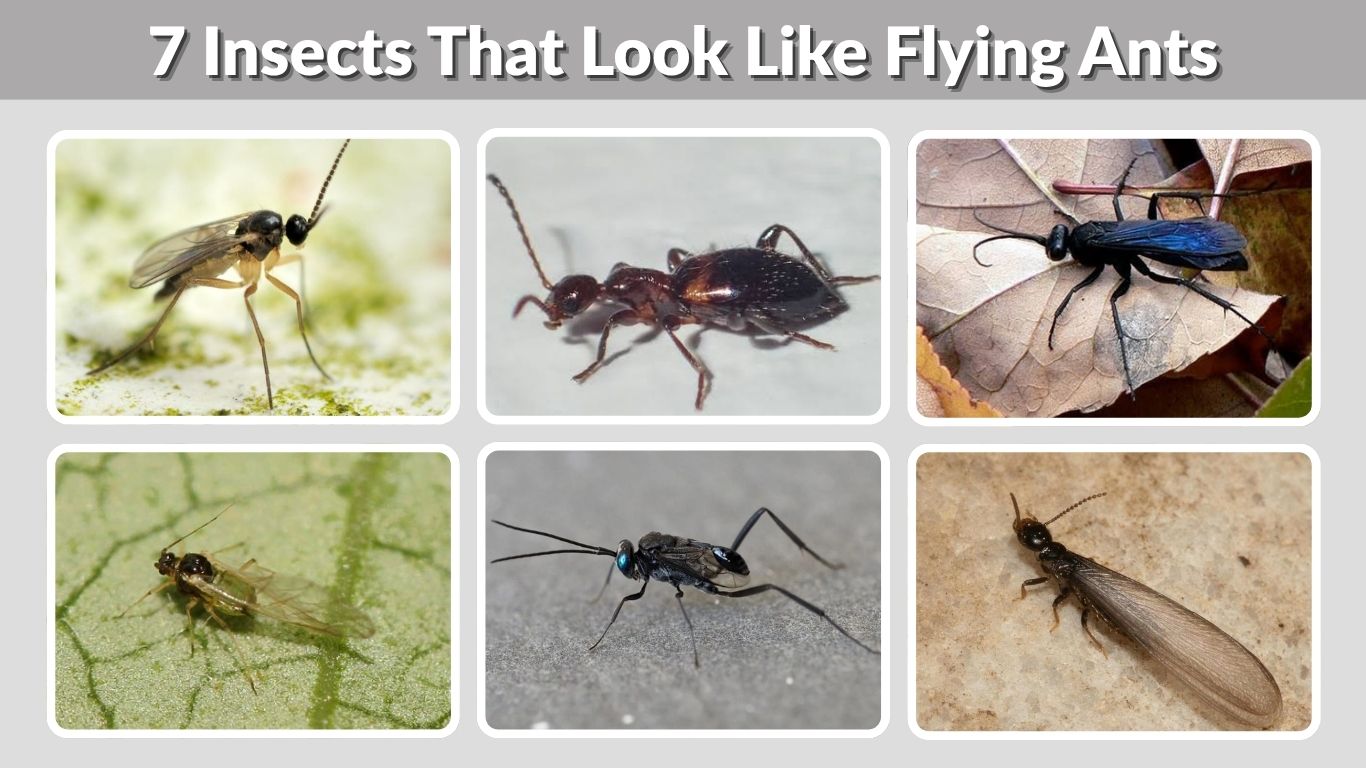
Flying ants are reproductive members of an ant colony that develop wings for mating. Their narrow bodies, transparent wings, and dark coloring can make them difficult to distinguish from termites, wasps, beetles, aphids, and small flies. Some lookalikes are harmless visitors, while others may indicate a pest problem requiring attention. Examining the insect’s antennae, waist, wings, legs, and behavior is more reliable than judging it by size or color alone. Here are seven insects commonly mistaken for flying ants and the features that separate them.
How to Identify a True Flying Ant
Before comparing lookalikes, it helps to understand the basic anatomy of a flying ant. Winged ants are reproductive males and queens, also called alates. They leave mature colonies to mate, and fertilized queens later remove their wings before attempting to establish new nests.
Key Identification Features
A true flying ant generally has:
- Two bent or elbowed antennae
- A narrow, clearly pinched waist
- Three defined body sections
- Two pairs of wings
- Front wings larger than rear wings
- Six legs attached to the thorax
- Black, brown, reddish, or yellowish coloring
An ant’s rear wings are noticeably shorter than its front wings. This feature, combined with its elbowed antennae and narrow waist, provides one of the most dependable identifications. University of California’s winged-ant identification guide
Quick Comparison of Flying Ant Lookalikes
Several insects resemble flying ants from a distance. This comparison highlights the most useful differences.
| Insect | Number of Wings | Antenna Shape | Waist | Best Identifying Feature |
|---|---|---|---|---|
| Flying ant | Four | Elbowed | Narrow | Larger front wings |
| Winged termite | Four | Straight | Broad | Four equal-sized wings |
| Ensign wasp | Four | Long, not distinctly elbowed | Very narrow | Small flag-like abdomen |
| Spider wasp | Four | Usually long and curved | Narrow | Long, spiny legs |
| Male velvet ant | Four | Long and mostly straight | Narrow | Hairy, often brightly marked body |
| Winged aphid | Four | Thin and mostly straight | No ant-like waist | Pear-shaped body and cornicles |
| Fungus gnat | Two | Long and threadlike | No pinched waist | Mosquito-like body |
| Ant-like flower beetle | Four flight wings under covers | Usually threadlike | Neck-like constriction | Hard wing covers |
1. Winged Termites
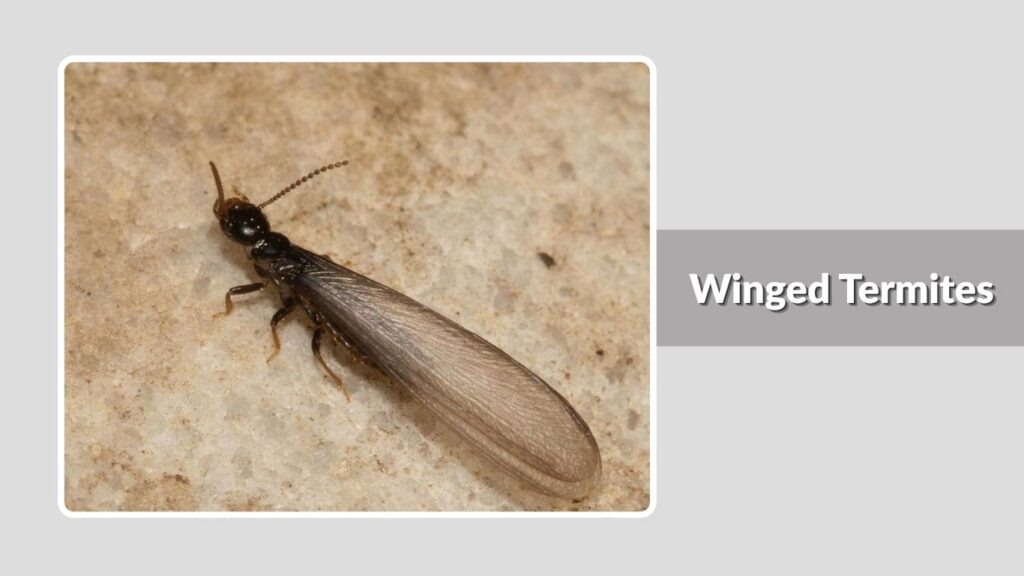
Winged termites are the insects most frequently confused with flying ants. Also called termite swarmers or alates, they leave mature colonies to mate and establish new colonies. Some are dark brown or nearly black, even though termite workers are usually pale.
Identification
Look for the following termite features:
- Straight, bead-like antennae
- Broad waist without a narrow middle
- Two pairs of nearly equal-sized wings
- Wings often much longer than the body
- Soft-looking, uniformly shaped body
- Black, brown, tan, or pale coloring
Termite wings are fragile and detach easily. Piles of matching discarded wings around windows, doors, baseboards, or wooden surfaces may remain after the swarmers disappear.
Where They Are Found
Subterranean termite swarmers may emerge from soil, foundation cracks, wall openings, or mud tubes. They often fly during warm and humid conditions, particularly after rainfall.
Drywood termite swarmers emerge directly from infested wood. They may appear around window frames, furniture, roof timbers, flooring, or other dry wooden materials.
Why They Resemble Flying Ants
Both insects have six legs, four wings, dark bodies, and reproductive adults that emerge in groups. Their seasonal mating flights can also happen under similar weather conditions.
The easiest differences are the waist, antennae, and wings. Termites have broad waists, straight antennae, and four similar wings. Flying ants have pinched waists, bent antennae, and smaller rear wings.
Risks and Control
Finding outdoor termite swarmers does not always mean a building is infested. However, swarmers emerging indoors—especially from wood or walls—can indicate an active colony.
Do not rely on household ant spray. Preserve several specimens and arrange a termite inspection. Treatment varies by species and may involve soil barriers, bait stations, localized wood treatments, or structural fumigation.
2. Ensign Wasps
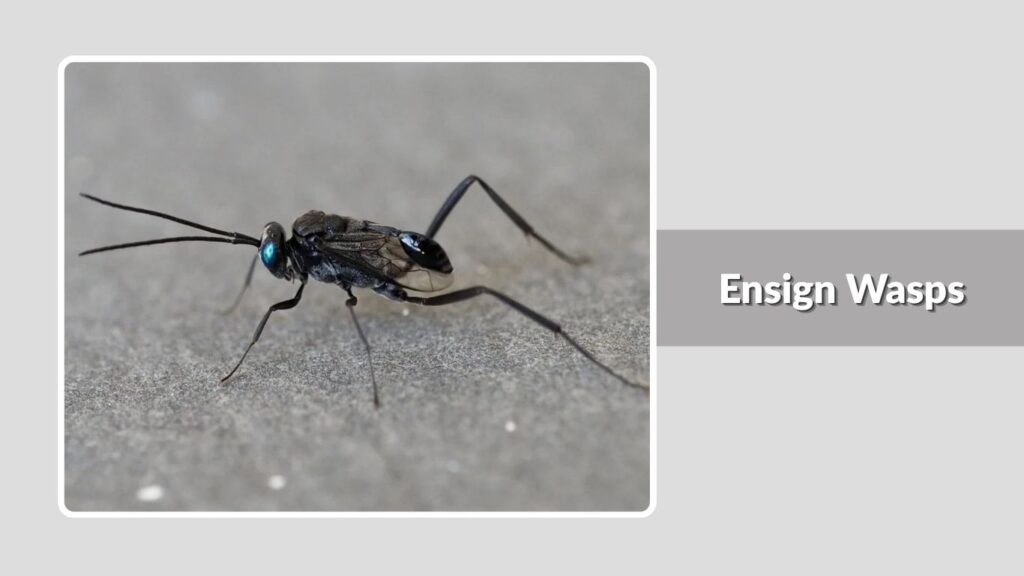
Ensign wasps are small, dark insects with a distinctive abdomen that resembles a tiny flag. Their black bodies, clear wings, and narrow waists sometimes cause homeowners to mistake them for unusually shaped flying ants.
Identification
An ensign wasp commonly has:
- A black or dark brown body
- Four clear or smoky wings
- Long legs and antennae
- A strongly narrowed waist
- A small, triangular or oval abdomen
- An abdomen attached high on the thorax
The abdomen moves up and down as the insect walks, much like a signal flag. This behavior gives the ensign wasp its common name.
Where They Are Found
Ensign wasps occur outdoors in warm environments but may enter houses while searching for cockroach egg cases. They can be found around kitchens, bathrooms, basements, garages, storage areas, and other locations where cockroaches may hide.
The familiar black ensign wasp Evania appendigaster is widespread in tropical and subtropical regions. Adults commonly measure approximately 5–7 millimeters long.
Why They Resemble Flying Ants
Their dark bodies, narrow waists, long antennae, and transparent wings create an ant-like outline. However, the tiny abdomen held above the body is unlike the larger, rounded abdomen of an ant queen.
Ensign wasps also lack the distinctly elbowed antennae of ants. They usually move alone rather than following ant trails or emerging in mating swarms.
Risks and Control
Ensign wasps are generally harmless to people. They do not establish destructive colonies in buildings and are considered beneficial because their larvae develop in cockroach egg cases. They neither bite nor sting people.
An occasional ensign wasp can be released outdoors. Repeated sightings may justify checking for cockroaches, food residue, leaking pipes, and hidden egg cases.
3. Spider Wasps
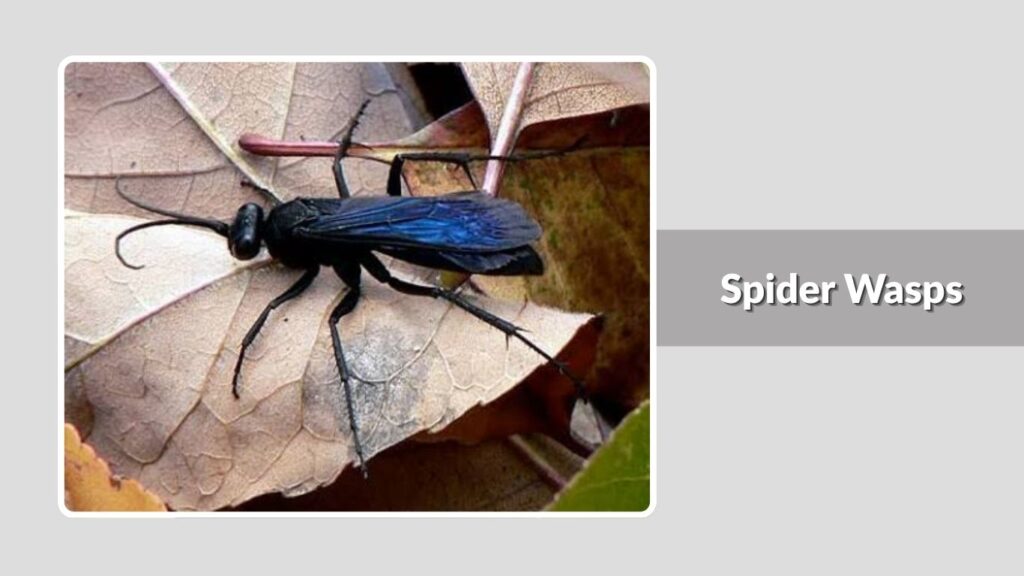
Spider wasps belong to the family Pompilidae. Many are black, dark blue, or reddish, with smoky wings and narrow bodies. Their ground-running behavior and ant-like shape can lead to confusion with large flying ants.
Identification
Spider wasps generally have:
- Black, blue-black, or reddish bodies
- Four smoky, amber, orange, or dark wings
- Narrow wasp-like waists
- Long, often spiny legs
- Long antennae without an ant-like elbow
- Rapid or erratic walking behavior
Many spider wasps repeatedly flick their wings while running across the ground. They are generally more slender and longer-legged than carpenter ant queens.
Where They Are Found
These solitary wasps are commonly seen in gardens, lawns, woodland edges, sandy areas, and other places where spiders live. Females search the ground, plants, crevices, and spider burrows for prey.
Most species create individual nests in soil, cavities, or sheltered spaces. They do not form large social colonies like ants, yellowjackets, or paper wasps.
Why They Resemble Flying Ants
Spider wasps and ants both belong to the order Hymenoptera, so they share several structural characteristics. A small black spider wasp may have a narrow waist and dark wings similar to those of a flying ant.
However, spider wasps have much longer legs, and their front and rear wings do not show the same obvious size difference found in flying ants. Their antennae are also generally straighter.
Risks and Control
Female spider wasps can sting, but they are solitary and usually avoid people unless trapped or handled. They use their stings primarily to paralyze spiders for their developing larvae. Some large species, including tarantula hawks, can deliver exceptionally painful stings.
Avoid touching them with bare hands. Routine control is rarely necessary because spider wasps help regulate spider populations and do not damage houses. NC State’s spider wasp identification guide
4. Male Velvet Ants
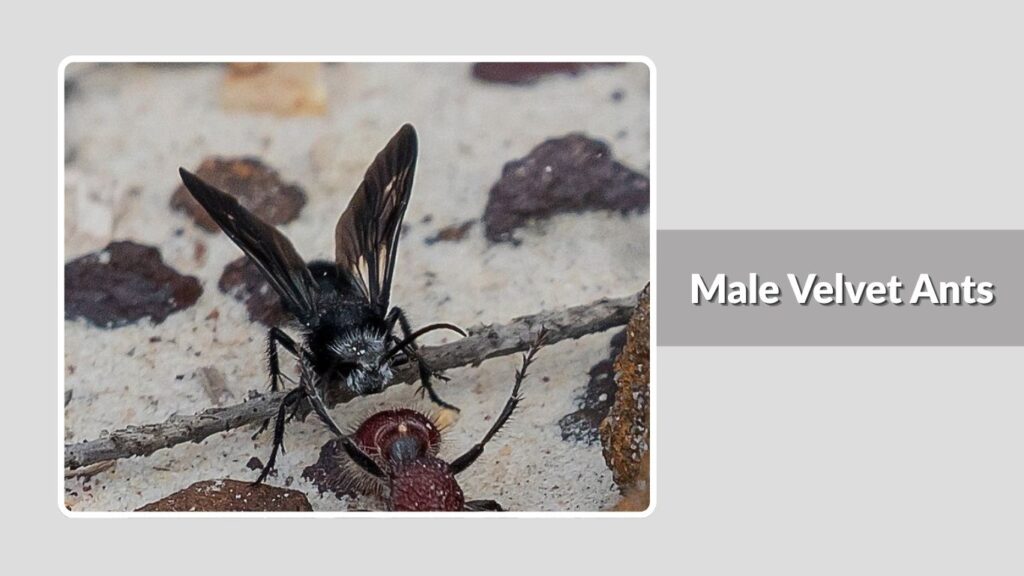
Despite their name, velvet ants are wasps in the family Mutillidae. The colorful, densely haired females are wingless, while adult males usually have wings. A dark male flying near the ground may resemble an ant queen or another large flying ant.
Identification
Male velvet ants may have:
- Black, brown, red, or orange markings
- Four transparent or smoky wings
- Long, mostly straight antennae
- A narrow waist
- A hairy body
- A slenderer shape than the wingless female
The male and female of one species may look so different that they are difficult to recognize as members of the same species.
Where They Are Found
Velvet ants are usually found in sunny, sandy, or open habitats where ground-nesting bees and wasps are present. Females walk across the ground searching for suitable host nests, while males fly while looking for females.
They are generally outdoor insects and do not establish colonies in houses. An individual may occasionally enter through an open door or window.
Why They Resemble Flying Ants
The term “velvet ant” reflects the wingless female’s ant-like appearance. Winged males retain the narrow waist, segmented body, and running behavior that can also make them look like flying ants.
Unlike a typical ant, a velvet ant’s antennae are not prominently elbowed. The male’s body is often hairier, and it does not participate in a dense colony swarm.
Risks and Control
Female velvet ants can deliver a very painful sting and should never be handled. Males do not have functional stingers, although identifying the sex at a glance may be difficult for an untrained observer.
Leave the insect alone or guide it outdoors using a container. Large-scale treatment is unnecessary because velvet ants are solitary parasitoid wasps, not structural or household pests. Purdue Extension confirms that velvet ants are wasps, with wingless females and winged males.
5. Winged Aphids
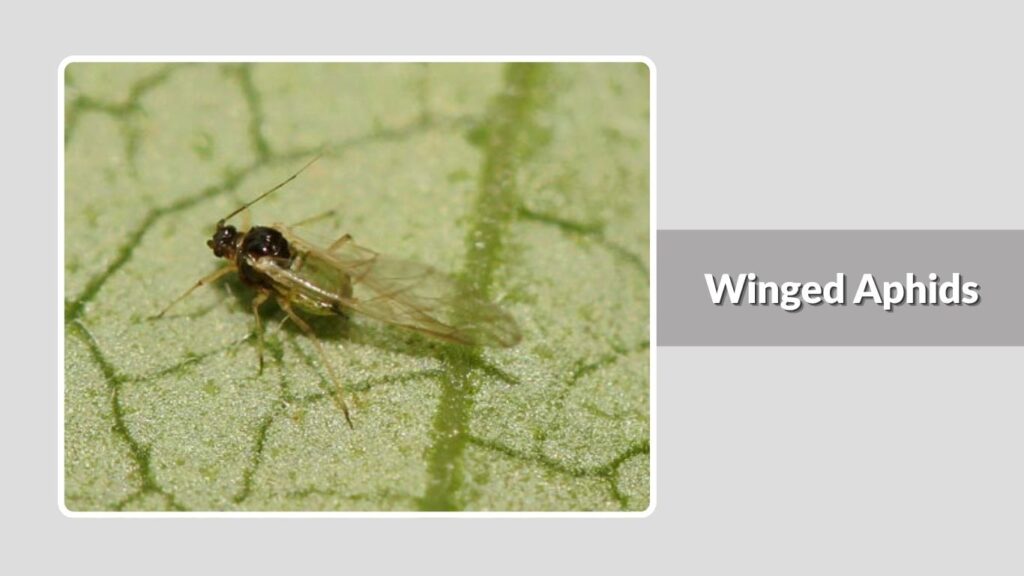
Aphids are tiny, soft-bodied insects that feed on plant sap. Although many are wingless, colonies can produce winged adults when plants become crowded, food quality decreases, or the insects need to colonize new plants.
Identification
A winged aphid usually has:
- A small, soft, pear-shaped body
- Green, black, brown, yellow, or reddish coloring
- Four transparent wings
- Long, thin legs and antennae
- No pinched ant-like waist
- Two tube-like cornicles near the rear
The cornicles can resemble tiny exhaust pipes extending from the abdomen. They are among the best features for distinguishing an aphid from a small flying ant.
Where They Are Found
Winged aphids commonly occur on vegetables, ornamental plants, fruit trees, shrubs, and houseplants. Adults may collect around windows after leaving an indoor plant or entering from outside.
Other signs include curled or distorted leaves, sticky honeydew, black sooty mold, shed skins, and clusters of wingless aphids around new plant growth.
Why They Resemble Flying Ants
Dark winged aphids are similar in size to tiny flying ants. Both have long antennae, transparent wings, and dark bodies. They may also be found together because ants feed on aphid honeydew and sometimes protect aphid colonies.
Aphids have pear-shaped bodies without narrow waists, and their antennae are not sharply elbowed. Their soft bodies also appear less clearly segmented.
Risks and Control
Aphids do not bite or sting people and do not damage buildings. Large populations can weaken plants by removing sap, spreading plant diseases, and contaminating leaves with honeydew.
Wash small populations from plants with water, prune heavily infested growth, and avoid excessive nitrogen fertilizer. Insecticidal soap or horticultural oil may be appropriate when used according to its label.
6. Fungus Gnats
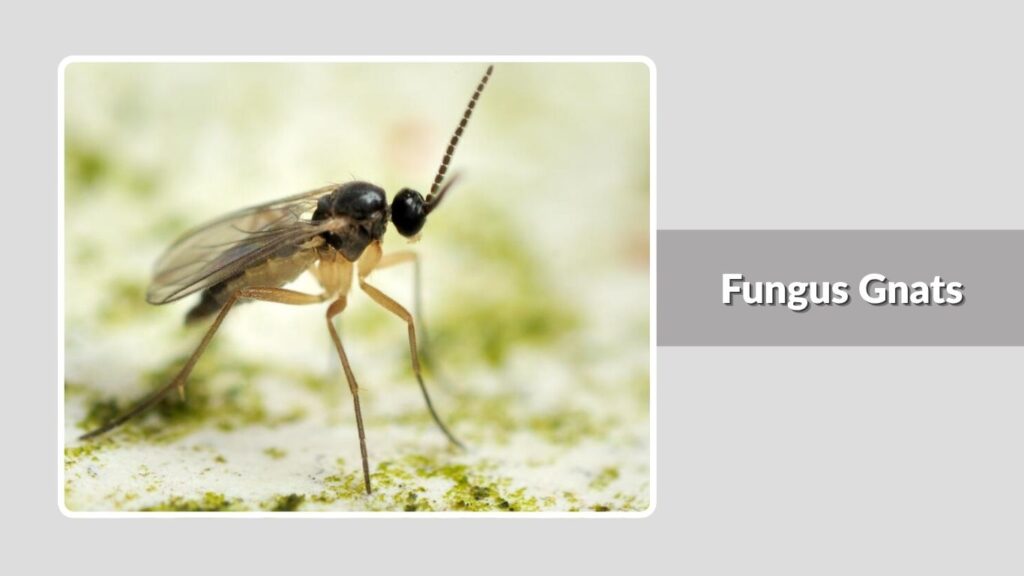
Fungus gnats are tiny, dark flies commonly seen around houseplants. Their black bodies, long antennae, and transparent wings sometimes cause people to describe them as little flying ants.
Identification
Adult fungus gnats have:
- One pair of clear or grayish wings
- Long, threadlike antennae
- Long, delicate legs
- A slender black or dark brown body
- No pinched waist
- A distinctive Y-shaped vein on each wing in common species
Most adults measure approximately 1⁄16 to ⅛ inch long. They resemble miniature mosquitoes more closely when examined with a magnifying glass.
Where They Are Found
Fungus gnats are closely associated with moist potting soil, greenhouses, seed trays, compost, and decaying organic material. Adults often walk across soil or fly weakly around plant pots.
They may gather around windows, screens, and lamps. Their larvae live in damp growing media and feed mainly on fungi and decomposing material, although some may damage fine plant roots.
Why They Resemble Flying Ants
Their small size and dark bodies make fungus gnats easy to mistake for tiny flying ants, particularly when several appear indoors at once. Both may also gather around light.
The easiest distinction is wing number. A fungus gnat is a true fly and has only one pair of functional wings. A flying ant has two pairs. Gnats also lack elbowed antennae and a narrow waist.
Risks and Control
Fungus gnats do not bite people. Adults are primarily a nuisance, but heavy larval populations can affect seedlings and sensitive houseplants.
Allow the upper layer of potting soil to dry between waterings when suitable for the plant. Empty standing water, remove decaying leaves, improve drainage, and use yellow sticky cards to monitor adults.
7. Ant-Like Flower Beetles
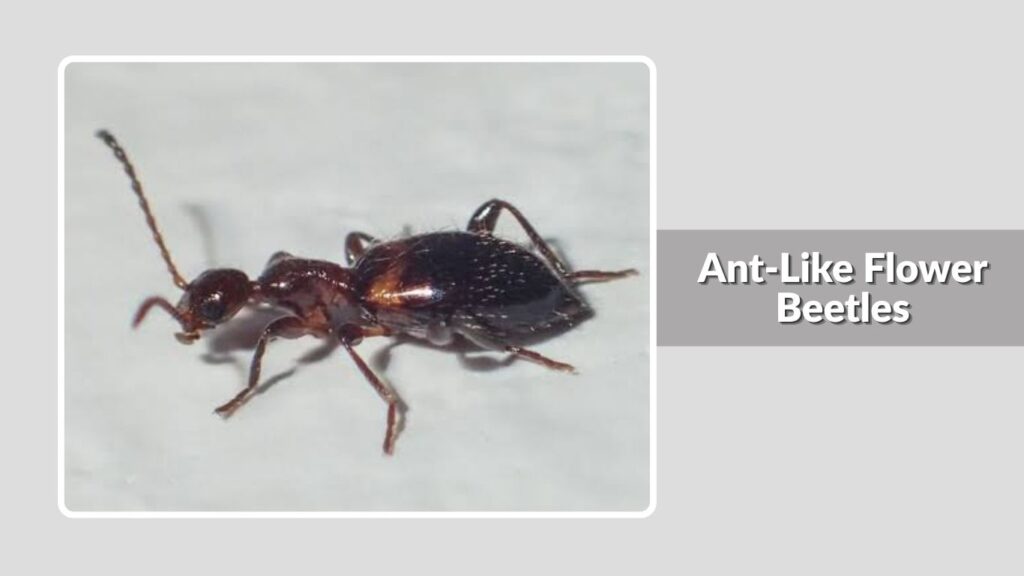
Ant-like flower beetles belong to the family Anthicidae. These small beetles have narrow bodies with constricted areas that create an ant-like shape. They usually look like ants while walking, but adults can fly when disturbed.
Identification
Ant-like flower beetles generally have:
- Small, narrow bodies
- Black, brown, reddish, or patterned coloring
- A neck-like constriction behind the head
- Threadlike or slightly clubbed antennae
- Hard front wings called elytra
- Membranous flight wings concealed underneath
Some species are only a few millimeters long. Their relatively large heads and narrow thoraxes contribute to their strong resemblance to ants.
Where They Are Found
These beetles occupy leaf litter, flowers, decaying vegetation, loose bark, sandy ground, compost, and other outdoor habitats. Some enter buildings accidentally or are attracted to exterior lights.
They generally feed on small insects, organic material, pollen, or fungi, although feeding behavior varies among species.
Why They Resemble Flying Ants
Their body constrictions, small size, rapid movements, and dark coloring create an ant-like appearance. If a beetle suddenly opens its wing covers and flies, an observer may reasonably assume it was a winged ant.
Look for a straight line running down the center of the back. This is where the beetle’s two hardened wing covers meet. Flying ants do not possess wing covers.
Risks and Control
Most ant-like flower beetles are harmless and do not form indoor colonies. They do not damage structural wood and are not normally important household pests.
Vacuum accidental visitors or move them outdoors. Repair window screens and reduce unnecessary exterior lighting if they repeatedly enter. Texas A&M identifies Anthicidae as ant-like flower beetles and notes that some are attracted to ultraviolet lights. Texas A&M’s Anthicidae record
How to Identify an Ant-Like Insect at Home
Avoid identifying an insect based solely on a distant photograph or its color. Collect a specimen in a clear container without touching it directly, especially if it may be a stinging wasp.
Use a magnifying glass and follow these steps:
- Count the wings: Flies have two wings; ants, termites, wasps, and winged aphids have four.
- Examine the antennae: Flying ants have distinct elbows.
- Check the waist: Ants have a strongly pinched middle; termites and aphids do not.
- Compare the wings: Ant rear wings are smaller, while termite wings are nearly equal.
- Look at the legs: Spider wasps have unusually long, often spiny legs.
- Inspect the abdomen: Aphids have cornicles, while ensign wasps have elevated flag-like abdomens.
- Check for wing covers: Hardened covers indicate a beetle.
Where the insect was found also provides useful evidence. Termites may emerge from wood or foundations, fungus gnats remain near damp plant soil, aphids gather on plants, and spider wasps usually search outdoor ground.
When Is Professional Identification Needed?
Professional identification is advisable when numerous insects emerge from walls, floors, foundations, or wooden surfaces. It is particularly important when the specimens have straight antennae, broad waists, equal wings, or easily detached wings—all possible termite characteristics.
Assistance may also be appropriate when:
- Swarms repeatedly occur indoors
- Wooden structures appear damaged
- Large ants emerge from damp wood
- The insect may deliver a painful sting
- Several rooms are affected
- The source cannot be located
FAQs
What insect is most commonly mistaken for a flying ant?
A winged termite is the most important flying-ant lookalike. Both insects emerge in mating swarms and have four wings. Termites have straight antennae, broad waists, and equal-sized wings, while flying ants have elbowed antennae, pinched waists, and smaller rear wings.
What tiny flying insects look like black ants?
Fungus gnats, winged aphids, ensign wasps, and ant-like flower beetles can resemble tiny black flying ants. Check nearby houseplants, count the wings, and examine the insect’s waist. A true flying ant has four wings, elbowed antennae, and a narrow middle.
Are flying ant lookalikes dangerous?
Most are harmless to people. Fungus gnats, aphids, ensign wasps, termites, and ant-like flower beetles generally do not sting. Female spider wasps and female velvet ants can sting painfully when threatened or handled, so unidentified ant-like insects should not be picked up directly.
Why are ant-like flying insects gathering around my windows?
Many insects move toward daylight or artificial light after entering a building. Flying ants and termites may also gather at windows after emerging from concealed colonies. Fungus gnats can originate from houseplants, while outdoor beetles and wasps may enter through damaged screens.
How can I tell if an ant-like insect is a wasp?
Wasps generally have narrow waists and four wings but lack the sharply elbowed antennae typical of ants. They may also have longer legs, brighter markings, or differently shaped abdomens. Ensign wasps have raised flag-like abdomens, while spider wasps have long, spiny legs.