
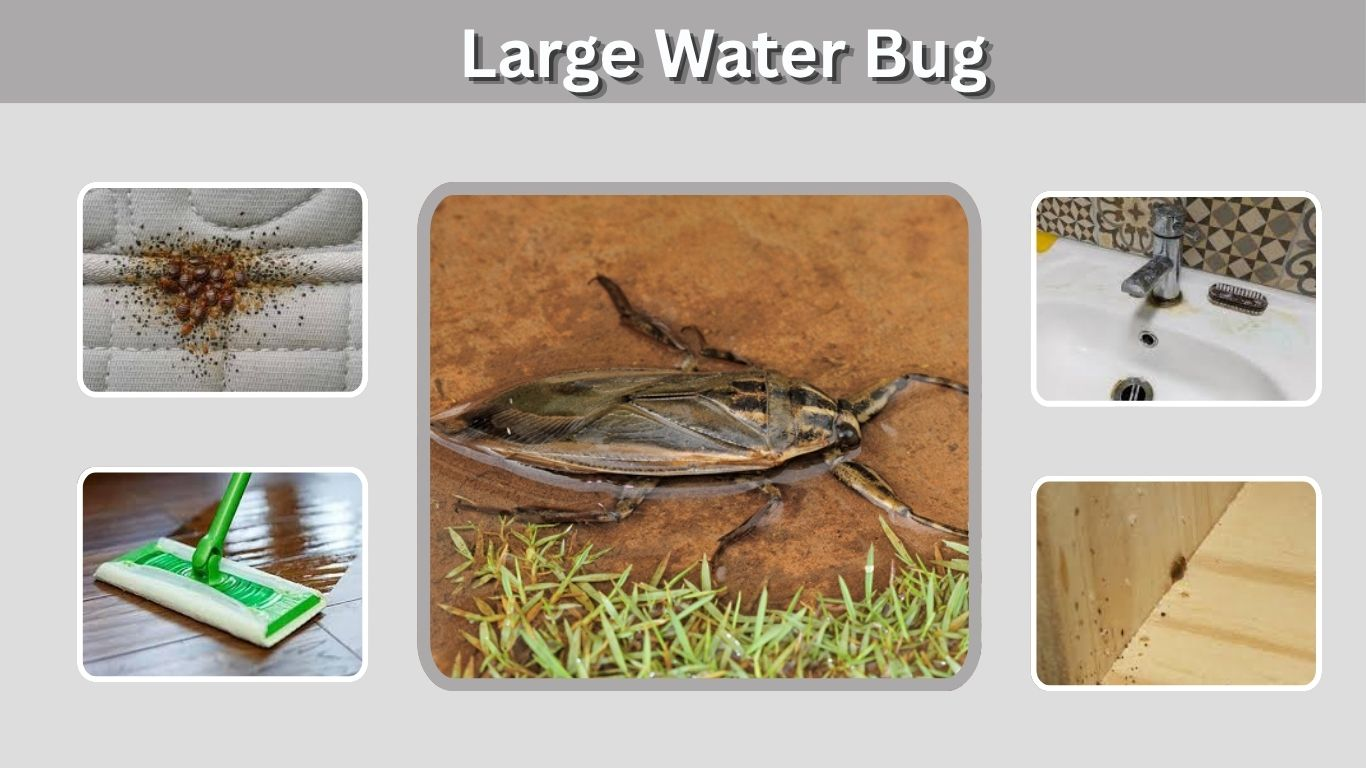
A large water bug can be alarming when it appears in a home, pool, garage, or yard. Many people use the term for different insects, including true giant water bugs and large cockroaches commonly called water bugs. Knowing the difference matters because each insect behaves differently and needs a different control method. This guide explains how to identify them, why they appear, and how to get rid of them safely.
What Is a Large Water Bug?
A large water bug is often used as a general name for big insects found near water, drains, bathrooms, basements, pools, and damp outdoor spaces. However, the phrase can describe two very different pests.
A true large water bug is usually an aquatic insect. Giant water bugs belong to the family Belostomatidae and live in ponds, lakes, streams, and wetlands. They are predators that feed on insects, tadpoles, small fish, and other small aquatic animals.
In everyday pest control language, many people also call large cockroaches “water bugs.” This is especially common in the United States, where American cockroaches, Oriental cockroaches, and smoky brown cockroaches may be called water bugs because they prefer damp places.
This difference is important. A true aquatic water bug usually enters a home by accident. A cockroach-like “water bug” may suggest moisture problems, food sources, cracks, drains, or possible infestation.
Large Water Bug vs Cockroach: Key Differences
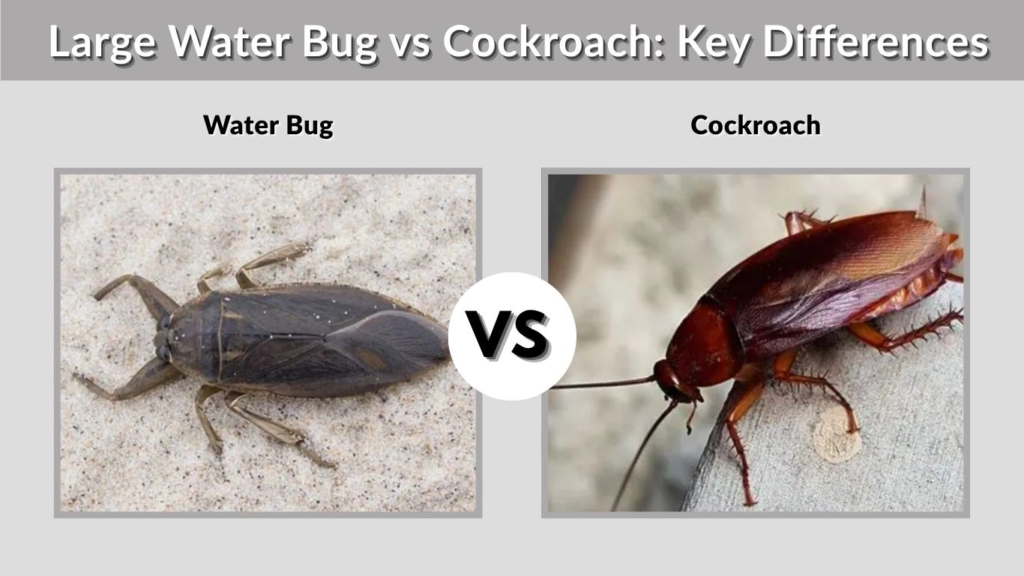
Many people search for large water bugs because the insect they found looks like a roach. The confusion is understandable because both can be dark, shiny, oval-shaped, and fast-moving. Still, there are clear signs that help separate them.
| Feature | True Large Water Bug | Cockroach Often Called Water Bug |
| Body shape | Flat, oval, often broad | Oval, long, and smoother |
| Legs | Front legs may look strong or claw-like | Long running legs with spines |
| Habitat | Ponds, pools, lakes, wetlands | Kitchens, drains, basements, bathrooms |
| Food | Other insects, small aquatic animals | Food crumbs, grease, waste, organic matter |
| Home issue | Usually accidental entry | May indicate infestation |
| Bite risk | Can bite painfully if handled | Does not usually bite people |
True water bugs often have front legs that look like pincers or grabbing arms. They use these legs to catch prey. Cockroaches have long antennae and are built for running. If the insect has very long antennae and runs away quickly when lights turn on, it is more likely a roach.
What Does a Large Water Bug Look Like?
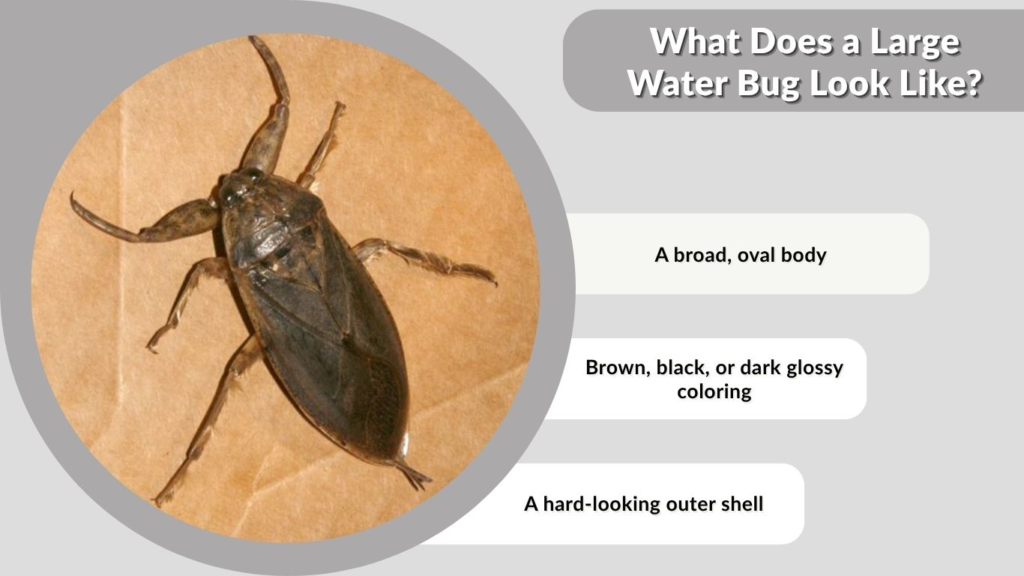
A large water bug usually has a wide, flattened body and may appear brown, dark brown, or black. Some can grow much larger than common household insects, which is why they often surprise homeowners. Giant water bugs can look especially intimidating because of their strong front legs.
Common visual signs include:
- A broad, oval body
- Brown, black, or dark glossy coloring
- Strong front legs that may look like pincers
- A hard-looking outer shell
- A flattened shape built for moving in water
- Wings in many adult species
If the insect is found in a pond, swimming pool, or near outdoor lights, it may be a true aquatic water bug. If it is found in a kitchen, bathroom, basement, laundry room, or near drains, it may be a cockroach commonly called a water bug.
Why Large Water Bugs Come Into the House
Large water bugs and roach-like water bugs enter homes for different reasons. True water bugs may fly toward lights at night and accidentally land near doors, patios, porches, or pools. They may also enter through gaps when outdoor conditions change.
Cockroach-type water bugs usually enter homes because they find moisture, warmth, food, and shelter. They are attracted to areas where water and organic matter are available.
Common reasons they appear indoors include:
- Leaky pipes under sinks
- Damp basements or crawl spaces
- Floor drains and sewer openings
- Food crumbs or grease buildup
- Trash cans without tight lids
- Gaps around doors and windows
- Outdoor mulch or leaf litter near the foundation
- Poor ventilation in damp rooms
Seeing one insect does not always mean there is an infestation. However, repeated sightings inside the home, especially at night, should be taken seriously.
Are Large Water Bugs Dangerous?
Large water bugs are not usually dangerous in the way venomous pests are, but they can still be unpleasant and sometimes painful. True giant water bugs can bite if they are picked up or handled. Their bite may feel sharp and painful, so it is best not to touch them with bare hands.
Cockroaches called water bugs are a different concern. They usually do not bite, but they can spread bacteria, contaminate food surfaces, and trigger allergies or asthma symptoms in sensitive people. Their presence may also indicate sanitation or moisture problems.
You should avoid direct contact with any large unidentified insect. Use gloves, a container, or a tool if you need to remove it. For ongoing indoor sightings, focus on moisture control and entry-point sealing instead of only killing the insects you see.
Large Black or Brown Water Bugs
Large black water bugs are often Oriental cockroaches, especially when found indoors. These roaches prefer cool, damp areas such as basements, drains, crawl spaces, and garages. They move more slowly than some other roaches and may look shiny black or very dark brown.
Large brown water bugs may be American cockroaches, smoky brown cockroaches, or true giant water bugs, depending on where they are found. American cockroaches are reddish-brown and often appear in sewers, drains, commercial buildings, and older homes. Smoky brown cockroaches are darker brown and common in warm, humid regions.
True aquatic water bugs can also be brown and may appear near pools, ponds, or outdoor lights. Location is one of the best clues. A brown insect in a swimming pool is more likely to be aquatic. A brown insect under a kitchen sink is more likely to be a roach.
Large Water Bugs in Florida and Warm States
Large water bugs are common in warm, humid states such as Florida, Texas, Georgia, North Carolina, and other southern regions. Warm weather, heavy rainfall, outdoor vegetation, standing water, and high humidity create ideal conditions for both aquatic insects and large cockroaches.
In Florida, people often use names like water bug, palmetto bug, and large roach interchangeably. This can make identification confusing. A “large Florida water bug” may be a true water bug near a pond or pool, but it may also be a palmetto bug, which usually refers to a large cockroach.
Homes in warm regions should pay special attention to moisture control. Sealing gaps, cleaning outdoor debris, repairing leaks, and keeping drains clean can reduce the chances of repeated sightings.
How to Get Rid of Large Water Bugs
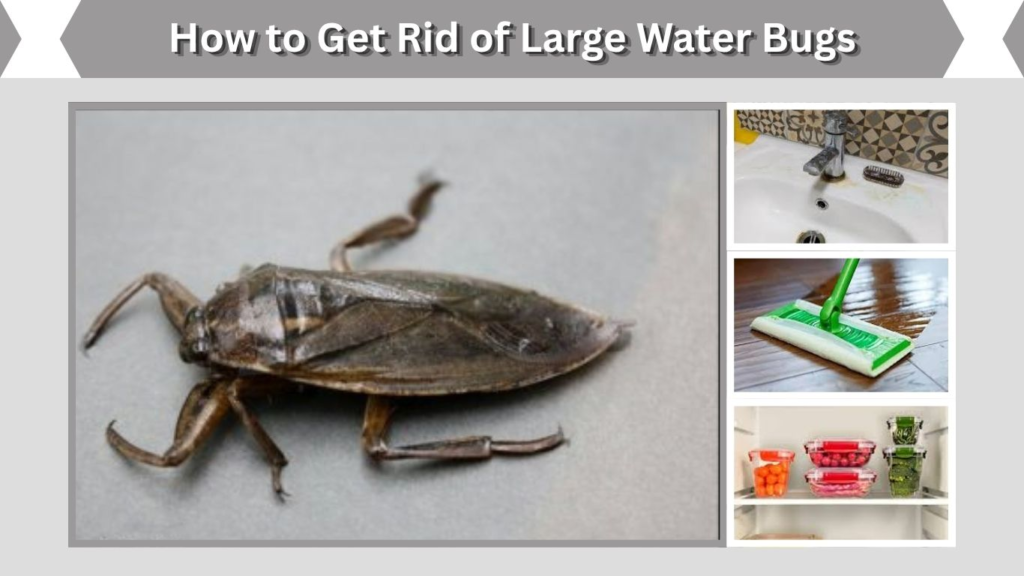
The best way to get rid of large water bugs depends on whether you are dealing with true water bugs or cockroaches. Start by identifying where the insects are coming from. A single insect near a pool may only need removal. Multiple insects in the kitchen or bathroom may require a pest control plan.
Remove Indoor Attractants
Large roach-like water bugs often come inside for food and moisture. Reducing these attractants makes your home less inviting.
Helpful steps include:
- Wipe counters and floors regularly
- Store food in sealed containers
- Empty trash often
- Clean grease behind stoves and appliances
- Fix leaking faucets and pipes
- Dry wet areas under sinks
- Use a dehumidifier in damp basements
- Keep pet food and water bowls clean overnight
Small changes can make a big difference. Moisture is especially important because many insects called water bugs thrive in damp conditions.
Seal Entry Points
Large insects can enter through surprisingly small gaps. Sealing access points helps prevent new bugs from coming inside after you remove the current ones.
Focus on:
- Door sweeps
- Window screens
- Gaps around pipes
- Cracks in foundations
- Openings near utility lines
- Garage door gaps
- Vents without screens
- Spaces around basement windows
Use caulk, weatherstripping, mesh screens, or expanding foam where appropriate. For drain-related issues, drain covers and regular cleaning can help.
Manage Outdoor Areas
Outdoor conditions often contribute to indoor sightings. If your yard has standing water, thick mulch, leaf piles, or clutter near the foundation, insects may gather close to your home.
To reduce outdoor activity:
- Remove standing water
- Clean gutters
- Trim vegetation near walls
- Move firewood away from the house
- Reduce thick mulch against the foundation
- Keep pool areas clean
- Turn off unnecessary outdoor lights at night
- Use yellow bug lights where suitable
True water bugs are often attracted to lights. Reducing bright exterior lighting can lower the chance of them landing near doors and windows.
Use Baits and Treatments Carefully
For cockroach-type water bugs, roach baits are often more effective than sprays because baits target hidden insects. Gel baits and bait stations can be placed near suspected activity areas, such as under sinks, behind appliances, and near drains.
Avoid overusing sprays because they may scatter roaches deeper into walls or make baits less effective. Always follow product directions and keep treatments away from children, pets, food surfaces, and water bowls.
For true aquatic water bugs, chemical treatment is usually unnecessary unless there is a broader outdoor pest issue. Physical removal and prevention are often enough.
Large Water Bugs in Swimming Pools
Finding a large water bug in a swimming pool can be unsettling, but it does not always mean there is a serious problem. Some aquatic insects accidentally land in pools, especially at night when lights are on. Others may be attracted by algae, other small insects, or poor water balance.
To reduce water bugs in pools:
- Skim the pool regularly
- Keep chlorine and pH balanced
- Remove leaves and organic debris
- Brush pool walls and steps
- Clean filters as needed
- Reduce poolside lighting at night
- Cover the pool when not in use
If water bugs keep returning, check whether other small insects are present in the water. Predatory aquatic bugs may stay where prey is available.
When to Call Pest Control
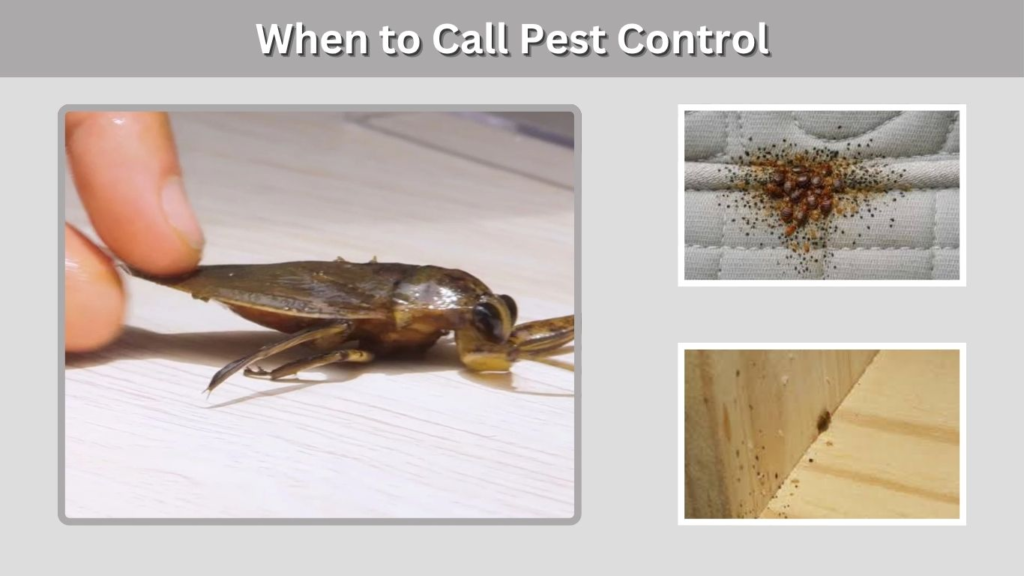
You may not need professional help for a single large water bug. However, repeated indoor sightings, droppings, egg cases, musty odors, or insects seen during the day may suggest a larger cockroach problem.
Consider calling a pest control professional if:
- You see several large bugs indoors
- Bugs keep appearing after cleaning and sealing
- You find them near food storage areas
- You notice droppings or egg cases
- You live in an apartment with shared walls
- You are unsure whether the insect is a roach or true water bug
- DIY baits and prevention steps are not working
A professional can identify the species, locate the source, and recommend a treatment plan based on the actual pest.
FAQs
Are large water bugs cockroaches?
Not always. Some large water bugs are true aquatic insects, while others are cockroaches commonly called water bugs. If the insect has long antennae, runs quickly, and appears near drains or kitchens, it is likely a cockroach. If it has strong front legs and appears near water, it may be a true water bug.
Do large water bugs bite people?
True giant water bugs can bite if handled, and the bite may be painful. They usually do not chase people, but they may defend themselves when disturbed. Cockroaches called water bugs rarely bite people, but they can contaminate surfaces and may trigger allergies in some homes.
Why do I have large water bugs in my house?
Large water bugs may enter because of moisture, food, shelter, outdoor lights, or open gaps around the home. Cockroach-type water bugs are especially attracted to damp basements, bathrooms, kitchens, drains, and crawl spaces. Fixing leaks and sealing entry points can reduce indoor sightings.
What is the best way to kill large water bugs?
For cockroach-like water bugs, bait stations or gel baits are usually better than random spraying because they target hidden pests. For true aquatic water bugs, physical removal is often enough. Long-term control depends on cleaning, reducing moisture, sealing gaps, and removing outdoor attractants.
Are large water bugs common in Florida?
Yes, large water bugs and roach-like insects are common in Florida because the climate is warm and humid. Many people in Florida use terms like water bug, palmetto bug, and large roach interchangeably. Correct identification helps determine whether the insect is an outdoor visitor or an indoor pest issue.