
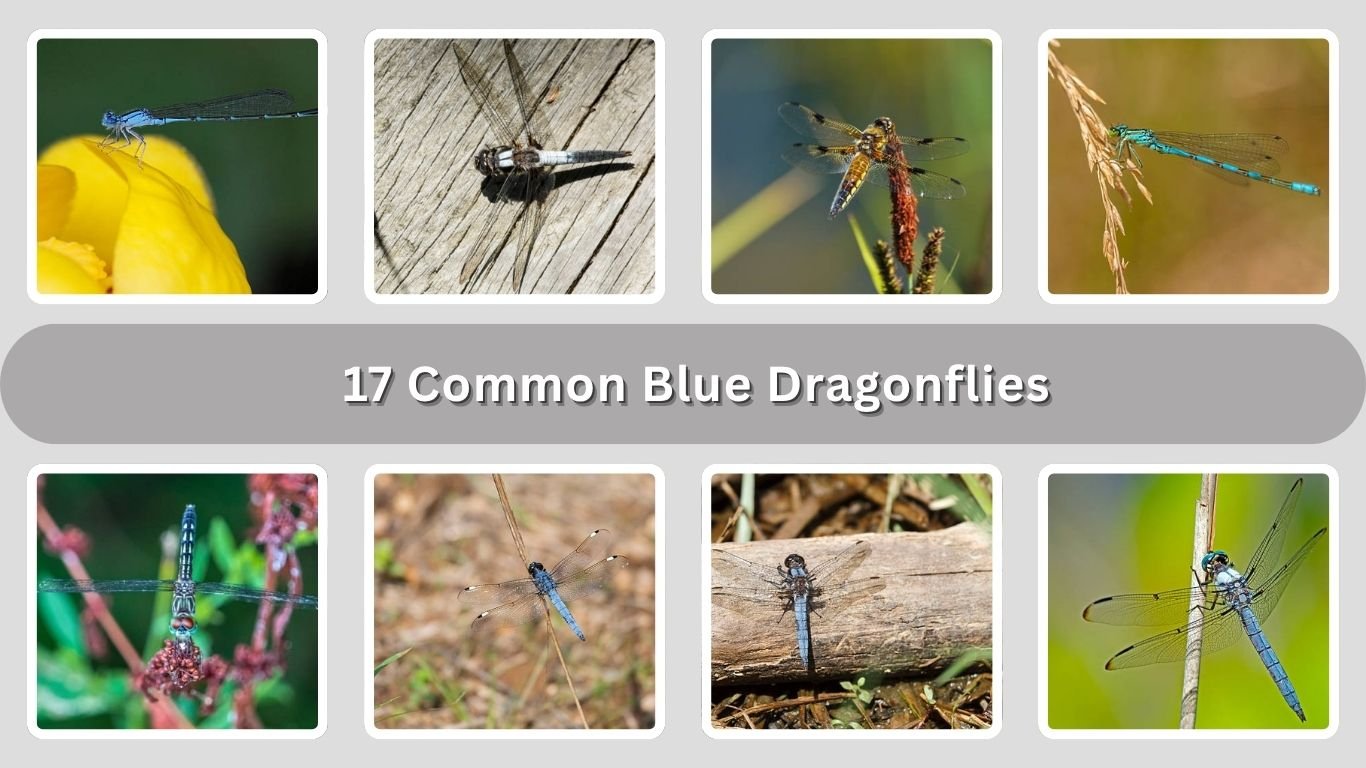
Blue dragonflies are among the most beautiful and fascinating insects, admired for their cool-toned colors and swift flight. These species are commonly found near freshwater habitats such as ponds, lakes, rivers, and wetlands across the world. In many cases, males display vibrant blue shades, while females appear in more muted colors like green or brown. Beyond their visual appeal, blue dragonflies play an important role in controlling insect populations. In this guide, you will discover 17 common blue dragonflies and damselflies, along with key features that help you identify them in nature.
1. Blue Dasher (Pachydiplax longipennis)

The Blue Dasher is a small and active dragonfly known for its bright blue coloration and quick movements. It is commonly found across North America, especially around freshwater habitats.
Identification
- Small to medium-sized dragonfly
- Males have a powdery blue abdomen
- Females are brown or yellow with striped patterns
- Clear wings with a slight amber tint at the base
Color Pattern
Mature males display a striking powder-blue color on the abdomen, which contrasts with their darker thorax. The eyes often appear bluish-green, adding to their vivid look. Females and immature individuals have more subdued brown or yellow tones with visible striping.
Habitat
Blue Dashers are commonly seen near ponds, lakes, marshes, and slow-moving streams. They prefer areas with still water and plenty of vegetation where they can perch and hunt.
Behavior
These dragonflies are highly active and often seen darting quickly over water. Males are territorial and frequently perch on twigs or stems. They feed on small flying insects, helping to control mosquito populations.
2. Common Blue Damselfly (Enallagma cyathigerum)

The Common Blue Damselfly is a slender and delicate insect, often mistaken for a dragonfly. It is widely distributed across Europe and Asia and is frequently seen near calm freshwater habitats.
Identification
- Small, slender body typical of damselflies
- Males are bright blue with black markings
- Females may be green, blue, or brown
- Wings are narrow and held together when at rest
Color Pattern
Males display a vivid blue body with black bands along the abdomen, creating a striking contrast. Females vary more in color, ranging from green to dull blue or brown. This variation helps them blend into vegetation and avoid predators.
Habitat
This species is commonly found near ponds, lakes, canals, and slow-moving streams. It prefers areas with abundant aquatic plants where it can rest and lay eggs.
Behavior
Common Blue Damselflies are less aggressive than dragonflies and often stay close to vegetation. They fly gently and are frequently seen resting with wings folded. They feed on small insects and contribute to maintaining ecological balance.
3. Blue-tailed Damselfly (Ischnura elegans)

The Blue-tailed Damselfly is a small and adaptable species known for its distinctive blue tail segment. It is commonly found across Europe, Asia, and parts of Africa.
Identification
- Small, slender damselfly
- Males have a black body with a bright blue tail segment
- Females show multiple color forms, including green and brown
- Wings are clear and held closed over the body
Color Pattern
Males are mostly black with a bright blue segment near the tip of the abdomen, making them easy to recognize. Females are more variable, with some appearing green, brown, or even bluish. This variation provides camouflage in different environments.
Habitat
Blue-tailed Damselflies thrive in a wide range of habitats, including ponds, lakes, ditches, and even polluted water bodies. Their adaptability allows them to live in both natural and urban environments.
Behavior
These damselflies are active and often seen flying low over water or resting on plants. They are less territorial than dragonflies and feed on tiny flying insects. Their ability to adapt makes them one of the most widespread damselfly species.
4. Eastern Pondhawk (Erythemis simplicicollis)

The Eastern Pondhawk is a bold and colorful dragonfly known for its bright blue males and strong predatory behavior. It is commonly found in North America near still water.
Identification
- Medium-sized dragonfly with a robust body
- Males are bright powder-blue
- Females are green with black markings
- Clear wings with a slight amber tint
Color Pattern
Mature males develop a striking powder-blue coloration that covers most of the body. Females, on the other hand, are bright green with contrasting dark patterns. This difference makes it easy to distinguish between the sexes.
Habitat
This species is commonly found around ponds, lakes, marshes, and slow-moving streams. It prefers areas with open water and nearby vegetation for perching.
Behavior
Eastern Pondhawks are aggressive hunters and will even prey on other dragonflies. They are often seen perched low, watching for movement before quickly darting to catch prey. Males are highly territorial.
5. Blue Dragonlet (Erythrodiplax minuscula)

The Blue Dragonlet is a small dragonfly known for its soft blue coloration and delicate appearance. It is commonly found in the southern parts of North America.
Identification
- Small dragonfly with a slender body
- Males have a pale blue abdomen
- Females are brown or tan with subtle markings
- Wings are clear and relatively short
Color Pattern
Males display a light blue or bluish-gray coloration, especially on the abdomen. The thorax may appear slightly darker. Females and immature individuals are dull brown or tan, helping them blend into dry surroundings.
Habitat
This species prefers shallow ponds, marshes, and temporary water bodies. It is often seen in open, sunny areas with sparse vegetation.
Behavior
Blue Dragonlets are active but less aggressive than larger dragonflies. They fly low over water and frequently perch on small plants. They feed on tiny insects and play a role in maintaining insect populations.
6. Great Blue Skimmer (Libellula vibrans)

The Great Blue Skimmer is a large and striking dragonfly known for its deep blue body and strong flight. It is commonly found in eastern parts of North America near freshwater habitats.
Identification
- Large dragonfly with a broad abdomen
- Males have a deep blue, powdery body
- Females are brown with yellow markings
- Wings show dark patches near the base
Color Pattern
Mature males display a rich blue coloration that covers most of the abdomen, giving them a bold appearance. The wings often have dark basal patches that add to their distinctive look. Females and immature individuals are brownish with yellow tones and visible striping.
Habitat
This species prefers ponds, lakes, marshes, and slow-moving streams. It is often found in areas with plenty of sunlight and surrounding vegetation for perching.
Behavior
Great Blue Skimmers are strong fliers and are often seen gliding over water. Males are territorial and defend their space aggressively. They feed on flying insects and are effective predators in their ecosystem.
7. Blue Corporal (Ladona deplanata)

The Blue Corporal is an early-season dragonfly known for its bluish body and distinctive wing markings. It is commonly seen in spring near freshwater areas.
Identification
- Medium-sized dragonfly with a flattened abdomen
- Males develop a bluish abdomen with age
- Females are brown with patterned markings
- Wings have dark bands across the middle
Color Pattern
Males gradually develop a pale blue coloration on the abdomen as they mature, while the thorax may remain darker. The wings feature noticeable dark bands, which help distinguish this species. Females are brown with more pronounced patterns and lack the blue tone.
Habitat
Blue Corporals are commonly found near ponds, lakes, and slow-moving streams. They prefer sandy or open areas near water where they can rest and hunt.
Behavior
These dragonflies are active early in the season and are often seen perching on the ground or low vegetation. They are quick fliers and feed on small insects. Males may defend territories near water during breeding periods.
8. Spangled Skimmer (Libellula cyanea)

The Spangled Skimmer is a colorful dragonfly known for its blue body and spotted wings. It is commonly found in North America, especially around still freshwater habitats.
Identification
- Medium-sized dragonfly with a sturdy body
- Males develop a blue abdomen with age
- Females are brown with yellow patterns
- Wings have dark spots or patches
Color Pattern
Mature males show a bluish abdomen with a slightly darker thorax. The wings feature dark spots that create a “spangled” appearance. Females and immature individuals are brownish with yellow markings and more visible wing patterns.
Habitat
This species prefers ponds, lakes, marshes, and slow streams. It is often seen in sunny areas with open water and nearby vegetation for resting.
Behavior
Spangled Skimmers are active fliers and frequently perch on twigs or plants. They hunt small flying insects and are beneficial in controlling pest populations. Males may defend small territories near water.
9. Blue-faced Meadowhawk (Sympetrum ambiguum)

The Blue-faced Meadowhawk is a small dragonfly recognized by its reddish body and distinctive bluish face. It is commonly found in North America during late summer and autumn.
Identification
- Small dragonfly with a slim body
- Males have a red abdomen and bluish face
- Females are yellowish-brown with subtle markings
- Wings are clear with slight amber tint
Color Pattern
Males display a red abdomen combined with a unique pale blue or whitish face, creating a noticeable contrast. Females and immature individuals are more muted, showing yellow or brown tones that help them blend into their surroundings.
Habitat
This species is commonly found near ponds, marshes, and slow-moving water bodies. It prefers areas with grasses and low vegetation near water.
Behavior
Blue-faced Meadowhawks are active fliers and are often seen perching on plants between short flights. They feed on small insects and are especially active during warmer parts of the day.
10. Chalk-fronted Corporal (Ladona julia)

The Chalk-fronted Corporal is a distinctive dragonfly known for its pale blue body and bold wing markings. It is commonly found across North America during spring and early summer.
Identification
- Medium-sized dragonfly with a broad abdomen
- Males develop a pale blue, chalky front
- Females are brown with yellowish patterns
- Wings have dark bands across the middle
Color Pattern
Males show a light blue or chalky appearance on the front of the body, especially on the abdomen. The thorax may appear slightly darker. Females and immature individuals are brown with yellow tones and more visible markings, providing camouflage.
Habitat
This species prefers ponds, lakes, and slow-moving streams. It is often found in open, sunny areas with nearby vegetation for perching.
Behavior
Chalk-fronted Corporals are active fliers and are often seen resting on the ground or low plants. They hunt small flying insects and may defend territories near water during breeding.
11. Azure Bluet (Enallagma aspersum)

The Azure Bluet is a delicate damselfly known for its soft blue coloration and slender body. It is commonly found in North America near calm freshwater habitats.
Identification
- Small, slender damselfly
- Males are light blue with black markings
- Females are greenish or brownish
- Wings are narrow and held together at rest
Color Pattern
Males display a pale azure-blue color with fine black bands along the abdomen. Females vary in color, often appearing green or tan. Their softer tones help them blend into surrounding vegetation.
Habitat
Azure Bluets are typically found near ponds, lakes, marshes, and slow-moving streams. They prefer areas with plenty of aquatic plants and calm water.
Behavior
These damselflies are gentle fliers and are often seen resting on grasses or reeds. They stay close to water and feed on tiny flying insects, contributing to insect population control.
12. Familiar Bluet (Enallagma civile)

The Familiar Bluet is a small and widespread damselfly known for its bright blue color and adaptability. It is commonly found across North America in a variety of freshwater habitats.
Identification
- Small, slender damselfly
- Males are bright blue with black bands
- Females may be blue, green, or brown
- Wings are clear and held closed at rest
Color Pattern
Males show a vivid blue coloration with distinct black striping along the abdomen. Females are more variable in color, ranging from blue to green or tan, which helps them blend into different environments.
Habitat
This species thrives in ponds, lakes, marshes, and even slightly polluted water bodies. It prefers calm water with vegetation for resting and breeding.
Behavior
Familiar Bluets are active but gentle fliers, often staying close to the water surface. They perch frequently and feed on tiny flying insects. Their adaptability makes them one of the most commonly seen damselflies.
13. Stream Bluet (Enallagma exsulans)

The Stream Bluet is a slender damselfly typically found near flowing water. It is less common than other bluets and prefers cleaner, more specific habitats.
Identification
- Small damselfly with a thin body
- Males are bright blue with black markings
- Females are duller, often brown or green
- Wings are narrow and folded over the body
Color Pattern
Males display a clear blue color with fine black bands along the abdomen. The contrast is less bold than in some other bluet species. Females have muted tones, helping them remain less visible in natural surroundings.
Habitat
As the name suggests, Stream Bluets prefer streams and flowing water rather than still ponds. They are often found along the edges of clean, shallow streams with vegetation.
Behavior
These damselflies are calm and stay close to water. They are often seen resting on plants along stream banks. They feed on very small insects and are less aggressive compared to larger dragonflies.
14. Powdered Dancer (Argia moesta)

The Powdered Dancer is a slender damselfly known for its soft blue coloration and graceful movements. It is commonly found near shaded freshwater habitats.
Identification
- Small, slender damselfly
- Males have a powdery blue body
- Females are brown or grayish
- Wings are clear and held together at rest
Color Pattern
Males display a soft, powder-blue coloration that gives them a slightly dusty appearance. The thorax may have darker markings. Females and immature individuals are more subdued, with gray or brown tones that help them blend into their surroundings.
Habitat
This species prefers streams, rivers, and shaded ponds. It is often found in areas with flowing water and nearby vegetation, especially in partially shaded environments.
Behavior
Powdered Dancers are calm and often stay close to vegetation. They fly gently and are frequently seen resting on leaves or stems. They feed on tiny flying insects and are less aggressive than larger dragonflies.
15. Blue Riverdamsel (Pseudagrion microcephalum)

The Blue Riverdamsel is a bright blue damselfly commonly found in tropical and subtropical regions. It is especially common in Asia, including areas like Bangladesh.
Identification
- Small damselfly with a slender body
- Males are bright blue with black markings
- Females are dull green or brown
- Wings are clear and folded when at rest
Color Pattern
Males show a vivid blue coloration with contrasting black patterns along the abdomen and thorax. This bright color makes them easy to spot near water. Females are less colorful, with greenish or brown tones for camouflage.
Habitat
This species is commonly found near rivers, ponds, rice fields, and slow-moving streams. It prefers warm climates and areas with plenty of vegetation near water.
Behavior
Blue Riverdamsels are active and often seen flying low over water. They perch frequently and hunt small insects. They are adaptable and can live in both natural and agricultural environments.
16. Blue Emperor (Anax imperator)

The Blue Emperor is a large and powerful dragonfly known for its bright blue abdomen and strong flight. It is widely distributed across Europe, Africa, and parts of Asia.
Identification
- Large dragonfly with a long, slender body
- Males have a bright blue abdomen with a dark line
- Females are green with bluish tones
- Wings are clear and strong
Color Pattern
Males display a vivid blue abdomen with a bold dark stripe running along the center. The thorax is typically green, creating a striking contrast. Females are more greenish overall, with less intense blue coloration.
Habitat
This species prefers large ponds, lakes, and slow-moving rivers. It is often seen in open areas with plenty of sunlight and clean water.
Behavior
Blue Emperors are strong and fast fliers, often seen patrolling large territories over water. They are highly territorial and aggressive hunters, feeding on a wide range of flying insects.
17. Blue Emperor(Rhionaeschna multicolor)

The Blue-eyed Darner is a large dragonfly recognized for its bright blue eyes and patterned body. It is commonly found in North America near freshwater habitats.
Identification
- Large dragonfly with a long abdomen
- Bright blue eyes are a key feature
- Body has a mix of blue and green markings
- Wings are clear and elongated
Color Pattern
This species features a combination of blue and green markings along the body, with bright blue eyes that stand out prominently. The abdomen has a patterned appearance rather than a solid color. Females have similar patterns but with slightly duller tones.
Habitat
Blue-eyed Darners are commonly found near ponds, lakes, marshes, and slow-moving streams. They prefer areas with abundant vegetation and open water.
Behavior
These dragonflies are strong fliers and are often seen flying continuously rather than perching. They hunt small insects in flight and are active during the day, contributing to natural insect control.