
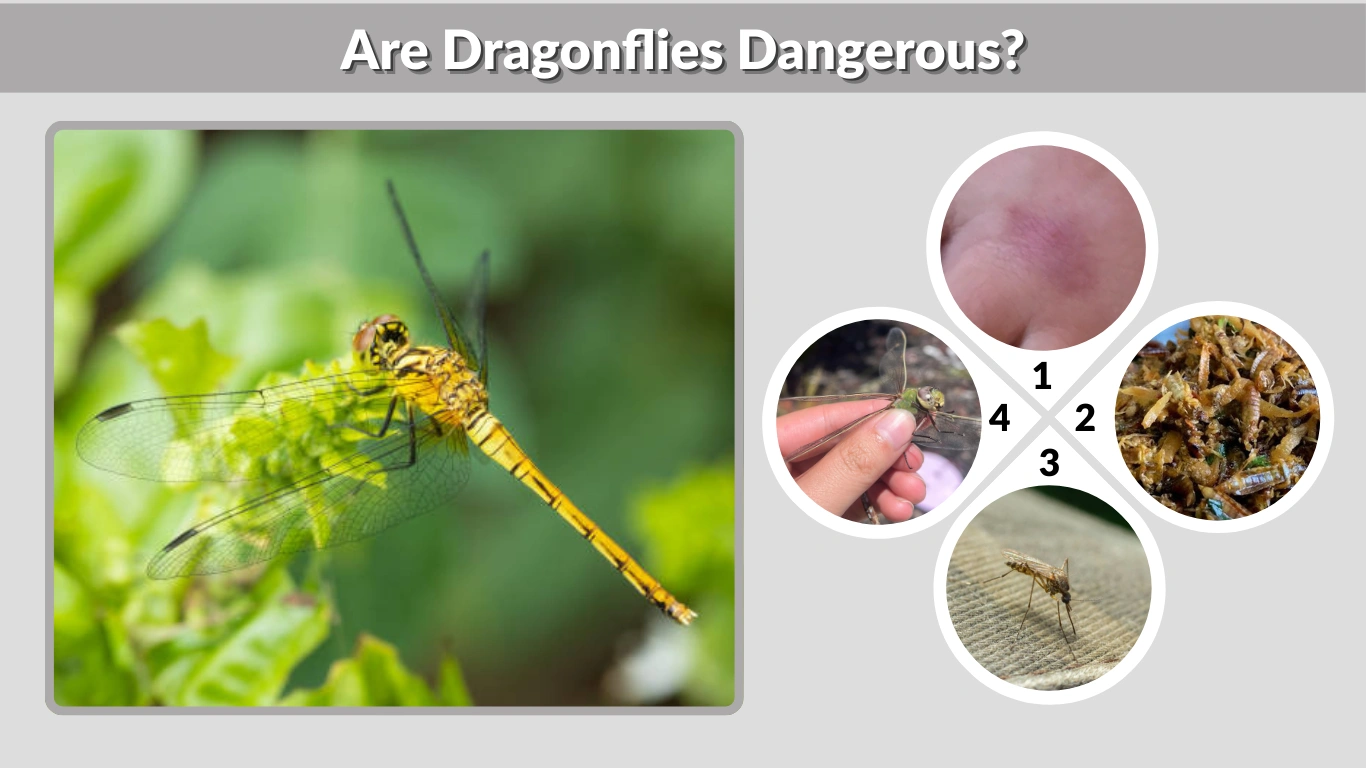
Dragonflies are fast, fascinating insects often seen hovering near ponds, lakes, and gardens. Their long bodies, wide wings, and large eyes can make them look intimidating at first glance. Because they move quickly and sometimes fly close to people, many wonder: are dragonflies dangerous? The short answer is no — dragonflies are generally harmless to humans. In fact, they are beneficial insects that help control mosquito populations. Let’s take a closer look at whether there’s any real reason to be concerned.
What Are Dragonflies?
Dragonflies belong to the order Odonata, a group of flying insects that have existed for over 300 million years. They are easily recognizable thanks to their long, slender bodies, two pairs of transparent wings, and large compound eyes that cover much of their head.
You’ll most commonly find dragonflies near freshwater sources such as:
- Ponds
- Lakes
- Streams
- Wetlands
- Backyard water features
This is because dragonflies lay their eggs in or near water. Their young, known as nymphs, live underwater before transforming into flying adults.
Beyond their striking appearance, dragonflies play an important ecological role. Both adult dragonflies and their aquatic nymphs are skilled predators. They feed on mosquitoes, flies, and other small insects, helping to maintain a balanced ecosystem.
Are Dragonflies Dangerous to Humans?

No, dragonflies are not dangerous to humans.
They are not aggressive insects and do not actively seek out people to attack. Unlike bees, wasps, or hornets, dragonflies do not have stingers and cannot inject venom. Most encounters with dragonflies are harmless and brief.
Sometimes, dragonflies may appear to fly directly toward you. This behavior can feel threatening, but it’s usually harmless. Dragonflies are highly territorial and curious. They may investigate movement in their environment, or they may simply be hunting mosquitoes that are flying nearby.
In short, dragonflies are far more interested in eating small insects than interacting with humans.
Do Dragonflies Bite?

While dragonflies are not dangerous, some people ask: do dragonflies bite?
The answer is yes — but only in rare situations.
Why Would a Dragonfly Bite?
Dragonflies have strong mouthparts called mandibles, which they use to catch and eat prey. However, they typically only use these to capture small insects.
A dragonfly may bite if:
- It is handled or grabbed
- It feels threatened
- It mistakes a finger for prey
These situations are uncommon because dragonflies usually avoid close contact with humans.
Does a Dragonfly Bite Hurt?
If a dragonfly does bite, it may feel like a small pinch. In most cases, the bite does not break the skin. Even if it does, it is not dangerous.
Here’s what you should know:
- Dragonflies do not have venom
- They do not inject toxins
- They do not transmit diseases through bites
At worst, a bite may cause minor discomfort similar to a tiny pinch. Serious reactions are extremely rare.
Can Dragonflies Sting?
A very common myth is that dragonflies can sting, especially with their long, thin tails. Some people even refer to them as “devil’s darning needles” because of this belief.
However, this is not true.
Dragonflies do not have stingers. Their long abdomen (often mistaken for a stinger) is used for balance and reproduction — not for defense.
Unlike bees or wasps:
- Dragonflies cannot inject venom
- They do not have a stinging organ
- They cannot attack in the way stinging insects do
This misconception likely comes from their appearance rather than their behavior.
Are Dragonflies Poisonous or Venomous?

Another common question is whether dragonflies are poisonous or venomous.
To clarify:
- Poisonous means harmful if touched or eaten.
- Venomous means able to inject toxins through a bite or sting.
Dragonflies are neither poisonous nor venomous.
They do not produce toxins, and they do not have glands that create venom. If a pet or wild animal eats a dragonfly, it is not exposed to poison. Likewise, if a dragonfly lands on your skin, there is no toxic risk.
Scientifically speaking, dragonflies are completely non-toxic insects.
Are Dragonflies Dangerous to Pets?
If you have dogs or cats, you might wonder whether dragonflies pose any risk to them. The good news is that dragonflies are generally harmless to pets.
Dogs and Cats
Many dogs and cats enjoy chasing flying insects, including dragonflies. Some may even catch and eat them. In most cases, this is not dangerous.
Dragonflies:
- Are not poisonous
- Do not contain venom
- Do not carry toxins harmful to pets
If a pet eats a dragonfly, the worst outcome is usually mild stomach upset — and even that is uncommon. Since dragonflies are natural insects without toxic defenses, they pose little to no threat when ingested.
Small Pets and Wildlife
For birds, frogs, reptiles, and fish, dragonflies are actually part of the natural food chain. In fact, dragonfly nymphs and adults are commonly eaten by wildlife.
Because they are non-toxic, dragonflies do not pose a chemical risk to small animals. They are simply another insect in the ecosystem.
Why Dragonflies Are Actually Beneficial

Instead of being dangerous, dragonflies are extremely helpful insects. In many environments, they are considered beneficial predators.
Natural Mosquito Control
One of the biggest advantages of dragonflies is their appetite for mosquitoes.
Adult dragonflies feed on:
- Mosquitoes
- Gnats
- Flies
- Small flying insects
Dragonfly nymphs (the underwater stage) also eat mosquito larvae before they mature. This means dragonflies help reduce mosquito populations both above and below water.
Some researchers even refer to dragonflies as “mosquito hawks” because of their efficiency in catching prey mid-flight.
If you dislike mosquito bites in your yard, dragonflies are actually your allies.
Indicators of a Healthy Ecosystem
Dragonflies are often found near clean, healthy bodies of water. Because their life cycle depends on freshwater habitats, they thrive in balanced ecosystems.
Their presence can indicate:
- Good water quality
- A healthy insect population
- Strong biodiversity
Rather than being pests, dragonflies contribute to ecological balance.
Why Do People Think Dragonflies Are Dangerous?
Despite being harmless, dragonflies sometimes intimidate people. There are several reasons for this.
First, their size can be surprising. Some species have wingspans of several inches, making them larger than many other flying insects.
Second, dragonflies fly quickly and hover suddenly. When one darts toward you, it may feel aggressive — but in reality, it is usually hunting smaller insects nearby.
Finally, myths and folklore have added to their scary reputation. Old nicknames like “devil’s darning needle” or “snake doctor” suggest danger, but these names are rooted in superstition, not science.
In truth, dragonflies are curious but not hostile insects.
When Should You Be Concerned?

In nearly all situations, there is no reason for concern around dragonflies.
However, minor issues could occur if:
- Someone grabs or squeezes one
- A dragonfly feels trapped
- A rare bite breaks the skin
If a bite does break the skin, simply wash the area with soap and water. There is no venom or toxin to worry about.
Allergic reactions to dragonfly bites are extremely rare. Compared to stinging insects like bees or wasps, dragonflies pose almost no medical risk.
How to Stay Safe Around Dragonflies
Coexisting with dragonflies is simple.
Here are a few easy tips:
- Avoid trying to catch or handle them
- Stay calm if one lands on you
- Teach children not to swat or grab insects
- Encourage dragonflies in your garden for natural pest control
If a dragonfly lands on you, it is harmless. It may simply be resting or investigating movement. It will usually fly away within seconds.
FAQs
Can a dragonfly bite break the skin?
In rare cases, a dragonfly bite may slightly break the skin if it feels threatened. However, this is uncommon and not dangerous. Dragonflies do not inject venom or toxins.
Are dragonflies aggressive?
No, dragonflies are not aggressive toward humans. They are territorial with other dragonflies but do not attack people intentionally.
What happens if a dragonfly lands on you?
Nothing harmful happens. Dragonflies may land briefly out of curiosity or to rest. They do not sting or harm humans.
Do dragonflies carry diseases?
Dragonflies are not known to transmit diseases to humans. Unlike mosquitoes, they do not spread viruses or infections.
Are dragonflies good or bad for your yard?
Dragonflies are good for your yard. They help control mosquitoes and other pest insects, making outdoor spaces more comfortable.
Final Verdict: Should You Be Afraid of Dragonflies?
No, you should not be afraid of dragonflies.
They are not dangerous, not venomous, and not aggressive. While they can bite in rare defensive situations, the risk is minimal and harmless. Instead of posing a threat, dragonflies provide valuable natural pest control and contribute to healthy ecosystems.
The next time you see one hovering nearby, you can feel reassured — dragonflies are far more helpful than harmful.