
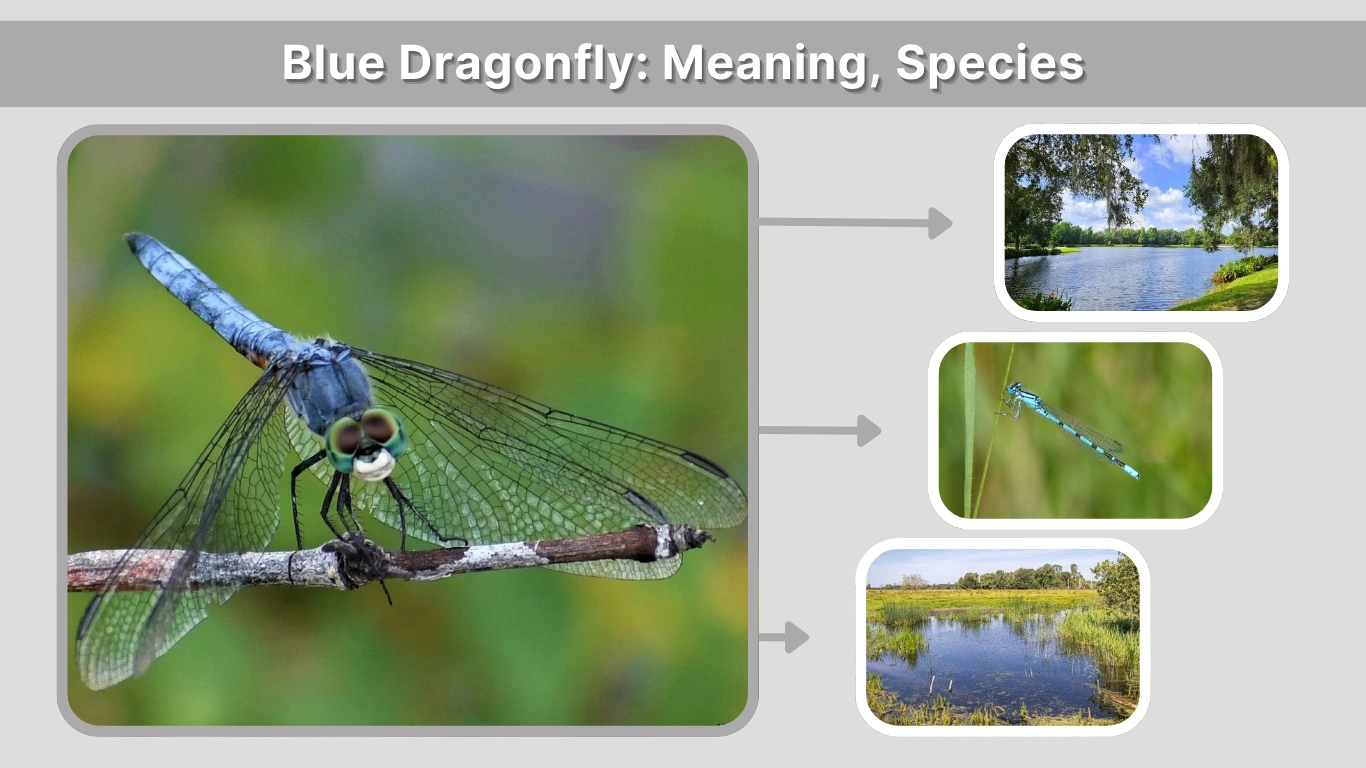
The blue dragonfly is one of the most striking insects found near water. With its shimmering wings and vibrant blue body, it easily captures attention in gardens, wetlands, and ponds. Many people are curious about whether blue dragonflies are rare and what they symbolize when they appear. Beyond their beauty, these insects play an important ecological role and carry deep spiritual meaning in various cultures. In this guide, we’ll explore what a blue dragonfly is, the different species, and why its brilliant color fascinates both scientists and nature lovers alike.
What Is a Blue Dragonfly?
A blue dragonfly is not a separate species but rather a dragonfly that displays blue coloration, either partially or entirely, on its body. Dragonflies belong to the order Odonata, a group of flying insects known for their large eyes, elongated bodies, and two pairs of transparent wings.
Scientific Classification
Dragonflies are part of the suborder Anisoptera. They are often confused with damselflies, which belong to the same order but differ in structure and behavior. Dragonflies typically have thicker bodies, stronger flight patterns, and wings that remain open when at rest. Damselflies, on the other hand, usually fold their wings back along their bodies.
One of the most noticeable features of dragonflies is their large compound eyes, which provide nearly 360-degree vision. This exceptional eyesight makes them highly skilled hunters.
Why Are Some Dragonflies Blue?
The brilliant blue color seen in many dragonflies is often the result of structural coloration rather than pigment alone. This means their bodies reflect light in a way that produces vibrant blue tones. In some species, a waxy coating called pruinescence develops as males mature, giving them a powdery blue appearance.
In many cases, male dragonflies are more brightly colored than females. The blue coloration often signals maturity and plays a role in attracting mates. Some species even change color as they age, with males turning bright blue only after reaching adulthood.
Types of Blue Dragonflies

There are many types of blue dragonflies found around the world. While their appearance may vary slightly, most share the same dazzling blue tones that make them easy to recognize.
Common Blue Dasher
The Common Blue Dasher (Pachydiplax longipennis) is widely found across North America. Males have a bright blue body with a dark thorax and clear wings. They are frequently seen perched on grasses or hovering near ponds and lakes. This species is especially common during summer months.
Blue Emperor Dragonfly
The Blue Emperor Dragonfly is one of Europe’s largest and most impressive dragonflies. It features a bold blue abdomen with greenish markings on the thorax. Known for its strong and direct flight, this species often patrols ponds and slow-moving rivers.
Blue Skimmer
The Blue Skimmer is commonly found in tropical and subtropical regions. It has a pale, powder-blue body and transparent wings. This dragonfly prefers warm climates and is often seen resting in sunny, open areas near water.
Eastern Pondhawk (Blue Male Morph)
The Eastern Pondhawk is an interesting example of color transformation. Females are typically green, but males gradually turn bright blue as they mature. This change makes adult males stand out dramatically in wetlands and garden ponds.
Are Blue Dragonflies Rare?
Blue dragonflies are not generally considered rare, but their visibility depends heavily on location and season. In many regions, especially near freshwater habitats, they are quite common during late spring and summer.
However, certain species may be less frequently seen due to habitat loss, pollution, or climate changes. Dragonflies rely on clean water for reproduction, and declining wetland areas can impact their populations. If you live near a healthy pond, marsh, or lake, spotting a blue dragonfly during warmer months is entirely possible.
While they may feel magical or uncommon when they appear, most blue dragonflies are simply thriving where conditions are suitable.
Habitat and Behavior of Blue Dragonflies

Blue dragonflies are closely tied to freshwater environments. Water plays a crucial role in their reproduction and early development, making ponds, lakes, marshes, and slow-moving streams their preferred habitats.
Where Do Blue Dragonflies Live?
You will most commonly find blue dragonflies near calm bodies of freshwater. They prefer areas with plenty of aquatic vegetation, which provides protection for eggs and nymphs. Wetlands and marshes are especially attractive because they offer both food and shelter.
Blue dragonflies are also common around backyard garden ponds. If the water is clean and free from chemicals, it can quickly become a breeding ground for these beautiful insects. Warm, sunny areas are ideal since dragonflies rely on sunlight to regulate their body temperature.
Diet and Hunting Skills
Dragonflies are expert aerial hunters. Blue dragonflies primarily feed on mosquitoes, flies, gnats, and other small flying insects. Their strong wings allow them to hover, glide, and change direction rapidly while chasing prey.
With nearly 360-degree vision, they can detect even the smallest movements. Once they lock onto their target, they capture it mid-air using their legs, which form a basket-like shape. Because they consume large numbers of mosquitoes, blue dragonflies are considered beneficial insects.
Life Cycle
The life cycle of a blue dragonfly begins when the female lays eggs in or near water. These eggs hatch into aquatic nymphs, also called larvae. The nymph stage can last from several months to several years, depending on the species.
During this stage, the nymph lives underwater and is a skilled predator, feeding on small aquatic creatures. When it is ready to mature, the nymph climbs out of the water and undergoes metamorphosis, emerging as a winged adult.
The adult stage is relatively short, often lasting only a few weeks to a few months. During this time, the dragonfly focuses on feeding and reproduction.
Blue Dragonfly Meaning and Symbolism
Beyond their biological importance, blue dragonflies carry powerful symbolic meaning. Their bright color and graceful flight have inspired spiritual interpretations across cultures.
Spiritual Meaning
The blue dragonfly is often associated with transformation and personal growth. Because dragonflies undergo dramatic metamorphosis, they symbolize change and adaptability. The color blue adds additional meaning, often linked to calmness, clarity, and communication.
Many believe seeing a blue dragonfly represents emotional balance and inner peace. It may serve as a reminder to trust life’s transitions and embrace new opportunities.
Cultural Symbolism
In Native American traditions, dragonflies are seen as symbols of renewal and swiftness. They are sometimes connected to water spirits and transformation.
In Japanese culture, dragonflies represent strength, courage, and happiness. They have long been admired and even appear in traditional art and poetry.
In modern spiritual interpretations, a blue dragonfly can symbolize hope, self-realization, and positive change.
What Does It Mean When You See a Blue Dragonfly?
If you encounter a blue dragonfly, it is often interpreted as a sign of growth or a shift in perspective. Some people view it as encouragement to let go of old habits and move forward with confidence.
Others see it as a reminder to stay calm and communicate clearly. Whether you interpret it spiritually or simply admire its beauty, spotting a blue dragonfly can feel meaningful and uplifting.
Blue Dragonfly vs Blue Damselfly

Although they look similar, blue dragonflies and blue damselflies have key differences.
Dragonflies have thicker, more robust bodies, while damselflies are slender and delicate. When resting, dragonflies typically hold their wings open and flat, whereas damselflies fold their wings neatly along their bodies.
Another noticeable difference is their flight style. Dragonflies are powerful fliers that can glide and hover with speed and precision. Damselflies have a lighter, fluttering flight pattern. Observing these features can help you correctly identify what you are seeing near water.
How to Attract Blue Dragonflies to Your Garden
If you want to welcome blue dragonflies into your outdoor space, creating a water-friendly environment is key. Adding a small pond or water feature can encourage them to visit and breed.
Planting native aquatic plants provides shelter for nymphs and perching spots for adults. Avoid using pesticides, as chemicals can harm both dragonflies and their food sources. Ensuring that part of your garden receives direct sunlight will also make it more inviting.
With the right conditions, blue dragonflies may become regular visitors.
FAQs
What does a blue dragonfly symbolize?
A blue dragonfly commonly symbolizes transformation, clarity, and emotional balance. Because dragonflies undergo metamorphosis, they represent change and personal growth. The blue color is often linked to calmness and communication, making the blue dragonfly a powerful symbol of inner peace and positive life transitions.
How long do blue dragonflies live?
Most of a blue dragonfly’s life is spent in the aquatic nymph stage, which can last months or even years. However, the adult stage typically lasts only a few weeks to a few months. During adulthood, they focus on feeding, mating, and reproduction.
Are blue dragonflies male or female?
In many species, bright blue coloration is more common in males. Males often develop vivid blue tones as they mature, while females may appear green or brown. However, coloration varies by species, and both males and females can sometimes display blue markings.
Are blue dragonflies good luck?
In many cultures, dragonflies are considered symbols of good fortune, renewal, and happiness. Seeing a blue dragonfly is often viewed as a positive sign representing hope, transformation, and new beginnings.
Conclusion
The blue dragonfly is more than just a beautiful insect. It plays an important ecological role as a predator of mosquitoes and serves as an indicator of healthy freshwater ecosystems. At the same time, it carries powerful symbolic meaning tied to transformation, clarity, and renewal. Whether you spot one near a quiet pond or in your own garden, a blue dragonfly is a reminder of nature’s beauty and the constant possibility of change.