
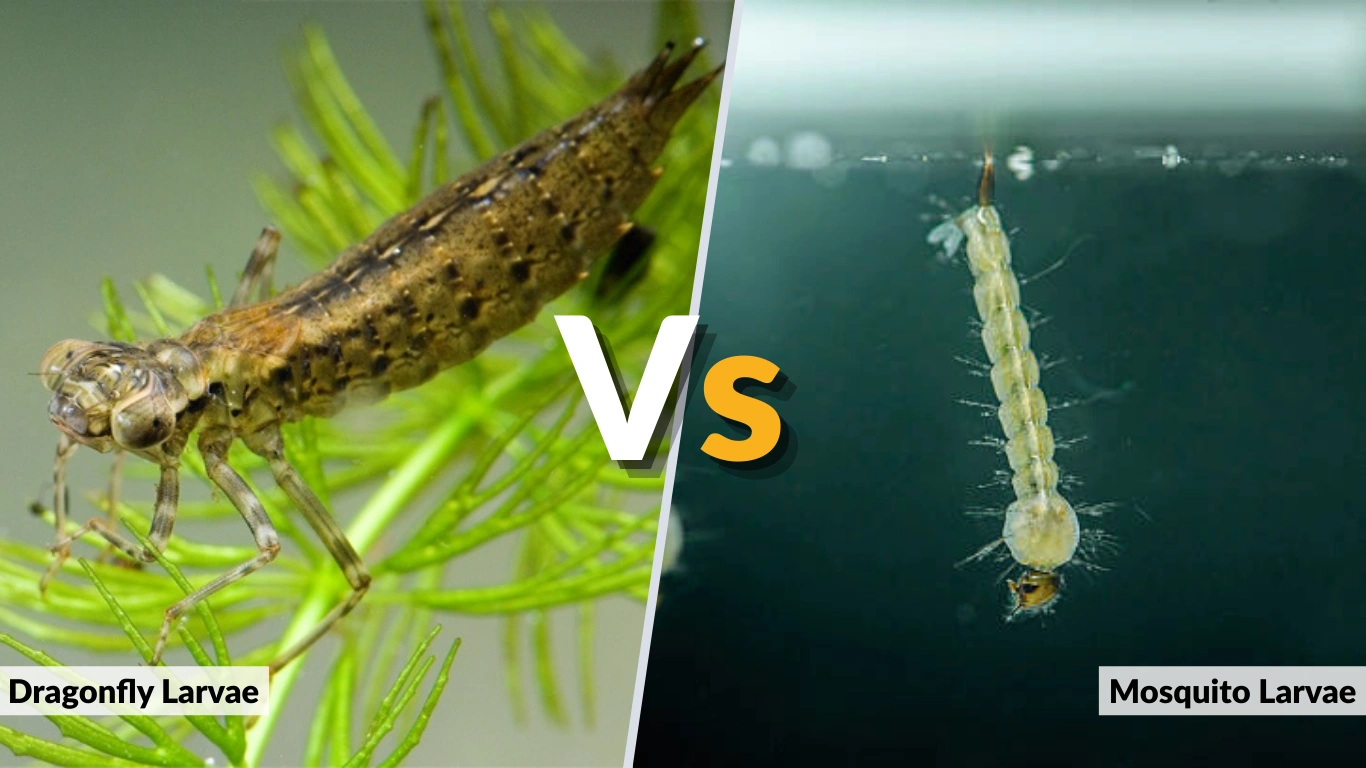
Dragonfly larvae and mosquito larvae are both commonly found in freshwater habitats, but they are very different insects. While mosquito larvae are known as pests that grow into biting adults, dragonfly larvae are powerful aquatic predators that actually help control mosquito populations. Understanding the differences between dragonfly larvae vs mosquito larvae is important for pond owners, gardeners, and anyone interested in aquatic ecosystems.
This guide explains how to identify them, how they behave, what they eat, and why one is beneficial while the other is considered a nuisance.
What Are Dragonfly Larvae?

Dragonfly larvae, also called nymphs, are the immature stage of dragonflies. Before becoming graceful flying insects, dragonflies spend most of their lives underwater. This larval stage can last anywhere from several months to three years, depending on the species and environmental conditions.
Dragonfly larvae live in:
- Ponds
- Lakes
- Slow-moving rivers
- Marshes
- Backyard water gardens
They are active predators and play a vital role in freshwater ecosystems.
What Are Mosquito Larvae?

Mosquito larvae are the immature stage of mosquitoes. They hatch from eggs laid in standing water and develop quickly, usually within one to two weeks.
You can find mosquito larvae in:
- Birdbaths
- Buckets
- Puddles
- Clogged gutters
- Any container holding stagnant water
Unlike dragonfly larvae, mosquito larvae are not predators. They feed on microscopic organic matter and algae near the surface of the water.
Dragonfly Larvae vs Mosquito Larvae: Physical Differences

One of the easiest ways to tell them apart is by appearance.
Size and Shape
Dragonfly Larvae:
- Thick, stocky body
- Six visible legs
- Large head with strong jaws
- Usually brown or green
- Grow up to 1–2 inches long (depending on species)
Mosquito Larvae:
- Thin, worm-like body
- No visible legs
- Small head
- Often hang at the water’s surface
- Usually less than ½ inch long
Mosquito larvae are sometimes called “wigglers” because of how they move. Dragonfly larvae crawl along the bottom or hide among plants.
Movement Differences

Movement is another clear distinction.
Dragonfly Larvae Movement
Dragonfly larvae move by:
- Crawling along the bottom
- Clinging to plants
- Using jet propulsion by expelling water from their abdomen
They are stealth hunters and often stay still while waiting to ambush prey.
Mosquito Larvae Movement
Mosquito larvae:
- Wiggle rapidly in an S-shape
- Hang upside down from the surface
- Come up frequently to breathe air
If disturbed, they quickly dive downward but soon return to the surface.
Breathing Mechanisms
Both insects live in water, but they breathe differently.
Dragonfly Larvae
- Breathe through internal gills located in the abdomen
- Can remain submerged without coming to the surface
Mosquito Larvae
- Breathe air through a tube called a siphon
- Must regularly come to the surface
If you see tiny larvae constantly rising to the surface, they are likely mosquito larvae.
Diet: Predator vs Filter Feeder

One of the most important differences in the dragonfly larvae vs mosquito larvae comparison is diet.
What Do Dragonfly Larvae Eat?
Dragonfly larvae are aggressive predators. They eat:
- Mosquito larvae
- Small aquatic insects
- Tadpoles
- Tiny fish
- Other invertebrates
They use a specialized extendable lower jaw (labium) to shoot forward and grab prey in a split second.
Because dragonfly larvae eat mosquito larvae, they are considered beneficial insects.
What Do Mosquito Larvae Eat?
Mosquito larvae feed on:
- Algae
- Bacteria
- Organic debris
- Microscopic organisms
They are filter feeders, not hunters. Their primary goal is to grow quickly and transform into adult mosquitoes.
Development Time
The life cycle timing is very different.
Dragonfly Larvae
- Remain underwater for 1–3 years
- Grow slowly
- Molt multiple times before becoming adults
Mosquito Larvae
- Develop in 4–14 days (depending on temperature)
- Rapid growth
- Quickly become adult mosquitoes
Because mosquitoes develop so quickly, even small amounts of standing water can lead to infestations.
Role in the Ecosystem
Understanding their ecological roles highlights why one is helpful and the other is harmful.
Dragonfly Larvae: Beneficial Predators
Dragonfly larvae help by:
- Controlling mosquito populations
- Maintaining insect balance
- Serving as food for fish and birds
- Indicating good water quality
Their presence usually suggests a healthy aquatic environment.
Mosquito Larvae: Pest Species
Mosquito larvae:
- Grow into biting adult mosquitoes
- Spread diseases such as malaria, dengue, and West Nile virus
- Thrive in stagnant water
Because of their health risks, mosquito larvae are often targeted for control.
Identification Guide: Quick Comparison Table
| Feature | Dragonfly Larvae | Mosquito Larvae |
| Body Shape | Thick, robust | Thin, worm-like |
| Legs | Six visible legs | No visible legs |
| Size | Up to 2 inches | Under ½ inch |
| Movement | Crawl or jet propulsion | Wiggle at surface |
| Diet | Predatory | Filter feeder |
| Development Time | 1–3 years | 1–2 weeks |
| Benefit or Pest? | Beneficial | Pest |
Habitat Differences
Dragonfly larvae prefer:
- Larger bodies of water
- Clean or moderately clean environments
- Areas with vegetation for hiding
Mosquito larvae prefer:
- Stagnant water
- Small containers
- Warm, shallow pools
- Temporary water sources
If you find larvae in a neglected bucket or gutter, they are almost certainly mosquito larvae, not dragonflies.
Can Dragonfly Larvae Control Mosquitoes?
Yes. Dragonfly larvae are natural mosquito predators. A single larva can eat dozens of mosquito larvae over time.
However, they are not a complete mosquito control solution. Mosquitoes reproduce quickly and can breed in very small amounts of water where dragonflies cannot survive.
The best mosquito control strategy includes:
- Removing standing water
- Encouraging natural predators
- Maintaining clean ponds
Safety and Handling
Neither dragonfly larvae nor mosquito larvae are dangerous to humans. However:
- Dragonfly larvae may pinch if handled.
- Mosquito larvae are harmless in water but become biting adults later.
It is generally best to observe them rather than handle them.
FAQs
What is the main difference between dragonfly larvae and mosquito larvae?
The main difference is that dragonfly larvae are large, predatory insects with visible legs, while mosquito larvae are small, worm-like filter feeders. Dragonfly larvae crawl along the bottom and hunt prey, whereas mosquito larvae wiggle near the surface and feed on microscopic debris.
Do dragonfly larvae eat mosquito larvae?
Yes, dragonfly larvae actively hunt and eat mosquito larvae. They use a fast, extendable lower jaw to capture prey. Because of this, dragonfly larvae are considered beneficial insects that help naturally reduce mosquito populations in ponds and wetlands.
How can I tell if I have mosquito larvae in my water?
Mosquito larvae hang at the water’s surface and move with a quick, wriggling motion. They frequently come up for air. If you disturb the water and see small, thin “wigglers” diving down and returning to the surface, they are likely mosquito larvae.
Are dragonfly larvae harmful to fish?
Dragonfly larvae can prey on very small fish or fry if kept in the same environment. While they are beneficial in natural ecosystems, they may not be suitable for small backyard fish ponds or aquariums containing tiny fish.
How long do dragonfly larvae and mosquito larvae live in water?
Dragonfly larvae can live underwater for one to three years before becoming adults. In contrast, mosquito larvae develop very quickly, usually transforming into adult mosquitoes within one to two weeks, depending on temperature and conditions.