
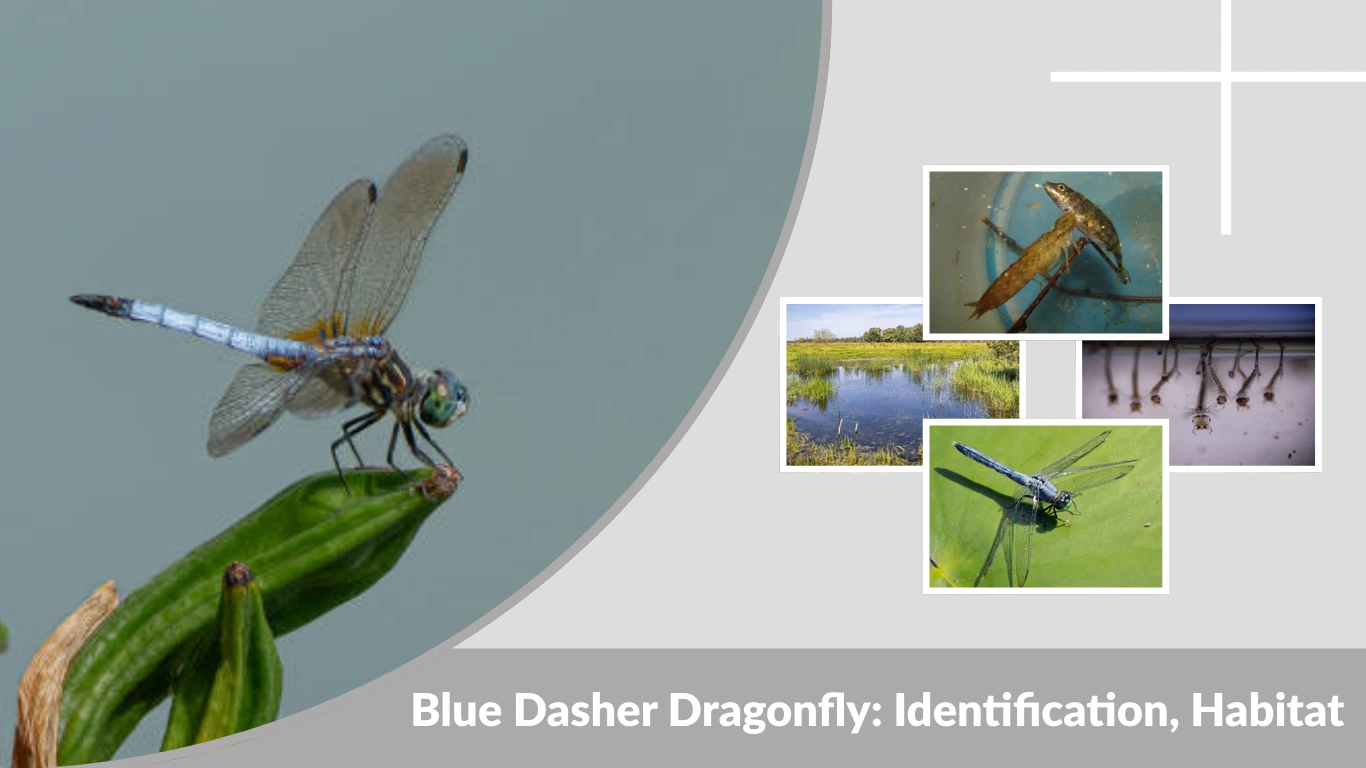
The blue dasher dragonfly (Pachydiplax longipennis) is one of the most common and easily recognized dragonflies in North America. Known for the male’s powdery blue abdomen and bright green eyes, this small but striking insect is often seen darting around ponds, lakes, and slow-moving streams. Despite its delicate appearance, the blue dasher is a skilled aerial predator and an important part of freshwater ecosystems. In this guide, you’ll learn how to identify it, where it lives, and how it survives throughout its fascinating life cycle.
What Is the Blue Dasher Dragonfly?
The blue dasher belongs to the skimmer family, Libellulidae, which includes many of the brightly colored dragonflies seen near water. It is admired not only for its vivid coloration but also for its bold and curious behavior.
Scientific Classification and Name Meaning
The scientific name Pachydiplax longipennis comes from Greek and Latin roots. “Pachy” means thick, “diplax” refers to double plates (likely describing body structure), and “longipennis” means long-winged. As a member of the Libellulidae family, the blue dasher shares characteristics with other skimmers, including strong flight ability and a preference for open, sunny habitats.
This species is considered one of the most widespread dragonflies in its range, making it a favorite subject for beginner insect watchers and photographers.
Geographic Distribution
Blue dasher dragonflies are found throughout most of the United States. Their range extends into southern Canada during warmer months and reaches parts of Mexico in the south. They are especially abundant in the eastern and central United States but can also be found in western regions wherever suitable freshwater habitats exist.
In colder climates, they are primarily active from late spring through early fall. In warmer southern states, their season may last much longer, sometimes nearly year-round.
How to Identify a Blue Dasher Dragonfly

Correctly identifying a blue dasher dragonfly is relatively easy once you know what to look for. However, males and females look quite different, which sometimes causes confusion.
Male Blue Dasher Characteristics
The male blue dasher is the most recognizable form. Mature males develop a powdery blue coating, called pruinosity, along most of their abdomen. This bluish appearance becomes more intense as they age.
Key features of male blue dashers include:
- A bright blue or bluish-gray abdomen
- Green to blue compound eyes
- A pale or whitish face
- Slender body about 1.5 to 2 inches long
- Clear wings with fine dark veins
One distinctive behavior is their habit of perching on the tips of grasses or small sticks with the abdomen slightly raised. This upward tilt is a helpful identification clue.
Female Blue Dasher Characteristics
Female blue dashers look very different from males. Instead of blue, their bodies are usually yellow with dark brown or black striping along the abdomen. Their eyes may appear brownish or greenish rather than bright blue.
Unlike males, females do not develop the powdery blue coating. This difference often leads beginners to mistake them for entirely different species. However, their size, shape, and habitat are similar to the males.
Distinctive Features
In addition to coloration, blue dashers have other features that help with identification:
- A compact, slightly flattened abdomen
- Clear wings without bold dark patches
- A white or pale face
- Large compound eyes that nearly touch
When perched, they often appear alert and ready to take off quickly. Their quick return to the same perch after short flights is another typical behavior.
Blue Dasher Habitat and Preferred Environment

The blue dasher dragonfly is closely tied to freshwater environments. Water plays a crucial role in its life cycle, particularly during its early developmental stages.
Types of Water Bodies They Prefer
Blue dashers are commonly found around:
- Ponds
- Lakes
- Marshes
- Slow-moving streams
- Ditches and small reservoirs
They prefer calm or gently moving water rather than fast-flowing rivers. Backyard garden ponds can also attract them, especially if the pond has natural vegetation and receives plenty of sunlight.
Ideal Environmental Conditions
Sunlight is important for blue dashers because dragonflies rely on external heat sources to regulate their body temperature. You’ll often see them resting in sunny areas during warm afternoons.
They also favor locations with nearby vegetation, such as tall grasses, reeds, or shrubs. These plants provide:
- Perching spots
- Protection from predators
- Egg-laying areas
Areas with clean, unpolluted water tend to support larger populations. Because their larvae develop underwater, good water quality is essential for survival.
Life Cycle of the Blue Dasher Dragonfly

Like all dragonflies, the blue dasher undergoes incomplete metamorphosis. Its life cycle includes three main stages: egg, nymph (larva), and adult.
Egg Stage
After mating, the female lays her eggs in or near freshwater. She may dip her abdomen directly into the water to release eggs, sometimes while the male guards her from nearby rivals.
The eggs hatch within a few days to a few weeks, depending on temperature and environmental conditions. Once hatched, the young dragonfly enters its aquatic phase.
Aquatic Nymph Stage
The nymph stage is the longest part of the blue dasher’s life. These immature dragonflies live underwater and look completely different from the winged adults. They have stout bodies, extendable jaws, and no visible wings.
As nymphs, they are active predators, feeding on:
- Mosquito larvae
- Small aquatic insects
- Tiny fish or tadpoles (occasionally)
They molt multiple times as they grow. This stage can last several months, depending on climate and food availability. During this time, they play a vital role in controlling mosquito populations in freshwater habitats.
Eventually, when fully developed, the nymph climbs up a plant stem or other surface above the water to begin its transformation into an adult dragonfly.
Adult Stage
Once the nymph climbs out of the water, it undergoes its final molt. The outer skin splits open, and the adult dragonfly slowly emerges. At first, its body is soft and pale, and its wings are crumpled. Over several hours, the wings expand and harden as fluids pump through them.
After this transformation, the blue dasher begins its life as a flying predator.
The adult stage typically lasts several weeks, although some individuals may live a couple of months under ideal conditions. During this time, their primary goals are feeding, defending territory, and reproducing. Peak activity usually occurs in summer, when warm temperatures provide the best flying conditions.
What Do Blue Dasher Dragonflies Eat?

Blue dasher dragonflies are carnivorous at every stage of life. They are efficient predators that help maintain balance in aquatic and terrestrial ecosystems.
Diet as Nymphs
Underwater, nymphs are stealthy hunters. They use a specialized extendable lower jaw, called a labium, to quickly grab prey.
Their diet includes:
- Mosquito larvae
- Small aquatic insects
- Water fleas
- Tiny crustaceans
Because they consume mosquito larvae, they contribute significantly to natural mosquito control long before reaching adulthood.
Diet as Adults
As adults, blue dashers become aerial hunters. They catch prey mid-flight using their spiny legs, which form a basket-like structure to trap insects.
Common prey includes:
- Mosquitoes
- Flies
- Gnats
- Small moths
- Other tiny flying insects
They typically return to a perch after catching and eating their prey. This “dash and return” behavior is part of how they earned the name “dasher.”
Behavior and Mating Habits
Blue dashers are active, alert, and sometimes aggressive, especially during breeding season.
Territorial Behavior
Male blue dashers are highly territorial. They select a perch near water and defend it against other males. If a rival approaches, the resident male will chase it away in a rapid aerial pursuit.
After chasing off intruders, the male often returns to the exact same perch. This repeated use of favored perches makes them easier to observe.
Mating Process
When a female enters a male’s territory, the male attempts to mate. Dragonflies mate in a unique heart-shaped formation known as the “wheel” position.
After mating, the female lays eggs in water, often while the male remains nearby to guard her from competitors. This guarding behavior increases the likelihood that his genes are passed on successfully.
Flight Pattern
Blue dashers are agile fliers. Their flight is quick and darting, with frequent hovering and sudden changes in direction. They can fly forward, backward, and even hover briefly in place.
Their two pairs of wings move independently, allowing for remarkable control and precision in the air.
Blue Dasher vs Similar Dragonfly Species

Because many dragonflies have blue coloration, misidentification is common.
Blue Dasher vs Eastern Pondhawk
The eastern pondhawk is one of the species most often confused with the blue dasher.
Key differences include:
- Eastern pondhawks are usually slightly larger.
- Pondhawks have a thicker, more robust abdomen.
- Blue dashers often show a white face and slimmer body.
Behavior can also help distinguish them. Blue dashers frequently perch with their abdomen slightly raised, while pondhawks may rest more horizontally.
Common Misidentification Tips
To correctly identify a blue dasher:
- Look for the upward-curved abdomen while perched.
- Check the eye color (bright green or blue in males).
- Observe habitat — blue dashers strongly prefer calm freshwater areas.
Careful observation of size, posture, and coloration usually makes identification easier.
Are Blue Dasher Dragonflies Beneficial?
Yes, blue dasher dragonflies are highly beneficial.
They help control mosquito populations both as aquatic nymphs and as flying adults. This natural pest control reduces the need for chemical insecticides in many environments.
They also serve as important links in the food chain. Fish, birds, frogs, and other wildlife feed on dragonflies, making them essential to ecosystem balance.
In addition, dragonflies are considered indicators of healthy water systems. A thriving blue dasher population often suggests good water quality and a stable freshwater habitat.
Importantly, blue dashers are harmless to humans. They do not sting, and although they can technically bite if handled, they rarely do and pose no danger.
How to Attract Blue Dasher Dragonflies to Your Yard
If you want to see more blue dashers near your home, creating a welcoming habitat is key.
Install a Small Pond
A backyard pond is one of the best ways to attract dragonflies. Even a small water feature can work if it includes:
- Shallow edges
- Native aquatic plants
- Clean, chemical-free water
Still or gently moving water is ideal.
Provide Perching Spots
Blue dashers need places to rest between flights. Add:
- Tall grasses
- Thin sticks
- Small shrubs near water
These natural perches make your yard more appealing to them.
Avoid Pesticides
Chemical pesticides can harm dragonfly larvae and reduce their food supply. Maintaining a pesticide-free garden supports insect diversity and helps dragonflies thrive.
Interesting Blue Dasher Dragonfly Facts
- Males develop their blue coloration as they mature.
- Their compound eyes give them nearly 360-degree vision.
- They can catch prey with impressive aerial precision.
- They are among the most commonly seen dragonflies in North America.
Their bold perching behavior and bright coloration make them a favorite among nature photographers.
FAQs
How long do blue dasher dragonflies live?
Blue dasher dragonflies spend several months as aquatic nymphs. Their adult life typically lasts a few weeks to a couple of months. The exact lifespan depends on environmental conditions, temperature, and food availability.
Are blue dasher dragonflies rare?
No, blue dashers are one of the most common dragonfly species in North America. They are widely distributed and frequently seen around ponds, lakes, and other calm freshwater habitats during warm months.
Do blue dasher dragonflies bite or sting?
Blue dashers do not sting because they do not have stingers. While they can technically bite if handled, they rarely do, and their bite is harmless to humans.
What does a blue dasher dragonfly symbolize?
Dragonflies are often associated with change, transformation, and adaptability. Because of their striking blue color and agile flight, blue dashers may also symbolize clarity, lightness, and resilience in many cultural interpretations.
Conclusion
The blue dasher dragonfly is a small but remarkable insect that plays an important role in freshwater ecosystems. From its aquatic nymph stage to its agile adult form, it helps control insect populations and supports biodiversity. With its bright coloration, territorial behavior, and widespread presence, it is one of the easiest dragonflies to observe and appreciate. Protecting clean water sources and natural habitats ensures that future generations can continue to enjoy this fascinating species.