
Dragonfly larvae, also known as dragonfly nymphs, are fascinating aquatic insects that spend most of their lives hidden underwater. Many people first notice them when cleaning a pond, spotting something unusual in standing water, or trying to control mosquito populations naturally. While adult dragonflies are well known for their speed and beauty, their larval stage is far less understood—but incredibly important. Dragonfly larvae play a key role in freshwater ecosystems and are powerful predators of mosquito larvae and other small aquatic organisms. Understanding what they are, how to identify them, and what they eat can help pond owners and homeowners decide whether these creatures are friends or pests.
What Are Dragonfly Larvae?
Dragonfly larvae are the immature stage of dragonflies and are commonly referred to as nymphs. Unlike butterflies or beetles that go through a pupal stage, dragonflies undergo incomplete metamorphosis. This means their larvae already resemble the adult insect in basic form, just without wings.
Dragonfly larvae live entirely underwater and can remain in this stage for several months to several years, depending on the species and environmental conditions. During this time, they grow by molting their exoskeleton multiple times. Because they are aquatic predators, they rely on freshwater habitats to survive and develop properly.
Dragonfly Larvae in Water
Dragonfly larvae are found in a wide range of freshwater environments, including ponds, lakes, marshes, slow-moving streams, and even untreated swimming pools. They prefer still or gently moving water with plants, rocks, or debris where they can hide and ambush prey.
Unlike fish, dragonfly larvae do not have gills on the outside of their bodies. Instead, they breathe through internal gills located in the rectum, drawing water in and out to extract oxygen. This process also allows them to move suddenly by expelling water, giving them a quick jet-like burst when hunting or escaping predators.
What Do Dragonfly Larvae Look Like?

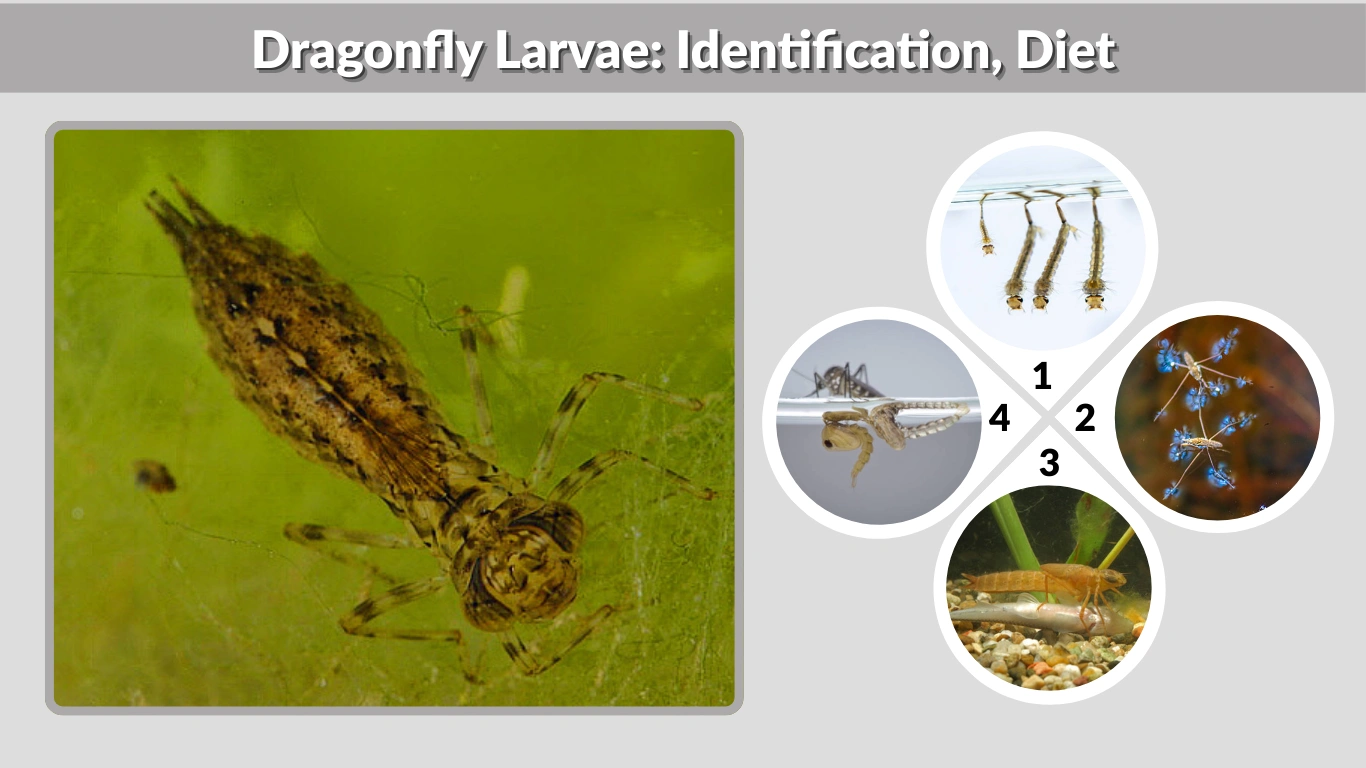
Dragonfly larvae have a stout, elongated body that is usually brown, green, or gray, helping them blend in with mud and vegetation. Most species range from about ½ inch to over 2 inches long. Their bodies appear thick and somewhat armored, with six legs positioned near the front.
One of the most distinctive features of dragonfly larvae is their extendable lower jaw, called a labium. This jaw shoots forward at high speed to grab prey, making dragonfly larvae highly effective hunters. When resting, this jaw folds neatly under the head, which can make identification difficult for beginners.
Dragonfly Larvae Pictures and Identification Tips
When looking at dragonfly larvae pictures or photos, focus on the thick body shape and lack of external tail gills. Many people confuse dragonfly larvae with damselfly larvae or mosquito larvae. Mosquito larvae are thin, worm-like, and move in a wriggling motion near the water’s surface, while dragonfly larvae crawl along the bottom or cling to plants.
Another helpful identification tip is behavior. Dragonfly larvae are slow-moving most of the time, relying on camouflage rather than constant motion. If disturbed, they may suddenly dart forward using their jet propulsion.
Dragonfly Larvae Life Cycle and Stages
The life cycle of a dragonfly begins when eggs are laid in or near water. After hatching, the larvae immediately begin their aquatic life. This larval stage is the longest part of the dragonfly’s life cycle and includes multiple growth stages as the nymph molts.
As the larva matures, it becomes more active and predatory. When it is ready to transform into an adult, it crawls out of the water onto a plant stem or solid surface. The exoskeleton splits open, and the adult dragonfly emerges, eventually flying away after its wings harden.
What Do Dragonfly Larvae Eat?

Dragonfly larvae are strict carnivores and opportunistic predators. They feed on almost any living creature they can overpower, including small insects, aquatic worms, tadpoles, and even tiny fish. Their extendable jaw allows them to strike quickly, making escape difficult for prey.
Do Dragonfly Larvae Eat Mosquito Larvae?
Yes, dragonfly larvae do eat mosquito larvae, which is one of the main reasons they are considered beneficial. Mosquito larvae are a common and easy target, especially in still water. A single dragonfly larva can consume large numbers of mosquito larvae over its lifetime.
However, while dragonfly larvae help reduce mosquito populations, they should not be relied on as the only control method. They work best as part of a balanced ecosystem that includes water movement, predators, and proper maintenance.
Mosquito Larvae vs Dragonfly Larvae

Mosquito larvae and dragonfly larvae differ significantly in appearance and behavior. Mosquito larvae are slender, light-colored, and usually found near the water’s surface, where they breathe through a siphon tube. They move constantly in a wriggling motion.
Dragonfly larvae, on the other hand, are thicker, darker, and live near the bottom of the water. They move slowly and deliberately, relying on ambush rather than constant motion. Seeing dragonfly larvae is often a sign of a healthier, more balanced aquatic environment.
Damselfly vs Dragonfly Larvae
Dragonfly larvae are often confused with damselfly larvae, as both live in freshwater and share similar habitats. However, there are clear physical differences that make identification easier once you know what to look for.
Dragonfly larvae have a thick, compact body and lack external tail structures. They breathe using internal gills, which are hidden inside the body. Damselfly larvae, by contrast, are slimmer and have three leaf-like tail gills extending from the end of their abdomen. These tail gills are the easiest way to distinguish between the two.
Behavior also differs between the species. Damselfly larvae are generally weaker swimmers and tend to cling to vegetation, while dragonfly larvae are more robust predators that crawl along the bottom and strike prey with greater force. Both are beneficial insects, but dragonfly larvae are usually more effective at controlling mosquito populations.
Dragonfly Larvae in Ponds and Pools

Dragonfly larvae commonly appear in garden ponds, water features, and other bodies of still freshwater. Their presence usually indicates a functioning ecosystem with enough oxygen and food sources. In ponds, they help control insect populations and rarely cause problems when balanced with fish and plants.
While dragonfly larvae may occasionally eat very small fish or fry, they are unlikely to harm adult fish. In most cases, the benefits of reduced mosquito larvae far outweigh any minor risks. Pond owners often encourage dragonflies by adding aquatic plants and avoiding excessive chemical treatments.
Dragonfly Larvae in Swimming Pools
Finding dragonfly larvae in swimming pools can be surprising, but it does happen, especially in pools that are unused or poorly chlorinated. Adult dragonflies may mistake still pool water for a suitable breeding site and lay eggs.
Dragonfly larvae are not dangerous to humans and do not sting or bite people. However, they do not belong in pools and should be removed. The safest method is to use a net and relocate them to a nearby natural water source. Maintaining proper chlorine levels and water circulation will usually prevent them from returning.
Can You Buy Dragonfly Larvae?
Many people wonder whether it is possible to buy dragonfly larvae for mosquito control or pond stocking. In some regions, dragonfly larvae are sold through pond suppliers or biological control vendors. However, availability is limited, and shipping live larvae can be challenging.
Before attempting to buy dragonfly larvae, it is important to check local wildlife regulations. In some areas, collecting or selling native insect species is restricted. There are also ethical considerations, as transporting larvae can disrupt local ecosystems if the species is not native.
Dragonfly Larvae for Sale: What to Know
Even when dragonfly larvae are available for sale, survival rates during transport may be low. Larvae are sensitive to changes in temperature, oxygen, and water quality. As a result, purchasing them is often less effective than attracting dragonflies naturally.
Creating a suitable habitat is usually the better approach. Providing clean water, native plants, and shelter encourages adult dragonflies to lay eggs on their own. This leads to healthier populations and better long-term mosquito control without the risks associated with buying larvae.
Do Mosquito Dunks Kill Dragonfly Larvae?

Mosquito dunks are a popular tool for controlling mosquitoes in ponds and standing water. They contain a bacterium called Bacillus thuringiensis israelensis (BTI), which specifically targets mosquito larvae.
BTI works by disrupting the digestive system of mosquito larvae when ingested. Dragonfly larvae, however, are not affected because they do not feed in the same way. When used correctly, mosquito dunks are considered safe for dragonfly larvae, fish, birds, and other wildlife.
For pond owners, this means mosquito dunks can be used alongside natural predators like dragonfly larvae without harming beneficial insects.
Should You Encourage Dragonfly Larvae?
Encouraging dragonfly larvae is generally a good idea for anyone looking to reduce mosquitoes naturally. They provide long-term control, support biodiversity, and require no chemical intervention. Their presence often signals a healthy freshwater environment.
That said, balance is important. Overcrowded ponds or very small water features may not support large predators well. By maintaining clean water, adding plants, and avoiding unnecessary pesticides, you can create an environment where dragonfly larvae thrive naturally.
Conclusion
Dragonfly larvae are an essential but often overlooked part of freshwater ecosystems. From their unique appearance and fascinating life cycle to their role as powerful mosquito predators, they offer both ecological and practical benefits. Whether you find them in a pond, notice them while cleaning a pool, or simply want to understand how to control mosquitoes naturally, learning about dragonfly larvae can change how you view these aquatic insects. Encouraging them through habitat-friendly practices is usually more effective than buying them, leading to healthier water and fewer mosquitoes over time.
FAQs
Are dragonfly larvae dangerous to humans?
No, dragonfly larvae are not dangerous to humans. They do not sting, and while they may pinch if handled roughly, it is harmless. They pose no threat to swimmers, pets, or children.
How long do dragonfly larvae live in water?
Dragonfly larvae can live underwater from several months to up to five years, depending on the species and environmental conditions. This larval stage is the longest part of their life cycle.
Will dragonfly larvae eat fish in a pond?
Dragonfly larvae may eat very small fish or newly hatched fry, but they rarely affect adult fish. In balanced ponds, their impact on fish populations is minimal compared to their benefits in controlling insects.
Can you raise dragonfly larvae at home?
Raising dragonfly larvae at home is difficult and not recommended for beginners. They require clean, oxygen-rich water, live prey, and stable conditions. Encouraging adult dragonflies to breed naturally is usually more successful.
Why do dragonfly larvae suddenly appear in pools or buckets?
Adult dragonflies may lay eggs in any still water they find, including pools, buckets, or birdbaths. If water remains undisturbed, eggs can hatch into larvae within a short time.