

Dragonflies are more than just beautiful garden visitors — they’re powerful natural pest controllers. A single dragonfly can eat dozens of mosquitoes in a day, making them one of the most beneficial insects to attract to your yard. But what plants attract dragonflies, and how can you encourage them to stay? The key isn’t just colorful flowers. Dragonflies look for water, prey, and strong perching spots. By choosing the right aquatic and garden plants, you can create a habitat that naturally draws them in.
Why Dragonflies Are Attracted to Certain Plants
Before choosing plants, it helps to understand what dragonflies actually need. Unlike bees or butterflies, dragonflies are predators. They don’t visit flowers for nectar — they hunt other insects and rely heavily on water habitats to reproduce.
Water Is Essential for Their Life Cycle
Dragonflies begin their lives in water. Females lay eggs in ponds, slow-moving streams, or on aquatic plants. Once hatched, the nymphs live underwater for months — sometimes even years — before emerging as adults.
Because of this, plants that grow in or near still water are especially attractive to dragonflies. Aquatic vegetation provides:
- Safe egg-laying surfaces
- Shelter for developing nymphs
- Protection from fish and predators
- A stable ecosystem for aquatic insects
Without a water source, you’re far less likely to attract breeding dragonflies.
They Hunt Where Insects Gather
Adult dragonflies are skilled aerial hunters. They feed on mosquitoes, gnats, flies, and other small flying insects. Flowering plants that attract pollinators and small insects indirectly attract dragonflies as well.
The more insect activity in your garden, the more appealing it becomes as a feeding ground. Bright, nectar-rich flowers create a buffet — and dragonflies quickly notice.
They Prefer Tall Perching Spots
Dragonflies are territorial. Males especially like to claim a sunny area and return to the same perch repeatedly. Tall plants with sturdy stems offer ideal lookout points.
From these perches, dragonflies can:
- Scan for prey
- Watch for rivals
- Soak up sunlight
- Rest between hunts
This is why upright plants, ornamental grasses, and strong-stemmed flowers often become favorite landing spots.
Best Aquatic Plants That Attract Dragonflies

If you have a pond or are considering adding one, aquatic plants are the most effective way to attract dragonflies long-term. These plants support every stage of their life cycle.
Water Lilies
Water lilies are one of the best pond plants for dragonflies. Their broad floating leaves provide perfect surfaces for egg-laying. Beneath the surface, they offer shade and protection for nymphs.
They also help regulate water temperature and reduce algae growth, creating a healthier environment overall.
Pickerelweed
Pickerelweed is a beautiful shoreline plant with spikes of purple flowers. It grows in shallow water or along pond edges, making it ideal for dragonfly habitat.
The flowers attract pollinators and small insects, which in turn draw adult dragonflies looking for food. Its sturdy stems also provide reliable perching spots.
Arrowhead (Sagittaria)
Arrowhead plants thrive in wet soil and shallow water. Their upright structure makes them excellent landing pads for dragonflies.
In addition to offering vertical structure, arrowhead plants create protective cover for aquatic larvae and contribute to a balanced pond ecosystem.
Cattails
Cattails are classic wetland plants that dragonflies naturally associate with. Their tall, strong stalks are perfect for resting and territorial displays.
However, they can spread quickly, so they’re best suited for larger ponds where they have room to grow without overtaking the space.
Submerged Plants (Hornwort, Elodea)
Submerged oxygenating plants are often overlooked, but they’re essential. Plants like hornwort and elodea provide underwater shelter for dragonfly nymphs.
They also improve water quality by increasing oxygen levels and absorbing excess nutrients. A healthy pond ecosystem increases the chances that dragonflies will return year after year.
Best Garden Flowers That Attract Dragonflies

Even if you don’t have a pond, you can still attract dragonflies by planting flowers that increase insect activity. These plants don’t directly feed dragonflies, but they create the hunting grounds dragonflies prefer.
Black-Eyed Susan
Black-eyed Susans are hardy, sun-loving perennials that attract bees, butterflies, and small flying insects. Their bright yellow petals make them highly visible in the landscape.
Because they grow on sturdy stems, dragonflies often use them as temporary perches while scanning for prey.
Coneflowers (Echinacea)
Coneflowers bloom for a long season and attract a wide range of pollinators. The consistent insect traffic makes your garden more appealing to dragonflies.
Their upright growth habit and strong stems also provide convenient landing spots.
Swamp Milkweed
Swamp milkweed thrives in moist soil, making it a great transition plant between water features and garden beds. It attracts butterflies and many small insects that dragonflies feed on.
Its height and clustered blooms add both structure and biodiversity to your yard.
oe-Pye Weed
Joe-Pye weed is one of the best tall plants for attracting dragonflies. Growing up to 5–7 feet in ideal conditions, it creates the height dragonflies love for perching and scouting.
Its large clusters of mauve-pink flowers attract butterflies, bees, and small flying insects throughout late summer. With steady insect activity and strong vertical stems, Joe-Pye weed turns your garden into an ideal dragonfly hunting zone.
Meadow Sage (Salvia)
Salvia produces spikes of nectar-rich flowers that draw in pollinators and small insects. While dragonflies don’t feed on nectar, they frequently patrol areas where insect activity is high.
Plant salvia in sunny areas for the best results. The upright flower spikes double as convenient landing platforms for resting dragonflies.
Tall Plants Dragonflies Love to Perch On
While flowers increase prey, structure is just as important. Dragonflies prefer open, sunny areas with tall vantage points.
Some of the best perching plants include:
- Ornamental grasses like feather reed grass or switchgrass
- Native shrubs near water features
- Non-invasive bamboo varieties
- Small tree branches or stakes placed near ponds
Dragonflies typically return to the same perch repeatedly. They choose spots that provide a clear view of the surrounding area and plenty of sunlight. Even adding a few tall structural plants can significantly increase sightings in your yard.
How to Attract Dragonflies Without a Pond
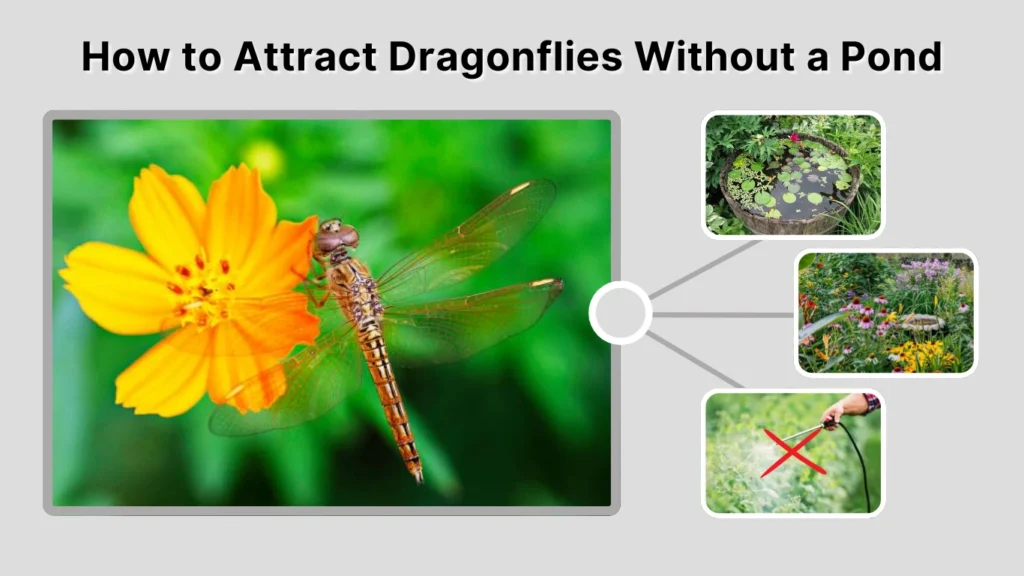
You don’t need a large backyard pond to enjoy dragonflies. While water helps, there are other ways to make your yard attractive.
Add a Small Water Feature
A simple water source can make a big difference. Consider:
- A small container pond
- A half-barrel water garden
- A shallow birdbath with aquatic plants
Even a modest water feature provides hydration and may encourage egg-laying if conditions are right.
Plant a Pollinator Garden
Choose a variety of flowering plants that bloom from spring through fall. Continuous blooms ensure consistent insect activity, which keeps dragonflies interested.
Native plants are especially effective because they support local insect populations.
Avoid Pesticides
Chemical pesticides reduce the insect population dragonflies rely on for food. They can also contaminate water sources and harm dragonfly nymphs.
A wildlife-friendly garden focuses on balance rather than elimination of insects.
Provide Sunny, Open Spaces
Dragonflies are sun-loving insects. They need warmth to regulate their body temperature and stay active. Make sure part of your yard receives full sun for most of the day.
Plants That Help Dragonflies Control Mosquitoes
Many gardeners hope certain plants will directly repel mosquitoes. In reality, plants don’t attract dragonflies because they repel pests — they attract them because they support a healthy ecosystem.
Flowering plants bring in small insects. Water plants support breeding. Dragonflies then move in to hunt mosquitoes and other flying pests.
While dragonflies won’t eliminate mosquitoes entirely, encouraging them can noticeably reduce populations over time. A balanced habitat is more effective than relying on a single “mosquito-repelling” plant.
Common Mistakes That Keep Dragonflies Away
Even with the right plants, a few common mistakes can prevent dragonflies from settling in:
- No water source nearby
- Heavy pesticide or insecticide use
- Too much shade and not enough sun
- Overly manicured landscapes with little plant diversity
Dragonflies prefer natural, slightly wild environments with layered vegetation and consistent insect activity.
FAQs
Do dragonflies like lavender?
Lavender does not directly attract dragonflies, but it attracts bees and small flying insects. Since dragonflies hunt these insects, they may visit lavender-rich gardens as feeding grounds, especially in sunny locations.
Do marigolds attract dragonflies?
Marigolds primarily attract pollinators and certain beneficial insects. While they don’t specifically draw dragonflies, increased insect activity around marigolds can indirectly encourage dragonfly visits.
Can dragonflies live in small backyard ponds?
Yes, dragonflies can use small backyard ponds if the water is still, chemical-free, and supported by aquatic plants. Even compact ponds can host dragonfly nymphs if conditions are stable.
How long does it take to attract dragonflies?
It may take one full growing season for dragonflies to consistently appear. Establishing water sources, native plants, and pesticide-free conditions improves your chances over time.
Are dragonflies good for gardens?
Dragonflies are highly beneficial. They help control mosquitoes, gnats, and flies while contributing to a balanced ecosystem. Their presence is often a sign of a healthy, thriving garden habitat.
Final Thoughts
If you’re wondering what plants attract dragonflies, the answer lies in creating the right environment. Aquatic plants support their life cycle, flowering plants attract their prey, and tall, sturdy plants provide perching spots.
By combining water features, pollinator-friendly flowers, and pesticide-free practices, you can turn your yard into a dragonfly haven. With patience and the right plant choices, these graceful, mosquito-eating insects will become regular visitors to your garden.