
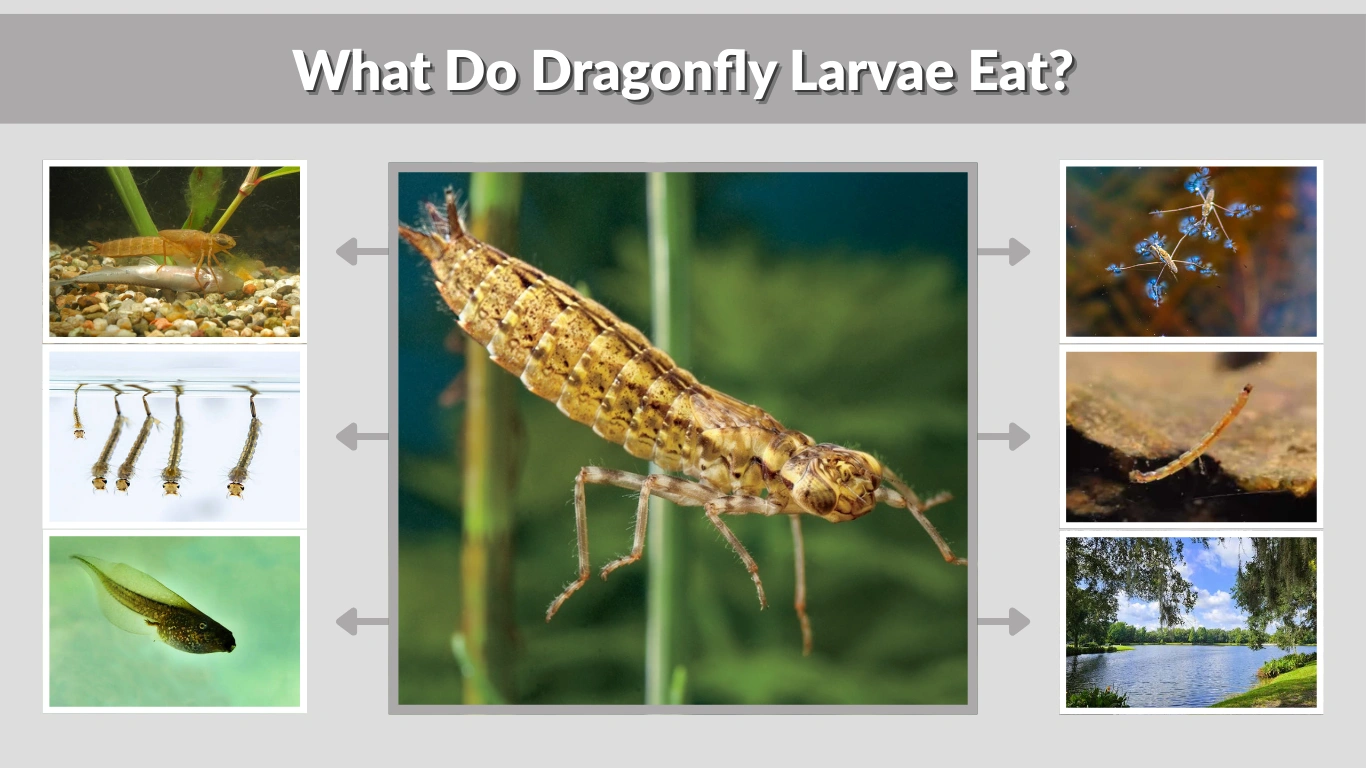
Dragonfly larvae are some of the most efficient predators in freshwater ecosystems. Before becoming graceful flying insects, dragonflies spend months or even years underwater as larvae, also called nymphs. During this stage, they are aggressive hunters that feed on a wide range of aquatic animals. Understanding what dragonfly larvae eat helps explain their important role in controlling pests like mosquitoes and maintaining ecological balance in ponds, lakes, and wetlands.
In this guide, we’ll explore the diet of dragonfly larvae, how they hunt, what they can and cannot eat, and their role in the aquatic food chain.
What Are Dragonfly Larvae?
Dragonfly larvae, or nymphs, are the immature stage of dragonflies. They hatch from eggs laid in or near water and live entirely underwater until they mature.
This larval stage can last:
- Several months in warm climates
- Up to three years in cooler regions
During this time, feeding is their primary activity. They must consume enough food to grow, molt several times, and eventually transform into adult dragonflies.
What Do Dragonfly Larvae Eat in the Wild?

Dragonfly larvae are carnivorous predators. They eat live prey and do not feed on plants or algae.
Their diet typically includes:
- Mosquito larvae
- Small aquatic insects
- Mayfly nymphs
- Water fleas
- Tadpoles
- Small fish
- Other invertebrates
The size of the prey depends on the size of the larva. Younger dragonfly nymphs eat tiny organisms, while larger ones can capture surprisingly big prey.
Do Dragonfly Larvae Eat Mosquito Larvae?
Yes, dragonfly larvae eat mosquito larvae — and they are very good at it.
Mosquito larvae often share the same freshwater habitats as dragonfly nymphs. Since mosquito larvae are small and abundant, they make an easy and nutritious food source.
Because of this feeding behavior, dragonfly larvae are considered beneficial insects. They help naturally reduce mosquito populations in ponds and wetlands.
However, they cannot completely eliminate mosquitoes because mosquitoes can breed in very small containers of water where dragonflies cannot survive.
Do Dragonfly Larvae Eat Tadpoles?
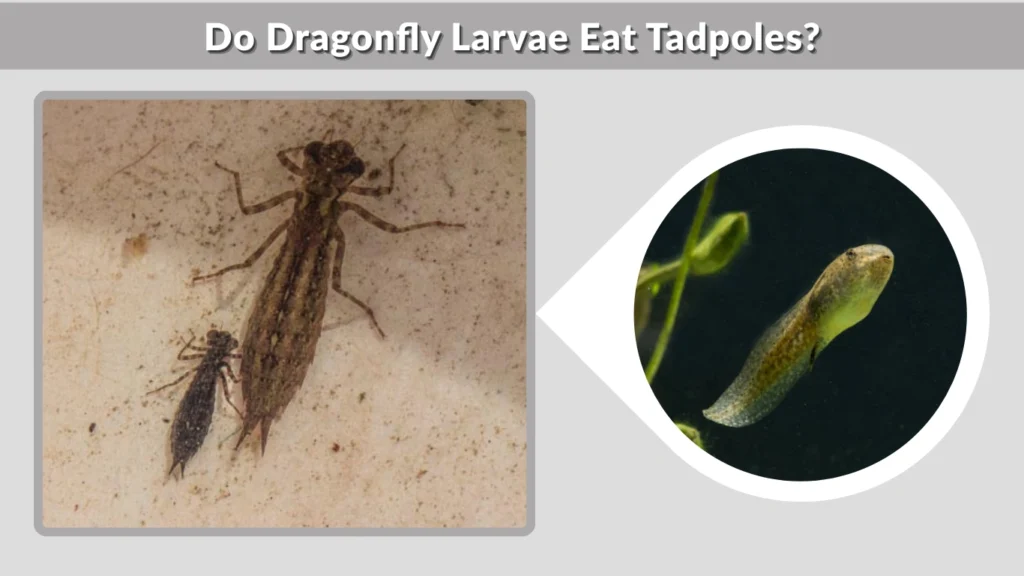
Larger dragonfly larvae may eat small tadpoles. While they usually target insects, they are opportunistic predators. If a tadpole is small enough and swims within reach, a dragonfly nymph may attack and consume it.
This shows just how powerful and adaptable these underwater hunters are.
Can Dragonfly Larvae Eat Small Fish?
Yes, large dragonfly larvae have been observed eating tiny fish, especially fish fry (newly hatched fish). They use their quick-striking mouthparts to grab prey before it can escape.
For this reason, dragonfly larvae are sometimes removed from small backyard fish ponds or aquariums where they could threaten young fish.
How Do Dragonfly Larvae Hunt?
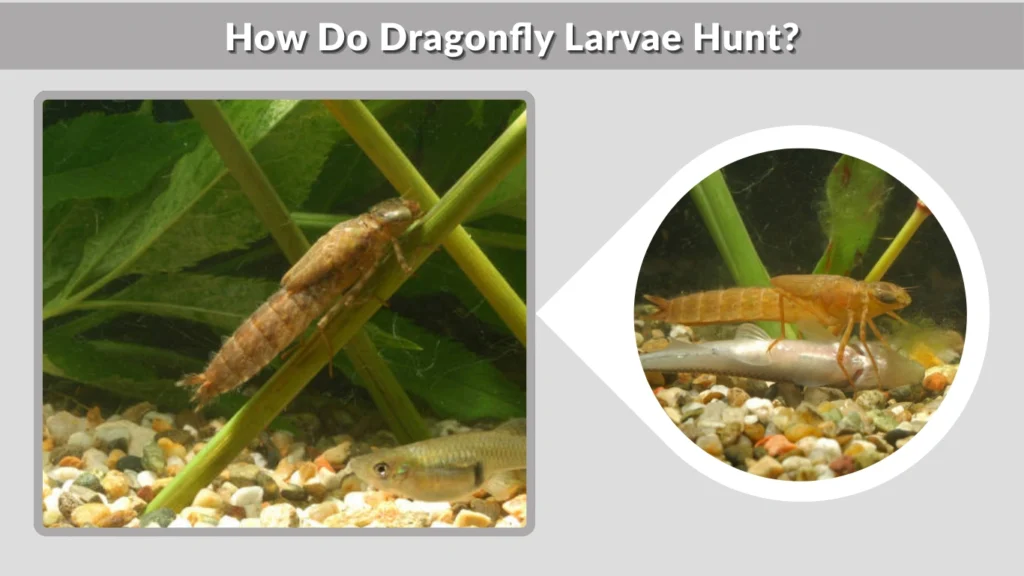
Dragonfly larvae are ambush predators. Instead of chasing prey, they wait patiently among plants, rocks, or mud.
Their most impressive hunting feature is their extendable lower jaw, called a labium. This specialized mouthpart:
- Folds under the head
- Shoots forward rapidly
- Grabs prey with sharp hooks
- Pulls the prey back to the mouth
The strike happens in a fraction of a second, making it almost impossible for small prey to escape.
Some dragonfly larvae also use jet propulsion to move quickly. They expel water from their abdomen, allowing them to lunge forward when needed.
Do Dragonfly Larvae Compete With Each Other?
Yes, dragonfly larvae can be territorial and even cannibalistic. Larger individuals may eat smaller dragonfly nymphs if food is scarce.
This behavior ensures that only the strongest survive to adulthood. It also prevents overcrowding in limited aquatic habitats.
What Do Dragonfly Larvae Eat in a Pond?
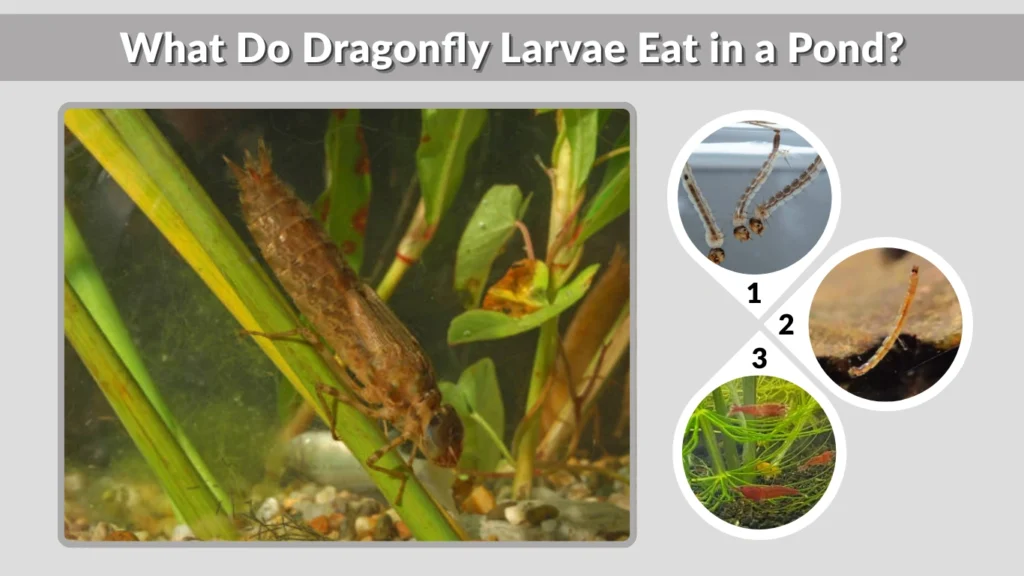
In a natural pond, dragonfly larvae feed on whatever prey is available. Common pond prey includes:
- Mosquito larvae
- Midge larvae
- Small crustaceans
- Water beetle larvae
- Tiny aquatic worms
Healthy ponds with abundant plant life provide both hiding places and food sources for dragonfly nymphs.
If you notice dragonfly larvae in your pond, it often means your water ecosystem is balanced and capable of supporting predators.
What Do Dragonfly Larvae Eat in an Aquarium?
If kept in captivity, dragonfly larvae require live food. Suitable options include:
- Mosquito larvae
- Bloodworms
- Small aquatic insects
- Brine shrimp
They will not eat fish flakes or plant-based food. Because they are predators, they must be given live or moving prey to trigger their hunting response.
Keeping dragonfly larvae in a community aquarium is generally not recommended. They may attack shrimp or small fish.
What Eats Dragonfly Larvae?
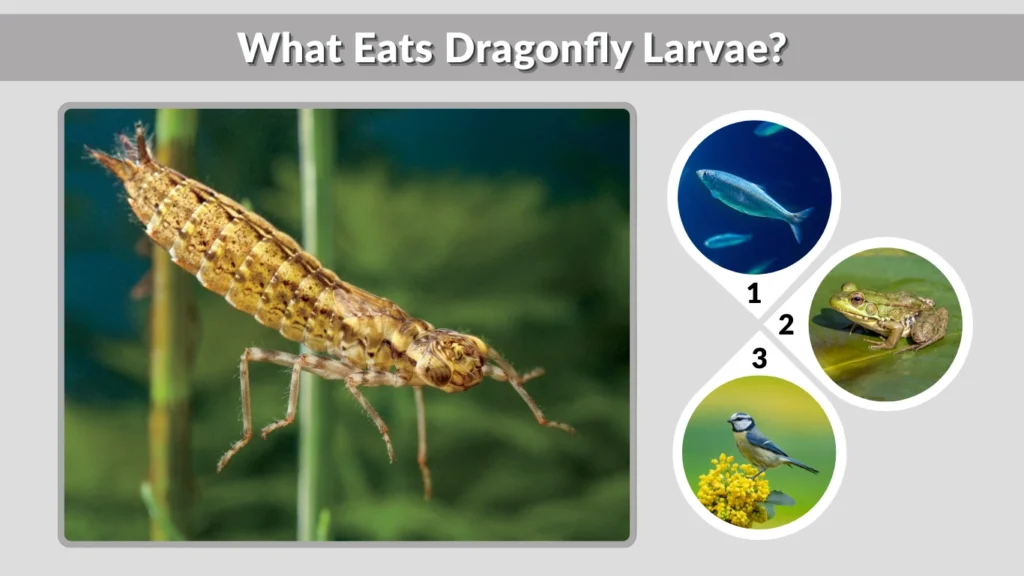
Although dragonfly larvae are predators, they are also prey for larger animals.
Animals that eat dragonfly larvae include:
- Fish
- Frogs
- Birds
- Larger aquatic insects
This makes dragonfly larvae an important middle link in the aquatic food chain. They control smaller insects while providing food for larger species.
How Often Do Dragonfly Larvae Eat?
Dragonfly larvae eat frequently, especially during periods of rapid growth. Younger larvae need constant nourishment to molt and increase in size.
Their feeding frequency depends on:
- Water temperature
- Prey availability
- Larval size
- Competition
In warm water with abundant prey, they may feed daily. In colder environments, their metabolism slows, and feeding becomes less frequent.
Do Dragonfly Larvae Eat Plants?
No, dragonfly larvae are strictly carnivorous. They do not eat algae, leaves, or plant matter.
Unlike mosquito larvae, which filter microscopic organic material, dragonfly nymphs rely entirely on capturing live prey.
Why Are Dragonfly Larvae Important?
Because of their diet, dragonfly larvae play a crucial ecological role:
1. Natural Mosquito Control
They reduce mosquito larvae populations in freshwater habitats.
2. Balanced Ecosystems
They prevent overpopulation of small aquatic insects.
3. Food Source for Wildlife
They support fish, birds, and amphibians.
Their presence often indicates healthy water conditions.
How Diet Affects Adult Dragonflies
The more food a dragonfly larva consumes, the stronger and healthier the adult dragonfly becomes.
Adequate nutrition during the larval stage influences:
- Adult size
- Wing strength
- Flight ability
- Reproductive success
Since the larval stage lasts much longer than adulthood, proper feeding during this period is essential for survival.
FAQs
Do dragonfly larvae eat mosquito larvae?
Yes, dragonfly larvae actively hunt and eat mosquito larvae. They use their fast, extendable lower jaw to grab and consume them. This makes dragonfly nymphs natural mosquito control agents in ponds, wetlands, and other freshwater habitats.
Can dragonfly larvae eat fish?
Large dragonfly larvae can eat very small fish, especially newly hatched fry. While they mostly feed on insects, they are opportunistic predators. For this reason, they may not be suitable for aquariums or small ponds with baby fish.
Do dragonfly larvae eat tadpoles?
Yes, larger dragonfly larvae may capture and eat small tadpoles if they are within reach. Although insects are their primary food source, they will prey on small aquatic animals when the opportunity arises.
How do dragonfly larvae catch their food?
Dragonfly larvae use a specialized extendable lower jaw called a labium. It shoots forward rapidly to grab prey and pull it back into the mouth. This ambush hunting method allows them to capture prey in a fraction of a second.
Do dragonfly larvae eat plants or algae?
No, dragonfly larvae are strictly carnivorous. They do not feed on plants, algae, or organic debris. Unlike mosquito larvae, which filter-feed on tiny particles, dragonfly larvae must hunt and eat live prey to survive.