
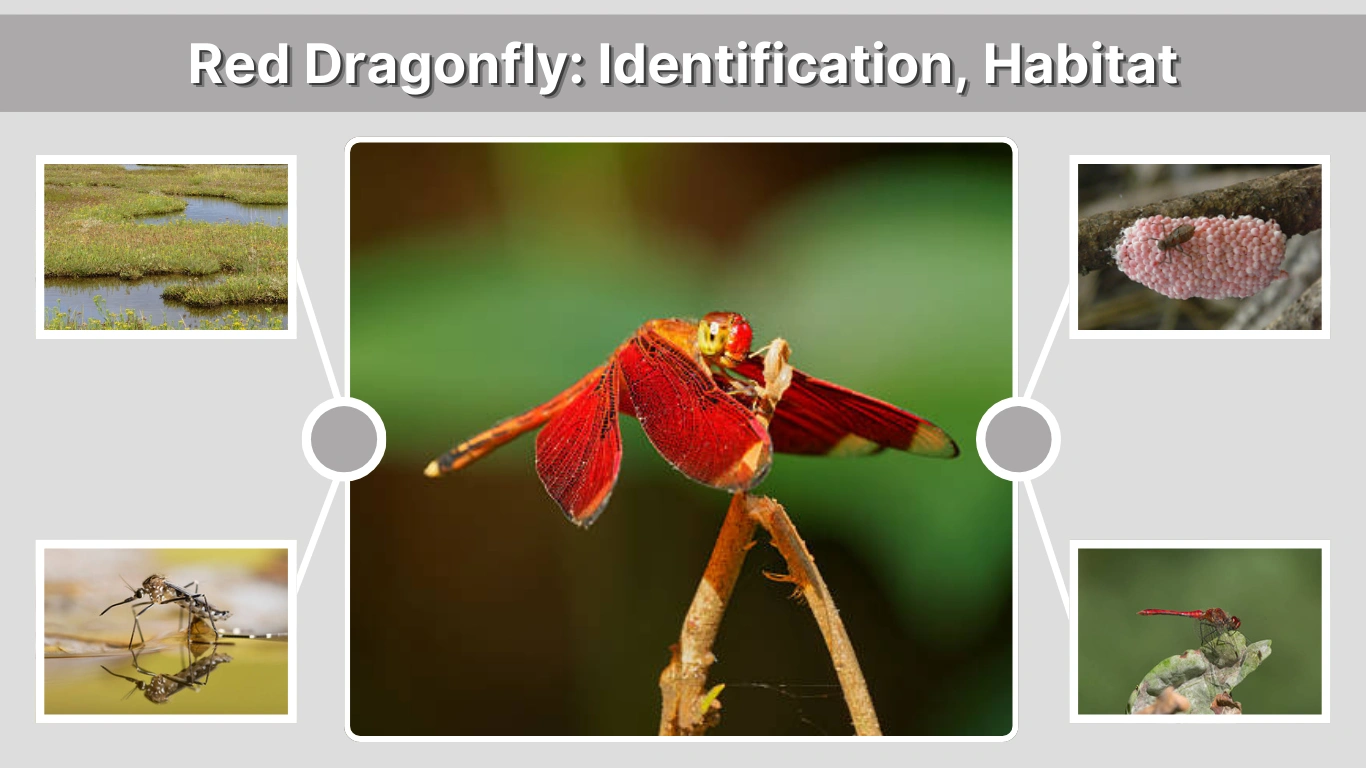
The red dragonfly is one of the most striking insects found in nature, instantly recognizable because of its bold coloration and graceful flight. Unlike more common green or blue dragonflies, red dragonflies stand out vividly against water, plants, and open skies. Their presence often captures attention, sparking curiosity not only about their biological traits but also about their deeper symbolic meanings.
Red dragonflies play an important role in ecosystems as skilled predators and indicators of healthy freshwater environments. At the same time, many cultures and belief systems associate them with transformation, strength, and emotional intensity. This article explores the red dragonfly from both a natural and cultural perspective, beginning with identification and species, and later moving into habitat, behavior, diet, and symbolism.
What Is a Red Dragonfly?
A red dragonfly is not a single species but a general term used to describe several dragonfly species that display red or reddish-orange coloration during adulthood. Dragonflies belong to the order Odonata and are known for their elongated bodies, large multifaceted eyes, and powerful wings.
The red coloration usually develops as the dragonfly matures. In many species, younger adults may appear yellow or light brown before turning bright red. This color change is often influenced by age, temperature, and sexual maturity. Male red dragonflies are typically more vibrant than females, as their color helps establish territory and attract mates.
Unlike butterflies, dragonflies do not fold their wings when resting. Their ability to hover, glide, and change direction instantly makes them highly efficient aerial hunters. Red dragonflies share these traits with other dragonflies but are especially noticeable due to their intense coloration.
Identification of a Red Dragonfly
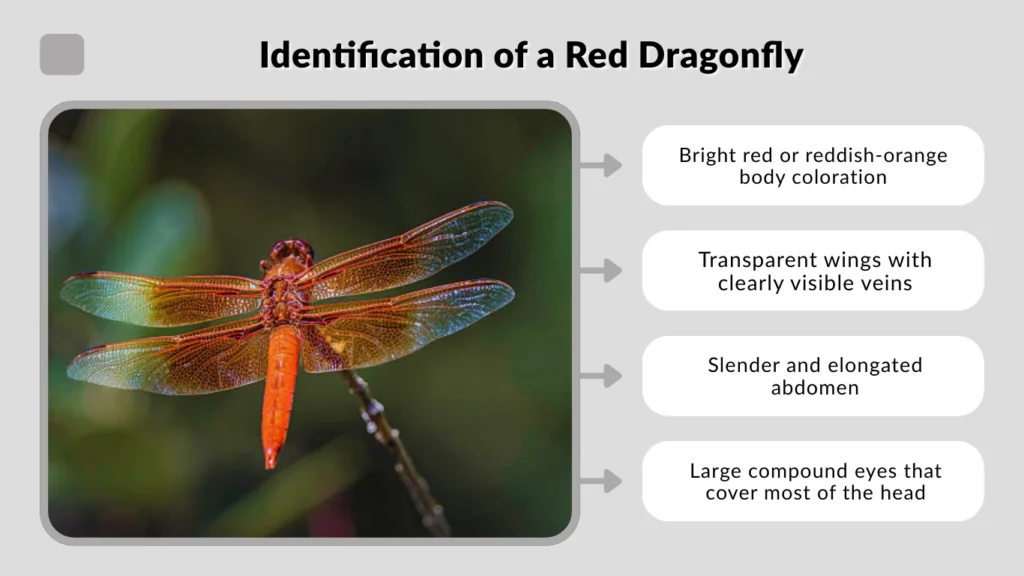
- Bright red or reddish-orange body coloration
- Transparent wings with clearly visible veins
- Slender and elongated abdomen
- Large compound eyes that cover most of the head
- Strong, fast, and agile flight pattern
- Medium to large body size depending on the species
These features help distinguish red dragonflies from damselflies and other flying insects. Their wings remain open while resting, and their flight is more powerful and direct compared to smaller insects.
Common Red Dragonfly Species
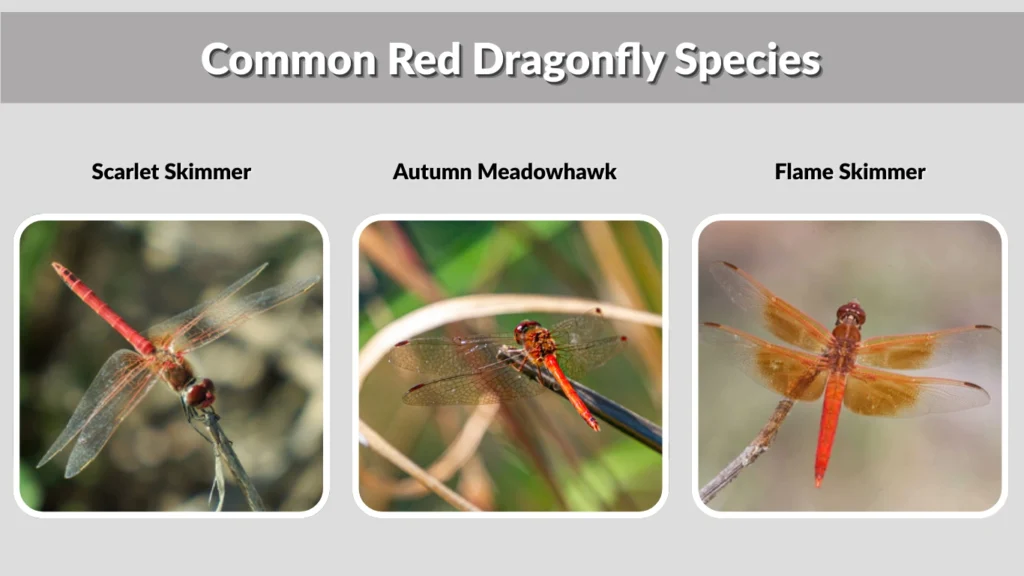
Scarlet Skimmer (Crocothemis servilia)
The scarlet skimmer is one of the most well-known red dragonfly species. Adult males display a vivid red body, while females and juveniles are usually yellowish-brown. This species is commonly found near ponds, lakes, and slow-moving streams, often perching on exposed rocks or vegetation.
Autumn Meadowhawk (Sympetrum vicinum)
The autumn meadowhawk appears later in the year, usually during late summer and fall. Its deep red coloration becomes more intense as temperatures drop. This species is often seen near wetlands and forest edges and is known for its relatively calm behavior compared to other dragonflies.
Flame Skimmer (Libellula saturata)
The flame skimmer is famous for its bright red body and preference for warm, sunny habitats. It is frequently found in the southwestern regions of North America, especially near shallow pools and slow-flowing water. Its color is among the most intense reds seen in dragonflies.
Habitat of Red Dragonflies
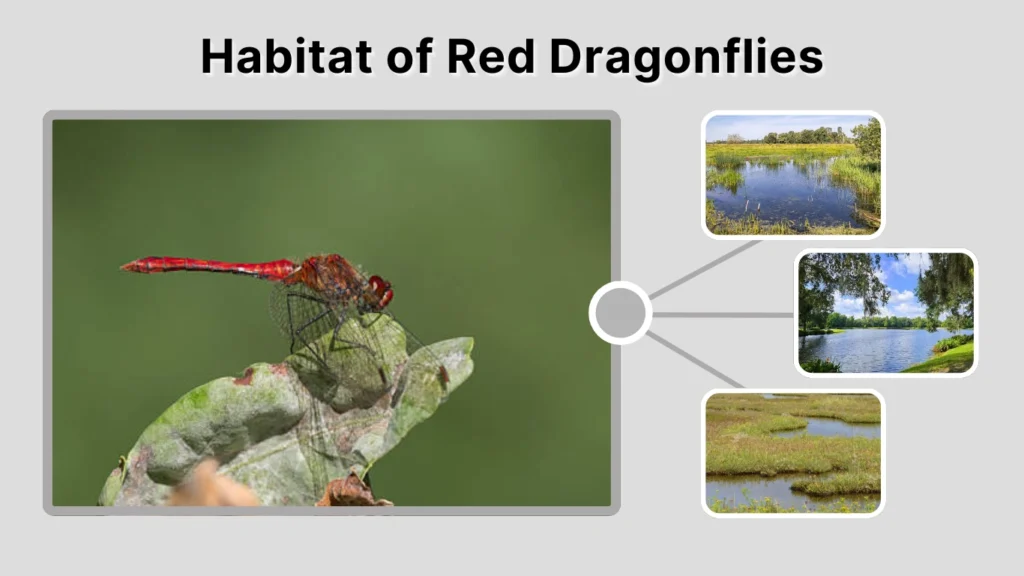
Red dragonflies are closely tied to freshwater environments, as water is essential for their reproduction and early development. They are commonly found near ponds, lakes, marshes, rivers, and slow-moving streams. Clean and stable water sources are especially important because dragonfly larvae live underwater for most of their lives.
Surrounding vegetation also plays a key role in their habitat. Plants provide perching spots for adults, shelter from predators, and suitable areas for mating and egg-laying. Red dragonflies can be seen basking in sunlight on reeds, branches, rocks, or even man-made structures near water.
Geographically, red dragonflies are found across many parts of the world, including Asia, North America, Europe, and Australia. Their distribution depends on climate, water quality, and availability of prey, with warmer regions often supporting more vibrant and active populations.
Behavior of Red Dragonflies
Red dragonflies are active and highly territorial insects, especially during the warmer months. Adult males often select a specific perch near water and defend it aggressively against rivals. From these vantage points, they watch for intruders, prey, and potential mates. When challenged, they engage in fast aerial chases, using their speed and agility to assert dominance.
These dragonflies are most active during sunny daylight hours, as warmth helps regulate their body temperature and flight efficiency. They frequently return to the same perch after short hunting or patrol flights. Although they may appear calm while resting, red dragonflies are alert and capable of taking off instantly when disturbed.
Diet of Red Dragonflies
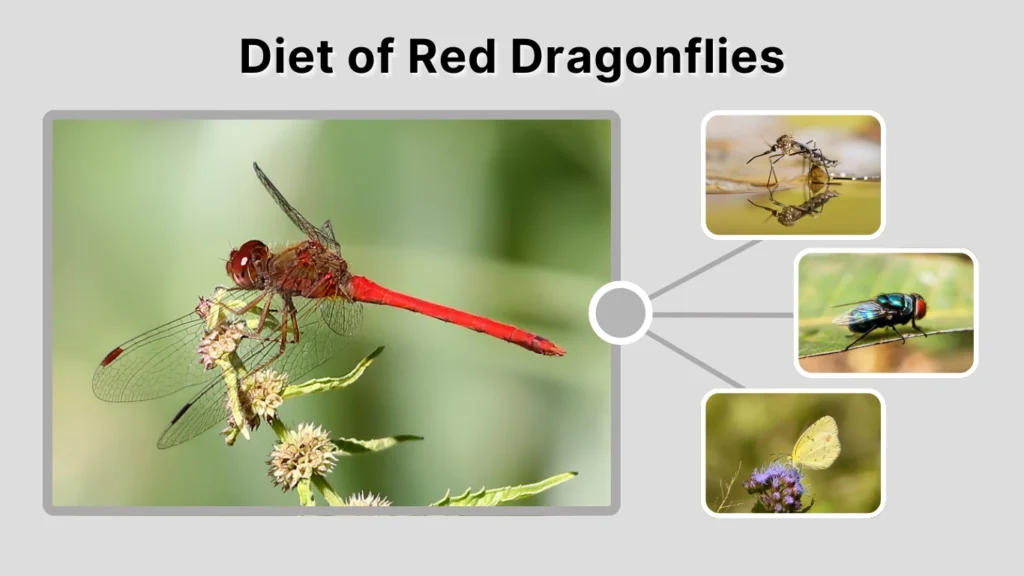
Red dragonflies are carnivorous and rely entirely on other insects for food. Their diet mainly consists of mosquitoes, flies, gnats, small butterflies, and other flying insects. Using their exceptional eyesight, they detect prey midair and capture it with remarkable precision.
Their legs form a basket-like structure that allows them to scoop prey while flying. Once captured, the insect is often consumed in flight or taken to a perch. Because they feed heavily on mosquitoes and pests, red dragonflies play an important role in naturally controlling insect populations in their environment.
Life Cycle of a Red Dragonfly
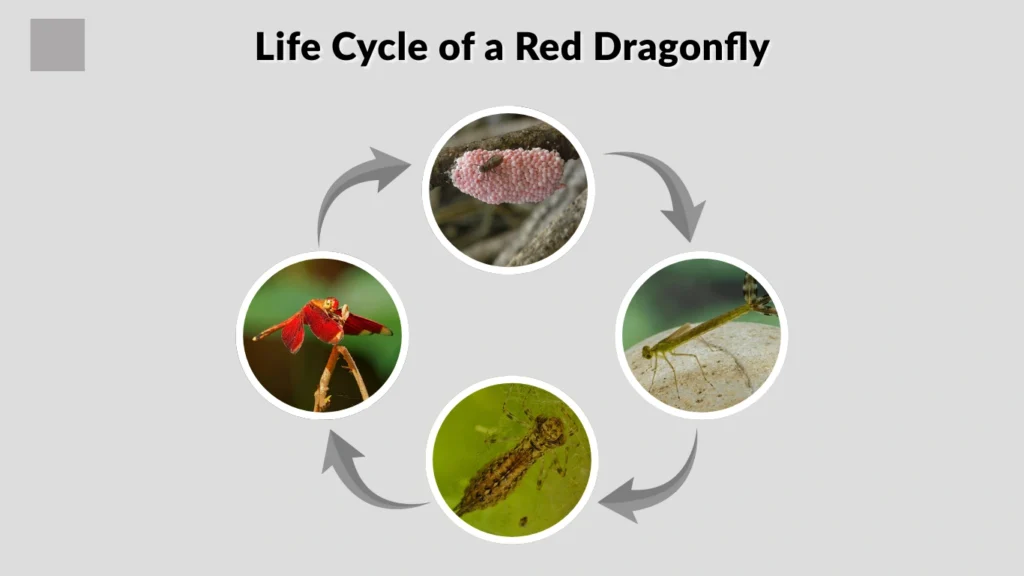
The life cycle of a red dragonfly begins when females lay eggs in or near freshwater. Some species deposit eggs directly into water, while others attach them to aquatic plants. After hatching, the larvae, also known as nymphs, live underwater for several months or even years, depending on the species.
During the nymph stage, red dragonflies are fierce predators, feeding on small aquatic organisms such as tadpoles, insect larvae, and tiny fish. They grow by molting multiple times as they develop. Eventually, the nymph climbs out of the water onto a plant or solid surface, where it undergoes its final transformation.
The adult dragonfly emerges from the nymph’s exoskeleton, dries its wings, and begins its life above water. Adult red dragonflies typically live for a few weeks to several months, focusing on feeding and reproduction.
Symbolism and Meaning of Red Dragonflies
General Symbolism
Red dragonflies are widely associated with transformation, vitality, and emotional strength. Like all dragonflies, they symbolize change due to their dramatic life cycle, but the red color adds themes of passion, courage, and intensity. They are often seen as reminders to live boldly and embrace personal growth.
Spiritual Meaning
In spiritual traditions, the red dragonfly is believed to carry messages related to life force and inner power. Its appearance may symbolize renewed energy, motivation, or the need to face challenges with confidence. Some interpret the red dragonfly as a sign to reconnect with one’s emotions or act from the heart.
Red Dragonfly in Different Cultures
In many Eastern cultures, dragonflies are symbols of strength, harmony, and happiness. Red dragonflies, in particular, are associated with late summer and autumn, representing maturity and the fulfillment of life cycles. In Japan, dragonflies are admired for their courage and have historically symbolized victory and resilience.
Among some Native American tribes, dragonflies are seen as symbols of transformation and adaptability. Their connection to water and air reinforces themes of balance between the physical and spiritual worlds. Red dragonflies may also be linked to protection and positive change.
Is Seeing a Red Dragonfly a Sign?
Seeing a red dragonfly often prompts reflection, especially for those who believe in symbolic or spiritual signs. Many people interpret such sightings as reminders to pay attention to emotions, relationships, or life transitions. Others see them simply as moments of natural beauty that encourage mindfulness and presence.
Whether viewed spiritually or scientifically, encountering a red dragonfly can inspire a deeper appreciation for nature and personal awareness.
Red Dragonfly vs Other Dragonfly Colors
While all dragonflies symbolize change and adaptability, color influences interpretation. Blue dragonflies are often linked to calm and communication, green to growth and balance, and black to mystery. Red dragonflies stand apart due to their association with passion, strength, and decisive action, making them especially powerful symbols.
Importance of Red Dragonflies in the Ecosystem
Red dragonflies play a crucial role in maintaining ecological balance. As predators, they help regulate populations of mosquitoes and other insects. Their presence also indicates healthy freshwater ecosystems, as they rely on clean water for reproduction and development.
Because dragonflies are sensitive to pollution and habitat loss, declines in their populations can signal environmental issues, making them valuable indicators for conservation efforts.
Conclusion
The red dragonfly is both a fascinating insect and a powerful symbol. From its distinctive appearance and complex life cycle to its role in ecosystems and cultural traditions, it represents transformation, vitality, and balance. Whether admired for its scientific significance or spiritual meaning, the red dragonfly reminds us of nature’s beauty and the importance of change in life.
FAQs
Are red dragonflies rare?
Red dragonflies are not considered rare, but their visibility depends on location, season, and habitat quality. In areas with clean freshwater and warm climates, they can be quite common during late summer and early autumn.
Are red dragonflies dangerous to humans?
Red dragonflies are not dangerous to humans. They do not sting and are not aggressive toward people. While they may bite if handled roughly, this is extremely rare and harmless.
What does it mean when you see a red dragonfly?
Seeing a red dragonfly is often interpreted as a symbol of change, strength, or heightened awareness. From a natural perspective, it usually means you are near a healthy water source where dragonflies thrive.
Do red dragonflies bite?
Red dragonflies can bite only if they feel threatened or are handled directly, but their bite is mild and does not cause injury. They prefer to avoid human contact.
What do red dragonflies eat?
Red dragonflies feed on small flying insects such as mosquitoes, flies, and gnats. Their diet makes them beneficial insects that help control pest populations.