
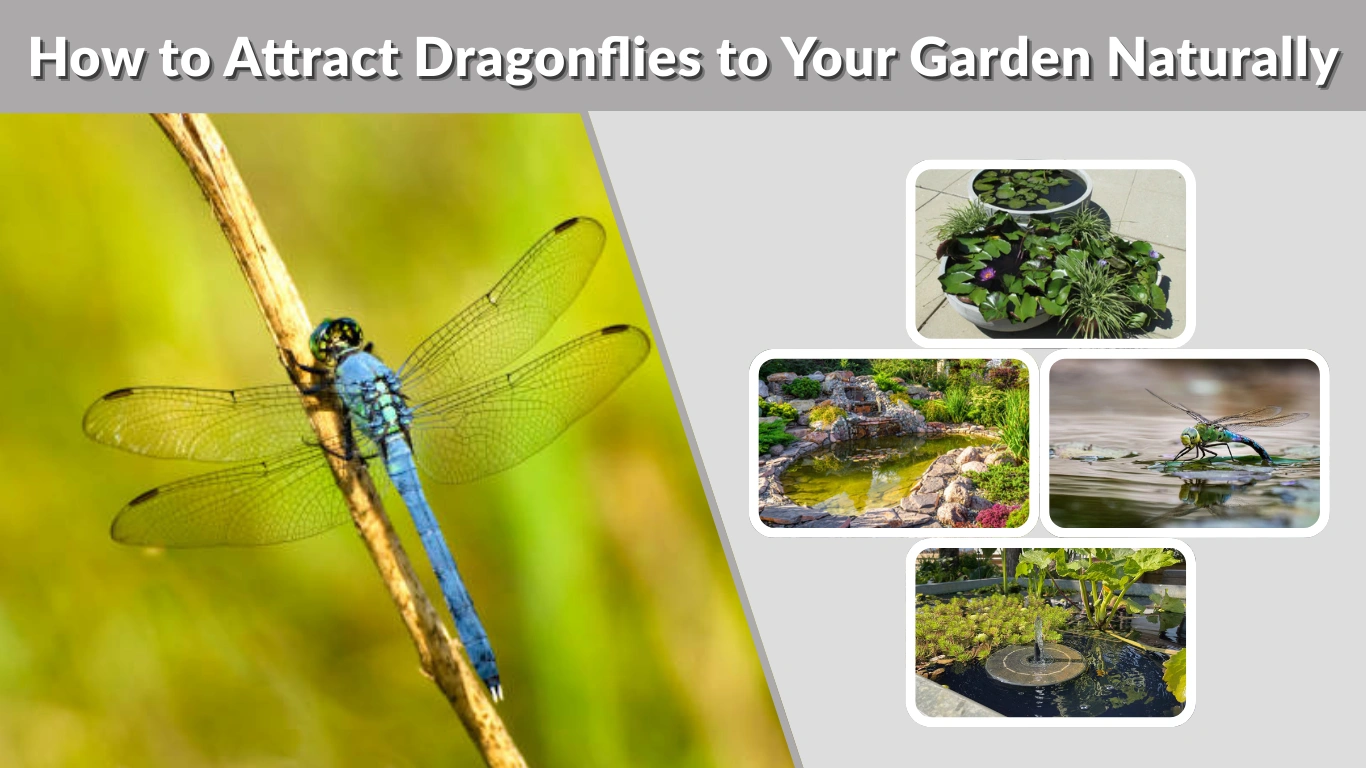
Dragonflies are more than just beautiful, shimmering insects darting across your yard. They are powerful natural predators that help control mosquitoes and other flying pests without the need for chemicals. If you want a healthier, more balanced garden ecosystem, attracting dragonflies is a smart and eco-friendly step. With the right combination of water, plants, sunlight, and habitat features, you can turn your backyard into a welcoming environment for these beneficial insects. The good news? You don’t need a huge property or complicated setup to get started.
Why You Should Attract Dragonflies
Bringing dragonflies into your garden offers both practical and environmental benefits. They are not just decorative visitors — they play an important role in maintaining ecological balance.
Natural Mosquito Control
One of the biggest reasons gardeners want dragonflies around is mosquito control. Dragonflies are skilled hunters. As adults, they feed on mosquitoes, flies, gnats, and other small flying insects. Even more impressive, dragonfly larvae (called nymphs) live in water and consume mosquito larvae before they ever become biting adults.
A single dragonfly can eat dozens of mosquitoes in a day. By encouraging dragonflies to settle in your yard, you create a natural pest control system that reduces your reliance on sprays and chemical repellents.
Signs of a Healthy Garden Ecosystem
Dragonflies are considered bioindicators, meaning their presence suggests a healthy environment. Because their life cycle depends on clean water and a stable habitat, they thrive in balanced ecosystems. If dragonflies begin visiting or breeding in your garden, it’s a strong sign that your space supports biodiversity.
Aesthetic and Wildlife Value
Beyond their usefulness, dragonflies add beauty and movement to your garden. Their iridescent wings and vibrant colors catch the sunlight as they hover and glide. Watching them patrol your yard can make your outdoor space feel alive and dynamic.
Create a Water Source (The Most Important Step)
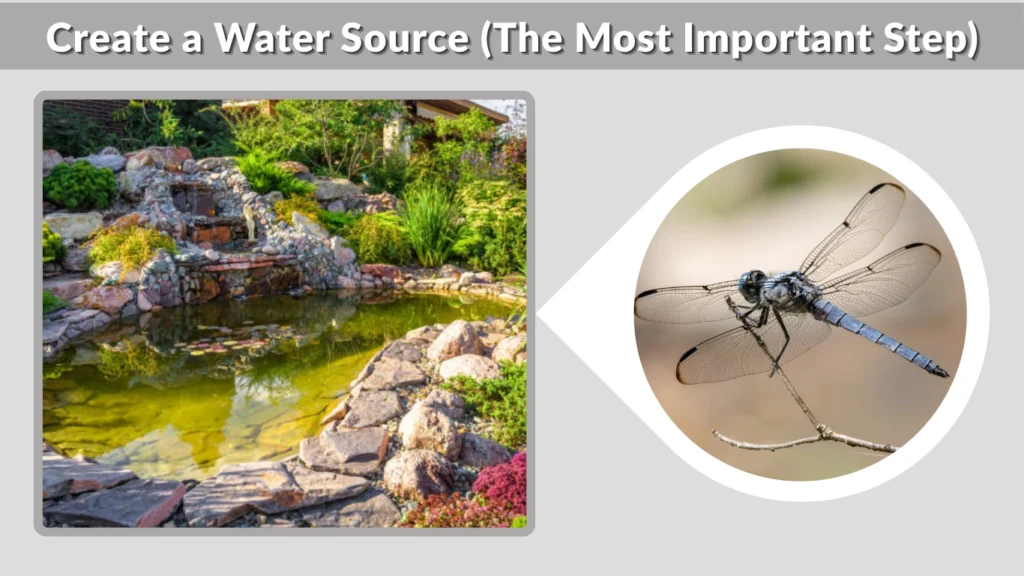
If you want to attract dragonflies successfully, water is essential. Dragonflies lay their eggs in or near water, and their nymphs develop underwater for months — sometimes even years — before emerging as adults. Without a water source, dragonflies may visit briefly to hunt, but they are unlikely to stay or reproduce.
Build a Backyard Pond
A pond is the most effective way to attract dragonflies. It doesn’t need to be large, but it should ideally be at least 2–3 feet deep in some areas. Deeper water helps regulate temperature and provides a stable habitat for larvae.
Sloped or gently graduated edges are important. Dragonflies prefer natural-looking ponds where plants can grow along the margins. Even a small wildlife pond can work if designed thoughtfully.
If space is limited, a pond as small as a few feet wide can still make a difference. What matters most is creating a stable aquatic environment.
Use the Right Type of Water
Avoid using chlorinated tap water directly in your pond. Chlorine can harm aquatic life, including dragonfly larvae. If you must use tap water, let it sit for several days before introducing plants or wildlife so the chlorine can dissipate.
Rainwater is often a better choice when possible. The goal is to keep the water as natural as possible. Avoid chemical treatments designed for ornamental ponds, as these can disrupt the ecosystem you’re trying to build.
Add Aquatic Plants for Egg-Laying
Aquatic plants are just as important as the water itself. Female dragonflies lay eggs on or near aquatic vegetation, so including a variety of plant types increases your chances of success.
Submerged plants such as hornwort or anacharis provide shelter for larvae and help oxygenate the water. Floating plants like water lilies offer shade and resting spots. Emergent plants such as pickerelweed or cattails give dragonflies a place to climb when they are ready to transform from nymph to adult.
The combination of these plant types creates layers within the pond, mimicking natural wetlands where dragonflies thrive.
Can You Attract Dragonflies Without a Pond?

While a pond dramatically increases your chances, it is still possible to attract dragonflies without building a large water feature.
Container Water Gardens
If you have limited space, consider creating a container water garden. A half-barrel, large ceramic pot, or sturdy container can hold enough water to support aquatic plants. Add submerged and floating plants just as you would in a pond.
Though smaller setups may not support large populations, they can still attract dragonflies looking for egg-laying spots.
Birdbaths and Small Water Features
Birdbaths and small fountains can attract dragonflies that are hunting for food. Place them near flowering plants or shrubs to create a more inviting environment. Keep the water clean and free from chemicals.
Without a true pond, dragonflies are more likely to visit rather than establish a breeding population. However, even temporary visits can help reduce mosquito numbers and add beauty to your yard.
Plant Vegetation Dragonflies Love
Water may attract dragonflies, but plants convince them to stay. Dragonflies need places to perch, hunt, hide from predators, and warm themselves in the sun. A thoughtfully planted garden dramatically increases your chances of seeing them regularly.
Native Perching Plants
Dragonflies frequently rest between flights. They prefer tall, sturdy stems where they can scan for prey. Native flowering plants and ornamental grasses work especially well because they are adapted to your local climate and support local insects.
Consider planting:
- Black-eyed Susan
- Joe-Pye weed
- Coneflowers
- Milkweed
- Tall native grasses
These plants provide strong vertical structure, making it easy for dragonflies to land and take off. Position them near your pond or water feature for the best results.
Plants That Attract Their Food Source
Dragonflies feed on small flying insects, so attracting pollinators and other tiny insects naturally supports them. A diverse mix of flowering plants encourages flies, gnats, mosquitoes, and other insects that dragonflies hunt.
Pollinator-friendly plants such as lavender, bee balm, yarrow, and native wildflowers help create a balanced food web. The goal isn’t to create a pest problem — it’s to maintain a natural ecosystem where predator and prey coexist.
The Importance of Native Plants
Native plants are especially valuable because they support local insect populations better than exotic species. When insects thrive, dragonflies have a consistent food supply. In addition, native plants typically require less maintenance, fertilizer, and water, making them ideal for sustainable gardening.
By combining aquatic plants with native flowering plants, you create both a nursery and a hunting ground for dragonflies.
Provide Sunlight and Shelter
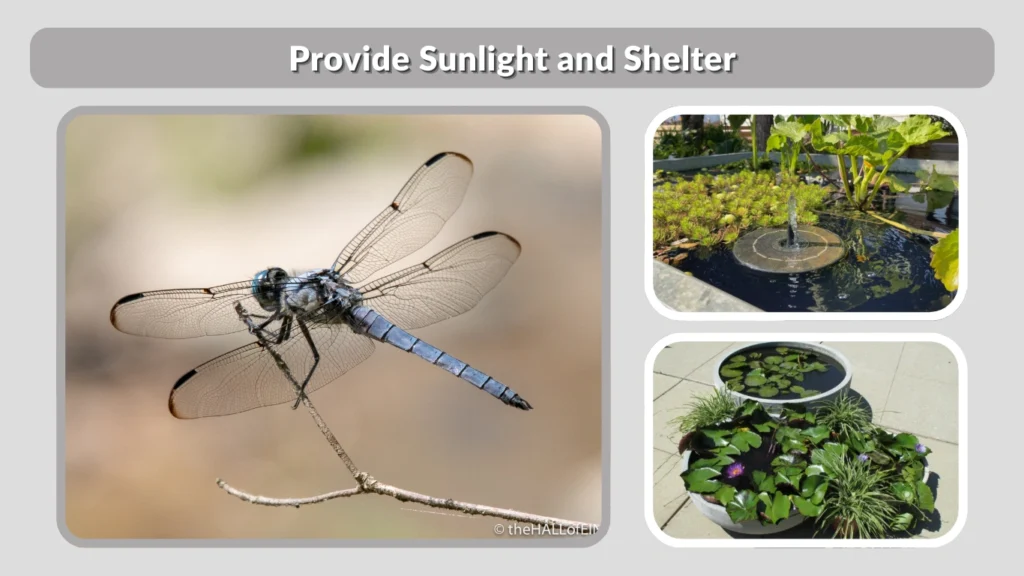
Dragonflies are cold-blooded insects, meaning they rely on the sun to regulate their body temperature. A shaded, heavily wooded yard is less attractive to them. Designing your garden with sun exposure in mind can significantly improve success.
Create Sunny Open Areas
Position your pond or water feature in a spot that receives several hours of direct sunlight each day. Open areas allow dragonflies to patrol and hunt efficiently. While some nearby vegetation is beneficial, avoid placing the pond entirely under dense tree cover.
Sunlit spaces also help aquatic plants grow and maintain a balanced pond environment.
Add Basking Spots
Dragonflies often rest in sunny locations to warm their wings. Flat rocks placed near the edge of a pond create ideal basking surfaces. Wooden stakes, fence posts, and tall plant stems also serve as lookout points.
These simple additions make your yard more functional for dragonflies without requiring major landscaping changes.
Reduce Wind Exposure
Strong winds make flying and hunting more difficult. If your yard is exposed, consider planting shrubs or hedges to act as windbreaks. Even a strategically placed fence can reduce wind flow and create calmer airspace.
A sheltered, sunny garden is far more inviting to dragonflies than an exposed, windy one.
Avoid Chemicals and Common Mistakes
Creating a dragonfly-friendly garden means working with nature rather than against it. Certain common gardening habits can unintentionally discourage them.
Why Pesticides Harm Dragonflies
Chemical pesticides don’t just kill mosquitoes — they also harm beneficial insects, including dragonflies. Sprays can contaminate water, kill larvae, and eliminate the insects dragonflies rely on for food.
If you want dragonflies to control mosquitoes naturally, avoid chemical treatments in and around your pond. Organic gardening practices support long-term ecosystem health.
Avoid Adding Fish That Eat Larvae
Many decorative pond owners add fish like koi or goldfish. While attractive, these fish often eat dragonfly eggs and larvae. If your goal is to attract breeding dragonflies, limit or avoid fish in wildlife ponds.
If you prefer fish, understand that you may mainly attract adult dragonflies for hunting rather than breeding populations.
Don’t Over-Clean Your Pond
A perfectly sterile pond is not ideal for wildlife. Some algae and plant debris are natural and beneficial. Over-cleaning removes hiding spots and disrupts the food chain.
Instead, aim for balance. Remove excessive buildup, but allow the pond to function like a small, natural wetland.
Seasonal Tips for Attracting Dragonflies
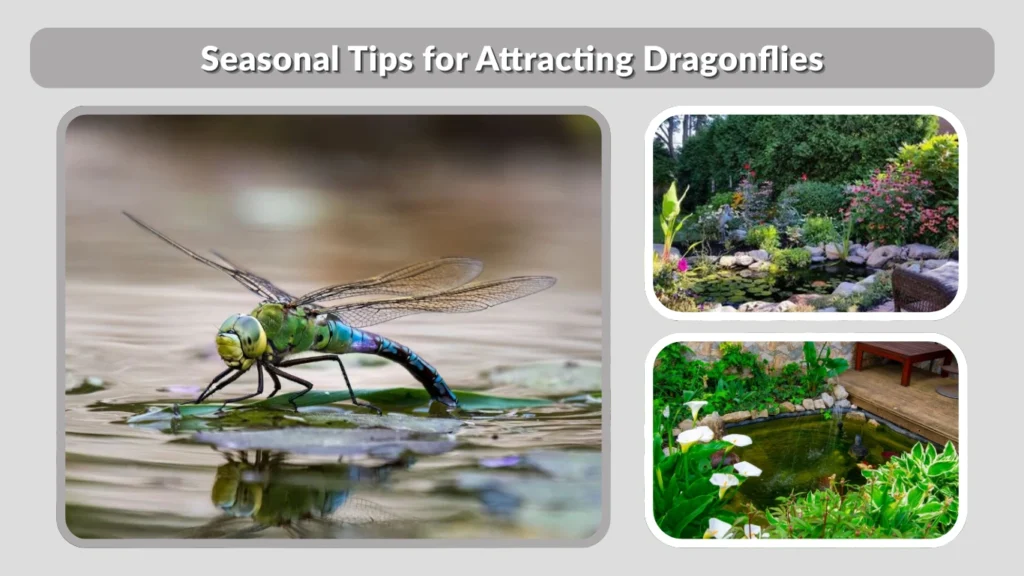
Dragonfly activity varies by season, and timing your efforts can improve your results.
Spring Preparation
Spring is the best time to establish or refresh a pond. Set up water features early so they are ready before dragonfly breeding season begins. Plant aquatic and native vegetation as temperatures warm.
Early preparation increases the chances that dragonflies will discover your habitat during peak activity.
Summer Maintenance
In summer, maintain consistent water levels and monitor plant growth. Ensure that part of the pond remains sunny and open. Avoid adding chemicals to control algae during hot months, as this can disrupt larvae development.
This is when dragonflies are most visible and active in your garden.
Fall and Winter Considerations
In cooler months, avoid cutting back all vegetation immediately. Some dragonfly species overwinter as larvae in the pond. Leaving plant stems and aquatic cover intact helps protect the developing insects.
A little patience through the colder seasons ensures future generations.
How Long Does It Take to Attract Dragonflies?
Attracting dragonflies requires patience. In some cases, you may notice them within a few weeks of installing a pond. In other situations, it may take an entire season for them to discover your garden.
Success depends on your location, proximity to natural water sources, climate, and how well your habitat supports breeding. Even if dragonflies don’t settle immediately, maintaining a wildlife-friendly garden increases the likelihood over time.
Conclusion
Attracting dragonflies to your garden is one of the most effective and natural ways to improve your outdoor space. By providing a clean water source, planting native vegetation, ensuring plenty of sunlight, and avoiding chemicals, you create an inviting habitat for these beneficial insects. Beyond their beauty, dragonflies help reduce mosquitoes and support a balanced ecosystem. Start small if needed, focus on creating a natural environment, and give nature time to respond. With patience and thoughtful planning, your garden can become a thriving dragonfly haven.