
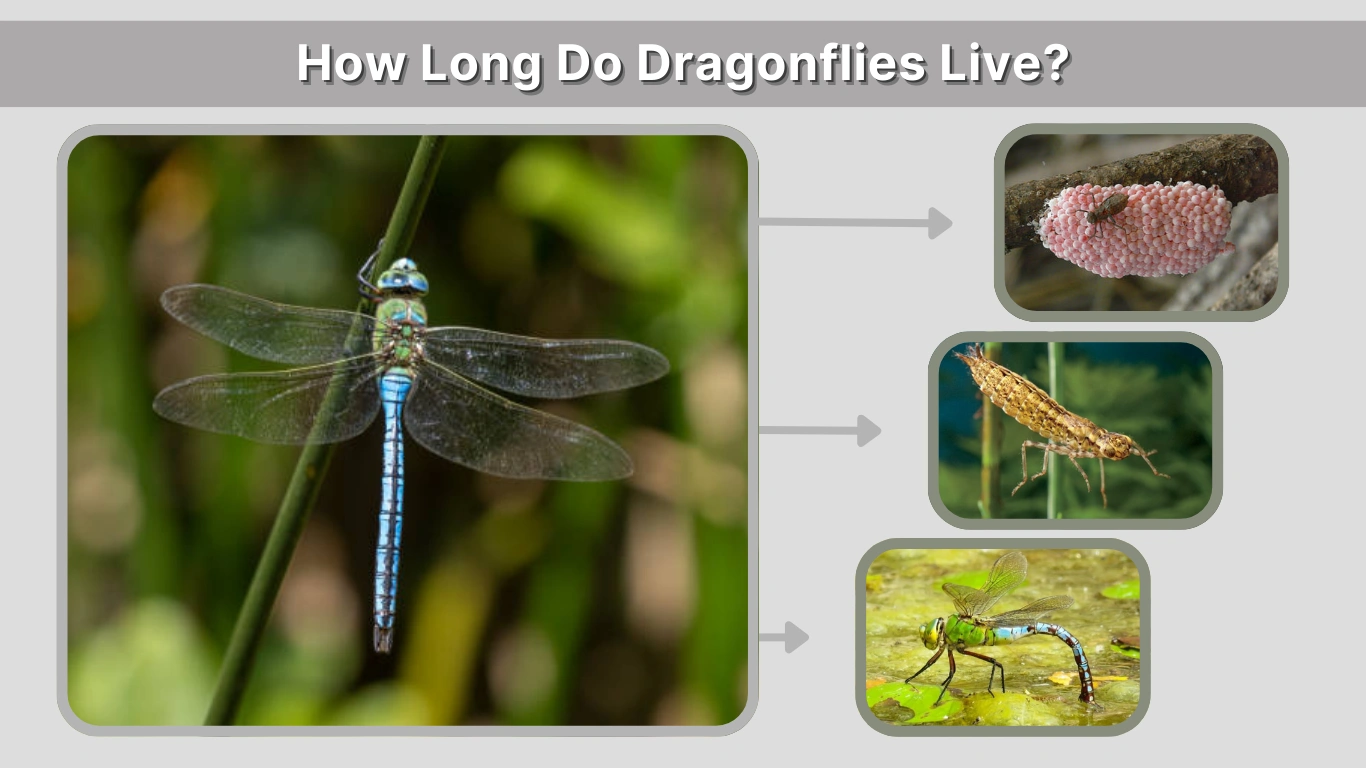
Dragonflies are some of the oldest insects on Earth, existing for more than 300 million years. With their bright colors, large eyes, and fast flight, they often catch people’s attention near ponds, lakes, and wetlands. A common question many people ask is: how long do dragonflies live?
At first glance, it may seem like dragonflies live only a short time, especially since adult dragonflies appear mainly during warmer months. However, their true lifespan is more complex. Dragonflies go through several life stages, and most of their life is spent out of sight. Understanding these stages helps explain how long dragonflies really live and why their lifespan varies so much.
How Long Do Dragonflies Live? (Quick Overview)
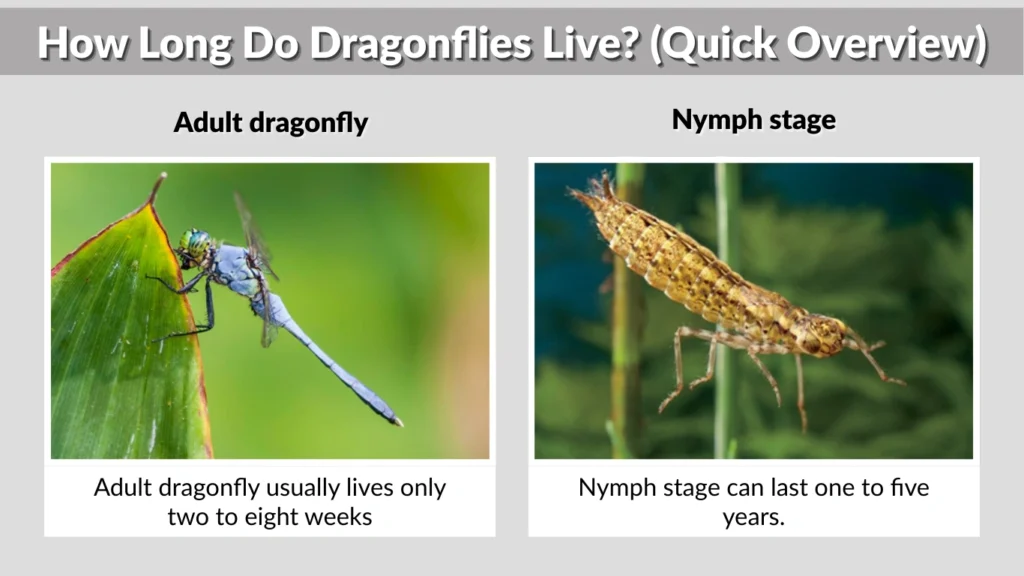
The total lifespan of a dragonfly can range from several months to more than five years, depending on the species and environment. This wide range exists because dragonflies spend most of their lives in an immature form called a nymph, living underwater.
While the adult dragonfly usually lives only two to eight weeks, the nymph stage can last one to five years. When people think dragonflies have short lives, they are usually thinking only about the adult stage. In reality, adulthood is just the final and shortest phase of a much longer life cycle.
Several factors influence a dragonfly’s lifespan, including species type, water quality, climate, and the presence of predators. To fully understand how long dragonflies live, it’s important to look at each stage of their life cycle in detail.
The Complete Life Cycle of a Dragonfly
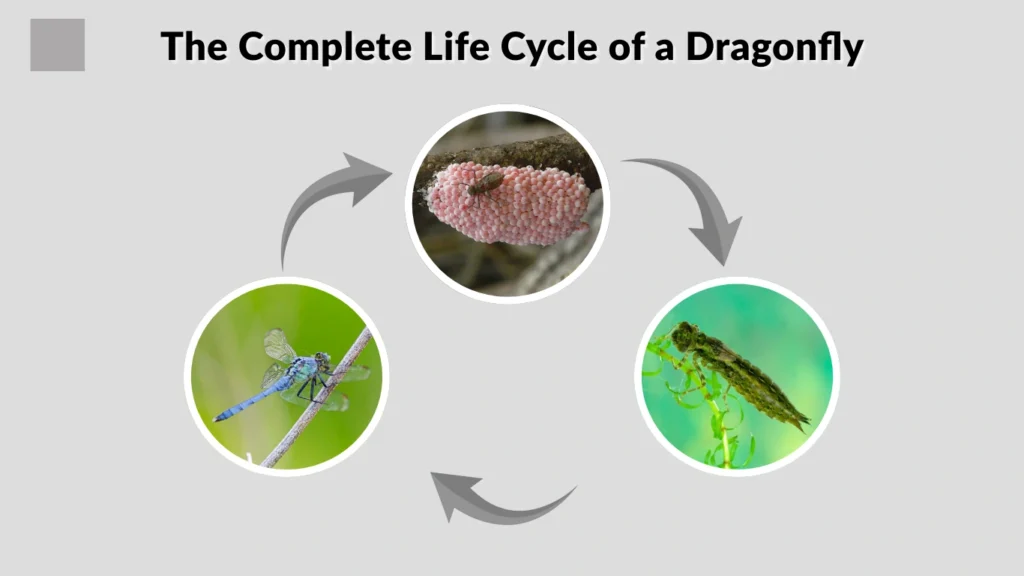
Dragonflies undergo incomplete metamorphosis, meaning they do not have a pupal stage like butterflies. Their life cycle consists of three main stages: egg, nymph, and adult.
Egg Stage
The dragonfly life cycle begins when a female lays eggs, usually in or near freshwater. Eggs are often deposited directly into water, attached to aquatic plants, or placed in mud near ponds, lakes, or slow-moving streams.
The egg stage is relatively short compared to other stages. Depending on the species and environmental conditions, dragonfly eggs typically hatch within one to several weeks. Warmer temperatures often speed up development, while cooler conditions can delay hatching.
Once the eggs hatch, the young dragonflies enter their longest and most important life stage.
Nymph Stage (Larval Stage)
The nymph stage is where dragonflies spend the majority of their lives. Dragonfly nymphs live underwater and can remain there for one to five years, depending on the species. Some fast-developing species may mature in less than a year, while larger species in cooler climates often take several years to become adults.
During this stage, dragonfly nymphs are fierce predators. They feed on mosquito larvae, small fish, tadpoles, and other aquatic insects. Nymphs grow by shedding their exoskeletons multiple times through a process called molting.
Living underwater provides several advantages. It offers protection from many aerial predators and provides a steady food supply. However, nymphs are still vulnerable to fish, birds, and water pollution. Clean, oxygen-rich water is essential for their survival, which is why dragonflies are often considered indicators of healthy freshwater ecosystems.
As the nymph grows and matures, it eventually reaches a point where it is ready for its final transformation.
Adult Dragonfly Stage
When the nymph is fully developed, it climbs out of the water onto a plant, rock, or other surface. There, it undergoes its final molt and emerges as an adult dragonfly. This process, known as emergence, is one of the most dramatic moments in a dragonfly’s life.
As an adult, the dragonfly’s main goals are to feed, mate, and reproduce. Adult dragonflies are powerful fliers and skilled hunters, feeding on mosquitoes, flies, and other small insects. Despite their agility, adult dragonflies live much shorter lives than nymphs.
How Long Do Dragonflies Live as Adults?
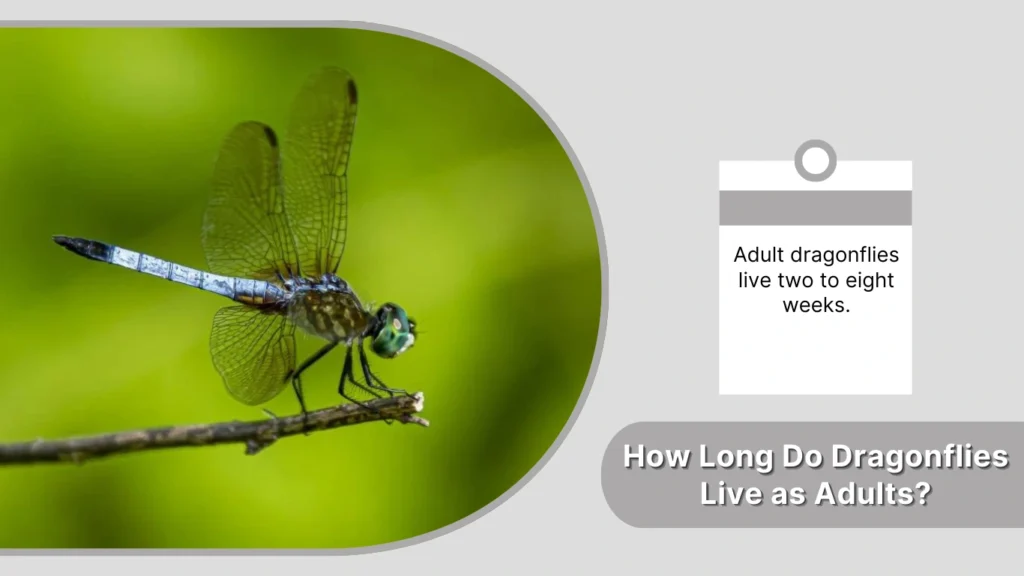
The adult stage is the shortest part of a dragonfly’s life. On average, adult dragonflies live two to eight weeks, though some may survive slightly longer under ideal conditions.
Adult lifespan depends on factors such as weather, availability of food, and exposure to predators. Dragonflies that emerge late in the season often have shorter lives, while those that emerge during stable, warm conditions may live longer. Their brief adult life is intense, focused almost entirely on reproduction and survival.
Why Dragonflies Spend Most of Their Life Underwater
One of the most interesting facts about dragonflies is that they spend the majority of their lifespan underwater as nymphs. This long aquatic phase offers several evolutionary advantages. Water environments provide a steady supply of food, allowing nymphs to grow slowly and efficiently over time.
Living underwater also helps protect dragonfly nymphs from many predators that target flying insects. While they still face threats from fish and birds, the underwater habitat offers more stability than the open air. This extended development period allows dragonflies to reach full size and strength before entering their short adult phase.
The long nymph stage also increases survival rates. By spreading growth over months or years, dragonflies reduce the risks associated with rapid development. This strategy has helped them survive major environmental changes over millions of years.
Factors That Affect a Dragonfly’s Lifespan
A dragonfly’s lifespan is not fixed. Several natural and environmental factors play a role in how long an individual dragonfly lives.
Species Differences
There are thousands of dragonfly species worldwide, and their lifespans vary significantly. Smaller species often develop faster and may spend less time as nymphs, sometimes under a year. Larger species, especially those in cooler climates, tend to have longer nymph stages that can last several years.
Genetics also influence adult lifespan. Some species are naturally longer-lived as adults, while others are adapted for quick reproduction within a short timeframe.
Environmental Conditions
Environmental quality is one of the most important factors affecting dragonfly lifespan. Clean freshwater with good oxygen levels supports healthy nymph development. Polluted water can slow growth, increase disease risk, or kill nymphs before they reach adulthood.
Climate also matters. Warmer temperatures generally speed up development, while colder conditions slow it down. Seasonal weather patterns, such as droughts or heavy rainfall, can significantly affect survival rates at all life stages.
Predators and Natural Threats
Dragonflies face predators throughout their lives. Nymphs are preyed upon by fish, frogs, and aquatic birds, while adult dragonflies are hunted by birds, spiders, and larger insects.
Natural threats such as parasites, disease, and extreme weather events can also shorten lifespan. Even though adult dragonflies are excellent fliers, they remain vulnerable, especially during mating or while resting.
How Long Do Dragonflies Live in the Wild vs Controlled Environments
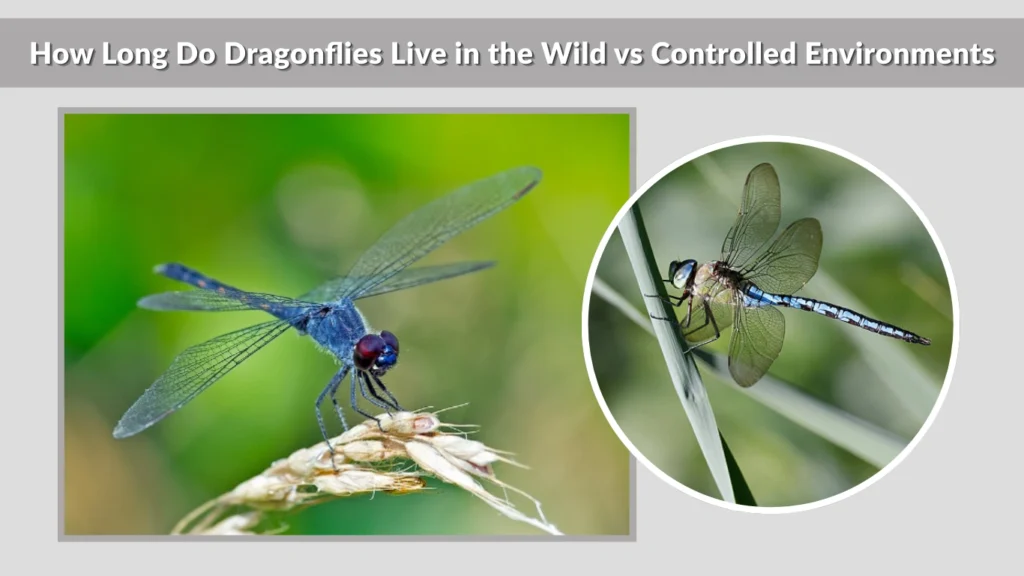
In the wild, dragonflies live as long as conditions allow. Their lifespan is closely tied to the health of their habitat. In clean, stable environments, dragonflies are more likely to complete their full life cycle successfully.
Dragonflies are rarely kept in captivity for long periods because their life cycle depends heavily on natural conditions. Replicating the correct water quality, temperature, and food sources for nymphs is extremely difficult. As a result, most lifespan data comes from observations in the wild rather than controlled environments.
How Dragonfly Lifespan Compares to Other Insects
Compared to many insects, dragonflies have surprisingly long lifespans. Butterflies, for example, often live only a few weeks as adults and spend much less time in their larval stage. Mayflies, on the other hand, may live for years as larvae but survive only a single day as adults.
Dragonflies fall somewhere in between. While their adult life is short, it is longer than that of mayflies and far more active. Their long nymph stage combined with a brief but powerful adult phase makes them unique among insects.
Common Myths About Dragonfly Lifespan
Many misconceptions exist about how long dragonflies live. One common myth is that dragonflies live for only a day. This confusion likely comes from mixing them up with mayflies.
Another myth is that dragonflies die immediately after mating. While mating can be dangerous due to predators, dragonflies do not automatically die after reproducing. They may continue feeding and mating multiple times during their adult lives.
There is also a belief that all dragonflies have the same lifespan. In reality, lifespan varies widely depending on species, environment, and individual conditions.
Why Dragonfly Lifespan Matters to Ecosystems
Dragonflies play an important role in maintaining balanced ecosystems. As nymphs, they help control populations of mosquito larvae and other aquatic pests. As adults, they continue to reduce insect populations, benefiting humans and wildlife alike.
Because dragonflies rely on clean water, their presence is often used as a sign of a healthy freshwater ecosystem. A decline in dragonfly populations can signal environmental problems such as pollution or habitat destruction.
FAQs
How long do dragonflies live in total?
Most dragonflies live between one and five years in total, with the majority of that time spent as underwater nymphs.
Can dragonflies live for years?
Yes, but only during the nymph stage. Adult dragonflies typically live for just a few weeks.
How long do dragonflies live without water?
Adult dragonflies do not need water to survive, but nymphs cannot live without it.
Do dragonflies die after mating?
No, dragonflies do not automatically die after mating. They may mate multiple times before dying.
Conclusion
Dragonflies live much longer than many people realize. While their adult lives last only a few weeks, their total lifespan can stretch across several years due to their long underwater nymph stage. This unique life cycle allows dragonflies to thrive in diverse environments and play a vital role in controlling insect populations. Understanding how long dragonflies live helps us appreciate their importance and the need to protect the freshwater habitats they depend on.