
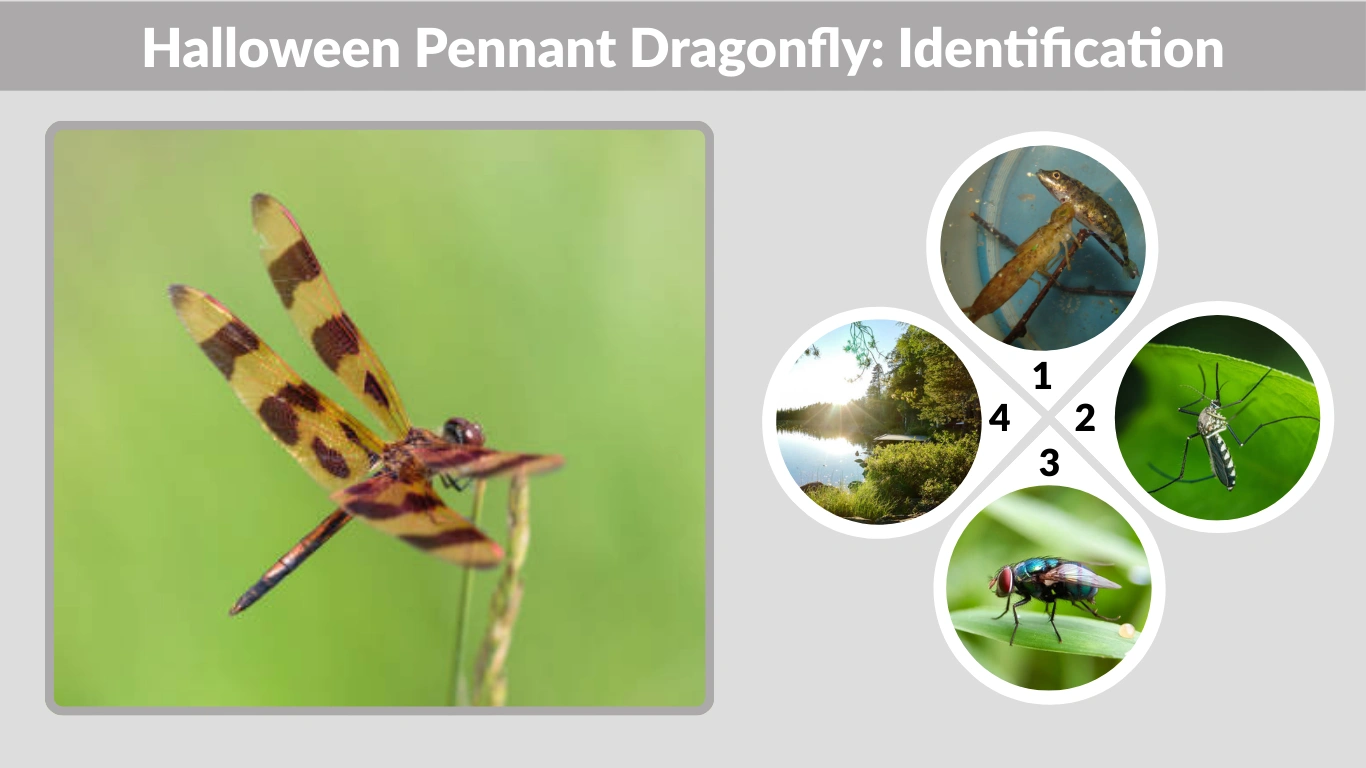
The Halloween pennant dragonfly (Celithemis eponina) is one of the most eye-catching dragonflies in North America. Named for its striking orange and black wing pattern, this small dragonfly resembles a tiny banner fluttering in the breeze. It is commonly found around ponds, marshes, and wetlands during the warmer months. Beyond its festive appearance, the Halloween pennant plays an important ecological role as a predator of mosquitoes and other insects. In this guide, you’ll learn how to identify it, where it lives, and how it develops throughout its fascinating life cycle.
What Is the Halloween Pennant Dragonfly?
The Halloween pennant belongs to the skimmer family, Libellulidae, one of the largest dragonfly families in the world. Within this family, it is part of the genus Celithemis, commonly known as pennants due to their distinctive perching posture and patterned wings.
Scientific Classification
The scientific name Celithemis eponina reflects its classification among the pennant dragonflies. Members of this group are generally small to medium-sized dragonflies with broad wings marked by bands or spots. Like other skimmers, Halloween pennants are strong fliers and are often seen basking in sunny areas near freshwater habitats.
They share similarities with other pennant species, such as the calico pennant, but their bold coloration makes them easier to distinguish once you know what to look for.
Why It’s Called the “Halloween” Pennant
The name “Halloween” comes from the dragonfly’s festive wing coloration. Its wings are tinted amber or orange and decorated with dark brown or black bands and spots. When sunlight shines through the wings, they resemble stained glass with warm autumn tones.
Another reason for the name is its perching behavior. The Halloween pennant often hangs from the tip of a grass stem, holding its wings slightly forward. As the wind moves the grass, the dragonfly sways gently, looking like a small flag or pennant waving in the air.
How to Identify a Halloween Pennant Dragonfly
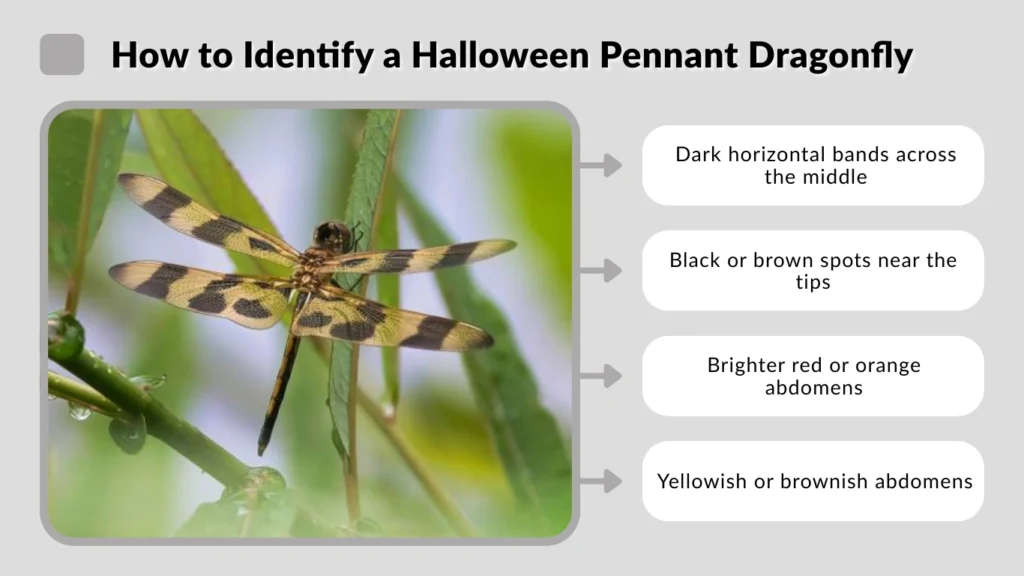
Correct identification is easier once you focus on wing patterns and body coloration. This species is smaller than many other dragonflies, but its bold markings make it stand out.
Wing Color and Pattern
The wings are the most distinctive feature. Key characteristics include:
- Amber or orange-tinted wings
- Dark horizontal bands across the middle
- Black or brown spots near the tips
- Clear sections between the bands
The pattern may vary slightly between individuals, but the overall orange-and-black combination is consistent. In bright sunlight, the wings appear almost translucent, enhancing their decorative look.
Male vs Female Differences
Although males and females look similar at first glance, there are subtle differences.
Male Halloween pennants tend to have:
- Brighter red or orange abdomens
- More vivid coloration overall
- Slightly darker wing markings
Females usually display:
- Yellowish or brownish abdomens
- Slightly paler body tones
- Similar wing band patterns
The differences are not as dramatic as in some other dragonfly species, but careful observation can reveal them.
Size and Body Structure
The Halloween pennant is relatively small, measuring about 1.3 to 1.6 inches in length. It has a slender abdomen and relatively broad wings compared to its body size. The eyes are large and widely spaced, typical of dragonflies, allowing for excellent vision.
When perched, its wings are often held forward or slightly angled, rather than flat and horizontal. This posture, combined with its habit of clinging to thin grass stems, helps distinguish it from other species.
Habitat and Geographic Range
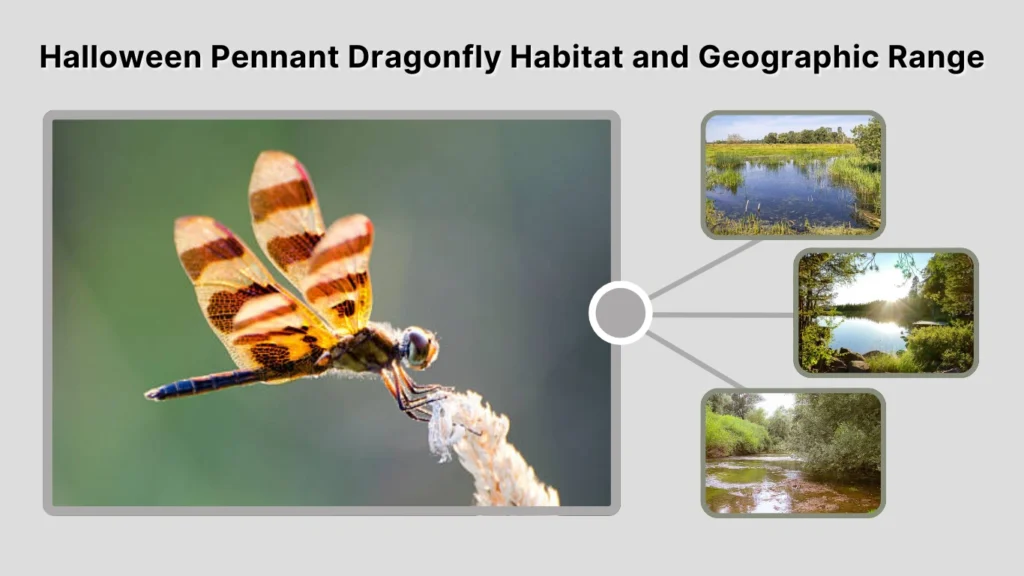
The Halloween pennant dragonfly is strongly associated with freshwater environments. Its presence often indicates a healthy wetland ecosystem.
Where They Are Found
This species is widely distributed across:
- The eastern United States
- The Midwest
- Southern Canada during warmer months
- Parts of Central America
They are especially common in regions with abundant marshes and ponds. In northern areas, they appear mainly during late spring and summer, while in southern regions, their season may last longer.
Preferred Habitats
Halloween pennants prefer calm or slow-moving freshwater habitats such as:
- Marshes
- Ponds
- Wetlands
- Shallow lakes
- Ditches with standing water
They are particularly drawn to areas with tall grasses and emergent vegetation. These plants provide ideal perching spots and safe places for egg-laying.
Sunlight is important to them, as dragonflies rely on external warmth to regulate body temperature. You’ll often see them resting in sunny, open areas near water rather than shaded forested spots.
Seasonal Activity
Halloween pennants are most active from late spring through early fall. Their peak population usually occurs during summer months when temperatures are warm and insect prey is abundant.
On warm days, they can often be seen flying low over water or perched along grassy shorelines. As temperatures cool in autumn, their numbers gradually decline.
Life Cycle of the Halloween Pennant Dragonfly
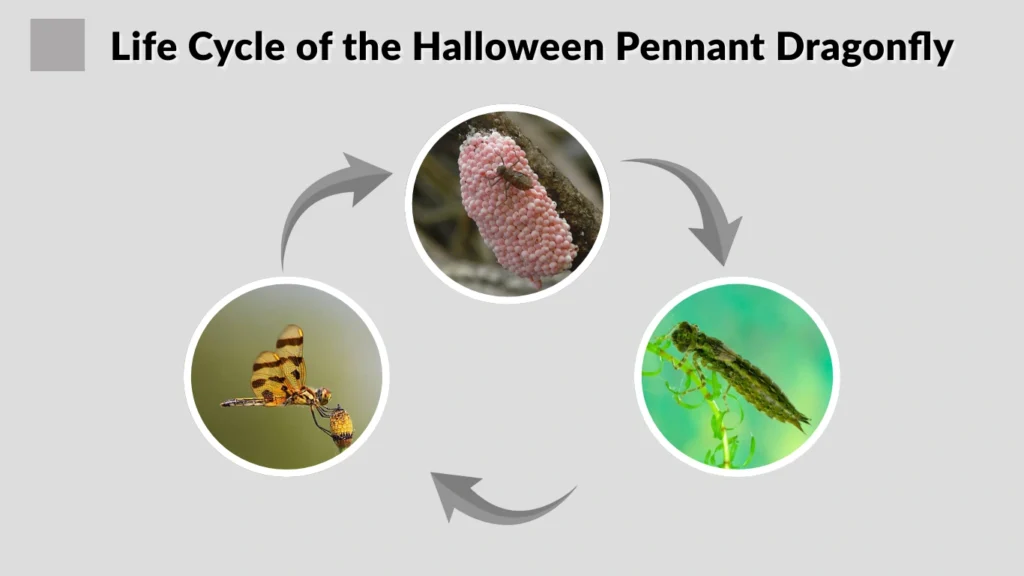
Like all dragonflies, the Halloween pennant undergoes incomplete metamorphosis with three main life stages: egg, nymph, and adult.
Egg Stage
After mating, the female deposits her eggs directly into freshwater. She may dip her abdomen into the water repeatedly to release eggs, sometimes while the male remains nearby to guard her.
The eggs hatch within several days to a few weeks, depending on environmental conditions such as temperature and water quality.
Aquatic Nymph Stage
Once hatched, the young dragonfly enters the nymph stage. Nymphs live underwater and look very different from adults. They have stout bodies, no visible wings, and specialized mouthparts for capturing prey.
During this stage, they feed on:
- Mosquito larvae
- Small aquatic insects
- Tiny crustaceans
The nymph stage can last several months. As the nymph grows, it molts multiple times, shedding its outer skin to allow for further development. This underwater period is crucial for growth and survival.
Adult Stage
When the nymph is fully developed, it climbs out of the water onto a plant stem or other surface. There, it undergoes its final molt. The outer skin splits open, and the adult dragonfly slowly emerges. At first, its body is soft and pale, and its wings are folded and wrinkled.
Over the next several hours, the wings expand as fluid is pumped through them. Once hardened, the dragonfly is ready for flight. The adult stage typically lasts several weeks, though this can vary depending on weather conditions and food availability. During this time, the dragonfly focuses on feeding, defending territory, and reproducing.
Behavior and Flight Characteristics
Halloween pennants are known for their delicate yet active behavior. Their unique posture and flight style make them fascinating to observe.
Perching Behavior
One of the most distinctive traits of the Halloween pennant is how it perches. It often clings to the tip of tall grasses, reeds, or thin stems near water. Instead of holding its wings flat, it angles them slightly forward.
As the breeze moves the plant, the dragonfly sways back and forth like a small banner. This behavior gives rise to the name “pennant” and makes the species easy to recognize in the field.
Flight Pattern
In flight, Halloween pennants appear light and fluttery compared to larger dragonflies. They typically fly low over water or along the edges of wetlands.
Their flight is:
- Quick but graceful
- Close to vegetation
- Interspersed with frequent perching
They often return to the same perch repeatedly after short hunting trips.
Territorial and Mating Behavior
Male Halloween pennants defend small territories near suitable egg-laying sites. If another male enters the area, aerial chases may occur. These brief confrontations usually end with one dragonfly retreating.
During mating, the pair forms the classic dragonfly “wheel” position, where their bodies connect in a circular shape. Afterward, the female lays eggs in the water, sometimes guarded by the male to prevent interference from rivals.
Diet and Feeding Habits
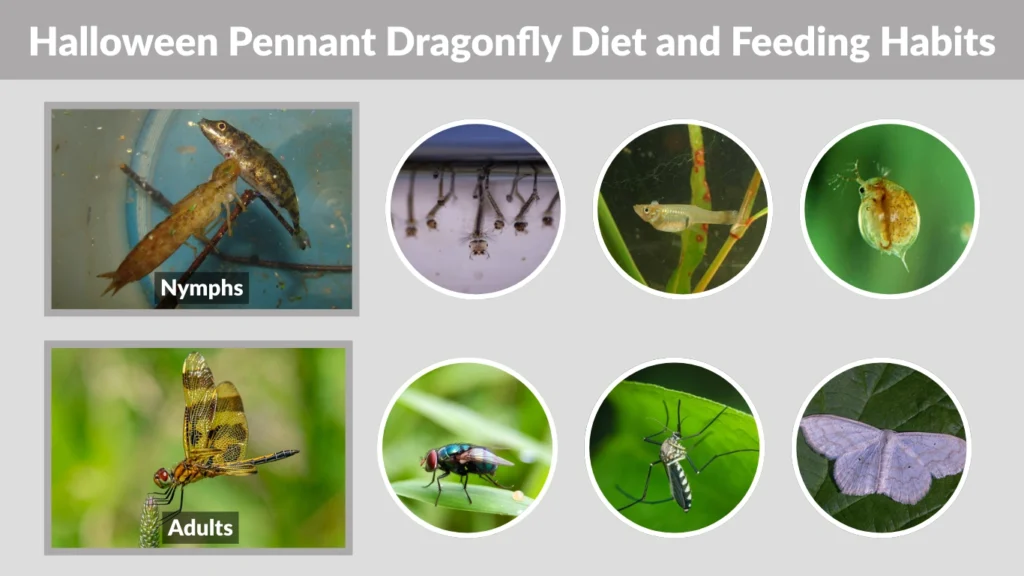
Halloween pennants are carnivorous throughout their lives and contribute to natural insect control.
What Nymphs Eat
Underwater nymphs are ambush predators. They use extendable mouthparts to capture prey quickly.
Their diet includes:
- Mosquito larvae
- Small aquatic insects
- Tiny crustaceans
- Other small invertebrates
By feeding on mosquito larvae, they help reduce mosquito populations before the insects ever take flight.
What Adults Eat
Adult Halloween pennants hunt flying insects. They capture prey mid-air using their legs, which form a basket-like structure.
Common prey includes:
- Mosquitoes
- Flies
- Gnats
- Small moths
After catching an insect, they often return to a perch to consume it. Their feeding habits make them valuable allies in maintaining ecological balance.
Halloween Pennant vs Similar Dragonflies
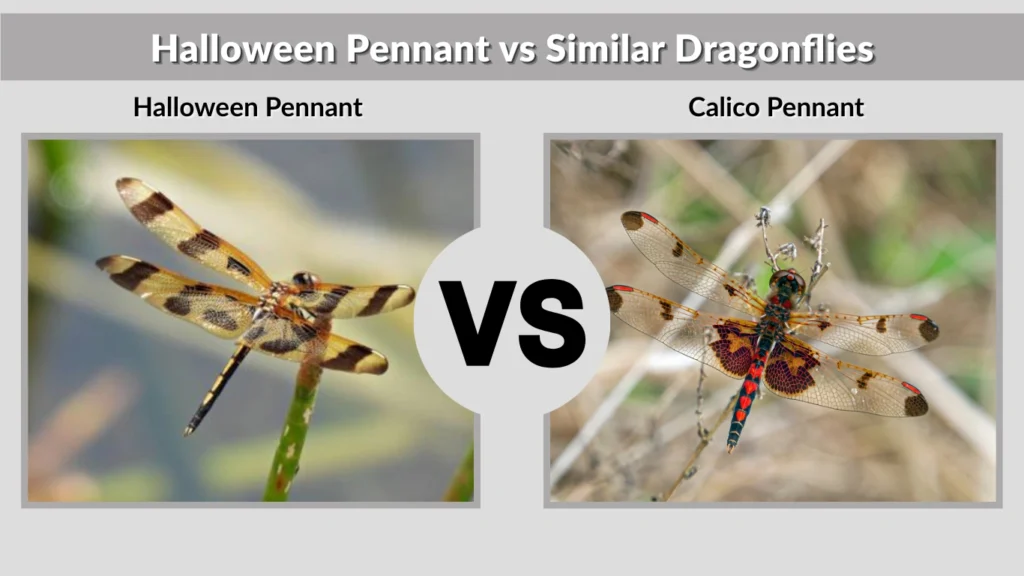
Several dragonfly species share similar colors or habitats, leading to occasional confusion.
Halloween Pennant vs Calico Pennant
The calico pennant is the species most commonly mistaken for the Halloween pennant.
Key differences include:
- Calico pennants often have more distinct white patches on the wings.
- Halloween pennants display a stronger amber or orange tint overall.
- Body coloration in calico pennants may appear darker or more patterned.
Careful attention to wing band placement and body color usually clarifies identification.
How to Avoid Misidentification
To correctly identify a Halloween pennant:
- Look for amber-tinted wings with dark horizontal bands.
- Observe its habit of perching on tall grasses.
- Note the small size and slender abdomen.
Field guides and close observation can help confirm the species, especially in areas where multiple pennant species overlap.
Are Halloween Pennant Dragonflies Beneficial?
Yes, Halloween pennant dragonflies are highly beneficial to ecosystems.
Both nymphs and adults feed on mosquitoes and other small insects, providing natural pest control. They are also important prey for birds, frogs, and fish, forming part of a balanced food web.
Because their larvae develop in water, their presence often indicates healthy freshwater habitats. Wetlands that support dragonflies typically have good water quality and diverse plant life.
Importantly, Halloween pennants are harmless to humans. They do not sting, and although they can bite if handled, they rarely do and pose no threat.
How to Attract Halloween Pennant Dragonflies to Your Yard
If you want to encourage Halloween pennants in your area, creating a suitable habitat is key.
Add a Water Feature
A small pond can attract dragonflies if it includes:
- Shallow edges
- Native aquatic plants
- Clean, chemical-free water
Still or slow-moving water works best.
Provide Tall Grasses
Plant reeds, sedges, or native grasses around the pond. These plants offer perfect perching spots and protection.
Avoid Pesticides
Reducing or eliminating pesticide use helps protect dragonfly larvae and ensures a steady supply of insect prey. A natural garden environment supports biodiversity and increases the likelihood of dragonfly visits.
Interesting Halloween Pennant Dragonfly Facts
- Their wings resemble stained glass when backlit by sunlight.
- The “pennant” name comes from their flag-like perching posture.
- They are most visible during warm summer afternoons.
- They are among the most photographed small dragonflies due to their bold wing patterns.
FAQs
Are Halloween pennant dragonflies rare?
No, they are fairly common in suitable wetland habitats across much of the eastern and central United States. However, they may be less noticeable due to their small size and preference for grassy areas near water.
How long do Halloween pennant dragonflies live?
They spend several months as aquatic nymphs underwater. The adult stage typically lasts a few weeks, though lifespan varies depending on temperature, food availability, and environmental conditions.
Do Halloween pennant dragonflies bite or sting?
They do not sting, as dragonflies lack stingers. While they can bite if handled, it is rare and harmless. They are generally non-aggressive toward humans.
What does the Halloween pennant dragonfly symbolize?
Like other dragonflies, the Halloween pennant is often associated with transformation, adaptability, and lightness. Its vibrant orange-and-black coloration may also symbolize seasonal change and energy.
Conclusion
The Halloween pennant dragonfly is a small but striking species that brings color and movement to wetlands and ponds. With its amber wings, gentle swaying posture, and important role as an insect predator, it is both beautiful and beneficial. By protecting freshwater habitats and maintaining pesticide-free gardens, we can help support healthy dragonfly populations and preserve the delicate ecosystems they inhabit