
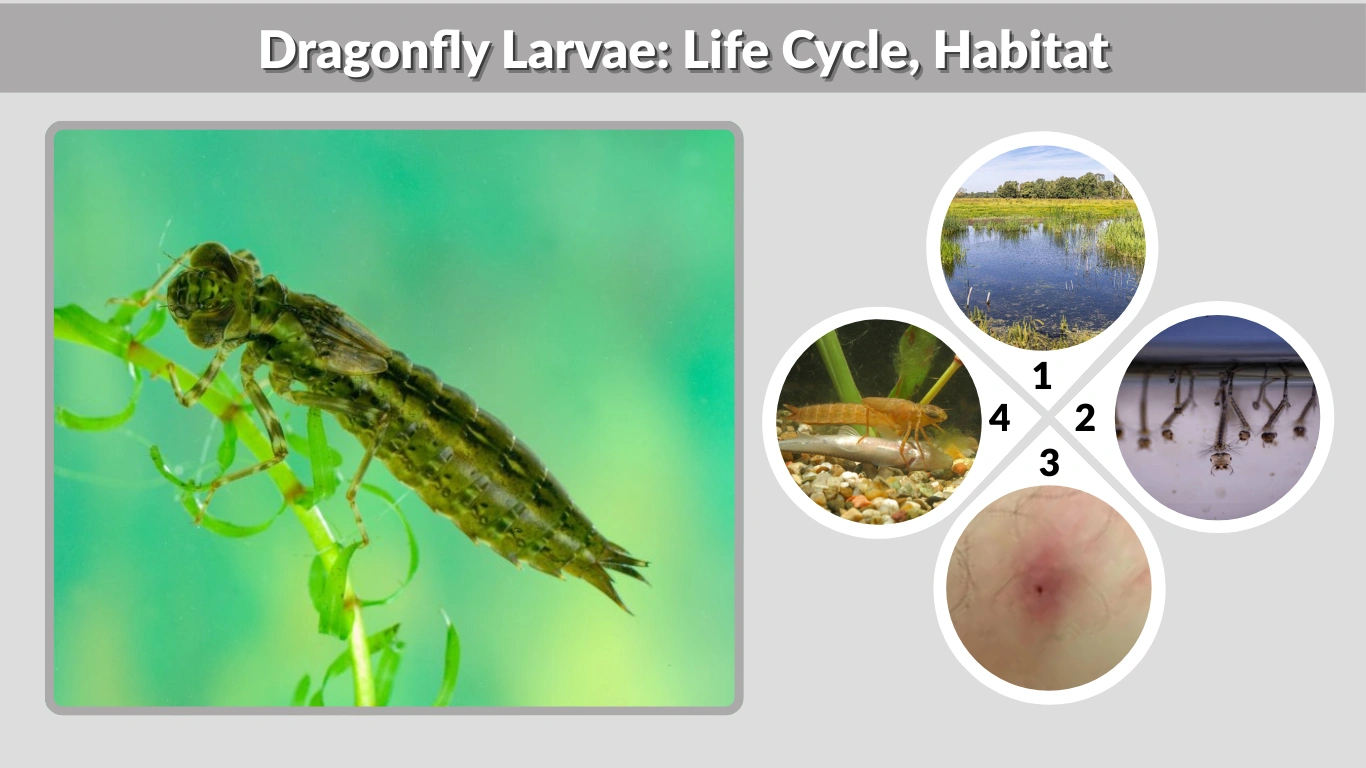
Dragonfly larvae, often called dragonfly nymphs, are the aquatic juvenile stage of dragonflies. While adult dragonflies are known for their fast flight and shimmering wings, most of their lives are actually spent underwater as larvae. These fascinating predators play an important role in freshwater ecosystems, feeding on small aquatic creatures and helping control insect populations like mosquitoes. Understanding dragonfly larvae gives you a deeper appreciation of how dragonflies develop and why they are so important to ponds, lakes, and streams.
What Are Dragonfly Larvae?
Dragonfly larvae are the immature stage of dragonflies belonging to the order Odonata. Unlike butterflies, dragonflies do not go through complete metamorphosis. Instead, they develop through incomplete metamorphosis, meaning they hatch from eggs into a form that already resembles a small, wingless version of the adult.
However, dragonfly larvae look very different from adult dragonflies. They are fully aquatic, have no wings, and are built for underwater hunting rather than flying.
Dragonfly Larva vs. Dragonfly Nymph
The terms dragonfly larva and dragonfly nymph are often used interchangeably. Technically, “nymph” is the more accurate term because dragonflies undergo incomplete metamorphosis. Insects that develop gradually without a pupal stage are typically called nymphs.
Despite this technical difference, “dragonfly larvae” is widely used in educational materials and online searches, so both terms refer to the same aquatic life stage.
Where They Fit in the Dragonfly Life Cycle
The dragonfly life cycle has three main stages:
- Egg
- Larva (nymph)
- Adult dragonfly
After mating, female dragonflies lay eggs in or near freshwater. Once the eggs hatch, the young dragonfly enters the aquatic larval stage. This stage lasts the longest—often months or even years—depending on the species and environmental conditions. Eventually, the larva leaves the water, transforms, and becomes a winged adult dragonfly.
The Dragonfly Life Cycle Explained
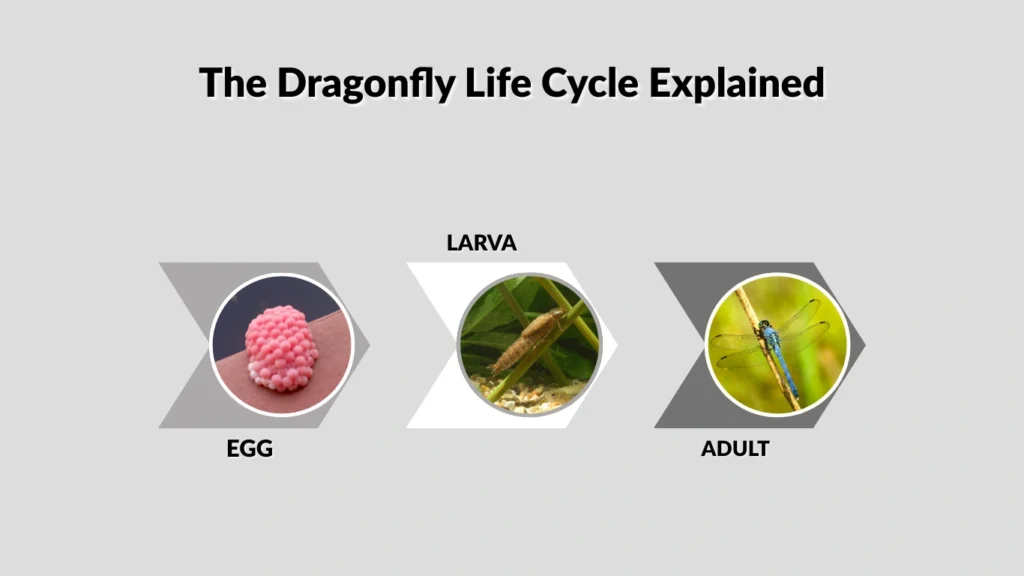
Understanding the dragonfly life cycle helps explain why dragonfly larvae are so important and why they spend so much time underwater.
Egg Stage
Female dragonflies typically lay their eggs in freshwater environments such as ponds, lakes, marshes, or slow-moving streams. Some species deposit eggs directly into the water, while others place them on aquatic plants or in mud near the water’s edge.
Eggs may hatch within a few weeks, but in some species, especially in colder climates, they can overwinter and hatch later when conditions improve.
Aquatic Larval Stage (Longest Phase)
Once the eggs hatch, the dragonfly larvae begin their underwater lives. This is the longest and most critical stage of development.
Depending on the species, dragonfly larvae may live underwater for:
- Several months
- One to two years
- Up to five years in some large species
During this time, the larvae grow through a series of molts called instars. Each time they outgrow their exoskeleton, they shed it and develop a slightly larger one. A dragonfly larva may molt 10 to 15 times before reaching full size.
The length of this stage depends on several factors:
- Water temperature
- Food availability
- Species type
- Climate
In colder regions, development tends to take longer because growth slows in low temperatures.
Emergence and Transformation into Adults
When the dragonfly larva is fully developed, it leaves the water in a process called emergence. It crawls up a plant stem, rock, or other surface above the waterline. There, its outer skin splits open, and the adult dragonfly slowly emerges.
This shed skin, known as an exuvia, is often found attached to plants near ponds and lakes.
After emerging, the adult dragonfly pumps fluid into its wings, allowing them to expand and harden. Once the wings are fully formed and dry, the dragonfly takes its first flight.
Dragonfly Larvae Habitat
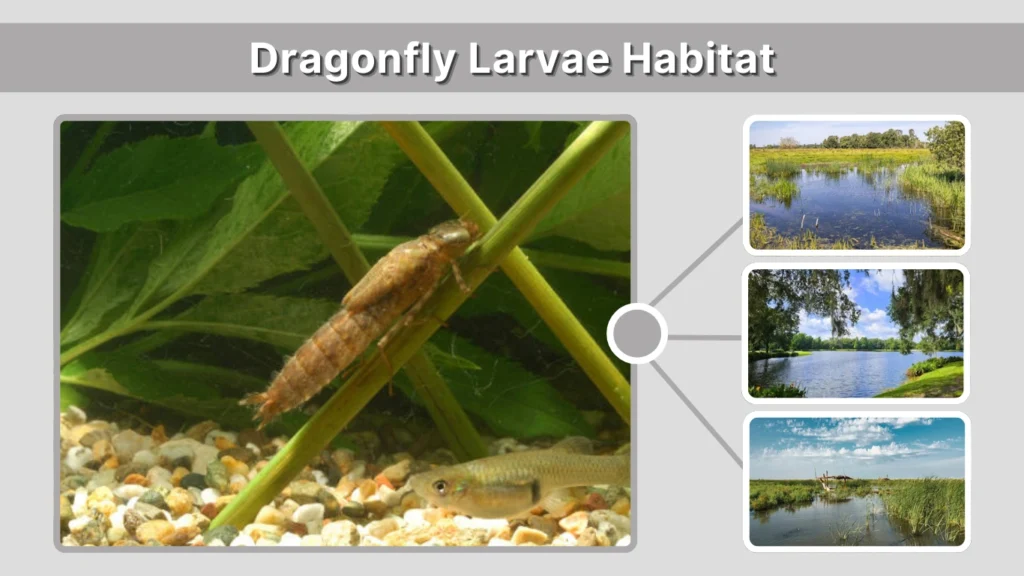
Dragonfly larvae are completely dependent on freshwater habitats. Without clean and stable aquatic environments, they cannot survive.
They are commonly found in:
- Ponds
- Lakes
- Marshes
- Wetlands
- Slow-moving streams
Because they require water for such a long period, dragonfly larvae are considered indicators of water quality. Healthy populations often suggest that the water ecosystem is relatively balanced and unpolluted.
Common Aquatic Environments
Dragonfly larvae prefer freshwater environments with plenty of hiding places. Aquatic plants, submerged vegetation, and muddy bottoms provide shelter from predators and excellent ambush points for hunting prey.
Still or slow-moving water is often ideal, though some species adapt well to gentle currents in streams.
Ideal Environmental Conditions
Several environmental factors influence where dragonfly larvae thrive:
- Vegetation: Provides protection and camouflage
- Oxygen levels: Clean, oxygen-rich water supports development
- Water temperature: Affects growth rate
- Food availability: Essential for molting and survival
Larvae typically hide among plants or debris and remain motionless until prey comes close enough to capture.
What Do Dragonfly Larvae Eat?
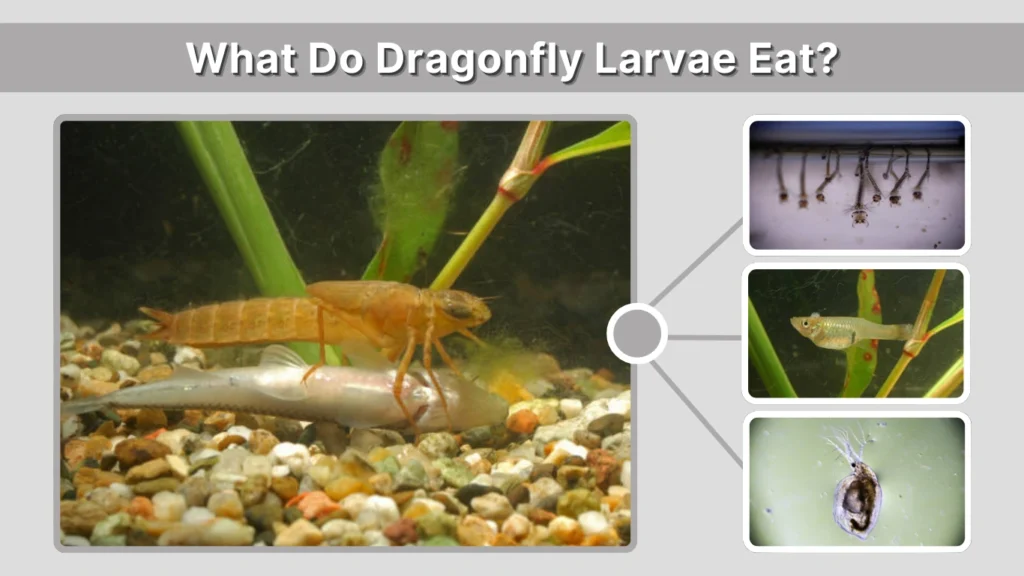
Dragonfly larvae are aggressive aquatic predators. From the moment they hatch, they begin hunting other small organisms in the water.
Their carnivorous diet plays an important role in controlling populations of various aquatic insects.
Typical Prey
Dragonfly larvae eat a wide variety of small aquatic animals, including:
- Mosquito larvae
- Small aquatic insects
- Water fleas
- Tadpoles
- Small fish
- Other invertebrates
Larger dragonfly larvae can even catch surprisingly large prey compared to their own body size. This makes them one of the top invertebrate predators in many freshwater ecosystems.
Unique Hunting Adaptations
One of the most fascinating features of dragonfly larvae is their specialized lower jaw, known as a labium. This extendable jaw acts like a spring-loaded arm. When prey comes within range, the larva rapidly shoots the labium forward to grab it.
This strike happens in a fraction of a second, making it almost impossible for prey to escape.
In addition to their powerful jaws, dragonfly larvae have:
- Excellent underwater vision
- Strong legs for gripping surfaces
- The ability to use jet propulsion by expelling water from their abdomen to move quickly
These adaptations make dragonfly larvae highly effective underwater hunters.
How to Identify Dragonfly Larvae
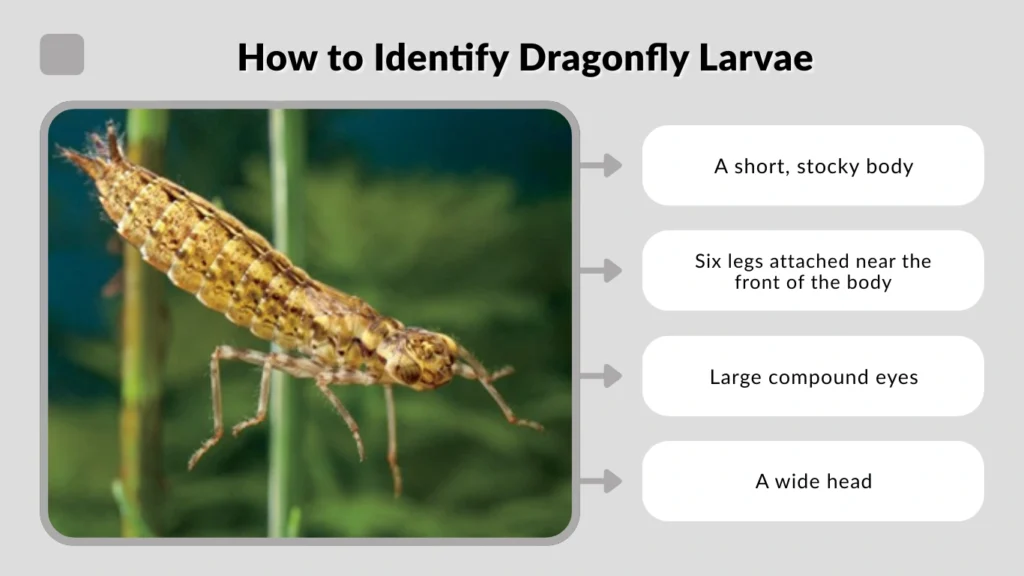
If you’ve ever scooped water from a pond and noticed a strange, brownish insect crawling along the bottom, you may have found a dragonfly larva. Because they look very different from adult dragonflies, identification can sometimes be confusing.
Dragonfly larvae are built for underwater life. Their bodies are compact, sturdy, and well-camouflaged against mud and vegetation.
Key Physical Characteristics
Dragonfly larvae typically have:
- A short, stocky body
- Six legs attached near the front of the body
- Large compound eyes
- A wide head
- No visible wings
- A dull coloration (brown, greenish, or muddy tones)
Unlike some aquatic insects, dragonfly larvae do not have external tail-like gills. Instead, they breathe through internal gills located in their abdomen. Water enters and exits through the rear end, allowing oxygen absorption. This same system also helps them move using jet propulsion.
Their thick body shape and strong legs make them look more robust compared to other aquatic nymphs.
Dragonfly Larvae vs. Damselfly Larvae
Dragonflies and damselflies both belong to the order Odonata, so their larvae can appear similar at first glance. However, there are clear differences:
Body Shape
- Dragonfly larvae: Short, broad, and chunky
- Damselfly larvae: Slender and elongated
Gills
- Dragonfly larvae: Internal gills (not visible externally)
- Damselfly larvae: Three leaf-like external gills at the tip of the abdomen
Movement
- Dragonfly larvae: Crawl and sometimes use jet propulsion
- Damselfly larvae: Swim in a fish-like motion using their tail gills
These differences make it easier to identify which type of nymph you’re observing in a pond or stream.
How Long Do Dragonfly Larvae Live?
The lifespan of dragonfly larvae varies greatly depending on species and environmental conditions. In general, they spend far more time as larvae than as adults.
While adult dragonflies may live only a few weeks or months, the larval stage can last:
- A few months in small species
- One to two years in many common species
- Up to five years in larger species
This extended aquatic period allows them to grow large enough to survive as strong flying predators once they become adults.
Factors That Affect Development Time
Several factors influence how long dragonfly larvae remain underwater:
Climate:
Colder temperatures slow metabolism and growth, extending the larval period.
Food Supply:
Abundant prey allows faster growth and earlier emergence.
Water Quality:
Pollution or low oxygen levels can stunt development or reduce survival rates.
Predators:
Fish, frogs, and birds prey on larvae, affecting population survival.
Because of these factors, development time can vary even within the same species in different regions.
Are Dragonfly Larvae Dangerous?
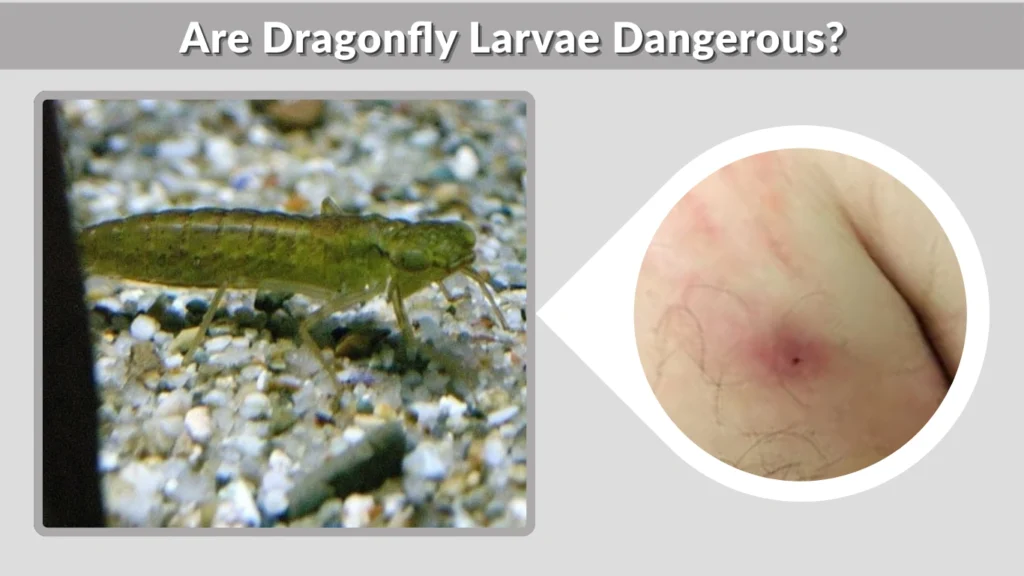
Many people are surprised by the fierce appearance of dragonfly larvae and wonder if they are harmful. Despite their predatory nature, they pose very little risk to humans.
Can They Bite Humans?
Dragonfly larvae can bite if handled, but this is purely defensive. Their bite may feel like a small pinch, but it is not dangerous and does not inject venom.
They are not aggressive toward humans and will typically try to escape rather than attack.
Do They Harm Fish?
In garden ponds, dragonfly larvae may eat very small fish fry. However, they rarely pose a threat to larger fish. In most natural settings, they help maintain ecological balance by controlling insect populations.
For many pond owners, the benefits of mosquito control outweigh the minimal risks to tiny fish.
Ecological Importance of Dragonfly Larvae
Dragonfly larvae play a critical role in freshwater ecosystems.
As predators, they help regulate populations of:
- Mosquito larvae
- Small aquatic insects
- Other invertebrates
By reducing mosquito numbers, dragonfly larvae contribute to natural pest control. This makes them especially valuable in wetlands and backyard ponds.
They are also an important food source for:
- Fish
- Frogs
- Birds
- Larger aquatic insects
Because they require relatively clean water, dragonfly larvae are considered indicator species. A healthy population often suggests good water quality and a balanced ecosystem.
Dragonfly Larvae in Garden Ponds
If you have a backyard pond, you may eventually notice dragonfly larvae living in it. In most cases, this is a positive sign.
Pros of Having Dragonfly Larvae
- Natural mosquito control
- Increased biodiversity
- Support for local wildlife
- Contribution to a balanced ecosystem
Dragonflies are often welcomed in gardens because adult dragonflies also feed on flying insects.
When They Might Be a Concern
In very small ornamental ponds with delicate fish fry, dragonfly larvae may occasionally reduce small fish populations. If this becomes a concern, maintaining balanced vegetation and proper pond management can help minimize issues.
For most pond owners, dragonfly larvae are beneficial residents rather than pests.
Fascinating Facts About Dragonfly Larvae
Dragonfly larvae have several remarkable features that make them unique among aquatic insects:
- They breathe using rectal gills, drawing water in and out of their abdomen.
- They can move quickly using jet propulsion, expelling water to propel themselves forward.
- Some species live underwater for years before becoming adults.
- Dragonflies are ancient insects with ancestors dating back over 300 million years.
These adaptations have helped dragonflies survive for millions of years with relatively little evolutionary change.
FAQs
How long do dragonfly larvae stay in water?
Dragonfly larvae typically stay underwater for several months to a few years, depending on the species and environmental conditions. In colder climates, development may take longer, sometimes up to five years before emerging as adults.
What do dragonfly larvae eat most frequently?
Dragonfly larvae mainly eat mosquito larvae, small aquatic insects, and other invertebrates. Larger species may also consume tadpoles and tiny fish. They are active predators and play a major role in controlling insect populations in freshwater habitats.
How can you tell dragonfly larvae apart from damselfly larvae?
Dragonfly larvae have short, stocky bodies and no visible external gills. Damselfly larvae are slender and have three leaf-like gills extending from the end of their abdomen. Their body shape and movement style are the easiest ways to distinguish them.
Are dragonfly larvae good for ponds?
Yes, dragonfly larvae are generally beneficial for ponds. They help reduce mosquito populations and support ecosystem balance. In most cases, they do not significantly harm fish and are considered a positive addition to garden ponds.
Do dragonfly larvae turn directly into dragonflies?
Yes, dragonfly larvae transform directly into adult dragonflies without a pupal stage. They crawl out of the water, shed their outer skin, and emerge as winged adults in a process called incomplete metamorphosis.