
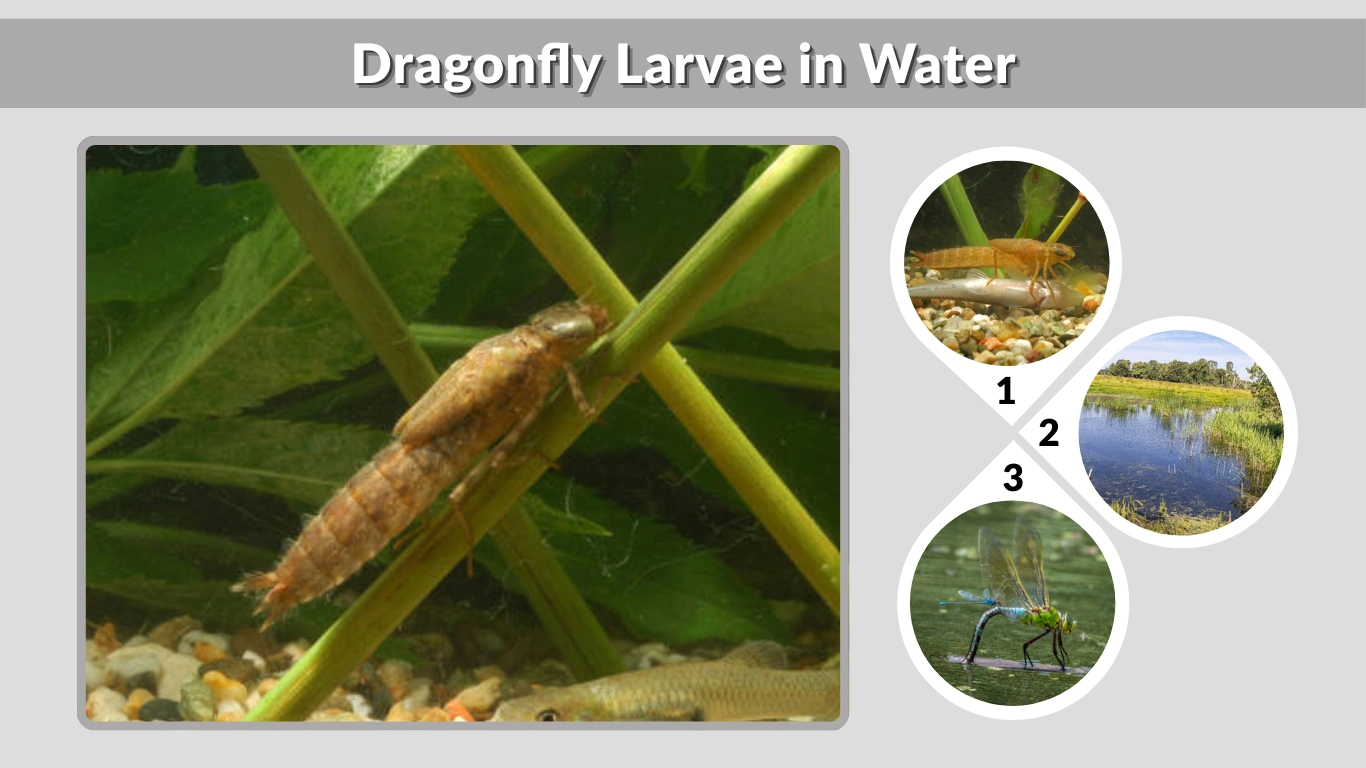
Dragonfly larvae in water are one of nature’s most fascinating aquatic predators. Before they become graceful flying insects, dragonflies spend most of their lives underwater as larvae, also called nymphs. These aquatic hunters play an important role in controlling mosquito populations and maintaining healthy freshwater ecosystems. Understanding the larval stage of a dragonfly helps explain why these insects are always found near ponds, lakes, rivers, and wetlands.
What Is a Dragonfly?
A dragonfly is a flying insect belonging to the order Odonata. It has a long, slender body, large compound eyes, and two pairs of transparent wings. Dragonflies are often confused with flies, but they are not true flies. True flies belong to the order Diptera and have only one pair of wings, while dragonflies have two.
Dragonflies are powerful fliers known for hovering, gliding, and even flying backward. However, before reaching adulthood, they begin life in a completely different environment — underwater.
Dragonfly Life Cycle Explained
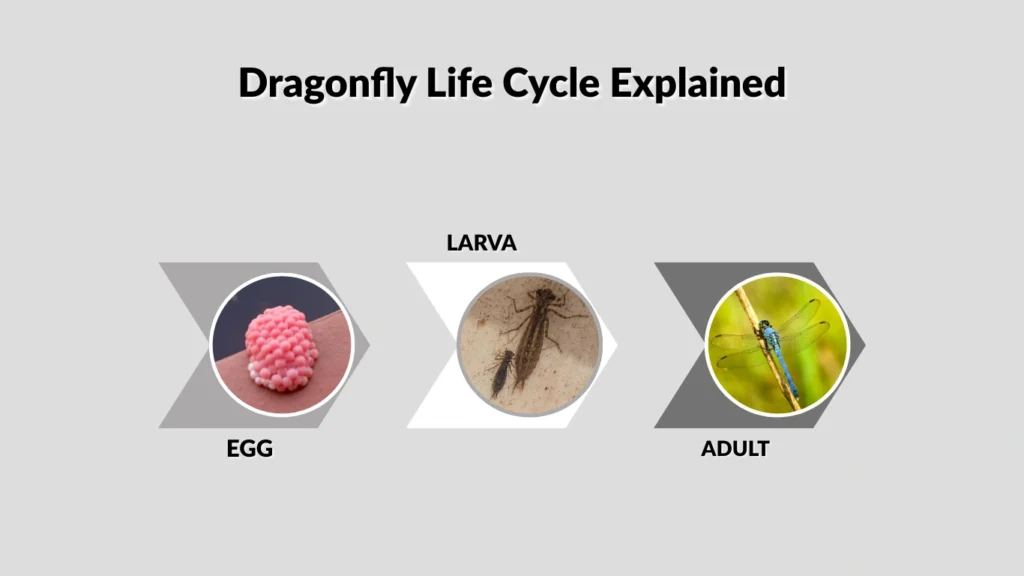
Dragonflies go through incomplete metamorphosis, which includes three stages:
- Egg
- Larva (nymph)
- Adult
Unlike butterflies, dragonflies do not have a pupal stage.
Dragonfly Egg Laying in Water
Do dragonflies lay eggs in water? Yes, they do. Female dragonflies deposit their eggs either directly into water or on aquatic plants. Some species dip their abdomen repeatedly into the water’s surface, which explains why dragonflies often appear to be “touching” water.
In certain species, dragonfly egg laying happens just below the surface, attaching eggs to submerged vegetation. This ensures that when the eggs hatch, the larvae are already in their aquatic habitat.
Larval Stage of a Dragonfly
The aquatic larva of a dragonfly is called a nymph. This stage can last anywhere from several months to as long as three years, depending on the species and environmental conditions.
Can dragonflies live underwater? As adults, no. But during the larval stage, they live entirely underwater. Dragonfly larvae breathe using specialized gills located inside their abdomen. They can even move by expelling water from their bodies in a type of jet propulsion.
Dragonfly larvae in water are highly active predators. They hide among plants, mud, and rocks, waiting to ambush prey.
From Nymph to Adult
How does a dragonfly develop from an aquatic insect into a flying one?
When the larva is fully grown, it climbs out of the water onto a plant stem or rock. Its outer skin splits open, and the adult dragonfly slowly emerges. The wings expand and harden before the insect takes its first flight.
Can a nymph dragonfly fly? No. Only the adult stage has wings. The larval stage is entirely aquatic and wingless.
Dragonfly Larvae in Water
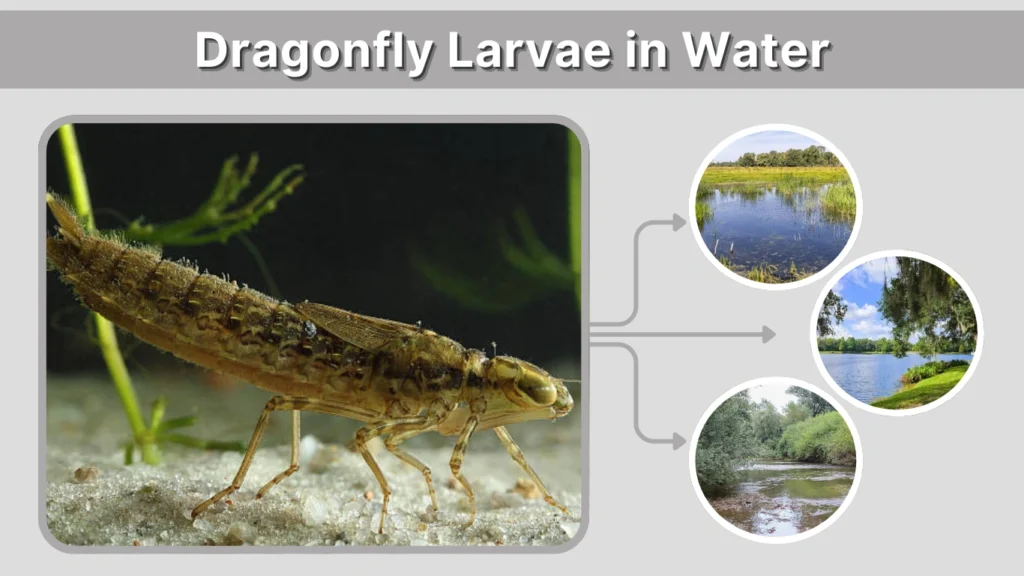
Dragonfly larvae are commonly found in:
- Ponds
- Lakes
- Slow-moving rivers
- Marshes
- Backyard water gardens
Because dragonflies rely on water for reproduction, adults are almost always seen near freshwater habitats. If you see a dragonfly on the river or resting on plants near a pond, it is likely part of a breeding population.
How long do dragonflies live in water? Most species spend the majority of their life — often one to three years — underwater as larvae. In contrast, adult dragonflies typically live only a few weeks to several months.
What Does Dragonfly Larvae Look Like?
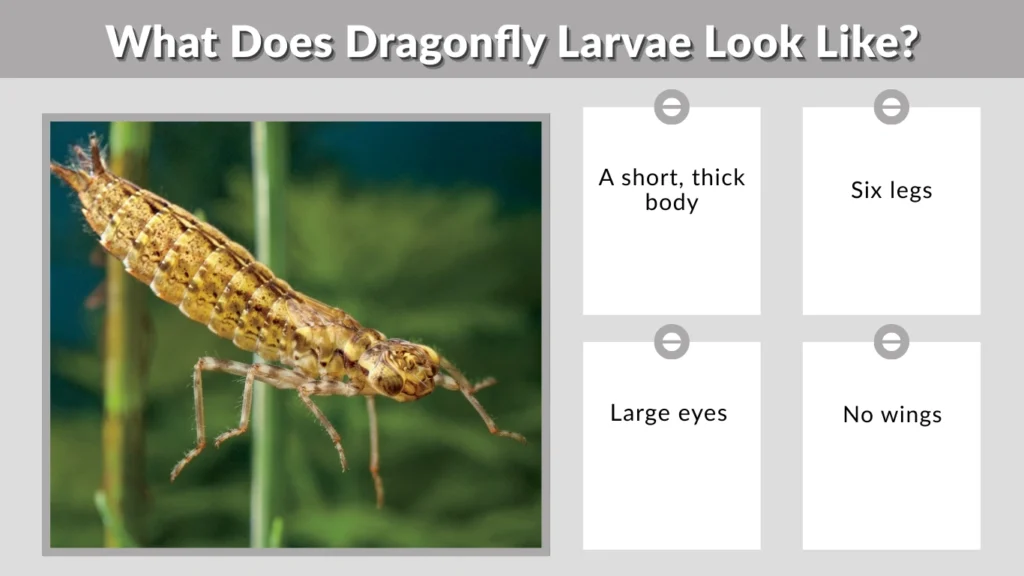
Many people ask, what does dragonfly larvae look like?
Dragonfly larvae look very different from adults. They have:
- A short, thick body
- Six legs
- Large eyes
- No wings
- A hinged lower jaw (labium) used to grab prey
Their extendable jaw is one of their most impressive features. It shoots out rapidly to capture prey in a fraction of a second.
Dragonfly larvae are often brown or green, helping them blend into muddy or plant-filled environments. Because of their stocky appearance, they are sometimes mistaken for other aquatic insects.
Dragonfly Larvae vs Mosquito Larvae
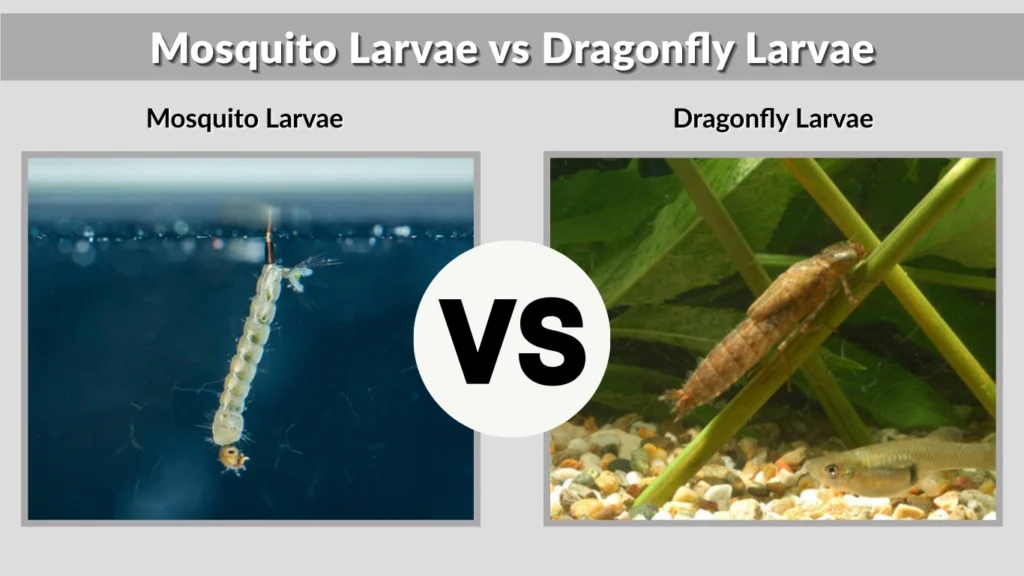
Dragonfly larvae are frequently confused with mosquito larvae, but they are very different.
Mosquito larvae are small, thin, and worm-like. They wiggle near the surface of the water and feed on tiny organic particles. In contrast, dragonfly larvae are much larger, bulkier, and crawl along the bottom or cling to plants.
The biggest difference is their role in the ecosystem. Mosquito larvae are prey, while dragonfly larvae are predators. In fact, dragonfly larvae eat mosquito larvae and help control mosquito populations naturally. This makes them beneficial insects in ponds and wetlands.
Because of this predatory behavior, dragonfly larvae are sometimes introduced into natural water features to reduce mosquito numbers.
What Do Dragonfly Larvae Eat?
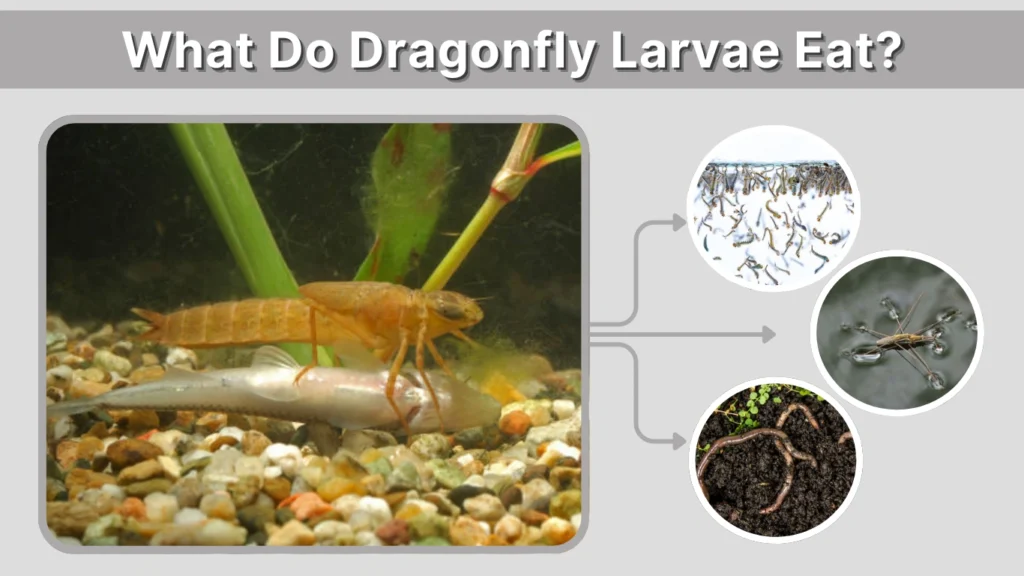
Dragonfly larvae are aggressive aquatic predators. They feed on a wide variety of small animals living in the water. Their diet commonly includes:
- Mosquito larvae
- Small aquatic insects
- Tadpoles
- Tiny fish
- Other invertebrates
Do dragonfly larvae eat tadpoles? Yes, larger nymphs are capable of catching and eating small tadpoles. There have even been observations of a dragonfly nymph eating fish, especially newly hatched fry in ponds or aquariums.
Their hunting method is highly effective. The larva stays motionless and then rapidly extends its specialized lower jaw to seize prey. This quick strike makes dragonfly larvae one of the most efficient predators in freshwater ecosystems.
However, dragonfly larvae are also prey for larger animals. Fish, birds, frogs, and even other dragonfly larvae may eat them. This places them in an important middle position in the aquatic food chain.
Dragonfly Larvae in Aquariums
Some people search for dragonfly larvae for sale or live dragonfly larvae for sale, hoping to use them for mosquito control or as an interesting aquatic pet. While it is possible to find them through specialty suppliers, keeping dragonfly nymphs in an aquarium can be challenging.
A dragonfly nymph in an aquarium requires:
- Clean, oxygen-rich water
- Live prey (such as mosquito larvae or small aquatic insects)
- Hiding places like plants or rocks
They are not ideal for community aquariums because they may attack small fish or shrimp. If you plan to care for a dragonfly larva, it is best to keep it in a species-only setup.
In many regions, collecting wild larvae may be regulated, so always check local laws before removing them from natural habitats.
Why Do Dragonflies Touch Water?
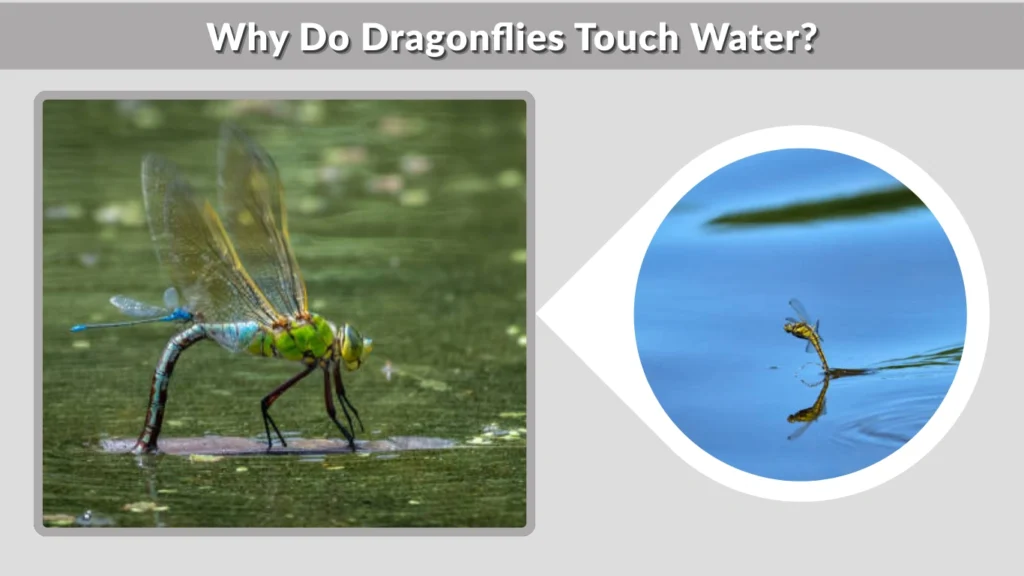
You may notice dragonflies repeatedly dipping their abdomen into water. This behavior is usually related to egg laying.
Do dragonflies drink water? They may absorb small amounts of moisture, but the primary reason they touch water is reproduction. Female dragonflies lay eggs in water or on aquatic plants. Males may also patrol water surfaces to defend territory from rivals.
This close connection to water explains why dragonflies live near ponds, rivers, lakes, and wetlands throughout their lives.
Dragonfly Swarms Explained
Seeing a dragonfly swarm on the beach or a large number of dragonflies in your yard can be surprising. What makes dragonflies swarm?
Dragonfly swarms usually occur for two main reasons:
- Feeding — Large numbers gather where flying insects are abundant.
- Migration — Some species migrate in groups over long distances.
Dragonfly swarms in yards often happen when mosquito populations increase. Since dragonflies eat mosquitoes, they gather where food is plentiful.
These swarms are generally harmless to humans and are actually beneficial because they reduce pest insect numbers.
How Do Dragonflies Fly?
How do dragonflies fly so skillfully?
Dragonflies have two pairs of wings that move independently. This allows them to:
- Hover in place
- Glide smoothly
- Fly backward
- Change direction quickly
Their wings beat in a figure-eight pattern, creating lift and thrust. This advanced flying ability makes them excellent aerial hunters.
It is important to note that dragonfly larvae do not have wings and cannot fly. The flying stage begins only after the insect emerges from water and becomes an adult.
Common Confusions About Dragonflies
Do Water Bugs Turn Into Dragonflies?
No, water bugs do not turn into dragonflies. Water bugs are separate aquatic insects belonging to different families. Dragonflies belong to the order Odonata and have a distinct life cycle.
Are Fly Larvae in Water Dragonflies?
Not necessarily. Many types of fly larvae live in water, including black fly larvae and mosquito larvae. These larvae look worm-like and do not develop into dragonflies.
Dragonfly larvae are thicker, have visible legs, and possess a distinctive extendable jaw.
Why Is a Dragonfly Not a Fly?
Despite the name, a dragonfly is not a true fly. True flies (like houseflies) belong to the order Diptera and have one pair of wings. Dragonflies have two pairs of wings and belong to a completely different order.
This difference in classification explains their unique life cycle, body structure, and flying abilities.
How Long Do Dragonflies Live?
Most of a dragonfly’s life is spent underwater as a larva. This stage may last one to three years. In contrast, adult dragonflies typically live for only a few weeks to several months.
Because the aquatic stage is so long, healthy freshwater habitats are essential for their survival.
Ecological Importance of Dragonflies
Dragonflies play an important ecological role:
- They control mosquito populations.
- They serve as food for fish, birds, and amphibians.
- They indicate clean water environments.
Since dragonfly larvae in water require good water quality, their presence often signals a healthy ecosystem.
FAQs
Can dragonflies live underwater?
Dragonflies can live underwater only during their larval stage. The aquatic larva, called a nymph, breathes using specialized gills. Adult dragonflies live above water and cannot survive submerged.
Do dragonflies lay eggs in water?
Yes, female dragonflies lay their eggs in water or on aquatic plants. This ensures that the larvae hatch directly into their aquatic habitat.
Do dragonfly larvae eat mosquito larvae?
Yes, dragonfly larvae are natural predators of mosquito larvae. They help reduce mosquito populations in ponds and wetlands.
What does dragonfly larvae look like?
Dragonfly larvae have thick bodies, six legs, large eyes, and no wings. They also have a unique extendable lower jaw used to capture prey.
Do water bugs turn into dragonflies?
No, water bugs are separate insects and do not transform into dragonflies. Dragonflies have their own distinct life cycle.