
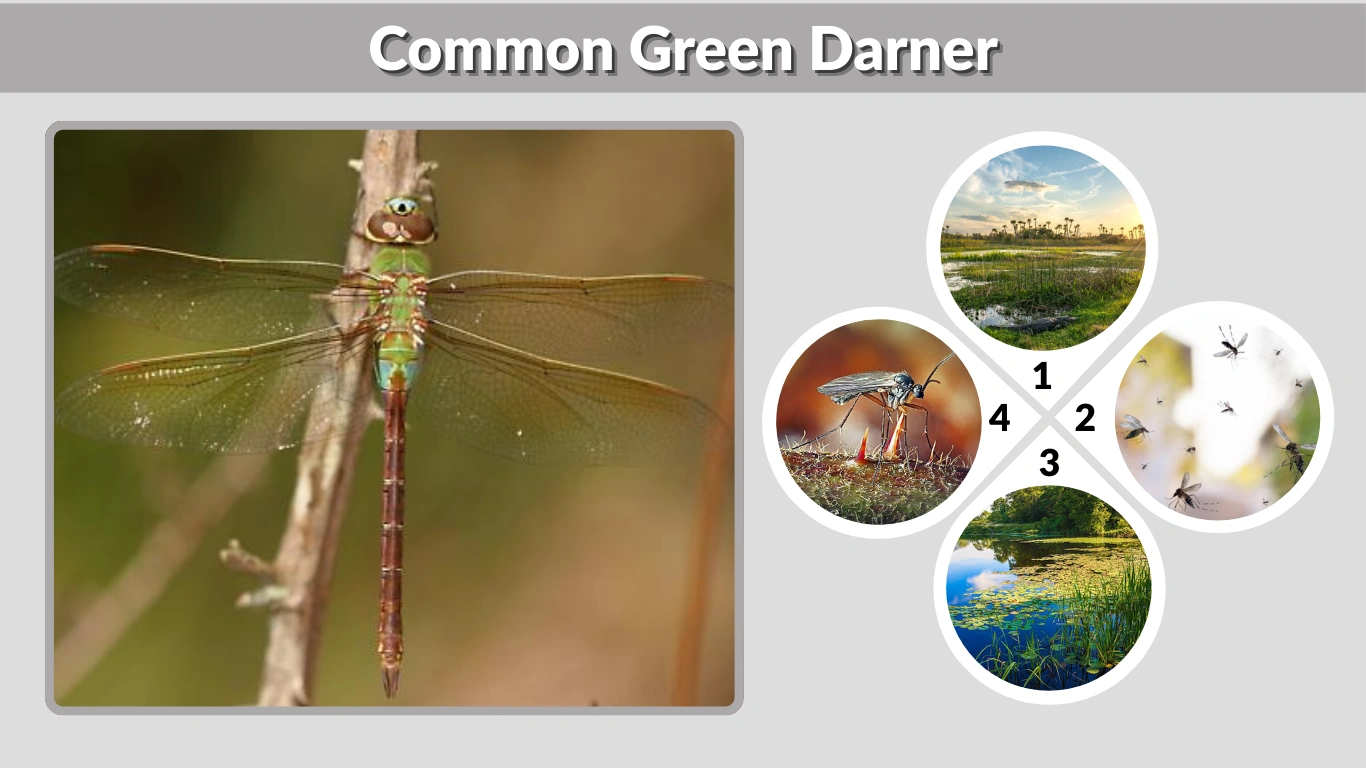
The Common Green Darner (Anax junius) is one of North America’s most recognizable dragonflies, famed for its neon-green thorax, powerful flight, and long-distance migration. Seen from Canada to Central America, this species is popular among photographers, birders, and nature lovers for its striking appearance and aerial hunting skills. Whether you’re searching for facts, images, male vs. female differences, or identification help, this guide covers everything from diet and size to regional sightings in places like Ontario, Toronto, and Arizona.
Identification
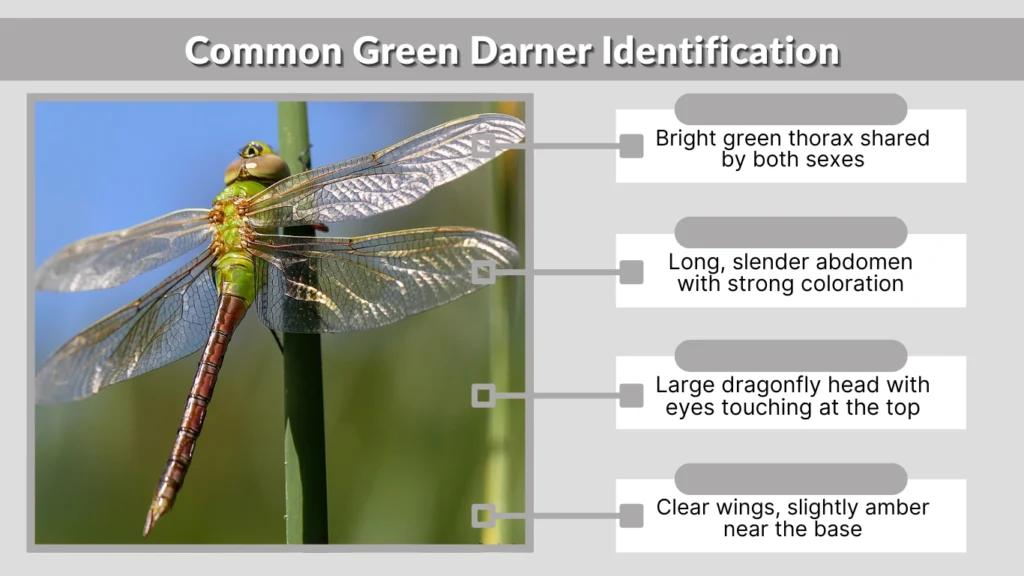
The Common Green Darner is a large, bright dragonfly that stands out even at a distance. Below is a high-clarity list-style guide to help identify males, females, and nymphs.
General Identification Features
- Bright green thorax shared by both sexes
- Long, slender abdomen with strong coloration
- Large dragonfly head with eyes touching at the top
- Clear wings, slightly amber near the base
- Swift, powerful flight that resembles small birds (supports the keyword “common green darner bird”)
Male Identification
- Abdomen is powder-blue in mature males
- Mature males display a distinct blue facial pattern
- Male dragonfly head shows more defined coloration compared to females
- Sleek, streamlined body ideal for long migrations
- Keywords included: common green darner male, mature male, mature male face, male dragonfly head
Female Identification
- Abdomen may be green, brown, or blue depending on maturity
- Female dragonfly head is slightly duller than males
- Often bulkier and more robust than males
- Excellent for distinguishing gender in photos and field observations
- Keywords included: common green darner female, female pictures, mature female dragonfly head
Male vs Female Comparison
- Males = blue abdomen; Females = brown/green/blue
- Male faces brighter; female faces duller
- Females often have thicker abdomens
- Keywords: common green darner male vs female, common green darner gender
Species Overview
The Common Green Darner is one of the largest species in the Aeshnidae family and is among the earliest dragonflies to appear each spring. Its scientific name, Anax junius, highlights its royal-like status (“Anax” meaning “lord” or “king”). This species is a top aerial predator, catching mosquitoes, midges, and small insects while in full flight.
It is commonly observed throughout the United States, southern Canada, and northern Mexico. In places like Ontario and Toronto, it is a seasonal highlight for dragonfly watchers. In regions such as Arizona, the species thrives around desert wetlands and artificial ponds. Its combination of bright coloration, large size, and migratory behavior makes it one of the most studied dragonflies in North America.
Taxonomy
A clear breakdown of its scientific classification:
| Rank | Classification |
| Scientific Name | Anax junius |
| Common Names | Common Green Darner, Green Darner Dragonfly |
| Family | Aeshnidae |
| Order | Odonata |
| Category | Darner dragonfly |
Keywords used: common green darner taxonomy, scientific name, anax junius.
Size
The Common Green Darner is one of the largest dragonflies found in North America.
- Body length: 2.8–3.3 inches (7–8.4 cm)
- Wingspan: 3.0–4.5 inches (7.5–11.5 cm)
- Nymph size: Up to 2 inches before emerging
This significant size makes it easy to identify in flight and contributes to its ability to migrate long distances.
Keywords included: common green darner size, size of common green darner, dragonfly size.
Habitat
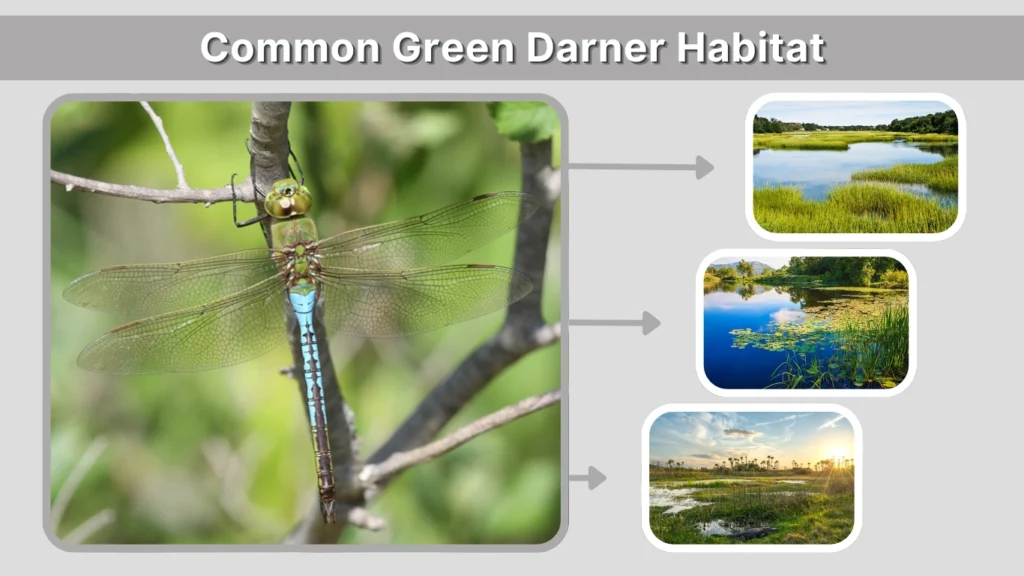
Common Green Darners rely heavily on freshwater environments, especially areas rich in vegetation. Typical habitats include:
- Marshes
- Ponds and still lakes
- Slow-moving streams
- Wetlands
- Temporary pools used for egg-laying
The species is highly adaptable and can even appear in city parks, golf-course ponds, and suburban wetlands.
Keyword used: common green darner habitat.
Range
The Common Green Darner is extremely widespread. Its range covers:
- Canada: especially Ontario and southern provinces
- United States: present in all states, including strong seasonal numbers in Arizona
- Mexico & Central America
- Rare UK sightings (likely windblown migrants)
Regional keywords included: canada common green darner dragonfly, ontario, toronto, arizona, common green darner uk.
Behavior
Flight & Hunting
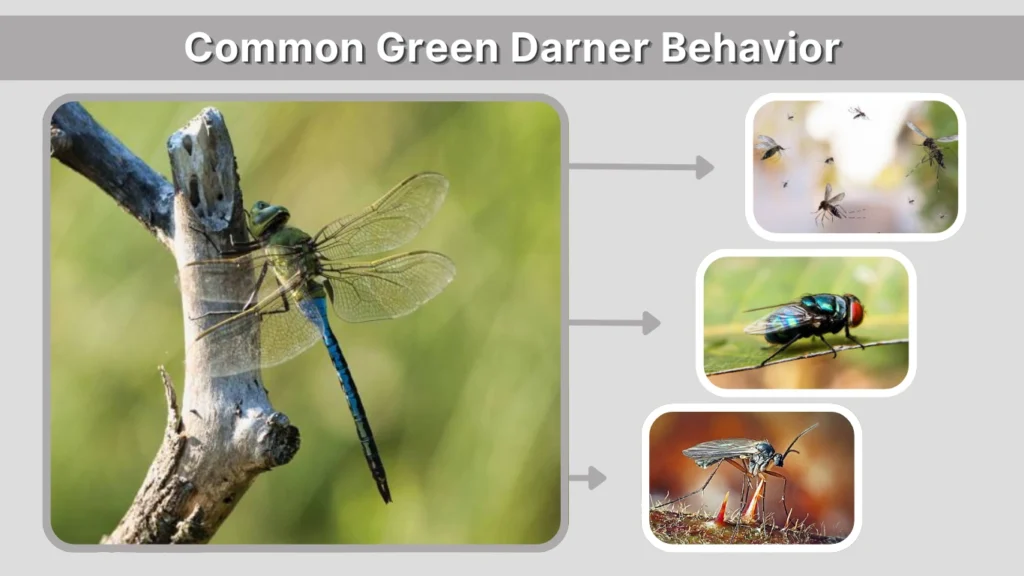
The Common Green Darner is a highly skilled aerial predator, capable of turning sharply, hovering like a hummingbird, and chasing prey mid-air. Its bird-like agility explains the keyword “common green darner bird.”
Diet
Their diet includes:
- Mosquitoes
- Flies
- Gnats
- Midges
- Small flying insects
This section supports the keyword: what does the common green darner eat and common green darner diet.
Migration
Common Green Darners are famous for long-distance migrations similar to monarch butterflies. They travel thousands of miles between breeding and overwintering grounds.
Keyword used: common green darner migration.
Life Cycle
The Common Green Darner experiences a dramatic life cycle that transitions from aquatic predator to powerful aerial adult. Females lay eggs on floating vegetation or submerged plant stems. Within a few days to weeks, the eggs hatch into nymphs—fierce underwater hunters that spend months growing before emerging to transform into adults.
Nymph Stage
Nymphs, also called naiads, are fully aquatic and equipped with extendable jaws that strike outward like a spring-loaded trap. They prey on tadpoles, mosquito larvae, small fish fry, and aquatic insects. Because nymphs grow quickly, they can reach impressive lengths of up to 2 inches, making them one of the larger dragonfly larvae in North America.
Keyword included: common green darner nymph.
Adult Stage
Newly emerged adults start with muted colors, but mature individuals display vibrant green thoraxes and blue or brown abdomens depending on gender. Keywords such as mature male, mature female, and mature male dragonfly head align with this stage.
Mating Behavior
Common Green Darners exhibit complex reproductive behavior. Males patrol territories aggressively, driving away rivals while searching for receptive females. After locating a mate, they form the classic “wheel position” seen in dragonflies. The pair then remains attached as the female deposits eggs directly into aquatic vegetation.
Keywords integrated: common green darner mating, male and female, gender differences.
Photography & Art Popularity
The striking colors of the Common Green Darner make it a popular subject for macro photographers and nature artists. Its bright green thorax, shimmering wings, and powder-blue male abdomen create visually dramatic images used in prints and décor.
- High-quality common green darner images and photos are often chosen for wall prints.
- Keywords like blue green dragonfly wall art common green darner photo connect to its popularity in nature artwork and digital photography.
Comparison Section
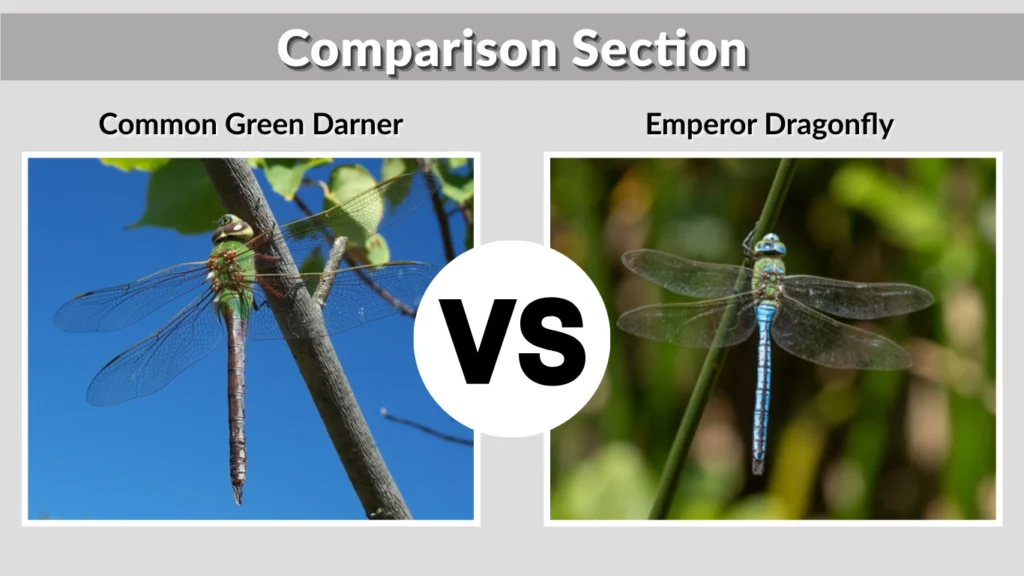
Common Green Darner vs Emperor Dragonfly
A clear comparison helps distinguish these two iconic species:
| Feature | Common Green Darner (Anax junius) | Emperor Dragonfly (Anax imperator) |
| Size | Slightly smaller | Slightly larger overall |
| Thorax | Bright green | Green but often more robust |
| Abdomen | Blue in males, brown/green/blue in females | Blue abdomen in males, green female abdomen |
| Range | North America | Europe, Africa, western Asia |
| Behavior | Migratory | Non-migratory |
This supports keywords: common green darner vs emperor and differences between emperor dragonfly common green darner.
Additional Facts
The Common Green Darner is one of the first dragonflies to appear in early spring due to its ability to withstand cooler temperatures. Its powerful flight muscles allow it to migrate long distances and hover like a bird. Adults live only a few weeks, but nymphs may spend months underwater before emerging. Their role as mosquito predators makes them ecologically valuable.
Keywords included: common green darner facts, dragonfly facts.
FAQs
What does the Common Green Darner eat?
The Common Green Darner feeds primarily on flying insects, including mosquitoes, gnats, flies, small moths, and midges. Its superb aerial agility allows it to catch prey mid-flight, often consuming hundreds of insects per day. Nymphs, on the other hand, feed on aquatic larvae, small fish, and tadpoles.
How can you tell a male from a female Common Green Darner?
Males have a bright blue abdomen and more vibrant facial coloration, while females may have green, brown, or blue abdomens depending on age. Females often appear bulkier. Males are sleeker with a more streamlined shape, especially noticeable in flight.
Do Common Green Darners migrate?
Yes. They are famous for long-distance seasonal migration, traveling from northern regions like Canada and the Great Lakes to warmer southern or coastal areas. Their multigenerational migration is comparable to monarch butterflies, making them one of the few dragonfly species with this behavior.
How big does the Common Green Darner get?
Adults typically measure 2.8–3.3 inches in body length with a wingspan of 3.0–4.5 inches. Their large size contributes to their strong flight power and makes them easy to identify even at a distance.
Where can Common Green Darners be found?
Their range spans the entire United States, southern Canada (including Ontario and Toronto), Mexico, and Central America. They are also found in desert oases in Arizona and occasionally appear as rare migrants in the United Kingdom.